Why Your House Smells Like a Pool and How to Fix It With Water Filtration

Ever turn on your faucet and get hit with a smell that whisks you away to the local swimming pool? That powerful, chemical scent is almost always chlorine, and it’s coming straight from your tap.

It’s the number one reason people complain about a smell of chlorine in house, and it’s a direct result of how your city keeps its water supply safe for everyone. But just because it's common doesn't mean you have to live with it. The secret to kicking that smell to the curb lies in your water.

So, Why Is My House Suddenly a Chlorine Zone?

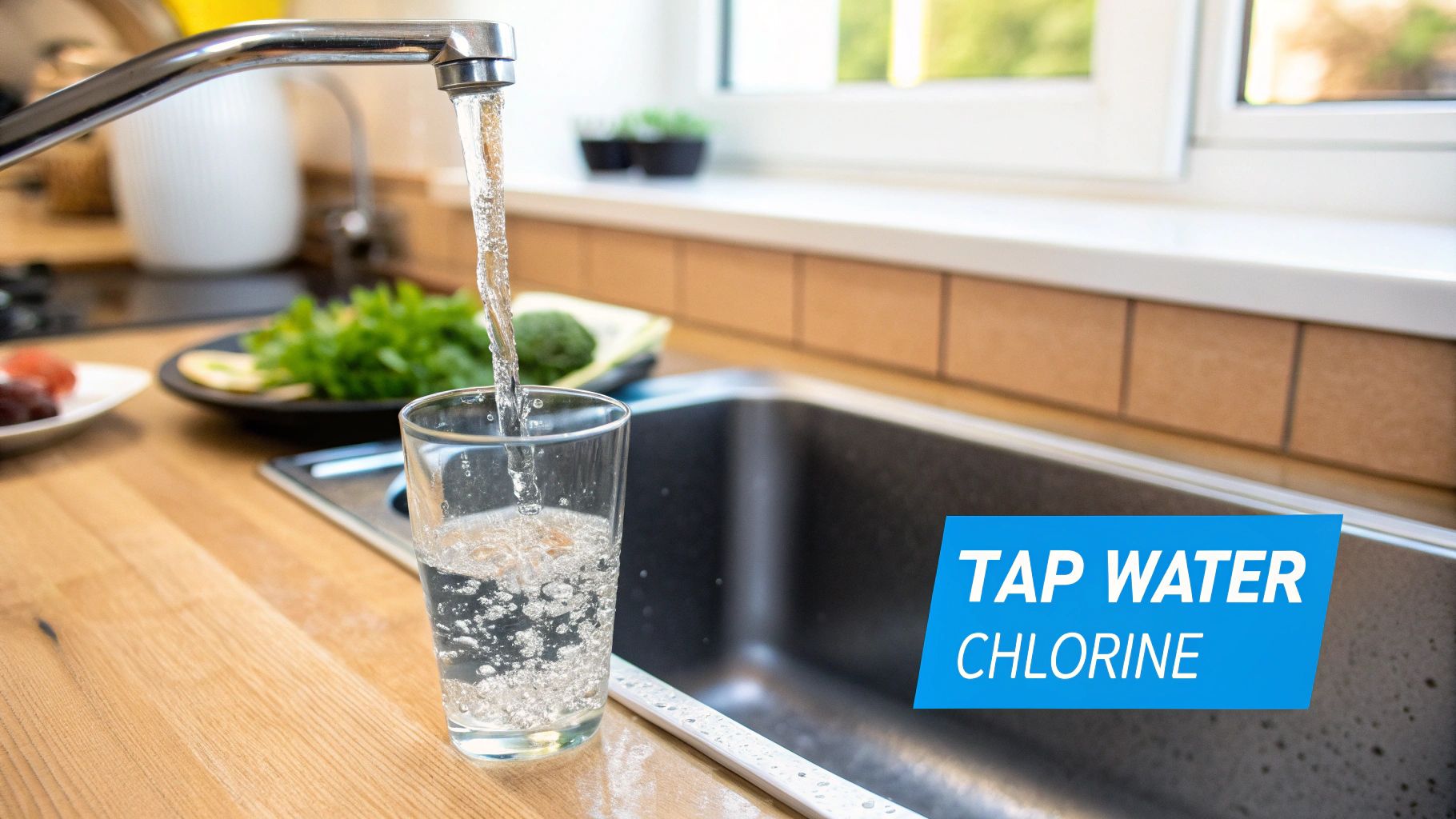
Tap water filling a glass from a modern kitchen faucet, with visible bubbles, implying chlorine presence.

So, why is this pool chemical in your drinking water in the first place? For more than 100 years, chlorine has been the world's go-to disinfectant for public water systems. It’s incredibly cheap and brutally effective at wiping out the nasty germs that can make you sick.

Think of it this way: water has a long, winding journey from the treatment plant to your home. As it travels through miles and miles of pipes, it needs a bodyguard to keep it pure. Chlorine is that bodyguard, creating a protective barrier that kills off bacteria and viruses along the way. Your home is the final stop on its tour.

Why Does the Smell Suddenly Get Stronger?

Have you ever noticed the chlorine smell is way more potent some days than others? You're not just imagining it. A few different things can cause the chlorine concentration in your water to spike temporarily.

  • Recent Heavy Rainfall: After a big storm, all that runoff can wash more contaminants into the water source. To combat this, treatment plants often have to bump up the chlorine levels to keep the water safe.
  • Water Main Maintenance: When the city flushes or repairs the water lines in your area, they often use a higher dose of chlorine to disinfect the pipes and make sure everything is clean.
  • Living Close to the Source: If your home is just a short hop from the water treatment facility, you might get water with more chlorine in it. It simply hasn't had as much time to dissipate on its journey to you.

The amount of chlorine in your water is carefully monitored. According to EPA standards, the maximum level allowed is 4.0 mg/L, but what you typically get at home is somewhere between 0.2–3.0 mg/L. For a lot of us, even the low end of that range is enough to cause that distinct, bleach-like smell. Discover more insights about chlorine in drinking water on frizzlife.com.

To help you narrow down where that smell is coming from, here’s a quick guide to common trouble spots.

Quick Guide to Chlorine Smell Sources in Your Home

This table can help you quickly figure out what's causing that chlorine odor by matching the location with common activities.

Source Location Common Activity Why It Smells Stronger Here
Kitchen Sink Washing dishes, filling a pot The aeration from the faucet releases dissolved chlorine gas.
Bathroom Shower Taking a hot shower Hot water and steam cause chlorine to vaporize, concentrating the smell in a small space.
Washing Machine Doing a load of laundry The agitation and hot water used in a wash cycle can release a strong chlorine odor.
Dishwasher Running a cleaning cycle High-temperature water jets spray chlorinated water, releasing the gas inside the machine.

This shows that while the source is always the water, certain activities and appliances can make the problem much more noticeable.

It's More Than Just a Bad Smell

The problem isn’t just about an unpleasant odor in your drinking glass. When you do something like take a hot shower or run the dishwasher, the heat and steam work together to turn that dissolved chlorine into a gas.

This process, known as volatilization, releases chlorine straight into the air inside your home.

All of a sudden, the issue isn't confined to your water. It’s in the air you and your family are breathing in the bathroom and kitchen, which can really impact your home's air quality and overall comfort. For anyone with sensitivities, this airborne chlorine can be especially irritating. The smell is the most obvious sign, but it’s really a signal that your water could be affecting your daily life in ways you haven't even considered. A simple water filter can fix this.

The Hidden Costs of That Chlorine Smell

That swimming pool smell you're noticing isn't just a weird quirk of your tap water—it's your home's way of telling you something is off. While the smell of chlorine in the house is the most obvious sign, the effects ripple out into your daily life in ways that might surprise you, creating hidden costs and constant little annoyances.

Ever get out of the shower and immediately feel like you need to slather on lotion? That tight, itchy feeling isn't your imagination. Chlorine is fantastic at its job, but it can't tell the difference between bad stuff in the water and the natural oils that keep your skin and hair healthy. The result is chronic dryness, brittle hair, and irritated skin.

Your laundry is another victim. That same chemical slowly but surely bleaches the life out of your clothes. If you've noticed your vibrant colors looking dull and faded way too soon, the chlorine in your wash water is likely the culprit, forcing you to replace favorite items more often.

From Your Shower to Your Lungs

Things get a lot more interesting when you turn up the heat. A hot shower is the perfect environment for chlorine to go airborne, turning from a liquid into a gas you can inhale. As your bathroom fills with steam, you're breathing in more than just water vapor.

For anyone in your family with asthma, allergies, or other respiratory issues, that vaporized chlorine can be a real irritant to their airways.

Here's something else to consider: the issue isn’t always just the chlorine itself. When chlorine mixes with the tiny bits of organic matter that are naturally in water, it can create a whole new class of compounds called disinfection byproducts (DBPs). Your water utility works hard to keep these within safe limits, but many people prefer to add their own layer of protection at home.

This is where filtering your water comes in. A whole-house water filter doesn't just get rid of the annoying smell—it tackles the root cause of dry skin, faded laundry, and those airborne irritants all at once. It’s a single move that brings comfort and peace of mind back to your entire home.

Uncovering a Sneaky Chlorine Smell Imposter

So you’ve noticed that distinct smell of chlorine in house, and your first instinct is to blame the tap water. You might be right, but it's not always the whole story. Often, an unexpected partner in crime is lurking right under your sink: your everyday household cleaners.

Think about it. Many of the most common all-purpose sprays, disinfectants, and toilet bowl cleaners are bleach-based. When you start cleaning and mix these with other products—especially anything with a citrus scent like lemon or orange—you can accidentally kick off a chemical reaction right in your home. This reaction can release airborne particles that make that chlorine smell feel way more intense.

The Cleaner Conundrum

This is where things get tricky. Your tap water might be contributing a baseline level of chlorine, but your cleaning routine can act like a powerful amplifier, making it nearly impossible to figure out what's really causing the smell. You end up pointing the finger solely at the water when your cleaning products are actually making the problem much worse.

It turns out there's some real science behind this. A fascinating study from Bucknell University found that when bleach fumes meet citrus compounds (the technical term is limonene) under normal indoor light, they create what are called secondary organic aerosols. These are tiny particles that can really irritate your eyes, nose, and throat. The smell threshold for chlorine is already super low, but this chemical mix can make the odor you perceive—and the potential for irritation—much stronger. You can read more about the study on common cleaners and its interesting findings.

This is exactly why a whole-house water filter can be such a game-changer. By stripping the chlorine out of your water right where it enters your home, you completely eliminate that baseline chemical odor. Suddenly, it becomes much easier to tell if other things, like your cleaning supplies or even your HVAC unit, are the real culprits behind any lingering smells. If you're trying to track down a strange scent, it’s worth understanding why your AC smells and how different issues can sometimes be mistaken for one another.

Once you have clean, chlorine-free water, managing these secondary sources is a breeze. Just improving your ventilation by cracking open a window or switching on an exhaust fan while you clean can make a world of difference. It's a simple habit that helps disperse any chemical fumes, leaving your home feeling—and smelling—much fresher.

Simple Steps to Diagnose Your Chlorine Problem

Before you can fix that lingering smell of chlorine in house, you need to put on your detective hat. Pinpointing the exact source is the crucial first step. It ensures you’re tackling the real issue instead of just taking a wild guess.

Thankfully, you don't need a forensics lab—a few simple DIY tests can give you all the clues you need.

The easiest place to start is what I call the "glass test." Just fill a clean glass with water from the faucet you suspect is the problem. Then, take the glass and walk into a different room, well away from the sink area. Now, give the water a sniff. This simple move isolates the water's scent from anything else that might be going on, like drain odors or leftover cleaning spray in the sink.

Hot Versus Cold Water Clues

Next up, let's see if temperature makes a difference. Test your hot and cold water taps one at a time. First, run the cold water for about a minute and smell it. Then, do the exact same thing with the hot water.

Is the chlorine smell way more intense from the hot tap? That's a huge clue. Hot water makes it easier for dissolved chlorine to turn into a gas (a process called "volatilization"), which concentrates that swimming pool smell, especially in a small space like a shower.

If the odor is only strong on the hot side, it could point to a problem inside your water heater. Sediment buildup at the bottom of the tank can sometimes react with the chlorine in your water and make the smell worse. But if the smell is equally strong from both hot and cold taps, the culprit is almost certainly the water coming from your city's supply.

Sometimes, what your nose registers as chlorine is actually an imposter. In older homes, a musty, chemical-like odor can come from mold compounds that trick you into thinking you're smelling chlorine. When you're trying to track down a mysterious smell, getting accurate info from something like a guide for an air quality testing kit can be a big help. In fact, some Swedish studies of homes built before 1980 found that specific "mold odors" can easily be mistaken for chlorine.

This flowchart can help you trace that chemical smell back to its origin.

A flowchart explaining the potential sources of chlorine smell, whether airborne or in water.

As you can see, the process helps you figure out if the smell is real, if it's a "smell-alike" like mold, or if it’s definitely coming from your water.

Getting Concrete Data with Water Tests

If you're ready to move past the sniff test and get some hard numbers, a home water testing kit is your best friend. These kits are incredibly simple to use and will tell you the exact concentration of free chlorine in your water.

You’ll generally find two types:

  • Test Strips: You just dip a strip into a water sample, and the color change tells you the chlorine level when you match it to a chart. They give you a quick, ballpark reading.
  • Digital Testers: For more accuracy, these handheld electronic gadgets give you a precise numerical reading of chlorine levels. There's no guesswork involved.

Once you run these simple diagnostics, you’ll have the evidence you need. Knowing for sure that chlorine is in your water—and at what level—gives you the power to move forward with confidence. From there, the next step becomes obvious: finding the right water filtration system to get rid of it for good.

The Ultimate Guide to Chlorine Removal Filters

Under-sink water filter system for chlorine removal with multiple cartridges and a separate faucet.

Alright, you've pinpointed the source of that pesky chlorine smell. Now, let's talk about the most effective way to get rid of it for good: a solid water filtration system.

When it comes to battling chlorine, one material is the undisputed champ: activated carbon.

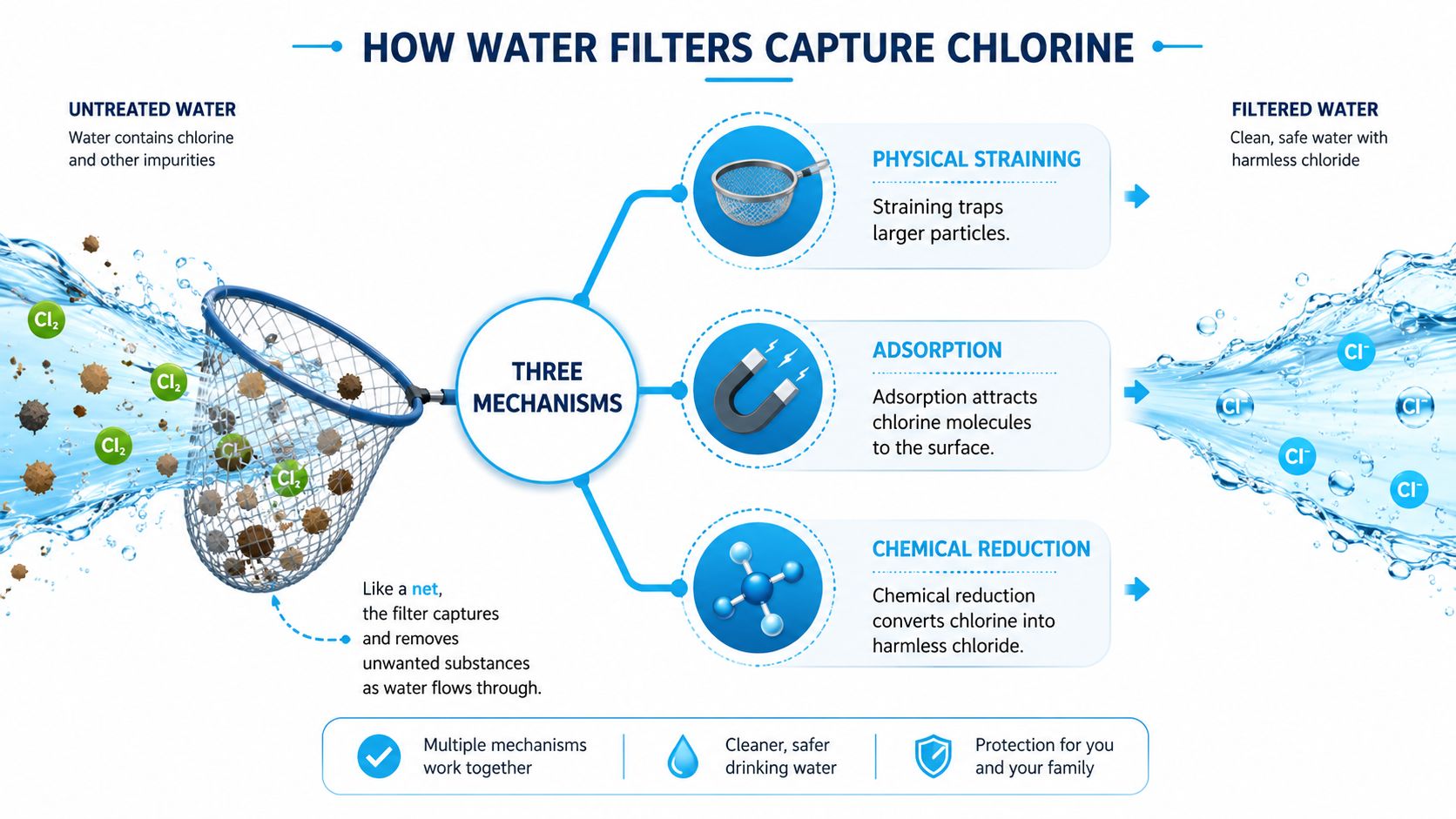
Think of activated carbon as a highly porous sponge, but on a microscopic level. It has an enormous surface area packed into a small space. As water passes through, the carbon uses a process called adsorption to essentially grab and hold onto chlorine molecules, trapping them so they can't get through to your tap. It’s a simple but incredibly powerful method that zaps that chemical taste and odor, leaving you with nothing but clean, great-tasting water.

Choosing Your Filtration Strategy

Not all filters are built the same, and the best one for you really boils down to your budget, whether you own or rent, and just how thoroughly you want to tackle the chlorine issue.

You’ve got two main paths you can take: a point-of-entry system that treats every drop of water in your home, or a point-of-use filter that focuses on a specific faucet or outlet.

A whole-house system is the all-in-one solution. It’s installed right where your main water line enters your house, meaning every faucet—from the kitchen sink and washing machine to every shower—gets purified water. This is the top choice for homeowners who are serious about protecting their skin, hair, and even their appliances from chlorine's harsh, drying effects.

On the other hand, if you’re renting or just need a more targeted, budget-friendly fix, point-of-use filters are a fantastic option. You can install one under your kitchen sink for clean drinking and cooking water, or even attach a filter directly to your showerhead. That last one is a game-changer for anyone tired of breathing in chlorine steam during a hot shower.

The Gold Standard of Certification
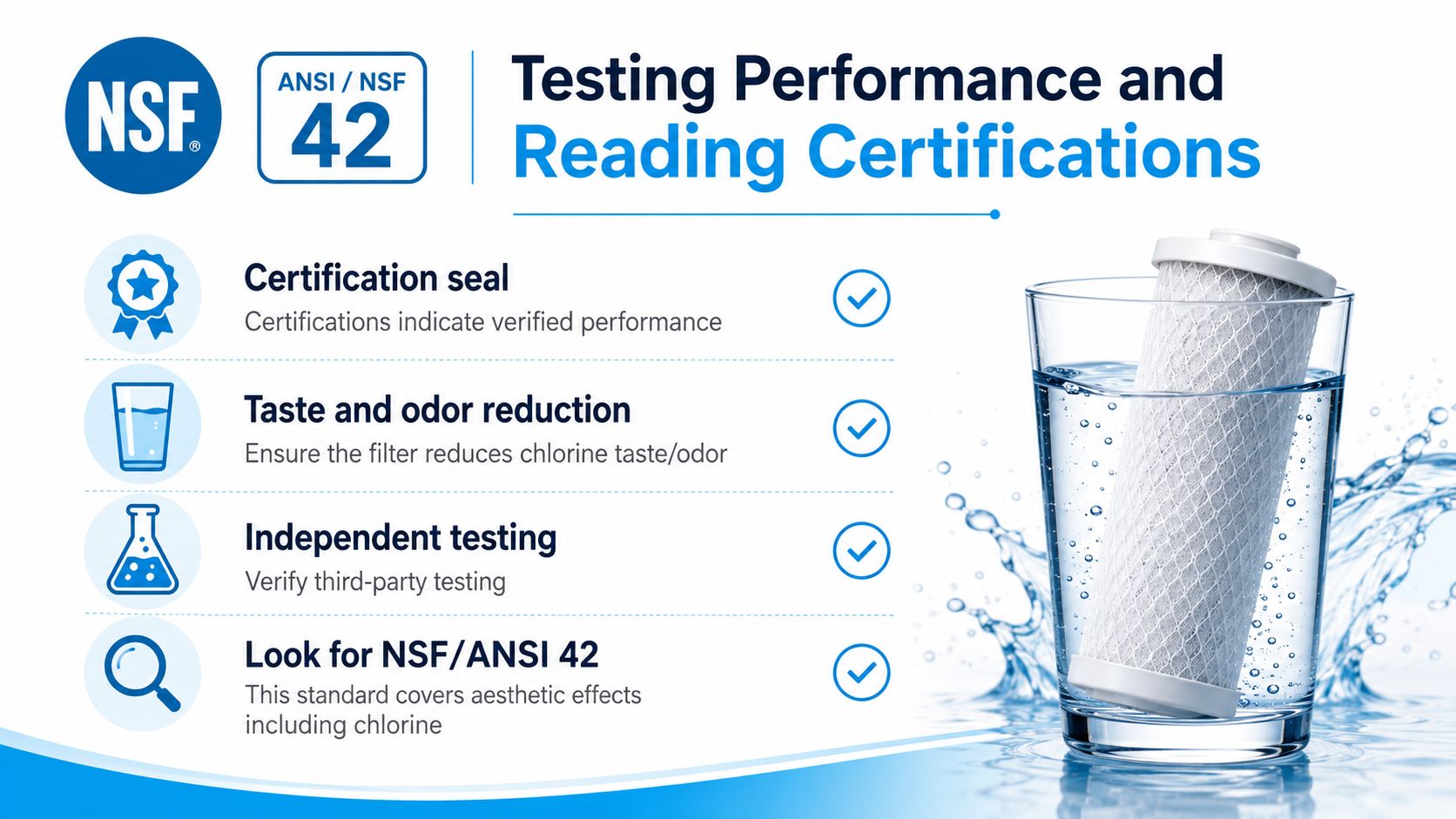
When you're shopping for a filter, keep an eye out for the NSF/ANSI 42 certification. This is an independent seal of approval. It proves the filter has been put through its paces and is guaranteed to reduce aesthetic issues like chlorine taste and odor. Think of it as your peace of mind that the product actually does what it claims.

Choosing the Right Water Filter to Remove Chlorine

To help you find the perfect match, let's compare the most common types of filters. Each offers a different mix of coverage, cost, and convenience.

Filter Type Best For Chlorine Removal Effectiveness Typical Cost Range Installation
Whole-House Filter Homeowners wanting a complete, set-it-and-forget-it solution for every tap. Very High (Typically removes 97% or more of chlorine from all water) $500 – $1,500+ Professional installation is often recommended.
Under-Sink Filter Renters or homeowners who want purified water for drinking and cooking at the kitchen sink. High (Excellent removal for a single, targeted faucet) $150 – $400 DIY-friendly for most people with basic plumbing skills.
Showerhead Filter Anyone wanting to protect their skin and hair from chlorine's drying effects. High (Specifically designed to remove chlorine from hot shower water) $30 – $100 Very easy DIY installation; usually just screws on.

Ultimately, picking the right filter comes down to what you’re trying to achieve. Do you just want better-tasting drinking water? Or are you looking to get rid of chlorine everywhere, from your laundry to your shower? Our experts have put together more detailed advice on all kinds of water filtration topics, which can help you find the best solution for your needs.

By weighing these options, you can confidently invest in a filter that brings that fresh, clean feeling back to your home.

Keeping Your Home Chlorine-Free for Good

Putting in a water filter is a huge win against the smell of chlorine in your house, but don't hang up your toolbelt just yet. The job isn’t quite finished.

Think of your filter as a hardworking gatekeeper. If it gets overloaded, it simply can’t do its job effectively. Regular, consistent maintenance is the real secret to keeping that clean, fresh water flowing for years to come.

The single most important task is changing the filter cartridges on schedule. This isn’t a friendly suggestion—it’s absolutely essential for the system to perform as it should. Over time, the activated carbon inside gets completely saturated with chlorine and all the other gunk it's been pulling out of your water. Eventually, it just can't trap anything else.

A clogged filter doesn't just stop working; it can become a breeding ground for bacteria or even release concentrated bursts of the very contaminants it was meant to remove. Sticking to a schedule is non-negotiable for safe, odor-free water.

A Simple Maintenance Plan

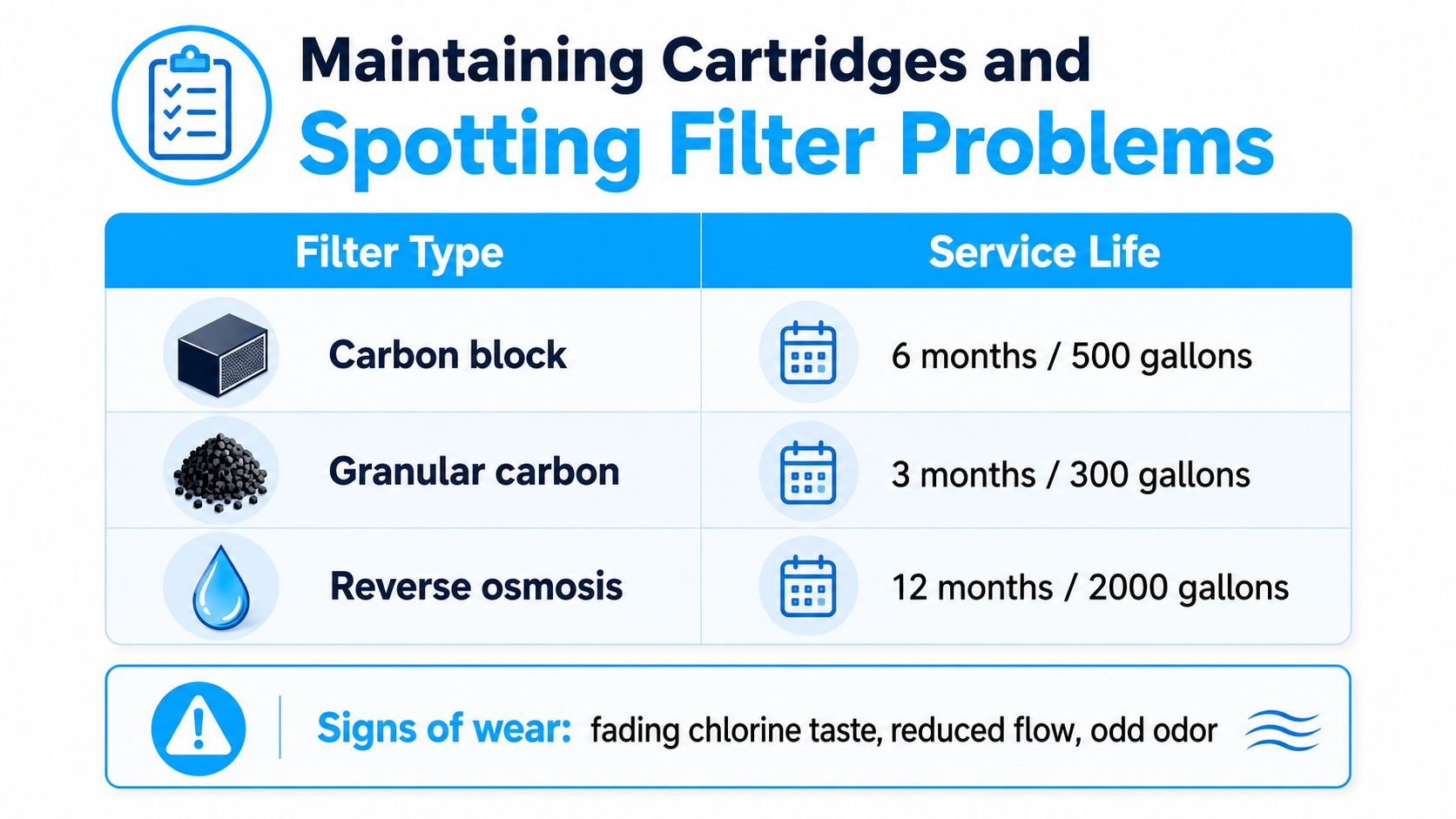
Different types of filter media, like granular activated carbon (GAC) and carbon block, have different lifespans. These typically range from six months to a year, so check the manufacturer's recommendation.

The easiest way to stay on top of it? The moment you install a new cartridge, pull out your phone and create a calendar reminder for the replacement date. Simple as that.

For bigger jobs, like installing a whole-house system, calling in a professional plumber is always the smartest move. And if that chlorine smell ever comes back out of the blue, take it as a clear signal from your system that it’s time for a professional check-up.

Your Questions About Chlorine Smell Answered

Even after you've pinpointed the source of that chemical smell, a few questions might still be nagging you. Let's get you some clear, straightforward answers so you can finally knock out that smell of chlorine in your house for good.

Why Does the Chlorine Smell Get Worse in Winter?

It's not just your imagination—that chemical odor often ramps up in the winter, and it's usually because we're using more hot water. When you heat chlorinated water for a shower or to do dishes, you're speeding up the process where chlorine turns into a gas. This gas gets released right into the steamy, enclosed air of your bathroom or kitchen.

On top of that, the colder, drier air in winter can actually make our sense of smell a bit more sensitive to these chemicals. A whole-house water filter tackles this problem at the source, removing chlorine before it gets to your water heater. That means even the longest, steamiest winter shower will be free of that harsh chemical smell.

Will a Water Softener Get Rid of the Chlorine Smell?

Nope, a standard water softener isn't built for that job. Water softeners are fantastic at removing hardness minerals like calcium and magnesium through a process called ion exchange, but that process does absolutely nothing to dissolved chlorine.

The real hero for getting rid of chlorine smell is a filtration system that uses activated carbon. Think of carbon as a sponge for chlorine—it adsorbs and traps the molecules, completely neutralizing both the taste and odor.

You can find some great modern systems that actually combine both softening and carbon filtration into a single unit. This gives you a one-two punch, solving both hard water spots and that nasty chlorine smell at the same time.

I Have a Filter, but I Still Smell Chlorine. What's Wrong?

This is a common one, and there are a couple of likely culprits. First, if you're using a point-of-use filter, like one that screws onto a single faucet, it's only treating the water at that one spot. You'll still get that chlorine smell from your showerhead and every other tap in the house.

If you already have a whole-house filter and the smell has come back, it's almost a sure bet that your filter cartridge is done and needs to be replaced. Over time, that carbon media gets clogged up and can't grab onto any more chlorine. Keeping up with a regular replacement schedule is the key to making sure your filter keeps doing its job, giving you fresh, odor-free water everywhere in your home.


At Water Filter Advisor, we're all about giving you in-depth guides and honest reviews to help you find the right water filtration solution. Check out our expert advice and take the first step toward pure, clean water today at https://www.waterfilteradvisor.com.

Will Reverse Osmosis Remove Chlorine From Your Water?

Yes, a reverse osmosis (RO) system is brilliant at removing chlorine from your tap water. But if you think it's the fancy, high-tech membrane doing all the work, you're in for a surprise. The real story is a classic tale of teamwork.

It’s not actually the famous RO membrane doing the heavy lifting here.

Chlorine Removal in RO Systems Is a Team Effort

You’d be forgiven for thinking the sophisticated RO membrane is the star player for every contaminant, but when it comes to chlorine, another component steals the show. The unsung hero is the activated carbon pre-filter, which acts as a dedicated bodyguard for the entire system.

Its main job is to grab onto and neutralize chlorine before it ever gets a chance to reach the delicate RO membrane.

This pre-filtration step is absolutely critical for two main reasons:

  • Protection: Chlorine is a powerful oxidant that can eat away at the thin-film material of an RO membrane. Without a pre-filter, the membrane would get damaged and fail way too early, which is an expensive fix.
  • Taste and Odor: The carbon filter is what finally gets rid of that unpleasant "swimming pool" taste and smell that comes from chlorinated tap water, giving you crisp, clean-tasting water.

Modern home RO systems are remarkably good at this, with quality models often achieving chlorine removal rates over 99%. This incredible efficiency is all thanks to the activated carbon pre-filter adsorbing the chlorine molecules long before the water hits the main event: the membrane.

This diagram shows you exactly how water flows through these initial stages to get the job done.

As you can see, the carbon filter is the essential first line of defense, neutralizing chlorine to protect the RO membrane downstream.

To give you a clearer picture, here’s a quick breakdown of which part does what.

Chlorine Removal At A Glance

System Component Role in Chlorine Removal Typical Effectiveness
Carbon Pre-Filter The primary workhorse; removes chlorine through adsorption. Highly effective, often removing >99% of chlorine.
RO Membrane Secondary role; primarily removes salts and dissolved solids. Limited effectiveness; can be damaged by direct exposure.
Carbon Post-Filter "Polishes" the water, removing any lingering tastes or odors. Very effective for final taste and odor improvement.

So, while the RO system as a whole gets the job done, it's really the carbon filters doing the specific work of chlorine removal.

This all ties into the broader impact of water quality and filtration on things you might not even think about, like how your morning coffee tastes. Getting that first stage right is what makes the entire process a success.

Meet the Carbon Filter: Your System's First Line of Defense

While the reverse osmosis membrane usually gets all the glory, the real workhorse for chlorine removal is actually the activated carbon pre-filter. This isn't just some minor preliminary step; it's a critical component that acts as your home system's first and most important line of defense against chlorine damage.

It all works because of a process called adsorption. Think of it like a magnet for contaminants. Instead of soaking up impurities like a sponge (that would be absorption), adsorption means the bad stuff sticks to the surface of the filter media. The activated carbon in these pre-filters is incredibly porous, giving it a massive internal surface area.

Just how massive? Get this: a single pound of activated carbon can have a surface area larger than 100 football fields. This intricate, web-like structure is what makes it so effective. As water rushes through, chlorine molecules are chemically attracted to the carbon's surface, where they get trapped and effectively neutralized.

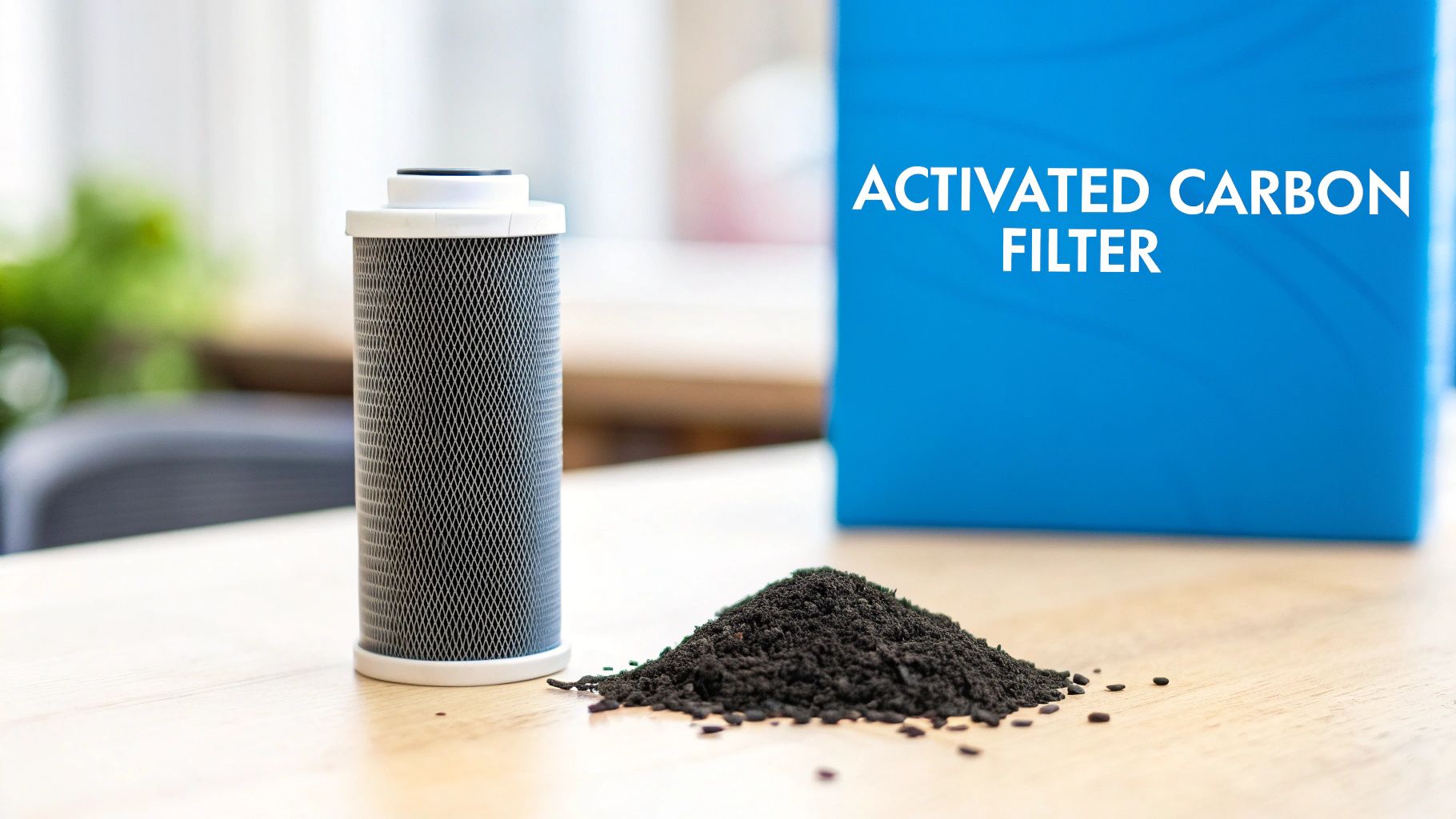
An activated carbon filter cartridge and a pile of carbon granules sit next to a box labeled 'ACTIVATED CARBON FILTER'.

Every tiny crevice and passage you see in that image multiplies the surface area available for chlorine to grab onto, ensuring it's stripped out of the water before it can cause any trouble.

Why This Pre-Filter Is Not Optional

This carbon pre-filter stage is absolutely non-negotiable in a home RO system. Chlorine is a powerful oxidizer—that’s what makes it great for killing bacteria in city water, but it's also what makes it incredibly destructive to the delicate polyamide material of an RO membrane.

Without the carbon pre-filter, chlorine would literally burn microscopic holes right through the membrane. This damage would completely ruin the most expensive part of your RO system and let all sorts of other contaminants sneak through, defeating the whole purpose of having a filter in the first place.

This is why understanding will reverse osmosis remove chlorine means looking at the entire system. The carbon filter is the essential bodyguard, clearing out the threat so the RO membrane can do its job safely and effectively.

Granular vs. Solid Block Carbon Filters

When you're shopping for a home RO system, you'll generally see two types of carbon pre-filters. They look a little different but both get the same critical job done.

  • Granular Activated Carbon (GAC): These filters are filled with loose, coffee-ground-like granules of carbon. Water simply flows through the loose media, which offers a huge surface area for adsorption. They're fantastic for chlorine removal and getting rid of bad tastes and odors.
  • Solid Carbon Block: These are made from finely powdered carbon that’s been compressed into a solid block. They tend to provide even finer filtration, often coming with a micron rating that means they can trap sediment in addition to chlorine. Because the water is forced through the dense block, it gets more contact time with the carbon, which many consider to be a bit more thorough.

In the end, both GAC and carbon block filters are extremely effective at their primary mission: protecting your RO membrane from chlorine. Any high-quality home RO system will have one of these right at the front, guaranteeing you get pure, great-tasting water for years to come.

The RO Membrane: The Heavy Lifter of Water Purification

Once the carbon pre-filter has done its job and neutralized the chlorine, the real star of the show can get to work. The reverse osmosis membrane is what takes your water from simply being "filtered" to being genuinely pure. This is where the heavy lifting happens, targeting the stubborn, microscopic contaminants that most other filters can't touch.

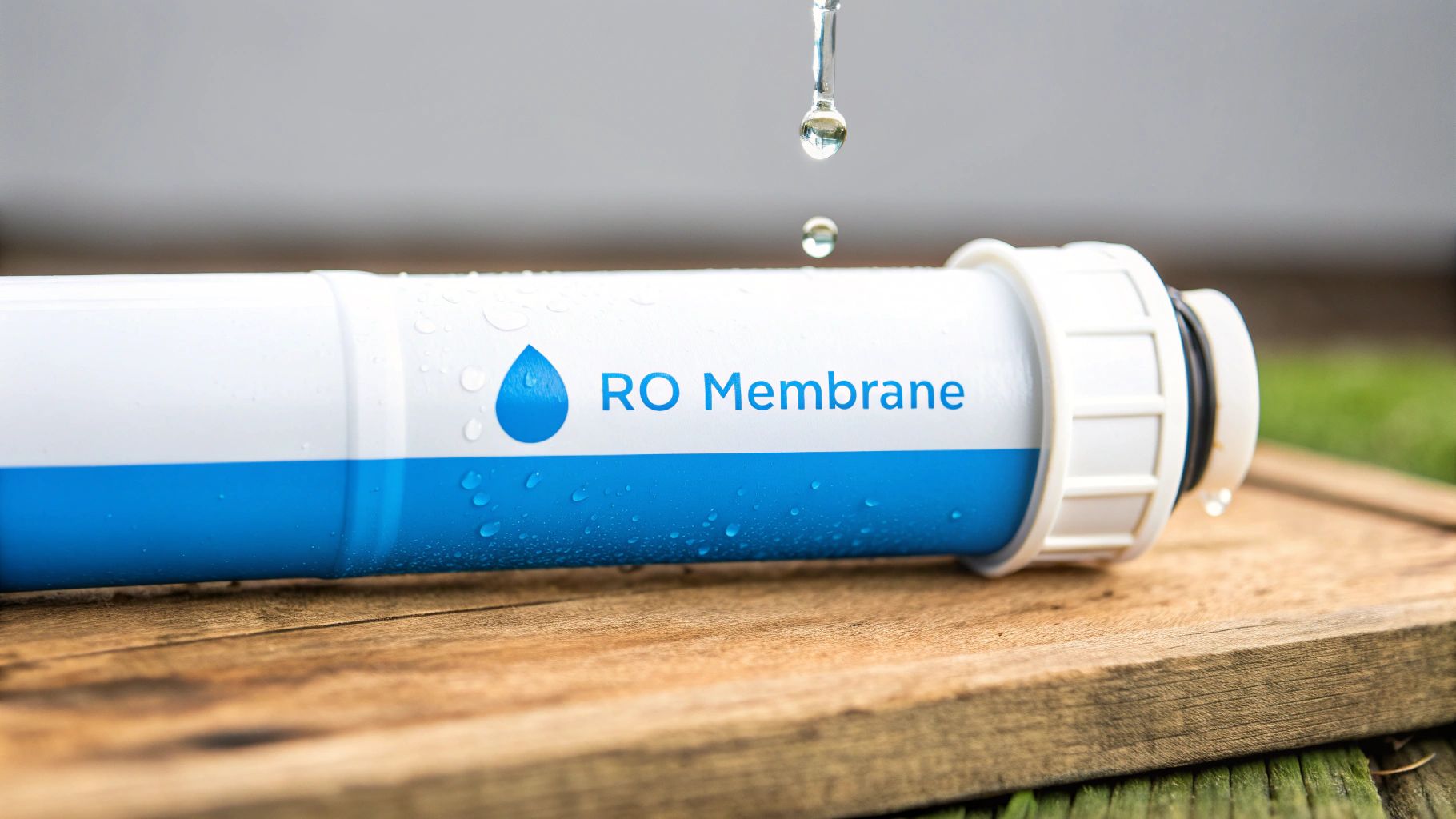
A white and blue RO Membrane filter with water dripping on it, resting on a wooden surface.

Think of the RO membrane as an incredibly exclusive gatekeeper for your home's water supply. It’s a tightly wound sheet of material with pores so tiny—around 0.0001 microns—that only water molecules can get an invitation to pass through.

Just how small is that? It's about 500,000 times smaller than a single strand of human hair. Nothing but pure H₂O is getting past this bouncer.

How Pressure Does the Hard Work

Your home’s water pressure provides the force needed to push water molecules through this semipermeable membrane. While pure water squeezes through, anything larger is physically blocked and left behind. It’s a surprisingly simple yet profoundly effective process.

This is how the membrane rejects a massive list of unwanted guests in your water, delivering unparalleled purity.

If the carbon filter is the bodyguard that handles the obvious threat (chlorine), the RO membrane is the high-tech security system that scans for everything else. It separates pure water from a whole host of dissolved contaminants with incredible precision.

The contaminants that get rejected don't just build up and clog the system. Instead, they’re mixed into a small amount of wastewater (called brine) and flushed right down the drain. This keeps the membrane clean and efficient, ready for the next drop.

What the RO Membrane Really Removes

With chlorine out of the way, the membrane can focus on the contaminants that are often the most difficult to remove and potentially the most harmful. This is what truly separates RO from basic carbon or sediment filters you might find at the hardware store.

Here’s a shortlist of what the RO membrane is designed to eliminate from your drinking water:

  • Heavy Metals: Lead, arsenic, mercury, and cadmium don’t stand a chance.
  • Dissolved Solids (TDS): This includes things like salts, nitrates, and fluoride, which are all stripped away.
  • "Forever Chemicals": The membrane is one of the most effective ways to remove emerging contaminants like PFAS, microplastics, and trace pharmaceuticals.

By letting the carbon filter handle the chlorine first, the RO membrane is protected and can perform at its best for much longer. This teamwork is why a complete RO system can confidently eliminate chlorine while also tackling hundreds of other contaminants, giving you the purest water possible right from your kitchen tap.

Chlorine vs. Chloramine: Understanding Your Water Supply

Just when you thought chlorine was your main concern, another player has entered the game for many homeowners. A growing number of cities and towns—now over 20% in the U.S.—have made the switch from standard chlorine to a compound called chloramine to treat their water.

This change has some big implications for how you should filter the water in your home.

Chloramine is what you get when you mix chlorine with ammonia. It's a more stable compound, which means it lasts longer as it travels through the city's pipe system. While that's great for the municipality, that same stability makes chloramine a much tougher nut to crack for most home water filters.

Glass vial and blue box with 'CHLORINE vs CHLORAMINE' text discussing water treatment.

This is why it's so important to know what's in your water. A standard activated carbon pre-filter is fantastic at grabbing chlorine, but it really drops the ball when it comes up against the tough chemical bond in chloramine.

The Problem with Standard Carbon Filters

Think of a standard carbon filter like a magnet specifically designed to attract and hold onto chlorine. It works great for that one job. But when chloramine flows by, that magnet just doesn't have the right kind of pull. The filter gets overwhelmed and stops working effectively in no time.

If your water has chloramine, a standard carbon pre-filter won't do enough to protect your RO membrane. This can cause the membrane to fail way too early, torpedoing your system's performance and letting other contaminants slip right on through.

So, what's the fix? You need a filter that's built for the job.

The Solution: Catalytic Carbon

The answer is a special type of filter media called catalytic carbon. This isn't just a slightly beefed-up version of activated carbon; it's engineered from the ground up to break the stubborn bond between chlorine and ammonia. It acts as a catalyst, triggering a chemical reaction that dismantles the chloramine molecule.

Here’s a quick look at how the two filter types stack up against these disinfectants:

Filter Type Effective Against Chlorine? Effective Against Chloramine?
Standard Activated Carbon Yes No (Very limited)
Catalytic Carbon Yes Yes

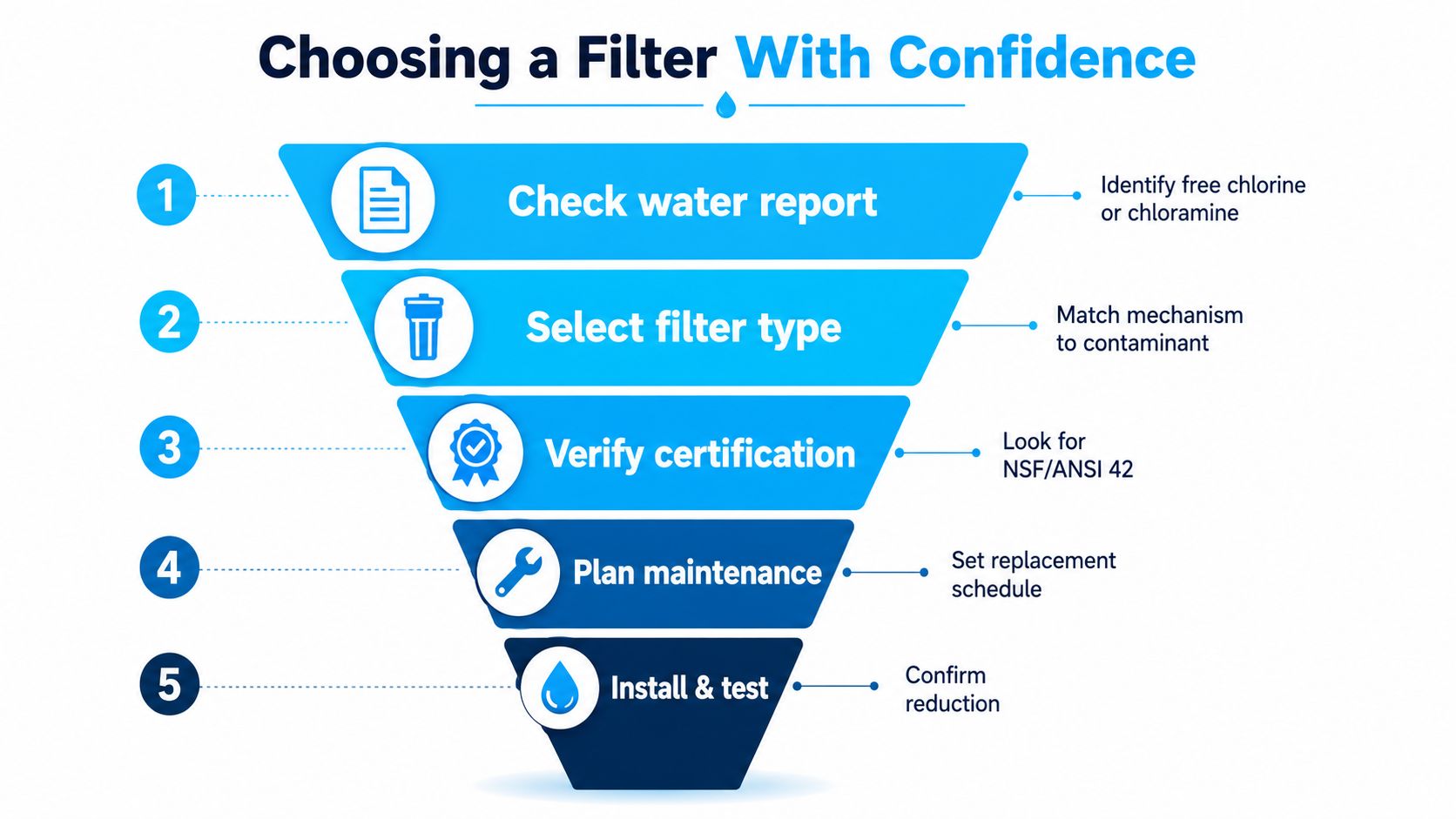
Before you pick out a home RO system, you absolutely need to find out what your local water utility uses. You can usually get this info from your city’s annual water quality report, or you can just give them a call. Knowing whether you're dealing with chlorine or chloramine is the critical first step to ensuring your system will actually do its job and remove these chemicals from your home's water.

Comparing RO Against Other Filtration Methods

Walk into any home improvement store, and the wall of water filters is enough to make your head spin. You’ve got pitchers, faucet-mount gadgets, and a dozen other options. So, where does a reverse osmosis (RO) system actually fit in for a homeowner?

While most of those simpler filters do a decent job of making your tap water taste less like a swimming pool, that's pretty much where their job ends. They're a one-trick pony. This is where a home RO system really starts to shine.

Think of it this way: a basic pitcher or faucet filter is like a bouncer at a club. It checks for the most obvious problem—in this case, the taste and smell of chlorine—and lets everything else slide. They use a simple layer of carbon, make the water more drinkable, and call it a day.

A reverse osmosis system, on the other hand, is the full-on Secret Service detail for your water. It doesn’t just deal with the obvious threat; it runs a comprehensive security check to handle all the invisible troublemakers.

A Head-to-Head Comparison

The difference in what these filters can do is night and day once you look past just chlorine. While the simpler options are focused on a single problem, RO systems are engineered from the ground up to be a complete water purification solution for your home.

Sure, a standard carbon filter can knock out 85-95% of chlorine, and a pitcher filter might get you 75-90% of the way there. But an RO system goes further, removing over 95% of chlorine while also eliminating up to 98% of arsenic, 95% of lead, and 90-99% of nasty PFAS "forever chemicals." You can see the full list of contaminants an RO system handles on softprowatersystems.com to get the whole picture.

The real takeaway here is that while lots of filters can make your water taste better, an RO system is one of the few that provides true purification. It gets rid of the chlorine, then keeps going to tackle the heavy metals, dissolved solids, and other contaminants the others just can't touch.

To lay it all out, let's put these systems side-by-side. This simple table makes it crystal clear where each filter excels and where it comes up short.

Chlorine Filter Comparison RO vs Other Methods

When you're shopping for a chlorine filter, it helps to see exactly what you're getting for your money. Here's a quick rundown of the most popular options for home use.

Filter Type Chlorine Removal % Removes Other Contaminants? Average Cost
Water Pitcher Filter 75-90% Very limited (some sediment, maybe zinc) $20 – $50
Faucet-Mount Filter 85-95% Limited (often lead and some VOCs) $30 – $70
Reverse Osmosis System >95% Yes (heavy metals, TDS, PFAS, etc.) $200 – $600+

As you can see, asking if RO removes chlorine is really just scratching the surface. Its true value is in its power to do so much more, giving you a level of protection and peace of mind that single-stage filters simply can't offer for your home.

Keeping Your RO System Running Smoothly

Knowing how your reverse osmosis system works is one thing, but keeping it in top shape is how you get years of pure, fantastic-tasting water. A little bit of routine care goes a very long way in protecting your investment in your home's water quality.

When you're shopping for a system, keep an eye out for official certifications. These aren't just marketing fluff; they're your guarantee of performance. Specifically, you want to see NSF/ANSI 42 certification, which confirms the system is effective at reducing chlorine, taste, and odor. On top of that, NSF/ANSI 58 is the gold standard for the overall performance of RO systems, verifying their claims for reducing a whole host of contaminants.

Choosing a certified system means you're not just taking a manufacturer's word for it. You're buying a product that has been independently tested and proven to meet strict public health and safety standards.

Your Simple Maintenance Checklist

Once your system is up and running, the maintenance is actually pretty simple. It mostly just boils down to swapping out the filters on a regular schedule. If you let this slide, you'll start to see reduced water flow, off-tastes, and—worst of all—you could damage the delicate RO membrane.

Here are the dead giveaways that it’s time for a filter change:

  • Slower Water Flow: If your RO faucet has gone from a steady stream to a disappointing trickle, that’s a classic sign your pre-filters are clogged up and need to be replaced.
  • A Change in Taste or Odor: The return of that all-too-familiar "swimming pool" smell is a sure sign your carbon pre-filter is spent and isn't pulling chlorine out of the water anymore.

The easiest way to stay on top of this is to just set a calendar reminder to check your filters every six to twelve months. Sticking to a schedule is the single best thing you can do to make sure your system keeps removing chlorine and other gunk for years to come.

For more pro tips on system upkeep, check out the comprehensive advice on water filter maintenance from our specialists. This simple routine protects your system and guarantees the pure water you expect.

Got Questions About RO & Chlorine? We've Got Answers.

We get a lot of questions from homeowners trying to figure all this out. Here are some of the most common ones, answered straight and simple.

Will Reverse Osmosis Get Rid of That Chlorine Smell?

You bet. That "swimming pool" odor and weird chemical taste you get from the tap? That's all chlorine. The activated carbon filter that comes before the RO membrane is a superstar at grabbing those chlorine compounds right out of the water.

It completely knocks out the taste and the smell, giving you nothing but clean, fresh-tasting water right in your kitchen.

Can I Test My Water to Make Sure the Chlorine is Actually Gone?

Absolutely, and you don't need a science degree to do it. You can pick up some simple DPD test strips or drops—the same kind used for pools and spas—at most hardware stores. They're cheap and easy to use.

Just test a sample from your kitchen tap and then another from your RO faucet. When your RO water shows a reading of zero, you know your system is doing its job perfectly.

Is It Okay to Use an RO System With a Water Softener?

Not just okay—it's one of the best things you can do for your home's water system. A water softener's job is to remove hard minerals like calcium and magnesium, which are notorious for building up scale and wrecking the delicate RO membrane.

Think of the water softener as a bodyguard for your RO system. By letting the softener tackle the hard minerals first, you protect the most critical (and expensive) part of your reverse osmosis unit. This little bit of teamwork helps the RO membrane last longer and keeps the whole setup running at peak efficiency for years to come.


Here at Water Filter Advisor, our whole goal is to give you clear, honest, research-backed advice so you can feel good about the water in your home. Check out our detailed guides and reviews to find the right water filter for your family at https://www.waterfilteradvisor.com.

Does Reverse Osmosis Remove Chlorine From Your Water?

Yes, a reverse osmosis (RO) system is a powerhouse when it comes to getting chlorine out of your water. But here’s the twist: the famous RO membrane, the star of the show, isn't the component doing the chlorine-busting work.

The real MVP is an unsung hero—the activated carbon pre-filter that comes with every complete RO system. It’s the bouncer at the club door, handling all the chlorine before the water gets anywhere near the delicate, high-tech membrane.

Why the Pre-Filter is the Real Star of the Show

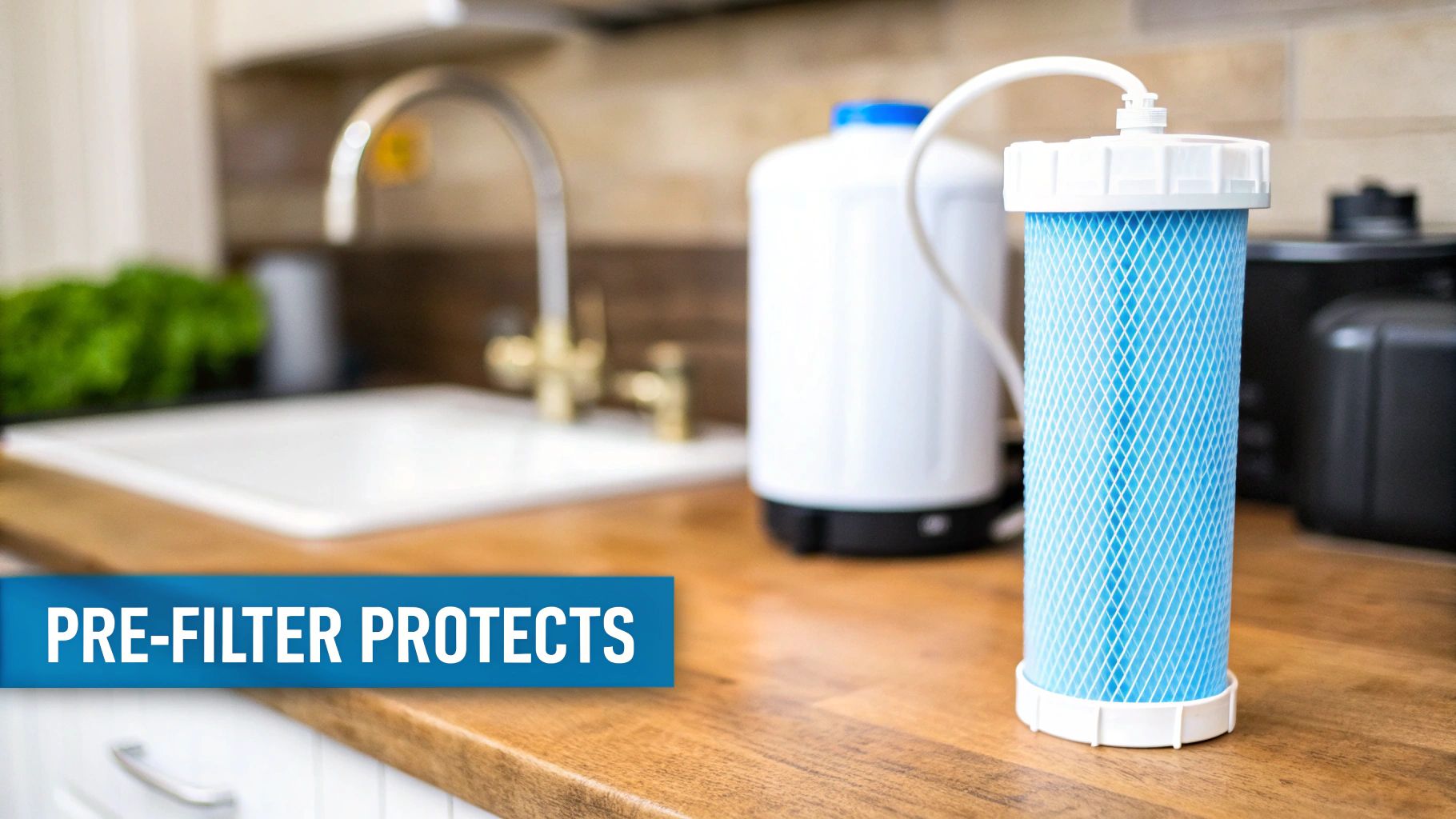
A blue pre-filter for water purification stands on a wooden kitchen counter next to a sink.

The water flowing from your kitchen tap has been treated with chlorine to kill off nasty bacteria and viruses—a standard public health practice that keeps us safe. While this is great for getting water safely to your home, it leaves behind that distinct "swimming pool" taste and smell.

Even worse, that same chlorine is public enemy number one for the heart of your RO system.

A proper home RO setup is a multi-stage affair, and it's designed this way for a very good reason. Think of the carbon pre-filter as a bodyguard for the RO membrane, neutralizing threats before they can cause any damage.

The Critical Role of Carbon Prefiltration

That first filter your tap water hits is typically an activated carbon block. Imagine it's a super-sponge with a massive, porous surface area that acts like a powerful magnet for chlorine. Through a process called adsorption, it grabs onto and neutralizes the chlorine molecules, stopping them in their tracks.

This isn't just a bonus feature; it's essential for the system's longevity. Chlorine is an oxidizer, meaning it would chemically burn and shred the thin-film composite RO membrane over time, completely ruining it.

A reverse osmosis system without a functioning carbon pre-filter is a system on a fast track to failure. Protecting the membrane is the single most important job of the pre-filtration stage.

So, while the RO system as a whole gets rid of chlorine, the credit really belongs to its hardworking carbon pre-filter.

You can count on this process being incredibly effective. Most residential RO systems with a standard carbon pre-filter will remove over 95% of chlorine. High-end systems can push that number up to an impressive 99–99.5%.

Considering that city water is usually treated with 0.2–1.0 mg/L of chlorine, this pre-filter step is more than enough to protect your system and give you fantastic-tasting water. You can learn more about the specifics of chlorine filtration from Island Well Service.

Chlorine Removal At A Glance: RO vs. Other Filters

It helps to see how a complete RO system stacks up against other common water filters when it comes to chlorine. While many methods work, they achieve it in different ways.

Filtration Method Typical Chlorine Removal Rate Key Mechanism
Reverse Osmosis System 95% to 99%+ Adsorption via carbon pre-filter
Activated Carbon Filter 95% to 98% Adsorption
KDF Filter 95% to 99% Redox (chemical reaction)
Catalytic Carbon Filter 98% to 99%+ Enhanced adsorption

As you can see, the carbon pre-filter in an RO system puts its performance right up there with dedicated chlorine filters. The main difference is that the RO system goes on to remove hundreds of other contaminants, too.

Understanding Why Chlorine Is The Membrane's Worst Enemy

To really get why reverse osmosis systems are built the way they are, you have to look at the relationship between chlorine and the RO membrane. It’s not just a minor tiff; it’s a full-on chemical assault that can wreck your entire filtration system. Without a pre-filter standing guard, the heart of your system gets destroyed in a shockingly short time.

Modern RO membranes are typically made from a material called Thin Film Composite (TFC). It's an incredible piece of engineering—a multi-layered polymer sheet rolled up like a scroll. It’s designed with microscopic pores, about 0.0001 microns wide, that are just big enough for water molecules to pass through while blocking almost everything else.

The Science Of Membrane Damage

This high-tech material is fantastic at its job, but it has one major kryptonite: it's extremely vulnerable to oxidation. Chlorine, the same chemical your city uses to disinfect the water supply, is a powerful oxidizing agent. When chlorinated water hits a TFC membrane directly, the chlorine literally attacks and burns the delicate polymer surface.

Think of it this way: your RO membrane is like a finely woven, high-tech piece of silk. Pouring chlorinated water onto it is like dumping bleach straight onto that fabric. The silk doesn’t just get a stain; its very fibers start to dissolve, weaken, and tear apart on a microscopic level.

This oxidative damage rips tiny tears and stretches the existing pores in the membrane. These new, bigger holes become a superhighway for all the contaminants the membrane was supposed to block in the first place.

Once a membrane is damaged by chlorine, it cannot be repaired. The damage is permanent and irreversible, allowing contaminants like heavy metals, salts, and dissolved solids to pass straight through into your drinking water.

The Consequences Of Chlorine Exposure

A membrane that's been hit by chlorine doesn't just work poorly—it fails spectacularly. Here’s what happens when that critical barrier is broken:

  • Contaminant Breakthrough: The system completely loses its ability to remove dissolved solids. Your water quality tanks as contaminants that were once blocked start pouring right out of your tap.
  • Reduced System Efficiency: A damaged membrane can't maintain the pressure needed for reverse osmosis to work. This leads to way more wastewater going down the drain and less purified water for you.
  • Costly Replacements: The RO membrane is the most complex and expensive part of the whole system. Letting chlorine get to it means you're looking at a big replacement bill much sooner than you ever should.

Ultimately, letting chlorine reach the RO membrane defeats the whole purpose of owning the system. You’re not just risking slightly less pure water; you're actively destroying its most important component, turning a powerful purification machine into little more than a leaky filter. This is precisely why the carbon pre-filter isn't just a nice-to-have—it's absolutely essential for protecting your investment.

Meet The Unsung Hero: The Carbon Pre-Filter

We’ve seen how chlorine can absolutely wreck a reverse osmosis membrane, but how do RO systems prevent this catastrophe? It’s all thanks to an often-overlooked component that does the heavy lifting.

While the RO membrane gets all the credit for its precision filtering, the real star of the chlorine removal show is the activated carbon pre-filter. Think of it as the system's bodyguard, working tirelessly to neutralize chlorine before it ever gets a chance to cause damage.

This little powerhouse works through a fascinating process called adsorption. This isn't the same as absorption, where a sponge soaks up water. Adsorption is all about molecules sticking to a surface.

Picture the activated carbon inside the filter as a massive, porous coral reef with an unbelievable amount of surface area. In fact, just one gram of activated carbon can have a surface area as large as a football field. As chlorinated water rushes through, the chlorine molecules are drawn to this huge surface and get trapped in all its nooks and crannies, sticking like tiny magnets.

Why Adsorption is a Game-Changer

This process is incredibly good at its job. The carbon pre-filter essentially sacrifices itself by adsorbing the vast majority of chlorine, keeping the delicate and expensive RO membrane safe and sound downstream. Without this critical first step, the entire system would be doomed to fail.

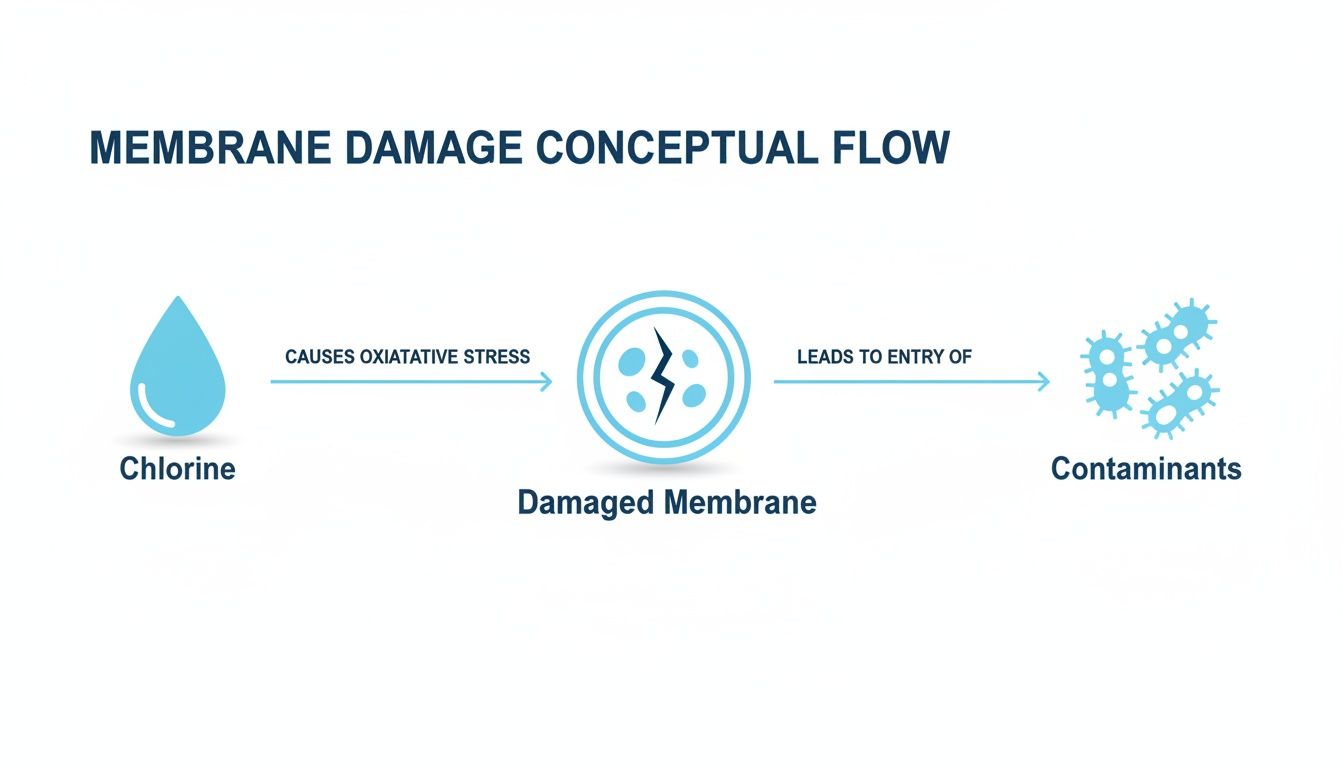
The diagram below shows exactly what happens when chlorine gets past this protective shield and reaches the membrane.

Flow diagram illustrating how chlorine causes oxidative stress, leading to membrane damage and contaminant entry.

It’s a simple but critical chain of events: a worn-out pre-filter leads directly to a damaged membrane, which ultimately lets contaminants sneak into your drinking water.

Two Key Types of Carbon Pre-Filters

When you’re shopping for a home RO system, you'll mainly run into two kinds of carbon pre-filters. Knowing the difference between them is key to understanding how well a system will protect itself from chlorine.

If you ever need help comparing systems or figuring out what’s best for your home, our experts at Water Filter Advisor have put together a ton of helpful water filtration advice to guide you.

Carbon Pre-Filter Showdown: GAC vs. Carbon Block

To really understand the difference, let's break down the two main players you'll find in home RO systems: Granular Activated Carbon (GAC) and Carbon Block filters.

Feature Granular Activated Carbon (GAC) Carbon Block
Structure Loose granules of activated carbon, similar to coarse sand or coffee grounds. Powdered carbon that has been compressed into a solid, dense block.
Water Flow Water flows around the loose granules, which can sometimes create channels and bypass some media. Forces water through the entire dense block, ensuring maximum contact time.
Performance Effective, but "channeling" can sometimes lead to slightly less consistent chlorine removal over time. Highly consistent and thorough removal of chlorine and other contaminants due to its uniform structure.
Contaminant Removal Primarily removes chlorine, taste, and odors. Less effective on very fine sediment. Excellent for chlorine, taste, odors, and can also filter out finer sediments and some VOCs.
Typical Lifespan Generally requires more frequent replacement due to potential for channeling. Often has a longer, more predictable service life because the entire media is used evenly.

Ultimately, for the best protection against chlorine, systems that include at least one carbon block pre-filter are the superior choice. Their solid design prevents water from finding an easy way out, ensuring every drop gets treated thoroughly. Knowing this helps you look past the marketing and see how well a system is truly built to last.

What Happens When Your Water Contains Chloramine

Just when you think you've got chlorine figured out, some cities throw a curveball: chloramine. This isn't just a fancy name for the same thing. It's a totally different chemical, made by mixing chlorine with ammonia.

Water suppliers love chloramine because it's tough and stable. It keeps doing its job disinfecting water as it travels through miles of pipes to get to your tap. That's great for public health, but its stubborn nature creates a real headache for most water filters.

Why Standard Carbon Filters Struggle

Your run-of-the-mill activated carbon pre-filter, which is a rockstar at grabbing free chlorine, just can't keep up with chloramine. The chemical bond holding the chlorine and ammonia together is incredibly strong, and simple adsorption just doesn't cut it.

Here’s a good way to think about it: a standard carbon filter is like a magnet for loose chlorine particles floating in the water. But chloramine is like chlorine that's been locked inside a chemical cage with ammonia. Your magnet can't just snatch it out; you need a special key to break the lock first.

If your city uses chloramine and your RO system only has a standard carbon filter, you're rolling the dice with your RO membrane. The pre-filter simply won't remove enough chloramine, letting it slip through and chew away at the membrane just like free chlorine would.

This is a huge deal for homeowners. You can't just buy a system that says "chlorine removal" and assume you're covered for chloramine, too. You need a filter specifically designed to break that bond.

The Solution: Catalytic Carbon

To really go to war with chloramine, you need to upgrade your ammo to catalytic carbon. This isn't just a re-branded filter. It's a special type of activated carbon that's been treated to give its surface a reactive charge.

This "catalytic" surface actively forces a chemical reaction to happen, shattering that stubborn bond between chlorine and ammonia. Once the cage is broken, the filter can easily grab the now-free chlorine and deal with the leftover ammonia.

Catalytic carbon is a complete defense system in one package:

  • It Breaks the Bond: First, it acts like the "key" to unlock the chloramine molecule.
  • It Adsorbs the Chlorine: Then, it works just like a standard carbon filter, pulling the free chlorine out of the water.
  • It Handles the Ammonia: Finally, it helps convert what’s left of the ammonia into harmless compounds that won't mess with your water quality.

For anyone living in an area with chloramine-treated water, picking an RO system with a catalytic carbon pre-filter isn't optional—it's essential. It is the only reliable way to protect your membrane and ensure your drinking water is truly free from these disinfectants. Anything less is like bringing a knife to a gunfight.

Keeping Your System's Chlorine Shield Strong

A man replaces a water filter in an under-sink reverse osmosis system beneath a kitchen counter.

Putting a reverse osmosis system in your home is a huge step toward better water, but its power to block chlorine isn't something you can just set and forget. That carbon pre-filter—your system's personal bodyguard against chlorine—is a consumable part. Think of it like the oil filter in your car; it needs to be changed regularly to keep the whole machine running right and protect the really expensive parts down the line.

Honestly, skipping this one simple task is the number one reason I see RO systems fail way too early. Once that carbon filter’s huge internal surface area gets clogged up with chlorine and everything else it has absorbed, it just stops working. This leaves your very delicate RO membrane totally exposed to the one chemical it was never built to handle.

Your Most Important Maintenance Task

If you do nothing else, the single most critical job for keeping your RO system alive is replacing the pre-filters on schedule. For most homes, this means you'll be swapping out the carbon and sediment filters every 6 to 12 months.

Picture that carbon filter as a sponge with a limited capacity. Once every microscopic pore is full, it physically can't grab another molecule of chlorine. From that moment on, chlorinated water just flows right past it and starts its destructive assault on the RO membrane.

Your maintenance schedule isn't just a friendly suggestion—it's the lifeline that protects your investment. A few dollars spent on new pre-filters can easily save you from a costly membrane replacement and ensure your system keeps delivering pure, chlorine-free water.

Sticking to the schedule is the absolute best way to guarantee your system's chlorine shield stays strong year after year.

How to Know When It's Time for a Change

While following the manufacturer's timeline is your safest bet, you can also use your own senses to tell when a filter is on its last legs. You just need to be on the lookout for a few key signs that chlorine is starting to slip past your system's defenses.

These clues mean your pre-filter is tapped out and needs to be replaced right away:

  • The Return of the Chlorine Smell: The most obvious sign is that faint but unmistakable swimming pool scent coming back to your purified water.
  • A Change in Taste: Your RO water should taste clean and crisp. If it starts to have a slight chemical or "tap water" flavor again, that's a red flag.
  • Visible Sediment: Noticing cloudy water or little particles could mean the sediment pre-filter is also clogged, which puts even more stress on the carbon filter.

If you want to be extra sure, grab some simple and cheap chlorine test strips. Just dip one into a glass of your RO water for a quick visual check. If that strip changes color, you know for a fact chlorine is getting through, and it’s time to change that pre-filter immediately.

How To Choose The Right RO System For Your Home

Now that you understand how a reverse osmosis system protects itself, picking the right one should feel a lot less intimidating. You know the secret: the carbon pre-filter is the unsung hero that takes care of the chlorine. With that piece of the puzzle in place, you can shop with confidence.

Your first move should be to zoom in on the pre-filtration stages of any system you're considering. Don't just glance at it—really look. You want to see models that specifically call out having at least one carbon block pre-filter. While a granular activated carbon (GAC) filter is okay, the tightly packed structure of a carbon block is way better. It forces the water to have more contact time with the carbon, which is key for completely wiping out the chlorine.

Check For The Right Certifications

How do you know if a system really does what it claims? Look for a crucial third-party seal of approval: NSF/ANSI 42. This is the specific industry standard for a filter’s ability to handle "aesthetic" issues like chlorine, funky tastes, and weird smells. When you see this certification, it means an independent lab has tested it and confirmed it actually works.

An NSF/ANSI 42 certification isn't just marketing fluff. It’s your proof that the pre-filters are up to the task of removing chlorine, which in turn protects the delicate RO membrane and gives you great-tasting water.

Address Chloramine If Necessary

Before you pull the trigger on a purchase, do one last bit of homework. Find out if your local water utility uses chloramine instead of just chlorine. This is a common practice. You can usually find this info on their website with a quick search, or just give them a call.

If they do use chloramine, you absolutely must get a system that has a catalytic carbon pre-filter. A standard carbon filter just won’t cut it against chloramine, and your expensive RO membrane will be left exposed to damage. By confirming what’s in your water first, you can match it to the right pre-filter technology and buy a system that’s truly built to last.

Common Questions Answered

Even after getting into the weeds of how reverse osmosis systems deal with chlorine, some specific questions always seem to come up. Let's get you some quick, clear answers to help you make the right call.

Does Reverse Osmosis Get Rid of Chlorine Taste and Odor?

You bet. In fact, killing that "pool water" taste and smell is one of the first things you'll notice. This job falls squarely on the carbon pre-filter. It grabs onto the chlorine compounds that cause the nasty flavor, leaving you with nothing but crisp, clean water.

Can I Add a Carbon Filter to My RO System?

Yes, and it's a super common maintenance step. If your current RO system isn't cutting it or you just want to beef up its chlorine defense, you can easily swap out the pre-filter cartridges. A great move is to upgrade from a standard Granular Activated Carbon (GAC) filter to a more solid carbon block filter for better performance and protection.

Your entire RO system's health really comes down to the pre-filters. Swapping them out on schedule is the single most important thing you can do to protect your investment.

How Long Does a Carbon Pre-Filter Last?

How long a carbon pre-filter lasts really depends on two things: how much chlorine is in your water and how much water your family uses. For most folks, you'll need to replace these filters every 6 to 12 months. A good carbon block filter might last a bit longer than a basic GAC one, but always stick to what the manufacturer says. Waiting too long is an expensive mistake you don't want to make.


Here at Water Filter Advisor, we're all about giving you the straight-up info you need to pick the best filtration setup for your family. Check out our detailed guides and reviews to find the right system for your home at https://www.waterfilteradvisor.com.

How Do I Dechlorinate Water for Better-Tasting Results

Ever notice that faint swimming pool smell coming from your tap? That’s not your imagination. It’s chlorine, a heavy-duty disinfectant used in municipal water systems to kill off nasty bacteria on its way to your home. While it's a hero for public health, its job is pretty much done by the time it reaches your faucet. From that point on, it’s just an uninvited guest that can mess with everything from the taste of your morning coffee to the health of your houseplants.

Ready to give chlorine the boot? Let's dive into how water filtration can give you purer, better-tasting water right from the tap.

Why Chlorine in Your Tap Water Is a Buzzkill

A kitchen faucet fills a clear glass with tap water, with a blue overlay stating 'TAP WATER CHLORINE'.

Chlorine is great at its day job—keeping our water safe. But having it in your home’s water brings along a few unwanted side effects. The most obvious is the impact on taste and smell. That distinct chemical note can turn a perfectly brewed cup of tea into a disappointment or make a simple glass of water taste… well, like a trip to the local pool.

Beyond your taste buds, chlorine can have real, tangible effects on your daily life. Many people find it dries out their skin and hair, leaving them feeling brittle and irritated after a shower. If you've ever wondered why your salon-fresh hair color fades so fast, the chlorine in your shower water is a prime suspect.

The Chlorine vs. Chloramine Showdown

Just to keep things interesting, many water treatment plants now use chloramine instead of chlorine. It’s a more stable compound made by mixing chlorine with ammonia. While that stability helps it disinfect water more effectively over long pipe runs, it also makes it a whole lot tougher to get rid of.

Here’s the breakdown you need to know:

  • Chlorine is a bit of a drama queen. It’s volatile and will naturally gas off and evaporate if you just let the water sit out.
  • Chloramine, on the other hand, is the stubborn, clingy type. It will not evaporate and needs specific filtration methods to be removed.

Figuring out which one your local utility uses is the first big step. You can usually find this info tucked away in your city’s annual water quality report.

Impact on Your Home and Hobbies

The need to ditch these chemicals goes way beyond just your drinking glass. That chlorinated water can wreak havoc on other parts of your life, too.

For anyone keeping fish, chlorine is public enemy number one. It can damage fish gills and wipe out the beneficial bacteria that keep a tank ecosystem healthy. Even home bakers aren't safe—chlorinated water can kill the delicate yeast in a sourdough starter, resulting in a sad, flat loaf.

This growing awareness has kicked off a huge demand for better water filtration. In fact, the global market for dechlorination is projected to jump from USD 1.5 billion in 2025 to a whopping USD 2.5 billion by 2035. You can dig into these market trends over at Future Market Insights. This surge shows just how many homeowners are looking for purer water for every part of their lives.

Simple DIY Methods for Dechlorinating Water

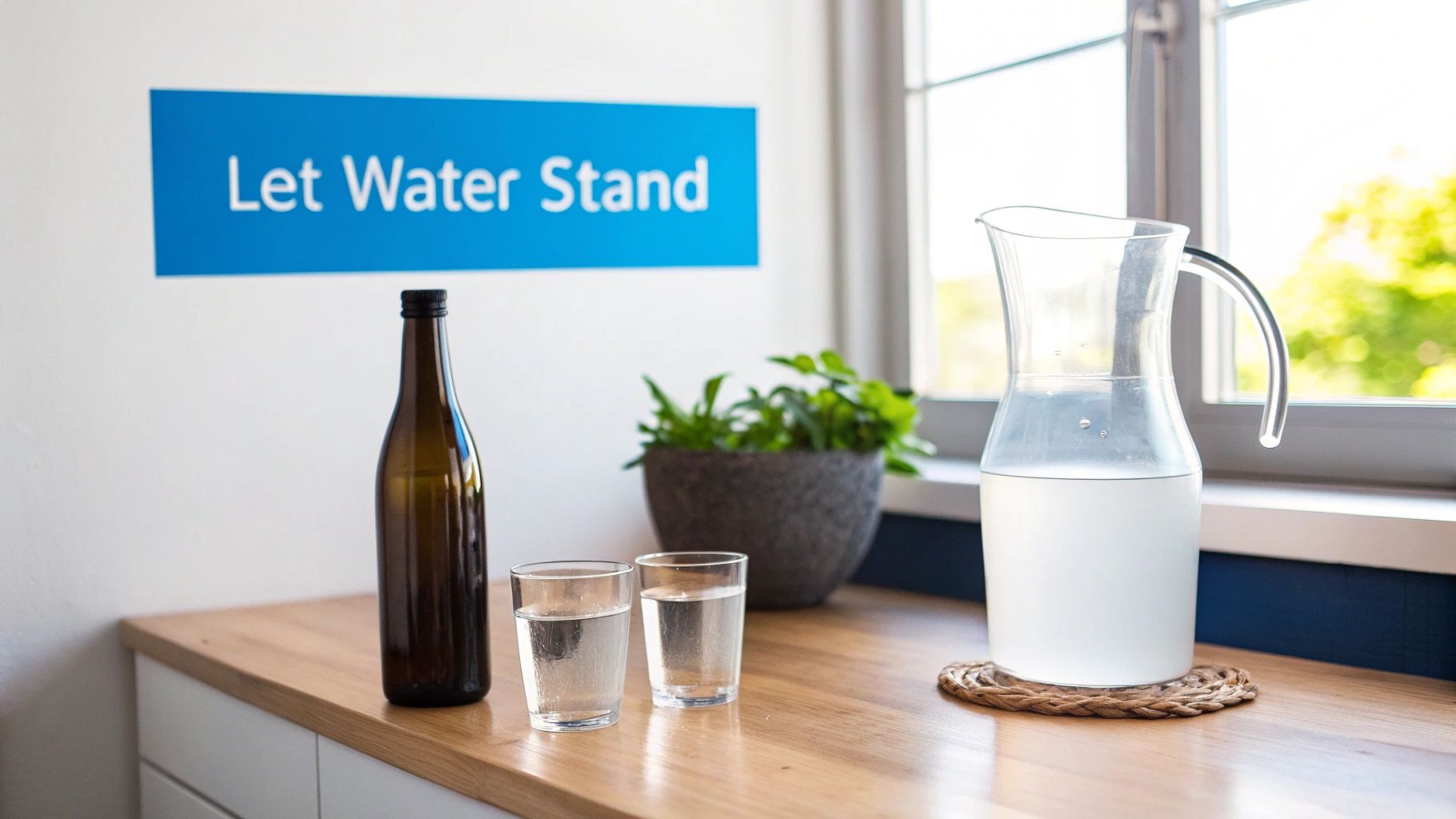
A kitchen counter with water bottles, glasses, a plant, and a 'Let Water Stand' sign.

If you're wondering "how do i dechlorinate water" but aren't ready to invest in a filtration system just yet, you're in luck. Some of the oldest methods are still effective for small jobs, like watering your plants or topping off a fishbowl.

These techniques really just come down to basic chemistry and a bit of patience. While they're not a whole-home solution, they're a good place to start.

Letting Water Stand and Off-Gas

The easiest trick in the book is aeration, which is just a fancy term for letting your water sit out. Chlorine is a volatile chemical, meaning it naturally wants to evaporate from water and escape into the air. You just have to give it time to do its thing.

For instance, filling a wide-mouthed pitcher and leaving it on the counter overnight will often do the trick. A larger surface area gives the chlorine more room to make a run for it. This process usually takes about 24 to 48 hours to get most of the chlorine out.

But there’s one huge catch to this simple method.

This only works if your tap water is treated with free chlorine. If your local water utility uses chloramine—that more stable blend of chlorine and ammonia—letting it stand will do absolutely nothing. Chloramine is designed to stick around and won’t just evaporate on its own.

This is exactly why you need to know what’s in your water before you start. Check your local water utility's annual report for that info. For a deeper dive into figuring out your water quality, you can find more water filter advice to help you test your supply.

Using Boiling to Accelerate Removal

Need chlorine-free water in a hurry? Boiling is your next best bet. It’s a more active approach that uses heat to force those unwanted chemicals out of the water.

  • For Chlorine Removal: A solid rolling boil for just 5-10 minutes is enough to drive off nearly all the free chlorine.
  • For Chloramine Removal: Chloramine is tougher. You’ll need to keep a vigorous, rolling boil going for at least 20-30 minutes.

While boiling is effective, it has drawbacks. The big one is energy cost—boiling gallons of water isn't practical for daily drinking. It also concentrates any other contaminants, like heavy metals, that might be left behind. While these methods work in a pinch, they highlight the convenience and effectiveness of modern water filtration systems.

Using Chemical Neutralizers Like Vitamin C

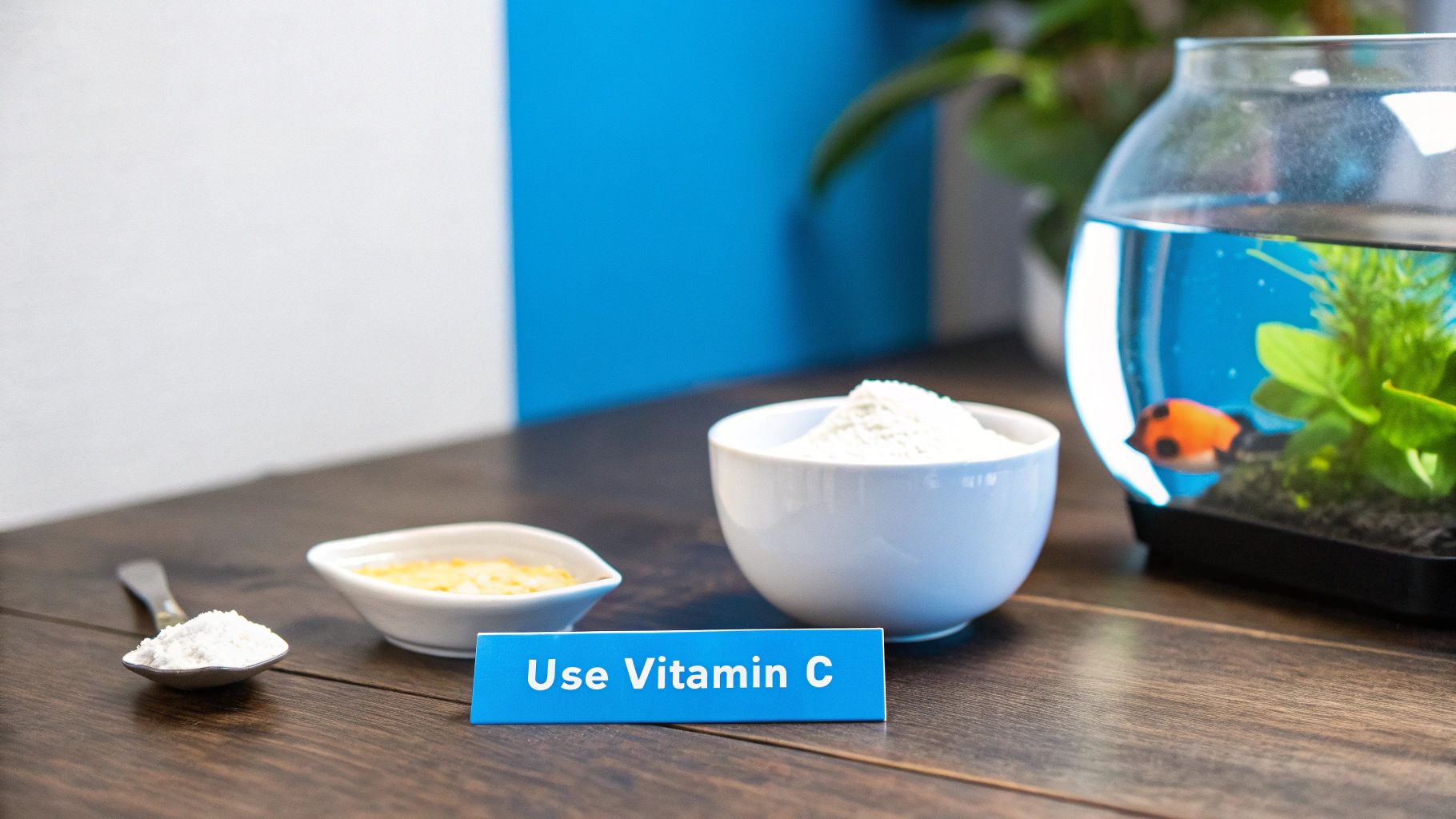
A table setup with white powder in bowls, a spoon, a 'Use Vitamin C' sign, and a fishbowl.

Let's be real, waiting 24 hours for water to dechlorinate on its own isn't always practical. When you need safe, chlorine-free water right now, chemical neutralizers can get the job done instantly.

I know the word "chemical" can sound a bit scary, but the most common option is probably sitting in your medicine cabinet right now: Vitamin C.

How Vitamin C Works Its Magic

Yep, good old ascorbic acid is a superstar when it comes to neutralizing both chlorine and its more stubborn cousin, chloramine. When you add a bit of Vitamin C powder to your water, it kicks off a super-fast reaction that turns chlorine and chloramine into harmless chloride. It's incredibly effective, and the best part is that it's totally safe.

Just be sure you're using pure ascorbic acid powder. Skip the flavored chewable tablets, as they're loaded with sugars and other stuff you don't want in your water.

The amount you need is surprisingly tiny. As a rule of thumb, about one teaspoon of ascorbic acid powder (around 4,000 milligrams) will treat a whopping 100 gallons of water. For something smaller, a tiny pinch is literally all it takes.

This makes it a great solution for specific tasks, but if you're looking for a hassle-free, automated solution for all the water in your home, a dedicated filtration system is the way to go.

Understanding Other Chemical Options

While Vitamin C is a fantastic option, you've probably seen another neutralizer on the shelves: sodium thiosulfate. This is the workhorse ingredient in most commercial water conditioners and has been trusted for decades. It's cheap and effective, but it's a chemical compound you wouldn't want to add to your drinking water.

For most people looking to improve the water in their homes, relying on manual additions isn't ideal. This is where modern water filtration technology truly shines, offering a permanent and effortless solution.

If you're tired of waiting for water to sit out or fiddling with chemical drops, it's time to look at the easiest, most reliable method out there: activated carbon filters. This isn't some niche trick; it's the gold standard in water filtration, and for good reason. It’s hands-down the most effective way to get clean, chlorine-free water throughout your home.

So, how does this magic work? It all comes down to a process called adsorption.

Picture each tiny granule of activated carbon as a super-porous sponge with an incredible amount of surface area. As water passes through, all the nasty stuff—chlorine, chloramine, and other chemicals that make your water taste and smell funky—gets stuck to the surface. What comes out the other side is just clean, crisp water.

What Makes Activated Carbon So Effective?

We're not talking about the charcoal briquettes for your grill. Activated carbon is specially treated with oxygen, which creates millions of microscopic pores between the carbon atoms. This gives it a ridiculously large surface area—a single gram can have more surface area than a football field!

This huge network of nooks and crannies acts like a powerful magnet for chlorine molecules. It’s fantastic at grabbing not just the easy-to-remove free chlorine, but also the more stubborn chloramine that methods like letting water stand can't touch. That makes it a complete filtration solution for pretty much any city water you'll encounter.

Finding the Right Carbon Filter for Your Home

Activated carbon filters come in all shapes and sizes, so you can definitely find one that fits your needs and budget, whether you're in a tiny apartment or a big family house.

Here are the most common types you’ll run into:

  • Pitcher Filters: The simplest starting point. They're perfect for renters or anyone who just wants better-tasting water for drinking. They're cheap to buy but require frequent cartridge changes.
  • Faucet-Mounted Filters: A small upgrade from a pitcher, these attach right to your kitchen faucet for filtered water on demand. They're convenient, but the filters are small and the flow rate can be slow.
  • Under-Sink Systems: Installed out of sight under your sink, these give you a dedicated faucet for top-notch filtered water. The filters last much longer, making them a really solid choice.
  • Whole-House Systems: This is the ultimate "set it and forget it" option. A large carbon filter is installed where your main water line enters your home, meaning every single drop of water is dechlorinated—for drinking, showering, laundry, you name it.

Getting chlorine out of water is a massive global industry. Driven by tight water quality regulations, the market for dechlorination is expected to jump from USD 1.6 billion in 2023 to USD 2.4 billion by 2030. You can dig into the data behind these trends over at Lucintel, which really shows how critical this filtration technology has become for homes and industries alike.

A Quick Look at the Costs and Upkeep

Your decision will probably come down to balancing upfront cost against long-term convenience. A water pitcher might only set you back $30, but the cost of replacement filters adds up.

On the other hand, a whole-house system is a bigger investment at first. But since its high-capacity filters can go for years before needing a swap, it often ends up being the more economical choice for homeowners who want pristine, chlorine-free water from every tap in the house.

Comparing Dechlorination Methods at a Glance

With so many options, it can be tough to decide which route to take. This table breaks down the most common methods to help you figure out what makes the most sense for your home.

Method Effective On Chlorine? Effective On Chloramine? Best For Cost & Effort
Aeration/Standing Yes No Small batches of water for plants, fish, or brewing. Free, but takes 24-48 hours and is slow.
Boiling Yes No Small, quick batches when you need chlorine-free water fast. Low cost (just energy), but labor-intensive.
Activated Carbon Yes Yes Drinking water, whole-house filtration, and aquariums. Moderate to high initial cost, but low long-term effort.
Vitamin C Yes Yes Instantly treating water for aquariums, gardening, or baths. Very low cost, requires precise measuring.
Sodium Thiosulfate Yes Yes Large volumes of water, like ponds and large aquariums. Very low cost, but can affect pH and requires careful handling.

Ultimately, there's a dechlorination method for every situation and budget. But for a truly hands-off, effective solution for your home, investing in a quality water filtration system is the clear winner for convenience, safety, and taste.

Choosing the Right Water Filtration System

Trying to pick the right water filter can feel overwhelming, but it doesn't have to be. The secret is to stop thinking about the hardware and start thinking about your actual needs. Once you dial in on your lifestyle and what you’re trying to solve, the right choice becomes much clearer.

What's your main goal? If you're renting and just want drinking water that doesn't taste like it came from a swimming pool, your needs are very different from a homeowner who's fed up with dry skin after every shower. Each problem has its own perfect filtration solution.

Point-of-Use vs. Point-of-Entry Systems

Your first big decision is where you want to treat your water. Do you need better water at one specific spot, or does your whole house need an upgrade? This choice splits the world of filters into two main camps.

  • Point-of-Use (POU) Filters: These guys treat water right where you’re about to use it. We’re talking about faucet-mounted filters, under-sink units, showerhead filters, and those classic water filter pitchers. They are fantastic for tackling a specific issue, like the taste of your drinking water, without a huge investment.

  • Point-of-Entry (POE) Systems: You’ll often hear these called whole-house systems. They’re installed right where the main water line comes into your home, filtering every single drop of water—from the shower to the washing machine. This is the go-to approach for widespread problems like chlorine-induced skin irritation or protecting your home’s plumbing.

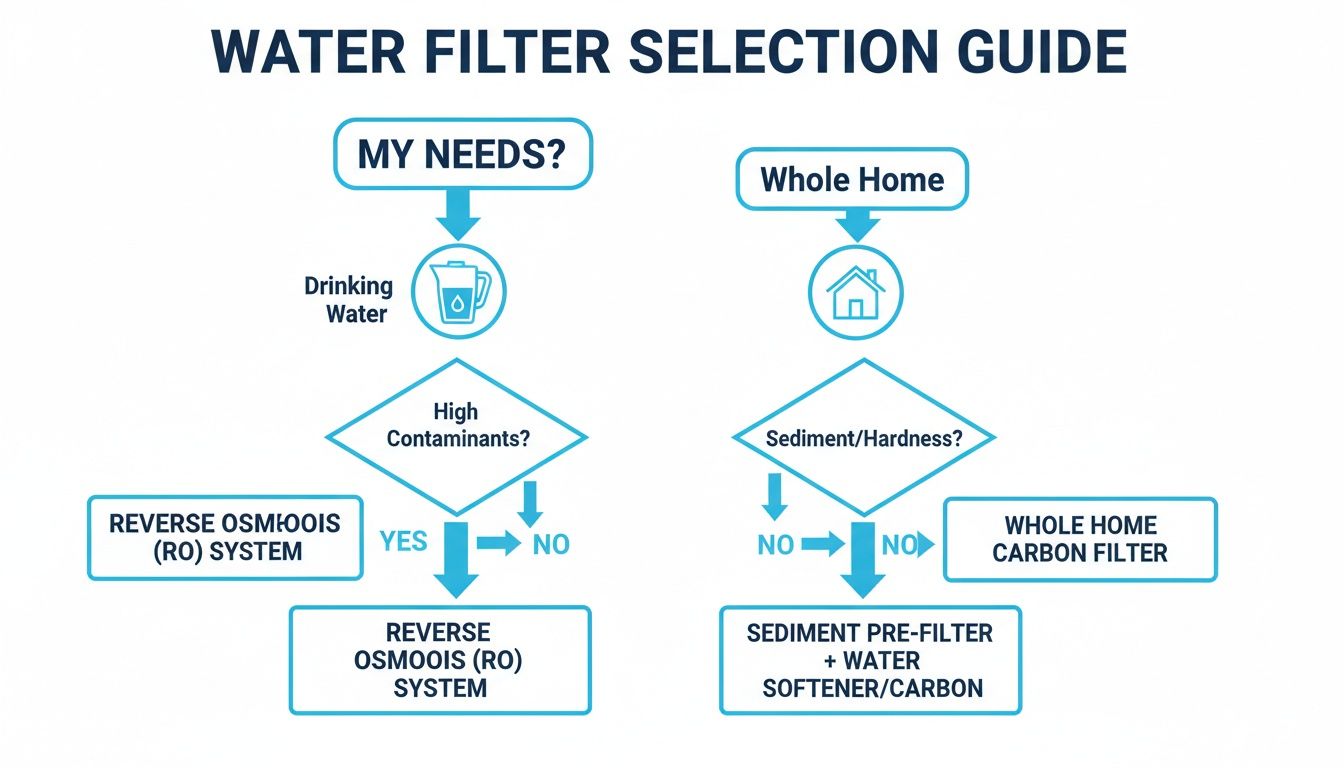
This handy flowchart can help you visualize the best path forward, from identifying your main issue to landing on the right type of filter for your home.

A water filter selection guide flowchart for drinking water and whole home needs, detailing RO, carbon filters, and water softeners.

As you can see, once you decide between spot-treating your drinking water or giving your entire home an overhaul, you can start drilling down into the specific filtration technology—like activated carbon or reverse osmosis—that will get the job done.

Matching a Filter to Your Life

Let’s get practical. If you’re a renter, a faucet filter or a high-quality pitcher gives you an instant and major upgrade to your drinking water with zero permanent changes.

On the other hand, if you own your home and have noticed your colorful clothes are fading way too fast, chlorine is almost certainly the culprit. In that scenario, a whole-house carbon filter is a smart investment. It protects your laundry, your skin, and your appliances all in one go. For a comprehensive treatment system, you might look into professional-grade solutions like the Brita Purity C Quell St C300 Water Filter.

Your choice ultimately boils down to three things: the problem you're solving, your budget, and how much installation and maintenance you're willing to handle. A POU filter is a low-cost, low-commitment starting point, while a POE system is the complete, long-term solution.

The demand for better water is growing fast. The market for dechlorination chemicals was valued at USD 1.37 billion in 2024 and is expected to jump to USD 2.54 billion by 2035, thanks to people like you wanting cleaner water at home. As regulations get stricter, you can bet the technology behind home filtration will only get better.

Look, you're going to have questions when you start digging into water filtration. It’s totally normal. Let's walk through some of the most common things people ask so you can choose your filter with confidence.

How Do I Know if My Water Has Chlorine or Chloramine?

The easiest way? Check your local water utility’s annual quality report. They're required to publish this, and you can usually find it on their website. It’ll tell you exactly what disinfectants they use.

If you want to test it yourself, grab some water test strips that measure both "free chlorine" and "total chlorine."

  • If the numbers for both are pretty much the same, you've got chlorine.
  • If your "total chlorine" reading is higher than your "free chlorine," that means you have chloramine.

This is a super important distinction. Simple methods, like letting water sit out, work great for chlorine but do absolutely nothing for chloramine, which requires a robust carbon filter.

Will a Standard Water Filter Pitcher Remove Chlorine?

Yes, for the most part. Almost all standard pitcher filters use activated carbon as their main filtering tool. This stuff is fantastic at adsorbing chlorine, which is why water from a pitcher filter almost always tastes and smells better right away.

But here's the catch: they aren't always great at removing chloramine. If your water report confirmed you have chloramine, you need to find a pitcher filter that is specifically certified for chloramine reduction. For anyone serious about making incredible coffee, the quality of your water is a game-changer; this guide to brewing exceptional coffee at home dives deeper into why the right water makes all the difference.

Pro Tip: Don't forget to change your filter cartridge on schedule! An old, clogged-up filter is useless for removing chlorine and can actually turn into a little hotspot for bacteria.

Is Using Vitamin C to Dechlorinate Drinking Water Safe?

Absolutely. Using pure ascorbic acid (that's just Vitamin C) is a perfectly safe and incredibly fast method for neutralizing both chlorine and chloramine. It works on contact, and you won’t taste or smell a thing.

A tiny pinch of the powder is all you need—it's powerful enough to treat several gallons of water. Just be sure you're buying 100% pure Vitamin C powder. While it's a great trick for specific tasks, for everyday drinking water, a reliable filter is a much more convenient and consistent solution.


Here at Water Filter Advisor, our mission is to give you the clear, straightforward knowledge you need to make smart choices about your water. Whether you need a simple pitcher or a full whole-house system, our expert reviews and guides are here to help. See what we have to offer at https://www.waterfilteradvisor.com.