Faucet Water Filter Adapter: Your Complete 2026 Guide
You bought a faucet filter for one reason. You wanted better-tasting water without tearing apart your kitchen plumbing. Then you opened the box, unscrewed the aerator, held the filter up to the faucet, and realized the threads don't match.
That's the point where a lot of people think they bought the wrong filter. Sometimes they did. More often, they ran into the small metal part nobody talks about until installation day: the faucet water filter adapter.
This part matters more than the filter marketing. If the adapter matches the faucet, installation is usually simple. If it doesn't, the filter is just an expensive object sitting on the counter. And with modern kitchen faucet designs, especially pull-down sprayers, the problem often isn't user error at all. It's a design mismatch built into the product category.
So Your New Water Filter Won't Fit Your Faucet
A common kitchen scene goes like this. The old aerator comes off easily. The new filter body looks straightforward. Then the adapter in the box either won't catch the threads, only turns half a rotation, or wobbles enough that you know it's going to leak.
That frustration is justified. Faucet-mounted filters are sold as easy home upgrades, but the connection point is where most installs go wrong. The issue usually comes down to one of three things: the faucet has the opposite thread type from the adapter provided, the faucet uses a non-standard size, or the faucet is a pull-down design that was never a good candidate for a faucet-mounted filter in the first place.
Millions of households run into that same bottleneck. The global market for faucet-mounted filters is projected to hit $4.5 billion by 2033, and that growth means many buyers each year still have to connect a new filter to one of several faucet thread standards, according to DataHorizzon Research on the faucet-mounted water filter market.
Why this keeps happening
Manufacturers tend to show the clean final result. They rarely show the awkward middle part where someone stands at the sink with three tiny adapters, a damp washer, and no clear idea which piece fits what.
The smallest part in the box is often the most important. The adapter is the bridge between your faucet's threads and the filter housing. Without the correct bridge, nothing seals correctly, no matter how good the filter cartridge is.
Practical rule: If the adapter doesn't thread on smoothly by hand, stop. Don't force it. Cross-threading a faucet tip turns a simple filter install into a repair job.
The real problem is often the faucet, not the person
Older standard faucets are usually predictable. Modern designer faucets are not. Pull-down and flexible spray heads changed the look of kitchens, but they also broke compatibility with a lot of faucet-mounted filtration products.
That's why some installs fail before they even start. The kit may be complete. The instructions may be fine. But the faucet geometry, thread location, or moving spray head makes a proper seal impossible.
What Exactly Is a Faucet Water Filter Adapter
A faucet water filter adapter is plumbing's version of a travel plug adapter. Your filter has one connection format. Your faucet has another. The adapter translates between them so the two parts can join without leaking.
If you strip away the packaging and brand language, the job is simple. The adapter matches the faucet on one side and the filter on the other. That's it. But because kitchen faucets come in different thread styles and sizes, a single adapter can't solve every install.
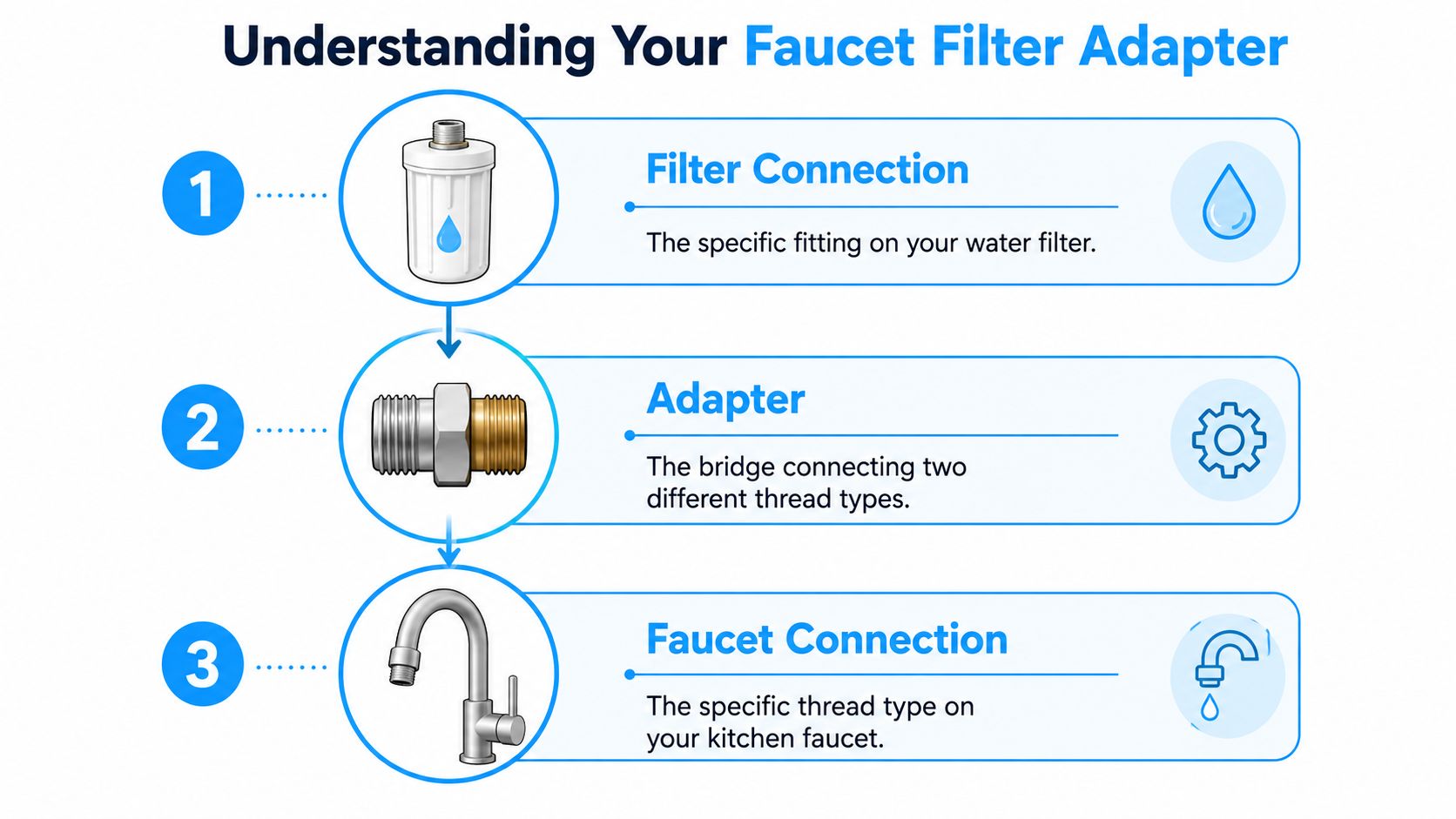
The three adapter types you'll run into
Most home setups fall into these categories:
Male-threaded adapter. This is used when the faucet has threads on the inside of the spout opening. The adapter presents the matching external thread so the filter can mount correctly.
Female-threaded adapter. This fits faucets that have visible threads on the outside of the spout. The adapter slips over and threads onto that exterior pattern.
Universal adapter. This is the rescue part for non-standard faucets, odd metric sizes, or faucets that don't match the basic adapters included in a standard kit.
The language confuses people because “male” and “female” can refer to either the faucet or the adapter. The easiest way to stay clear is to look at the faucet first. If the faucet has visible threads on the outside, you need the adapter that mates with that. If the threads are recessed inside the spout, you need the opposite style.
What the adapter actually has to do
A good adapter doesn't just “fit.” It needs to do four jobs at once:
- Thread correctly so it starts by hand without binding.
- Seat a washer or O-ring so water seals before pressure builds.
- Hold alignment so the filter body isn't hanging crooked.
- Survive repeated removal when you change cartridges or clean buildup.
Some systems also use a 3/8-inch splitter with a female-male-male configuration to feed both the main sink line and a filter line without interrupting normal use, as shown in this 3/8-inch splitter installation example on YouTube.
The adapter is small, but it does the sealing, alignment, and compatibility work that makes the whole filter system possible.
Why cheap installs fail
Most bad installs don't fail because the metal part is defective. They fail because the wrong washer was reused, the old aerator gasket stayed behind, or the installer forced mismatched threads and hoped tightening harder would fix it.
It won't. Threads create alignment. The washer creates the seal. You need both.
The Ultimate Guide to Faucet Threads and Compatibility
If you want the filter to fit on the first serious attempt, identify the faucet threads before buying anything else. This is the step that saves the most time and prevents most leaks.
In standard residential setups, compatibility is usually built around a 7/8-inch external male thread with 27-UNF, but non-standard faucets require precise measurement of the outer diameter for male threads or inner diameter for female threads to pick the correct universal adapter and get a leak-free seal, as detailed in Aquafilter's faucet thread guidance.
Start by checking where the threads are
Remove the aerator and look closely at the faucet tip.
- If you see threads on the outside of the faucet spout, that faucet has male threads.
- If the threads are inside the opening, that faucet has female threads.
- If you don't see usable threads at all, or the end is part of a spray head assembly, you may be dealing with a faucet that won't accept a standard faucet-mounted filter.
A coin or rough eyeballing isn't enough when the faucet is non-standard. Use calipers if you have them. For male threads, measure the outermost diameter. For female threads, measure the innermost diameter.
Common Faucet Thread Sizes
| Common Name | Male Thread Diameter | Female Thread Diameter |
|---|---|---|
| Standard residential faucet thread | 7/8-inch | Match by corresponding internal size |
| Non-standard metric example | M18.5 | Match by corresponding internal size |
| Non-standard imperial example | 15/16-inch | Match by corresponding internal size |
| Non-standard imperial example | 13/16-inch | Match by corresponding internal size |
The point of the table isn't to make you memorize thread families. It's to show why “universal” can still mean “measure first.”
The washer matters as much as the thread
A lot of leaks blamed on the adapter are really washer problems. The seal depends on a rubber O-ring or washer seated correctly in the threaded end. If the original aerator washer remains in place and you stack another washer on top of it, the adapter may appear tight but still leak under pressure.
Leave the old aerator parts out unless the filter manufacturer specifically tells you to reuse them. One proper washer in the right place seals better than two jammed together.
The pull-down faucet problem nobody explains well
Many guides often dodge the issue. They say “check compatibility” and leave it there. That doesn't help someone with a modern kitchen faucet whose spray head pulls out on a hose.
Installation materials confirm that many faucet-mounted filters explicitly don't fit on flexible or extendable faucets, and that mismatch shows up again and again in returns and buyer frustration, according to EPA installation guide material covering these fit limitations.
The reason is mechanical, not personal. Pull-down sprayers move, vibrate, and often don't provide a fixed threaded surface where a locking collar can seat securely. Even if you can force an adapter onto the end, the moving hose and spray-head design may make the setup drip, loosen, or fail outright.
If you have a pull-down faucet, assume incompatibility first and prove compatibility second.
Step-by-Step Faucet Adapter Installation and Troubleshooting
A correct install is simple. A rushed install creates leaks. The difference is usually five extra minutes at the sink.
Start with the faucet turned off. Clear the sink so small washers and adapters don't disappear down the drain. Keep a towel nearby, because even clean installs usually drip a little while parts are being swapped.
Here's the visual sequence most DIYers need:
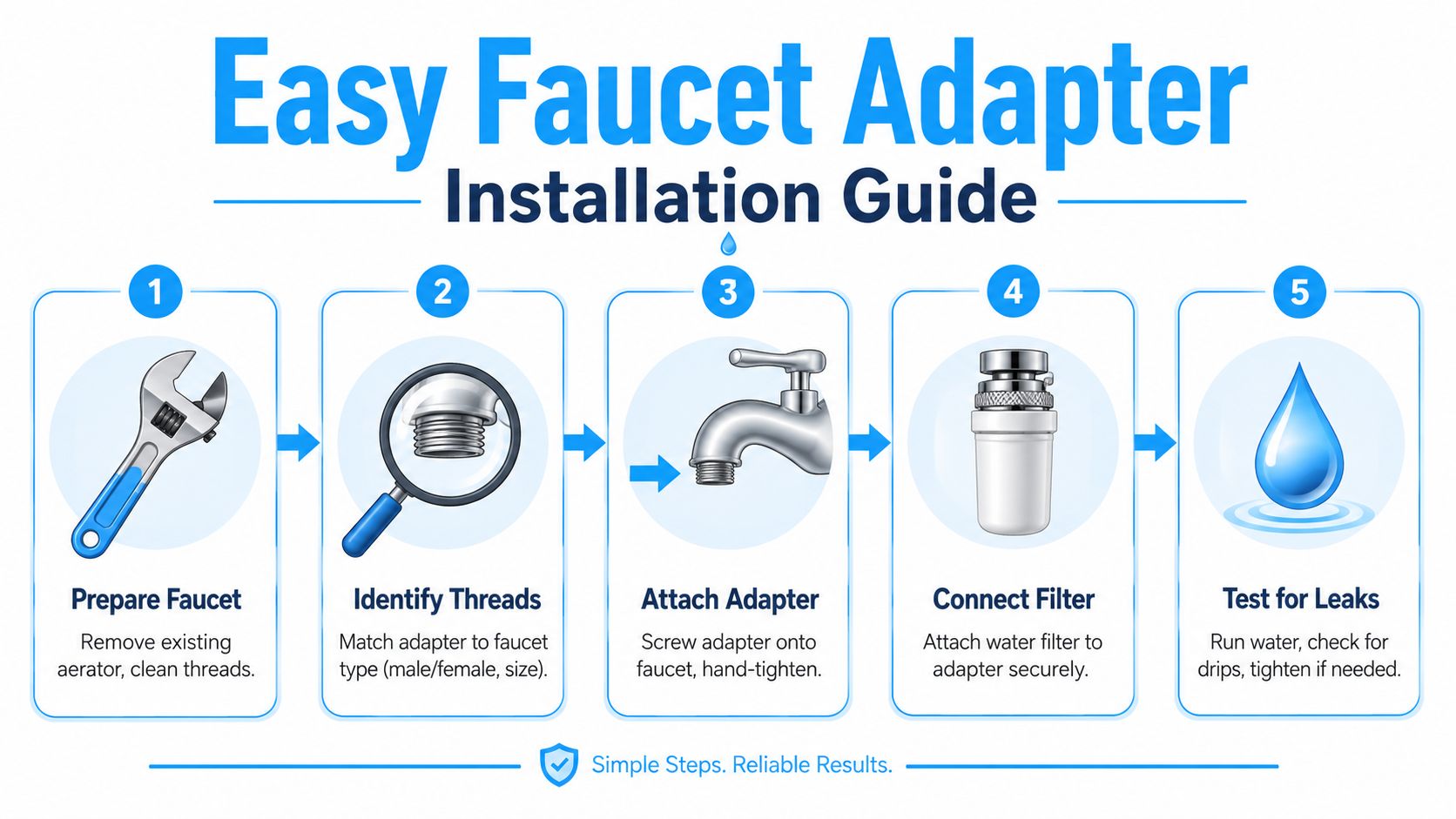
The install that works
Remove the aerator carefully.
Unscrew it by hand if possible. If it's stuck, use pliers with a cloth around the finish so you don't scar the metal.Clean the faucet threads.
Mineral scale and grit make good threads feel like bad ones. Wipe the end of the spout and check for leftover gasket material.Match the adapter to the faucet.
Don't guess. Offer up the adapter and make sure it starts straight. It should turn smoothly by hand.Seat the correct washer or O-ring.
The adapter needs its sealing washer in place. On many setups, leaving the original aerator washer behind causes leaks or crooked engagement.Hand-tighten first.
Thread the adapter on by hand until snug. Then attach the filter body according to the manufacturer's mount design.
After that, run cold water gently and inspect the joint. Increase flow only after the connection stays dry.
A short video can help if you want to see the motion and hand positions:
The one rule you should not ignore
Some homeowners also compare faucet-mounted systems with under-counter units that use dedicated connections. Whichever route you take, connect the system only to the cold-water line. Hot water can severely damage filtration components and compromise the system, as stated in Home Depot's under-counter filter installation document.
This is not a minor warning. Filtration media, housings, seals, and plastic components are not designed for hot supply exposure unless the manufacturer says otherwise.
Quick fixes for the problems that show up most
- Small drip at the adapter joint. Remove the adapter and check the washer. A twisted, doubled, or missing washer is the first suspect.
- Adapter won't thread smoothly. Back off immediately. You likely have the wrong thread type or size.
- Filter hangs at an angle. The adapter may be cross-threaded, or debris is trapped on the faucet face.
- Flow feels weak right away. Confirm the filter is fully seated and that the diverter or mount isn't partially blocked.
- Leak appears only when water runs harder. That usually points to a poor washer seal or a connection that was tightened while misaligned.
If a metal adapter needs force to start, it's the wrong adapter or it's going on crooked. Good fits feel almost effortless at the beginning.
Choosing Your Filter and Maintaining the System
The easiest filter to live with is not always the one with the loudest contaminant list on the box. For home use, the smart buy is the system that fits your faucet cleanly, includes a sensible adapter kit, and stays easy to service after the novelty wears off.
That long-term part matters. Top-tier faucet filters can reduce 71 specific contaminants in certified configurations, and many are rated for 100 gallons per cartridge, which works out to about three months of typical use. That means most households handle filter replacement 3 to 4 times annually, according to Wirecutter's review of faucet water filters. Every one of those changes puts hands back on the adapter and threads.
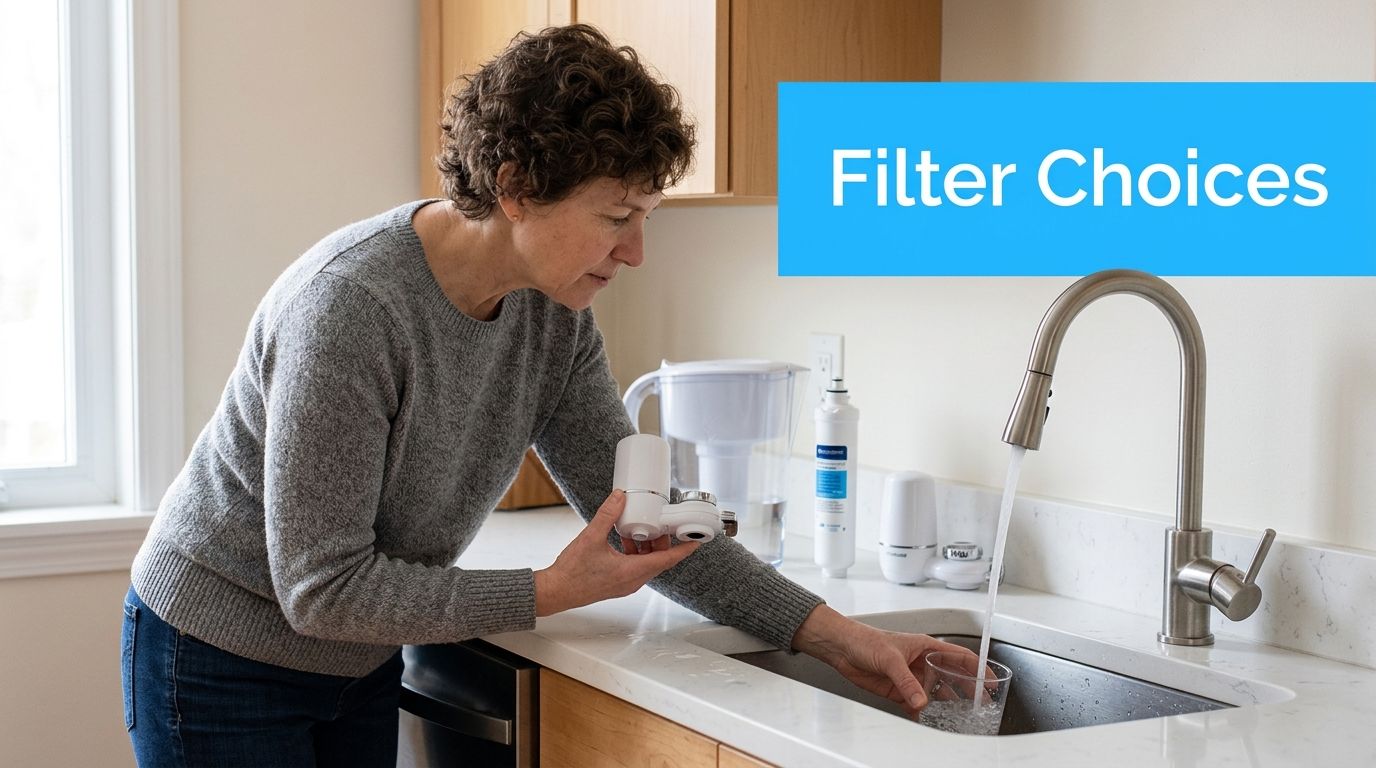
What to look for before you buy
Choose the system like a plumber would, not like a box designer wants you to.
- Complete adapter kit included. A filter that ships with multiple thread options saves guesswork and a hardware-store trip.
- Clear faucet exclusions. If the product page dances around pull-out or pull-down compatibility, treat that as a warning sign.
- Straightforward cartridge access. You'll be changing filters regularly, so the mount shouldn't fight you every time.
- Reasonable flow expectations. Faucet filters trade some speed for contact time and reduction performance. That's normal.
If you want a broader reference point on comparing systems, replacement parts, and household filtration options, the practical guides at Water Filter Advisor's advice section are worth keeping bookmarked.
Maintenance that prevents future leaks
Adapter care is basic, but a lot of people skip it.
After each cartridge change, inspect the threads for mineral crust, wipe the washer seat clean, and check whether the rubber washer has flattened or cracked. If the adapter uses a removable O-ring, make sure it hasn't rolled out of its groove. These tiny parts do the sealing work.
A few habits make a big difference:
- Store spare adapters together so the right one doesn't vanish into a junk drawer.
- Hand-start every reconnection before tightening anything.
- Clean mineral deposits early instead of scraping hardened buildup later.
- Replace worn washers promptly when they look compressed or ragged.
Don't buy based on marketing alone
A faucet filter is a user-experience product as much as a water-treatment product. If the adapter system is poor, the cartridge quality won't save the ownership experience. The best setup is the one that fits your faucet, seals on the first try, and stays predictable through repeated filter changes.
When a Faucet Filter Is Not the Answer
Some kitchens aren't good candidates for a faucet-mounted filter. That's not failure. It's just an honest diagnosis.
The biggest dead end is the modern pull-down or extendable spray faucet. Manuals and installation materials confirm that many faucet-mounted filters don't fit on flexible or extendable faucets, and that mismatch is a major reason buyers move to under-sink or countertop systems, as noted in the earlier guidance on fit limitations. If the spray head moves, vibrates, or lacks a stable threaded endpoint, another adapter usually won't solve the underlying problem.

Good reasons to stop chasing adapters
A pivot makes sense when any of these are true:
- Your faucet is a pull-down sprayer and the filter manufacturer excludes it.
- The faucet uses a designer spout with unusual hidden threading or no practical aerator connection.
- Your landlord won't allow fixture changes that risk scratching or modifying the faucet.
- You want a cleaner look without a filter body hanging off the tap.
Better alternatives at the sink
An under-sink filter is usually the cleaner permanent answer. It hides the filtration hardware below the counter and keeps the main faucet area uncluttered. For many households, that solves both the compatibility problem and the visual one.
A countertop filter works well when you need a no-fuss setup and don't want to gamble on faucet thread compatibility. It's also a practical move for renters who want filtration without depending on the faucet tip design.
Sometimes the right plumbing decision is to stop trying to make the wrong product fit. A different filter style can be faster, cleaner, and less aggravating than one more adapter order.
The useful takeaway is simple. If you have a standard threaded faucet, a faucet-mounted filter and the right adapter can be a tidy home filtration upgrade. If you have a flexible spray faucet, treat incompatibility as a normal industry limitation, not a personal mistake.
If you're comparing faucet, countertop, and under-sink options and want clear, no-hype guidance, visit Water Filter Advisor. It's a solid resource for choosing the right filtration setup, understanding maintenance, and avoiding the compatibility mistakes that waste time and money.
