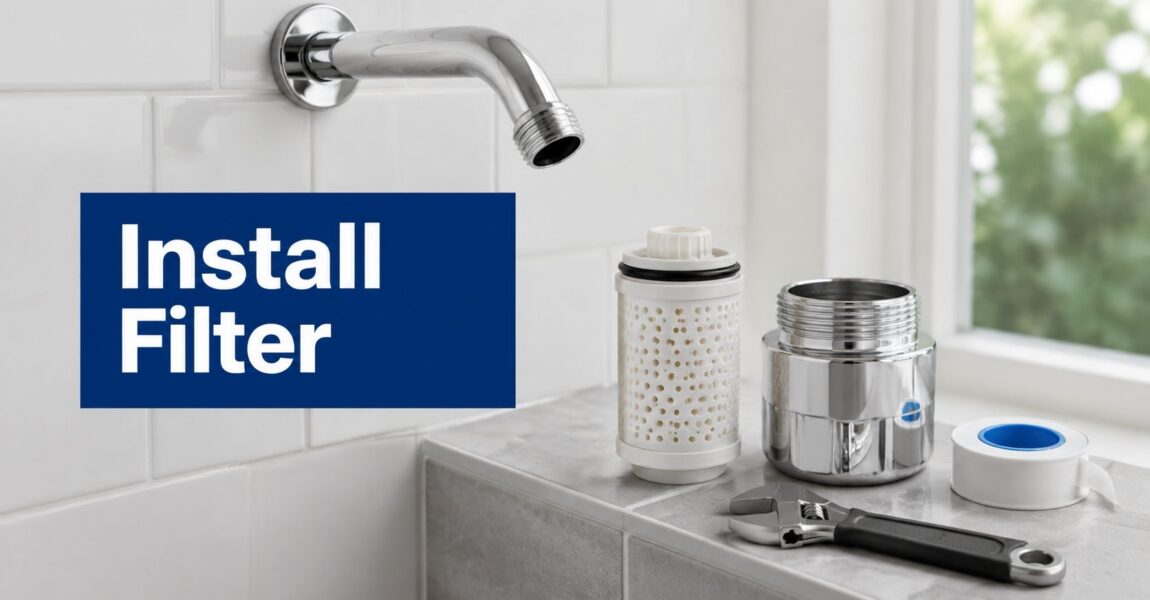
Master How to Install Shower Filter: Quick 2026 DIY Guide

You notice it the second the hot water hits. The steam carries that chemical smell, your skin feels tight before you even towel off, and your hair never quite feels clean and soft at the same time.

A shower filter is a simple fix, but the install goes better when you treat it like real plumbing instead of product packaging. Some setups thread on in minutes. Others fight back because the old shower arm is corroded, the factory washer is missing, or the house uses chloramine-treated water and the new cartridge needs a proper flush before anyone showers in it.

That part gets skipped in a lot of “tool-free” guides. It should not be. A clean, leak-free install is what turns a filter from a gadget into an upgrade you feel on your skin and hair every day.

If you want better water in the bathroom, start with the shower. Then use solid water treatment advice to match the filter and install method to your plumbing, especially if you live in an older home: practical water filtration guidance for homeowners.

Why Your Shower Water Needs an Upgrade

You feel bad shower water before you know what is in it. Skin feels tight after a rinse. Your scalp gets itchy. Hair turns rough, dull, or harder to manage. If the steam carries a bleach-like smell, that is another common clue.

In real bathrooms, the problem is often disinfectants in the water, especially chlorine or chloramine, plus the wear and tear of the plumbing feeding the shower. I see this a lot in older homes. The filter matters, but so does the condition of the shower arm, the threads, and any mineral buildup sitting behind the old showerhead. A good install starts with understanding that you are improving water quality at the fixture, not fixing every issue upstream.

What people usually notice first

The first signs show up on your body and hair, not on a water test report.

  • Skin feels dry fast: You step out of the shower and already want lotion.
  • Hair feels rough or frizzy: Color-treated, curly, and fine hair usually shows the change first.
  • Steam smells chemical-heavy: Hot water makes that smell more obvious.
  • Sensitive skin gets irritated more easily: Water can meet municipal standards and still feel harsh in daily use.

Hot water makes all of this more noticeable.

That is why a shower filter can make such a big difference. It improves the water at the exact point where it hits your skin and hair every day. In homes served by chloramine-treated water, this also means you need to follow the manufacturer's flushing steps after installation instead of jumping straight into a shower. Skip that, and people often think the filter is not working when the cartridge has not been flushed properly yet.

There is also a comfort piece people miss. If you are already improving flow and spray performance with things like savings and comfort with low-flow shower heads, cleaner-feeling water makes that upgrade feel complete.

Why this upgrade makes sense

A shower filter is a targeted fix. You do not need to open walls or commit to a whole-house system just to make one of your daily routines feel better.

It is also one of the few bathroom upgrades you can usually feel right away. Better water on your skin. Less chemical smell in the steam. Hair that feels cleaner instead of stripped. The catch is simple. The result depends on choosing the right filter for your water and installing it carefully, especially if old threads, corrosion, or hard-water scale are part of the job.

Choosing Your Ideal Shower Filter Type

A lot of installation problems start here, at the buying stage. Someone orders a filter because the box says universal, then finds out the unit is too bulky for a low-mounted arm, the showerhead no longer clears the wall, or the cartridge media is a poor match for local water treatment.
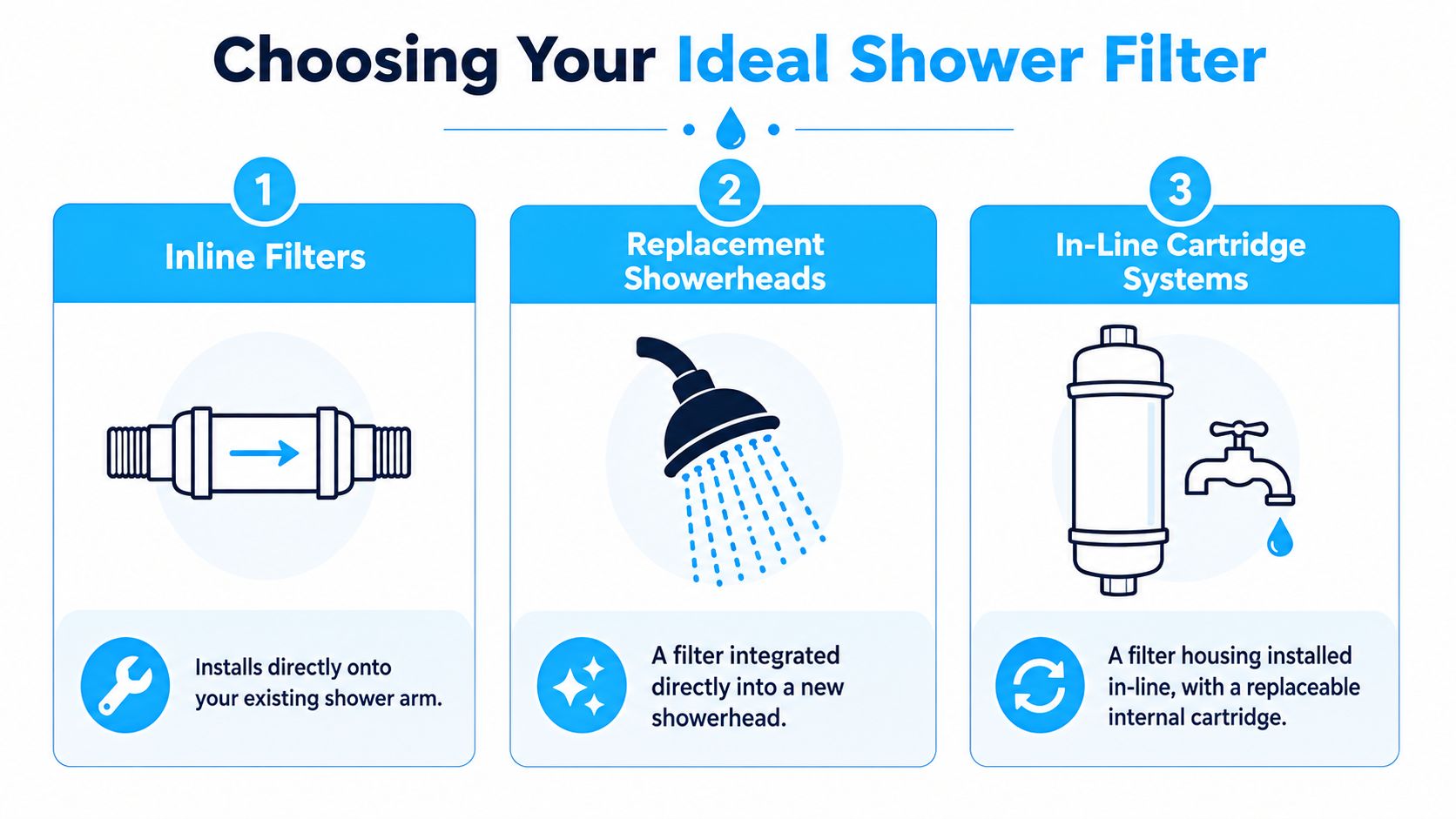
A guide on how to choose the right shower filter, showing three types of filtration systems.

Choose the filter for your plumbing first, then for the marketing claims on the package. That approach saves returns, cuts down on leaks, and gives you a better shot at the result you want: shower water that feels better on skin and leaves hair less dry and dull.

The three common filter styles

Inline filters thread between the shower arm and your current showerhead. I recommend these when you already like your showerhead and want to keep its spray pattern, finish, and flow feel. They are also the easiest fit in many rentals, as long as there is enough space between the wall and the head.

Replacement showerheads combine the filter and the head in one unit. They make sense when the old head is worn out, scaled up, or not worth saving. One swap improves water quality and the shower experience at the same time.

In-line cartridge systems use a separate housing with a replaceable cartridge inside. These are often easier to service later, but they can look bulkier and may put more weight on an older shower arm.

How to choose without getting burned

If your current showerhead works well, an inline unit is usually the smartest buy.

If the old head sprays unevenly, has heavy mineral buildup, or looks rough, replace the whole thing.

If you care most about simple cartridge changes, a cartridge housing is easier to maintain, but check clearance carefully before you buy.

Filter Type Best For Installation Ease Key Feature
Inline Filter Keeping your existing showerhead Easy Mounts between shower arm and current head
Replacement Showerhead Full shower refresh Easy Filter is built into a new head
In-Line Cartridge System Easy cartridge servicing Moderate Replaceable internal filter cartridge

What actually matters

Stage count gets too much attention. In real bathrooms, fit, cartridge availability, thread quality, and water chemistry matter more.

That last point gets missed all the time. If your city uses chloramine instead of free chlorine, make sure the filter is rated for it and follow the flushing instructions exactly after installation. A quick rinse is not always enough. With chloramine-treated water, some cartridges need a more thorough flush before the water smells and feels right. If you want a broader comparison of shower filters and other home options, Water Filter Advisor's filtration advice library is a good reference.

Older homes need extra caution. Corroded threads, short shower arms, and mineral buildup can limit what style fits cleanly. A bulky cartridge housing that looks fine online can turn into a leak point if the arm is worn or the head ends up hanging at an awkward angle. General fixture-fit guidance from Bulls Eye Repair's home maintenance resources is also useful if your bathroom hardware has not been touched in years.

Buy the filter that matches your water, your space, and the condition of the shower arm. That is what makes installation go smoothly.

Your Pre-Installation Checklist and Tools

You find out what kind of shower filter install you really have after the old showerhead comes off. In a newer bathroom, the threads are usually clean and the filter goes on with little fuss. In an older home or rental, mineral scale, old tape, and corrosion at the shower arm can turn a "tool-free" job into a leak chase.
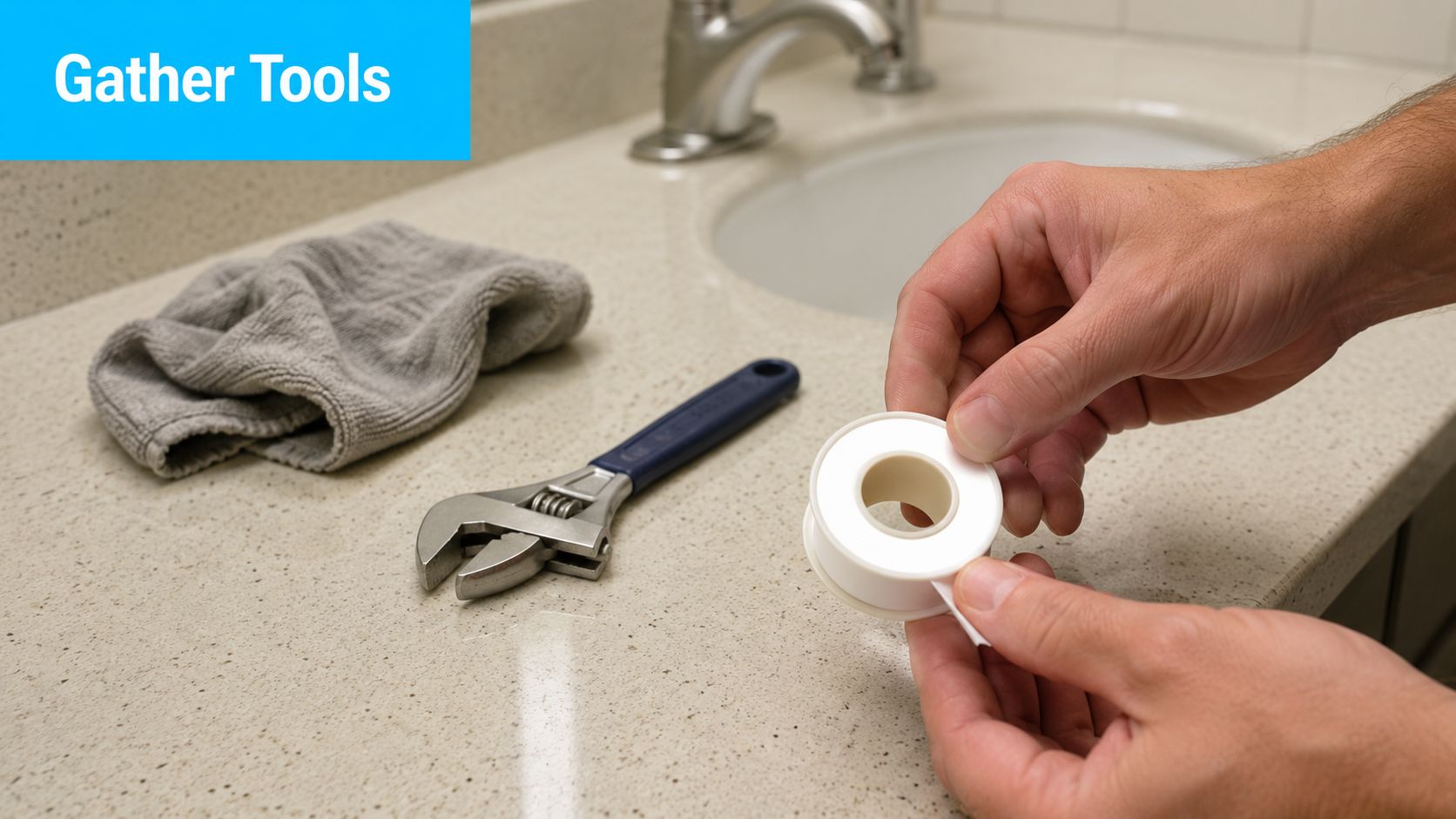
A person preparing to install plumbing fixtures with a wrench and plumber's tape on a bathroom counter.

I keep this part simple. Set out a few basic items before you touch the old head, and the install goes faster and cleaner.

  • Your shower filter kit: Confirm the housing, cartridge, washer, O-ring, and any adapter are in the box.
  • Fresh plumber's tape: Use new tape every time. Old tape or half-dried scraps cause bad seals.
  • Adjustable wrench: Helpful for stuck showerheads and for snugging connections without overdoing it.
  • Soft cloth or rag: Wrap finished surfaces before using the wrench so you do not scratch chrome, nickel, or painted parts.
  • Old toothbrush or small nylon brush: Good for cleaning thread grooves.
  • Small bowl or towel: Catch grit, old tape, and drips so they do not end up down the drain.

The toothbrush earns its place. Dirty threads are one of the most common reasons a new filter drips right after installation. If old tape, scale, or white mineral crust stays in the grooves, the new tape cannot seat properly and the filter body may tighten crooked.

Check the shower arm before you install anything new. Look closely at the threaded end, not just the finish around it.

  • Damaged threads: Flattened, bent, or partially stripped threads can cause slow leaks no matter how good the filter is.
  • Corrosion: Light discoloration is usually fine. Heavy rust, pitting, or flaky metal means you need to slow down and tighten with care.
  • Leftover sealant: Remove every bit of old tape or pipe dope.
  • Washer fit: Make sure the washer or O-ring sits flat in the filter connection before tightening.

One more real-world point gets missed in a lot of "easy install" guides. If your water utility uses chloramine, some filters need a longer flush than the quick rinse printed on generic packaging. Keep a bucket or towel nearby and plan a proper flush after installation so the cartridge media clears fully and the water smells normal sooner.

If the shower arm already shows staining inside the wall escutcheon, damp drywall, or other signs of hidden leaks, inspect that before adding a filter. A new filter improves water quality for skin and hair, but it will not fix a failing threaded connection behind the wall.

Clean threads, fresh tape, the right washer, and a wrench within reach. That is what makes this job go smoothly, especially in older bathrooms where corrosion decides how "easy" the install will be.

The Step-by-Step Shower Filter Installation

A shower filter install feels easy until the old showerhead refuses to budge or the new filter starts threading on crooked. In newer homes, this can be a five-minute swap. In older bathrooms with mineral buildup or light corrosion, the same job takes a little more patience. The payoff is worth it. Once the filter is in and flushed properly, the water is usually much kinder to dry skin, irritated scalps, and color-treated hair.
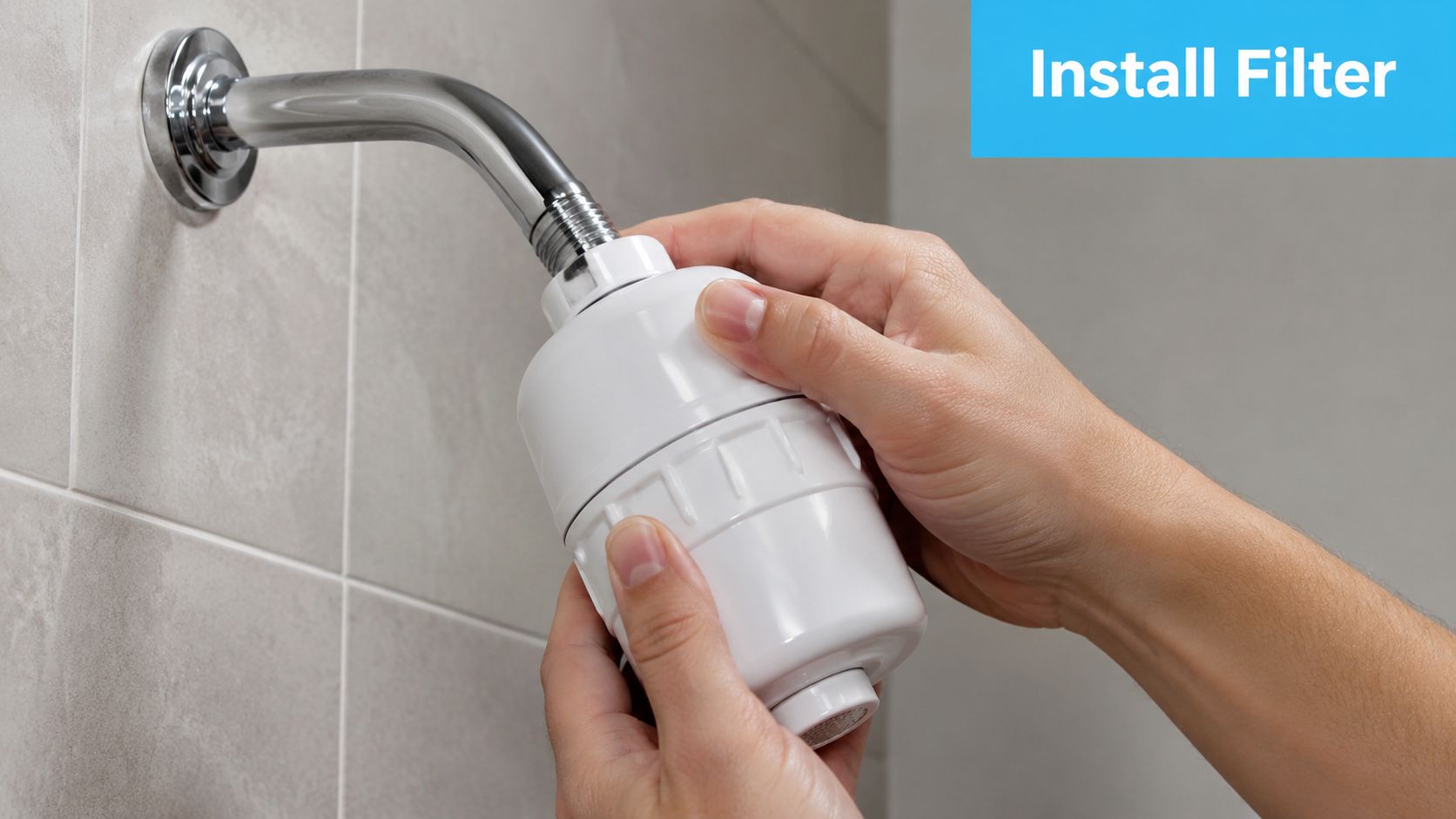
A pair of hands screwing a white shower filter unit onto a wall-mounted shower arm pipe.

Remove the old showerhead

Start with the shower off and the area dry so you can spot leaks later.

Turn the old showerhead counterclockwise. If it comes off by hand, fine. If it fights you, wrap the fitting with a soft cloth and use an adjustable wrench with steady pressure. Pulling hard to one side can twist the shower arm inside the wall, and that turns a simple filter install into a repair job.

On stubborn fittings, a little patience beats more force. Short, controlled pressure usually works better than muscling it.

Clean the threads properly

With the old head removed, clean the shower arm threads until the grooves are fully visible. Strip off old tape, old pipe dope, and any grit sitting in the threads.

This step decides how the rest of the install goes. If debris stays behind, the filter can bind early, sit crooked, or leak even when it feels tight.

A dry rag, an old toothbrush, or a nylon brush usually does the job.

Apply thread seal tape the right way

Wrap fresh thread seal tape clockwise so it tightens with the filter instead of bunching up underneath it. Use enough tape to fill the threads cleanly without creating a bulky lump.

A good rule is 5 to 8 full wraps, overlapped neatly and pressed into the grooves with your fingers, followed by the manufacturer's flushing steps after installation, as noted in Aquasana's installation guidance.

Neat tape matters. Sloppy tape causes more leaks than people expect.

Install the washer and thread on the filter

Set the rubber washer or O-ring flat inside the filter connection before you thread anything on. Then start the filter by hand and keep it straight from the first turn.

If it does not spin on smoothly, stop and back it off. Cross-threading usually starts in the first turn or two, especially on older shower arms with worn threads.

Hand-tight is often enough on a clean connection with a properly seated washer. If needed, give it a small extra turn with pliers or a wrench over a cloth. Keep that final snug-up gentle. Plastic housings and plated fittings do not like over-tightening.

If you are installing an inline model, reattach the showerhead after the filter body is secure. If the filter and showerhead are one piece, you are already at the final connection.

Flush the filter before first use

Run cold water through the new filter before you shower. New media often sheds a little harmless carbon dust at startup, and flushing clears that out before it hits your hair and skin.

For many filters, a short flush is enough. For chloramine-treated water, I recommend being more thorough than the quick rinse some boxes suggest. Let it run, cycle the water on and off a few times if the manufacturer calls for it, and keep flushing until the water runs clear and the initial carbon smell settles down. That extra minute or two prevents a lot of false alarm moments later.

For readers who like watching the sequence before touching a wrench, this short install demo helps with the hand positions and fitting order:

What a good installation looks like

A proper install is easy to judge. The filter sits straight, the showerhead points where it should, and every visible connection stays dry during the first run.

Check the joint with dry fingers or a tissue. Even a slow seep needs attention right away because it rarely fixes itself once hot water and vibration get involved.

If you want a broader DIY reference for bathroom fixture work, Bulls Eye Repair's home maintenance resources are worth browsing. Shower filters are simpler than many fixture swaps, but the same habits matter. Clean threads, correct tape direction, a flat washer, and careful tightening.

Quick install summary

  1. Turn off the shower and remove the old showerhead
  2. Clean the shower arm threads completely
  3. Wrap fresh tape clockwise with 5 to 8 neat turns
  4. Seat the washer and thread the filter on by hand
  5. Snug it gently if needed, then flush it thoroughly

That is the whole job. A leak-free install usually comes down to thread prep, a straight hand-threaded start, and a proper flush at the end.

Troubleshooting Leaks and Other Common Issues

You finish the install, turn the water on, and spot a drip at the fitting or a burst of dark water from the head. That does not mean the filter is faulty. In my experience, post-install problems usually come from thread prep, washer placement, or a flush that was too short for the way your local water is treated.
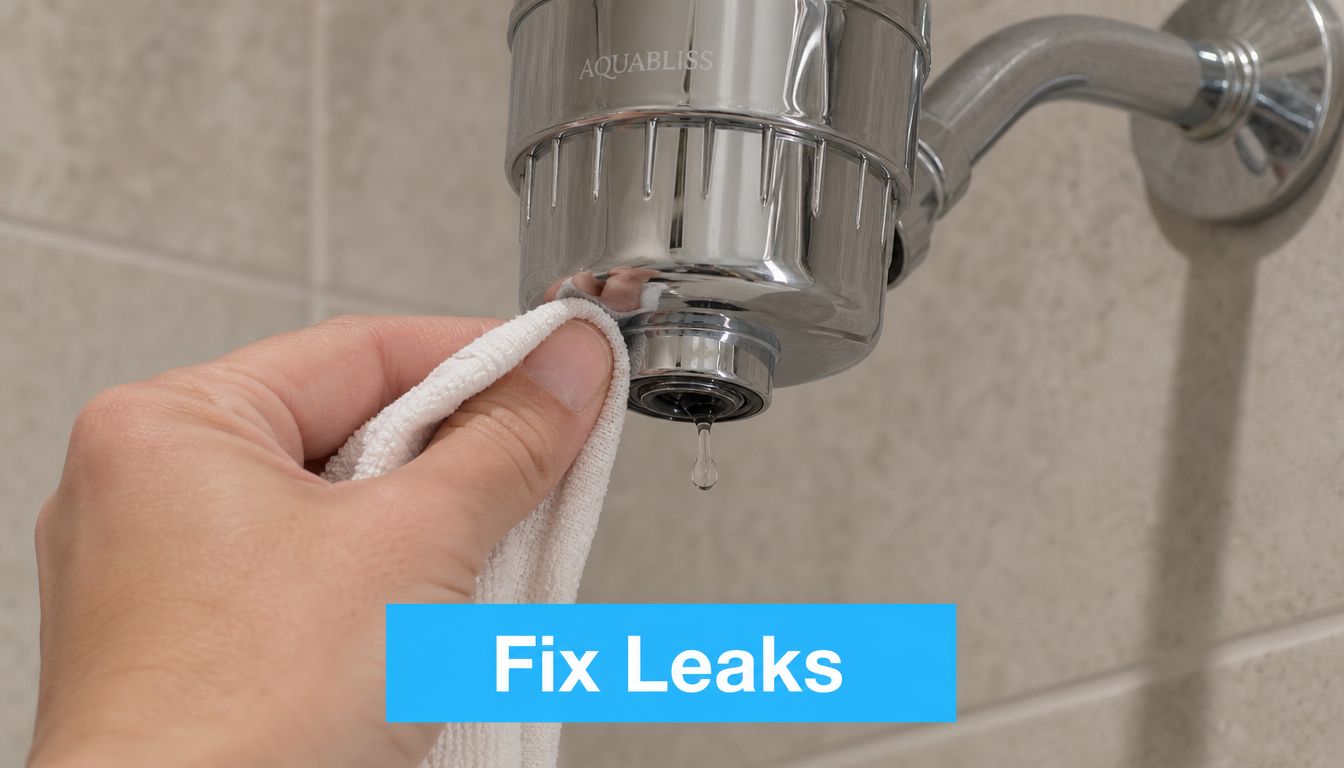
A hand holds a white cloth under a leaking chrome Aquabliss shower filter in a tiled bathroom.

Start with the leak before you start blaming the filter body. A threaded shower connection only has a few places to fail, and each one has a straightforward fix. What causes trouble is over-tightening. I see that a lot in older homes where the shower arm threads are already worn or slightly corroded. More force on damaged threads rarely seals the joint. It usually makes alignment worse.

If water drips from the threaded joint

Work through these checks in order:

  • Washer missing, twisted, or pinched: Remove it and seat it flat.
  • Tape wrapped the wrong way: Rewrap it clockwise so it stays in place as the fitting tightens.
  • Too little tape on older threads: Add a few neat wraps so shallow or worn threads can seal.
  • Cross-threaded fitting: Back it off and restart by hand. It should spin on smoothly for the first turns.
  • Mineral buildup on the shower arm: Clean the threads fully. Old scale can stop the filter from seating square.

If the drip seems to be coming from somewhere behind the visible connection or from the wall area, it's smart to learn the broader signs of hidden leaks so you don't mistake a larger plumbing problem for a bad shower filter install.

If the water looks cloudy or dark at first

That is usually carbon fines washing out of a new cartridge. It looks alarming, but it is common on first start-up.

Flush the filter longer than the box suggests if your water supplier uses chloramine. The short, tool-free marketing version of this job skips over that detail, but chloramine systems often need a more deliberate flush with warm water and a few on-off cycles before the media settles and performance levels out. If the filter seems disappointing right away, I would question the flush first.

If pressure drops and stays low

A small change in flow during the first run can happen while the cartridge saturates. Weak pressure that continues means something is restricting the path.

  • Check the inlet screen: New installs often catch loose sediment from the pipe.
  • Make sure the cartridge is seated correctly: If it sits crooked, flow drops fast.
  • Inspect the showerhead itself: An old head full of scale can get blamed on the new filter.
  • Look at the shower arm in older homes: Rust flakes and debris can break loose during installation and lodge in the filter or head.

One good reset solves a lot of these issues. Take the unit back off, clean the threads, confirm the washer is flat, reinstall it by hand, and flush it properly. A careful reinstall beats brute force every time.

Maintaining Your Filter for Pure Water Year-Round

A shower filter only helps your skin and hair if the cartridge inside it is still doing its job. I see plenty of installs that were done right once, then ignored until the water starts smelling like a pool again. Good maintenance is what keeps the chlorine reduction, softer feel, and better shower experience going.

Cartridges do not all age at the same pace. A house with heavy use, sediment, or chloramine-treated water will usually burn through media faster than the box implies. In older homes, rust and scale from the supply line can shorten cartridge life too, especially after the first install shakes loose debris inside the shower arm.

Signs it's time to change the cartridge

You usually get warning signs before the filter is fully spent.

  • The chlorine smell returns: If that treated-water smell comes back, the media is likely near the end of its service life.
  • Skin feels tighter or hair feels dull: This is often the first thing people notice, even before they notice odor.
  • Water flow drops off: Sediment, scale, or a loaded cartridge can restrict flow.
  • The cartridge has been in place longer than the manufacturer recommends: Calendar reminders work better than guesswork.

How to replace it without creating leaks

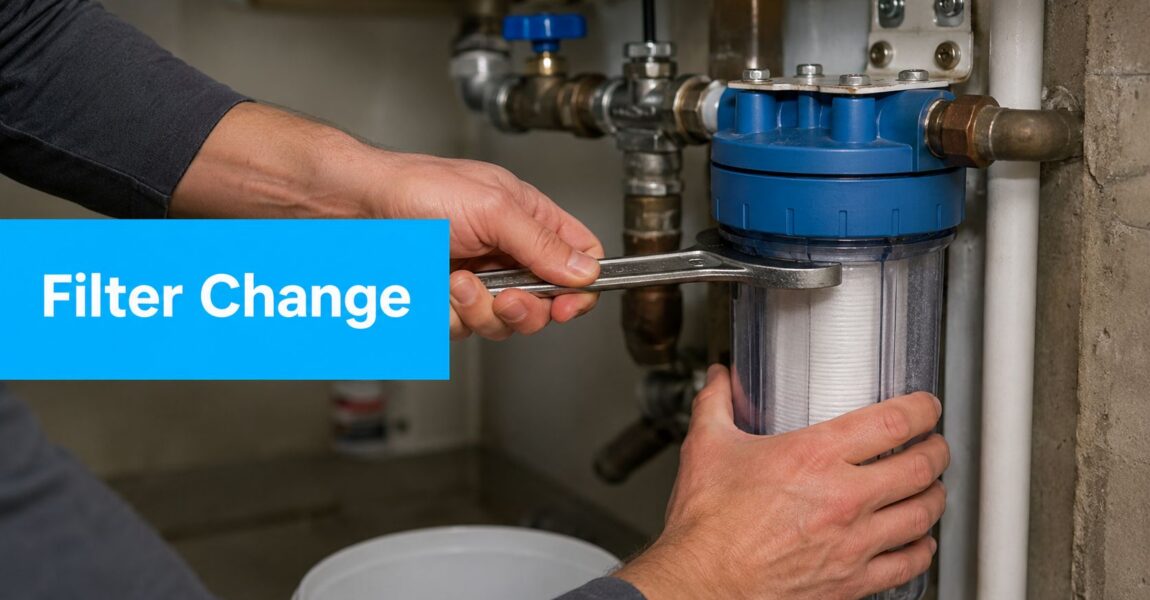
Replacement is simple if you stay methodical. Shut the shower off fully, let the fixture cool if you have been using hot water, then unscrew the housing carefully so you do not pinch the O-ring or cross-thread the body on reassembly.

Set the old cartridge aside, wipe out the housing, and check the washer and threads while it is open. If you live in an older home, look for rust flakes or mineral grit inside the filter body. That debris can keep the new cartridge from seating properly and cause a slow drip that gets blamed on the filter itself.

Install the new cartridge in the correct direction, hand-tighten the housing, and flush it before showering. If your water utility uses chloramine, give the new cartridge a longer flush than the quick-start instructions suggest. Warm water and a few on-off cycles usually help settle the media and clear carbon fines more thoroughly.

On-time cartridge changes are what keep the improvement real. The housing is reusable. The media inside is the working part.

If you want help comparing shower filters, replacement cartridges, and other home water treatment options without digging through marketing claims, Water Filter Advisor is a solid place to start. It's especially useful when you're deciding between a basic shower upgrade and a bigger filtration plan for the whole home.
How to Change Whole House Water Filter: 2026 DIY Guide

You notice it gradually. The shower doesn't hit as hard as it used to. The kitchen tap starts looking a little lazy. Then your coffee tastes a bit off, or the water has that faint chlorine smell you swear wasn't there a month ago.

A lot of homeowners assume something serious is going wrong with the plumbing. Most of the time, the culprit is simpler. Your whole house filter is doing its job, and now it's loaded up enough that it needs attention.

That's the good news. Learning how to change a whole house water filter usually isn't a big plumbing project. Once you're prepared, one installation guide notes the replacement itself can take about 10 minutes without tools or a plumber, which is why many homeowners treat it as routine maintenance instead of a major repair job, especially when a bypass valve is installed (Kind Water's replacement guide).

The part that rattles first-timers isn't usually the filter. It's the fear of opening the wrong thing, getting sprayed, or putting it back together and finding a leak. Fair concern. I've seen perfectly capable DIYers make the same avoidable mistakes over and over: skipping the pressure relief, pinching the O-ring, reinstalling stages in the wrong order, or cranking the housing down like they're sealing a submarine hatch.

None of that is hard to avoid once you know why each step matters. That's what makes this job manageable. You're not just swapping a cartridge. You're protecting water pressure, water taste, fixture performance, and the rest of your plumbing.

Your Guide to Cleaner Water and Better Pressure

A whole house filter sits in a funny spot in home maintenance. When it works, nobody thinks about it. When it starts clogging, the whole house feels it.

You'll often see the first clues in ordinary routines. The upstairs shower feels weak. The washing machine seems to fill slower. A glass of water tastes flatter, harsher, or just different enough that you notice. Those changes can sneak up on you because filtration problems don't usually announce themselves all at once.

Why this job feels bigger than it is

Homeowners hear “main water shutoff” and immediately think “plumber.” That's understandable. But replacing a cartridge in a whole house system is usually more like careful appliance maintenance than a complex pipe repair.

What matters is control. Shut water off cleanly. Relieve pressure. Open the housing the right way. Check the seal before you reassemble. Bring the system back online slowly.

Practical rule: If you move slowly on the shutdown and restart, the rest of the job gets much easier.

The actual swap is usually the shortest part. The prep and restart are where people either make life easy for themselves or create a mess.

What a successful filter change should feel like

A good filter change isn't dramatic. You don't need brute force, panic tightening, or improvised plumbing heroics. You need a clear path, the right cartridge, and a little patience.

Here's what usually goes right when the job is done properly:

  • Pressure returns smoothly: Fixtures stop feeling strangled by a clogged cartridge.
  • Water quality improves: Taste and odor issues that crept in often settle back down.
  • You avoid surprise leaks: A clean, properly seated O-ring does most of that work.
  • The next change gets easier: Once you know your shutoff, housing, and cartridge sequence, future swaps feel routine.

That's why this is a confidence-building project. You're working on something that affects every faucet in the house, but the task itself is very approachable when you respect the sequence.

Gathering Your Tools and Prepping the Area

The easiest filter change starts before you touch the housing. Most bad experiences come from stopping halfway through to hunt for towels, realizing the replacement cartridge is wrong, or discovering you don't know where the shutoff valve is.

Preparation is what keeps this from turning into wet, annoying chaos.

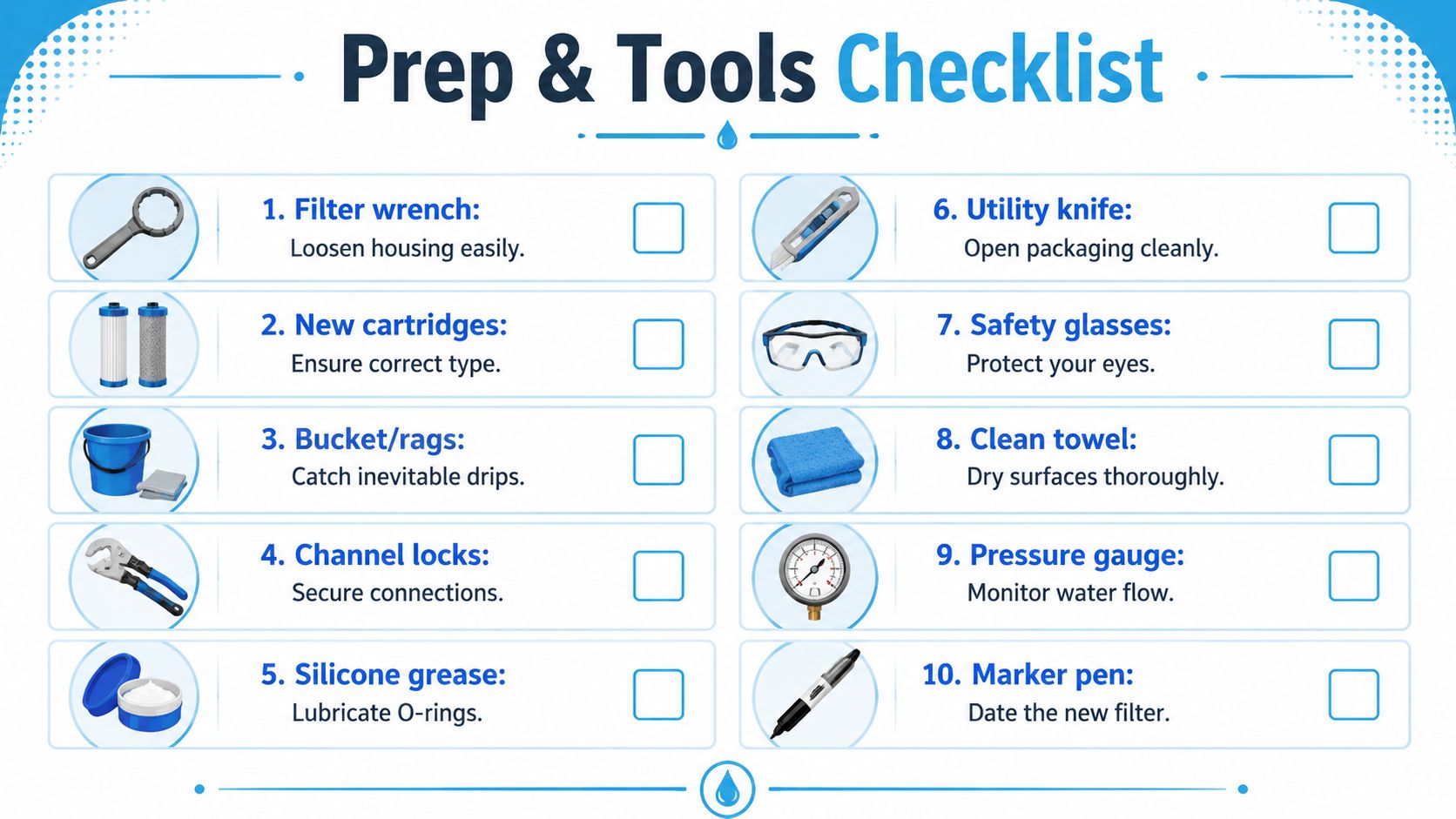
What to set out before you begin

A helpful checklist displaying the necessary tools and supplies needed to change a home water filter system.

Lay everything within arm's reach. Don't count on “I'll grab that in a second” once the system is open.

  • New cartridges: Match the exact type your system uses. Sediment, carbon, and specialty cartridges are not interchangeable just because they fit the housing.
  • Filter wrench: This gives you controlled turning force on the sump housing without beating it up.
  • Bucket and rags: Even a clean, careful swap releases trapped water.
  • Channel locks: Useful for nearby fittings if something needs light correction, but they are not your first choice for the plastic housing.
  • Food-grade silicone grease: A light coat on the O-ring helps it seat properly and reduces the chance of twisting or pinching.
  • Utility knife: Handy for packaging, especially when you don't want cardboard scraps and plastic wrapping near the open housing.
  • Safety glasses: Pressure relief can spit.
  • Clean towel: Use this to wipe the O-ring groove and housing threads.
  • Pressure gauge: Helpful if your setup includes one or if you like tracking system behavior over time.
  • Marker pen: Write the install date on the housing or cartridge if there's room.

The prep that prevents panic

Before you do anything else, find these parts:

What to locate Why it matters
Main shutoff valve You need a reliable way to stop incoming water before opening the housing.
Bypass valve If your system has one, it can shorten downtime and make servicing calmer.
Nearest downstream faucet You'll use it to release pressure from the line.
Pressure-release button Some housings have one on top. It makes opening the sump much easier.

If you have a multi-stage system, line up the new filters in installation order before starting. Don't open every package at once and mix them on the floor.

The homeowners who have the smoothest filter changes are almost never the strongest. They're the ones who prepared the area first.

Clear the work zone

Give yourself room. Move storage bins, detergent bottles, holiday decorations, or anything else crowded around the filter bracket.

A few practical habits help:

  • Put the bucket directly under the housing: Not “nearby.” Directly under it.
  • Protect the floor: A towel under the bucket catches the drips that miss.
  • Use decent lighting: Most sealing mistakes happen because someone couldn't clearly see the O-ring groove.
  • Keep kids and pets out of the area: You don't want someone bumping your arm while you're reseating a housing.

The goal is simple. When the system is open, you want both hands free and your brain calm.

The Main Event Performing the Filter Swap

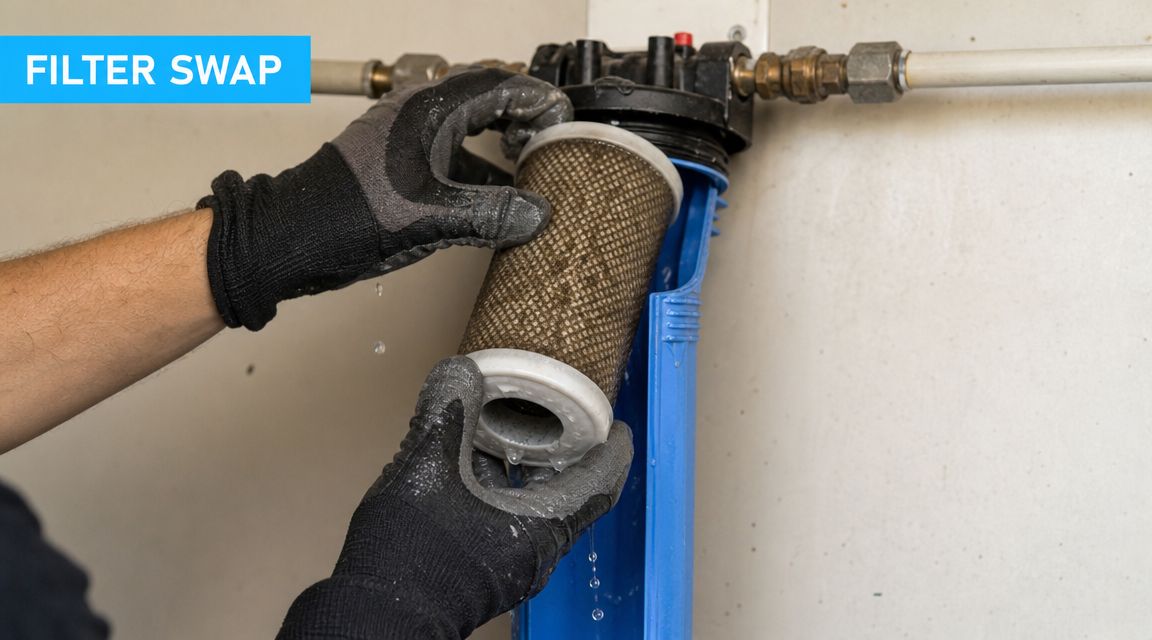
The part that makes first-timers nervous is usually the moment the housing starts to turn. That hesitation is healthy. A whole house filter can hold pressure, and I've seen people crack a sump, dump a bucket of water on the floor, or pinch an O-ring because they rushed the swap.

A person wearing protective gloves replacing a dirty, used water filter cartridge from a housing unit.

Shut the water down the right way

Shut off the water feeding the filter housing. If your system has a bypass, set it the way the manufacturer calls for before you open anything. If it does not, shut off the main supply upstream of the filter.

Then open a cold faucet downstream and leave it open for a moment. If your housing has a pressure-release button, press it. The goal is simple. Remove pressure before you try to unscrew the canister.

Skipping that step is how a routine filter change turns into a mess. If the housing feels unusually tight, trapped pressure is often the reason, not just a stubborn thread.

Loosen the housing with control

Put the bucket directly under the sump, then fit the housing wrench squarely around it and turn counterclockwise. Use steady pressure. Sharp jerks tend to slip the wrench or crack older plastic.

If it does not move, stop and verify two things before adding force:

  • the water is fully shut off
  • the line pressure is relieved
  • the wrench is seated flat on the housing ribs

Support the housing with your free hand as it comes loose. It usually holds more water than people expect, and dropping a full sump can damage the threads or the cartridge seat.

Remove the old filter and inspect the sealing surfaces

Lift out the old cartridge and set it in the bucket. Then check the inside of the housing, the threads, and the O-ring groove before you even touch the new filter.

Look for the stuff that causes leaks later:

  • sediment or sludge in the bottom of the housing
  • grit stuck in the O-ring groove
  • a dry, flattened, twisted, or cracked O-ring
  • signs the old cartridge was sitting off-center

Wash the housing with mild soap and water, then rinse it well. Wipe the groove and threads clean. A single grain of sand under the O-ring can be enough to cause a slow drip once pressure returns.

If the O-ring is damaged, replace it. If it is still in good shape, apply a light coat of food-grade silicone grease. Light coat. Too much grease attracts debris and makes it easier for the O-ring to shift out of place.

Set the new cartridge in correctly

Install the new cartridge in the orientation the manufacturer specifies. Some filters can go in either direction. Others have a clear top and bottom, a gasketed end, or a flow arrow that matters.

For multi-stage systems, keep each cartridge in its proper housing and order. First-timers often focus on getting the new filter to fit and miss the bigger issue, which is whether each stage is doing the job it was chosen for. Sediment, carbon, and specialty media are not interchangeable just because the cartridges look similar.

If your main reason for changing the filter is weak fixtures or poor flow, MG Drain Services' expert advice gives a good overview of other pressure causes worth ruling out. A clogged filter is common, but it is not the only reason a house loses pressure.

Reassemble carefully and stop before overtightening

Put the O-ring back in its groove and make sure it sits flat all the way around. Then thread the housing on by hand. It should turn smoothly with even resistance.

If it feels crooked, gritty, or hard to start, back it off and try again. Cross-threading is one of the costliest DIY mistakes on these housings, and once the threads are damaged, tightening harder only makes it worse.

Use the wrench only for the final snug fit if needed. Plastic filter housings do not need brute force to seal. They need clean threads, a seated O-ring, and even contact.

Use this quick check before you call the swap done:

Reassembly check What you want to see
O-ring Flat in the groove, not pinched or bulging
Housing threads Even and straight, no visible tilt
Cartridge position Properly seated and centered
Housing body Hand-tight or just slightly snugged with the wrench

For readers who like seeing the process in motion, this walkthrough can help with hand position and pacing:

Mistakes that cause trouble fast

A few shortcuts create the same problems again and again:

  • Using petroleum grease on the O-ring: Use food-grade silicone grease only.
  • Forcing in a cartridge that is only "close enough": Similar size does not mean correct seal or filtration.
  • Ignoring cartridge direction or stage location: The system may run, but performance can drop and filters can load up early.
  • Cranking the housing down hard: Extra force often means the O-ring is out of place or the threads are misaligned.

The best filter changes look boring. That's a good sign. Calm hands, clean parts, and a careful reassembly beat strength every time.

Post-Installation Checks and System Flushing

A lot of first-timers relax too early here. The housing is back on, the wrench is down, and it feels finished. I've seen more leaks show up in the first few minutes after re-pressurizing than during the actual swap, so treat startup like part of the job.

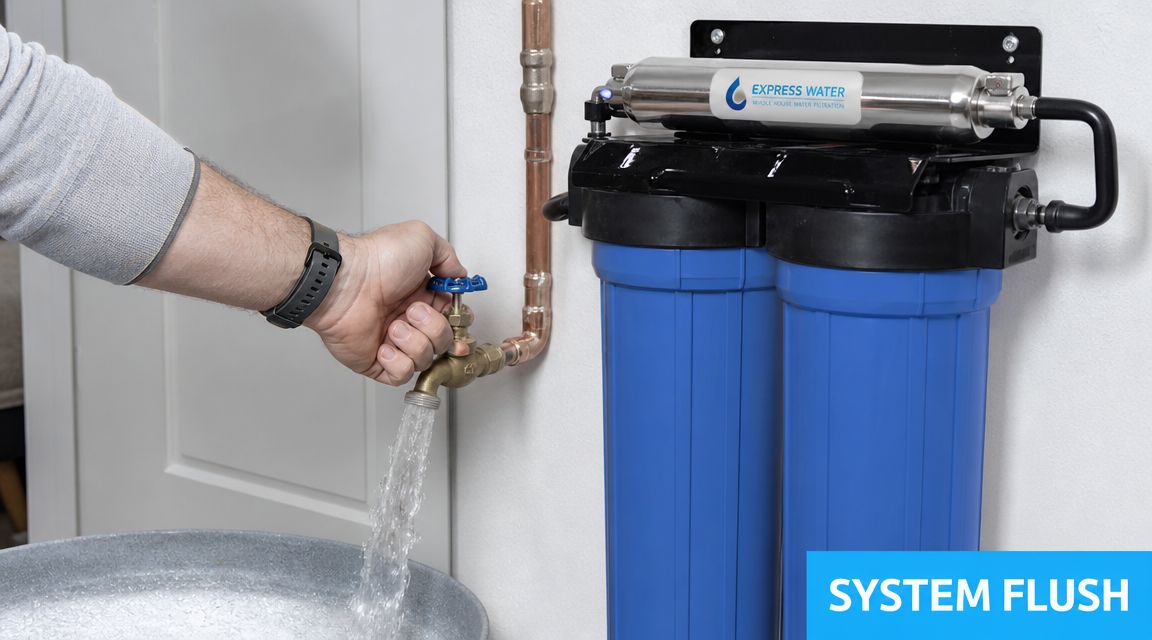
Start by bringing the water back on slowly. If your system has a bypass, return it to the filter position in a controlled way. The goal is to let the canister fill gradually so the O-ring can settle under pressure instead of getting hit all at once.

Watch the housing closely as it fills. Don't just look from a few feet away. Run a dry hand or paper towel around the seam, the cap, and any nearby fittings. Small leaks hide there first.

A person flushing a whole house water filtration system by running water through an installed brass faucet.

If you catch a drip, shut the water back off and relieve pressure before touching the housing. In my experience, the usual causes are simple. The O-ring shifted, a little grit got onto the sealing surface, or the sump threaded on slightly crooked. A tiny leak almost never stays tiny once the system sits under full pressure.

Once everything stays dry, flush the new filter with cold water only. Run water long enough to clear the startup dust and air from the cartridge. New carbon filters often shed harmless black or gray fines at first, and trapped air can make the water spit and surge. If you want a broader reference on filter care and replacement timing, this whole house water filter advice guide is a useful companion.

That flush does more than improve appearance. It clears loose media, pushes air out of the lines, and helps keep faucet aerators and appliance screens from catching that debris later. Skip this step and you may end up chasing cloudy water or weak flow at fixtures that were working fine before.

A little cloudiness right after the change is usually normal. Pour a glass and let it sit for a minute. If the cloudiness clears from the bottom up, that's air, not contamination.

You may also hear a bit of pipe noise or get some sputtering at faucets for a short time. That usually settles down as the air works out of the system. What should get your attention is different. A housing that keeps weeping, a strong bad taste that doesn't improve after flushing, or low flow across the whole house means something still needs attention.

Before you walk away, do a quick round of the house. Run a few cold fixtures, check that pressure feels normal, and come back to the filter housing after it has been under pressure for a bit. Then mark the install date on the housing.

That date saves guesswork next time. It also tells you, at a glance, whether a filter is due or just being blamed for another plumbing problem.

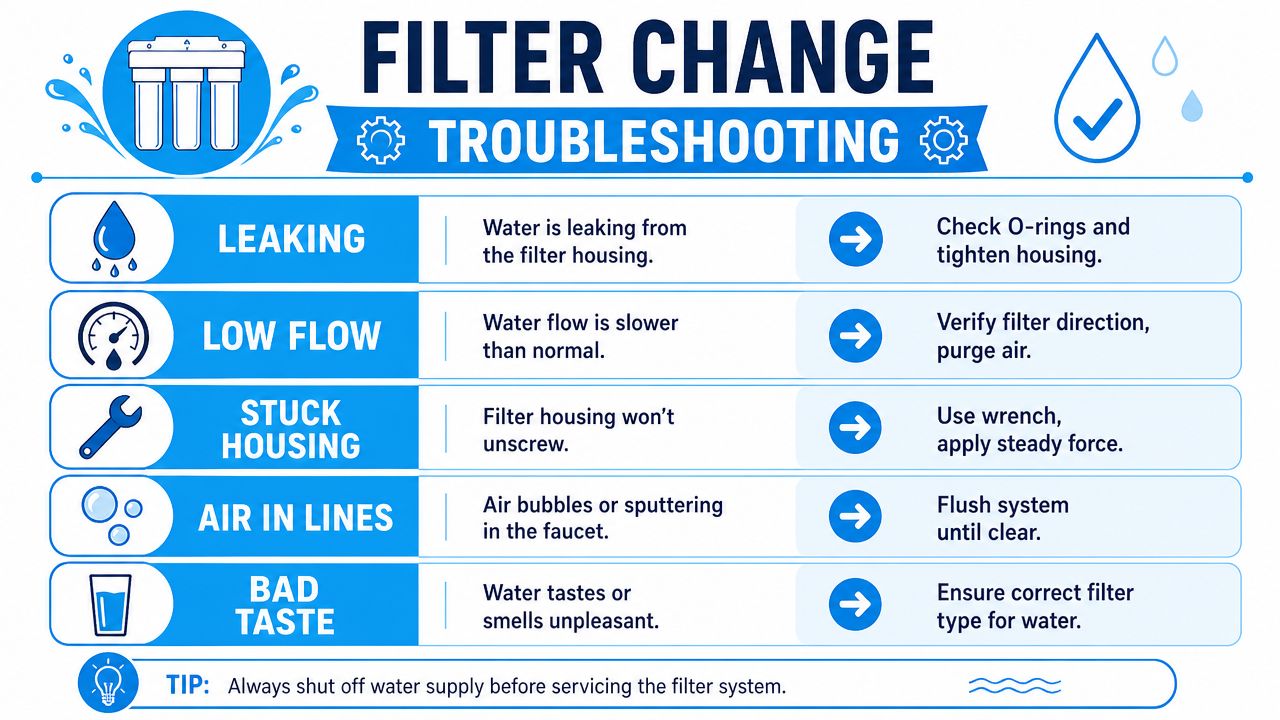
Solving Common Problems During a Filter Change

Most filter-change problems come down to a short list. The nice thing is that they're usually fixable without tearing the whole setup apart.

A troubleshooting guide for water filter systems illustrating common issues like leaks, low flow, and bad taste.

Leak at the housing

If the housing drips after reassembly, the first suspect is the O-ring. Not the threads. Not your tightening strength. The O-ring.

Common causes include:

  • It slipped out of the groove
  • It twisted during tightening
  • There's grit in the groove or on the sealing surface
  • It's worn or cracked

Shut the water off, relieve pressure, reopen the housing, and inspect everything carefully. Most recurring leaks trace back to seal alignment.

Housing is stuck solid

This usually happens when someone over-tightened it last time, or pressure wasn't fully relieved before trying to remove it.

Use the proper wrench and apply steady force. If low flow has been one of your household symptoms, MG Drain Services' expert advice is a useful companion read because it helps you separate filter-related restriction from broader plumbing pressure issues.

Slow, even pressure with the correct wrench works better than sudden force.

Avoid pipe wrenches on the plastic sump unless you're prepared to replace parts.

Pressure is still poor after the new filter

If the old filter was clogged and the new one didn't fix low flow, check these likely culprits:

Symptom Likely cause What to check
Weak flow everywhere Valve not fully reopened Main shutoff or bypass position
Weak flow right after replacement Air still in lines Continue flushing cold water
Flow dropped after install Cartridge mismatch or wrong orientation Filter type and seating
Only some fixtures affected Debris reached aerators Faucet aerators and showerheads

If you installed a finer filter than your system usually runs, that can also change how the house feels. Not every cartridge that fits a housing is a good match for whole-home flow demands.

No water flow at all

This one sounds scary, but it's usually something simple.

  • Bypass left in the wrong position
  • Main valve still shut or only partially open
  • Cartridge seated incorrectly and blocking flow
  • A direction-specific filter installed backward

When there's zero flow, go back to basics. Valve positions first. Cartridge orientation second. Fancy theories later.

Smart Maintenance and Choosing Your Next Filter

The easiest whole house filter change is the one you saw coming. Don't rely on memory. Set a reminder on your phone, write the date on the housing, and keep the correct replacement cartridges on hand before you need them.

If you use a multi-stage system, remember the maintenance logic that matters most: replace filters based on how the system behaves, not just on habit. Reduced pressure, changing taste, odor issues, and visible sediment loading are all practical signals that the system wants attention.

Pick the next filter with your water in mind

Your next cartridge choice should match your water source and what you're trying to fix.

  • Sediment filters: Best when sand, rust, or visible particles are the main issue.
  • Carbon filters: Better for chlorine taste and odor concerns.
  • Well water setups: Often need a different approach than municipal water because the water problems aren't the same.
  • Very fine cartridges: They can improve certain outcomes, but they can also create flow complaints if they're too restrictive for the house.

If you want to sharpen your filter selection before the next purchase, the buying and maintenance articles in Water Filter Advisor's advice library are a useful place to compare system types, cartridge roles, and homeowner-friendly maintenance tips.

Dispose of the old cartridge according to the manufacturer's instructions and your local waste rules. Don't toss a soaking wet used filter on a shelf and tell yourself you'll handle it later. That's how basements start collecting mystery messes.


If you want help choosing the right replacement cartridge, comparing whole-house systems, or getting clearer answers on maintenance, visit Water Filter Advisor.

DIY Whole House Water Filter System: Your Complete Install Guide

Taking on a DIY whole house water filter system is a seriously satisfying project, and it's far more achievable than you might think. This guide is your complete game plan, walking you through everything from figuring out what's lurking in your water to getting your system installed and flowing. No confusing jargon here—just the practical, hands-on steps you need to build the perfect water purification fortress for your home.

Your Blueprint for Pure Water in Every Faucet

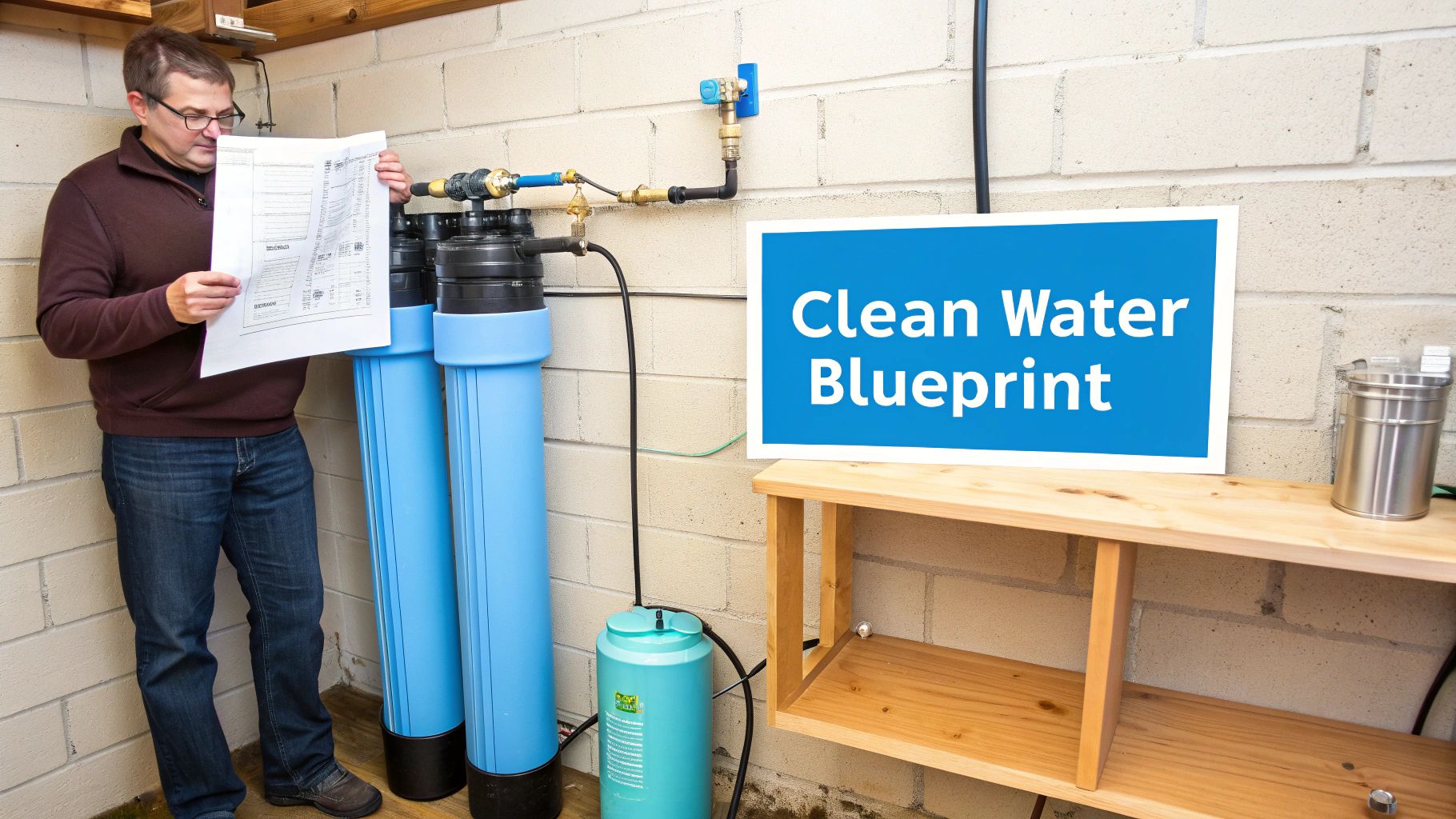
A man reviews a blueprint next to a DIY whole house water filter system with blue tanks.

When you decide to go the DIY route for your water filtration, you're the master of your water's destiny. You get to build a setup that's perfectly dialed in for your home's unique water challenges. Whether you're on city water or a private well, a whole house system—often called a point-of-entry (POE) system—purifies every single drop of water coming into your house.

That means pristine water from every tap, from the kitchen sink where you fill your glass to the shower that starts your day. And the benefits go way beyond just better-tasting water.

Why Go with a Whole House System?

Installing a system that treats all your water offers some major advantages that those little pitcher filters just can't touch. By catching contaminants right at the source, you're protecting your entire home's plumbing from the inside out.

  • Protect Your Appliances: Sediment, chlorine, and hard water minerals can be assassins for your water heater, dishwasher, and washing machine, causing them to fail prematurely. A whole house filter is like a personal bodyguard for these expensive appliances.
  • Healthier Showers: Your skin and hair can absorb chemicals like chlorine during a hot shower. Filtering that water can lead to softer skin, shinier hair, and less irritation.
  • Improved Taste and Odor: Say goodbye to common culprits behind funky tastes and smells, like chlorine or sulfur. You’ll have crisp, clean water for drinking, cooking, and making that perfect cup of coffee.
  • Peace of Mind: There's nothing like knowing your family is protected from a whole range of potential contaminants—think lead, pesticides, and industrial chemicals that can slip through municipal treatment.

This proactive approach to water quality is catching on. The global home water filtration market, valued at USD 20.8 billion in 2025, is expected to surge to USD 35.7 billion by 2035. This huge jump is fueled by growing concerns over contaminants like PFAS and lead. The DIY option is particularly popular because it eliminates the high installation costs that deter nearly half of homeowners. You can discover more insights about the home water filtration market and its growth.

A DIY whole house water filter system isn't just another weekend project; it's a powerful investment in your family’s health and the longevity of your home's plumbing. By handling the install yourself, you gain complete control over your water quality and save a significant amount of money.

What's Really Lurking In Your Water?

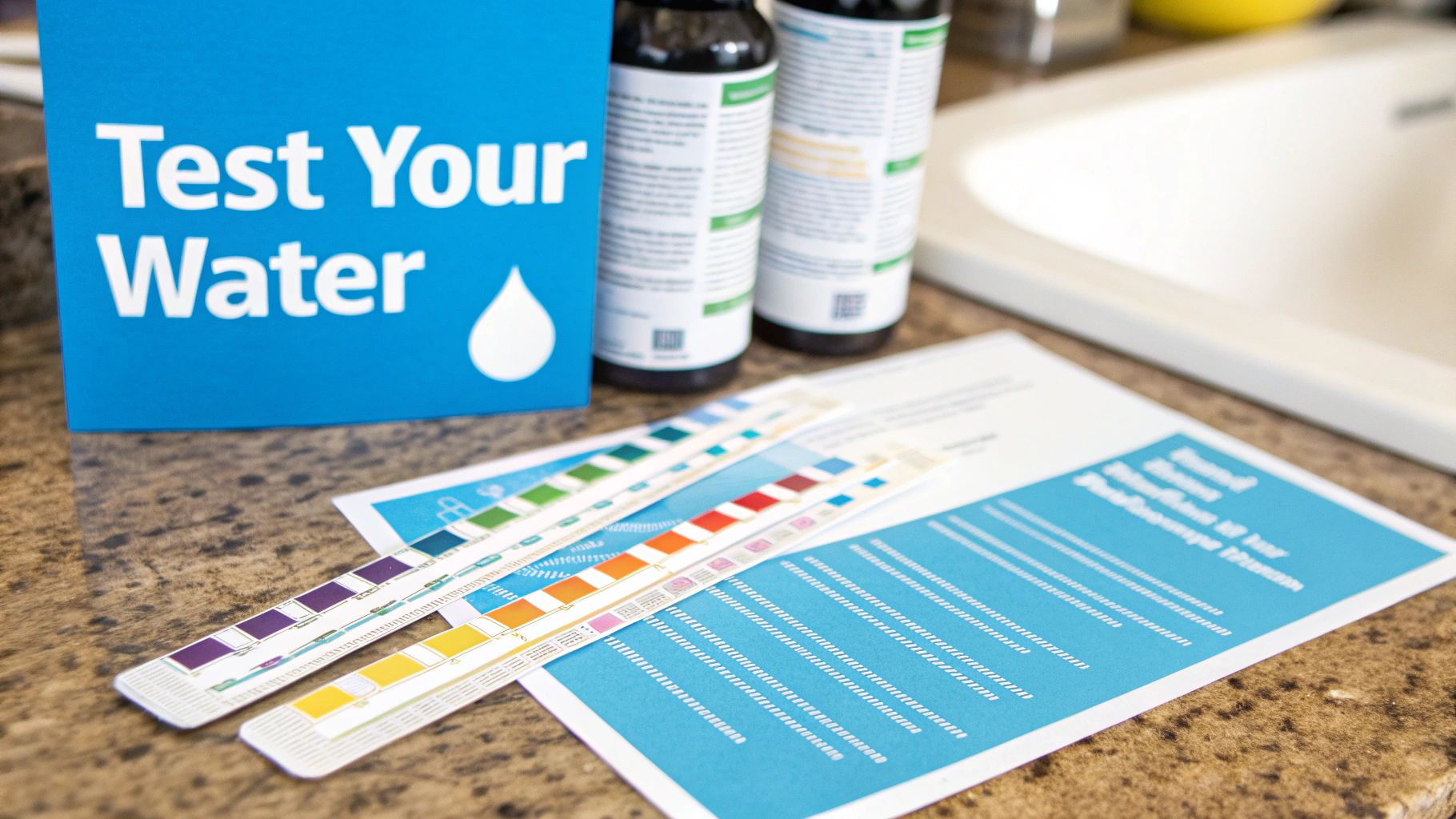
A blue 'Test Your Water' sign stands beside water testing strips and reagent bottles on a kitchen counter near a sink.

Before you buy a single fitting or cut a single pipe, you have to play water detective. The single biggest mistake people make with a DIY whole house water filter system is guessing what they need to filter out.

Building a system without knowing what’s in your water is like trying to cook a gourmet meal blindfolded. You'll likely use the wrong ingredients and end up with an expensive mess.

Your water gives you clues every day. That faint swimming pool smell in the shower? That’s chlorine. Those frustrating reddish-brown stains in the toilet bowl? Almost certainly iron. These signs are a good start, but you need hard data to build a filtration strategy that truly works.

First Stop: Your City's Water Report

If you’re on city water, you have a powerful and free tool at your disposal: the Consumer Confidence Report (CCR). Your local water utility is legally required to publish this annually. It details what contaminants they found, at what levels, and how those numbers compare to EPA safety standards.

You can usually find your CCR on your utility’s website by searching for "[Your City Name] water quality report." It can look a bit technical, but focus on common players like chlorine, lead, haloacetic acids (HAA5), and total trihalomethanes (TTHMs)—these are typical byproducts of disinfection. This report is your starting blueprint.

Remember, the city’s report shows water quality as it leaves their plant. It doesn't account for contaminants the water might pick up on its journey through miles of pipes to your home—like lead from old service lines.

Digging Deeper with Home and Lab Testing

For well water users—and anyone on city water who wants the complete picture—testing is non-negotiable. You have a couple of options.

  • At-Home Test Strips: These are the quick-and-easy option. They’re inexpensive and give you an instant reading for basics like chlorine, pH, and water hardness. They're great for a quick snapshot but lack the precision for serious contaminants.
  • Lab Analysis Kits: This is the gold standard. You buy a kit, collect a water sample, and mail it to a certified lab. In return, you get a detailed report showing the exact levels of heavy metals, VOCs, bacteria, and much more. If you're on a private well, this is an absolute must.

Identifying the Usual Suspects

With your test results in hand, you can connect the dots and choose the right filtration solutions. Here are the common culprits and what they mean for your home.

The Common Contaminants Table

Contaminant Common Signs & Symptoms Primary Concern
Chlorine Swimming pool smell, dry skin/hair after showering. Taste, odor, and potential formation of harmful byproducts.
Hardness Minerals White, crusty scale on fixtures; soap scum; dull clothes. Damage to plumbing and appliances; inefficient soap usage.
Iron Reddish-brown stains on sinks and laundry; metallic taste. Staining, potential for pipe buildup, and unpleasant taste.
Sediment Cloudy or murky water; grit in your tap aerators. Clogs pipes and appliances; can carry other contaminants.
Lead Odorless, tasteless, and colorless. Only detectable via testing. Serious health risks, especially for children.
VOCs Can have a chemical or gasoline-like odor in high concentrations. Wide range of health effects depending on the specific chemical.

Armed with this data, you’re no longer guessing. You're making an informed decision, ready to pick the specific filters that will solve your unique water problems. This evidence-based approach is the foundation of a successful DIY whole house water filter system.

Choosing Your Filtration Arsenal

Alright, you've got your water test results. The mystery is solved. Now for the fun part: choosing the hardware to battle whatever is lurking in your pipes. This is where you architect a diy whole house water filter system that’s custom-built for your water.

It’s easy to get lost in the sea of filter types and technical jargon. But don't worry. Think of it like assembling a team of superheroes—each filter has a specific power, and you just need to pick the right heroes for your situation.

The Core Components of Your System

Most whole house setups aren't a single magic bullet; they're a series of filters working in sequence, with each stage tackling a different class of contaminants. Let's break down the key players.

  • Sediment Filters: This is your non-negotiable first line of defense. A sediment filter is a mechanical screen that snags physical gunk like dirt, sand, rust, and silt. Placing this filter first is crucial; it protects the more delicate and expensive filters downstream from getting clogged with debris.
  • Carbon Filters: These are the undisputed champions of water filtration. Granular Activated Carbon (GAC) is incredible at adsorbing chemical contaminants. Its main job is to remove chlorine, which dramatically improves the taste and smell of city water. Carbon also excels at tackling volatile organic compounds (VOCs) and other chemicals. If your water utility uses chloramine, look for catalytic carbon, which is specially designed to break it down.
  • Specialized Media Filters: For specific problems, you need a specialist. If your tests show heavy metals like lead or mercury, you'll need a filter with media like KDF (Kinetic Degradation Fluxion). This alloy media uses a chemical process to remove those heavy metals and also inhibits bacteria growth within the filter.
  • Water Softeners or Conditioners: If you're battling hard water—those stubborn white, crusty deposits on your faucets and shower doors—a water softener is the definitive solution. These systems use ion exchange to physically remove hardness minerals (calcium and magnesium), protecting your plumbing and appliances from destructive scale buildup.

Matching Filtration Media to Your Water Problems

Here’s a quick-reference table to help you match the most common water issues with the right filtration media.

Filtration Media and Contaminant Targets

Contaminant Type Common Examples Primary Filtration Media Best For
Physical Particulates Dirt, Sand, Rust, Silt Sediment Filter (Spun or Pleated) The first stage of any system; protects other filters from clogging.
Chemical Disinfectants Chlorine, Chloramines Activated Carbon (GAC, Catalytic) Improving taste and odor; removing synthetic chemicals and VOCs.
Heavy Metals Lead, Mercury, Iron KDF, Activated Alumina, Manganese Greensand Targeted removal of specific metals; often used for well water.
Hardness Minerals Calcium, Magnesium Ion Exchange Resin (Water Softener) Preventing scale buildup and protecting pipes and appliances.
Microbiological Bacteria, Viruses, Cysts UV (Ultraviolet) Purifier Disinfecting water without chemicals; essential for untreated well water.

Choosing the right system isn't about buying the most expensive setup. It’s about a targeted, intelligent approach. You use your water test results to assemble the exact team of filters needed to solve your specific problems—nothing more, nothing less.

Sizing Your System to Avoid a Pressure Catastrophe

This is one of the most critical steps, and it’s where many DIY projects go wrong. Sizing isn't just about fitting the system in your basement; it's about ensuring it can keep up with your family's water demand. Get this wrong, and you'll suffer the ultimate frustration: a weak, dribbling shower.

The key metric is Gallons Per Minute (GPM), which measures the system's flow rate.

An undersized system creates a bottleneck, unable to treat water fast enough. Ever tried to shower while the washing machine is running, only to have the pressure drop to a pathetic trickle? That’s the classic sign of an undersized system.

To figure out your needs, add up the flow rates of all the fixtures you might use simultaneously:

  • Standard shower: ~2.5 GPM
  • Dishwasher: ~2 GPM
  • Washing machine: ~2 GPM

With all three running, you’d need a system that can handle at least 6.5 GPM. For most families, a system rated for 10-15 GPM provides a safe buffer.

Equally important is the port size on the filter housings. Always choose 1-inch ports. The slightly cheaper ¾-inch options are a trap. That extra quarter-inch makes a massive difference in flow capacity and is your best insurance against pressure loss. The technology is similar to how different air purification systems target specific pollutants; different water filtration media are designed for specific water contaminants.

The Hands-On Installation Process

Alright, you’ve done the research, tested your water, and selected your filtration arsenal. Now comes the exciting part: getting your hands dirty and installing your DIY whole house water filter system. This is where your planning pays off, and it’s a completely manageable project for anyone with some basic confidence and the right tools.

This isn't just about connecting a few pipes. It's about building a reliable system that will serve you for years. Let's walk through the process, from prepping your workspace to the final victory of turning the water back on.

Your Pre-Installation Checklist

A smooth installation begins before you ever touch a pipe. Getting organized now will save you from frustration and those dreaded mid-project trips to the hardware store.

First, let's gather your tools and materials:

  • Pipe Cutters: Ensure you have the right type for your pipes—a tubing cutter for copper or a specialized shear cutter for PEX.
  • Wrenches: A couple of adjustable pipe wrenches are essential for tightening fittings.
  • Deburring Tool: Don't skip this. This gadget cleans the inside and outside of a cut pipe, which is critical for a perfect, leak-free seal.
  • Tape Measure & Marker: The classic rule: measure twice, cut once.
  • Bucket & Towels: Water will come out of the lines when you cut them. Be prepared.
  • Fittings: Whether using push-to-connect, compression, or threaded fittings, always buy a few extras.

With your gear ready, the next step is the most important: safety.

Safety First, Always: Before you do anything, find your home's main water shutoff valve and turn it off completely. Inform everyone in the house not to use any faucets. Also, kill the power to your electric water heater at the breaker box to prevent the heating elements from burning out.

Planning Your Layout and Bypass Loop

Now, let's determine the system's location. It must be installed on the main water line, immediately after the shutoff valve and water meter, but before the line splits off to the water heater or other fixtures. This ensures every drop of water entering your house is filtered.

Here’s a pro tip that will make future maintenance a breeze: build a bypass loop. A bypass is a simple three-valve arrangement that lets you route water around the filter system.

Why is this so critical? When it’s time to change filters, you simply close the valves to the filter and open the bypass valve. Water is instantly restored to your house. This means you can perform maintenance without being rushed. It’s a small amount of extra work upfront that pays off immensely.

Even if you’re new to plumbing, reviewing a step-by-step plumbing installation guide for a simpler project can give you confidence in working with home water lines.

Making the Cut and Installing the System

The main water is off. Open the lowest faucet in your house (like a basement sink) and one on the top floor to drain most of the water from the pipes. Now you're ready.

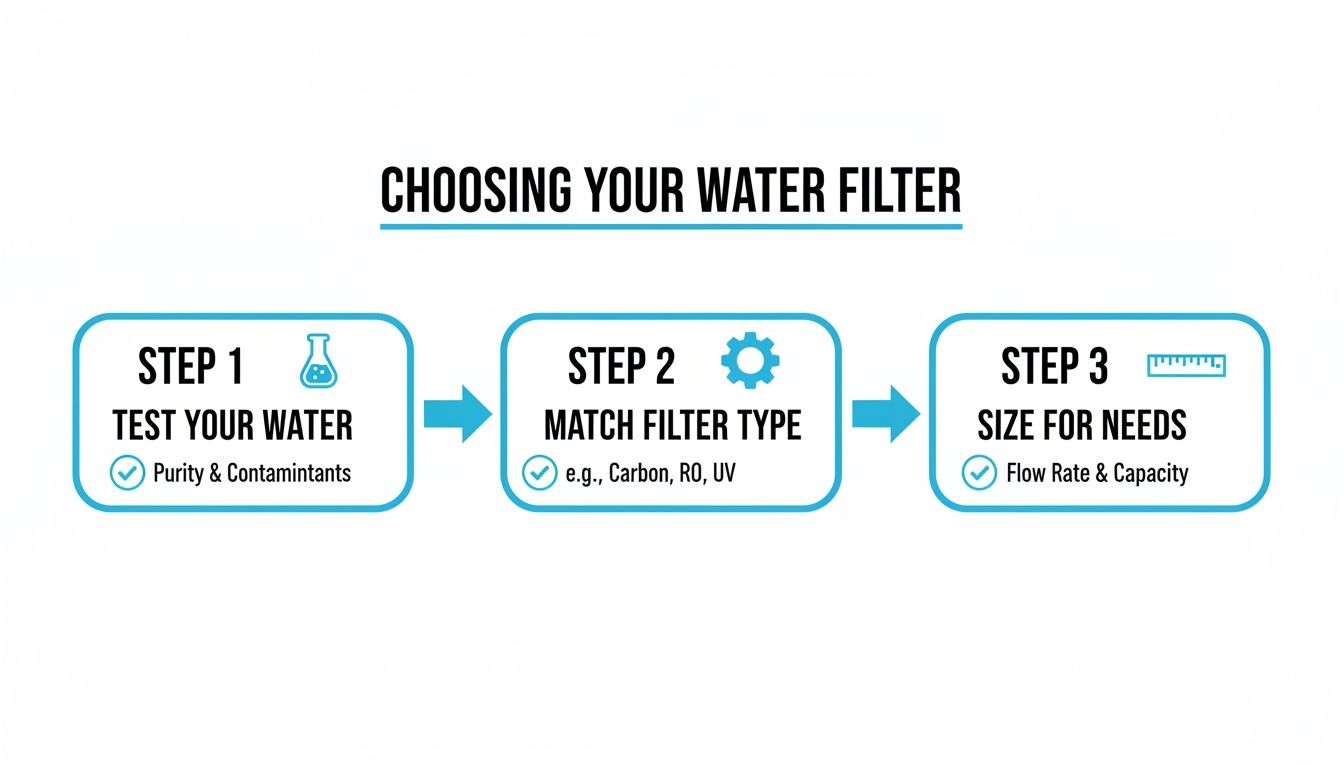
A step-by-step guide on choosing a water filter, covering testing, type matching, and sizing.

A successful project follows a clear path: test the water, match the filter to the problem, and size it correctly for your home.

Here’s how to bring it all together:

  1. Measure and Cut: Carefully measure the section of pipe you need to remove for the filter assembly, including your bypass valves. Double-check your measurement, take a deep breath, and make a clean, straight cut.
  2. Clean and Prepare: Use your deburring tool to smooth the cut edges. For copper pipe, use emery cloth to polish the ends until they shine. This prep work is essential for a watertight connection.
  3. Assemble and Connect: Install your shutoff valves and fittings onto the pipe ends. Whether you're using push-to-connect fittings or soldering copper, ensure every connection is solid. Pay close attention to the "in" and "out" arrows on the filter unit—installing it backward is a common mistake!
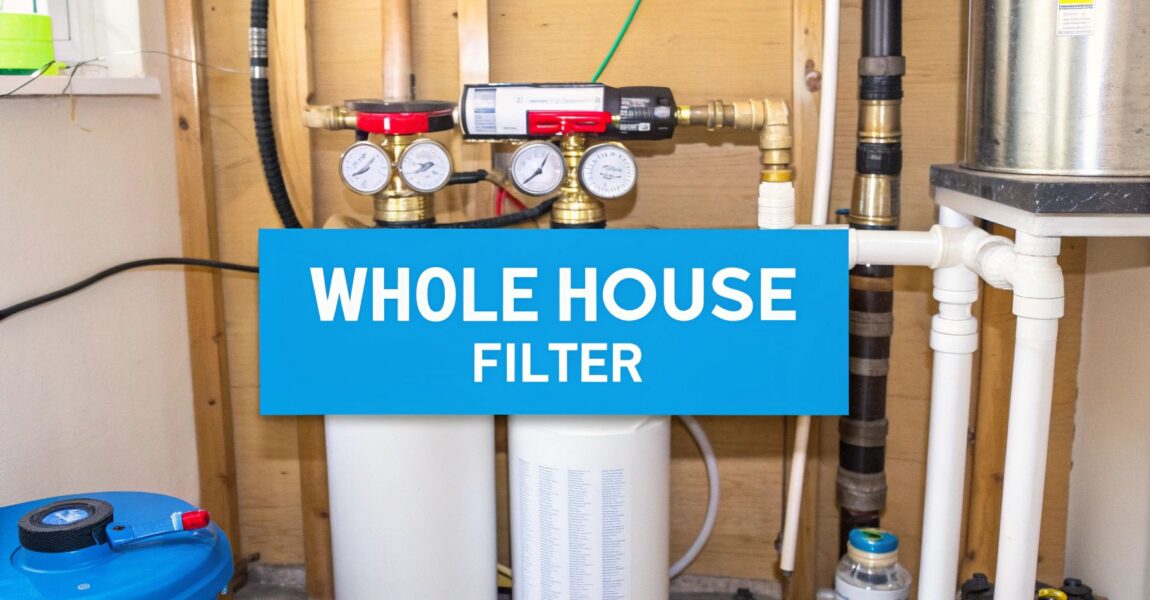
  4. Add Pressure Gauges: Here’s another pro tip. Install a pressure gauge before the filter and another one right after. This is your system’s dashboard. When the filter is new, both gauges will read about the same. As the filter clogs, the "after" gauge will show a pressure drop, visually telling you it's time for a filter change.

Once connected, turn the main water supply back on—just a crack at first. Listen for hissing and check every joint for drips. If it’s dry, open the valve fully. Turn on a faucet to bleed the air out of the lines. That’s it! You've just upgraded your entire home's water quality.

Keeping Your System Running Smoothly

Getting your new DIY whole house water filter system installed is a major achievement, but the job isn't quite finished. Think of it like a car—it needs regular tune-ups to perform at its best. Consistent, simple maintenance is the secret to ensuring your investment continues to pay dividends in clean, pure water for years to come.

If you just set it and forget it, filters will inevitably clog, performance will degrade, and you’ll eventually be right back where you started. A little proactive scheduling keeps everything running perfectly.

Creating a Realistic Maintenance Schedule

There’s no universal maintenance schedule; it depends on your specific water quality and the system you installed. For example, if your water is heavy with sediment, that pre-filter will clog much faster than it would with relatively clear city water.

As a starting point, here’s a general timeline you can adapt:

  • Sediment Pre-Filters (Every 3-6 Months): This will be your most frequent task. These filters are on the front lines, catching all the physical debris.
  • Carbon Block Filters (Every 6-12 Months): These workhorses remove chlorine and chemicals. They eventually become saturated and stop absorbing contaminants.
  • Large Carbon Media Tanks (Every 3-5+ Years): For large, backwashing carbon systems, you'll replace the media inside the tank itself. It's a less frequent but more involved job.

Keeping up with maintenance is getting easier. The water filter market, expected to grow from USD 16.78 billion in 2026 to USD 22.8 billion by 2030, is embracing smart technology. Many new systems feature app alerts that notify you when a filter change is due.

The benefits are clear—a good system can extend a water heater’s life by 30% by preventing scale buildup, a problem affecting 85% of US homes. For most homeowners, spending $100-$200 a year on filters is a small price compared to the $1,000+ they might spend on bottled water. You can read the full research about the water filters market for more details.

Listening to Your System: Signs of Trouble

Your system will give you clear signals when it needs attention. You just have to know what to look—and taste—for. Catching these clues early prevents small issues from becoming major problems.

A sudden, noticeable drop in water pressure is the #1 sign of a clogged filter. Those pressure gauges you installed are your best friend. If the "post-filter" gauge reads significantly lower than the "pre-filter" one, it's time to change that sediment filter.

Another dead giveaway is a decline in water quality. If that chlorine taste or musty smell returns, your carbon filter is exhausted and can no longer absorb contaminants. It's time for a replacement.

Troubleshooting Common Hiccups

Even with a perfect installation, you might encounter minor issues. Don't worry; most are simple fixes.

The Noisy Pipes Problem
A "water hammer" or vibrating noise when a faucet is shut off quickly is usually caused by air trapped in the lines post-installation. You can typically bleed it out by opening a few faucets on your top floor and in the basement simultaneously for a couple of minutes.

The Tiny Drip at a Fitting
Small, persistent drips at threaded fittings are more annoying than anything. To fix it:

  1. Shut off the water using your bypass loop.
  2. Open a nearby faucet to relieve pressure.
  3. Use two wrenches—one to hold the fitting steady and the other to give the nut a slight quarter-turn.
  4. Turn the water back on and check your work. Avoid over-tightening.

Filters That Clog Too Quickly
If you're replacing sediment filters in weeks instead of months, it could be due to city water main flushing or high sediment levels in a well. The solution might be switching to a pleated, washable sediment filter or adding a "spin-down" filter before your main cartridge to catch larger debris.

Common Questions About DIY Water Filtration

It's one thing to have a plan, but another to get ready to cut into your home's main water line. A DIY whole house water filter system is a significant project, and it’s normal to have questions. Let's tackle the most common ones so you can start with confidence.

How Much Does This Project Really Cost?

This is where the DIY approach truly shines. The total cost can vary, but you are almost guaranteed to save a substantial amount over hiring a professional.

The system itself is the biggest expense, ranging from $300 for a simple sediment and carbon filter combo to over $1,500 for multi-stage systems with a water softener or UV lamp.

Budget another $50 to $200 for plumbing supplies like pipes, fittings, and valves for your bypass loop. Ongoing costs for replacement filters might be $75-$150 per year. Compare that to the $500 to $1,000 in labor alone that a plumber might charge, and the savings are crystal clear.

Will a Whole House Filter Kill My Water Pressure?

This is the number one fear, but a correctly sized system will have a virtually unnoticeable effect on your water pressure. The key is matching the system's Gallons Per Minute (GPM) rating to your home's peak water demand.

A classic rookie mistake is choosing a filter with ¾-inch ports instead of 1-inch ports to save a few dollars. That smaller diameter is a guaranteed bottleneck that will choke your flow. Always invest in 1-inch ports to keep your showers powerful.

If you notice a pressure drop over time, it’s almost always a clogged sediment filter—proof the system is doing its job and a friendly reminder that it's time for a filter change.

Do I Need a Plumber or Can I Really Do This Myself?

If you have basic plumbing skills, this is a very achievable DIY project. If you've ever installed a faucet or repaired a leaky pipe, you likely have the necessary skills. Modern push-to-connect fittings have made this job even more accessible by eliminating the need for soldering copper pipes.

However, it's always wise to check with your local municipality. Some building codes require a licensed plumber for any work on a home's main water supply. A quick call can prevent a major headache later.

What Is the Difference Between a Filter and a Softener?

This is a crucial distinction. The easiest way to think about it is that filters remove things, while softeners exchange things.

  • A water filter is designed to trap or absorb contaminants. Media like activated carbon or sediment cartridges grab things like chlorine, pesticides, rust, and lead.
  • A water softener has one specific job: to target "hardness minerals" like calcium and magnesium. It uses ion exchange to swap those mineral ions for sodium ions, preventing scale buildup in your pipes and appliances.

For many homes, especially those with hard water, the best solution is to have both. They work perfectly as a team—the filter cleans the water, and the softener protects your plumbing.


At Water Filter Advisor, we're dedicated to helping you make sense of your home's water quality. From in-depth buying guides to practical maintenance tips, we provide the clear, research-backed information you need. Start your journey to better water today by exploring our resources at https://www.waterfilteradvisor.com.