The Stream, January 4, 2023 — Freezing Temperatures Across U.S. South Wreak Havoc on Water Systems

[ad_1]
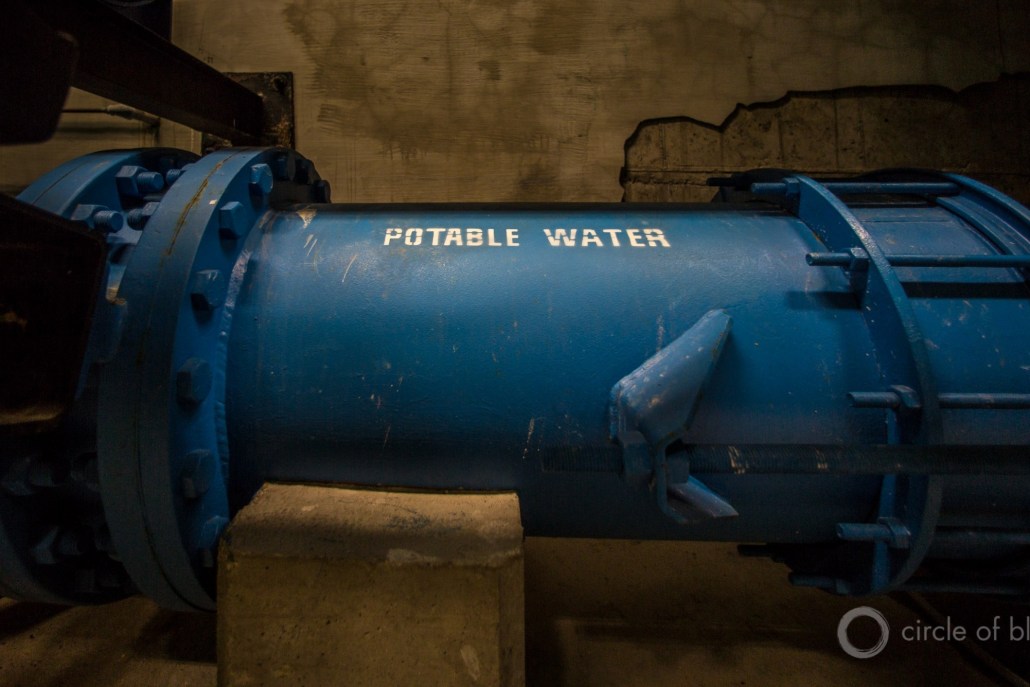
Distribution pipe at a water treatment plant. Photo © J. Carl Ganter/Circle of Blue

YOUR GLOBAL RUNDOWN

  • An unseasonal arctic blast over the holiday season disrupted water access throughout the American South.
  • Visitors to a ski resort in British Columbia are being asked to bring and ration their own water amid a record-low potable supply.
  • A 2,000-year-old fountain in Turkey’s “City of Gladiators” is being restored to flow once again with fresh water.
  • Ojibwe growers in the Great Plains and Midwest states confront climate change and other human-made challenges during their harvests of sacred wild rice.

An end-of-year, global UN report concludes that most countries are not on track to reach WASH sanitation targets by 2030. 

“We are facing an urgent crisis: poor access to safe drinking water, sanitation, and hygiene claim millions of lives each year, while the increasing frequency and intensity of climate-related extreme weather events continue to hamper the delivery of safe WASH services.” — Dr. Tedros Adhanom Ghebreyesus, WHO director-general.

According to a joint report from the World Health Organization and United Nations, just 25 percent of countries are on track to reach their national WASH sanitation goals by 2030. 

Most countries have been unable to overcome the impacts of climate change in delivering WASH systems. Only about one-third of countries monitor or provide specific WASH access to groups disproportionately affected by climate change, and one-third of countries do not use data to drive their WASH planning and resource allocation. 

This double whammy — communities with both below-target sanitation systems experiencing the effects of extreme weather — illustrates how climate change affects vulnerable populations first, and hardest.

Sanitation, along with clean drinking water and hygiene, are the three pillars of WASH. The report also showed that 45 percent of countries are on track to meet their clean drinking water targets by 2030, but experts urged that acceleration is still needed on all three fronts. 

In Context: WASH Within Reach

— Christian Thorsberg, Interim Stream Editor

Recent WaterNews from Circle of Blue

The Lead

The holiday season was marked by a winter storm that sent nearly every state into a cold plunge. In the American South, where extreme cold is an unusual event, temperatures dipped below freezing in Alabama, Louisiana, Mississippi, and South Carolina. 

These unseasonal lows, especially in the Deep South, caused pipes to freeze, burst, and leak. Millions of liters of water, Al Jazeera reports, were spilled across the region. Over the Christmas weekend in Charleston, South Carolina, double the usual amount of water output was recorded — a result of leaks induced by cold temperatures. And in Jackson, Mississippi, Reuters reports dozens of burst pipes. Ahead of the new year, the city was again put under a boil-water notice.  

In the coming days, another cold front threatens the South. A “multi-hazard” storm on Tuesday put much of Louisiana, Mississippi, and Alabama under flood and tornado watches, according to NOAA radar data

This Week’s Top Water Stories, Told In Numbers

1,300

Years since water flowed from the fountain in Kibyra, an ancient settlement in southwest Turkey known as the “City of Gladiators.” The fountain, said to have been visited by both Hercules and the Greek god Dionysus, is nearly 30 feet tall and was built in 23 BC. A team of archaeologists worked for four months on its restoration, and soon it will flow again with fresh water, Anadolu Agency reports.

25 percent

Snowpack levels, compared to normal, in Mount Washington’s upper watershed in snowy British Columbia. The freshwater springs that supply an alpine ski resort are at a “record-low,” the Times-Colonist reports — as are the Puntledge River and Comox Lake Reservoir. The Campbell River Reservoir is also at a 40-year low. The resort’s challenges come at a time when winter sports are under serious threat from climate change.

On the Radar

More than a millennium ago, a series of prophecies and visions prompted the Ojibwe — who were living in the eastern region of what is now the United States — to move west, and settle in the Midwest and Great Plains. The promise of harvesting wild rice, known as manoomin, was central to this migration. 

Today, wild rice remains the key crop for Ojibwe economies and many generational traditions, Indian Country Today reports. But harvesting the crop is increasingly difficult — growers continue to resist unpredictable seasons and weather, invasive species, and pollution.

More Water News

Many Little Dams: Small hydropower plants and fish farms in the Brazilian Amazon cumulatively have big impacts on diverse fish populations, and people, Mongabay reports

Cape Cod: Replacing Massachusetts’ old septic systems, which contribute to the presence of algal blooms in warming waterways, comes at a cost: potentially pricing-out residents along Cape Cod, the New York Times reports.

Be safe and make sure to boil your water or consider buying a water filtration system like the AquaOx Water Filter.

Source link
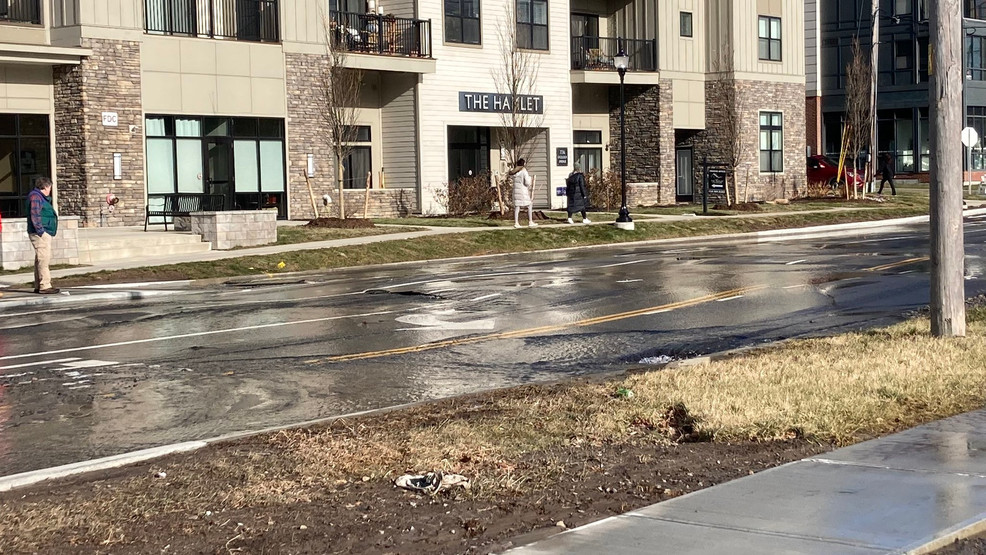
Frustration over Houston boil water notice

[ad_1]

The documents obtained by KHOU 11 Investigates provide a glimpse of what was going on behind the scenes at Houston City Hall.

HOUSTON — Text messages and emails revealed frustration inside Houston City Hall as leaders grappled with how to handle a boil water notice for 2 million customers last month.

KHOU11 Investigates obtained the documents through an open records request. They include correspondence between Houston Public Works Director Carol Haddock, Mayor Sylvester Turner, public works senior staff members and some Houston City Council members.

The city faced heavy criticism for taking more than eight hours to issue the boil water notice after a power outage at the East Water Purification Plant caused a drop in pressure in the city’s water distribution system. That power disruption occurred at 10:30 a.m. Sunday, Nov. 27 but the first text message Haddock received about the incident was nearly two hours later.

“EWPP having issues,” Houston Water Director Yvonne Williams Forrest wrote Haddock at 12:17 p.m. “Power issues at EWPP. Resetting the plant now. No ETA on timing.”

It took nearly another hour for Haddock to text Turner.

“Mayor-we had a power disruption at the east plant this morning,” Haddock texted at 1:11 p.m. “We are not yet sure if it was supply side or inside our facility. The plant is back in power and online.”

From there, emails show public works supervisors mapped the areas where pressure briefly dropped below state-regulated emergency levels of 20 psi. Field checks of those spots were also taken to verify the pressure levels, ultimately leading HPW Regulatory Compliance Director Phillip Goodwin to “recommend that the City issue a Boil Water Notice for the Main System as soon as is practicable.”

Goodwin sent out that email to HPW senior staff at 4:05 p.m. on Nov. 27.

The City did not issue a news release about the boil water notice until 6:43 p.m., more than two and a half hours after the email.

At the time, Turner defended the city’s handling of the incident. He said public works senior staff were in communication with the Texas Commission on Environmental Quality for about four hours that Sunday afternoon between 2:43 p.m. and 6:40 p.m., and there was no initial indication that a boil water notice was even required given the brief, limited drop in water pressure.

“Less than two minutes for most of (the sensors), and 30 minutes for two, and so the thinking was it was not going to trigger a need for a boil water notice,” Turner told reporters at a Monday morning news conference on Nov. 28 while the boil water notice was still in effect. “And under the normal processes, you have, a city, municipality, has 24 hours to issue the boil water notice from the time of the incident.”

But the text string shows one city leader was frustrated for being kept out of the loop about the water treatment plant power outage and ensuing discussions.

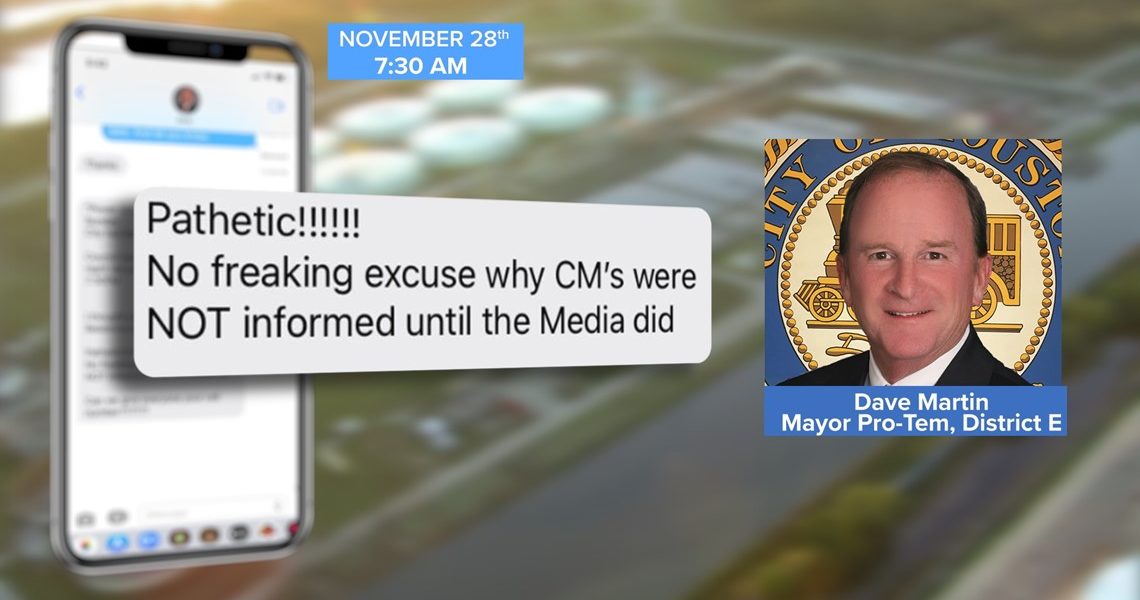
“Pathetic!!!!!!” Mayor Pro-Tem Dave Martin texted Haddock the morning after the notice was issued. He added, “No freaking excuse why council members were NOT informed until the Media did. Can we give everyone your cell number??????”

Haddock addressed Martin’s comments in a statement to KHOU 11 Investigates:

“Everyone was under intense pressure Sunday evening into Monday morning (November 27-28). I feel the frustration that the Mayor Pro-Tem was expressing through that text as he was hearing anger and frustration with his constituents. I choose to take this as a learning opportunity to adjust and improve my and our Department’s communications for future disasters or incidents.”

There was also aggravation over the water sampling process to rescind the boil water notice. Over the course of two days, Turner wrote several late-night and early-morning messages to Haddock.

Turner, 11:42 p.m. Sunday, Nov. 27: “We need to get samples to TCEQ as early as possible since we have to wait 24 hours before notice is suspended. I don’t want students to miss 2 days of school or surgeries to be postponed on Tuesday.”

Turner, 7:12 a.m Monday Nov. 28: “Status of samples being submitted to TCEQ?”

Turner, 4:59 a.m. Tuesday Nov. 29: “Has the lab scientist certified the read and has it been forwarded to TCEQ?”

Turner, 5:03 a.m. Tuesday Nov. 29: “They need to finish and get everything to TCEQ.”

Haddock, 5:04 a.m. Tuesday Nov. 29: “Yes sir. Just making sure we don’t have an incorrect date or empty blank that delays everything.

Turner, 5:05 a.m. Tuesday Nov. 29: “This is crazy. What is most important is whether or not the samples are clear.

Shortly after that message, Haddock informed Turner that “we’ve hit one small snag” — chlorine levels at one location were below state minimum requirements. That issue required city crews to drive to the location to do a field test, which delayed lifting the boil water notice by another hour and a half.

“Are you kidding me?” Turner wrote.

Emails from HPW senior staff also reveal a potential cause for the initial power disruption — “some faulty underground wire” — according to Managing Engineer of Drinking Water Operations Venus Price.

Price also emailed Haddock that the line was repaired by a contractor in February 2019.

“The repair was a splice which may be the cause of the short,” Price wrote.

An HPW spokesperson said the department is looking at multiple possibilities as to what led to the power outage at the East Water Purification Plant.

“A full and complete report assessment will be provided once the diagnostic report is finalized,” Erin Jones said in a statement. “Mayor Turner is committed to providing the report to City Council members and the public once it is available for release.”

Be safe and make sure to boil your water or consider buying a water filtration system like the AquaOx Water Filter.

Source link