
If you're hunting for the best shower filters for chlorine, you’ll quickly discover the real champions use a multi-stage filtration strategy. Think of it like an all-star team for your water. The powerhouses combine Kinetic Degradation Fluxion (KDF), Activated Carbon, and sometimes Vitamin C to knock out chlorine and its nasty sidekicks. This triple-threat approach is what saves your skin and hair from that harsh, post-shower dryness, and it runs circles around simpler, single-media filters.
Your Quick Guide to a Chlorine-Free Shower
Showering in chlorinated water can feel a lot like taking a daily dip in the local pool. It leaves your skin feeling tight, your hair brittle, and generally zaps the luxury out of your shower routine. Chlorine is a necessary evil for disinfecting the municipal water supply, but its benefits stop the moment it leaves your showerhead. Worse yet, the steam from a hot shower can release chlorine gas, which you then breathe in. A quality shower filter is a simple, yet game-changing, upgrade for any home.
The secret to choosing the right filter is understanding what’s happening under the hood. Different filter materials are pros at grabbing different contaminants, especially in the high-temperature, high-flow environment of a shower.
Core Filtration Technologies Explained
To make a smart choice, it helps to know the main players doing the heavy lifting in chlorine filtration. Each one has a specific job, but they all work together to give you a healthier, more refreshing shower.
- Kinetic Degradation Fluxion (KDF): This is a fancy name for a granular copper-zinc alloy that’s an absolute workhorse. It uses a slick electrochemical reaction to neutralize free chlorine, and it actually performs better in hot water—making it perfect for shower filters.
- Activated Carbon: A classic for a reason. Activated carbon is brilliant at adsorbing not just chlorine but also other organic gunk that can cause funky smells, immediately improving your water's quality.
- Vitamin C: This powerful antioxidant is your best friend if you have sensitive skin or color-treated hair. It instantly neutralizes both chlorine and its tough-to-remove cousin, chloramine, on contact.
The biggest leap in shower water quality comes from filters that layer these technologies. This synergy means that what one medium might miss, another one will catch, giving you a much more complete defense against common water contaminants.
This is just the beginning, of course. For a deeper dive into the world of home water filtration, you can explore more expert advice on water filters.
To see how these technologies stack up at a glance, check out the summary table below.
Comparing Top Chlorine Filtration Technologies
This table breaks down the primary ways shower filters eliminate chlorine, giving you a quick look at how well they perform, their longevity, and the water conditions they're best suited for.
| Filtration Technology | Primary Function | Effective Against | Best For |
|---|---|---|---|
| KDF | Converts chlorine into harmless chloride | Free Chlorine, Heavy Metals | Hot water environments; long-lasting chlorine removal. |
| Activated Carbon | Adsorbs chemicals and contaminants | Chlorine, Odors, VOCs | General-purpose filtering and improving water smell. |
| Vitamin C | Instantly neutralizes chlorine and chloramine | Chlorine, Chloramine | Sensitive skin, color-treated hair, and chloramine removal. |
Each of these has its place, but as you can see, combining them in a single home water filtration unit gives you the most comprehensive protection.
Why Chlorine in Your Shower Is a Health Concern
You know that “clean” smell your tap water has? That’s usually chlorine. It's a fantastic disinfectant for getting water safely to your home, killing off pathogens along the way. But once it hits your shower, its job is pretty much done. That’s where the benefits stop and the problems can start, especially for your skin.
The main problem is that chlorine is an oxidant. It doesn't know the difference between a harmful bacteria and the natural oils (sebum) that keep your skin and hair healthy and moisturized. It just strips them all away, and doing that day after day leads to a whole host of issues.
This constant stripping action is why your skin might feel tight, dry, and itchy right after you towel off. If you already deal with sensitive skin, eczema, or psoriasis, chlorinated water can be a real nightmare, triggering flare-ups and making a simple daily shower a source of constant irritation.
The Impact on Hair Health
Your hair doesn't get a pass, either. Chlorine directly attacks the hair cuticle—the protective outer layer of each strand—leaving it rough, damaged, and porous. The results are both visible and tangible.
- Increased Dryness and Brittleness: When those natural oils are gone, hair gets brittle and becomes way more prone to breakage and split ends.
- Color Fading: If you color your hair, chlorine is public enemy number one. It strips color fast, making vibrant shades look dull and brassy in no time.
- Unmanageable Texture: A damaged cuticle leads to frizzy, tangled, and lackluster hair that just won’t cooperate.
If you want to get into the nitty-gritty of how the chemical wreaks havoc on your hair, check out this a comprehensive guide to chlorine damage to hair. Knowing exactly what you’re up against is the first step to fixing it.
More Than Just Skin Deep
The issues with chlorine go beyond just surface irritation. A hot, steamy shower completely changes how you’re exposed to it. The heat causes chlorine to turn into a gas much faster than the water around it.
In a hot shower, the enclosed space fills with chlorine gas. Studies have shown you can absorb more chlorine through inhalation and your skin in a single 10-minute shower than by drinking eight glasses of the same water.
Breathing this in sends the chemical straight to your respiratory system and into your bloodstream. It gets worse. When chlorine mixes with the normal organic stuff in water (like bits of leaves), it creates disinfection byproducts (DBPs), like trihalomethanes (THMs). These compounds are even easier for your body to absorb and are a significant health concern.
It's no surprise that people are catching on. The global shower filter market was valued at around USD 1.12 billion and is expected to hit USD 2.13 billion by 2033. This growth is all about people like you wanting to cut down on their daily chemical exposure. Grabbing one of the best shower filters for chlorine isn't just about comfort anymore—it’s a smart, proactive step for your home and health.
A Look at the Top Chlorine Filter Technologies
To pick the right shower filter for your home, you need to know what's going on inside it. Not all filters are built the same, especially when you're dealing with hot water and harsh chemicals like chlorine. The best ones use specific technologies, and each has its own way of tackling the bad stuff before it ever touches your skin or hair.
We're going to dive into the main players in chlorine filtration: Kinetic Degradation Fluxion (KDF), Activated Carbon, Vitamin C, and Calcium Sulfite. Once you understand what each one does—and what it doesn't do—you'll be able to find the perfect fit for your shower.
Kinetic Degradation Fluxion (KDF): The Advantage
KDF, which stands for Kinetic Degradation Fluxion, is a special blend of high-purity copper and zinc that's a beast at neutralizing chlorine. It all comes down to a simple electrochemical process called redox (reduction-oxidation). You can think of it as a tiny, non-stop chemical reaction happening right inside your filter.
As chlorinated water passes over the KDF media, the two different metals create a small electrical charge. This zap instantly converts free chlorine—a nasty oxidant—into harmless chloride ions. We're essentially talking about basic salt. This process is incredibly effective, and it works even better in hot water, making it a go-to for shower filters.
Another huge benefit of KDF is its bacteriostatic properties. The environment it creates prevents bacteria, algae, and fungi from growing inside the filter cartridge. That means no gross gunk buildup, which keeps your filter working better, longer.
Activated Carbon: The Adsorption Powerhouse
Activated carbon is probably the most famous material in the water filter world, and for good reason. It works through a process called adsorption, where contaminants literally stick to the carbon’s enormous internal surface area. Just one gram of activated carbon can have a surface area the size of a football field.
This massive surface is riddled with microscopic pores that are perfect for trapping organic chemicals and other contaminants, including chlorine. It’s especially good at grabbing the compounds that create funky odors, which is why water filtered with carbon just smells and tastes cleaner.
But activated carbon has a weakness in the shower: it becomes less effective as the water heats up. That's why you almost always see it paired with KDF in multi-stage filters. The KDF does the heavy lifting with chlorine in the hot water, and the carbon swoops in to polish it off by removing other impurities.
Key Differentiator: KDF is the champ in hot water and stops bacteria growth, while activated carbon is better at removing a wider variety of organic compounds and odors. When you put them together in a home water filter, you get a powerful one-two punch against the most common chemicals in city water.
It's no surprise that demand for these smarter, multi-stage systems is on the rise. The filtered shower head market is on track to hit USD 4.5 billion by 2033, growing at a solid 7% each year. This boom shows people are actively seeking out better, more convenient ways to improve their water at home. You can explore more on these market trends and see what's new in filtration tech.
Vitamin C: The Instant Neutralizer
Vitamin C, or ascorbic acid, might seem like a newcomer to the filtration party, but it's an incredibly effective tool. Its claim to fame is its ability to neutralize not just free chlorine but also its tougher cousin, chloramine, on contact. Many cities now use chloramine (a mix of chlorine and ammonia) because it lasts longer in the water system.
The chemistry is simple: Vitamin C instantly turns both chlorine and chloramine into harmless compounds. This makes it a fantastic option if you have very sensitive skin, eczema, or color-treated hair, since it leaves absolutely no harsh oxidants behind.
- Speed: The reaction is pretty much instantaneous.
- Effectiveness: It's one of the only technologies that's great against chloramine in a small shower filter.
- Gentleness: It’s completely safe and mild on skin and hair.
The only real trade-off with Vitamin C filters is their lifespan. The Vitamin C gets used up in the process, so you might find yourself replacing cartridges more often than KDF or carbon models, especially if your home water has high chlorine levels.
Calcium Sulfite: The Hot Water Specialist
Calcium Sulfite is another workhorse that excels at reducing chlorine in hot water, much like KDF. It's a ceramic-like material that triggers a chemical reaction, converting chlorine into harmless chloride.
Its biggest selling point is its efficiency at high temperatures, which is right where activated carbon starts to struggle. Because of this, you’ll often find Calcium Sulfite beads packed into multi-stage filters right alongside KDF and carbon. This layered approach creates a filter that aggressively targets chlorine no matter how hot you like your showers.
By seeing how each of these technologies works, it becomes clear why a filter using a combination of them is far superior. A home water filtration system that strategically layers KDF, Calcium Sulfite, Activated Carbon, and maybe even Vitamin C offers the most complete protection, making sure every shower is free from the damaging effects of chlorine and other junk.
Choosing the Right Filter for Your Home's Water
Knowing the difference between KDF and Vitamin C is great, but how do you turn that into the right purchase for your shower? The truth is, the best shower filters for chlorine are never one-size-fits-all.
What works for one home might be overkill for another. Your water chemistry, your family's needs, and even whether you own or rent all play a huge part in finding the perfect match. This is where we get practical.
Matching a Filter to Your Life
Let's move past the lab specs and into real-world situations. The ideal filter for a solo renter is going to be completely different from what a family with young kids needs. Here are a couple of common scenarios to show you what I mean.
Scenario 1: The Family with Sensitive Skin
If anyone in your house deals with eczema, psoriasis, or just chronically dry, itchy skin, your top priority is getting rid of irritants. You need a filter that’s as gentle as possible, which means neutralizing every last bit of chlorine and chloramine.
- Top Concern: Removing skin irritants to soothe and protect delicate skin.
- Best Bet: A multi-stage filter that includes Vitamin C. It's fantastic because Vitamin C instantly neutralizes both chlorine and chloramine, leaving nothing behind to cause a reaction. Add KDF media into the mix, and you’ve got powerful chlorine reduction that holds up even in steamy, hot showers.
Scenario 2: The Renter in a Hard Water Area
If you're renting, a whole-home water filtration system is usually off the table. You need something simple to pop on and off. If you're also in a hard water area, you're fighting a two-front war against chlorine and the mineral buildup that makes hair feel like straw and leaves a chalky film on your skin.
- Top Concern: Chlorine removal, super easy installation, and some relief from hard water.
- Best Bet: An in-line filter or an all-in-one filtered shower head that contains a scale inhibitor (like polyphosphate). These are typically tool-free, so you won't be breaking any lease agreements. While they don't technically "soften" water, they prevent scale from building up, making the water feel much smoother on your skin and hair.
Choosing a filter isn't just about water chemistry; it's about solving a personal problem. Whether it's protecting your child's sensitive skin or saving your color-treated hair from fading, the right filter delivers a tangible improvement to your daily life.
This quick decision tree can give you a starting point based on what matters most to you.
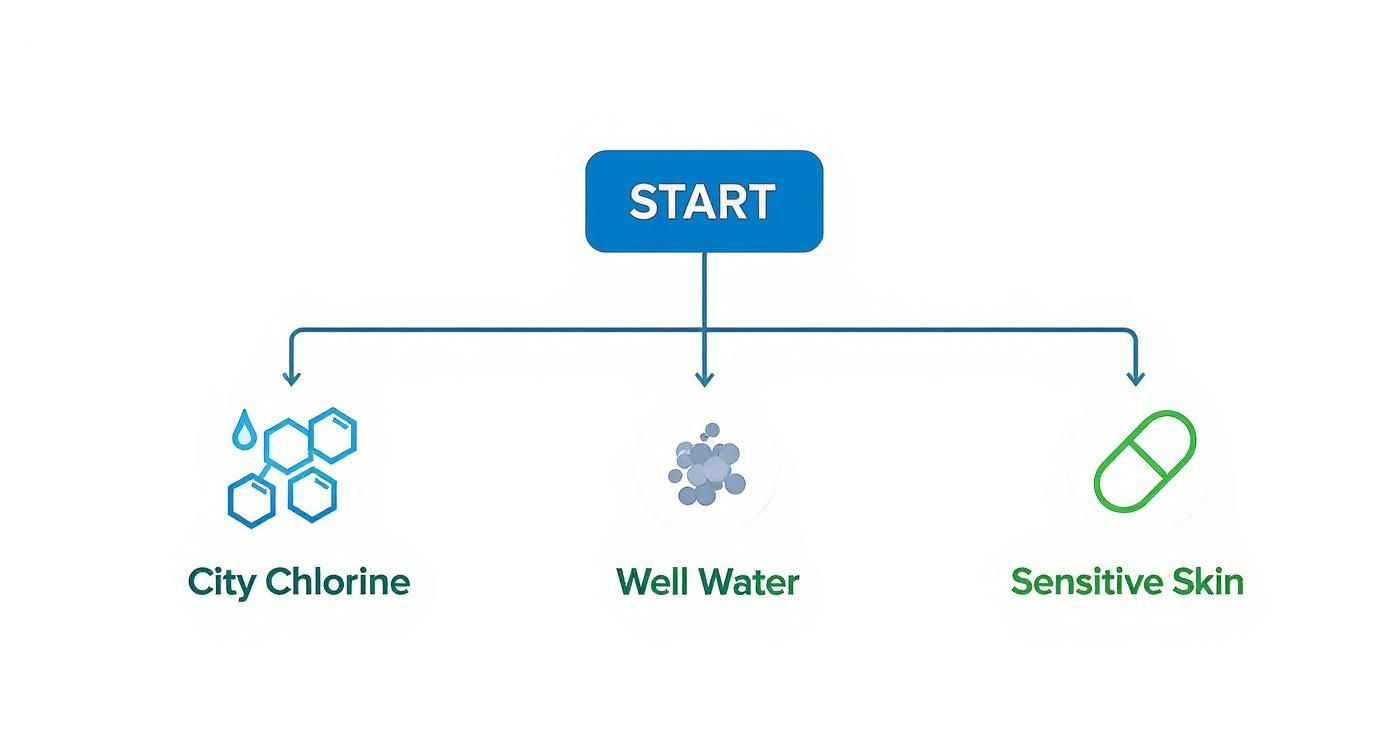
It’s a simple visual guide: KDF for most city water, activated carbon if you have well water concerns, and Vitamin C if you're dealing with serious skin sensitivity.
Building Your Buyer's Checklist
To make this even easier, running through a checklist ensures you don't miss anything important before you click "buy." It helps you think through your actual needs instead of getting distracted by marketing hype.
I've put together a simple but powerful checklist to walk you through the key points. Use these questions to size up any filter you’re considering. It’s a straightforward way to focus on what really matters for performance and long-term value.
Your Shower Filter Buyer's Checklist
This table will guide you through the essential questions to ask yourself, helping you match your unique needs with the right filtration technology for your home.
| Consideration | Questions to Ask Yourself | Recommended Filter Type |
|---|---|---|
| Water Source & Contaminants | Does my city use chlorine or chloramine? Do I have hard water mineral buildup? Do I smell sulfur or other odors? | Chloramine: Vitamin C or catalytic carbon. Hard Water: Filter with scale inhibitor. Odors: Activated carbon. |
| Household Needs | Do I or my family members have sensitive skin, eczema, or allergies? Is my hair color-treated? | Sensitive Skin: Vitamin C filter. Color-Treated Hair: Multi-stage filter with KDF and Vitamin C. |
| Installation & Compatibility | Am I a renter needing a temporary solution? Do I have a fixed, handheld, or rain shower head? | Renter: In-line filter or all-in-one filtered shower head. Compatibility: Check product specs for your shower type. |
| Flow Rate & Water Pressure | Is low water pressure a concern in my home? Do I prefer a high-pressure shower experience? | Look for filters with a rated flow rate of 2.0 GPM (gallons per minute) or higher to minimize pressure loss. |
| Long-Term Cost & Maintenance | What is the cost of replacement cartridges? How often do they need to be replaced (e.g., 3, 6, or 12 months)? | Calculate the annual cost of ownership (initial price + yearly cartridge cost) to find the best value over time. |
By working through this checklist, you go from just another shopper to an informed buyer. You’ll be ready to pick one of the best shower filters for chlorine that not only works but also fits your home, your lifestyle, and your budget.
Installation, Maintenance, and Long-Term Costs
A great filter is only as good as its upkeep. After you’ve picked out the best shower filter for chlorine, the real work begins with installation and a simple maintenance plan. This is what ensures you get consistent, clean water and that your investment actually pays off.
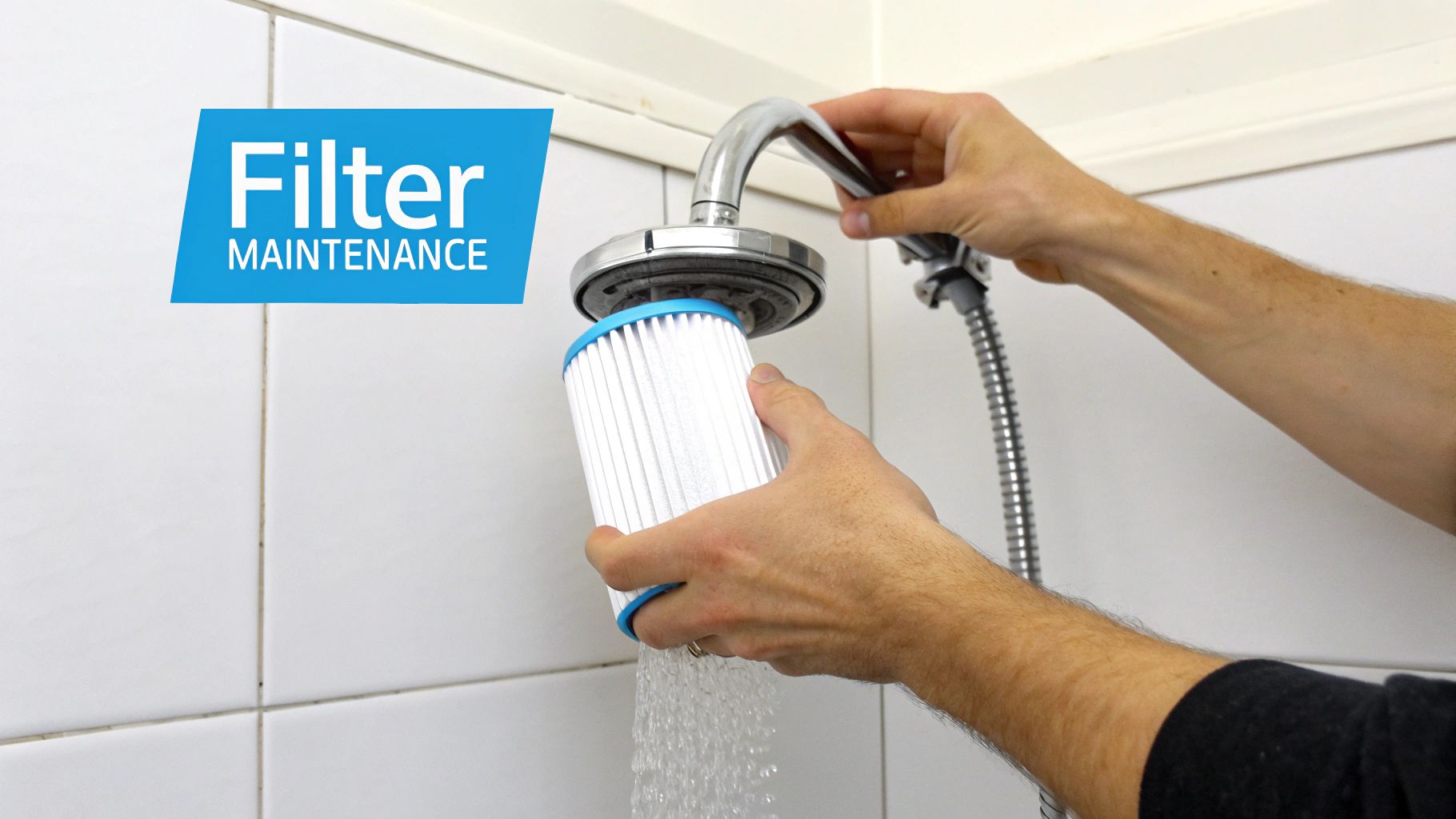
The good news? Most modern shower filters are designed for a quick DIY install. You’ll rarely need more than a few basic tools and maybe 15 minutes of your time. The whole point is to create a solid, leak-free connection so all the water is forced through the filter media.
Your Guide to a Leak-Free Installation
Whether you bought an in-line unit or a complete filtered shower head, the process is pretty much the same. Preventing annoying drips comes down to getting a tight seal at every connection point.
Here's a quick rundown:
- Prep the Area: First things first, shut off the water to the shower. Go ahead and unscrew your current shower head from the arm coming out of the wall. If it’s been on there for a while, you might need an adjustable wrench to get it loose.
- Clean the Threads: With the old head off, grab a rag and wipe down the threads on the shower arm. Getting rid of old sealant tape and mineral gunk is the secret to a good seal.
- Apply Plumber's Tape: Wrap the clean threads on the shower arm with plumber's tape, which usually comes in the box. Go clockwise about 3-4 times to create a nice, watertight barrier.
- Install the Filter: Now, screw the new filter or filtered shower head onto the taped threads. Get it hand-tight first, then give it one last gentle turn with a wrench if you feel it needs it. Be careful not to overtighten—you can crack the plastic housing.
If you're in the middle of a bigger project or notice your plumbing looks a bit ancient, sometimes it's best to call in a pro. For a full overhaul or just to make sure everything is perfect, professional bathroom renovation services can handle the installation and ensure your new setup is integrated flawlessly.
Keeping Your Filter in Top Shape
Maintenance really just means one thing: swapping out the filter cartridge on schedule. A spent cartridge can’t remove chlorine effectively, and you'll notice your water pressure taking a nosedive. Most brands suggest a replacement every three to six months, or after it’s handled 10,000 to 12,000 gallons of water.
The most obvious sign your filter is done is a sudden drop in water pressure. You might also start to smell that distinct "public pool" chlorine scent again. These are your filter's way of telling you its work is done.
Do yourself a favor and set a recurring reminder on your phone for replacement day. This simple habit is the single most important thing you can do to keep your filter working at its best.
Calculating the True Cost of Ownership
The price on the box is just the beginning. To get the full picture, you need to think about the Total Cost of Ownership (TCO). This means adding the upfront price to the ongoing cost of replacement cartridges over a year or two.
Let's break it down with two fictional filters:
| Feature | Filter A (Budget Model) | Filter B (Premium Model) |
|---|---|---|
| Initial Cost | $30 | $65 |
| Cartridge Cost | $15 | $25 |
| Cartridge Lifespan | 3 Months (4 per year) | 6 Months (2 per year) |
| Annual Cartridge Cost | $60 ($15 x 4) | $50 ($25 x 2) |
| First-Year Total Cost | $90 | $115 |
| Second-Year Total Cost | $150 | $165 |
As you can see, the budget filter looks like a steal at first glance. But with more frequent cartridge changes, its long-term cost creeps up to nearly match the premium one. Filter B, with its longer-lasting cartridge and likely superior media, often makes the slightly higher price a worthwhile trade-off. This kind of math helps you see past the marketing and find what offers real, sustainable value.
A Few Final Questions About Shower Filters
Even with all the data and comparisons, you might still have a few practical questions. To make sure you've got all the pieces of the puzzle, we've rounded up the most common things people ask when picking out the best shower filter for chlorine for their home.
How Can I Tell If My Shower Filter Is Actually Working?
The easiest and most certain way to know is to test your water. Grab some simple chlorine test strips or a droplet kit—you can find them online or at any pool supply store. First, test the plain tap water from your sink to get a baseline reading.
Then, let your shower run for about a minute and test the water coming through the filter. If you see a big drop in the chlorine level, your filter is doing its job. You'll probably also notice other changes over time, like that "swimming pool" smell completely disappearing and your hair and skin feeling softer.
The most obvious sign a filter is at the end of its life? A sudden and serious drop in water pressure. When your shower's powerful spray turns into a weak trickle, it's time to swap out that cartridge.
Will a Chlorine Filter Get Rid of Chloramine, Too?
This is a really important question, and the answer is almost always no. Most standard KDF and activated carbon filters are fantastic at removing free chlorine, but they're not built to handle chloramine. Chloramine is a much tougher compound made of chlorine and ammonia that many cities now use.
If your local water utility uses chloramine, you absolutely need a filter made specifically for it. Your best bet will be a multi-stage filter that includes either catalytic carbon or Vitamin C, since both are great at breaking the chloramine bond. Always check your local water report first, then shop for a filter that's certified for chloramine removal.
Is a Shower Filter Going to Ruin My Water Pressure?
Putting anything in the direct line of your water flow will technically reduce pressure a tiny bit, but a well-made, modern shower filter is designed to keep this to a minimum. Most high-quality filters are rated for a flow rate of 2.0 to 2.5 GPM (gallons per minute), which is right in line with what standard shower heads put out. You really shouldn't notice a difference.
If you do experience a major, sudden drop in pressure, that's your filter telling you it's clogged up. It means the filter media is full of gunk and can't let water through efficiently anymore. Stick to the manufacturer's replacement schedule, and you'll keep your water flowing strong.
Are Pricier Shower Filters Really Any Better?
Not necessarily. The price tag doesn't always reflect how well a filter works. What truly matters is the quality of the filtration media inside and whether it’s the right type for your water—not how much it costs. A more affordable filter with certified KDF and calcium sulfite can easily do a better job than a fancy, expensive one that lacks any third-party proof.
Instead of focusing on price, look for these things:
- NSF/ANSI Certifications: This is your guarantee that the filter performs as advertised.
- Filtration Media: Make sure it’s designed to remove what’s actually in your water (chlorine vs. chloramine).
- Cartridge Lifespan: Look at the long-term cost of replacement cartridges, not just the initial price of the unit.
By focusing on these performance details, you can find one of the best shower filters for chlorine that provides real value, no matter the cost.
Here at Water Filter Advisor, our mission is to empower you with clear, practical information to make the best decisions for your home's water quality. From our in-depth guides to honest reviews, we're here to help you create a healthier home for your family. Explore all our resources at https://www.waterfilteradvisor.com.
- November 30, 2025
- 0
- Uncategorized
