
Welcome to the main event in the battle for your tap water! In one corner, we have the lightning-fast, always-ready Faucet Filter, delivering clean water on demand. In the other, the cool, calm, and collected Pitcher Filter, offering simple, portable refreshment. Deciding between them isn't about which one is "better"—it's about which champion of hydration fits your home's unique needs.
Choosing Your Home Water Filtration Champion
Picking between a faucet filter and a pitcher filter feels like choosing between a sprinter and a marathon runner. Both get the job done, but in very different ways. They are both fantastic, affordable entry points into the world of home water filtration, primarily designed to banish the funky taste and smell from your tap water. However, they serve vastly different roles in a household, and understanding those nuances is the key to finding your perfect match.
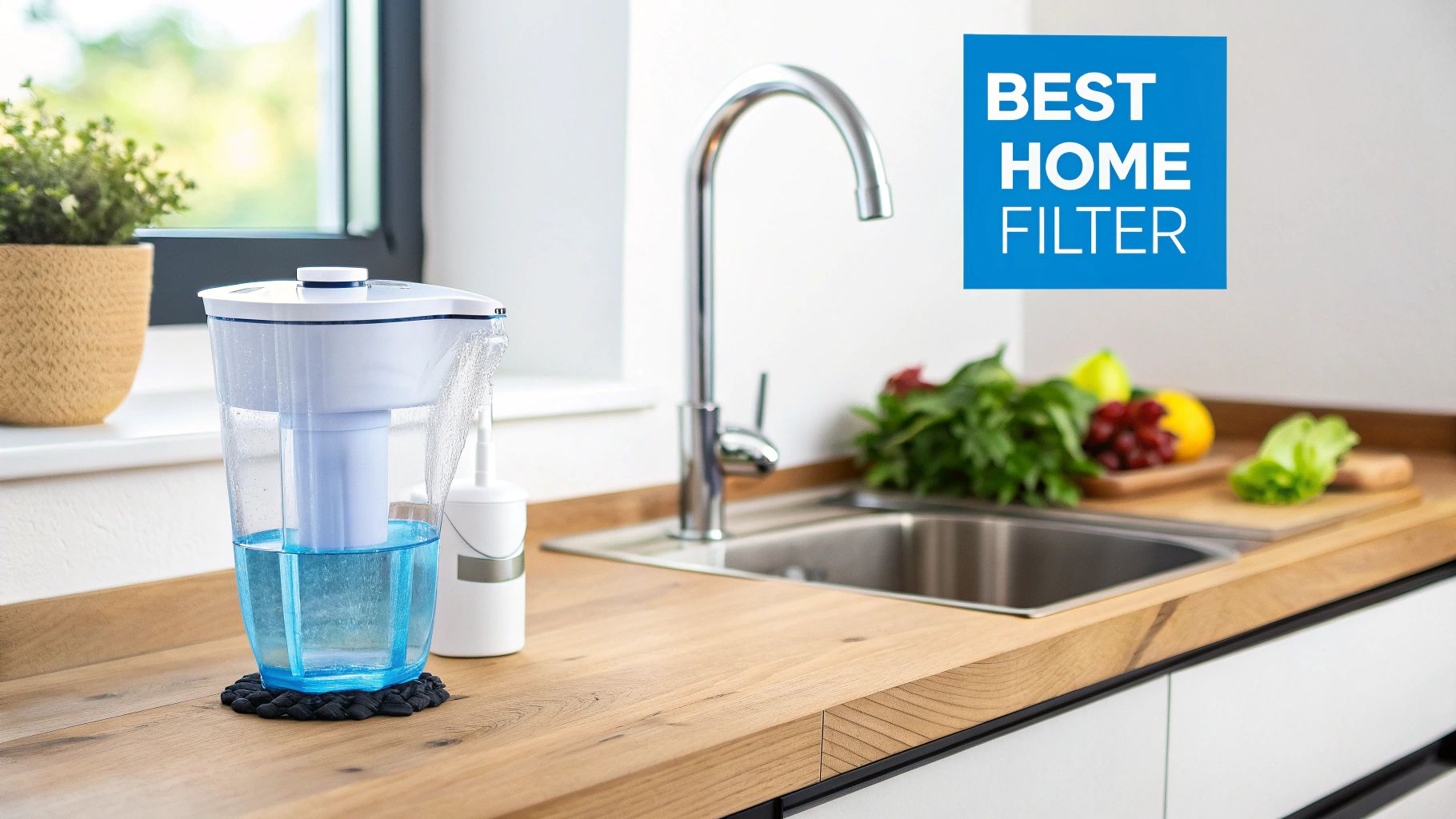
This guide will referee the match, breaking down the three key rounds: convenience, cost, and filtration power. Your daily habits are the ultimate judge. Are you a busy parent needing gallons of pure water for cooking now, or a solo dweller who just wants a perfectly chilled, refreshing glass of water after a long day? Let's find out.
The Tale of the Tape: Faucet filters are the undisputed champs of unlimited, on-demand filtered water for every kitchen task. Pitcher filters, meanwhile, are masters of portability and simplicity, ensuring chilled, clean water is always ready for you to grab and go.
Faucet Filter vs. Pitcher Filter: At a Glance
Here’s a quick tale of the tape to show how these two popular filtration systems stack up head-to-head.
For a deeper dive into the world of clean water, feel free to check out our complete collection of expert water filtration advice to find the perfect solution for your home.
| Feature | Faucet Filter | Pitcher Filter |
|---|---|---|
| Convenience | Instant access; switch between filtered and unfiltered water | Batch filtration; requires filling and waiting |
| Speed | Fast, on-demand flow | Slow, gravity-fed filtration |
| Installation | Simple, screws onto most standard faucets | No installation required |
| Portability | Fixed to the faucet | Highly portable; can be stored in the fridge |
| Filter Lifespan | Typically 100 gallons (2-3 months) | Typically 40 gallons (1-2 months) |
| Ideal For | Cooking, washing produce, high-volume drinking water | Chilled drinking water, small households, renters |
Ultimately, both are solid contenders for basic water filtration, but your lifestyle will truly determine which one earns the title in your kitchen.
The On-Demand Power of Faucet-Mounted Filters
If you live life in the fast lane and value a seamless, integrated setup in your kitchen, then faucet-mounted filters are your heavyweight champion. These compact powerhouses attach directly to your existing faucet, transforming it into an instant source of purified water. With the flick of a switch, you toggle between regular tap water for washing dishes and clean, filtered water for drinking, cooking, or making the perfect cup of coffee.
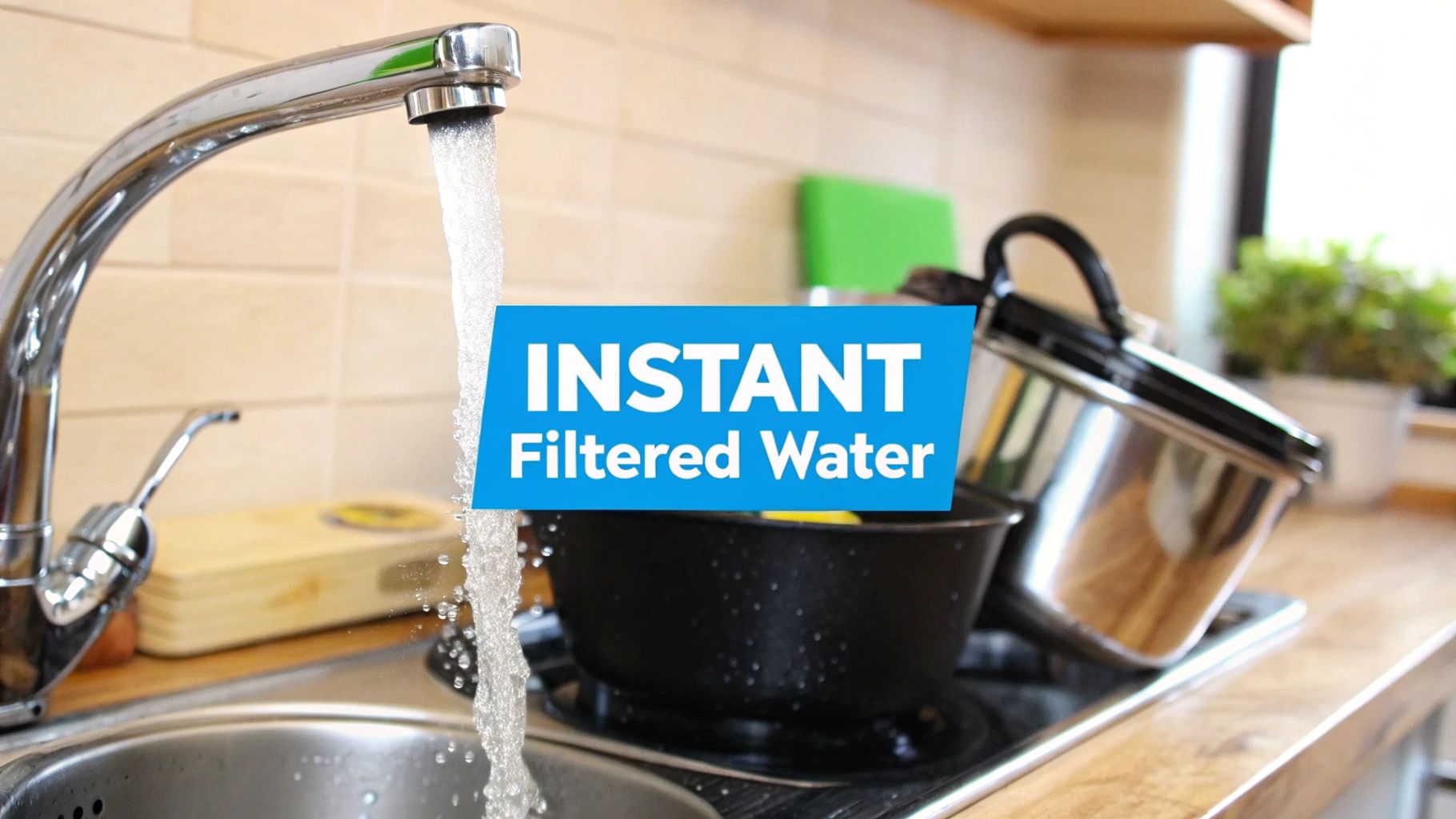
This "always-on" functionality is the main event. There's no waiting for a pitcher to fill, and you're not sacrificing precious real estate on your counter or in your fridge. For a bustling household, that kind of on-demand access is nothing short of a lifesaver.
Picture this: you're in the middle of whipping up a pasta dinner and need to fill a large pot. A faucet filter delivers a steady stream right then and there. No more tedious cycles of emptying and refilling a small pitcher.
How Faucet Filters Pack a Punch
Most faucet filters employ a multi-stage filtration process, with activated carbon as the star player. It's the same core technology found in many pitchers, but because tap pressure forces water through the filter, the media can be more compact and dense. This design is exceptionally effective at its main job: making your water taste and smell fantastic.
- Primary Goal: Its main mission is to reduce chlorine, sediment, and other common culprits that give water an unappealing taste or odor.
- Advanced Models: Higher-end versions are often certified to reduce serious contaminants like lead, mercury, and certain pesticides, offering an extra layer of protection.
- Filter Lifespan: A typical cartridge can process about 100 gallons of water, which usually serves a household for two to three months before needing a replacement.
The key advantage of a faucet filter isn't just filtration—it's filtration without the wait. It provides an unlimited, immediate supply of clean water, making it an indispensable tool for high-volume kitchen tasks.
This demand for convenient, point-of-use solutions is reflected in the market. The global faucet-mounted water filter market was valued at USD 2.6 billion and is projected to reach USD 4.13 billion by 2032. This growth underscores a clear consumer preference for filtration that seamlessly integrates into daily life. You can explore the data and market drivers in this detailed industry analysis.
When it’s faucet filter vs. pitcher filter, the faucet-mounted model is the undisputed winner for anyone who needs large volumes of filtered water instantly and values a clutter-free kitchen.
The Grab-and-Go Simplicity of Pitcher Filters
When it comes to pure, unadulterated simplicity and flexibility, the water filter pitcher is in a class of its own. The design is elegantly straightforward: a self-contained unit that uses the simple power of gravity to gently guide tap water through a filter cartridge. No tools, no complex attachments, and absolutely zero installation. It's the ultimate plug-and-play solution for better-tasting water.
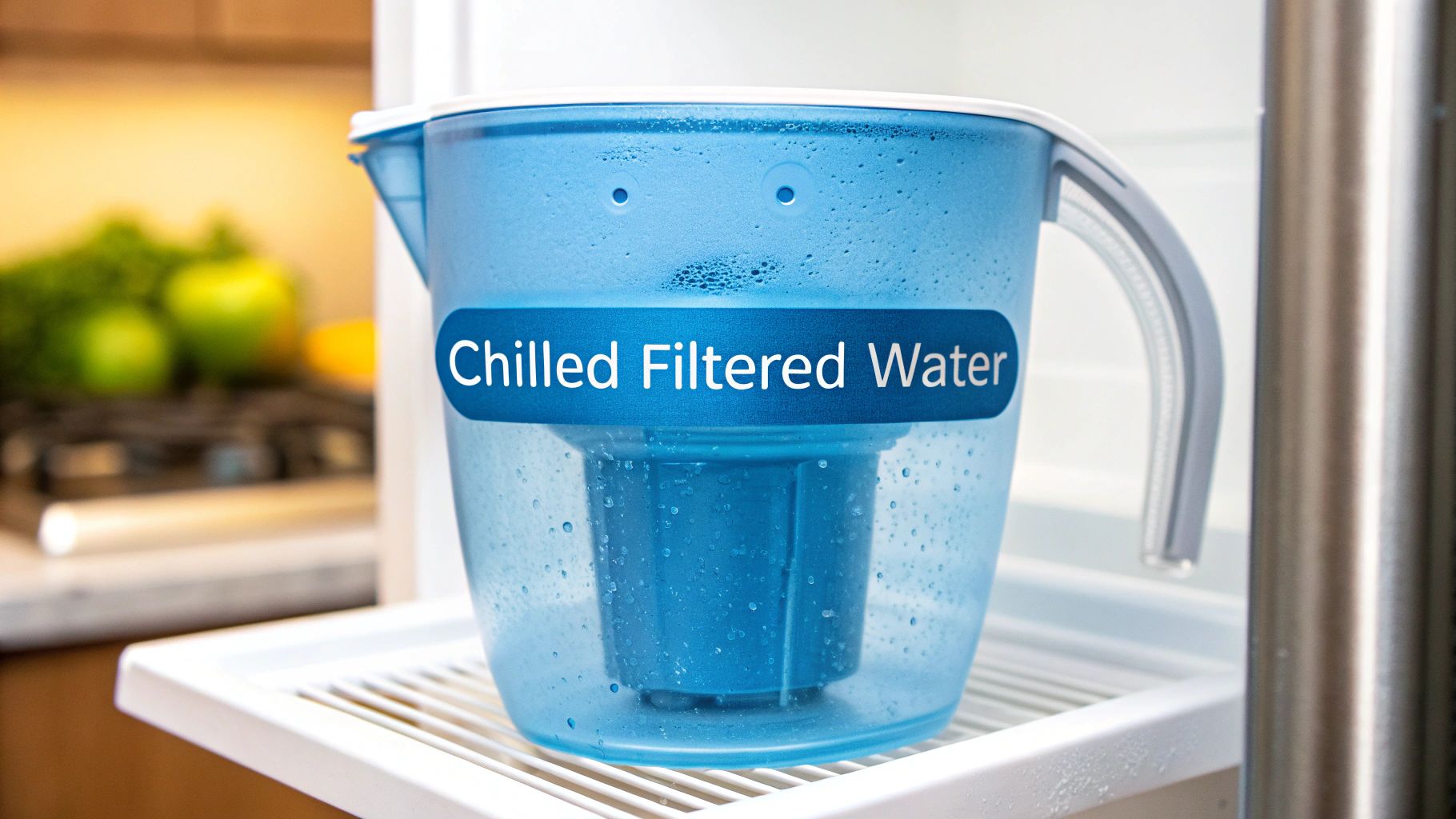
This grab-and-go nature makes pitcher filters a favorite for renters, college students in dorm rooms, or anyone with a non-standard faucet that won't accommodate a mounted device. You simply fill the top reservoir, let gravity work its magic, and in a few minutes, you have a fresh batch of filtered water ready to enjoy.
Their biggest selling point is undeniable portability. You can store a pitcher in the fridge for perfectly chilled water, bring it to the dinner table for easy refills, or keep it on your desk for all-day hydration. This freedom is a major factor in the faucet filter vs. pitcher filter debate, as you are never tethered to the kitchen sink.
What Pitcher Filters Do Best
The primary mission of a pitcher filter is to improve the taste and smell of your water. They are brilliant at reducing chlorine, the main culprit behind that "tap water" taste in many municipal water supplies. By tackling chlorine, along with other minor impurities like zinc and sediment, they deliver a noticeably cleaner and more refreshing drinking experience.
However, it's crucial to understand their limitations. A standard pitcher filter isn't designed to remove heavy-duty contaminants like lead, pesticides, or bacteria. Its role is to enhance the sensory experience of your water.
- Key Advantage: Unmatched portability with zero installation hassle.
- Primary Function: Excels at reducing chlorine to eliminate unpleasant tastes and odors.
- Best Use Case: Perfect for individuals or small households who primarily want chilled, great-tasting drinking water readily available.
Pitcher filters are the embodiment of user-friendly filtration. Their strength lies not in removing every possible contaminant, but in delivering simple, portable, and great-tasting water with minimal effort and cost.
This accessibility is a key reason for their immense popularity. They constitute a significant portion of the U.S. point-of-use water treatment market, which was valued at USD 4.59 billion and continues to expand. Their convenience and low initial cost make them an excellent gateway for anyone looking to improve their home water quality. You can learn more about the growth of accessible home water treatment solutions and see how consumer demand is shaping the industry.
Comparing Filtration Power and Performance
When you're deciding between a faucet filter and a pitcher, performance is about more than just better taste—it's about understanding what's being removed from your water. The real difference lies in the filtration technology and the certifications that prove it works. This is where the conversation shifts from merely improving taste to addressing specific health concerns.
The gold standard to look for is an NSF/ANSI certification. These aren't just marketing buzzwords; they are independent, third-party standards that verify a filter's claims. This certification is your best guarantee of a filter's real-world effectiveness.
Understanding the Key Certifications
Most basic filters, including nearly all pitchers and many entry-level faucet models, are certified to NSF/ANSI Standard 42. This standard addresses "aesthetic" effects, confirming the filter's ability to reduce substances like chlorine that affect taste and smell. If your main goal is a more refreshing glass of water, a filter with Standard 42 certification is likely sufficient.
However, if you're concerned about more serious contaminants, you need to look for NSF/ANSI Standard 53. This is a much more rigorous standard that covers health-related contaminants. Filters bearing this certification are proven to reduce harmful substances like lead, mercury, asbestos, and certain parasites like Cryptosporidium and Giardia.
The biggest performance difference is the certification. NSF/ANSI Standard 42 is for taste and odor. Standard 53 is for serious health contaminants like lead. You'll find plenty of faucet filters with both, but most pitchers only meet the first one.
This is a critical distinction. A faucet filter has a significant advantage here. The water pressure from your tap actively pushes water through the filter media, allowing for a denser and more complex filter design that can capture these microscopic contaminants more effectively.
Speed and Flow: A Practical Comparison
Certifications aside, the day-to-day user experience is a huge factor. A faucet filter provides an instant, continuous stream of clean water directly from the tap. You can fill a large pot for pasta in under a minute without a second thought. This immediate access makes it a seamless addition to any busy kitchen.
A pitcher filter, in contrast, relies on gravity. You fill the top reservoir and then you wait. It can take several minutes for the water to slowly trickle through the filter into the pitcher below. This "fill-and-wait" process is fine for grabbing a single glass of water but becomes a bottleneck when you need a large quantity at once.
Let's look at a real-world scenario:
- Faucet Filter: Fills a gallon pot for cooking in about 60-90 seconds. Instantly.
- Pitcher Filter: Takes a good 10-15 minutes to filter a full pitcher (typically about half a gallon). You'd need to refill it multiple times to get the same amount of water.
In the end, the choice between a faucet filter and a pitcher really boils down to your goals. For a basic taste improvement, a pitcher is a simple, no-fuss tool. But for certified removal of more dangerous contaminants and the convenience of instant, high-volume filtered water, a faucet-mounted system is the clear performance winner.
Analyzing Long-Term Cost and Daily Maintenance
Filtration power is crucial, but how a filter impacts your wallet and daily routine is where the rubber meets the road. In the faucet filter vs. pitcher filter debate, this long-term commitment of money and effort is often the deciding factor. The initial price is just the entry fee; the recurring costs and maintenance are what truly define the ownership experience.
A faucet filter might appear to be the more expensive option upfront, typically ranging from $30 to $50. However, its replacement cartridges are built for endurance, usually filtering about 100 gallons of water. This means you'll likely only be swapping it out three or four times a year.
Pitcher filters, on the other hand, have a lower initial cost, often between $20 and $40. The trade-off is their much shorter filter lifespan, which maxes out at around 40 gallons. For a family that uses a lot of water, this could mean changing the filter as frequently as once a month.
The True Annual Investment
When you crunch the numbers over a full year, the financial picture becomes clearer. That "cheaper" pitcher can actually end up costing more due to the frequent purchase of new filters.
Let's break down the typical annual costs and maintenance for both.
Annual Cost and Maintenance Breakdown
This table provides a clear overview of what to expect in terms of spending and effort over a year.
| Aspect | Faucet Filter | Pitcher Filter |
|---|---|---|
| Initial Cost | $30 – $50 | $20 – $40 |
| Replacement Filter Cost | $15 – $20 each | $10 – $15 each |
| Filter Lifespan | ~100 gallons (3-4 months) | ~40 gallons (1-2 months) |
| Annual Replacement Cost | $60 – $80 | $60 – $90 |
| Maintenance Effort | Low: Twist-on/off, <1 min | Medium: Soak, rinse, assemble |
As you can see, while the faucet filter has a slightly higher initial cost, its longer-lasting cartridges often make it the more economical choice annually. The convenience of fewer changes adds significant long-term value.
This infographic simplifies the choice based on your primary goal for your water.
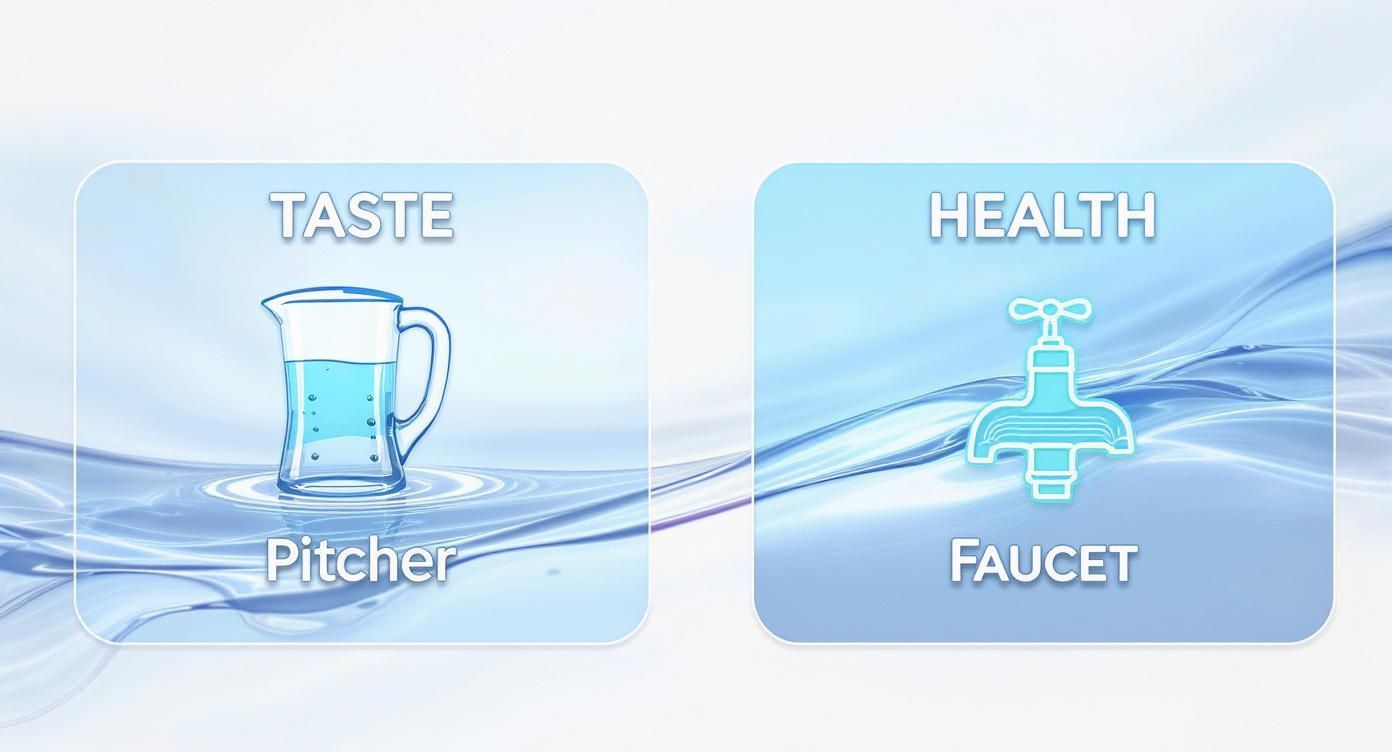
The visual makes it clear: if you simply want better-tasting water, a pitcher is an easy win. But if your concerns are centered on health-related contaminants, a faucet filter is the smarter starting point.
Daily Use and Maintenance Effort
Convenience extends beyond water access to the maintenance routine itself. Replacing a faucet filter is a clean, dry task. You simply twist off the old cartridge and twist on the new one. The entire process takes less than a minute.
Pitcher filter maintenance is a bit more involved. It requires disassembling the pitcher, soaking the new filter to activate it, rinsing it thoroughly, and then reassembling everything. It's a wet, multi-step process that can feel like a recurring chore.
While high-end systems like Reverse Osmosis dominate the water purification market in terms of sales, simpler options like pitcher and faucet filters represent a huge portion of the accessible solutions people use daily. The global water filters market, valued at USD 15.88 billion, reflects a clear consumer divide between those seeking top-tier performance and those prioritizing affordable convenience. You can find more insights into the global water purifier industry to see how these trends are shaping the market.
Ultimately, a faucet filter offers an "on-demand" lifestyle with minimal fuss. In contrast, a pitcher filter requires a "fill-and-wait" approach with more frequent, hands-on maintenance.
Making the Right Choice for Your Home
So, which filtration champion will you choose? The truth is, there's no single "best" filter. The right choice boils down to your daily routine, how much water you use, and what you use it for. It's about aligning the filter's strengths with your lifestyle.
Think in terms of volume and speed. If you have a busy household—cooking meals, brewing coffee, washing produce, and filling water bottles all day—the on-demand nature of a faucet filter is a game-changer. It delivers an endless stream of clean water precisely when you need it, keeping your kitchen flowing smoothly.
On the other hand, a pitcher filter is the undisputed king of simple, portable filtration. It's the perfect match for a single person in an apartment, a student in a dorm, or anyone who simply wants a supply of cold, filtered water waiting in the fridge.
Scenarios to Guide Your Decision
Let's place these contenders in real-world scenarios to make your decision crystal clear.
- The Busy Family: With kids needing drinks, pasta water to boil, and vegetables to rinse, a faucet filter is the clear winner. It provides gallons of filtered water on the spot, keeping your kitchen in motion without any delays.
- The Apartment Renter or Student: When you prioritize simplicity, want to avoid installation, and love chilled water, the pitcher filter is your ideal match. You can easily carry it from the kitchen to your desk or living room.
- The Small Kitchen Owner: In a compact kitchen, counter space is precious. A faucet filter keeps your countertops clear, which is a massive advantage, especially if you're planning an efficient small kitchen renovation.
At its core, the faucet filter vs. pitcher filter debate is this: Faucet filters are for high-volume, immediate needs right at the sink. Pitchers are for personal, portable use, especially if you prefer your water chilled.
By analyzing how you use water every day, you can choose the system that not only purifies your water but genuinely makes your life a little easier.
Your Top Water Filter Questions Answered
Even after weighing the pros and cons, a few lingering questions often remain. Let's tackle some of the most common queries from people caught in the faucet-versus-pitcher dilemma.
Will a Faucet Filter Fit on My Pull-Down Sprayer?
This is a major deal-breaker, and unfortunately, the answer is almost always no. Faucet-mounted filters are designed for standard, threaded faucets. They are not compatible with the unique connectors on pull-down sprayers, handheld models, or faucets with integrated sprayers. Always double-check your faucet type before purchasing.
Can I Really Trust That Filter Indicator Light?
Think of the indicator light as a helpful suggestion, not a precise scientific instrument. It's typically a simple timer based on an estimate of average usage or a set number of days. It has no way of knowing your actual water quality or consumption.
If you have particularly hard water or use significantly more water than average, your filter cartridge could be exhausted long before the light activates. The most reliable method is to track your usage in gallons to know exactly when it’s time for a replacement.
Is It Okay to Run Hot Water Through a Faucet Filter?
You should never run hot water through these filters. The heat can damage the activated carbon inside the cartridge, causing it to potentially release the contaminants it has already trapped back into your water. This permanently ruins the filter. Always remember to switch to the unfiltered setting for hot water.
Here at Water Filter Advisor, our goal is to help you find the right filtration setup for your home. For more deep dives and product reviews to help you decide with confidence, check out our guides at https://www.waterfilteradvisor.com.
- November 15, 2025
- 0
- Uncategorized
