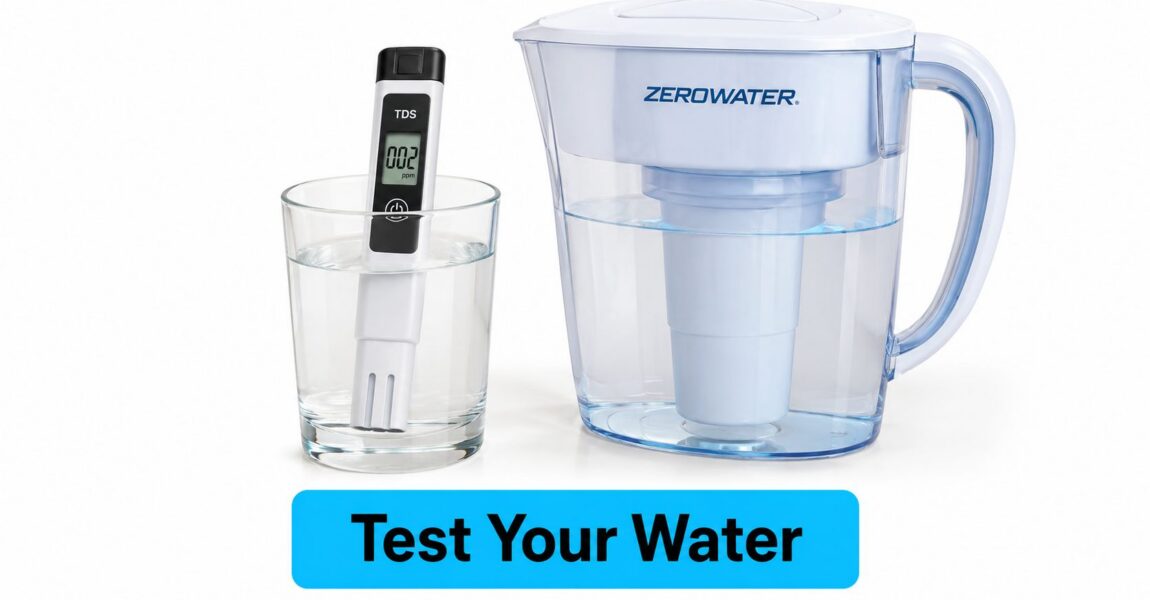
How to Use Zero Water Tester
You've just filled a new ZeroWater pitcher, spotted the small digital tester tucked into the lid, and wondered whether its reading can tell you if the water is safe. That's a sensible question, but the number has a narrower job than many people expect.
The tester can help you compare tap water with filtered water and monitor how consistently your filter is reducing dissolved solids. It can't identify particular contaminants or certify that water is safe to drink. Once you know that distinction, taking a useful reading is straightforward.
What Your ZeroWater Tester Is Really Telling You
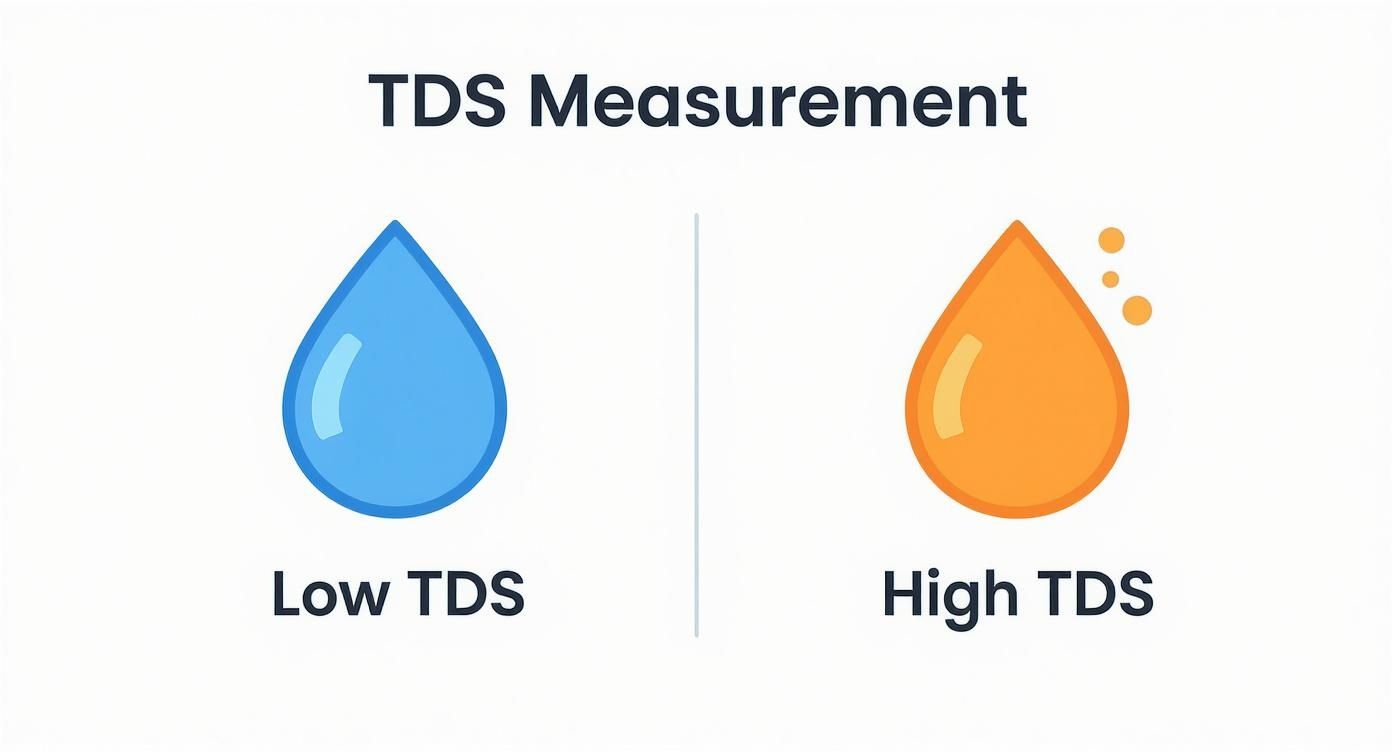
A ZeroWater tester is a total dissolved solids (TDS) meter. It measures how readily the water conducts electricity and uses that measurement to estimate the amount of dissolved material, displaying the result in parts per million (ppm). Because dissolved ions increase conductivity, the reading can help you compare a sample from your tap with one from your pitcher. A lower filtered-water reading suggests that the filter is removing conductive dissolved material.
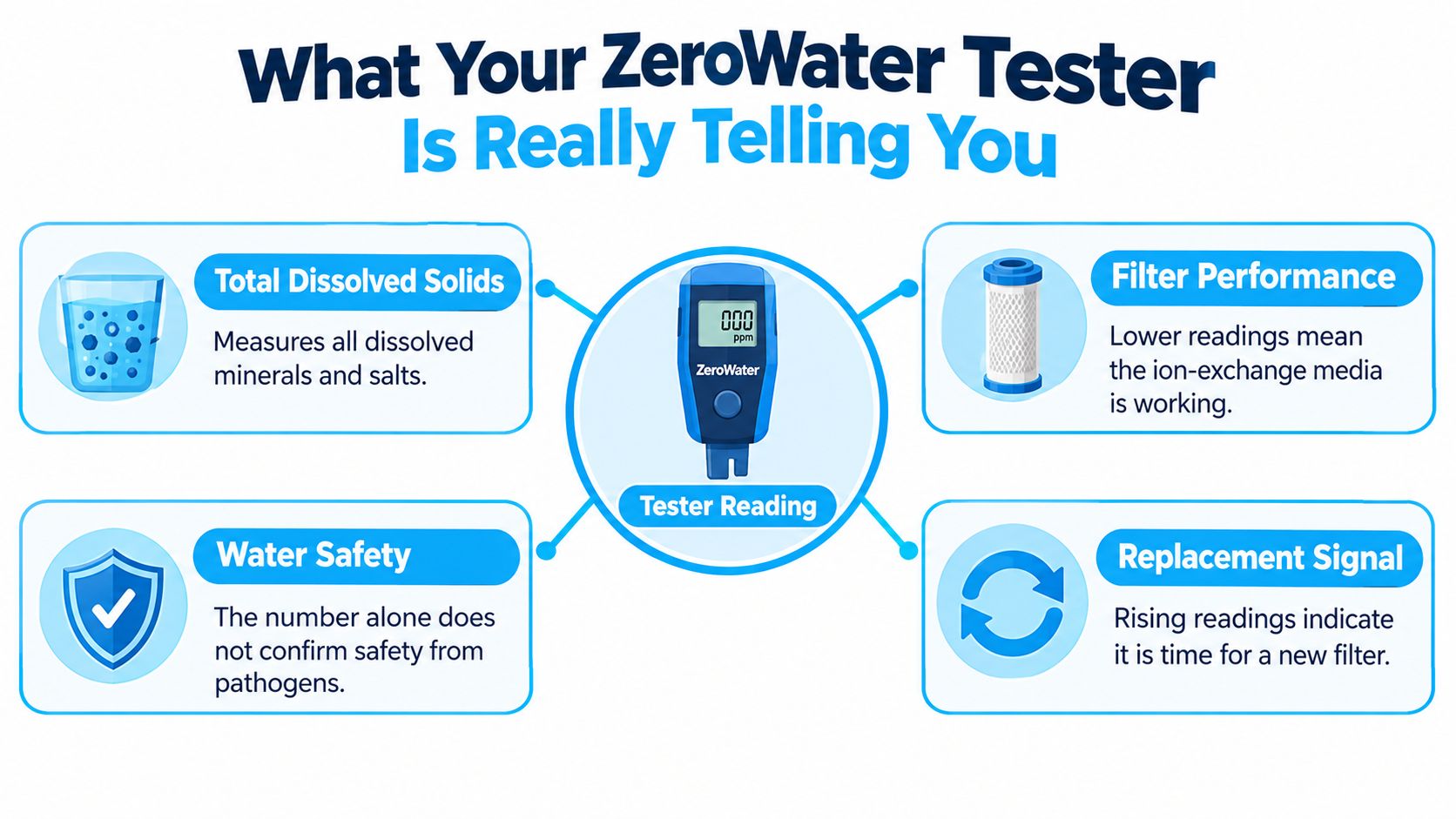
The important limitation is that TDS is an aggregate reading, not a list of ingredients. It can't tell you whether the dissolved material is lead, nitrate, sodium, beneficial minerals, or something else. It also can't detect bacteria or other undissolved organisms, and it doesn't identify many nonionic contaminants. A low number may show that the water has low conductivity, but it doesn't prove that every health-relevant contaminant is absent.
The U.S. Geological Survey describes TDS as the combined concentration of dissolved substances and explains that specific conductance is commonly used as a proxy because conductivity rises as dissolved ions increase. If you want a plain-language primer on the instrument, learn what a TDS meter measures.
Keep the jobs separate: use the meter to follow filter performance and consistency. Use contaminant-specific testing to answer questions about a particular health concern.
The U.S. Environmental Protection Agency's secondary maximum contaminant level for TDS is 500 mg/L (500 ppm). It's a non-enforceable aesthetic guideline intended to address taste, appearance, and related acceptability, not a direct health limit. A reading below it doesn't certify safe water, and a higher reading doesn't identify a dangerous substance. For homeowners weighing treatment choices beyond a pitcher, find HALO water filtration in Atlanta as one example of a whole-home filtration resource.
Get the Meter Ready Before Your First Reading
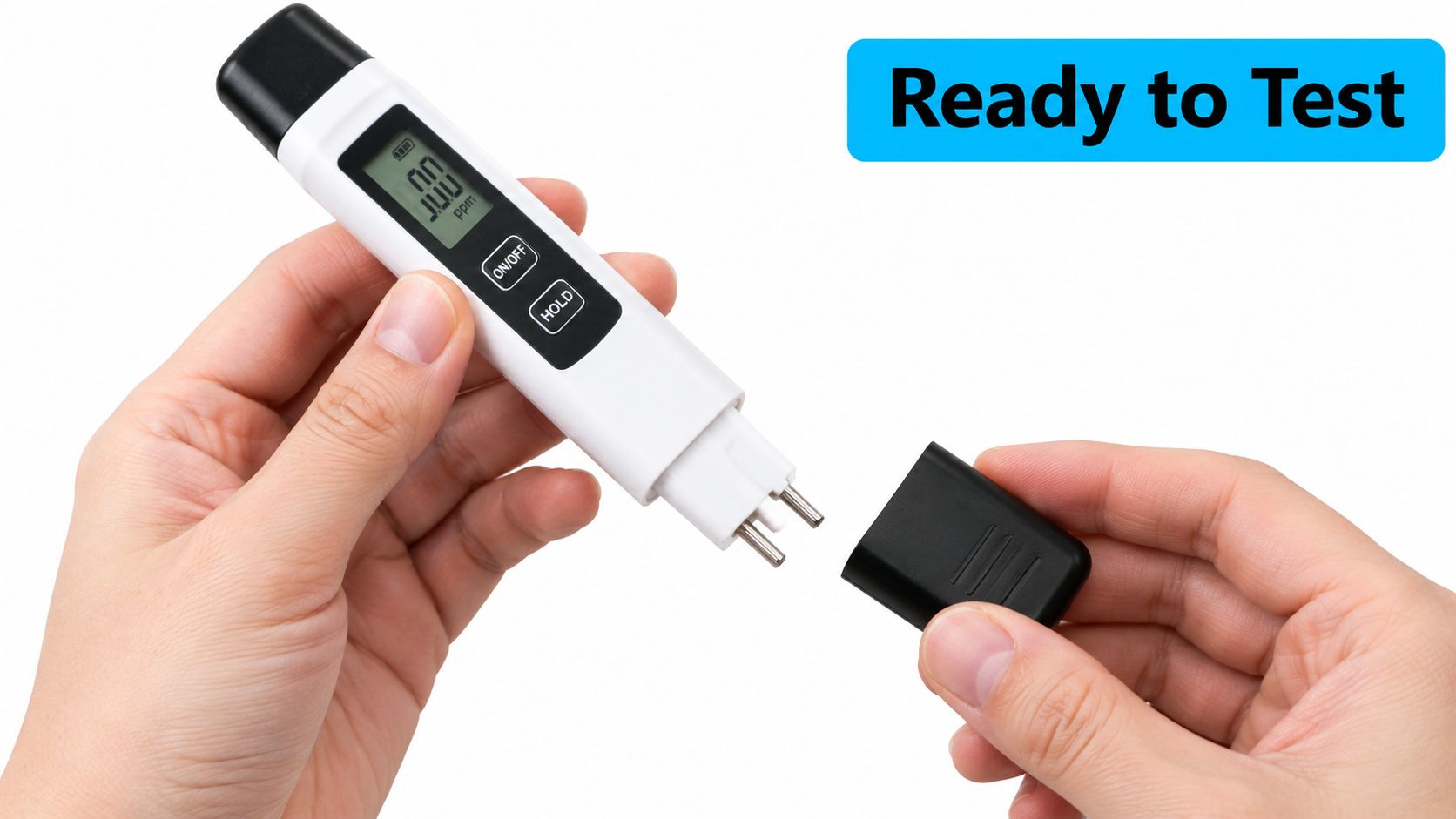
Before testing water, look over the meter rather than switching it on. Remove the protective cap and check the probe for residue, dried droplets, or mineral crust. If the probe looks dirty, rinse it and let it dry; if the display is faint or inconsistent, check that the batteries are seated properly and have charge.
Calibration is easy to overlook, especially when the meter is used casually at home. For a quality check, validate it against a certified conductivity/TDS standard close to the range you expect to measure, at a comparable temperature. General TDS-meter guidance recommends calibration around 25°C (77°F) and an acceptance check within approximately 2% of the standard after calibration. It recommends allowing 10–20 seconds for normal water to stabilize, and up to 20–30 seconds for very cold or hot samples. These recommendations are described in general TDS-meter use and calibration guidance.
Match the standard to the expected reading
A common calibration mistake is using a high-concentration standard to check a near-zero filtered-water result. The reference should ideally be within one decade of the expected reading. If it's far outside that range, you're asking the meter to extrapolate, and the low-range result may not be meaningfully calibrated.
Set out a clean glass reserved for testing. Juice, coffee, detergent, or soap film can leave residue that changes the sample. Rinse the probe with a little of the water you're about to test, then dry the meter's outer housing with a lint-free cloth. Keep liquids away from the display and electronics.
Taking a Reading You Can Actually Trust
Start with a fresh sample. Pour the tap or pitcher water into a clean glass rather than testing in the pitcher itself; a separate sample makes it easier to keep the probe clear of the container and avoid contaminating the stored water. If you're comparing filtered and unfiltered water, use clean sample containers and handle each sample the same way.
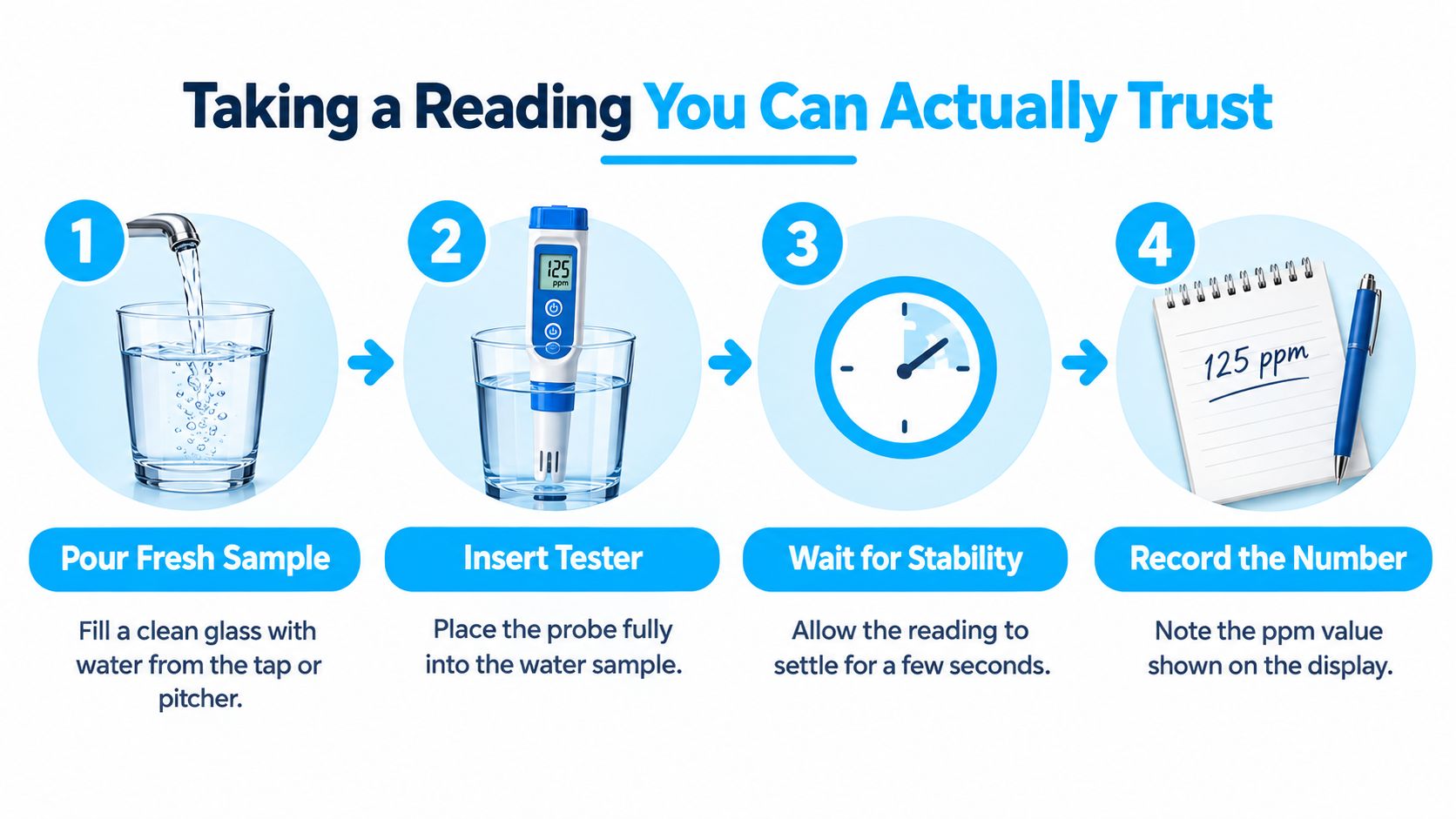
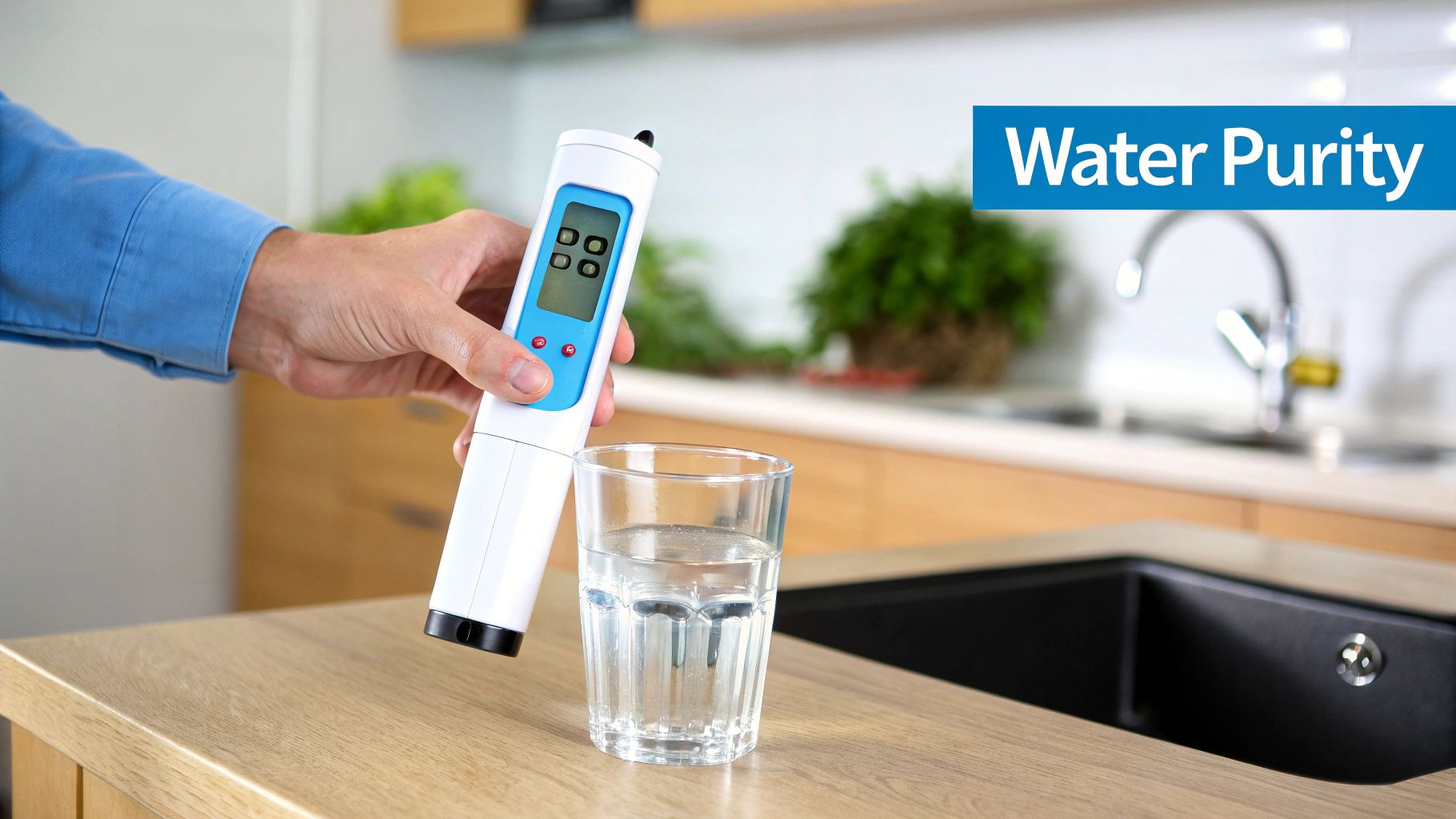
Remove the cap, switch on the meter, and lower the probe into the sample. Immerse only the probe end, keeping the water below the marked maximum level. Don't submerge the electronics. Gently agitate the probe to dislodge bubbles, then hold it steady and wait for the display to settle. For room-temperature water, allow 10–20 seconds; very cold or hot samples can take up to 20–30 seconds, as outlined in the calibration guidance above.
Make the comparison repeatable
Temperature, bubbles, residue, and inconsistent sample handling can all complicate comparisons. Use samples at similar temperatures when practical, and don't record a changing value as if it were final. ZeroWater's instructions identify the tester as a way to compare untreated tap water with filtered water and specify that it reports TDS in ppm. The manufacturer's replacement trigger for ZeroWater-filtered water is 006 ppm or higher, as stated in the ZeroWater meter instructions.
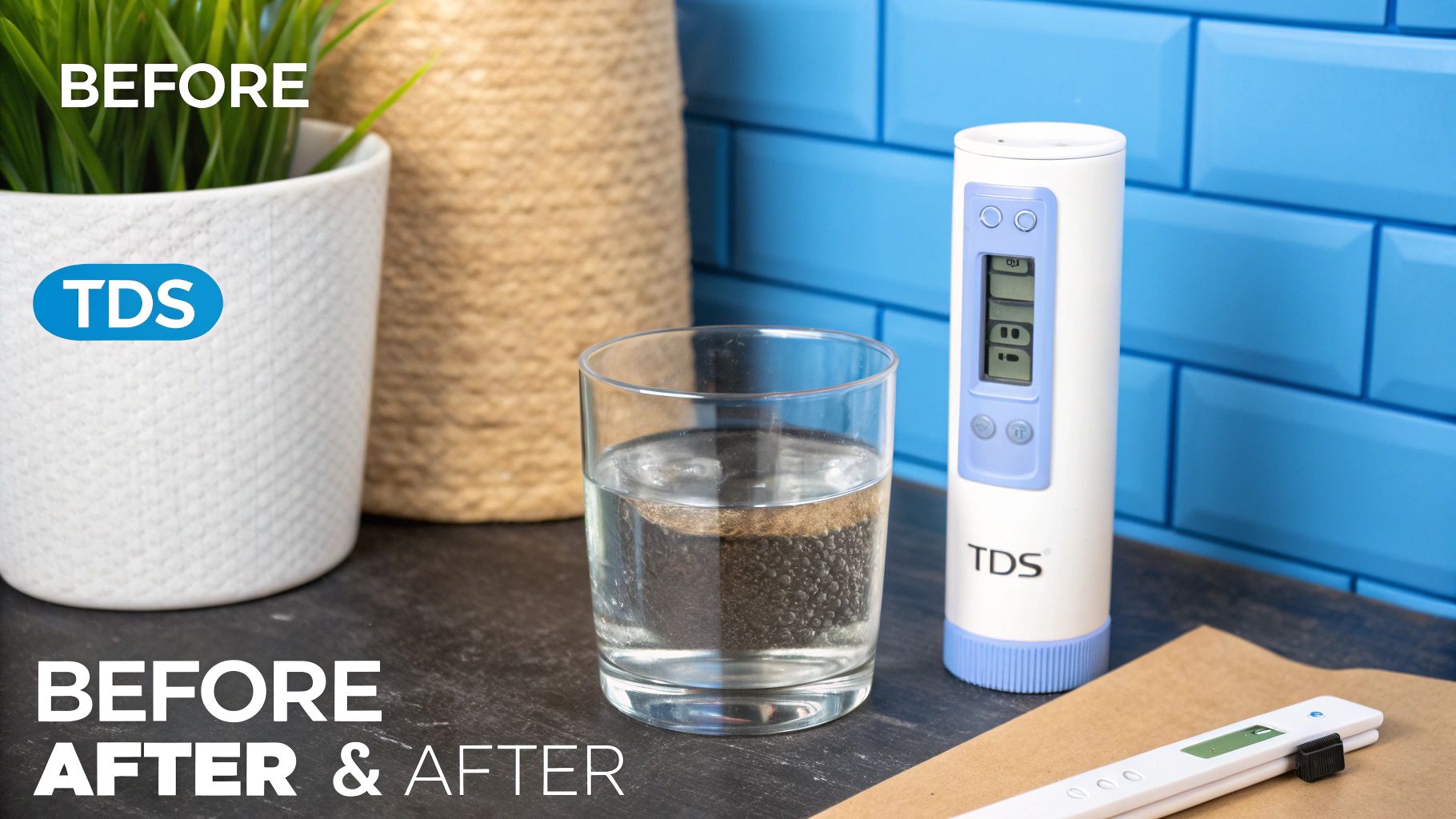
Write down the source, date, approximate temperature, and pre- and post-filtration readings. A simple notebook or spreadsheet is enough. After each measurement, rinse and dry the probe before testing the next sample, so water left on it doesn't carry into the next glass.
For a visual walkthrough of handling a handheld meter, this video may help:
Turning the Number Into a Decision
A single reading is most useful when you know what it's being compared with. With a ZeroWater filter, a result in the 000–005 ppm range can indicate that the filter is still removing conductive dissolved material effectively. The manufacturer's 006 ppm replacement trigger is an operational signal for its system, not a universal boundary between safe and unsafe water.
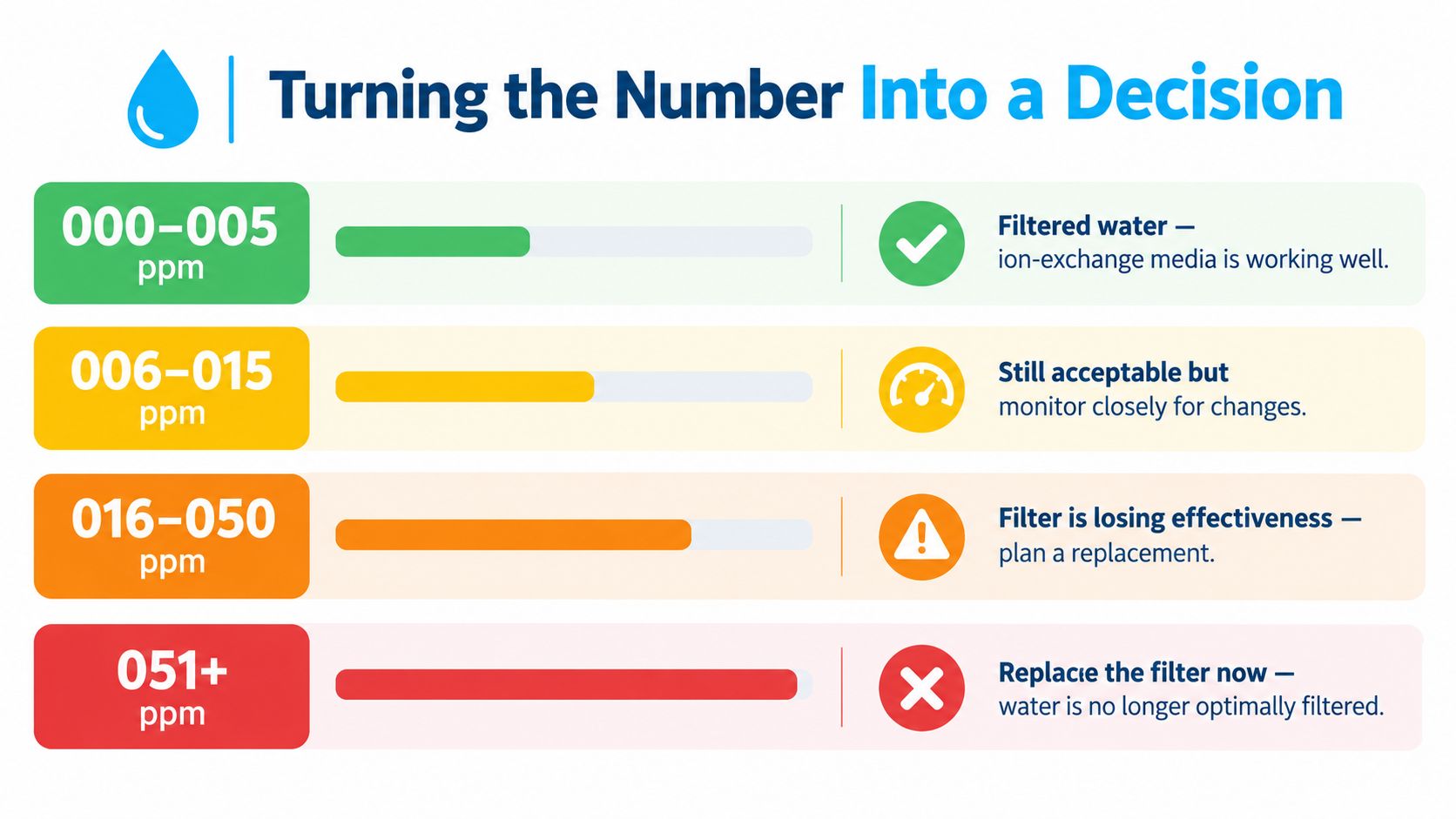
A reading that rises over repeated checks is more informative than a number taken in isolation. If the filtered-water result is increasing, repeat the test carefully, compare it with your log, and check the cartridge according to the product instructions. A sudden change can also reflect sampling error or water bypassing the filter, so don't assume the media has failed based on one surprising result.
Use the reading as a prompt, not a verdict
Taste, odor, and flow can add useful context to your maintenance decision. A change in taste or smell, or a slower flow, is a reason to inspect the filter and follow the manufacturer's guidance. The tester can help track dissolved-solids reduction, but it can't assess every way a filter might be performing. In particular, a TDS reading doesn't tell you whether a separate filtration function, such as reducing chlorine-related taste or odor, is working as intended.
A practical decision path is simple:
- If a result looks unexpected, repeat it using a fresh sample and clean probe.
- If a repeat reading reaches the manufacturer's replacement trigger, inspect or replace the cartridge according to its instructions.
- If you're worried about a specific contaminant, arrange testing that measures that contaminant rather than relying on TDS.
- If the reading stays consistent, keep recording it so you can recognize a change later.
A log turns the meter from a one-time gadget into a trend tool. Compare like with like: tap against filtered water, using similar sampling conditions. Don't treat a chart's colored bands or an isolated ppm value as a contaminant diagnosis.
When the Reading Looks Wrong and What to Do About It
An odd number doesn't always mean the filter suddenly changed. Sampling mistakes can alter a result, so check the handling before buying a replacement cartridge.
- Probe past the maximum line: Water may reach the electronics. Keep immersion below the marked limit and test again.
- Water is hot: Temperature can make readings less stable. Let the sample cool and repeat.
- Bubbles cling to the probe: Trapped air can interfere with contact. Gently agitate the probe in the sample.
- Residue or soap is on the probe: Carryover can affect the result. Rinse the probe with the sample before testing.
- The glass is contaminated: Leftover coffee, juice, or cleaning product can alter the water. Use a clean glass.
- The display is still changing: An early number isn't settled. Wait until the reading stabilizes before recording it.
Repeat before you react
Suppose the filtered-water result looks unexpectedly high. Take a fresh sample, rinse the glass and probe, and repeat the measurement using the same immersion depth and waiting routine. If the two readings differ substantially, investigate the cause rather than averaging them. A large difference is a signal to check technique, sample cleanliness, or the meter before making a filter decision.
A duplicate that agrees makes the result more useful, but it still doesn't turn TDS into a safety test. A high reading doesn't prove the water is dangerous, and a low reading doesn't prove it's safe. The tester measures conductivity as a proxy for dissolved ions; it can't identify individual substances or confirm the absence of pathogens. If the concern is lead, nitrate, microbes, or another specific contaminant, seek the appropriate test.
Beyond the Meter – Building a Smart Home Testing Habit
A pitcher meter can help you follow your filter. It can't replace testing the water supply for particular contaminants. A laboratory test can be selected to measure concerns such as lead, nitrate, or PFAS, while the TDS meter gives you a broad conductivity-based reading. For a clearer explanation of what TDS represents, the USGS overview of dissolved solids and conductivity explains why conductivity is used as a surrogate for dissolved ionic material.
Match the test to the question
If you're concerned about chlorine taste, microbiological safety after a boil-water advisory, or volatile organic compounds, a TDS meter isn't the right tool. Those questions call for testing or treatment guidance specific to the substance or hazard. If you rely on a private well, a reassuring TDS result can coexist with a contaminant that the meter can't detect.
You can explore water quality testing kits to compare options for household testing. Choose a test based on your water source and the contaminants you want to investigate, rather than treating a general reading as a complete water-quality assessment.
A workable home routine doesn't need to be complicated:
- For filter tracking: Take periodic TDS readings and record the source, date, temperature, and result.
- For supply concerns: Choose laboratory testing that targets the contaminants relevant to your water.
- For an unexpected change: Repeat the reading with clean equipment, then seek contaminant-specific testing if the concern remains.
- For a health concern: Don't use a low TDS value to rule out a contaminant; contact a qualified testing provider or appropriate health professional.
Keep the roles clear: the ZeroWater tester helps you compare and monitor filtered water, while contaminant-specific tests answer questions about what may be present. That distinction makes the small meter more useful, not less.
Water Filter Advisor offers practical guides to choosing and maintaining home filtration, from pitcher and under-sink systems to testing kits and replacement cartridges. Visit Water Filter Advisor to compare household filtration options and find guidance that fits your water-quality questions.