Best Whole House Iron Filter for Well Water (2026 Guide)

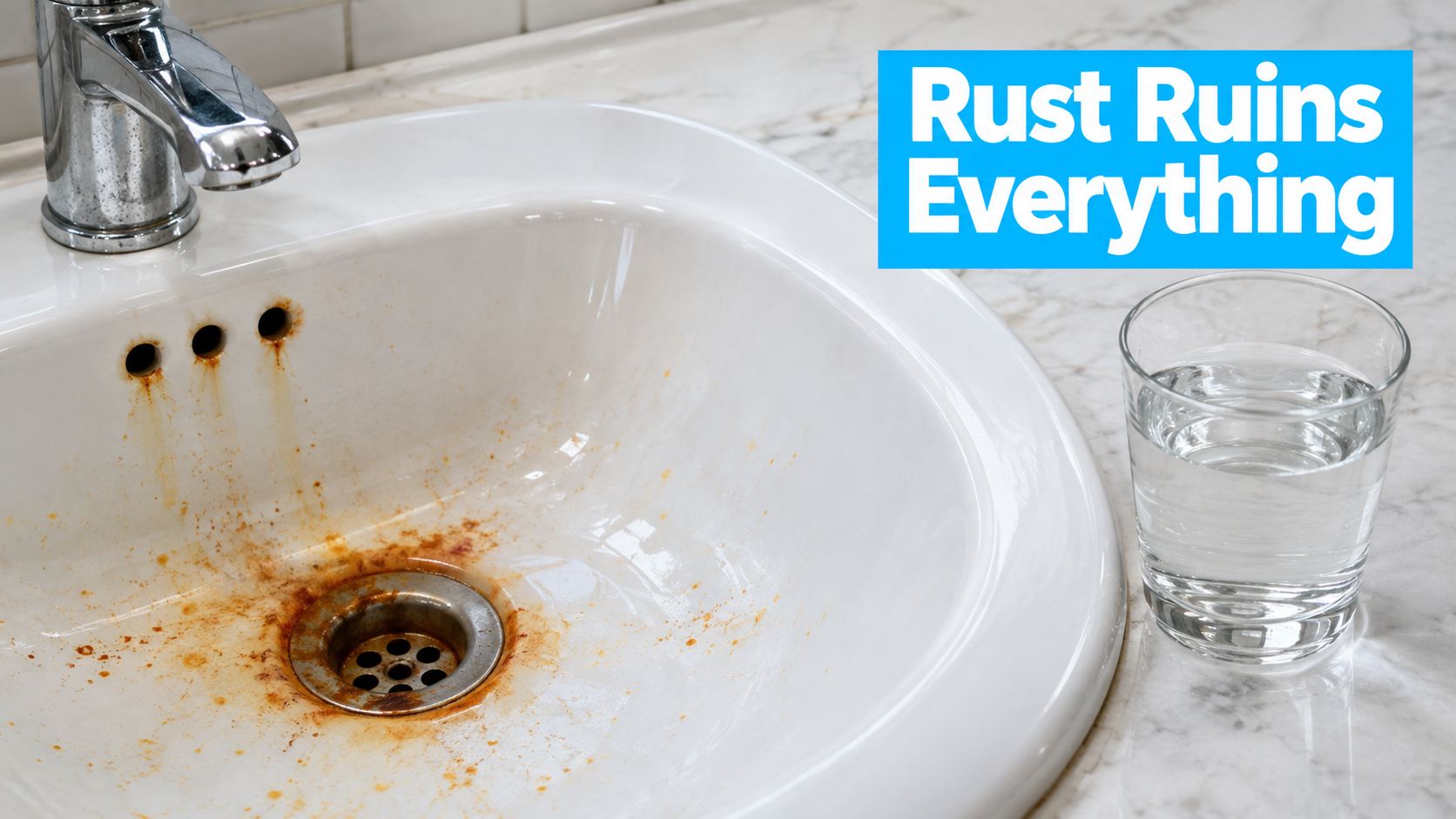
Orange streaks in the toilet bowl. Brown staining around the tub drain. A glass of water that looks clear at first, then leaves a metallic aftertaste you can’t ignore. If that sounds familiar, you’re not dealing with a small nuisance. You’re dealing with a whole-house water problem that reaches every faucet, appliance, and pipe in the home.

A lot of homeowners start the search for the best whole house iron filter for well water by looking for one machine that will “remove iron.” That’s usually the wrong starting point. Iron is rarely the only issue in a well. It often shows up with hardness, manganese, sulfur odor, sediment, or even iron bacteria. Buy a filter for the wrong version of the problem, and you end up with staining that never goes away, pressure that drops, and equipment that clogs long before it should.

The better approach is to think like a water treatment installer. Build a treatment train. Test first, identify the actual contaminants, then choose the right sequence of equipment so each stage helps the next one work better.

Is Your Well Water Waging War on Your Home

The signs usually show up slowly. First it’s a faint orange line in the sink. Then white towels start coming out of the wash looking yellowed. Then someone mentions the water tastes like a handful of pennies. By the time most homeowners start shopping, the water has already been working on the plumbing for a while.

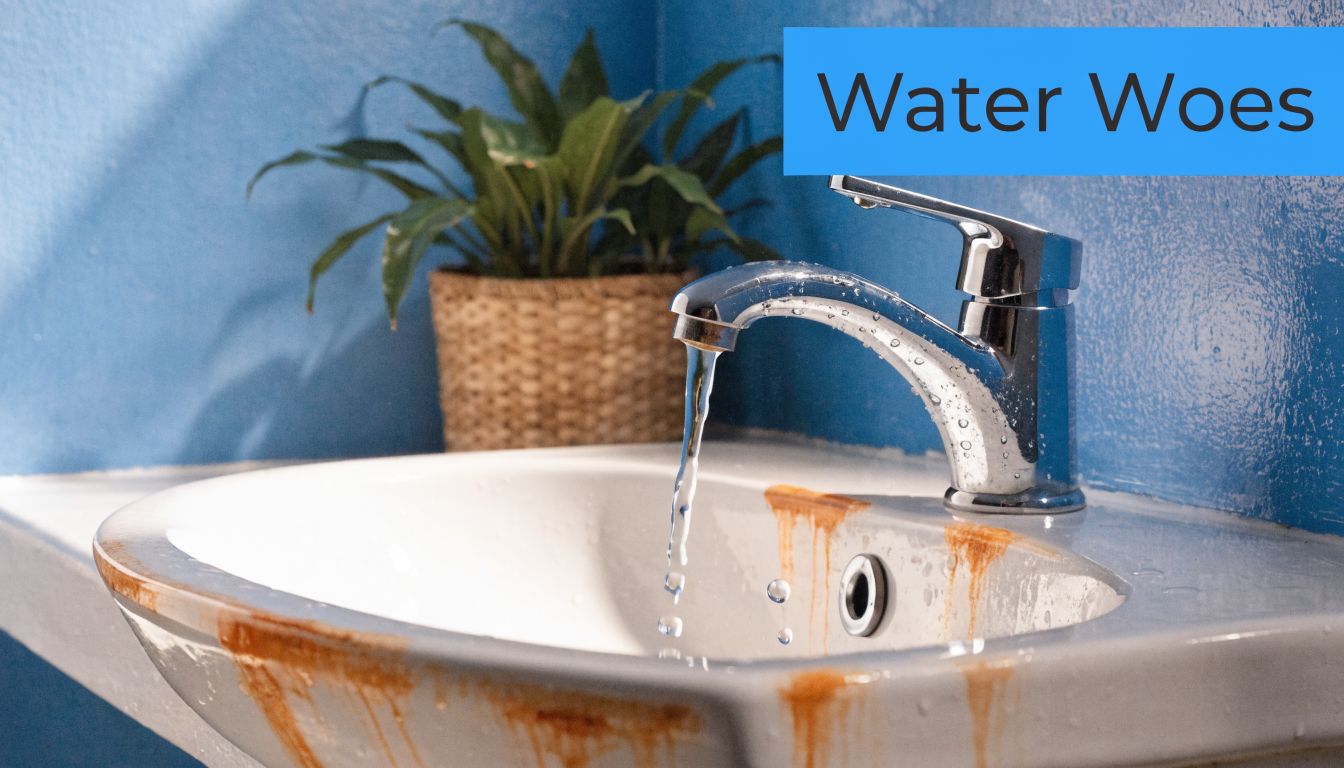
A bathroom sink stained with rust showing water flowing from a metal faucet against blue walls.

Iron in well water isn’t rare. Iron contamination affects approximately 23 million U.S. households relying on private wells, and the U.S. Geological Survey reports that 15 to 20% of these wells exceed the EPA’s secondary standard of 0.3 ppm for iron, which is where staining, metallic taste, and plumbing damage become common issues, according to this review of iron filter performance and well water conditions.

What iron does in a house

Iron creates two kinds of frustration at the same time. One is visible. Rust-colored staining on fixtures, tubs, toilets, grout, and laundry. The other is hidden. Iron builds up inside valves, water heaters, dishwasher parts, and narrow plumbing passages.

That combination tricks people into underestimating the problem. They focus on the ugly stains because they can see them. Meanwhile, the plumbing keeps collecting deposits.

Practical rule: If iron is staining your toilet tank or sink, it’s also traveling through everything else that uses water.

Why a simple product list won’t help enough

Homeowners often ask which unit is “best,” as if all iron filters are interchangeable. They aren’t. Some systems are strong with dissolved iron but struggle with sulfur. Some handle manganese well. Some are fine in a clean well but fail fast when hardness or bacteria gets involved.

That’s why the right answer usually sounds less exciting than people expect. It starts with diagnosis, not shopping. The best system is the one that matches your water chemistry, your home’s flow demand, and the order your equipment is installed in.

First Step Always Test Your Water

If you skip testing, you’re guessing. In well water, guessing gets expensive fast.

A homeowner sees orange staining and buys an iron filter online. It arrives, gets installed, and maybe it helps for a while. Then the rotten egg smell comes back, pressure starts dropping, or the stains never fully stop. Most of the time, the filter itself isn’t defective. The diagnosis was.

A person holding a clear sample vial filled with liquid for water quality testing purposes.

Iron isn’t one thing

When people say “I have iron,” they might mean very different water conditions.

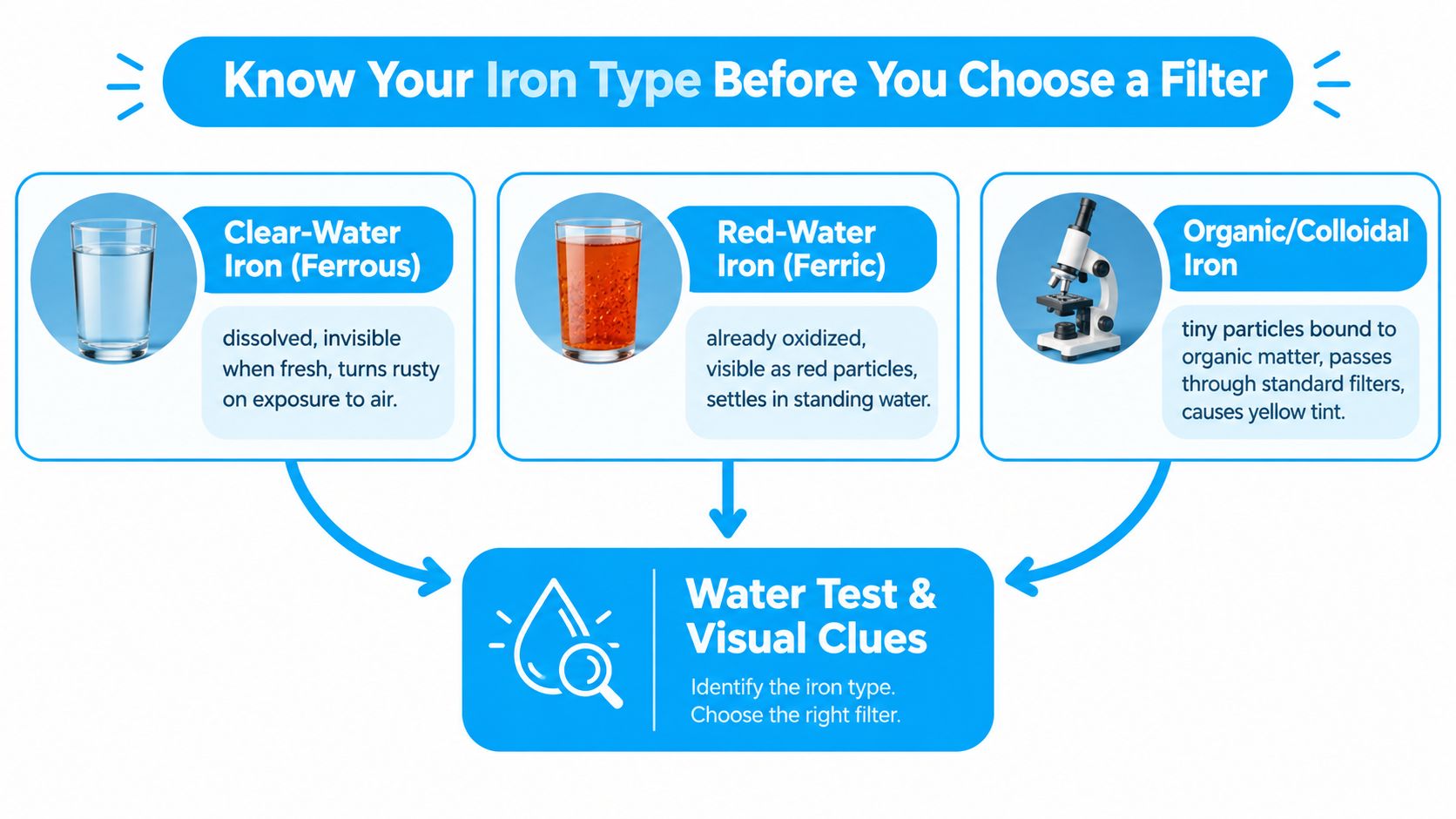
  • Ferrous iron is dissolved iron. It often comes out of the tap looking clear, then turns orange after it sits or hits air. This is often called clear-water iron.
  • Ferric iron is already oxidized. You can think of it as rust particles floating in the water. It’s visible and easier to trap with the right filtration stage.
  • Iron bacteria is the troublemaker many product pages barely explain. It forms slime, fouls plumbing, and can overwhelm filters that would work fine on ordinary iron.

Each one behaves differently. That matters because treatment depends on how the iron enters the filter and what else is traveling with it.

What to test for besides iron

A proper well water workup should identify more than the iron level.

You also want to know:

  • Hardness, because hard water can interfere with some iron systems and create scale that shortens equipment life.
  • Manganese, because it often rides along with iron and can stain fixtures dark brown or black.
  • Hydrogen sulfide, which creates the rotten egg smell and changes the treatment approach.
  • pH, because some media need the right water chemistry to work consistently.
  • Sediment and turbidity, because grit can load a filter bed too quickly.
  • Bacteria concerns, especially if you’ve seen slime in toilet tanks or around plumbing fixtures.

Test results should tell you what needs to happen first, second, and third in the treatment line. They should not just point you to one tank.

Why testing saves money

The biggest mistake in this category is buying a strong iron filter for a mixed-contaminant well and expecting it to solve everything alone. It won’t. If the water contains iron plus hardness, or iron plus sulfur, or iron plus bacteria, you’re building a system, not buying a single fix.

That’s why I always treat testing as the first piece of equipment, even though it isn’t equipment. A test prevents you from putting the wrong tank in the middle of the plumbing and asking it to do a job it was never built for.

If you need help understanding the basics before you compare equipment, the practical guidance in Water Filter Advisor’s water filtration advice library is useful for sorting through common home treatment setups and terminology.

A quick read on the water you already have

Even before the formal test comes back, your house is already giving clues.

  1. Clear water that turns orange later usually points toward dissolved iron.
  2. Water that already looks rusty suggests oxidized iron or sediment-heavy conditions.
  3. Slimy buildup in the toilet tank raises suspicion for iron bacteria.
  4. Rotten egg odor usually means sulfur is part of the story.
  5. Soap that won’t lather and scale on fixtures points toward hardness joining the party.

Those clues aren’t enough to size a system, but they are enough to stop you from buying blind.

Comparing Iron Filtration Technologies

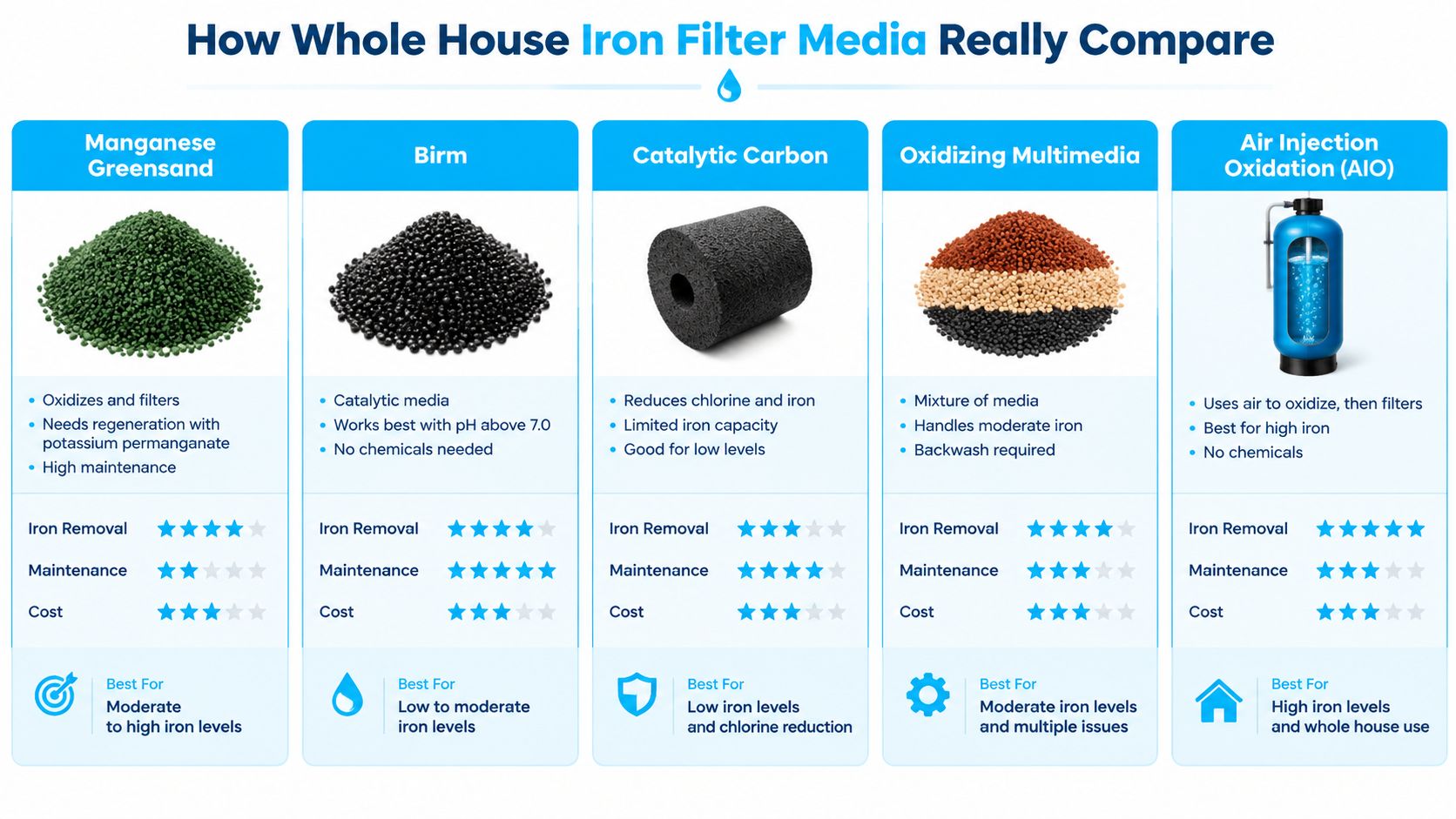
Most whole-house iron filters do the same job in broad terms. They convert iron into a form the system can capture, then they flush the collected material out during backwash. The difference is how they do that job, what kind of water they work best in, and how much babysitting they require.

Here’s a simple side-by-side view.

Technology Best fit Strengths Trade-offs
Air Injection Oxidation Homes with typical iron issues and a preference for chemical-free treatment Strong whole-house option, low day-to-day involvement, widely used Can struggle when water has iron bacteria or high hardness
Manganese greensand Water that needs oxidation and filtration in one media bed Effective when matched properly to the water Requires regeneration chemistry and more hands-on upkeep
Catalytic media such as Katalox-Light Homeowners wanting strong oxidation support with durable media Good fit in many iron and manganese applications Still depends on correct sizing and water chemistry
Chemical oxidation with chlorine or peroxide Tough wells with sulfur, slime, or severe mixed contamination More aggressive treatment for difficult water More components, more maintenance, and chemical handling
Water softener only Very light iron combined with hardness Useful support equipment in the right role Not a substitute for a real iron filter in most wells

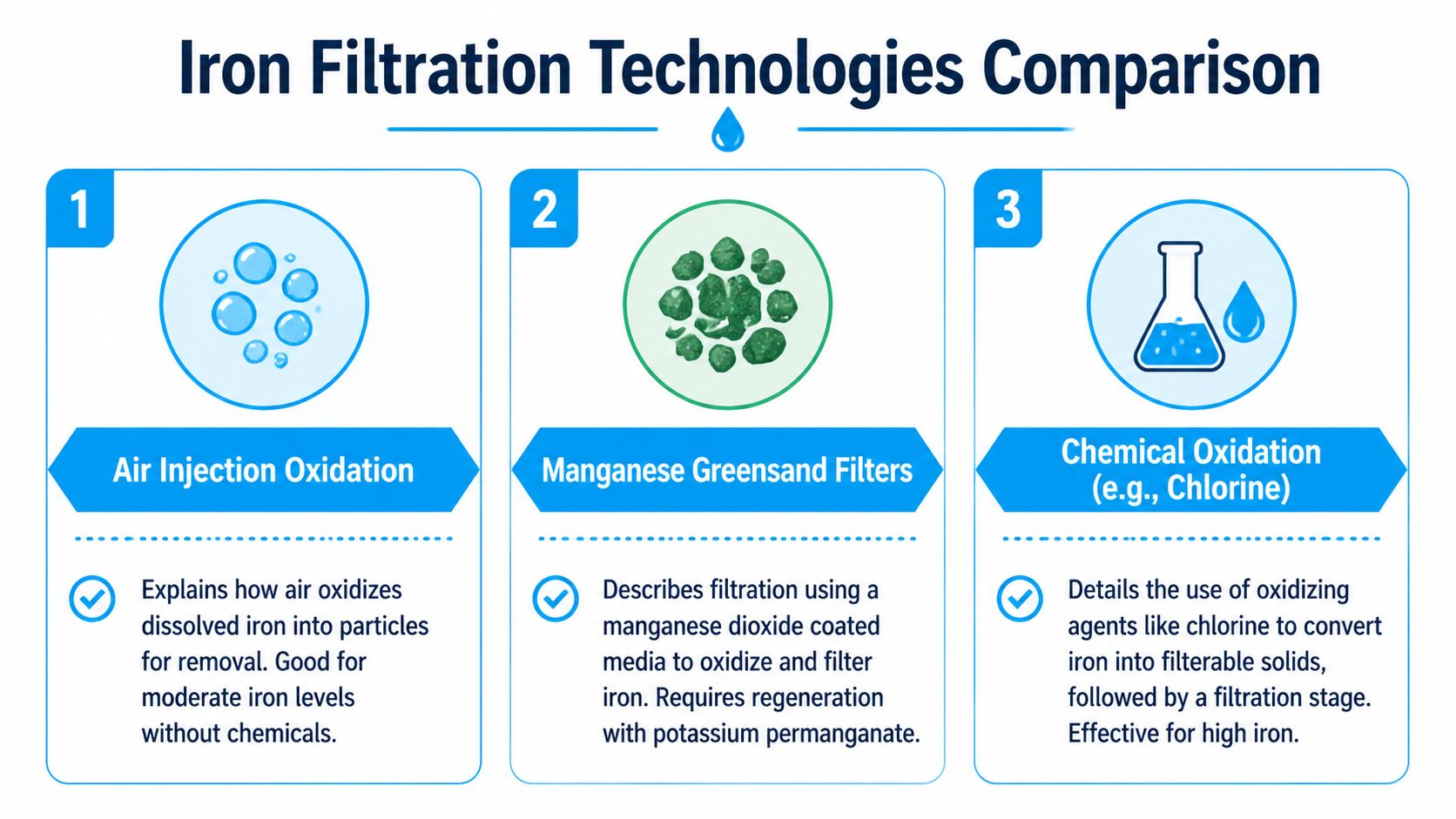
A comparison chart showing three iron filtration technologies: air injection, manganese greensand filters, and chemical oxidation.

Air Injection Oxidation systems

Air Injection Oxidation, usually shortened to AIO, is where many of the best residential systems live. The idea is simple. The system introduces air into the tank, oxygen reacts with dissolved iron, and the iron changes from something invisible in the water into particles the media can catch.

This process is akin to taking steam and turning it into droplets you can wipe off a mirror. The iron was there the whole time. Oxidation just makes it possible to grab it.

Modern AIO systems are often a set-and-forget solution for many homes. Models like the SpringWell WS1 are presented as effective up to 7 ppm iron, while the SoftPro IronMaster is positioned for more severe situations up to 30 ppm, according to this roundup of whole-house well water systems.

That’s why AIO is often the first technology I look at for the best whole house iron filter for well water. It’s clean, effective in the right conditions, and doesn’t force the homeowner into constant chemical handling.

Catalytic media and why it matters

AIO systems still depend on the media inside the tank. Media is the working surface where oxidized contaminants get trapped and removed during backwash. One of the names you’ll see often is Katalox-Light, especially in systems built for stronger iron loads.

Some homeowners focus almost entirely on the control valve brand and ignore the media. That’s backwards. The valve controls the cycle. The media does the water treatment.

A stronger media bed can mean better contaminant handling, longer useful life, and more stable performance when the well water changes a bit through the year. That doesn’t make every catalytic-media system equal, but it does explain why two tanks that look similar on the outside can perform very differently.

If a product description talks about “removing iron” but says little about the media, be cautious. That’s like buying a vacuum based on the power button and ignoring the motor.

Greensand and older oxidizing media

Manganese greensand has been used for a long time, and it still has a place. It works by coating media with an oxidizing surface that helps convert and filter iron and manganese. The catch is maintenance. These systems typically need regeneration with chemicals.

That extra step doesn’t make greensand bad. It just makes it less appealing for homeowners who want low involvement. A well-matched greensand setup can work very well, but it asks more from the owner and leaves less room for neglect.

Birm also shows up in some comparisons. It can work in the right water, but it’s less forgiving than many people think. If the chemistry isn’t favorable, performance can fall off quickly.

Chemical oxidation for difficult wells

Some wells need a stronger approach. That’s especially true when sulfur odor, biofouling, or stubborn mixed contamination shows up. In those cases, a chemical feed system paired with a contact stage and filtration can outperform a simple AIO tank.

Chemical oxidation is the heavy-duty route. Instead of relying on air alone, the system injects an oxidizer such as chlorine or peroxide to convert contaminants aggressively before they hit the filter stage.

This approach is less elegant but often more dependable in ugly water. It’s the work truck of iron treatment. More parts, more upkeep, more attention. But when the water is hostile, a work truck beats a sports car.

The limited role of water softeners

A water softener can help with small amounts of iron in some homes, especially when hardness is also a problem. But using a softener as your primary iron filter is one of the most common mistakes in well water treatment.

Softeners are hardness machines first. If the well has meaningful iron, especially when staining is obvious, the softener usually needs help from a dedicated iron stage ahead of it or beside it in the treatment plan.

That’s the difference between a system that limps along and one that solves the problem.

Key Factors for Choosing Your System

Shoppers get overwhelmed because spec sheets throw around terms like valve size, media volume, service flow, and backwash rate as if everyone installs this equipment for a living. What matters is how those specs play out at 7 a.m. when someone’s showering, the dishwasher is running, and the washing machine kicks on.

Flow rate matters more than most people expect

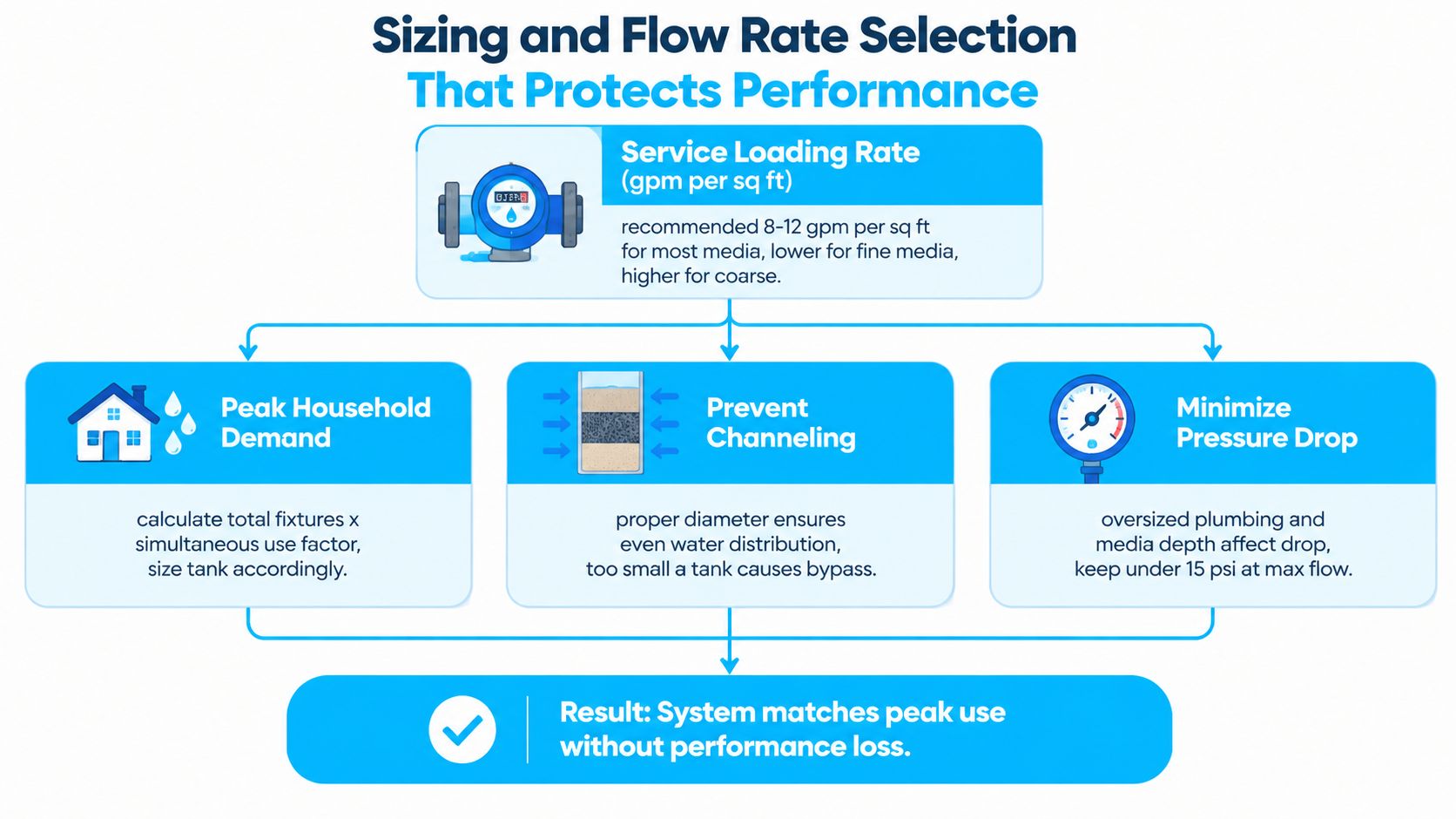
If a unit is undersized for the home, it may still remove iron on paper and still feel disappointing in real life. That’s because the best whole house iron filter for well water has to treat the water without choking the house.

A larger household or a home with several bathrooms needs enough service flow to keep pressure usable during peak demand. If the filter can’t keep up, you’ll feel it first in the shower.

A few practical checks help:

  • Bathroom count matters: More bathrooms usually mean more overlapping water use.
  • Fixture habits matter: A home with irrigation, large tubs, or frequent laundry loads places a different demand on the system.
  • Well pump matters too: The filter can’t deliver more flow than the rest of the plumbing can support.

Size the plumbing path, not just the tank

Port size and pipe size affect how freely water moves through the treatment line. In a larger home, narrow connections can act like a pinch point even if the tank itself looks substantial.

That’s one reason I like homeowners to review complete-system layouts, not just isolated filter specs. Broader references on best whole home water filtration systems can help you compare how iron filters fit into full-house plumbing strategies rather than treating them like stand-alone gadgets.

Think in ownership costs, not sticker price

The cheap unit often becomes the expensive one. You pay once at checkout, then pay again in media changes, chemical supplies, lost pressure, or equipment that never fully fixes the stains.

Focus on these questions:

  • How often does the system backwash? Frequent backwash can be fine if it’s necessary, but it affects water use and wear.
  • What media is inside? Better media usually means better durability and less frustration.
  • Does the system need chemical replenishment? That changes both maintenance and running cost.
  • How easy is service? Straightforward controls and available replacement parts matter more than flashy marketing.

A good iron filter should fit your water and your habits. If it only works when everything is ideal, it’s not a good home system.

The control valve deserves attention

The valve is the traffic controller. It determines when the unit backwashes, how long cycles run, and how reliably the system cleans itself. A solid valve paired with the right media usually outperforms a fancy-looking tank with weak internals.

Homeowners don’t need to become valve experts. They just need to avoid treating the control head like an afterthought.

Best Iron Filters for Common Well Water Scenarios

Product selection finally makes sense. Not by asking which unit is “best” in the abstract, but by matching the equipment to the water profile.

Low to moderate iron with otherwise clean well water

If your test shows straightforward iron and no major sulfur, bacteria, or heavy hardness complications, an AIO system is usually the cleanest answer.

Systems like SpringWell WS1 make sense. It’s positioned for homes dealing with iron in the lower to moderate range, and the appeal is obvious. Chemical-free treatment, whole-house coverage, and a design homeowners can live with without constant attention.

This type of setup is often the sweet spot for people who want a real fix without building a mini treatment plant in the basement.

Higher iron levels that need more muscle

Once the iron gets more aggressive, you need a system built for heavy loading. That’s where SoftPro IronMaster stands out in many comparisons. It’s frequently mentioned for handling stronger iron situations and uses the AIO approach with media designed for tougher work.

The practical reason to step up here is simple. When iron is heavy, a lighter-duty system may work briefly, then start slipping. Staining returns, backwash becomes more important, and the homeowner ends up chasing symptoms.

For high-iron wells, I’d rather see a system with headroom than one operating at the edge of its comfort zone.

Iron plus manganese

Iron and manganese often travel together, but they don’t always behave the same way in treatment. Manganese can be harder on some systems and may push the recommendation toward media and designs known to handle that combination well.

In those cases, Pentair’s Iron & Manganese Combo is worth a look because it’s noted for manganese-heavy conditions among verified products. The key point isn’t the brand name alone. It’s that manganese changes the target. A filter that’s merely “good for iron” may not be the right fit once manganese becomes a priority.

Iron plus rotten egg odor

If the water smells like sulfur, don’t treat it like an iron-only job. That smell changes the system choice.

A strong candidate in this category is US Water Systems Matrixx Infusion, which is positioned for homes dealing with both iron and hydrogen sulfide. This is exactly the kind of scenario where homeowners waste money by buying a standard iron tank, only to learn later that odor control needed to be built into the original design.

For sulfur combinations, the right system doesn’t just remove staining. It restores the house to a point where showers, laundry, and kitchen water stop announcing themselves.

Iron plus hardness

This is one of the most common mixed problems in well water, and it’s where treatment train thinking pays off.

If the house has both iron and hard water, the answer usually isn’t “buy a better iron filter” or “buy a bigger softener.” It’s sequence. In many homes, the iron stage and the softener need to work together, each doing the part it’s good at.

A practical setup often looks like this:

  1. Sediment protection first if the well carries grit or visible particulate.
  2. Iron removal next so the softener isn’t asked to carry the whole load.
  3. Softener after that to deal with hardness and polish up the water for daily use.

That order protects the softener and gives better long-term stability.

Clean iron versus messy iron

Not every iron problem deserves the same confidence in AIO. If the well is relatively clean and the issue is mostly dissolved iron, AIO can be an excellent fit. If the well has slime, sulfur swings, or clear signs of biological fouling, I move much faster toward stronger pretreatment or chemical oxidation.

That distinction matters more than the brand list. Homeowners don’t lose money because they bought a “bad” product. They lose money because they bought the right product for somebody else’s water.

The best recommendation isn’t the unit with the loudest marketing. It’s the one that matches the chemistry in your test report and the order of equipment in your plumbing line.

Solving Complex Problems Iron Bacteria and Mixed Contaminants

Simple buying guides frequently fall short. They treat all iron like a basic oxidation problem. It isn’t.

Iron bacteria changes the game because you’re not just removing dissolved minerals. You’re dealing with slime, biofilm, and fouling that can coat plumbing and overwhelm media beds. A standard AIO tank can look perfect on the sales page and still struggle badly in that environment.

A useful warning from product analysis is that standard AIO systems can clog rapidly if water hardness exceeds 10 gpg or iron bacteria is present, often forcing the homeowner to add a pre-filter or water softener at an extra cost of $800 to $1,500, as noted in this discussion of mixed-contaminant well water and iron filtration limits.

How to recognize an iron bacteria problem

You may be dealing with iron bacteria if you notice:

  • Slimy residue in toilet tanks, filter housings, or around fixtures
  • Recurring odors that don’t line up neatly with a standard sulfur-only problem
  • Filters plugging early even when the equipment seems properly chosen
  • Persistent staining after installing a basic iron system

Iron bacteria often requires disinfection thinking, not just filtration thinking.

What usually works better

For these tougher wells, the treatment train often becomes more important than the individual filter.

A common order is:

  1. Sediment stage if grit or turbidity is present
  2. Oxidation or chemical injection stage when the water needs stronger treatment
  3. Iron filtration media tank
  4. Water softener if hardness is part of the water profile
  5. UV sterilizer when biological protection is needed after the rest of the treatment

This isn’t the only valid order, but it shows the logic. You don’t want downstream equipment fighting upstream problems it was never designed to handle.

Where homeowners get into trouble

The most expensive phrase in well water treatment is “I thought this one unit would do it all.”

Mixed contaminants rarely reward that mindset. If your well has iron, hardness, sulfur, and bacteria concerns, you’re building a chain. Every link has to support the next one. When that sequence is wrong, even good equipment performs like bad equipment.

Installation Maintenance and Troubleshooting

A whole-house iron system isn’t difficult to live with when it’s installed correctly. Most long-term headaches trace back to placement, drain setup, bypass access, or poor sequencing.

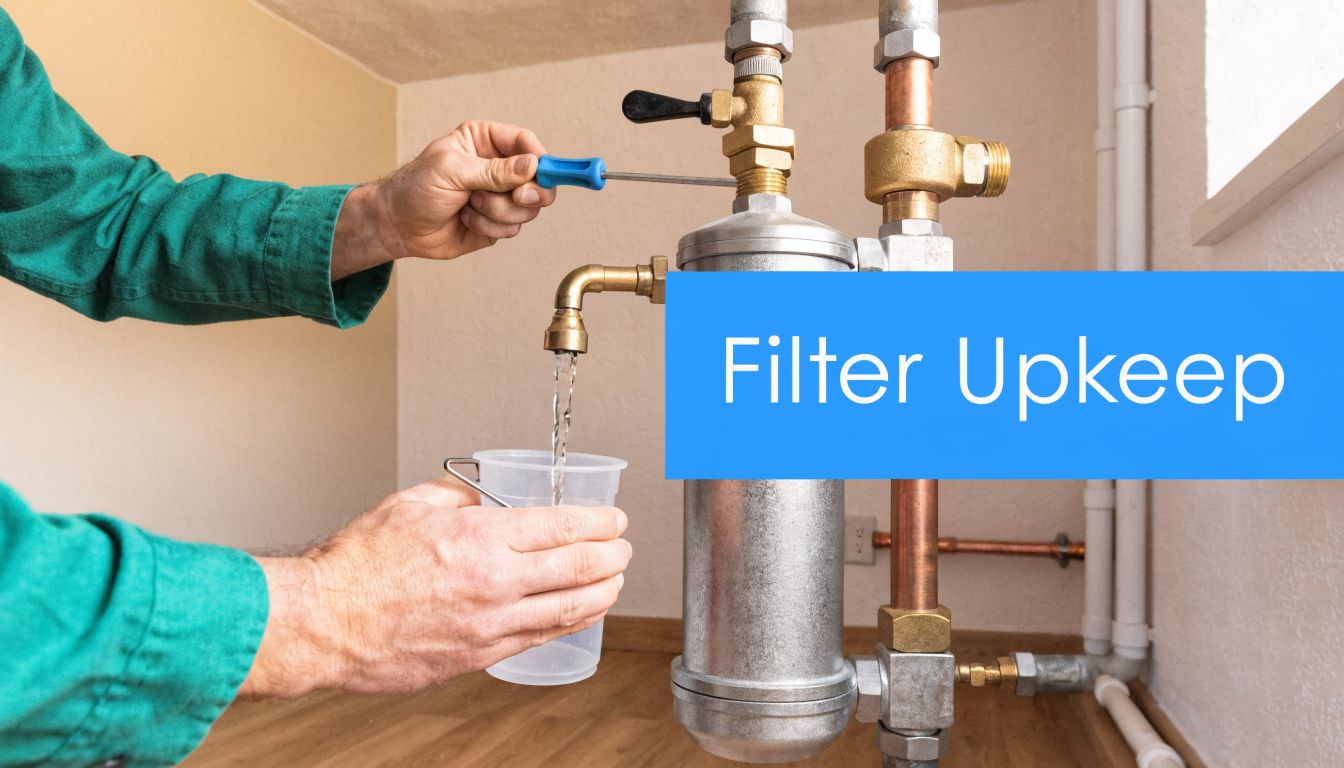
A professional maintenance person performs upkeep on a metal water filter system connected to plumbing pipes.

Decide early whether this is DIY or pro work

Some mechanically inclined homeowners can handle installation if the plumbing is accessible and the treatment plan is simple. But a whole-house iron filter still needs correct bypass orientation, drain routing for backwash, enough space to service the tank, and proper tie-in ahead of the fixtures you want protected.

If you’re installing equipment during a renovation or trying to understand where the treatment line fits into the home’s supply layout, a plain-English guide to plumbing rough-ins helps make sense of how and where water lines are set before finish plumbing goes in.

Maintenance that keeps the system working

A good maintenance routine is simple and repeatable.

  • Watch the backwash cycle: Make sure the system is cleaning itself and draining properly.
  • Inspect for pressure changes: A sudden drop can point to fouled media, clogged prefiltration, or a valve issue.
  • Check for returning stains or odor: That usually means the treatment is no longer matching the water, or a stage upstream is failing.
  • Keep the bypass accessible: You don’t want to dig behind storage shelves during service.
  • Retest water when conditions change: Seasonal shifts or well work can change performance.

Here’s a helpful walkthrough of what proper service and upkeep looks like in the field.

Troubleshooting the common complaints

If pressure drops after installation, check the sediment stage first and confirm the system was sized for household demand. If stains return, don’t assume the unit is “bad.” Confirm the media is still functioning, the valve is cycling properly, and the original test didn’t miss a mixed-contaminant issue.

If the system seems noisy during regeneration, that can be normal, but sharp changes in sound deserve a look at the drain line, valve movement, and backwash flow.

The goal is simple. Protect the investment by treating the system like home equipment, not a mystery tank you ignore until the toilet turns orange again.


If you want help comparing systems, understanding test results, or figuring out the right treatment train for your home, Water Filter Advisor is a practical place to keep researching. Their guides can help you sort through iron filters, softeners, UV systems, and maintenance questions so you can choose equipment that suits your water.

Best Home Water Filter for Well Water: A 2026 Guide

If you're shopping for the best home water filter for well water, you're probably already dealing with a clue your water is sending you. Orange stains in the toilet bowl. A rotten egg smell when the shower starts. Grit in aerators. Laundry that never looks fully clean. Or maybe the water looks fine, but you know private wells don't come with a city utility watching over them.

That last point matters most. Well water problems are local, specific, and often layered. One home has iron and sediment. The house next door has sulfur odor and bacteria concerns. A third has water that tastes metallic but leaves no visible staining. That's why the right answer usually isn't a single product recommendation. It's a system built from your test results, your plumbing, and your maintenance budget.

I've seen homeowners lose money by buying the wrong equipment for the right problem, and I've seen them lose even more by buying the right equipment in the wrong size. A proper setup treats the contaminants you have, preserves pressure throughout the house, and doesn't surprise you later with ugly maintenance costs. That's the framework that matters.

First Things First Test Your Well Water

Buying filtration before testing is like buying prescription glasses before the eye exam. You might get lucky. That, however, is rare.

A private well can carry several issues at once. Some are obvious, like metallic taste or staining. Others don't announce themselves at all. If you want the best home water filter for well water, your first job is to figure out exactly what your water contains and what it's doing inside the house.

A person wearing a black nitrile glove holding a water sample bottle in front of a rustic well house.

Use screening tools carefully

Home test strips and basic kits can be useful as an early warning. They can tell you whether you're likely dealing with hardness, pH issues, or a staining problem. They can also help you notice a change after a heavy rain, plumbing work, or a pump repair.

But strips don't give you the level of confidence you need before spending real money on treatment equipment. For a whole-house system, send a sample to a state-certified lab. That report becomes your equipment blueprint.

Practical rule: Don't size equipment from a hunch, a smell, or a strip color. Size it from a lab report.

What to ask the lab to test

A good well water panel should cover the contaminants most likely to affect home filtration decisions. Focus on the issues that change equipment selection:

  • Iron and manganese: These cause staining, taste issues, and can foul plumbing and fixtures.
  • Hydrogen sulfide: This is the classic rotten egg odor problem.
  • Sediment or turbidity indicators: These help you decide whether you need a strong pre-filter stage.
  • Bacteria or microbial indicators: Invisible problems need a different response than staining problems.
  • pH and general water chemistry: Some treatment media only work well inside certain operating ranges.

The collection step matters too. Use the lab's bottle, follow their timing instructions, and avoid contaminating the sample with dirty hands, faucet debris, or a bottle cap set on the counter. Small mistakes at this stage can push you toward the wrong system.

Think of water quality as a whole-house issue

Water testing also fits into the broader way you evaluate a home environment. Homeowners who are careful about private well safety often take the same approach with air and soil concerns. If you're already looking at broader property health, a guide to radon testing is another useful example of why proper diagnostics come before treatment.

For hands-on help with how to compare results and treatment options, a solid next stop is the practical guidance library at Water Filter Advisor advice.

Decoding Your Water Test Results

A lab report can look like it was written for a chemist. Homeowners don't need to become chemists. They need to know what each result means for faucets, laundry, plumbing, smell, and day-to-day use.

The most common well water troublemakers usually show up in patterns. Some leave visible evidence. Others announce themselves when you run hot water. A few don't show themselves at all until the lab report comes back.

Common well water contaminants and their symptoms

Contaminant Common Symptoms Impact on Home & Health
Iron Orange or reddish-brown staining, metallic taste, discolored laundry Stains fixtures and fabrics, can build up in plumbing and make water unpleasant to use
Manganese Dark brown or black staining, bitter or metallic notes Stains fixtures and laundry, can foul appliances and leave stubborn deposits
Hydrogen sulfide Rotten egg odor, stronger smell when water is first run Makes water unpleasant for showering and cooking, can contribute to corrosion problems
Sediment Grit in water, cloudy appearance, clogged faucet screens Wears on valves and appliances, reduces pressure, loads up downstream filters quickly
Bacteria or viruses Often no obvious sign, sometimes odor or slime depending on the cause Raises safety concerns and usually calls for disinfection rather than basic filtration alone

What the big five usually mean

Iron is the classic well-water nuisance. The verified data for whole-house systems notes that private wells across the United States frequently contain high levels of iron, hydrogen sulfide, and manganese, affecting an estimated 15 million private wells, with specialized systems such as the SpringWell WS1 designed to remove up to 7 PPM of iron, 8 PPM of hydrogen sulfide, and 1 PPM of manganese without chemicals using air injection oxidation technology, according to lab-test-based system data. In a home, iron usually shows up before the lab report does. Sinks, tubs, toilets, and white laundry tell on it quickly.

Manganese is iron's less famous cousin. It often creates darker staining and can leave black or brown marks that homeowners mistake for dirt or mold. It also changes what media type makes sense in an oxidation filter.

Hydrogen sulfide gives you the odor complaint that drives many well-water purchases. Standard carbon alone often won't solve a sulfur problem if the gas load is significant. That's where people waste money by buying a taste-and-odor filter for what is really an oxidation job.

If the problem stains, smells, and clogs, treat it as a system issue, not a drinking-water-only issue.

Pay attention to combinations

Sediment by itself is straightforward. Sediment combined with iron is not. Bacteria combined with sulfur odor is not. The report matters because contamination stacks change the order of treatment.

Here are the signs I tell homeowners to connect to the report:

  • Orange stains plus metallic taste: Usually points toward iron treatment, often ahead of any final polishing stage.
  • Black staining plus grit: Often means manganese and sediment both need attention.
  • Rotten egg smell with clear-looking water: Commonly calls for an oxidizing approach, not just a cartridge swap.
  • Pressure loss throughout the home: Frequently means sediment loading, fouled media, or both.

The most important reading skill

Don't read a lab report as a pass-fail document. Read it as a design document. A test result doesn't just tell you whether something is present. It tells you what treatment technology fits, where that treatment belongs in the sequence, and whether the long-term maintenance burden will be light or annoying.

That's the difference between buying a filter and building a water treatment plan.

Your Filtration Arsenal Matching Tech to Contaminants

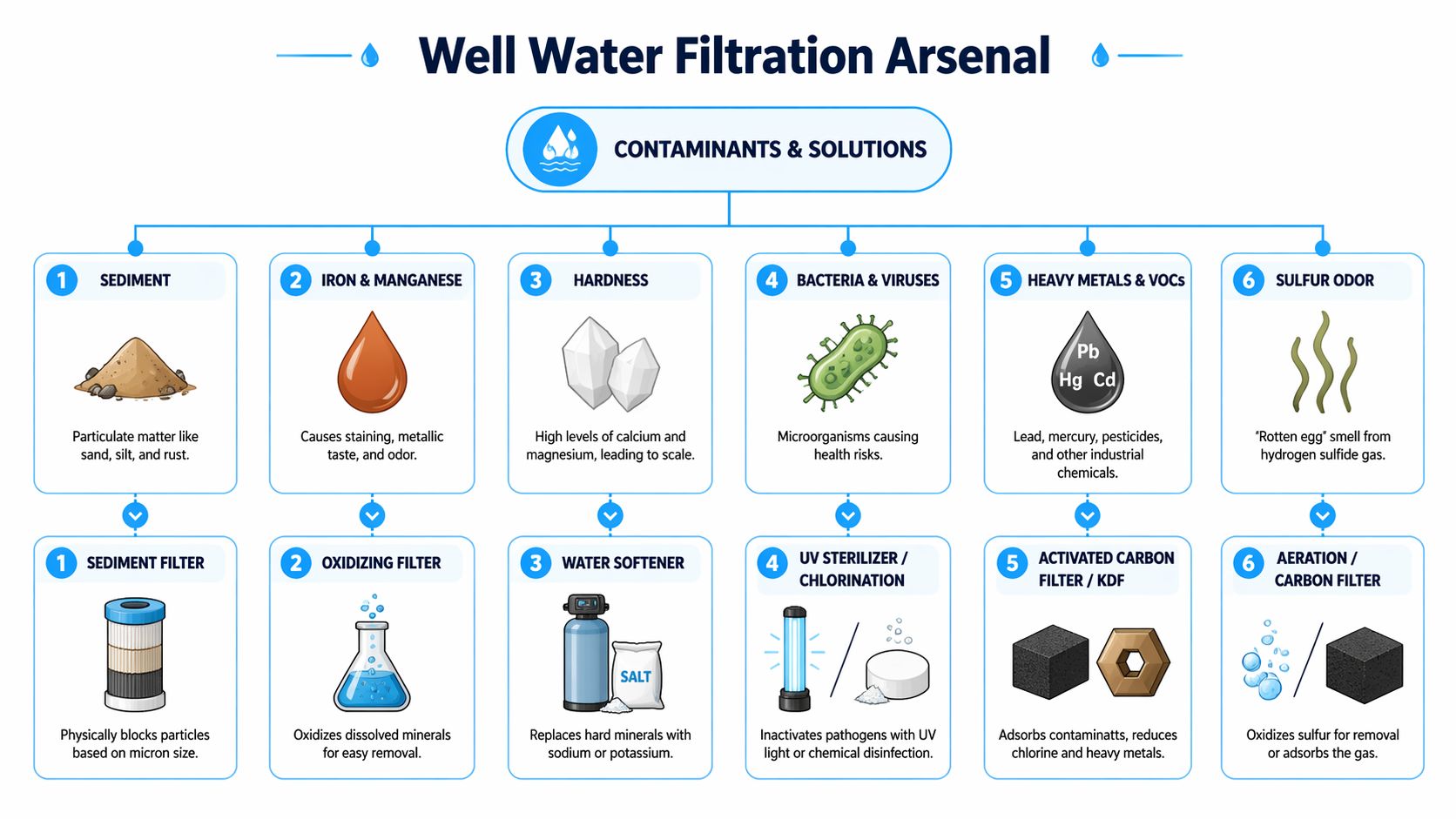
Water treatment works best when you stop thinking in terms of one magic filter. A strong well-water setup is more like a layered security team. One stage catches grit. Another handles dissolved minerals that cause staining. A later stage cleans up odor or chemical carryover. If needed, a final stage deals with microbes.

That sequence matters because each component protects the one after it.

A chart illustrating different well water contaminants and their corresponding effective filtration or treatment solutions.

Sediment filters as the first line

A sediment pre-filter is the bouncer at the door. It catches sand, silt, rust flakes, and other particles before they crowd out the equipment downstream. If you skip this stage in a sediment-heavy home, you force every later filter to do a dirty job it wasn't meant to do.

Sediment filtration isn't glamorous, but it's often what preserves pressure and extends the life of expensive equipment. In homes with visible grit, this stage is rarely optional.

Oxidizing filters for iron manganese and sulfur

Specialized well-water gear proves its worth. Air injection oxidation systems create an air pocket inside the tank that oxidizes dissolved contaminants so the media can remove them. That's why systems like the SpringWell WS1 are built around oxidation rather than simple cartridge filtration.

When homeowners ask me what works for bad staining and sulfur odor, this category is usually the answer. The verified lab-based performance data tied to the WS1 is strong because it addresses the contaminants that show up repeatedly in private wells.

What doesn't work well is trying to force a generic whole-house carbon unit to solve heavy iron or sulfur. Carbon is a finisher. It is not a substitute for a proper iron filter when the chemistry says oxidation is needed.

A sulfur smell that survives a carbon cartridge usually isn't asking for more carbon. It's asking for the right pretreatment.

Carbon filters for polishing and chemical reduction

Activated carbon and catalytic carbon have a different job. They improve taste and odor, reduce certain chemical contaminants, and serve as a polishing stage after the rougher work is done upstream.

Carbon works best when the water reaching it has already been cleaned of sediment and major iron loading. If you send dirty or iron-heavy water through carbon first, you shorten its useful life and lower performance.

This is also where whole-house systems designed for chemical reduction can shine in the right application. They are especially useful when the concern isn't just staining but broader water quality cleanup through the home.

KDF media and specialty applications

KDF media often appears in specialty setups or in combination systems aimed at heavy metals and added protection for downstream media. It isn't the star of most private-well treatment trains, but it can make sense where water chemistry supports it and where the system builder is solving more than one issue at once.

The practical point is simple. Specialty media should be matched to a known problem. Don't buy it because it sounds advanced.

UV purifiers and disinfection stages

A UV purifier is the final guard. It doesn't remove staining minerals or sediment. It disinfects water by inactivating microorganisms as water passes the lamp. That means UV belongs after filtration stages that improve clarity. Dirty water can interfere with disinfection performance.

Some homes need UV. Some need a different disinfection strategy. But if the water test flags microbial concern, don't expect a sediment cartridge or iron tank to handle it.

A good system is staged on purpose

A practical well-water train often looks like this:

  • Stage one, sediment control: Protects valves, media tanks, and appliances from abrasive particles.
  • Stage two, problem-specific treatment: This might be an AIO iron and sulfur filter or a softener, depending on the water.
  • Stage three, polishing: Often carbon, used to improve final taste and odor.
  • Stage four, disinfection if needed: UV or another dedicated microbial treatment step.

That order keeps each component doing the work it was designed to do.

Deciding Between Whole House and Point of Use Systems

This decision gets simpler when you ask one question first. Are you trying to protect the whole home, or are you trying to improve the water at one tap?

If the problem is staining, sediment, sulfur odor in showers, or equipment wear, a point-of-use filter won't solve the full problem. It may improve drinking water at the kitchen sink while the rest of the house still suffers.

Where whole-house systems make sense

A whole-house system, also called point-of-entry treatment, handles water as it enters the home. That's the right strategy when the water is affecting plumbing, fixtures, appliances, bathing, laundry, or the water heater.

A strong example in this category is the SpringWell CF Series. According to SpringWell's CF Series specifications, the CF4 and CF+ provide 1,000,000-gallon capacity, 99.6% chlorine removal, and service flows of 12 GPM for the CF4 and 20 GPM for the CF+ at 25-80 PSI, with reduction claims that include PFAS, PFOA, and PFOS. Those numbers matter because undersized whole-house units often create pressure complaints before they solve water-quality ones.

If your water issue follows you into every bathroom and appliance, whole-house treatment is usually the practical choice.

Where point-of-use systems earn their place

A point-of-use system works at one location, usually under the sink or on a countertop. These setups are useful when your main goal is drinking and cooking water quality.

They can be a smart add-on even in homes with whole-house treatment. A homeowner might use whole-house filtration for sediment, iron, and odor control, then add a dedicated kitchen unit for a final drinking-water polish.

Side-by-side trade-offs

  • Scope of protection: Whole-house protects plumbing and appliances. Point-of-use protects only the tap where it's installed.
  • Installation complexity: Whole-house equipment usually requires more space, plumbing work, and proper sizing.
  • Maintenance style: Whole-house upkeep tends to involve fewer but larger service events. Point-of-use systems usually mean smaller, more frequent cartridge changes.
  • Best use case: Whole-house for house-wide water problems. Point-of-use for targeted drinking-water improvement.

If your shower smells bad and your toilet stains orange, don't try to fix a whole-house problem under the kitchen sink.

For many well-water homes, the answer isn't one or the other. It's a combination with each system doing a different job.

Sizing Your System and Calculating Long Term Costs

A filter can be technically correct and still be a bad purchase. That happens when the unit is undersized for the house, oversized for the chemistry, or cheap upfront but expensive to keep alive.

The homeowners who make the best decisions usually stop asking, "What's the price?" and start asking, "What will this cost me to run well for years?"

Flow rate is a comfort issue

Flow rate is the amount of water the system can move without choking the house. In practical terms, it shows up during peak use. Someone is showering, the dishwasher is running, and a toilet refills. If the equipment is too small, pressure drops and complaints start.

The simplest way to think about sizing is by household demand:

  • Small demand homes: Fewer bathrooms and less overlapping water use can often work with lower service flow.
  • Busy family homes: More fixtures running at the same time need more capacity and better valve performance.
  • Large homes or multi-bath layouts: These are where undersized treatment systems become obvious fast.

A filter that looks affordable but can't keep up isn't a bargain. It's a bottleneck.

The real number to watch is ownership cost

Many "best well water filter" lists fail people. They compare features and skip the long-term bill. Verified background on well-water filtration points to the importance of total cost of ownership, noting that replacement media under heavy contamination loads can run $200-500 annually, and that air injection systems such as the WS1 may keep media for up to 10 years under ideal conditions, while high iron levels above 5 PPM can cut that to 2-3 years, which can inflate costs 3x, according to Crystal Quest's well water filtration discussion.

That single point changes how you should shop. A system that looks inexpensive can become the expensive option if your water chemistry exhausts media early.

A better way to compare systems

When comparing two filtration setups, calculate the following over the years you expect to own the home or the equipment:

  • Pre-filter replacements: These are often the routine cost people forget to include.
  • Main media life: Ask how your actual water chemistry affects replacement timing, not just the best-case brochure claim.
  • Service needs: Some systems need more hands-on upkeep than others.
  • Related supplies: If a setup uses salt, chemicals, or power, include that in your budget.

The TCO questions that expose weak options

Ask every vendor these questions:

  1. How does my iron load affect media life?
  2. What part of this system needs replacement most often?
  3. What maintenance am I expected to do myself?
  4. What happens to pressure as the system loads up?
  5. Which costs are not included in the initial quote?

A good answer is specific to your report. A weak answer sounds generic.

Building Your Perfect Well Water Filtration System

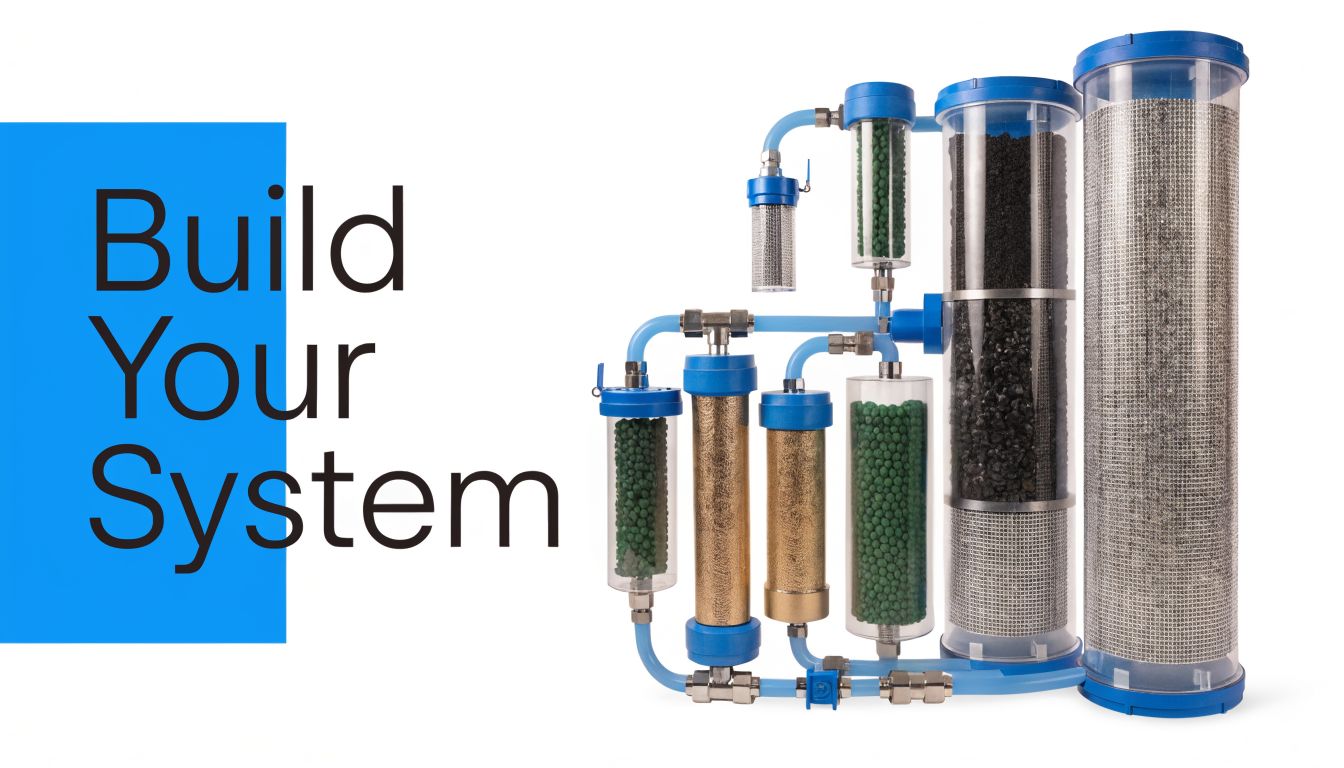
The best home water filter for well water is usually not a single filter. It's a filtration train, arranged in the order your water needs.

That sounds complicated until you reduce it to a simple rule. Put the rough treatment first, the specialized treatment next, and the polishing or disinfection stage last.

A modular water filtration system showing various clear filter cartridges with different internal media components connected by blue tubes.

Matching the train to the test

Here are practical system layouts that make sense for common well-water scenarios.

  • Sediment plus iron: Start with a sediment pre-filter, then an iron filter, then a carbon polishing stage if taste or odor still needs cleanup.
  • Hydrogen sulfide odor plus staining: Use sediment protection if needed, then an oxidation-based sulfur and iron filter, followed by carbon if you want final odor polishing.
  • Bacteria concern with otherwise manageable water: Pre-filtration first, then the core treatment stages for any minerals or odor issues, with UV at the end.
  • Heavy particulate load with mixed nuisance issues: Use strong sediment control up front so the specialty tanks don't get buried in debris.
  • Hard water layered onto other problems: Treat nuisance contaminants in the right order, and place softening where it supports the system rather than interfering with it.

The order matters as much as the parts. A UV unit before cloudy water is a bad sequence. Carbon before heavy iron is usually a short-lived sequence. A softener thrown into the wrong place can complicate the system instead of helping it.

A few combinations that work well

A common setup for visible staining and dirty water is:

Sediment filter → AIO iron filter → carbon filter

A common setup where microbial protection is part of the plan is:

Sediment filter → primary contaminant treatment → UV

If your water smells bad at every tap but also carries particles, don't skip that first barrier. Sediment is what gradually shortens the life of everything behind it.

Good treatment trains don't ask one component to do three jobs badly. They give each stage one clear job and enough protection to keep doing it.

A short visual walkthrough can help if you're trying to picture how these parts fit together in a real installation.

The shopping list mindset

When I review a homeowner's plan, I don't look for the fanciest brand list. I look for a clean answer to four questions:

  • What exactly are we removing?
  • What has to be protected first?
  • Where is pressure most likely to become a problem?
  • What will this setup cost to maintain?

If you can answer those four, your system design is usually headed in the right direction.

Installation Upkeep and Common Troubleshooting

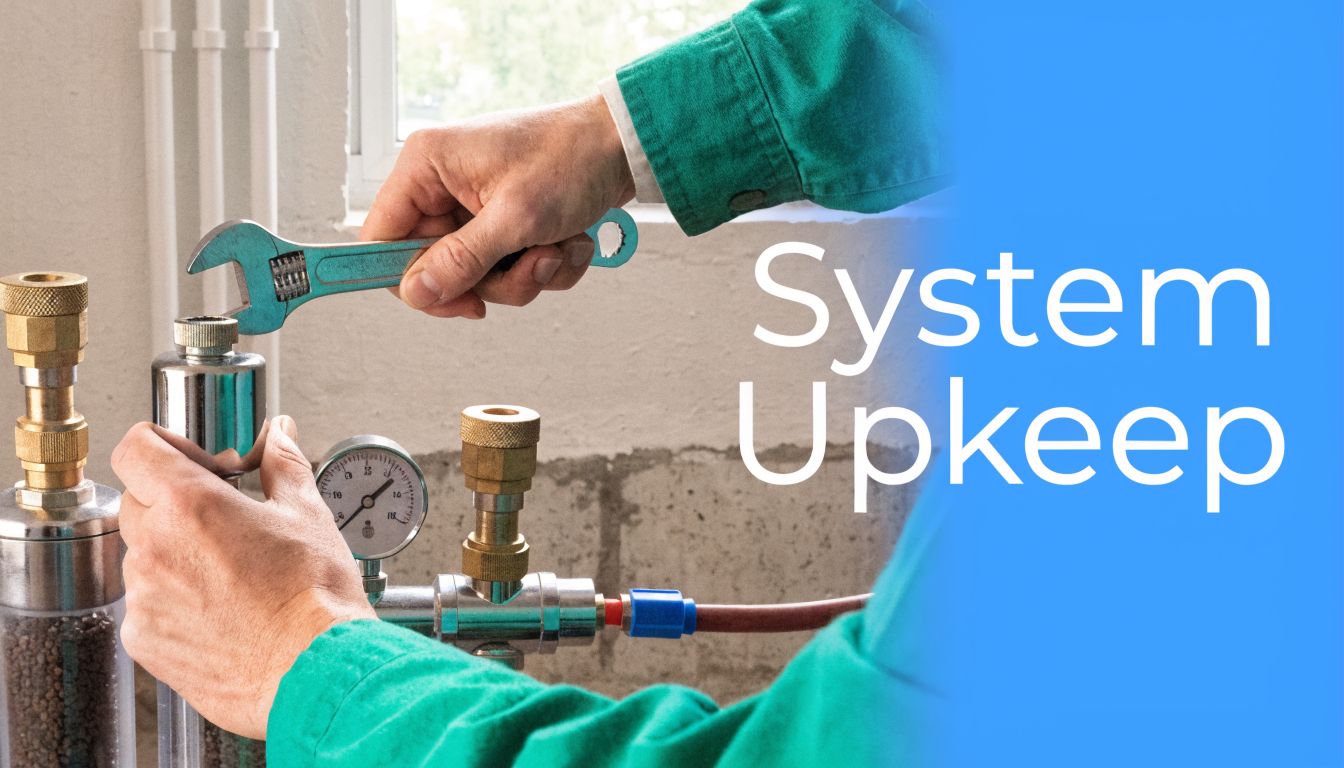
Even a well-chosen filtration system can disappoint if it's installed poorly or ignored after startup. Most long-term complaints come from three places. Bad placement, skipped maintenance, or unrealistic expectations about what the equipment is supposed to do.

A professional technician wearing a green uniform performs maintenance on a home water filtration system.

DIY or hire a pro

Some homeowners can handle basic installation work, especially when the system is simple and the plumbing layout is clean. Whole-house well systems get more demanding when they involve larger tanks, bypass valves, drain lines, pressure concerns, or disinfection equipment.

If you hire a professional, look for someone who can do more than connect pipes. You want a person who understands well-water chemistry, equipment order, service access, and how to leave room for future maintenance.

A maintenance routine that keeps systems honest

Create a written service schedule and keep it near the equipment. Don't rely on memory.

  • Check pre-filters regularly: These are often the first point of pressure loss.
  • Watch for returning odor or staining: That usually means a treatment stage is overloaded, exhausted, or bypassing.
  • Inspect bypass settings and valves: A partly closed or incorrectly set valve can make a healthy system look broken.
  • Look around the equipment base: Small leaks can gradually create bigger house problems over time.

If you're not sure what hidden moisture problems look like once water escapes containment, this guide on signs of water damage in your home is useful for spotting trouble early.

Quick troubleshooting that saves time

If pressure suddenly drops, start with the simplest suspect. Check the sediment stage first. That's often where a system announces that it has been doing its job.

If a sulfur smell comes back, don't assume the whole system failed. It may be one exhausted stage or a change in raw water conditions. If staining returns, compare where it appears. Whole-house return usually points to treatment performance. One fixture only may point to local plumbing or fixture buildup.

A good troubleshooting habit is to ask what changed. Water conditions, usage, service intervals, and valve positions usually explain the problem faster than guesswork.

Frequently Asked Questions About Well Water Filters

Can one filter handle all well water problems

Usually not. Well water often has layered issues, and different contaminants need different treatment methods. The best results usually come from staged treatment rather than a single all-purpose box.

Is a whole-house system better than an under-sink filter

It depends on the goal. If you're dealing with staining, odor, sediment, or appliance wear, whole-house treatment makes more sense. If you only want better drinking water at one tap, an under-sink unit may be enough.

Will a carbon filter remove iron and sulfur odor by itself

Sometimes it can help with mild odor polishing, but it often isn't the right primary treatment for heavier iron or hydrogen sulfide problems. Those usually need specialized pretreatment.

How do I know what size system I need

Start with your water test and your household demand. A system has to match both the chemistry and the amount of water your home uses at peak times.

Why do some homeowners regret the cheapest system

Because initial price isn't the full cost. Media replacement, routine upkeep, and pressure complaints can make a low-priced system the costly choice over time.

Should I install UV just to be safe

Only if the water conditions and test results support it and the system is built to feed UV properly. UV is a disinfection tool, not a substitute for sediment or iron treatment.


If you're comparing systems and want clear, practical help without the marketing fog, Water Filter Advisor is a solid place to research filters, maintenance needs, and the trade-offs that matter in a real home.

How to Remove Iron in Water: A Homeowner’s Guide

Orange streaks in the toilet bowl. Rust stains in the sink. White laundry that comes out looking dull. Water that runs clear from the tap, then turns tea-colored in the glass. That is how most homeowners discover they have an iron problem.

The fix is not “buy a filter.” The fix is choosing the right filter for the exact kind of iron in your water. That is where people waste money. They install a softener when they need oxidation. They buy a sediment filter for dissolved iron. They shock the well once, then wonder why the slime comes back.

If you want to know how to remove iron in water without guessing, use a simple rule. Match the iron type to the treatment method. That one decision saves the most frustration.

First Steps Uncovering Your Iron Issue

Iron is common in home water, especially from wells. The U.S. Environmental Protection Agency sets a secondary maximum contaminant level of 0.3 mg/L because iron causes staining and metallic taste, and some groundwater sources can exceed 10 mg/L according to the Ohio State University Extension fact sheet on iron in water.

That number matters less than this question: What kind of iron do you have?

A hand holding a water test strip in a clear glass of water to check quality.

Learn the four troublemakers

Most home iron problems fall into four buckets.

  • Ferrous iron means dissolved iron. Water often looks clear at first, then turns orange or brown after sitting.
  • Ferric iron means oxidized iron. It already exists as particles, so the water may look rusty right away.
  • Organic iron is iron tied up with organic matter. It often behaves unpredictably and can slip past filters.
  • Iron bacteria is not just iron. It is biological slime that feeds on iron and coats plumbing, tanks, and filter media.

A lot of bad equipment choices happen because people lump all four together.

Use simple at-home checks first

You can learn a lot before calling anyone.

Fill a clear glass from the cold water tap and look at it immediately. Then let it sit.

  • If the water starts clear and later turns rusty, suspect ferrous iron.
  • If it is already orange, brown, or cloudy, suspect ferric iron.
  • If it looks yellowish, tea-colored, or unusually stubborn to treat, organic iron moves higher on the list.
  • If you see slime, sheen, or stringy buildup in the toilet tank or around fixtures, iron bacteria becomes a possibility.

Another useful clue is where the problem shows up.

  • Only at one faucet: likely local pipe scale or fixture debris.
  • At every tap in the house: likely a whole-house issue.
  • Only on hot water: the water heater may be part of the problem.

Practical tip: Take the toilet tank lid off. Homeowners often spot iron bacteria there first because the tank sits undisturbed long enough for slime and residue to show themselves.

Test before you shop

A basic iron test kit is useful because treatment decisions depend on concentration, not just appearance. Even if you plan to hire a pro, testing first keeps the conversation grounded.

For homeowners trying to sort out filtration options, maintenance, and testing tools in one place, this general advice library is useful: https://www.waterfilteradvisor.com/advice/

If your home also deals with drainage, runoff, or recurring groundwater around the property, broader site work can affect water quality conditions over time. In those cases, it is worth understanding water management solutions so you are not treating house symptoms while ignoring outside water movement.

Know when lab testing is worth it

Home screening gets you pointed in the right direction. Lab testing becomes worth the cost when:

  1. You are replacing an expensive system
  2. You suspect both iron and manganese
  3. You have odor, slime, or repeated fouling
  4. Your water changes seasonally
  5. You are on municipal water and want to separate source-water issues from pipe corrosion

For municipal homes, a useful trick is sequential sampling. Run one sample immediately after the tap sits, then another after flushing the line. If the first sample is worse, the iron may be coming from household plumbing or nearby pipe corrosion rather than the water source itself.

The diagnosis that guides the fix

Use this quick cheat sheet before spending money:

Sign you notice Most likely issue What it usually means
Clear water turns rusty after sitting Ferrous iron Dissolved iron needs oxidation or ion exchange
Water is rusty right from the tap Ferric iron Particle filtration matters
Tea tint or difficult-to-remove staining Organic iron Basic filters often struggle
Slime, odor, recurring orange buildup Iron bacteria Filtration alone usually is not enough

The best homeowner move is boring but effective. Test first, identify the iron form, then buy treatment. That order prevents the classic mistake of putting a softener in front of a problem it was never designed to solve.

Choosing the Right Iron Filtration System

Once you know the iron type, the equipment list gets much shorter. Most homes do not need every stage on the market. They need the one setup that matches the water.

The broad treatment thresholds are straightforward. According to the Illinois Department of Public Health guidance on iron in drinking water, polyphosphates sequester less than 2 mg/L, water softeners are best for less than 5 mg/L, manganese greensand filters handle up to 10 mg/L, and chlorine injection or aeration are necessary above 10 mg/L.

Infographic

Start with the mismatch to avoid

The most common bad match is simple. A homeowner has visible rust particles or slime, installs a water softener, and expects it to behave like an iron filter. It will not.

A softener can work well on low-level dissolved ferrous iron. It is a poor choice for ferric iron, heavy iron loading, or iron bacteria. In those situations, it fouls, loses efficiency, and turns into a maintenance project.

Iron Removal Method Comparison

Method Best For (Iron Type) Max Iron Level (ppm) Pros Cons
Polyphosphate feeder Very low dissolved iron <2 Simple approach for light aesthetic issues Does not remove iron, can be a poor fit for broader treatment goals
Water softener Low ferrous iron <5 Also removes hardness, familiar equipment Struggles with ferric iron, bacteria, and heavier iron loads
Manganese greensand filter Ferrous and some oxidized iron up to 10 Strong whole-house option for moderate iron Needs regeneration and regular upkeep
Aeration plus filtration Ferrous iron above 10 Chemical-free approach for the right water Needs enough contact and good filtration after oxidation
Chlorine injection plus filtration High iron or iron bacteria above 10 Handles difficult water and biological issues well More components, more maintenance
Sediment filter Ferric iron particles as pre-treatment qualitative Good at catching visible rust solids Does not remove dissolved iron
Reverse osmosis Select point-of-use problems, especially lower pipe-sourced issues qualitative Useful under the sink for drinking water Not a whole-house iron solution

Water softeners when they make sense

If your water test shows low dissolved ferrous iron, a softener is often the most economical answer. It pulls double duty by removing hardness too, which matters in homes already battling scale and soap problems.

A softener makes sense when:

  • The iron is dissolved, not visibly particulate
  • Staining is present but not severe
  • You already need hardness treatment
  • You are prepared to clean the resin and use the right salt setup

That last part gets ignored. Softener owners who treat iron casually often pay for it later with fouled resin and poor regeneration.

If you need plumbing help with this kind of setup, a local specialist in water softener installation and repair can be more useful than a general handyman because bypass placement, drain routing, and valve programming affect performance.

Oxidizing filters for the middle ground

This is the category many well owners need. Media like manganese greensand or systems using air injection oxidation work by changing dissolved iron into a particle, then trapping it.

These systems fit homes where:

  • the iron level is beyond what a softener handles comfortably
  • the water has recurring staining throughout the house
  • the homeowner wants whole-house treatment
  • chemical-free treatment is preferred, when the water chemistry supports it

Birm, greensand, and AIO filters all live in this neighborhood, but they are not interchangeable. Some need the right pH and oxygen conditions. Some regenerate. Some backwash heavily. The details matter.

Key takeaway: Oxidation systems are often the sweet spot for whole-house iron removal because they target the iron directly instead of asking a softener resin bed to do a job it only partly likes.

Chlorine injection for the ugly water

When iron is high, when the staining is aggressive, or when slime points to iron bacteria, chemical oxidation becomes hard to beat. This is not the prettiest setup, but it is one of the most effective.

A typical system includes:

  1. A metering pump that injects chlorine ahead of treatment
  2. A retention tank that gives the water time to react
  3. A backwashing media filter to capture oxidized particles
  4. Often a carbon stage to remove chlorine residual and polish taste

This is the setup I point homeowners toward when their problem is bigger than “some orange staining.”

What about municipal water

Municipal iron is a different animal. The iron can come from corroding pipes rather than the original water source. For that reason, a whole-house iron system is not always the best-value answer.

If the problem is mainly at the kitchen tap, or mainly affects drinking water, an under-sink RO system or a targeted cartridge setup may be the smarter buy. That is especially true for renters or owners who do not want to repipe or install a large backwashing tank.

The shortest decision framework

If you want the no-nonsense version, use this:

  • Low ferrous iron and hard water: water softener
  • Moderate iron with whole-house staining: greensand or similar oxidizing filter
  • High iron, bacteria, or severe fouling: chlorine injection plus filtration
  • Visible particles only: sediment pre-filtration can help, but only if the iron is already oxidized
  • Drinking-water-only issue on municipal supply: under-sink RO or targeted point-of-use treatment

That is how to remove iron in water without overbuying. You do not win by installing the fanciest system. You win by installing the least complicated system that matches the water.

A Practical Guide to Installing Your Iron Filter

A whole-house iron filter does not need a fancy install to work well. It needs a correct one. The plumbing path, drain arrangement, and service access matter more than polished pipe work.

Start with location. Install the system on the main incoming cold-water line, before the water heater. That protects fixtures, toilets, appliances, and the heater itself from iron buildup.

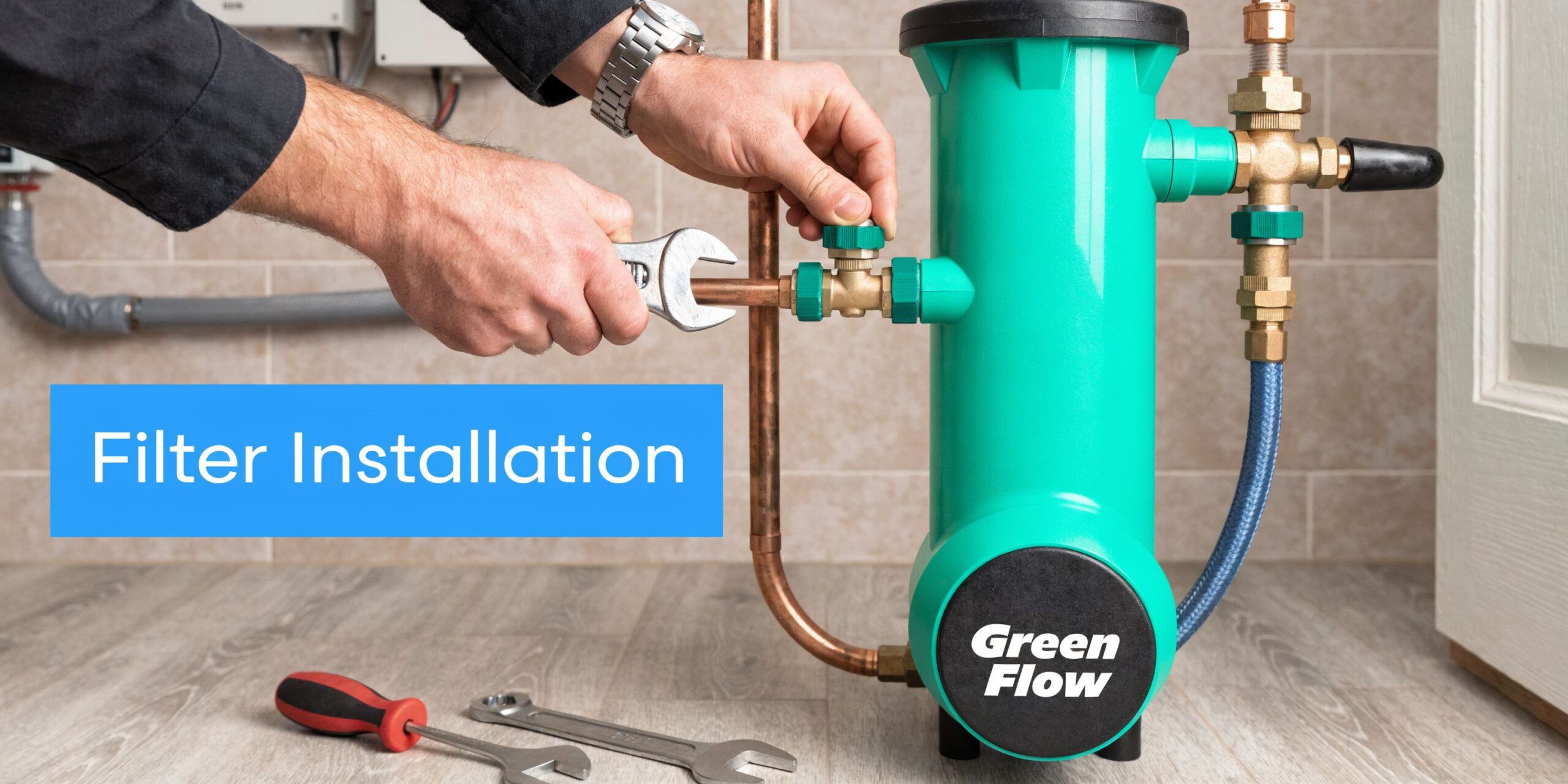
A professional technician using a wrench to install a Green Flow water filtration system for home use.

Pick the right spot

The ideal location has four things:

  • A nearby drain for backwash water
  • Enough space overhead to service the valve and remove media if needed
  • Protection from freezing
  • A level surface if the tank sits on concrete or a platform

Do not wedge a tall tank into a corner where you cannot turn a bypass or inspect a leak.

Build around a bypass

Every iron filter should have an accessible bypass valve. Many control heads include one. If yours does not, add one with basic plumbing.

A bypass lets you:

  • isolate the filter during maintenance
  • keep water flowing to the house during repairs
  • troubleshoot whether the filter or the plumbing is causing a pressure issue

Skipping a bypass saves a little effort now and creates a lot of annoyance later.

Follow the flow direction carefully

Tank systems are not forgiving about reversed flow. The inlet and outlet markings matter.

Before making final connections:

  1. Set the tank in place.
  2. Dry-fit the plumbing.
  3. Confirm the incoming main hits the inlet side.
  4. Confirm the outlet feeds the house.
  5. Confirm the drain line route before tightening anything.

I have seen more than one homeowner blame a new filter for poor performance when the unit was piped backward.

Account for backwash and drain lines

Iron filters need to flush themselves. That means the drain line is part of the treatment system, not an afterthought.

Use a drain route that is secure, unobstructed, and sized appropriately for the valve requirements. Keep it protected from kinks and freezing. If the drain backs up or the line is undersized, the media bed cannot clean itself properly.

For difficult water, some systems rely on oxidation before filtration. One effective example is chlorine injection. In those cases, high iron above 3 ppm or iron bacteria can be treated with chlorine injection, a metering pump, a retention tank with 20 to 60 minutes of contact time, and a backwashable media filter, achieving 98%+ removal rates, as shown in this video demonstration of chlorine injection iron treatment.

A quick visual walkthrough helps before first startup:

Add two simple upgrades

These are not required, but they make ownership easier.

  • Pressure gauges before and after the filter help you spot pressure drop as media loads up.
  • Unions or flexible connectors make future servicing much easier than cutting rigid pipe.

Neither upgrade is glamorous. Both are practical.

Installer tip: Leave enough room to remove the control head without tearing apart surrounding plumbing. Future you will appreciate the extra few inches.

First startup matters

Once the plumbing is complete, do not rush full flow through a dry tank.

Use this order:

  1. Put the system in bypass.
  2. Slowly pressurize the plumbing and check for leaks.
  3. Crack the bypass to fill the tank gradually.
  4. Run the manufacturer’s initial backwash or startup cycle.
  5. Flush until the discharge runs clean and stable.
  6. Return the unit to service and test at a nearby faucet.

Slow filling protects media beds and helps avoid sudden surges through the control valve.

When to hand it off to a pro

DIY installation is reasonable for many homeowners. It stops being a casual weekend project when you have:

  • chemical feed pumps
  • retention tanks
  • unusual drain limitations
  • old galvanized pipe
  • low pressure issues
  • mixed contaminants beyond iron alone

In those homes, a licensed water treatment installer or plumber earns the money by preventing callbacks, leaks, and misconfiguration.

Your Iron Filter Maintenance Checklist

Iron treatment systems fail at first. Stains creep back. Pressure slips. Backwash gets weaker. Then the homeowner says the filter “stopped working,” when the issue is usually maintenance.

That matters even more if iron bacteria is part of the problem. According to the Clean Water Store discussion of iron bacteria treatment, iron bacteria thrive in 15-20% of U.S. private wells, form biofilms that resist standard filters, and ongoing treatment such as weekly permanganate dosing for greensand filters or H2O2 injection can outperform one-time chlorination alone.

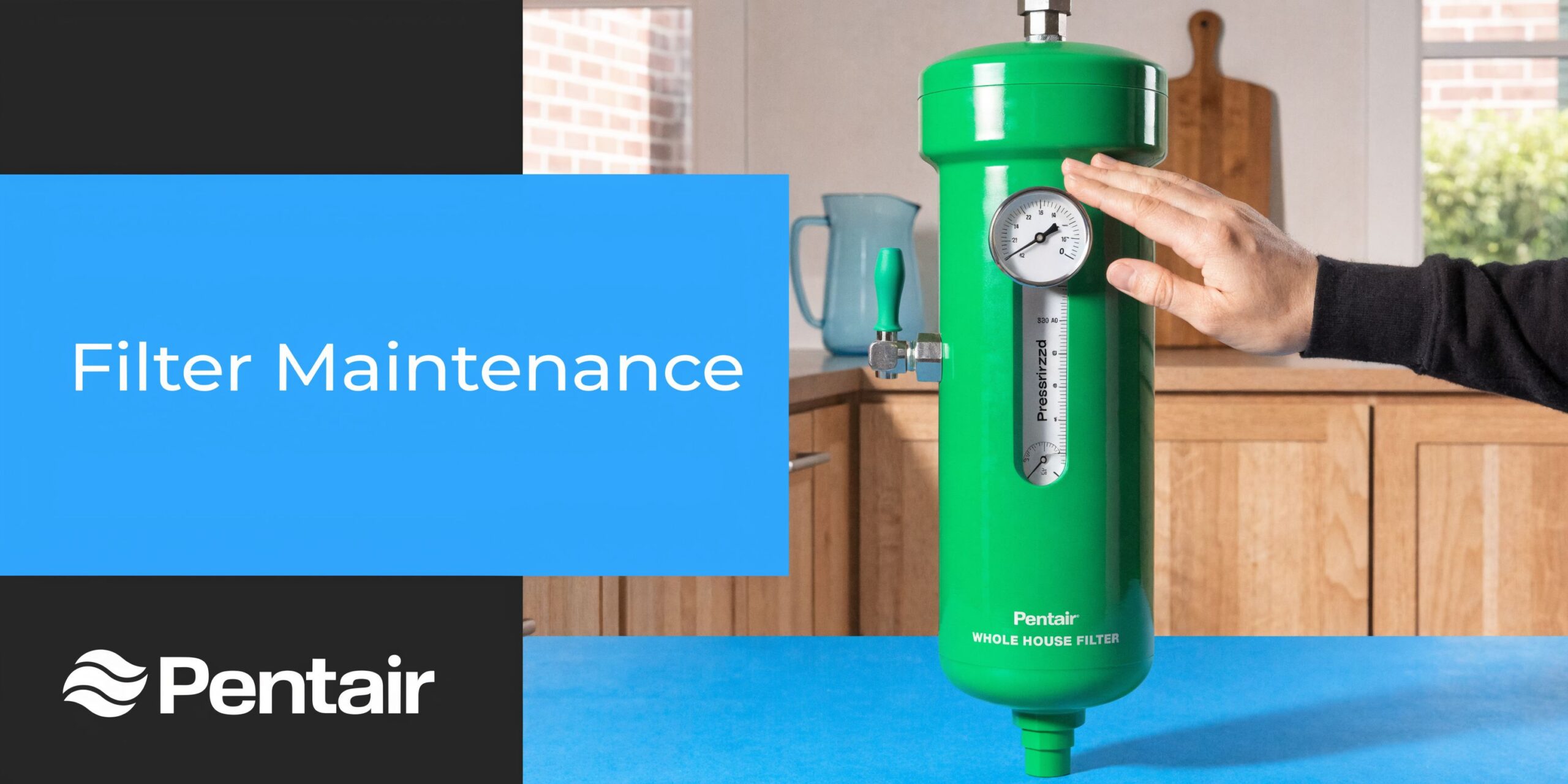
A person checking the pressure gauge on a green Pentair whole house water filtration system unit.

What to check routinely

A good maintenance routine is simple and repeatable.

  • Look for leaks: Check valve bodies, fittings, and drain lines. Small drips become bigger problems around treatment equipment.
  • Watch pressure behavior: A noticeable drop across the system often means the media bed or prefilter is loading up.
  • Confirm the control valve cycles properly: If the unit should backwash or regenerate and does not, treatment quality falls quickly.

System-specific upkeep

Different systems need different attention.

Water softeners

If a softener is handling iron, keep the brine tank in good condition and use cleaning products intended for iron fouling. Resin beds that treat iron need more attention than resin beds treating hardness alone.

Check for:

  • salt bridging
  • mush or sludge in the brine tank
  • resin fouling signs, such as stains returning before regeneration

Greensand and oxidizing filters

These systems depend on proper regeneration or backwashing. If they skip cycles, the media bed loads with iron and performance drops.

Pay attention to:

  • regeneration supply, if your system uses one
  • drain flow during backwash
  • changes in water color after a cycle

Chlorine or peroxide injection systems

These setups work well, but only if the feed system feeds.

Inspect:

  • chemical tank level
  • injector operation
  • tubing condition
  • retention tank cleanliness
  • post-filter performance

A homeowner checklist that works

Use this rhythm:

Timing What to do Why it matters
Frequent glance Check for leaks and unusual sounds Catches failures early
Regular review Inspect salt, chemicals, and pressure behavior Prevents underfeeding and fouling
Seasonal habit Clean tanks, replace prefilters if used, inspect drain line Keeps backwash and flow reliable
Periodic retest Test treated water Confirms the system is still matching the water

Practical tip: If stains return, do not immediately blame the media. First check whether the unit backwashed, regenerated, or drew chemical as intended.

Iron bacteria needs ongoing control

This is the category homeowners underestimate most. Shock chlorination may knock it back, but it rarely counts as a forever fix on its own. If slime returns, the treatment plan needs to include routine disinfection or a stronger oxidation strategy.

That is why maintenance is not optional in iron treatment. A neglected system does not age gracefully. It turns into expensive plumbing that lets rust through.

Understanding the True Cost of Iron-Free Water

The cheapest iron system on day one is often not the cheapest iron system to own.

Homeowners usually compare sticker prices and stop there. A better comparison includes equipment, installation labor or DIY supplies, consumables, replacement media or cartridges, and the time you spend babysitting the system.

Compare ownership, not just purchase

A softener can look attractive because it is familiar and often solves two problems at once when hard water is also present. But if you ask it to handle iron that pushes beyond its comfort zone, the hidden costs show up in resin cleaners, salt use, service calls, and reduced performance.

An oxidizing filter may cost more up front, yet feel easier to live with when it is correctly matched to the water. That is especially true for households treating whole-house iron instead of just kitchen drinking water.

Municipal homes should think differently

Most iron guides focus on well water, but municipal water can bring a different budget decision. According to the SoftPro discussion of municipal iron and point-of-use options, iron from corroding pipes affects 20-30% of U.S. urban households, and one overlooked comparison is about $200 in annual maintenance for a whole-house softener versus about $50 for under-sink RO replacement cartridges when the issue is lower, pipe-sourced iron.

That is a useful reality check. If the staining is minor and mostly tied to drinking water or one faucet, a whole-house install may be more system than you need.

The three cost buckets that matter

Upfront cost

This includes the equipment itself, plus bypass parts, shutoff valves, fittings, drain tubing, and any prefilters. DIY installs can reduce labor but still require proper materials.

Operating cost

Systems separate themselves by operating costs. Softeners need salt and often resin cleaning attention. Chemical injection systems need feed solution and periodic service. Cartridge-based point-of-use systems need replacement filters.

Hassle cost

This one never appears on the invoice, but it is real. A complicated system that constantly needs adjustment costs attention. A simpler system that does its job is worth more than many homeowners realize.

Best-value rule: Buy the smallest effective solution that fits the iron problem. Whole-house gear for a kitchen-only issue is overspending. A softener for a bacteria problem is underspending in the wrong direction.

The true cost is not “what did the tank cost.” It is “what will this setup ask from me every year, and is that fair for the problem I have?”

Troubleshooting Common Issues and Top Questions

Iron systems usually tell you what is wrong. You just have to read the symptoms correctly.

Quick fixes for common problems

The water pressure dropped after installation
Check the bypass setting first. Then check the sediment prefilter if one is installed. After that, look at whether the unit is overdue for backwash or whether the drain line is restricted.

The stains came back
Do not assume the media is spent. Confirm the system is cycling, drawing any required chemical, and treating the full house flow. Returned staining often points to a skipped maintenance step or a water change.

The filter seems to regenerate too often
Look at the settings, household water use, and whether the system was oversized or undersized for actual demand. Frequent cycling can also happen when iron fouls media faster than expected.

Common homeowner questions

Can a water softener really remove iron

Yes, but only in the right lane. It works best on low-level ferrous iron. It is not the right primary tool for visible rust particles, heavy iron loading, or iron bacteria.

Can I remove iron without chemicals

Yes. Aeration and other oxidation-based systems can work well in the right water conditions. They are often a good fit when the issue is dissolved iron and the water chemistry supports oxidation and filtration.

What if I have both iron and manganese

That usually pushes the setup toward a dedicated oxidizing filter or a more advanced treatment train rather than a simple softener. Mixed contamination is one of the clearest cases for thorough testing before purchase.

What if the rotten egg smell comes with the iron

Odor changes the equipment choice. Homes with both iron and sulfur issues often need an oxidation approach instead of basic ion exchange alone. This is one of the situations where a single “all-purpose” filter usually disappoints.

Do sediment filters remove iron

Only if the iron is already oxidized into particles. A sediment filter does nothing meaningful for dissolved ferrous iron by itself.

Is under-sink treatment enough

Sometimes. If the issue is limited to drinking water, especially on municipal supply, point-of-use treatment can be the smarter move. If toilets, tubs, laundry, and appliances all stain, you need whole-house treatment.

The pattern is consistent. Iron problems become expensive when the diagnosis is lazy. Once the iron type is clear, the right system usually becomes obvious.


If you want help comparing whole-house filters, under-sink systems, testing kits, and maintenance options without wading through marketing noise, visit Water Filter Advisor. It is a practical resource for choosing the right water treatment setup for your home and keeping it working.