How to Remove Hard Water Stains from Sink Safely at Home
You clean the sink at night, wake up in the morning, and there it is again. A chalky ring around the drain. A white outline at the faucet base. Tiny cloudy spots that make an otherwise clean bathroom or kitchen look like nobody touched it.
That cycle frustrates people because hard water stains look like ordinary grime, but they don't behave like grime. You can scrub harder and still get nowhere. If your home water is mineral-heavy, the sink keeps telling on it. Cleaning matters, but water filtration and softening matter more because they deal with the cause instead of the symptom.
Why Your Sink Keeps Showing Those White Marks
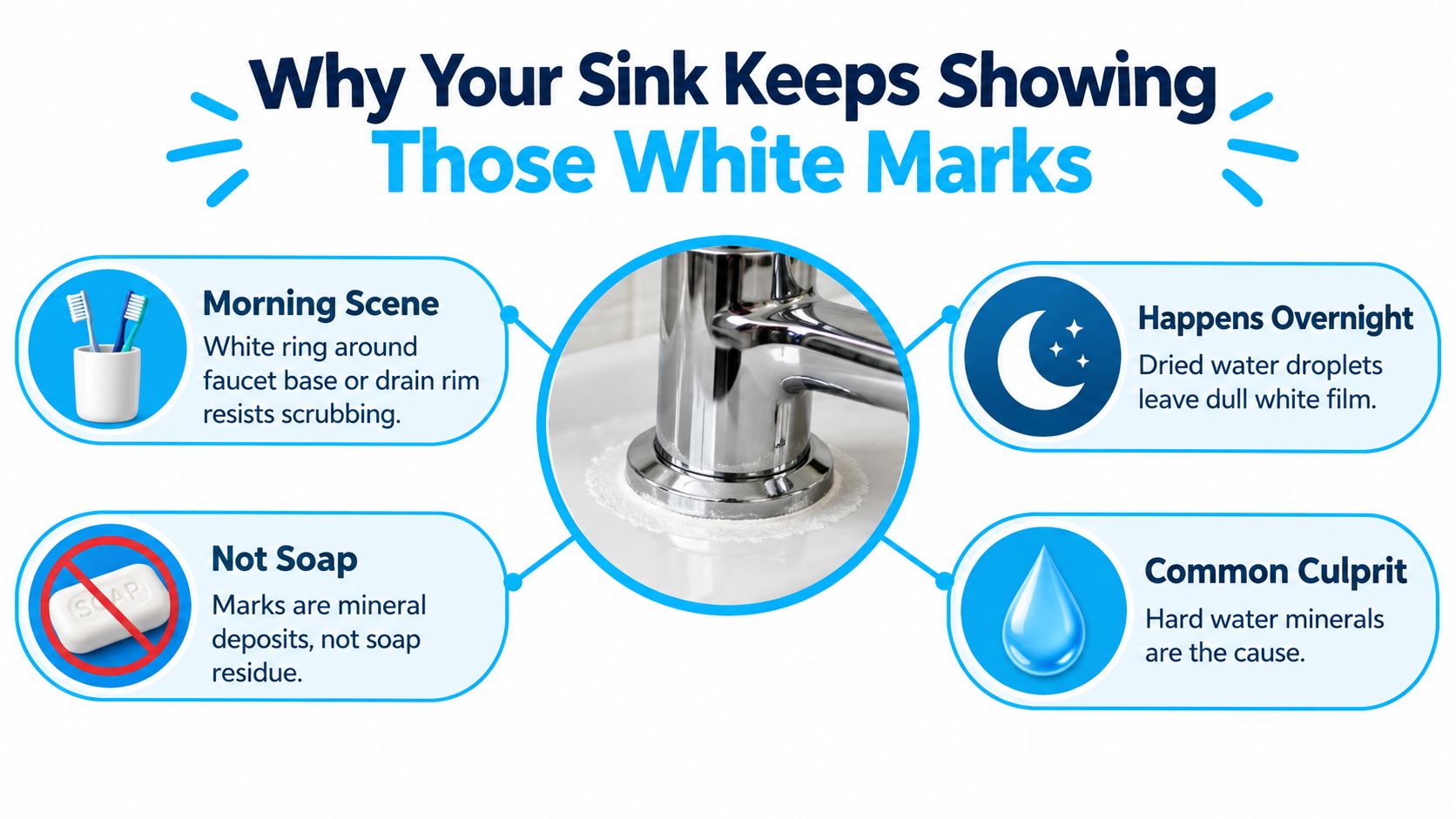
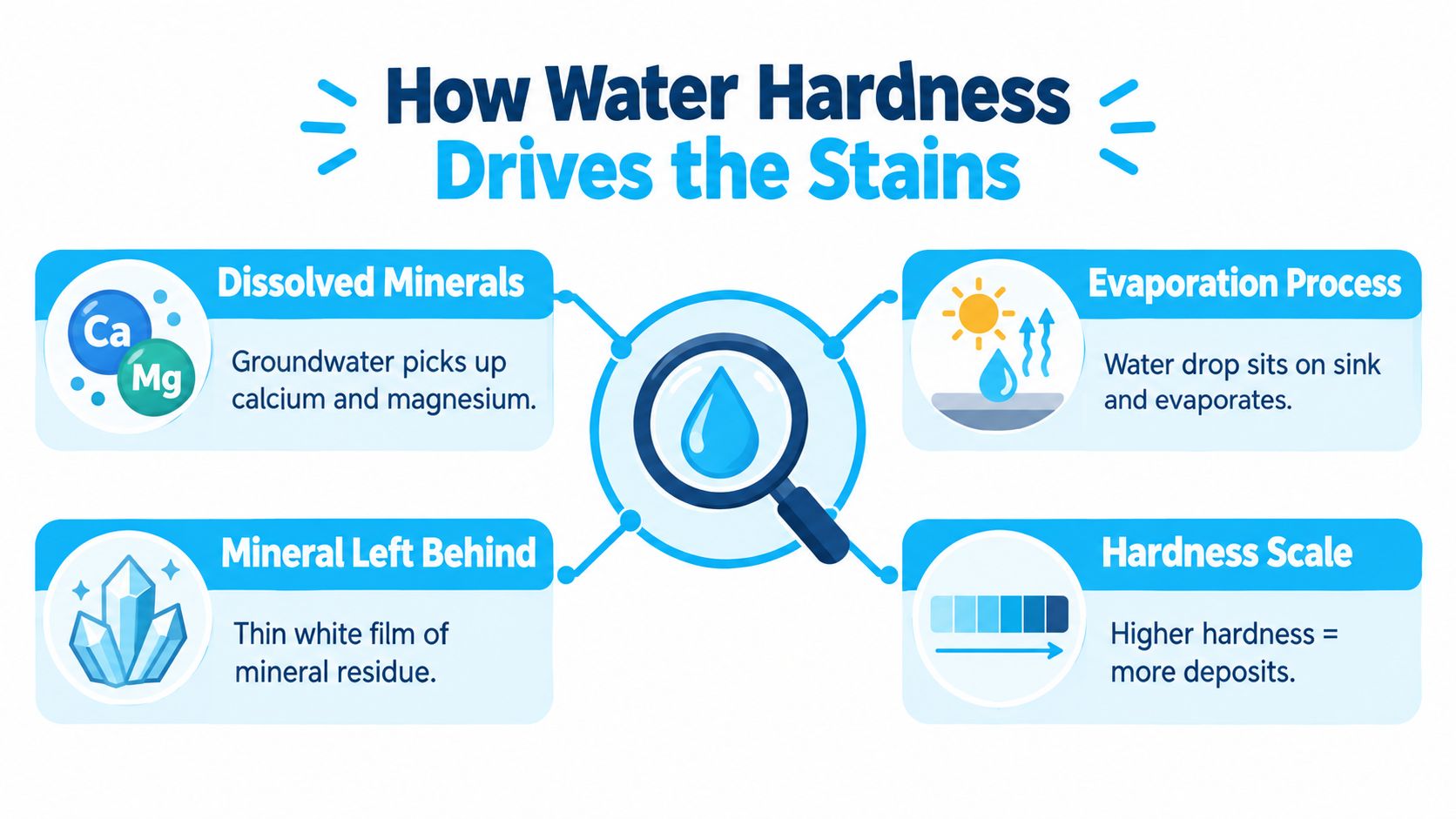
That dull white film on the sink usually isn't leftover soap. It's mineral deposit buildup from water that dried on the surface. Hard water carries dissolved calcium and magnesium, and those minerals stay behind when the water evaporates. One sink-cleaning guide describes these stains as mostly calcium and magnesium compounds, especially calcium carbonate, which is why mild acids can break them down (hard water stain cleaning guidance).
What hard water means in everyday terms
Water hardness is just a measure of how much dissolved mineral your water carries. Once hardness rises into the hard range above about 120 mg/L, scale and soap-scum problems become more common, and very hard water above roughly 180 mg/L often points people toward treatment to reduce recurring fixture buildup (water hardness and softening ranges).
If that describes your home, the sink is often the first place you notice it.
- Faucet base rings show up where splashes sit and dry.
- Drain rims collect residue because water lingers there.
- Toothbrush holders and soap dishes leave ghostly outlines on the counter and basin.
Stain or surface damage
Not every cloudy mark is the same.
A removable hard water stain sits on top of the finish. It feels rough or chalky, and acids usually loosen it. True etching is different. Etching changes the surface itself, so the area may stay dull even after the mineral crust is gone. That's more common on acid-sensitive materials.
Practical rule: If the spot softens when kept wet with a sink-safe acid treatment, you're usually dealing with deposit buildup, not permanent finish damage.
Hard water stains on sink surfaces can be solved with a short cleaning routine that tackles the visible problem. But if you keep seeing the same white marks every few days, the bigger issue isn't your effort. It's the water feeding the sink.
Vinegar Method Step by Step
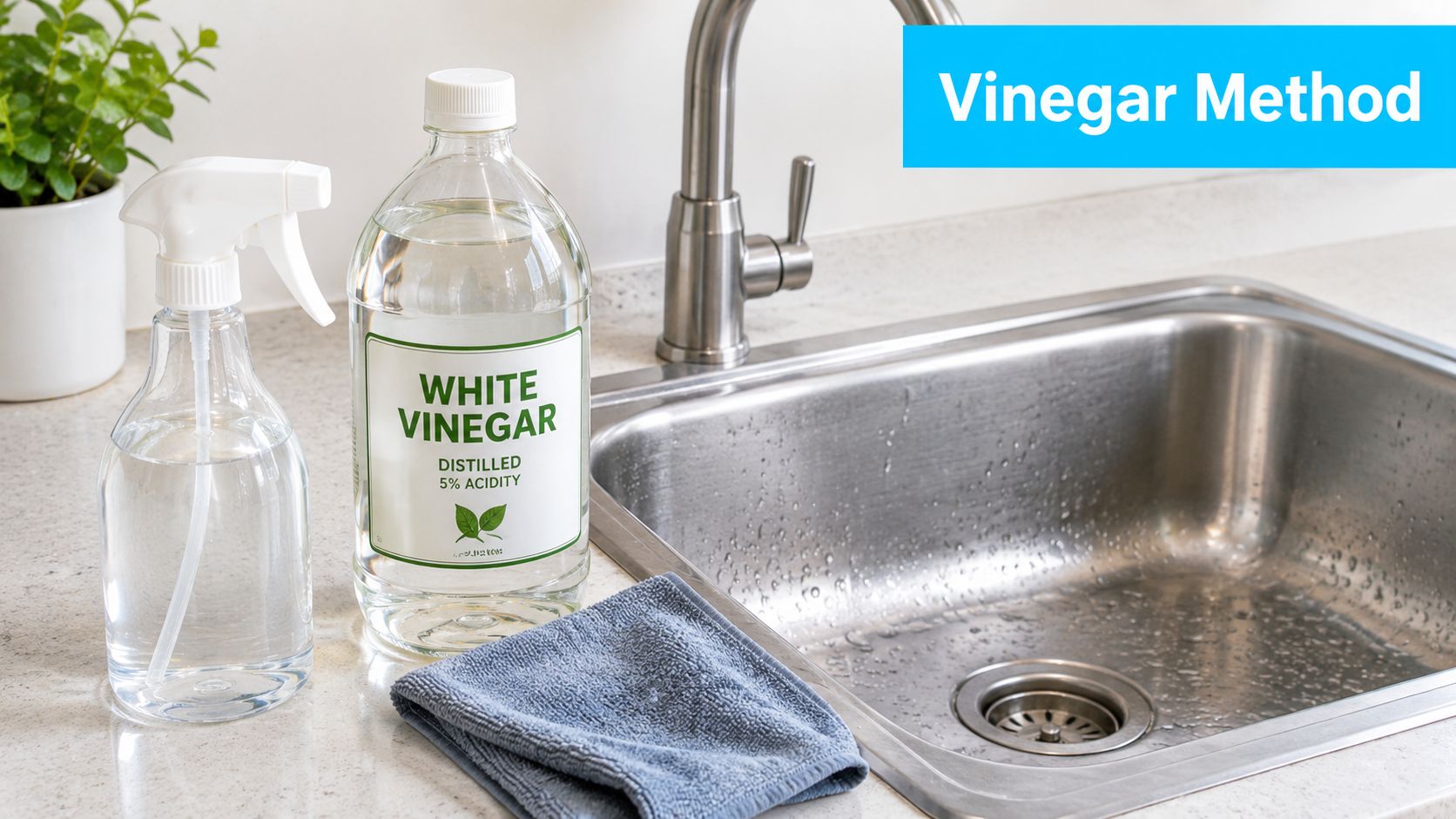
Vinegar is the method many homeowners reach for first because it matches the chemistry of the stain. White distilled vinegar contains about 5% acetic acid, which is strong enough to dissolve alkaline mineral deposits when the surface stays wet for 15 to 30 minutes (vinegar chemistry for hard water stains).
Start simple.
The basic routine
Independent sink-cleaning guidance suggests using white vinegar directly or a 50/50 vinegar-and-water mix, leaving it on the stained area for about 10 to 30 minutes before scrubbing and rinsing (sink cleaning with vinegar).
Here's the routine I use on compatible surfaces:
- Clear the sink first. Remove soap residue, hair, food bits, or loose grit with warm water.
- Apply the vinegar solution. For normal spotting, use the 50/50 mix. For thicker buildup, use undiluted white vinegar.
- Keep it wet. Lay a paper towel or soft cloth over the stain so the vinegar doesn't run off too fast.
- Wait through the dwell time. Give it enough contact to soften the mineral crust.
- Scrub gently. Use a non-scratch sponge or microfiber cloth in small circles.
- Rinse thoroughly. Wash away dissolved residue and leftover acid.
The part skip is the last one.
Drying is part of the cleaning
If rinse water evaporates on the surface, it can leave dissolved minerals behind and start the cycle all over again. That's why practical sink-cleaning instructions often pair acid cleaning with immediate rinsing and thorough drying (why drying prevents re-depositing).
Use a microfiber cloth and dry the basin, drain rim, and faucet base right away.
A sink isn't really finished until it's dry.
For a visual walkthrough, this video helps show the pace and pressure that work best on everyday buildup.
Safety and common mistakes
A few rules matter more than any shortcut:
- Ventilate the room. Even mild acids smell strong in small bathrooms.
- Never mix vinegar with bleach or ammonia.
- Use soft tools only. A rough scrub pad can trade white stains for scratch marks.
- Skip vinegar on acid-sensitive materials. Some sink finishes and stone surfaces don't handle it well.
If the white ring barely changes after a careful vinegar treatment, don't lean harder on the sponge. Change methods instead.
Citric Acid, Baking Soda, Pumice, and Commercial Options
Once vinegar has done what it can, the next step is choosing a cleaner based on what is sitting on the sink. Hard water buildup behaves a lot like chalk on a sidewalk. Fresh marks dissolve fairly easily. Older deposits harden in layers and often need either a stronger acid, a mild abrasive, or both.
Citric acid for low-odor mineral removal
Citric acid is a practical next option when you want an acid cleaner without the strong vinegar smell. It is commonly used for dissolving mineral scale, and in real sink cleaning it tends to work best on cloudy film, faucet-base rings, and the crust that collects where water dries again and again.
Mix citric acid with warm water according to the product directions, apply it to the stained area, and let it sit briefly before wiping with a soft cloth or non-scratch sponge. If the deposit softens but does not fully lift, repeat once instead of scrubbing harder. That usually protects the finish better, especially on sinks that already have light wear.
Other options and where they fit
Baking soda is the mildest tool in this group. It works more like a polishing paste than a scale remover, so use it for a thin haze or for final cleanup after an acid has loosened the minerals. On thick white crust, baking soda alone usually just burns time.
Pumice is more specialized. It can remove stubborn deposits from some porcelain and vitreous china surfaces if both the stone and the sink stay wet the whole time. Used on the wrong material, it can scratch the finish fast. Commercial descalers are the heavy-duty option. They are useful when the stain has built up for months, especially around drains and overflow openings, but they only make sense if the label clearly approves your sink material.
If you have a marble vanity or trim near the sink, it helps to learn how to protect polished marble surfaces before you start treating nearby spots. For natural-stone care, guidance from the Natural Stone Institute warns against acidic cleaners on marble and other acid-sensitive stone because they can etch the surface rather than just remove the mineral deposit (Natural Stone Institute care guidance).
Side-by-Side Comparison of Hard Water Stain Removal Methods
| Method | Best For | Safe Surfaces | Dwell Time | Approx. Cost | Effort |
|---|---|---|---|---|---|
| Citric acid solution | Moderate mineral film and routine descaling | Many common sink surfaces when used with soft tools | Short soak | Low | Moderate |
| Baking soda paste | Light haze and finishing cleanup | Stainless steel and porcelain with gentle pressure | Short contact | Low | Moderate |
| Pumice stone | Thick crust on compatible glazed surfaces | Porcelain and vitreous china when kept wet | Very brief contact | Low | Higher |
| Commercial descaler | Heavy, stubborn limescale | Only surfaces approved on the label | Follow label instructions | Medium | Lower physical effort, higher care needed |
A good rule is to soften first, then lift. Acid loosens the mineral bond. Gentle wiping or light abrasion removes what the acid has already weakened.
That approach treats the stain you can see. If the same white marks keep returning a few days later, the bigger problem is usually the water itself, not the cleaning method.
Matching the Method to Your Sink Material
The same white crust can behave very differently depending on what is underneath it. Hard water leaves mineral deposits on all kinds of sinks, but the safe way to remove that buildup changes with the surface. A method that cleans stainless steel nicely can leave stone dull, and a tool that helps on porcelain can scratch glass.
Consumer cleaning guidance often suggests mild acids such as vinegar for common hard water stains, especially on surfaces like chrome and glass, while also warning readers to check finish compatibility before using stronger or longer treatments (Good Housekeeping's hard water stain advice).
Start with the sink material, not the cleaner bottle.
For stainless steel, use the gentlest option that will dissolve the film, then wipe with the grain using microfiber or a soft non-scratch pad. Stainless usually handles short contact with vinegar or citric acid well, but it still shows scratches if you get impatient and reach for steel wool or a harsh scrubber. The goal is to loosen the minerals, not scour the metal.
For porcelain and enameled cast iron, mild acid cleaners can remove the chalky layer, but the finish deserves a softer hand than the stain does. If you scrub aggressively with gritty powders, you can trade a white mark for a dull patch that catches the next round of buildup even faster.
For chrome faucets and trim, keep contact short and controlled. Chrome tends to look better after a brief spot treatment, a rinse, and a dry buff. Leaving an acidic wrap on too long can affect the finish, especially around edges and worn spots.
For glass basins, the problem is usually visibility as much as buildup. Even a light mineral film makes clear glass look cloudy. A mild acid wash followed by a full rinse and immediate drying works better than repeated rubbing on a dry surface, which can leave fine scratches.
For granite composite, natural stone, and specialty matte finishes, slow down and check the manufacturer's care instructions first. Some of these surfaces tolerate very little acidity. Hard water is still the cause of the stain, but the fix often needs to be a pH-balanced or brand-approved cleaner instead of the usual vinegar routine.
Safe Cleaning Methods by Sink Material
| Sink Material | Best Method | Use With Caution | Avoid |
|---|---|---|---|
| Stainless steel | Mild acid cleaning with microfiber, then dry and buff with the grain | Baking soda with light pressure | Steel wool and harsh abrasives |
| Porcelain | Vinegar or citric acid with soft cloth or non-scratch pad | Pumice on suitable glazed surfaces with water | Aggressive abrasive powders |
| Chrome | Short acid contact on mineral spots, then rinse and dry | Soaked wraps left on for extended contact | Harsh scrubbing tools |
| Glass | Citric-acid cleaning and a clean squeegee or microfiber dry | Repeated spot polishing in one area | Scratchy pads |
| Granite composite or stone-based finishes | pH-balanced or manufacturer-approved cleaners | Any acidic cleaner unless the manufacturer approves it | Straight vinegar and abrasive tools |
If you are not sure what the sink is made from, check the product paperwork, the manufacturer's site, or the listing from when the fixture was installed. Five minutes of checking is cheaper than trying to fix etching, haze, or scratches later.
This is also where the bigger pattern starts to show. If every safe method works for a few days and the white marks keep coming back, your cleaning choice is only part of the story. The minerals in the water are feeding the problem, and some sink materials show that buildup faster than others.
When Basic Cleaning Is Not Enough
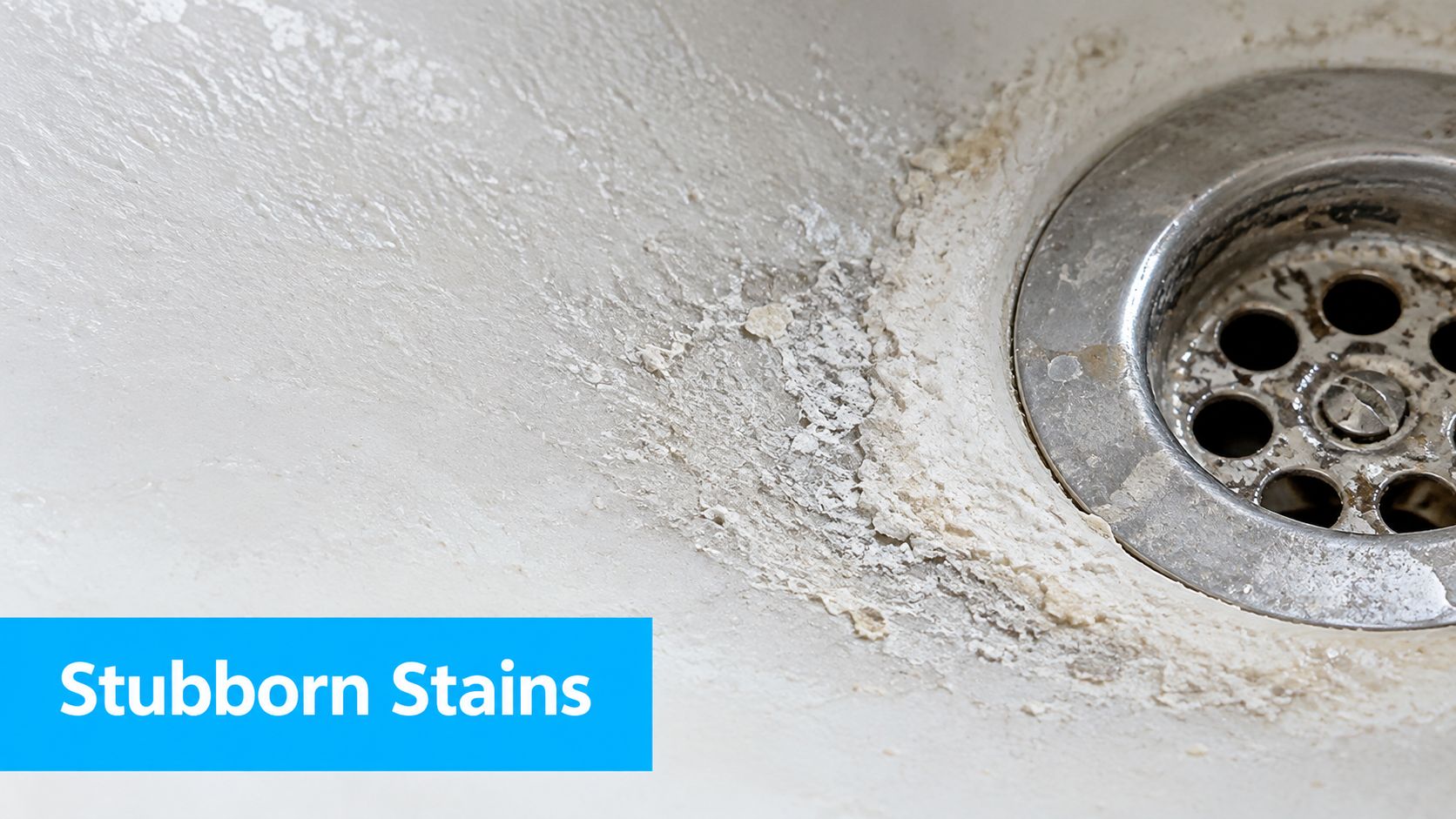
Some hard water stains stay powdery and wipe away with the usual routine. Others turn into a crust that clings to the drain, the overflow opening, or the faucet base like it belongs there. Those are the spots that usually fool people into thinking they need a harsher chemical right away.
They don't always. They often need more time and less force.
Use the soften-then-lift approach
For heavier deposits, sink-cleaning guidance often recommends a two-step process. First soften the scale with an acid treatment, then use a non-abrasive sponge or soft brush to lift the loosened residue because the dissolved calcium carbonate layer can still cling to the surface (two-step removal approach).
That method looks like this in real life:
- Lay the soak where the crust is thickest. A paper towel soaked in warm vinegar solution stays put around the drain rim or faucet base.
- Wait instead of scrubbing early. Let the acid work on the deposit underneath.
- Lift with a soft tool. A non-scratch pad or other material-safe tool removes the loosened layer with less risk.
- Repeat the soak if needed. A second cycle is safer than pushing harder.
Stubborn scale usually gives way to patience before it gives way to muscle.
Know when to stop
If two careful cycles barely change the spot, or if the surface looks pitted, dulled, or etched, it's time to stop DIY cleaning. At that point, you may be dealing with finish damage, not just mineral residue. A plumber or stone-care specialist can tell you whether the problem is surface buildup, fixture wear, or a larger water issue showing up in the sink first.
How Water Hardness Drives the Stains
Every hard water stain starts long before the sink. The minerals are already in the water when it enters the house. By the time the drop lands on the basin and dries, the chemistry has done most of the work.
Cleaning treats the symptom
You can learn how to remove hard water stains from sink surfaces and get solid results. But no cleaning routine can stop the next dried droplet from leaving another trace if the incoming water still carries the same mineral load.
That's why water filtration and softening deserve more attention in this conversation.
- Whole-house softening addresses hardness at the point of entry, which helps reduce recurring scale on sinks, faucets, shower glass, and fixtures throughout the home.
- Point-of-use filtration can help in smaller spaces or rentals, especially when a whole-house system isn't practical.
- Testing first helps you decide whether you're dealing mostly with hardness, or whether iron and other issues are adding to the staining pattern.
For readers comparing options, Water Filter Advisor's guidance library covers home filtration, maintenance, and treatment categories that relate directly to recurring fixture buildup.
Prevention starts upstream
This is the part many people skip because a bottle of cleaner feels faster than a water treatment decision. But if your sink develops fresh white marks every few days, the sink isn't the main problem. The water is.
Root-cause view: A cleaned sink stays cleaner longer when the home water carries fewer hardness minerals in the first place.
Once you start thinking that way, stain removal becomes maintenance. Filtration and softening become the long game.
A Simple Weekly Routine That Keeps Stains Away
A clean sink doesn't stay clean by accident. It stays clean because you interrupt the mineral-drying cycle before the residue hardens.
The highest-impact habit is also the least exciting: dry the sink every evening. If water doesn't sit and evaporate, minerals don't get the chance to leave a visible ring.
A low-effort weekly checklist
This is the kind of routine that sticks because it doesn't ask for much time.
| Task | Frequency | Tool or Product |
|---|---|---|
| Dry the basin, drain rim, and faucet base after last use | Daily | Microfiber cloth |
| Wipe faucet handles and aerator area | Midweek | Soft cloth with a light vinegar mist on compatible surfaces |
| Wash the whole basin | Weekly | Warm water, gentle soap, soft sponge |
| Dry and buff the full sink area | Weekly | Clean towel or microfiber cloth |
| Spot-treat returning mineral marks | As needed | Sink-safe acid cleaner or citric acid solution |
What makes the routine work
- Keep the cloth nearby. If the towel lives in another room, you won't use it.
- Treat tiny spots early. Fresh haze is easier than chalky buildup.
- Watch the repeat zones. Drain flanges, faucet bases, and overflow openings usually need attention first.
- Think beyond cleaning. If the marks come back fast, consider whether a softener or filtration upgrade belongs on your list.
Most sink advice stops at scrubbing. The better approach is half cleaning, half water strategy. That's what keeps the job from repeating itself all week.
If your sink keeps collecting white marks no matter how often you wipe it down, you're probably dealing with a water problem as much as a cleaning problem. Water Filter Advisor helps homeowners compare filtration and softening options, understand water testing, and choose practical systems that reduce recurring mineral buildup throughout the house.
