DIY Water Softener Installation A Homeowner’s Guide to Pure Water

Taking on a DIY water softener installation is one of the best home filtration upgrades you can make, and you can conquer this project in just a few hours. This is a totally manageable mission for a handy homeowner. Modern systems come in plug-and-play kits that can save you a bundle on plumber fees.

Your Guide To Winning The War On Hard Water

If you're sick of the chalky white spots on your faucets, stiff laundry, and the ghost of soap scum haunting your shower doors, you've come to the right place. The villain in this story is hard water, which is loaded with minerals like calcium and magnesium. It might not be a health risk, but it's a real menace to your home's plumbing and appliances.

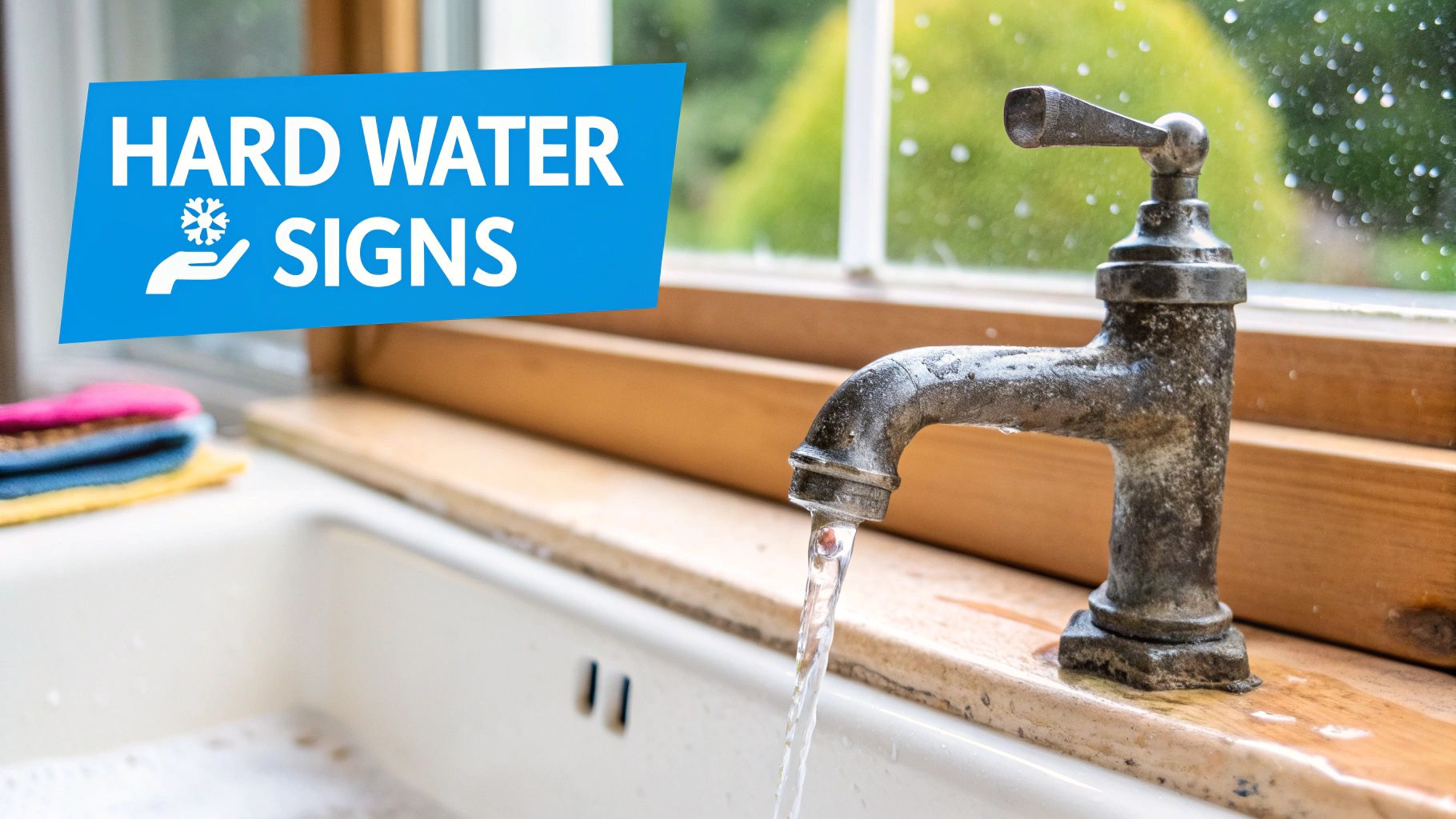
Close-up of a kitchen sink and faucet heavily covered in hard water stains and mineral deposits.

A water softener is the permanent fix. By installing one yourself, you're not just getting better water—you're protecting your big-ticket investments. Mineral buildup clogs pipes, guts the efficiency of your water heater, and sends dishwashers and washing machines to an early grave.

Why DIY Is The Ultimate Home Filtration Hack

DIY water softener jobs are booming, and for good reason. Today's salt-based and salt-free systems usually include complete kits, letting you sidestep a professional plumber and save anywhere from $500 to $1,000 on the install. The global market for these home water filtration systems reflects this trend.

This guide is here to walk you through the entire process, so you know exactly what you're getting into. We’ll cover the two main types of systems you’ll be looking at:

  • Salt-Based Ion Exchange Systems: The traditional workhorses. They are the heavyweight champions of water filtration, pulling hardness minerals out of your water and swapping them with sodium ions. The result is truly soft water.
  • Salt-Free Water Conditioners: These don't actually remove the minerals. Instead, they use a process called Template Assisted Crystallization (TAC) to change the mineral structure so it won't stick to surfaces and build up as scale.

When you install a water softener yourself, you gain a deep understanding of your home's water filtration system. You'll be ready for any future maintenance and can be proud you fixed the problem on your own.

We'll give you clear, actionable steps for a successful installation, from planning it out to firing it up. If you want to check out other home water filtration strategies, take a look at our broader https://www.waterfilteradvisor.com/advice/ section. Let's get started on bringing pure, soft water to every tap in your house.

Laying the Groundwork for Your Install

A successful water softener installation is all about the prep work. Honestly, what you do before you even unbox the unit is what separates a smooth Saturday project from a frustrating, leaky mess.

Get these first few steps right, and you'll end up with the right filtration system for your house without any nasty surprises down the road.

First thing's first: you need to know exactly what you're up against. That means testing your water to find out its hardness, measured in grains per gallon (GPG). Don't guess. Grab a simple water hardness test kit online or from the hardware store.

This single number is the most critical piece of the puzzle. It's the secret code that tells you everything you need to know to size your new filtration system correctly.

Choosing Your Water Softener Type

Before you get too deep into sizing, you need to decide which type of system is right for you. The two main players in home water filtration are traditional salt-based softeners and salt-free conditioners. Each has its pros and cons depending on your water, budget, and even local rules.

This table breaks down the key differences to help you make the right call.

Feature Salt-Based (Ion Exchange) Salt-Free (TAC Conditioners)
How It Works Physically removes hardness minerals (calcium & magnesium) through ion exchange. A true water filtration process. Crystallizes minerals so they can't stick to pipes and surfaces. It doesn't actually remove them.
Feel of Water Creates a noticeably "slippery" or "silky" feel. No change in the water's feel.
Maintenance Requires regular salt refills and uses water/power for regeneration cycles. Virtually maintenance-free. No salt, no electricity, no wastewater.
Best For Very hard water (over 10 GPG); when you want to eliminate scale buildup completely. Moderately hard water; areas with brine discharge restrictions; those on low-sodium diets.
Environmental Impact Discharges salt brine into the sewer or septic system. No salt or chemical discharge, making it more eco-friendly.

Ultimately, if you're battling seriously hard water and want that classic soft water feel, a salt-based system is your best bet. If you have moderate hardness and prefer a low-maintenance, eco-friendly option that still protects your pipes, a salt-free conditioner is a fantastic choice.

Getting the Sizing Right

Once you know your GPG, you need to figure out your home's daily water demand. A good, solid estimate is to multiply the number of people in your house by 75 gallons per day.

So, a family of four will use roughly 300 gallons of water each day (4 people x 75 gallons/person).

Now, let's put those two numbers together to find out how much filtration work the softener needs to do daily. The math is easy:

Daily Gallons Used × Water Hardness (GPG) = Daily Grains to Remove

Let's stick with our family of four, and say their water tested at 15 GPG:

300 gallons × 15 GPG = 4,500 grains per day

This tells you that you need a softener that can handle at least 4,500 grains of hardness between its cleaning (regeneration) cycles. Softeners are sold by their total capacity, which usually falls between 24,000 to 64,000 grains. A standard 32,000-grain unit would work perfectly here, needing to regenerate about once a week (32,000 ÷ 4,500 ≈ 7 days).

My advice? It's always better to go slightly bigger than you think you need. An undersized unit has to regenerate constantly, which just wastes salt and water and wears out the system faster. Think of it as buying a filtration system with room to grow.

Finding the Right Spot for Your System

With your capacity figured out, it's time to play scout and find the perfect home for your new unit. For any DIY water softener installation, you want to place it as close as you can to where the main water line enters your house. Crucially, it must be installed before the pipe splits off to your water heater.

This makes sure you get filtered, soft water for both your hot and cold taps (we usually leave outdoor faucets on hard water). A basement, garage, or utility closet is your best bet. Make sure the spot has:

  • Enough Room: You need space for both the main resin tank and the separate brine (salt) tank, plus room to walk around them for maintenance.
  • Power Nearby: Most softeners need a standard 110V GFCI outlet to run the control valve.
  • A Place to Drain: The softener has to flush out salty water during regeneration. A floor drain, laundry sink, or standpipe are all good options.

A Quick Check on Local Rules

Last but not least, do yourself a favor and check your local plumbing codes before you buy anything. This is especially important for salt-based systems, as some towns have rules about discharging brine into the sewer or a septic tank.

A quick phone call to your city's building department will clear up any questions. Getting this sorted out now saves a massive headache later and ensures your home filtration project isn't just done right, but done legally.

Assembling Your Tools And Materials

A successful DIY water softener installation all comes down to good prep. Trust me, nothing kills your weekend project faster than having to make multiple runs back to the hardware store for a single fitting you forgot. Let's get everything you need laid out before you even think about cutting a pipe.

Think of it like this: a clean cut, a solid wrench, and good thread sealant are the three pillars of any home filtration plumbing job. Get these right, and you're already halfway to a leak-free installation.

Essential plumbing tools process showing a pipe cutter, wrench, and teflon tape icons.

Must-Have Tools For The Job

Let's sort out the absolute non-negotiables. You simply won’t be able to finish the job without these items in your toolkit.

Core Tool Checklist:

  • Pipe Cutters: Make sure you have a cutter specifically for your pipe type—PEX, copper, or PVC. A clean, straight cut is everything for a good seal.
  • Adjustable Wrenches (x2): You absolutely need two. One wrench holds the fitting in place while the other does the tightening. A couple of 10-inch or 12-inch wrenches are perfect.
  • Tape Measure: The old rule holds true: measure twice, cut once. Getting your pipe lengths right from the start saves a lot of headaches.
  • Bucket and Towels: Water is going to spill when you drain the lines. It's just a fact. Having a bucket underneath to catch the initial flow and towels for cleanup is just working smart.
  • Teflon Tape: Also called plumber's tape, it’s essential for sealing threaded connections. I always grab two rolls. It's cheap, and running out mid-job is the worst.

If you're working with PEX tubing, you’ll also need a dedicated PEX crimping tool and the right size crimp rings. These are specialized, but they're the only way to create a secure connection that will pass inspection and last for years.

Gathering Your Plumbing Materials

Most softener kits will give you the main components: the control head, mineral tank, brine tank, and the bypass valve. That bypass valve is a crucial piece—it lets you shut off the softener for maintenance without turning off water to the entire house.

What the kit won't include is the plumbing to connect that bypass valve to your main water line. The exact pieces you need depend entirely on what's already in your house.

A hard-won personal tip: always buy a few extra fittings than you think you need. Having an extra elbow or connector on hand can turn a potential showstopper into a minor inconvenience.

When you're shopping, you’ll see different pipe materials. Knowing the pros and cons of PPR vs PVC vs CPVC is helpful if you're running new lines, but for this job, you'll mainly need adapters.

  • Flexible Water Heater Connectors: These braided stainless steel hoses are a DIYer's best friend. Their flexibility makes it so much easier to line up the softener with your existing pipes. Check the fitting size you need—usually ¾-inch or 1-inch.
  • Pipe-Specific Fittings: You'll need the right adapters to go from your home's pipes (copper, PEX, PVC) to the softener's connections. For a no-solder option on copper or PEX, SharkBite fittings are fantastic. They just push to connect and create a surprisingly strong seal.
  • Drain Tubing: The kit probably includes a length of this, but unroll it and check. Make sure it's long enough to reach your floor drain or utility sink without any sharp bends or kinks that could block the flow.

Alright, you've got your tools, unboxed the new softener, and picked the perfect spot. Now for the main event: the installation itself. Don't let the plumbing intimidate you. We'll walk through this step-by-step, with some real-world advice to keep things dry and straightforward.

A man installs a white water softener system, adjusting brass fittings in a utility room.

Think of it like minor surgery on your water lines. The plan is to shut everything down, make a few clean connections, and then bring it all back online. Just take your time and check every connection twice.

Safety First: Shut Down and Drain

Before you even think about touching a pipe cutter, kill the water supply to your house. Find the main shutoff valve—it’s usually in the basement, a crawlspace, or near where the water line enters your home from the outside. Crank it all the way off.

Now, you have to get the water out of the pipes. Head to the lowest faucet in your house (maybe a basement sink or an outdoor spigot) and the highest one (like an upstairs shower) and open them both up. This lets air into the system and helps every last drop drain out. This is a non-negotiable step if you want to avoid a surprise shower the second you cut into a pipe.

Making the Cut

With the system drained, it’s time to get to work on the main water line. Grab your tape measure and mark out the section of pipe you’ll be removing to install the bypass valve. Always remember the old rule: measure twice, cut once.

Stick a bucket right underneath where you plan to cut. No matter how well you think you've drained the pipes, there’s always a little water left. Use your pipe cutter to make two clean, straight cuts and remove the section. A clean cut is absolutely critical for getting a perfect, leak-free seal later.

Installing the Bypass Valve

The bypass valve is the nerve center of your new setup. It’s what lets you shut off water to the softener for maintenance without cutting off water to the entire house. Trust me, you’ll be glad you have it.

Most kits come with a bypass valve that attaches right to the softener's control head. Pay close attention to the arrows that show the direction of water flow. This part is crucial:

  • The INLET side connects to the pipe bringing water from your main supply.
  • The OUTLET side connects to the pipe that feeds the rest of your house and the water heater.

Pro Tip: When you install the bypass valve, make sure the handles are easy to get to. Don't face them toward a wall where you can't reach them. A little bit of planning here will save you a ton of hassle down the road when it's time for maintenance.

Now, connect the valve to your main lines using whatever fittings you chose. If you're using flexible braided lines, get them hand-tight and then give them one last quarter-turn with a wrench. For push-to-connect fittings like SharkBites, make sure the pipe end is clean and push it in firmly until you hear and feel it click home.

Connecting the Softener Tanks

Next, it’s time to hook the main mineral tank up to the bypass valve. Attach your flexible hoses to the inlet and outlet ports on the control head. Again, follow the arrows to make sure water flows in through the hard water side and out through the soft water side.

This is where your type of home filtration system really matters. A traditional salt-based system has two tanks, while a salt-free conditioner is usually just a single unit.

  • For Salt-Based Systems: You'll have a separate brine tank. Connect the small brine line tube from the control head over to the port on the brine tank. This little tube is what pulls the salt solution into the main tank during the regeneration cycle.
  • For Salt-Free Conditioners: No brine tank, no problem. You can skip that step entirely. Just connect your inlet and outlet, and your plumbing work is almost finished.

This all sounds more complicated than it is. For most DIYers, connecting the valves and tanks is a straightforward job that takes just 2-3 hours. The payoff is huge, often leading to a 99% reduction in hardness down to less than 7 grains per gallon. For a family in a hard-water area, that can mean saving around $200 a year on soaps and energy. You can dig into more data on the water softening market to see just how big an impact these home water filtration systems have.

Running the Drain and Overflow Lines

A salt-based softener has to flush out all the hardness minerals and salty brine it collects during regeneration. To do that, you need to run two lines to a drain.

First is the main drain line. This flexible tube runs from the control head to a floor drain, standpipe, or utility sink. It's critical to leave an air gap of at least 1.5 inches between the end of the tube and the drain. This prevents any contaminated water from being siphoned back into your fresh, filtered system.

Second is the brine tank overflow tube. This is purely a safety measure. If the brine tank ever gets too full, this tube directs the excess water to the same drain, stopping a salty flood before it starts. Use zip ties or a clamp to make sure both tubes are secure and won't pop out of the drain.

Once all your connections are solid and the drain lines are secure, you're officially done with the hardest part of your DIY water softener installation. Step back and admire your handiwork before we move on to the final checks and startup.

Bringing Your New System Online

A hand adjusts the digital control panel of a blue water softener system, displaying 'SYSTEM STARTUP'.

Alright, the pipes are all connected and you’ve double-checked every fitting. This is the moment you've been working toward. It's time to fire up your new water softener and program the brains of the operation.

The tough part is behind you. Now let's get this filtration system commissioned the right way.

The Slow Introduction of Water

Don't just crank the main water valve all the way open. You never want to slam a new system with a sudden blast of high-pressure water. That's a good way to stress the connections or even damage the softener's guts. Slow and steady is the name of the game here.

First, make sure the softener's bypass valve is still set to "bypass." This lets water flow to the house while keeping the softener isolated for now.

Slowly turn your main water shutoff valve about a quarter-turn open. Go run a faucet somewhere in the house to confirm you have flow, then head back and inspect all your new plumbing for any drips.

If it's all dry, you can now slowly move the bypass valve toward the "service" position. Listen closely—you should hear the big mineral tank start to fill with water. This is your most important leak check. Get a flashlight and get a good look at every single connection you made. Look for the smallest bead of water.

I always give it a solid 15-20 minutes after the tank fills before I call it leak-free. I've seen slow seeps take their time to show up, and finding one now is much better than finding a puddle later.

Programming the Control Head

Once you're positive everything is watertight, go ahead and plug in the control head. This is where you'll tell the softener just how hard your water is and set up its cleaning schedule. The digital display might look a little intimidating, but the process is usually pretty simple.

Your most important job is to enter the water hardness number (in GPG) from your water test. This one setting is the key to the whole operation, as it tells the unit how often it needs to regenerate.

Next, you'll set the time of day and the regeneration time. I always recommend setting it for a time when no one is using water, like 2:00 AM. This way, the regeneration cycle won't interrupt a shower with hard water or cause a drop in water pressure. Some newer softeners have smart features that track your water usage and only regenerate when needed, which is a great way to save on salt and water.

While this is a DIY guide, getting different perspectives on installing water softeners can give you extra tips on programming and what to expect long-term.

Kicking Off the First Regeneration

With the programming done, you have to manually start the very first regeneration cycle. This is a critical step. It flushes out any leftover dust or debris from the manufacturing process and, more importantly, it gives the resin beads their initial charge by soaking them in brine.

Pour a few gallons of water directly into the brine tank first, then add one or two bags of good-quality softener salt. Check your manual to find the "Manual Regeneration" button—you'll usually need to press and hold it to get the cycle started.

This first cycle can take up to two hours to complete. It will run through a few key stages:

  • Backwash: Loosens up the resin bed and washes out any sediment.
  • Brine Draw: Sucks the salty water from the brine tank to "recharge" the resin.
  • Slow Rinse: Pushes the brine solution completely through the resin.
  • Rapid Rinse: Flushes all the excess salt and hardness minerals out to the drain line.
  • Brine Refill: Adds water back to the brine tank to dissolve salt for the next cycle.

Once that's finished, your system is officially up and running. Congratulations, you're now making beautifully filtered, soft water!

A Simple Maintenance Schedule

Your DIY water softener installation might be complete, but a little bit of care will keep it running smoothly for years to come. The good news is, there isn't much to it.

Your Long-Term Checklist:

  1. Check Salt Levels Monthly: This is your main job. Just peek in the brine tank once a month and make sure it's at least one-third full of salt.
  2. Use the Right Salt: Stick to high-purity salt pellets or crystals. You want to avoid rock salt; it's full of dirt and impurities that can eventually clog your filtration system.
  3. Clean the Brine Tank Annually: About once a year, let the salt level get low and then clean out the bottom of the brine tank. This gets rid of any "salt mush" or sediment and prevents a "salt bridge"—a hard crust that can form and stop the softener from making brine.

Common Questions About DIY Installation

Even after you've followed a guide, questions will pop up. A DIY water softener installation has a lot of moving parts, and it’s totally normal to hit a snag or two.

We get calls all the time about these exact situations. Here are the most common questions we hear, with answers to get you through the finish line.

Can I Install A Water Softener On A Well System?

Absolutely. In fact, if you have well water, you probably need a softener more than most. The main thing to know is that well water often comes with extra baggage—sediment, sand, and sometimes a lot of iron. All that gunk can destroy a new softener.

Your best move is to install a sediment pre-filter right before the water softener's inlet. Think of it as a bodyguard for your softener. It catches all the debris before it can clog up the resin bed. If you skip this, the resin gets fouled, its filtration efficiency tanks, and you’ll be replacing the whole unit way sooner than you should.

What Should I Do If I Notice A Small Leak After Installation?

First, don't panic. A small drip is almost always an easy fix.

Hit the bypass valve first. This is exactly why you installed it. You can shut off water to the softener and keep it running for the rest of the house.

Now, find the leak. Most of the time, it’s a threaded connection that isn't quite sealed.

  • Shut off the water to the unit and drain any pressure.
  • Unscrew the fitting that's dripping.
  • Clean all the old Teflon tape off the threads.
  • Wrap the male threads with fresh Teflon tape. Give it a good 3-4 wraps, going in the same direction you'll be tightening the fitting.
  • Screw it back together. Get it snug, but don’t go crazy, especially with plastic parts. Over-tightening is a great way to crack a fitting.

Slowly turn the water back on and check your work. That extra tape usually does the trick.

Does My Whole House Need Soft Water?

That’s a great question, and the practical answer is no, probably not. Soft water is incredible for your showers, appliances, and laundry, but your lawn and garden won’t be fans. The sodium in softened water isn't great for plants long-term.

For that reason, standard practice for a DIY water softener installation is to plumb the system so it treats all the water after your outdoor spigots. This gives you the best of both worlds: your indoor plumbing and appliances are protected by superior water filtration, and your garden stays happy.

Why Is My Water Pressure Lower After Installation?

A big drop in water pressure is not normal. It's a red flag that something went wrong during the install.

Start with the simple stuff: check that every single valve is fully open. The main shutoff, the bypass valve, all of them. It's surprisingly easy to leave one only halfway open.

If the valves are good, look for a kink in one of the flexible connector hoses or even the drain line. Also, make sure you didn't install the unit backward—if the water is flowing against the intended direction, it will choke off your pressure. Finally, this can happen if the home filtration system is too small for your house, which is why getting the sizing right from the very beginning is so important.


Water Filter Advisor is your go-to resource for making sense of home water filtration. From in-depth guides to unbiased reviews, we provide the clarity you need to choose the best solutions for your family's health and comfort. Explore our resources today at https://www.waterfilteradvisor.com.
A Beginner’s Guide to Using a Water Softener Like a Pro

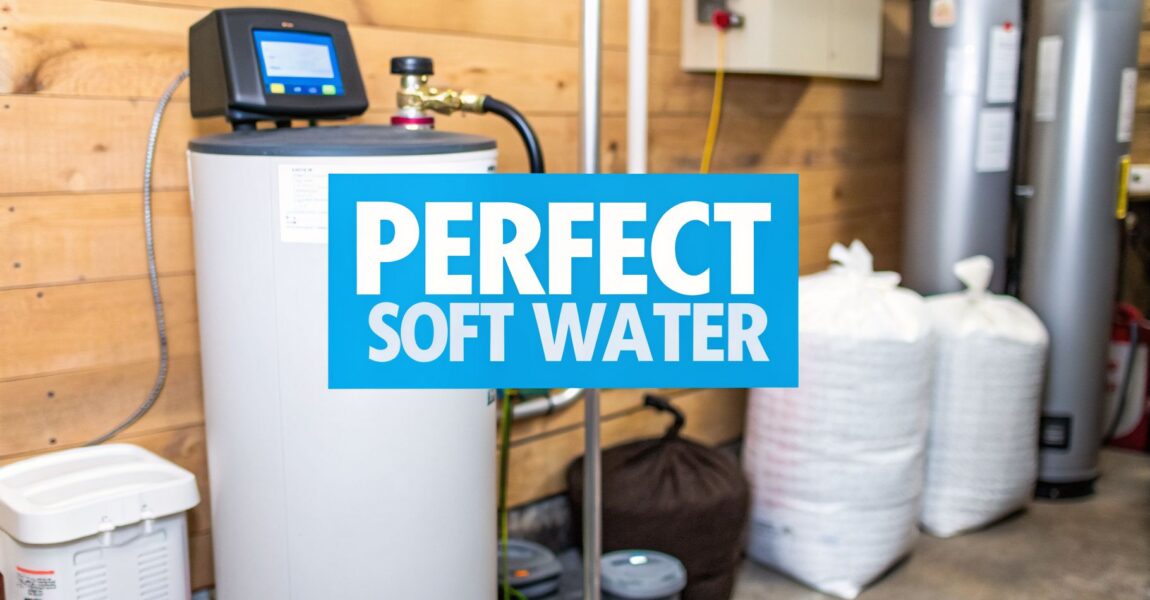
So, you’ve finally brought home your very own water softener, the undisputed champion in the war against hard water. You're ready to banish soap scum, rescue your crusty appliances, and finally experience the joy of a shower that doesn’t leave you feeling like a reptile. But… now what? You're staring at this glorious piece of home tech, wondering how to unleash its full potential.

Don't sweat it. Getting your system up and running is far less intimidating than it looks. It's mostly about giving it the right "fuel" (salt) and telling it when to clean itself.

This guide will walk you through those first crucial steps, turning you from a hard water victim into a soft water virtuoso. Let's dive in.

Your Quick Start to a Softer Water World

If you're fed up with dishes that look like they’ve been dusted with chalk and towels that could double as sandpaper, you’re in the right place. Properly setting up your water softener is the key to unlocking a whole new world of clean, and it's simpler than you might think. We'll skip the boring tech-speak and get straight to the good stuff.

Hard water isn't just an annoyance; it's a home-wrecker, plaguing over 85% of homes in the U.S. Your new softener is the frontline defense against this mineral menace, and a stellar initial setup ensures you're not wasting salt, water, or your sanity.

Below is your cheat sheet to getting started. These are the absolute must-do actions to take the moment your softener is installed.

Quick Guide to Getting Your Water Softener Running

Action Item Your First Steps Why This Is Crucial
Add Salt Pour one 40-pound bag of high-purity salt pellets into the brine tank. Aim for about half-full. This is the "magic food" for your softener. Without it, the system can't recharge itself to fight another day.
Set Hardness Find your water's hardness level (in GPG) from a local water report or a test kit. Program this number into the control head. This tells your softener how tough the enemy is, so it can bring the right amount of firepower without wasting resources.
Schedule Regeneration Program the regeneration cycle to run when you're dreaming, like at 2 AM, when no one is using water. This "self-cleaning" cycle prevents hard water from sneaking into your pipes while the unit is recharging.

Nailing these three things from the get-go sets your system up for a long and happy life of hassle-free operation.

Did you know your morning coffee is about 98% water? If your water tastes like a swimming pool, your coffee will too. Hard water minerals like calcium make your brew taste chalky and bitter. Softened water lets the true, vibrant flavors of your coffee beans shine through.

Programming Your First Cycle

Once the salt is in, it's time to talk to the machine's brain: the control head. You’ll need to input your water hardness value, measured in grains per gallon (GPG). You can usually find this on your city's water quality report online, or get your hands dirty with a simple water hardness test kit from a hardware store.

After setting the hardness, program the time of day. The most important setting here is the regeneration time. I always recommend setting it for the dead of night—2 AM is the gold standard. Why? Because the system goes into bypass mode during regeneration, meaning you'll get untreated hard water if you turn on a faucet. Scheduling it for a time when everyone's dreaming of soft, fluffy clouds avoids this completely.

For more in-depth tips and tricks on water treatment, you can always explore a wide range of water filtration advice.

Finally, kick off a manual regeneration cycle right after you finish programming. This will get the resin bed fully charged and ready to start softening your water immediately.

Peeking Under the Hood: How Your Water Softener Actually Works

To truly master your water softener, it helps to know what's going on inside that mysterious tank. Once you understand the mechanics, you can fine-tune its performance, save money, and keep it humming along for years. At its heart, a water softener is a surprisingly elegant system built around three key players.

Think of it as a well-oiled team:

  • The Mineral Tank: This is the main event. It’s a big tank filled with thousands of tiny resin beads that act like powerful magnets for hard water minerals. As water flows through, these beads snatch up the calcium and magnesium, sending beautifully soft water out to your home.
  • The Brine Tank: This is the salt reservoir, the softener's loyal sidekick. You keep it filled with salt, which dissolves in water to create a potent brine solution that recharges those resin beads.
  • The Control Valve: This is the brain of the whole operation. It directs the flow of water and decides when it's time to run the cleaning process, known as regeneration.

The Magic of Ion Exchange

The science behind how a softener obliterates hardness is a brilliant process called ion exchange. As your home’s hard water passes through the mineral tank, the negatively charged resin beads attract and grab onto the positively charged calcium and magnesium minerals (the bad guys). To complete the trade, the beads release harmless sodium ions into the water.

This is a continuous filtration process that springs into action every time you turn on a tap. A softener's main job is to prevent the very problems that might lead you to use a calcium hardness reducer in other places, like a swimming pool.

Eventually, those resin beads get completely covered with hardness minerals and can't grab any more. That’s the signal for the control valve to step in and start the all-important regeneration cycle.

The simple infographic below shows the basic steps to get your system ready to go for the first time.

A three-step guide for first water softener use: add salt, set hardness, and run cycle.

As you can see, once you add salt and program your water hardness level, you just need to kick off a cycle to get things started.

Smart Regeneration vs. Timed Regeneration

The regeneration cycle is when your softener uses that salty brine solution to wash all the collected minerals off the resin beads and flush them down the drain. How your system decides when to do this makes a huge difference in its efficiency.

A modern, demand-initiated softener can save a family of four up to 2,000 gallons of water and 500 pounds of salt per year compared to an old timer-based model. It regenerates only when needed, not on a fixed schedule.

Older softeners work on a simple timer, regenerating every few days whether they need to or not. That’s like doing a full load of laundry for just one dirty sock—incredibly wasteful.

Modern, "smart" softeners are much more clever. They use a flow meter to track how much water your household actually uses. They only trigger a regeneration cycle after a pre-set volume of water has been softened. This "demand-initiated" regeneration adapts to your real life. It won't waste salt regenerating while you're on vacation, but it will be ready to handle the extra load when you have house guests for the weekend.

Choosing the Right Salt and Filling Your Brine Tank

Various types of salt are displayed in containers, with water actively pouring from a blue barrel.

Think of the salt in your brine tank as the energy drink that powers your water softener's regeneration. Without it, the whole system grinds to a halt. Picking the right type and adding it correctly is a fundamental part of getting the most out of your home water filtration setup.

The quality of salt you use is directly linked to your softener’s efficiency and how often you'll be stuck cleaning out the tank. It's a simple equation: the purer the salt, the less gunk and sediment will build up.

Salt Types Explained

When you hit the store, you'll generally see three main types of salt. Each comes with its own set of pros and cons for your home's water filtration system.

  • Evaporated Salt: This is the top-shelf, premium choice, boasting a purity of around 99.9%. It’s made in a controlled, indoor process, which means almost no insoluble gunk makes its way into the bag. If you want to minimize maintenance and keep your tank sparkling clean, this is your champion.
  • Solar Salt: Created by evaporating seawater, solar salt is also quite pure, clocking in at about 99.5%. The catch is that it’s harvested outdoors, so small amounts of sediment can sometimes sneak in and accumulate in your tank over time.
  • Rock Salt: This is the budget option, but it also has the lowest purity. It looks like tiny pebbles and contains a lot more insoluble material that can quickly lead to a dirty brine tank and even clogs.

For almost every homeowner, evaporated salt pellets are the best bet. They might cost a little more upfront, but they dissolve cleanly and save you from the soul-crushing chore of cleaning out a sludgy tank. That small extra cost is well worth it.

How to Fill Your Brine Tank

Just as important as your salt choice is how you fill the brine tank. A classic rookie mistake is to dump in bags until it’s filled to the brim. This is a surefire way to cause headaches like "salt bridging," which we'll get into in a moment.

A good rule of thumb is to keep the salt level above the water line, but never fill the tank more than two-thirds full. Check the level once a month and toss in a new bag when it gets down to about one-third full.

This simple routine prevents overfilling and makes sure the salt can dissolve properly to create that all-important brine solution for regeneration.

Managing your salt isn't just about your softener—it's about protecting your entire home's water filtration ecosystem. Did you know that a properly working water softener can slash household plumbing repair bills by up to 75%? Hard water scale chokes pipes and appliances, leading to clogs that cost American homeowners over $2.5 billion every year. You can explore more about these findings and market trends to see the full financial impact.

Tackling the Dreaded Salt Bridge

A salt bridge is exactly what it sounds like: a hard crust of salt that forms inside your brine tank, usually just above the water level. This solid layer blocks the salt underneath from dissolving, meaning your softener can't make brine and can't regenerate. If you notice the salt level in your tank hasn't moved in a while, a salt bridge is the number one suspect.

Fixing it is surprisingly satisfying. Just take a long-handled tool, like a broom handle, and gently tap the crust to break it up. Once it's broken, scoop out any big, undissolved chunks. To keep it from happening again, remember not to overfill your tank and stick with high-purity salt pellets.

Essential Maintenance for Long-Term Performance

Your water softener is a true workhorse, but like any appliance that's constantly on the job, it needs a bit of regular TLC to keep performing at its peak. Think of it like changing the oil in your car—a little preventative care now saves you from massive, expensive headaches later.

Following a simple maintenance routine is the secret to getting the most out of your home water filtration investment and ensuring you always have that high-quality soft water you paid for.

Quick Monthly Checks

You don't need a toolbox or a plumbing license for these. Just a few minutes each month can help you spot a small issue before it turns into a major flood or a system failure.

First, pop the lid on your brine tank and take a peek. Is the salt level at least one-third full? Great. While you're there, give the whole unit a quick visual scan for any drips or puddles. Catching a leak early can save you a world of hurt.

A well-maintained water softener doesn't just protect itself; it protects every single water-using appliance in your house. This is especially true for tankless water heaters, which are notoriously sensitive to hard water. Soft water is critical to their efficiency and longevity, helping you avoid premature failure and the need for specialized Tankless Water Heater Services.

Annual Deep Cleaning

Once a year, set aside a little time for a more thorough cleaning. This means completely emptying the brine tank to clear out all the gunk—sediment, dirt, and that lovely "salt mush"—that inevitably builds up at the bottom. If you let it go, this sludge can clog your system and severely cripple its filtration effectiveness.

Here’s a quick annual checklist to follow:

  • Scrub the Brine Tank: Once you've emptied the old salt and water, give the inside of the tank a good scrub with simple soap and water. Make sure to rinse it out completely before you add new salt.
  • Clean the Resin Bed: Grab a bottle of specialized water softener resin cleaner. This stuff is formulated to dissolve the iron, manganese, and other junk that coats the resin beads and stops them from grabbing hardness minerals.
  • Clear the Injector: The venturi and nozzle assembly, also known as the injector, can get clogged with tiny bits of sediment. Check your user manual for how to take it apart and clean these small parts. This ensures the system creates the proper suction to pull brine during the regeneration cycle.

This is a huge part of learning how to use water softener systems for the long haul.

Seriously, don't skip the resin cleaner, especially if your water has high iron content. Iron fouling is one of the top reasons softeners begin to fail. Regular cleaning is the only real way to combat it and keep your softener regenerating like new for years to come.

Troubleshooting Common Water Softener Issues

A man kneels outdoors, using a diagnostic tool on a home water softener system.

Even a perfectly maintained water softener can have an off day. Before you reach for your wallet to schedule a service call, a little DIY detective work can often solve the most common glitches. If you’re suddenly noticing spotty dishes again or your soap just isn’t lathering like it used to, it’s time to play investigator.

Many issues are surprisingly simple fixes. With a bit of know-how, you can diagnose what's gone wrong and get your system back to delivering that silky-smooth water your home deserves.

My Water Is Hard Again!

This is the most common complaint, and it usually points to a few usual suspects. First, check the blindingly obvious: is the system plugged in and turned on? It sounds silly, but you'd be surprised how often a power flicker or an accidental unplug is the villain.

Next, make sure your softener isn't in bypass mode. Every softener has a bypass valve—usually a handle or a couple of knobs—that routes water around the unit for maintenance. If that handle got bumped into the wrong position, you're just getting untreated hard water straight from the source.

Finally, confirm your softener is actually regenerating. You should hear it kick on at its scheduled time, which for most people is around 2 AM. If it’s eerily silent, you could be looking at a power problem or a busted timer motor in the control valve.

The Brine Tank Is Full of Water

Walking in to see a brine tank filled to the brim with water can be alarming, but don't panic. This almost always points to an issue with the brine line or the injector system, which is what creates the suction to pull that salty water into the mineral tank.

A few things could be at play here:

  • Clogged Injector: This is the most frequent culprit. A tiny part called a venturi injector gets blocked with sediment or salt gunk, killing the suction needed to draw brine.
  • Kinked Brine Line: Check the small tube running from the brine tank to the control valve. If it’s kinked, squashed, or clogged, the brine can’t flow.
  • Stuck Safety Float: Inside the brine well, there’s a safety float. If it gets stuck in the "up" position, it can mess with how the system adds and removes water.

A clogged injector is usually an easy fix. Just check your manual to find it, then carefully take it apart and give it a good cleaning with a small brush and some water. This simple step often brings a dead system right back to life.

Ever wondered why your skin feels like sandpaper after showers? It's hard water stripping natural oils. Dermatologists note that soft water can reduce soap scum by 50%, letting you create a rich lather with half the soap—saving a typical family around $150 yearly on products alone. Learning to troubleshoot your system ensures these benefits never stop. Discover more insights about the growing household water softener market on databridgemarketresearch.com.

The System Is Not Using Any Salt

If you peek in your tank and the salt level hasn't moved in weeks, your softener isn't regenerating properly. This means you aren’t getting soft water, even if it sounds like the system is running. The number one cause here is a salt bridge.

A salt bridge is a hard, crusty layer of salt that forms just above the water level in your brine tank, almost like concrete. It prevents the salt below it from dissolving, so no brine gets made.

To fix it, just grab a broom handle and gently tap the crust until it breaks apart. Then, you can scoop out any big, undissolved pieces. To prevent this from happening again, try not to overfill the tank and always use high-purity salt pellets.

Your Top Water Softener Questions Answered

Jumping into the world of home water filtration can feel a little overwhelming. You’ve got questions, and we've got answers. Here are some of the most common things homeowners ask when getting started.

How Often Should I Add Salt?

This is a big one, and the real answer is: it depends. Your water’s hardness, how much water your family uses, and the size of your brine tank are all factors.

As a rule of thumb, just pop the lid and check the salt level once a month.

You want the tank to stay at least one-third full. This ensures there's enough salt to make the brine needed for the regeneration cycle. A common mistake is filling it to the top—don't do it! This can lead to a "salt bridge" and clog up your system. For a typical family of four, you'll probably add a 40-pound bag of salt every month or two.

Can I Drink Softened Water?

For most people, yes, absolutely. The amount of sodium added during the ion exchange process is directly tied to how hard your water was to begin with, and it’s usually a very small amount.

Let's say your water has a hardness of 15 GPG (grains per gallon). After softening, it will contain about 280 mg of sodium per liter. To put that in perspective, that’s less sodium than you'd get from two slices of regular white bread.

If you're on a strict, doctor-ordered low-sodium diet, it’s always best to check with them first. A popular solution is to install a separate reverse osmosis (RO) system at the kitchen sink for drinking and cooking water. This powerful filtration method removes virtually everything, including the added sodium.

Pro Tip: Water softeners don't just add a little sodium; they remove the hard minerals that make coffee taste chalky and bitter. With softened water, the true flavor of your coffee beans really comes through.

My Softener Is Using Salt, but the Water Is Still Hard. What's Wrong?

This is a classic head-scratcher, but don't call for a repairman just yet. There are a few things you can check yourself.

  • Is it in Bypass? First, check the bypass valve. Someone might have accidentally bumped the handle, causing water to skip the softener entirely.
  • Do you have a Salt Bridge? Look inside the tank. You might see a hard, solid crust of salt that has formed over the water. This "bridge" stops the salt underneath from dissolving. If you see one, you can usually break it up carefully with something like a broom handle.
  • Are the Resin Beads Fouled? Over many years, the resin beads that do the heavy lifting can get coated with iron or other contaminants, making them less effective. A special resin cleaner, run through the system, can often bring them back to life.

What's the Difference Between a Softener and a Salt-Free Conditioner?

This is a crucial distinction in the world of home water filtration. A traditional water softener uses ion exchange to physically remove the hardness minerals (calcium and magnesium) from your water. This is the only method that provides all the benefits you associate with soft water—silky skin, spotless dishes, and bubbly lather.

A "salt-free water conditioner" doesn't actually remove anything. Instead, it uses a different technology (like Template Assisted Crystallization, or TAC) to alter the structure of the minerals so they won't stick to your pipes and appliances as scale. So, while conditioners are great for preventing scale buildup, they won't give you that truly soft water feeling or stop soap scum.


At Water Filter Advisor, our mission is to provide clear, unbiased information to help you get safer, better-tasting water. Check out our guides and reviews to find the right solution for your home at https://www.waterfilteradvisor.com.

How to Treat Hard Water: A Homeowner’s Filtration Face-Off

Tired of chalky faucets, sad-looking soap suds, and dishes that come out of the dishwasher looking dirtier than they went in? You’re not just imagining it—you’re in a battle with hard water. The only way to win this war for good is to install a whole-house water filtration system that attacks the problem at the source, kicking those pesky hardness minerals like calcium and magnesium to the curb. This is your ticket to stopping limescale in its tracks, getting a luxurious lather, and saving your appliances from an early, crusty demise.

The Telltale Signs of Hard Water in Your Home

An old faucet with running water in a kitchen sink, showing mineral deposits from hard water.

Before you can pick your weapon, you need to be sure you're fighting the right enemy. Luckily, hard water isn't subtle. It leaves a trail of evidence all over your house, disguised as everyday annoyances you've probably just accepted as normal.

Hard water is simply water that’s loaded with dissolved minerals—mostly calcium and magnesium—that it picked up on its journey through the ground. While it’s perfectly safe to drink, it’s a menace to your home. So, if you think your shower doors have a permanent fog or your faucets look like they have a bad case of dandruff, you're not going crazy. That's just hard water making itself at home.

Visible Clues Around Your Sinks and Showers

The easiest place to spot the signs of this mineral invasion is wherever you use water the most. Your kitchen and bathroom are ground zero, and they're probably covered in a trail of gunk that defies all your cleaning efforts.

Look at the base of your faucets and around your showerhead. See that stubborn, white, crusty buildup? That's limescale, the calling card of hard water. It’s what’s left behind when water evaporates, and it’s basically rock. Another dead giveaway is the slimy soap scum that clings to your shower doors and tub. The minerals in your water are having a chemical party with your soap, creating that sticky, insoluble mess.

Chalky spots are another telltale sign, and they can be a real pain to remove. For some specific tips on that, check out Your Ultimate Guide to Removing Hard Water Spots on Windows.

You might also be dealing with:

  • Dull, spotty dishes and glassware: No matter how much rinse aid you use, your glasses look like they were dried with a dirty towel.
  • Weak water pressure: Limescale isn’t just an eyesore; it’s building up inside your pipes and faucet heads, slowly strangling your water flow.
  • That filmy feeling on your skin: The same reaction creating soap scum in your tub is happening on your body, leaving a residue that can clog pores and make your skin feel dry and itchy.

The Invisible Damage to Appliances and Fabrics

What you can't see is often doing the most damage. Hard water is waging a silent war on your appliances, and the collateral damage can get expensive.

Your water heater is public enemy number one for limescale. As it heats the water, scale forms directly on the heating elements, acting like a concrete blanket. This forces the unit to work way harder and burn more energy just to do its job, often leading it to fail years before its time. In fact, studies show that hard water can slash a gas water heater's efficiency by up to 24%.

Hard water doesn't just make cleaning harder; it actively works against the things you’re trying to clean. The minerals prevent detergents from lathering properly, meaning you have to use more product to get the same result, whether you're washing clothes, dishes, or yourself.

This problem carries over to the laundry room, too. Those same minerals get trapped in the fibers of your clothes, leaving them feeling stiff and scratchy. You’ll notice that your bright colors fade faster and your whites start looking dingy or gray, no matter how much bleach you throw at them. It’s a frustrating cycle of washing things that never seem to get truly clean.

To help you connect the dots, here’s a quick reference table.

Hard Water Problems and Their Filtration Solutions

This table breaks down the common issues you're seeing and points you toward the most effective water filtration system to solve them.

Common Problem Primary Cause Effective Filtration Solution
Limescale on fixtures & appliances High calcium and magnesium levels Ion-Exchange Water Softener, Salt-Free Conditioner
Soap scum & poor lather Minerals reacting with soap Ion-Exchange Water Softener
Dull, stiff, or faded laundry Mineral deposits in fabric fibers Ion-Exchange Water Softener
Dry skin and dull hair Soap residue left on skin/hair Ion-Exchange Water Softener, Showerhead Filter
Cloudy or spotty dishes Mineral deposits left after drying Ion-Exchange Water Softener, Reverse Osmosis
Reduced appliance efficiency Scale buildup on heating elements Ion-Exchange Water Softener

Ultimately, understanding these signs is the first step toward finding the right filtration treatment and reclaiming your home.

Alright, you've seen the signs. The soap scum that won’t quit, the chalky film on your faucets—something’s definitely up with your water. The next move is to find out just how hard it is.

Knowing your water's specific hardness level isn't just for bragging rights. It's the critical first step to choosing the right water treatment system. You don’t want to end up with a system that’s too weak to handle the job or, conversely, pay for more power than you actually need.

The Quick and Dirty Soap Suds Test

If you're impatient and want a rough idea right now, try the classic soap suds test. It's free, takes about five minutes, and all you need is a clean bottle with a cap and some basic liquid soap—think simple castile soap, not a fancy detergent.

Here's the drill:

  • Fill the clean bottle about a third of the way with your tap water.
  • Add around 10 drops of the liquid soap and screw the cap on tight.
  • Now, give it a good, hard shake for about 15 seconds.

Take a look. If your water is soft, you’ll see a nice, thick layer of suds, and the water below will be mostly clear. Hard water, on the other hand, will give you a sad-looking, suds-free surface and the water itself will look cloudy or milky. That cloudiness? That's your soap reacting with all the calcium and magnesium, creating the very soap scum you’re trying to get rid of.

For a More Accurate Number: DIY Test Strips

For a more scientific result, grab a pack of DIY water hardness test strips. They're cheap, easy to find at any home improvement store or online, and they give you a real number to work with.

You just dip a strip into a glass of tap water for a couple of seconds, pull it out, and wait. After a minute or so, the strip will change color. You then match that color to the chart that came in the kit.

The chart gives you a hardness reading, usually in Parts Per Million (PPM) or Grains Per Gallon (GPG). Professionals almost always talk in GPG, but the conversion is easy: 1 GPG equals 17.1 PPM.

This number is what really matters. For most homes, once you get over 7 GPG (or 120 PPM), you’re in the territory where a water softener starts to make a lot of sense. That’s the point where you’ll really see limescale build-up wreak havoc on your pipes and appliances.

For Pinpoint Accuracy: A Digital Tester

If you're a data geek or just want to be absolutely certain, a digital water tester is your best bet. These are handheld gadgets that measure the Total Dissolved Solids (TDS) in your water.

While a TDS meter measures everything dissolved in the water (not just the hardness minerals), a high TDS reading in city tap water is almost always a dead giveaway for high hardness. You get an instant, precise reading in PPM on a digital screen, which takes all the color-matching guesswork out of the equation. This kind of precision is perfect if you’re trying to dial in the settings on a high-efficiency water softener.

It's no surprise that more and more people are getting serious about this. The global water softener market was a US$2.9 billion industry back in 2022 and is projected to hit $6.8 billion by 2033. That’s a lot of homeowners deciding to protect their homes from hard water damage. You can check out more details on the water softener market trends on custommarketinsights.com.

Water Softeners vs. Water Conditioners: The Main Event

Okay, so you've confirmed hard water is the problem. Now, how do you fix it? When you're looking for a whole-house filtration solution, it really comes down to two main players: the classic salt-based water softener and the modern salt-free water conditioner.

This isn't just about plumbing hardware. It’s a choice between two completely different philosophies for dealing with those pesky minerals.

Think of it this way: a water softener is like a bouncer at a club, physically throwing the troublemakers (calcium and magnesium) out. A water conditioner, on the other hand, is like a skilled negotiator that convinces them to behave so they don't cause any problems. Both get the job done, but their methods are worlds apart.

The Classic Solution: Salt-Based Water Softeners

For most people, the image that pops into their head when they hear "hard water treatment" is a salt-based water softener. There's a good reason for that—they are the undisputed champions of hardness removal, and their method is both simple and incredibly effective.

The magic happens through a process called ion exchange. Your water flows through a tank filled with resin beads that are covered in sodium ions. Since the calcium and magnesium ions in your water have a stronger charge, they get pulled to the resin like a magnet, bumping the sodium ions off and into your water. It’s a direct swap: bad minerals out, harmless sodium in.

This total removal of hardness minerals is what gives you genuinely soft water. The difference is night and day:

  • Limescale vanishes: With the scale-forming minerals gone, they can't build up on faucets, shower doors, or inside your water heater.
  • Soap works like it should: You'll get that rich, sudsy lather you see in commercials. You'll also use way less soap, shampoo, and detergent.
  • That signature "slippery" feel: This is the tell-tale sign of truly soft water. Without minerals to react with soap, it rinses off completely, leaving your skin's natural moisture behind. It feels slick, but that’s actually the feeling of being 100% clean.

But this level of performance requires some upkeep. Eventually, those resin beads get clogged with all the minerals they've collected. To clean them, the system runs a regeneration cycle, flushing itself with a saltwater brine from a second tank. That brine tank is the part you have to keep topped up with heavy bags of salt.

The Modern Alternative: Salt-Free Water Conditioners

If you're looking for a way to stop scale damage without adding sodium to your water or lugging salt bags, a salt-free water conditioner is a fantastic option. The most important thing to know is that these systems do not remove the minerals, so they don't technically "soften" the water.

So what do they do? They change the minerals' behavior. The most proven technology here is Template Assisted Crystallization (TAC). As water flows through the TAC media, the calcium and magnesium minerals are converted into microscopic crystals.

These tiny, harmless crystals can't stick to pipes, fixtures, or heating elements. They just flow right on through your plumbing and down the drain. You get the number one benefit—scale prevention—without actually altering your water's mineral content. The healthy calcium and magnesium are still there, they've just been neutralized.

Here's the bottom line: Salt-free conditioners are all about preventing scale. You won't get that slippery feeling or mountains of soap bubbles, but you will protect your pipes, water heater, and dishwasher from destructive limescale.

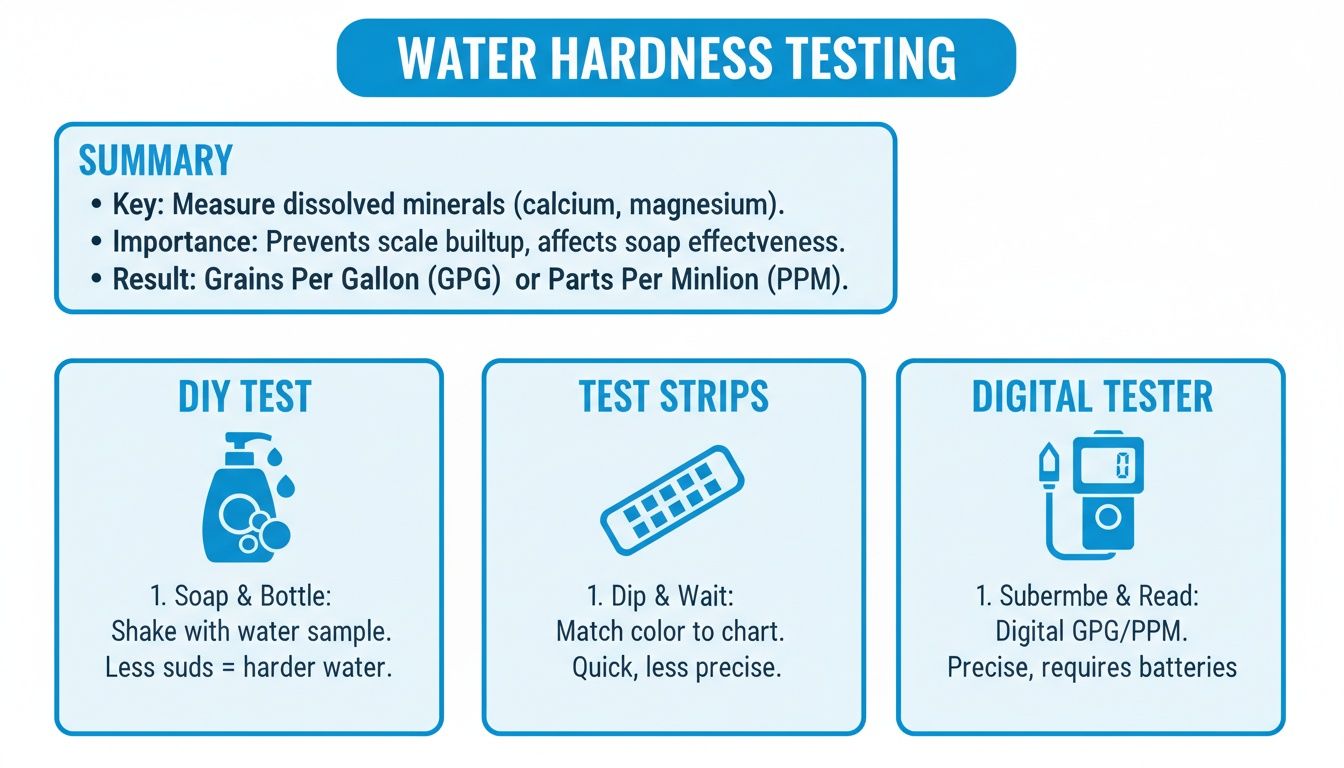
This infographic lays out a few simple ways to figure out just how hard your water is. Knowing your numbers is the first critical step before picking any treatment system.

Infographic on water hardness testing, outlining a summary and three methods: DIY, test strips, and digital testers.

Whether you use a basic soap test or a precise digital meter, getting this data helps you choose and size your system correctly.

Making the Right Choice for Your Home

So, which one is for you? It really comes down to what you're trying to achieve. There’s no single “best” system, just the one that’s the best fit for your home and your priorities.

This head-to-head comparison should make the differences crystal clear.

Water Softener vs. Water Conditioner: Head-to-Head Comparison

Feature Salt-Based Water Softener Salt-Free Water Conditioner
Primary Function Physically removes calcium & magnesium Neutralizes minerals to prevent scale
How It Works Ion Exchange Template Assisted Crystallization (TAC)
Scale Prevention 100% elimination Excellent scale prevention (99%+ effective)
"Soft Water" Feel Yes, creates the distinct slippery feel No, water chemistry is unchanged
Soap Lather Significantly improves lather No change in lather
Maintenance Regularly add salt (40-50 lbs/month) Virtually maintenance-free
Environmental Impact Discharges salt brine into wastewater No salt, no waste, no electricity
Initial Cost Generally lower upfront cost Often a higher initial investment
Ongoing Costs Salt, water, and electricity for regeneration None
Best For Homeowners wanting to fix all hard water issues Homeowners focused on protecting plumbing & appliances

In the end, it’s a straightforward choice.

If you want the full soft-water experience—no scale, better skin and hair, and amazing soap lather—then a salt-based water softener is the clear winner. It's the only way to physically remove the minerals that cause all the problems.

If your main goal is to protect your home's expensive plumbing and appliances from scale buildup, and you want a zero-maintenance, eco-friendly solution, then a salt-free water conditioner is an excellent choice. It's the ultimate "set it and forget it" system for preventing the costly damage hard water can do.

Exploring Other Hard Water Filtration Methods

While whole-house softeners and conditioners are the heavy hitters, they aren't the only tools in your filtration arsenal. Sometimes, a more focused, targeted approach is exactly what’s needed.

Maybe you just want ultra-pure drinking water or a simple fix for your dry hair. For that, other filtration methods offer the perfect solution. These alternatives can work great on their own or even supplement a larger system, letting you fine-tune the water quality throughout your home.

Reverse Osmosis for Pure Drinking Water

You’ve probably heard of Reverse Osmosis (RO) systems. They are the gold standard for water purification, usually installed right under the kitchen sink with a small, dedicated faucet. An RO system is a multi-stage filtration beast that does a lot more than just soften water.

It works by pushing water through a special membrane filled with microscopic pores. This process strips out nearly everything that isn't H₂O, including:

  • Hardness minerals like calcium and magnesium
  • Contaminants like chlorine, lead, and pesticides
  • Dissolved solids, salts, and even fluoride

What you get is exceptionally clean, great-tasting water that's amazing for drinking and cooking. But that level of purification is exactly why RO is rarely a whole-house solution. These systems produce water slowly and create wastewater in the process, making them impractical and wasteful for things like showers and laundry.

Key Takeaway: An RO system is the ultimate point-of-use filtration fix for pristine drinking water. It will remove hardness minerals from the water you drink, but it isn't designed to protect your home's entire plumbing network from limescale.

The Power of Showerhead Filters

Is your main complaint about hard water what it does to your hair and skin? If so, a specialized showerhead filter is a fantastic and incredibly budget-friendly fix.

These devices are a breeze to install—they just screw on between your existing showerhead and the pipe coming out of the wall. They target the water exactly where it impacts your personal care routine the most.

They use filtration media, often a mix of KDF (Kinetic Degradation Fluxion) and carbon, to cut down on both hardness minerals and chlorine. While they don't technically "soften" water like an ion-exchange system, they do a great job reducing the scale and chlorine that are the real culprits behind dry, itchy skin and dull, brittle hair. This is an ideal solution for renters or anyone who wants to solve skin and hair issues without the cost of a whole-house system.

A Broader Look at Water Filtration

As you can see, treating hard water often involves more than just tackling minerals. The world of water filtration is huge, with systems designed for everything from sediment to specific chemical contaminants. For instance, you might have a softener to handle the minerals but still want a carbon filter to improve the taste and smell.

This is especially true in unique setups, like mobile living. In these cases, a broad approach to water quality is key. For more on keeping water clean on the go, you might want to read up on finding the best RV water filter system.

Reverse osmosis is only becoming more popular. In fact, within the water treatment world, reverse osmosis systems are expected to command about 35% of the market share by the end of 2035. It's easy to see why, since these membrane filters can remove up to 99% of water impurities. Whether it’s for your whole house, your RV, or just your drinking glass, understanding all these options is the key to finding the perfect fix for your water.

Installation and Maintenance for Your Filtration System

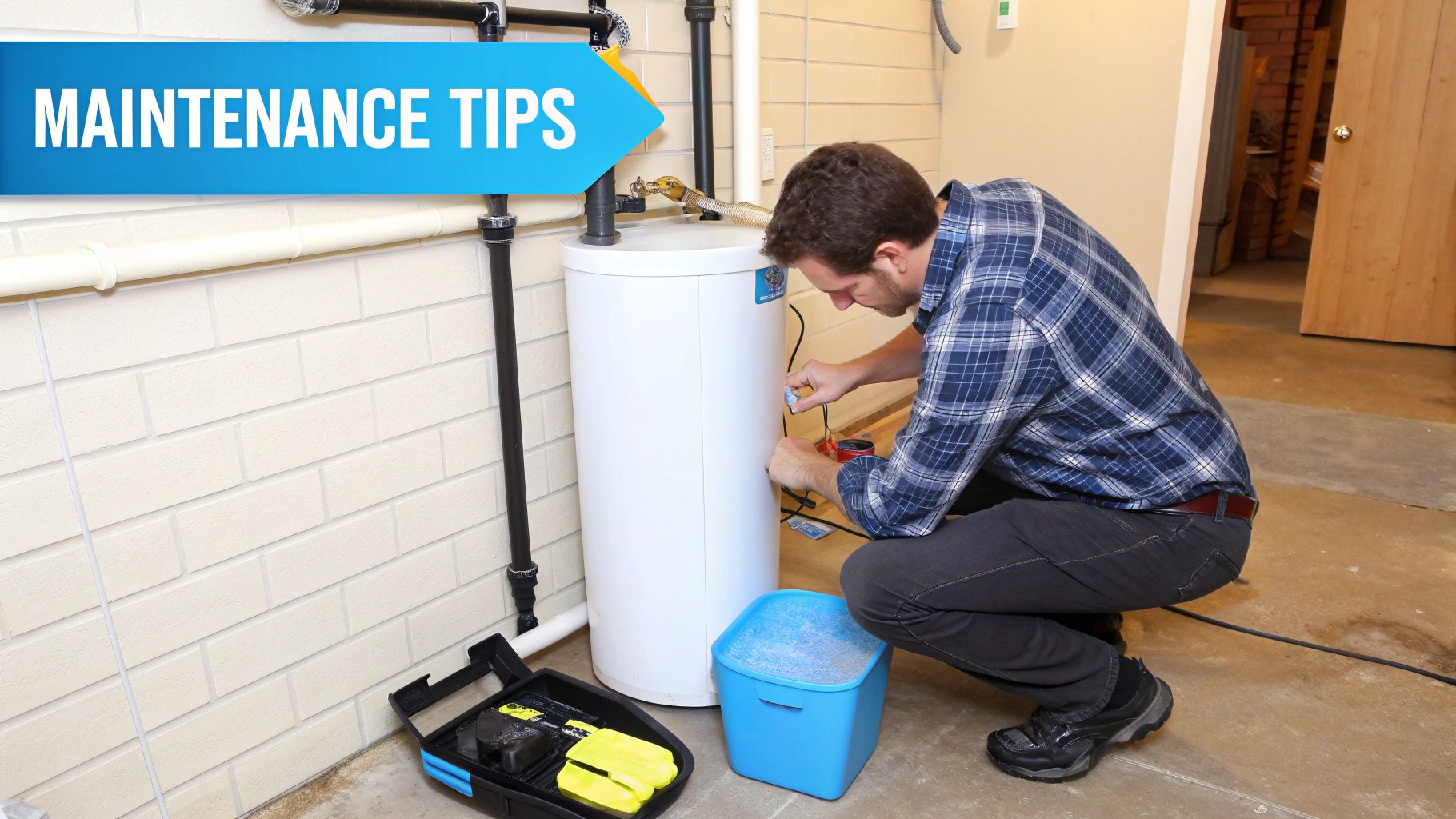
A man performing maintenance on a white water heater in a utility room with tools and a bucket.

Getting a hard water filtration system is a huge step, but the work doesn't stop once you've made the purchase. Proper installation and a little upkeep are what protect your investment and keep your home running scale-free for years to come.

Think of it this way: even a brand-new car needs its oil changed.

A whole-house system is a serious piece of plumbing. You're cutting into your home's main water line, which can feel pretty daunting. Your first big call is deciding whether to roll up your sleeves and do it yourself or bring in a pro.

DIY Installation vs. Professional Help

If you're already comfortable with plumbing projects, a DIY installation is definitely on the table. Most systems arrive with detailed instructions, and the basic process is straightforward: shut off the main water, cut a piece of pipe, and hook up the new unit. If you've handled pipe cutters, soldering, or PEX fittings before, you'll probably feel right at home.

For a lot of folks, though, this is a job best left to a professional plumber.

A licensed pro brings a lot to the table. They’ll ensure the system is installed to code, won’t leak (preventing a potential disaster), and can help you figure out the optimal spot for the unit. That's a big deal, especially since a salt-based softener needs to be near both a drain and a power outlet.

Expert Insight: Spending a few hundred dollars on a professional installer buys you total peace of mind. A bad install can cause leaks, a drop in water pressure, or even void your warranty, which makes hiring a pro a smart move for such a long-term home improvement.

Your Long-Term Maintenance Checklist

Once your system is up and running, a little routine care goes a long way. The maintenance you'll need to do really depends on the type of filtration system you picked.

For a traditional salt-based water softener, your main task is pretty simple: keep the brine tank topped up with salt. Here’s what that looks like:

  • Check the Salt Level: Take a peek inside the brine tank at least once a month.
  • Refill as Needed: A good rule of thumb is to keep the tank at least one-third full. For a typical family of four, you'll likely add one 40-pound bag of salt every month or two.
  • Choose the Right Salt: Stick to high-purity salt pellets made specifically for water softeners. Cheaper rock salt often has dirt and gunk that can clog up the system's more delicate parts.
  • Clean the Brine Tank: About once a year, it's a great idea to empty and clean out the brine tank. This gets rid of any sediment or "salt mush" that’s built up on the bottom.

Care for Salt-Free and Cartridge-Based Systems

If you went with a salt-free water conditioner that uses Template Assisted Crystallization (TAC), your to-do list is much shorter. There's a reason people call these "set it and forget it" solutions.

The TAC media inside the tank will eventually need to be replaced, but usually only every three to five years. It's a job many homeowners can handle themselves in under an hour—just unscrew the tank head, dump out the old media, and pour in the new.

For smaller, cartridge-based filters, like the ones you find on showerheads or under a sink, it’s even easier. All you have to do is swap out the filter cartridge based on the manufacturer's schedule, which is typically every six months to a year. Keeping up with this is key to making sure the filter keeps doing its job effectively.

Your Hard Water Questions Answered

After digging into all the different filtration methods for hard water, there are always a few questions that pop up. This is where we tackle those last few uncertainties head-on, giving you straight answers to the things we hear most often from homeowners just like you. Let's get everything cleared up so you can feel good about your next step.

Will a Water Softener Make My Drinking Water Salty?

This is probably the biggest myth we run into, and it's a totally fair question. While salt-based softeners do use sodium chloride (salt) to regenerate, the actual amount of sodium that makes its way into your tap water is tiny.

It's an ion exchange, not an addition. The system swaps a sodium ion for a calcium or magnesium ion. For most homes with moderately hard water, the sodium added is less than what's in a single slice of white bread. Honestly, you'd be hard-pressed to taste any difference at all.

That said, if you're on a strict, doctor-ordered low-sodium diet, it's something to discuss with them. A great workaround many people choose is to install a whole-house softener and then add a reverse osmosis system under the kitchen sink. You get the best of both worlds: your whole house is protected from scale, and you have ultra-pure, sodium-free water for drinking and cooking.

Can I Treat Hard Water if I Live in an Apartment?

You absolutely can. Installing a big whole-house system is usually off the table for renters, but you’ve still got some fantastic point-of-use filtration options that can make a world of difference. You don't have to just put up with hard water because you don't own the place.

Here are the most common filtration fixes for renters:

  • Showerhead Filters: This is the go-to for apartment dwellers. A simple screw-on shower filter designed for hard water can drastically cut down on scale and chlorine. The result? Skin that feels softer and hair that's healthier and easier to manage.
  • Faucet-Mounted Filters: For your kitchen sink, a filter that attaches right to the faucet is an easy way to improve the taste and quality of the water you drink and cook with.
  • Countertop Filtration Systems: From simple pitcher filters to more advanced countertop units, you can get great-tasting, filtered water without touching the plumbing at all.

These targeted solutions let you enjoy many of the perks of treated water without making a single permanent change.

How Do I Choose the Right Size Water Softener?

Getting the right size water softener is a huge deal for its efficiency and your long-term happiness with it. If it's too small, it will regenerate constantly, wasting salt and water. If it's too big, you've just spent more money than you needed to.

The right size all comes down to two numbers: your water hardness level (in Grains Per Gallon, or GPG) and how much water your household uses each day.

You can figure out your daily needs with a quick calculation:
(Number of People in Home) x (75 Gallons per Person) x (Your Water’s GPG) = Daily Grains to Remove

Let's walk through a real-world example. A family of four with water that has a hardness of 10 GPG would figure it out like this: 4 people x 75 gallons x 10 GPG = 3,000 grains per day. Since you want the system to go a few days between regeneration cycles, a standard 32,000-grain unit would be a solid choice for this family. Most manufacturers have easy-to-read sizing charts to help you lock in the perfect model. For more general filtration questions, you can always find more in-depth articles in our water filter advice section.


At Water Filter Advisor, our goal is to give you the clear, unbiased information you need to find the perfect solution for your home's water. Whether you need a whole-house system or a simple faucet filter, explore our guides and reviews to make a confident choice. Visit us at https://www.waterfilteradvisor.com to get started.

How to Get Rid of Calcium in Your Water: The Ultimate Homeowner’s Guide

Tired of chalky water spots and crusty faucets? The most effective way to eliminate calcium from your home's water is with a whole-house ion-exchange water softener. If you're only after pure water for drinking and cooking, a point-of-use reverse osmosis system under your kitchen sink is your best bet. This guide will break down the science, cut through the jargon, and help you choose the right filtration system to declare victory over hard water.

The Hard Truth About Your Home's Water

A kitchen sink with a faucet and dirty dishes, showing visible hard water stains and mineral deposits.

If you're locked in a never-ending battle with stubborn white spots on your glassware, constantly scrubbing crusty buildup off your showerheads, or wondering why your towels feel like sandpaper, you’re not alone. Welcome to the world of hard water, where the main villain is dissolved calcium.

This isn't some industrial pollutant; it’s a natural mineral that water absorbs as it travels through underground rock like limestone and gypsum. Whether you're on city water or a private well, this invisible mineral can infiltrate your pipes and become your home's arch-nemesis. It's the secret force behind some of your most frustrating household chores.

Why Calcium Is a Household Nuisance

While calcium is perfectly safe to drink, the high concentrations found in hard water create a host of expensive and infuriating mechanical problems. And the damage goes far beyond a few unsightly stains.

  • Appliance Sabotage: Calcium buildup, also known as limescale, forms an insulating layer on the heating elements in your water heater and dishwasher. This forces them to work harder and guzzle more energy just to reach the right temperature, leading to higher bills and premature failure.
  • Plumbing Clogs: Over time, limescale builds up inside your pipes, slowly choking off the flow of water. You might first notice a drop in water pressure, which can eventually lead to a full-blown, wallet-draining plumbing emergency.
  • Personal Care Problems: That same mineral residue doesn't just stick to pipes—it clings to your skin and hair, leaving them feeling dry, brittle, and lifeless. It also clogs pores and neutralizes soaps and shampoos, preventing them from lathering up properly.

Water hardness is one of the most common water quality headaches homeowners face. According to the U.S. Geological Survey, water with calcium levels over 120 mg/L is considered very hard. That level of hardness can slash an appliance's energy efficiency by 15-25%. The constant strain from limescale forces your machines to work overtime, shortening their lifespan and driving up your utility bills.

The frustrating cycle of cleaning, scrubbing, and replacing appliances often leads back to one root cause: hard water. By tackling the calcium at its source, you can protect your investments and simplify your daily routines.

The impact of hard water goes beyond your home's pipes and appliances. For hobbyists, managing water parameters is everything, highlighting the crucial need for specific water conditions in aquariums. It's a perfect example of how mineral content affects more than just our plumbing.

If you want to dive deeper into different filtration options, you can explore plenty of comprehensive guides and advice over at https://www.waterfilteradvisor.com.

Pinpointing Your Calcium Problem: What the Tests Reveal

Before you can declare war on hard water, you need to know exactly what you’re fighting. It’s like a doctor diagnosing an illness before prescribing medicine—guessing is not an option. Measuring the calcium level in your water gives you a specific number, and that number is the single most important factor in choosing the right filtration system.

Trying to figure out how to get rid of calcium in water without knowing your hardness level is a recipe for failure. You could end up with a system that's too weak for the job or, just as bad, an overpowered one that wastes salt and water.

Starting with Simple Home Observations

You can get a quick gut check on your water with a simple, old-fashioned soap test. Grab a clear bottle with a tight-fitting cap, fill it halfway with tap water, and add about ten drops of pure liquid soap (like castile soap, not detergent).

Shake it vigorously for 30 seconds. If you get a thick, sudsy head of foam that sticks around, your water is likely on the softer side. If all you see are a few pathetic bubbles and a cloudy, milky film, you’re definitely dealing with hard water. This won't give you a precise number, but it confirms your suspicions and tells you it's time to dig deeper.

Getting a Specific Number with Test Strips

For a more accurate measurement, home water hardness test strips are an affordable and incredibly easy option. You can grab them at most home improvement stores or online. They work just like a litmus test: dip a strip into a glass of tap water, wait a few seconds, and then compare the color to a chart on the package.

That chart translates the color into a specific hardness level, usually measured in grains per gallon (GPG). This is the magic number you need. For instance, a result of 12 GPG tells you your water is "very hard" and gives you the exact data needed to properly size a water softener.

Knowing your GPG is non-negotiable. It dictates the grain capacity of the water softener you'll need and ensures it regenerates at the right intervals, saving you money on salt and water while guaranteeing soft water on demand.

The Most Accurate Testing Methods

For the highest degree of accuracy, you have two great options. If you're on city water, your local utility is required to publish a yearly Water Quality Report (sometimes called a Consumer Confidence Report). You can usually find this on their website, detailing everything about your water supply, including its average hardness level.

If you have a private well, sending a sample to a certified water testing laboratory is the best investment you can make. This will not only give you a precise hardness reading but will also screen for other potential contaminants. It gives you a complete picture of your water's chemistry so you can choose a system that addresses all your home's needs.

Imagine this: a family buys a new, high-efficiency washing machine but is constantly frustrated because their clothes come out stiff and dingy. They blame the machine, but a simple $10 test kit reveals their water is a staggering 18 GPG. Armed with this number, they install a properly sized water softener, and suddenly, the washer performs perfectly. That small diagnostic step saved them from needlessly replacing an expensive appliance.

Alright, you've got your water test results in hand and now it's time to pick your weapon. Walking into the world of water treatment can feel overwhelming, with a bunch of technical jargon like "ion exchange" and "reverse osmosis" getting thrown around.

Let's cut through the noise. I'm going to break down the most common ways to deal with calcium in your water so you can figure out what actually makes sense for your house.

This decision tree gives you a good visual of where to start. It's all about figuring out if you have a problem first, then deciding how deep you need to go with testing.

The bottom line is simple: you have to confirm you've got hard water before you start shopping. A quick DIY test can give you a clue, but a lab analysis gives you the hard numbers you need to make a smart choice.

Ion Exchange Water Softeners: The Gold Standard

If you want to protect your entire home—we're talking pipes, faucets, showerheads, and every appliance that uses water—then a traditional salt-based water softener is the undisputed champ. This is the only method that physically yanks the hard minerals right out of your water.

They work on a principle called ion exchange. Water flows into a tank filled with resin beads coated in sodium. The calcium and magnesium in your water are like magnets to these beads, sticking to them and "kicking off" the sodium into the water.

The result? Genuinely soft water. The kind that feels silky smooth, makes soap lather like crazy, and stops scale buildup dead in its tracks. It’s a true whole-house fix that tackles the problem at its source.

Salt-Free Water Conditioners: A Different Approach

You've probably seen "salt-free water softeners" advertised. Let's be crystal clear: these are water conditioners, not softeners. They don't actually remove any calcium.

Instead, they use a clever bit of science (often called Template Assisted Crystallization, or TAC) to change the physical form of the calcium minerals. Think of it like turning sticky Velcro into smooth little crystals that can't grab onto pipes or fixtures.

This is a great way to prevent scale buildup, but the calcium is still there. You won't get that classic "slick" feel of soft water and might still see some light water spots, but it's a fantastic, low-maintenance option if you just want to protect your plumbing without adding salt.

Reverse Osmosis: For Pure Drinking Water

Maybe you're not worried about your pipes, but you want absolutely pure, amazing-tasting water for drinking and cooking. In that case, a reverse osmosis (RO) system is what you're looking for.

These are typically installed right under the kitchen sink. An RO system pushes water through an incredibly fine membrane that acts like a bouncer, blocking up to 99% of all dissolved solids—calcium included.

You get incredibly clean water from a special, dedicated faucet. The catch? It's a "point-of-use" solution. It does nothing to protect your dishwasher, shower, or water heater from scale. For extreme purity, some specialized systems like lab water purifiers for distilled water use similar, highly advanced filtration principles.

Calcium Removal Methods at a Glance

To make it even simpler, here’s a side-by-side look at how these options stack up.

Treatment Method How It Works Effectiveness on Calcium Average Upfront Cost Ongoing Maintenance
Ion Exchange Water Softener Physically removes calcium and magnesium ions, replacing them with sodium ions. Excellent. Completely removes hardness minerals for whole-house protection. $800 – $3,000+ Regular salt refills (typically every 1-2 months).
Salt-Free Water Conditioner Alters mineral structure to prevent scale formation without removing calcium. Good at scale prevention. Does not soften water or remove calcium. $600 – $2,000 Minimal. Media replacement may be needed every 3-6 years.
Reverse Osmosis System Forces water through a fine membrane to remove dissolved solids. Excellent. Removes up to 99% of calcium at a single point of use. $200 – $600 Annual filter and membrane replacements.
Magnetic Descaler Uses a magnetic field to supposedly alter mineral ions. Poor / Unproven. Lacks consistent scientific backing for effectiveness. $100 – $400 None. "Set it and forget it" installation.

As you can see, the right choice really boils down to whether you want to completely remove calcium for your whole house or just manage its effects at specific taps.

What About Magnetic Descalers?

You’ll also stumble across magnetic or electronic "descalers." These are little gadgets that you clamp onto the outside of your main water pipe. The claim is that a magnetic field changes the calcium ions so they won’t form scale.

Frankly, the science behind these is shaky at best. While some people swear they see a small difference, most independent tests and plumbing pros agree they just don't provide the reliable, long-term results you get from a real softener or conditioner. I generally tell people to save their money and invest in a proven technology.

Sizing and Selecting Your Water Filtration System

Alright, you've got your water test results in hand. Now comes the fun part: picking the right hardware to finally get rid of that pesky calcium.

This is where a little bit of planning can save you a mountain of headaches later. One of the most common—and costly—mistakes homeowners make is choosing the wrong size system. You either end up with a unit that can't keep up with demand or, just as bad, one that’s constantly wasting salt and water.

Let’s walk through exactly how to match a filtration system to your home's unique needs. Getting this right means you’ll nail that perfect balance of performance and efficiency.

Calculating Your Water Softener Grain Capacity

When you're shopping for water softeners, "one size fits all" is a recipe for disaster. The most important number you need to get familiar with is grain capacity. This tells you how many "grains" of hardness the softener can pull out of your water before it has to run a cleaning cycle, which is called regeneration.

To figure out the right capacity, you only need two things:

  • Your water hardness in grains per gallon (GPG). This is the key number from your water test.
  • Your family's daily water usage. A solid rule of thumb is 75 gallons per person, per day.

The math is actually pretty simple:
Number of People x 75 Gallons/Person x Hardness (GPG) = Total Grains Per Day

That final number is the daily workload your softener will be up against. With that, you can pick a system sized to regenerate about once a week—the sweet spot for peak efficiency.

Pro Tip: Try to find a softener that regenerates roughly every seven days. If it regenerates too often, you're just throwing money away on salt and water. If it waits too long, you risk hard water "bleeding" back into your pipes before the cycle runs.

A Real-World Sizing Example

Let's make this real. Imagine a family of four—two adults, two teenagers, and a dishwasher that seems to be running 24/7.

  • Family Size: 4 people
  • Water Hardness Test Result: 15 GPG (which is considered very hard)

Here’s how they'd calculate their daily grain requirement:
4 people x 75 gallons/person x 15 GPG = 4,500 grains per day

Since the goal is a weekly regeneration cycle, we just multiply that by seven days:
4,500 grains x 7 days = 31,500 grains

Based on this, the family should be looking for a water softener with a capacity of at least 32,000 grains. A standard 32k-grain unit would be a perfect match, easily handling their high water usage without constantly having to regenerate.

Whole-House vs. Point-of-Use: The Strategic Choice

Your next big decision is about scope. Are you trying to protect your entire home from calcium buildup, or is your main goal just to get crystal-clear drinking water at the kitchen sink?

A whole-house water softener is your go-to solution if you want to eliminate calcium everywhere. It gets installed right where the main water line enters your home, which means every faucet, showerhead, and appliance—from the water heater to the washing machine—gets treated, soft water. This is the best way to protect your plumbing and extend the life of your appliances.

On the flip side, a point-of-use (POU) system, like an under-sink reverse osmosis (RO) filter, is a more targeted approach. It delivers incredibly pure water to a single tap, which is perfect for drinking and cooking. Just remember, it won't do a thing to stop scale from building up in your pipes or dishwasher. The right choice really just depends on what problem you're trying to solve.

Look for Credible Certifications

In the world of water treatment, it’s easy for a company to make big claims. Real proof is what separates the good from the junk. To make sure you’re buying a product that actually does what it promises, always look for third-party certifications from reputable organizations.

  • For water softeners, the gold standard is NSF/ANSI 44. This certification guarantees the system effectively reduces hardness as advertised.
  • For reverse osmosis systems, look for NSF/ANSI 58. This confirms the system's ability to reduce a whole host of contaminants, including dissolved solids like calcium.

Think of these certifications as your quality-control check.

This is especially critical when you look at the global picture. The World Resources Institute has documented that 25 countries, home to a quarter of the world's population, face extreme water stress. In these areas, shrinking water supplies often lead to higher concentrations of minerals. This makes effective calcium removal a must-have for both homes and industries. You can explore the findings on high water-stress regions to learn more about these growing challenges.

Installation and Maintenance for Lasting Results

A person maintains a water softener system, pouring water into its brine tank for optimal function.

You've done the research and picked out the perfect water treatment system. That’s a huge win, but it's really only half the battle.

The truth is, a top-of-the-line softener with a sloppy installation is just a fancy, oversized paperweight. Proper setup and a little routine upkeep are what really lock in years of soft, scale-free water.

Whether you're a confident DIYer ready to roll up your sleeves or you'd rather leave it to the pros, let's walk through what it takes to get it done right.

The DIY Installation Path

If you're comfortable with basic plumbing, installing a water softener can be a totally manageable weekend project. It just requires attention to detail. The whole idea is to install the unit near your main water line—usually in the garage, basement, or a utility closet—before the line splits off to your water heater.

Before you even think about cutting pipes, make sure you've got the right gear. A smooth installation is all about having the proper tools from the start.

  • Essential Tools for the Job:
    • Pipe cutters and a deburring tool (for clean, professional cuts)
    • Two adjustable wrenches to get fittings nice and snug
    • Teflon tape for creating those crucial leak-proof seals
    • A tape measure and a level to keep everything straight
    • The right pipes and fittings for your specific plumbing (PEX, copper, or PVC)

One of the most important parts of any softener is the bypass valve. This is a godsend. It lets you route water around the softener for maintenance or repairs without shutting off water to the entire house. Trust me, you’ll be glad it's there.

On a difficulty scale of 1 to 10, I’d put a DIY softener installation around a 6 or 7. It’s definitely more involved than changing a faucet, but it's not as intense as replumbing a whole bathroom. If cutting into your home's main water line makes you nervous, it's always smarter to call a pro.

Vetting a Professional Plumber

Not into the idea of a DIY plumbing project? No problem. Hiring a qualified plumber is the most surefire way to get the job done right. But don't just hire the first person who pops up in a search.

A great installation starts with asking the right questions. When you're getting quotes, make sure you ask:

  • "How many water softener installations have you done?" (You want experience here.)
  • "Are you fully licensed and insured for this type of plumbing work?"
  • "Does your quote include all parts and labor, or will there be hidden fees?"
  • "Do you offer a warranty on your installation work?"

A plumber who gives you confident, straightforward answers to these questions is likely a pro you can trust.

A Simple Maintenance Schedule for Peak Performance

Once your system is up and running, a little routine care is all it takes to keep it working perfectly for years. Think of it like changing the oil in your car—a small task that prevents huge, expensive problems.

1. Keep the Salt Topped Off: This is your main job. Check the brine tank about once a month and add salt as needed. The golden rule is to always keep the salt level above the water line. This ensures the system can make the brine solution it needs for the regeneration cycle.

2. Clean the Brine Tank Annually: At least once a year, it’s a good idea to empty and clean out the brine tank. Over time, salt impurities can form a "salt bridge" or a layer of sludge at the bottom, which can clog up the works.

3. Check the Settings Periodically: If you suddenly notice your water feels hard again or your salt usage goes through the roof, your settings might have been knocked out of whack. Just take a look and verify the hardness level programmed into the control valve still matches your original water test results.

Got Questions About Removing Calcium from Water?

Even after you've done your homework on getting rid of calcium in your water, a few questions always seem to come up. Let's tackle those last-minute uncertainties and bust a few common myths so you can move forward with total confidence.

It's perfectly normal to have some lingering thoughts. You're making a pretty big decision for your home, after all, and you want to know you've covered all your bases. Here are the most common questions we hear from homeowners just like you.

Will a Refrigerator or Pitcher Filter Get Rid of Calcium?

This is a big one, and the answer is a hard no. Your standard refrigerator filter, countertop pitcher, or the little filter you screw onto your faucet are almost always just activated carbon. Their job is to make your water taste and smell better by grabbing things like chlorine.

They simply aren't designed to capture dissolved minerals like calcium and magnesium—those minerals sail right on through. To actually pull calcium out, you need a system built for that specific job, like a water softener that uses ion exchange or a reverse osmosis system that filters water down to the molecular level.

Is It Actually Unhealthy to Drink Hard Water?

For most people, drinking hard water is totally fine. In fact, it can be a small source of essential minerals like calcium and magnesium. The fight against hard water is really about protecting your house, not your health.

The real problems are mechanical and financial. Hard water is brutal on your appliances, clogs up your pipes, and leaves that scaly film on your skin and hair. The only time a health concern might come into play is for someone with specific medical issues, like a history of kidney stones. In that case, they should definitely talk to their doctor.

I Installed a Softener, So Why Do My Dishes Still Have Spots?

This is super frustrating, but it's usually an easy fix. If you're seeing spots on "clean" dishes after putting in a new softener, a few things could be going on.

First off, a rinse aid is your dishwasher's best friend, even with soft water. It helps water slide right off the dishes so spots can't form as they dry. Second, go check the settings on your softener's control head. If the hardness level is programmed too low, the system won't regenerate often enough and some hard water can slip through.

And finally, take a look in the brine tank. The number one reason a softener stops working is because it's out of salt. No salt means the resin beads can't get recharged to do their job.

What’s the Annual Cost to Run a Water Softener?

A lot of homeowners worry about the ongoing costs, but you'll be surprised at how low they are. You're really only looking at two things: salt and a tiny bit of electricity.

A typical family of four can expect to spend somewhere between $50 and $100 a year on salt, depending on how hard their water is and how much they use. The electricity is minimal—often less than what your digital alarm clock uses.

Most people find these costs are easily covered by the savings. You’ll use less soap, detergent, and cleaning supplies, and you’ll significantly extend the life of your water heater and dishwasher, which helps you avoid having to replace them way too early.


At Water Filter Advisor, we believe everyone deserves access to clean, high-quality water. Our in-depth guides and unbiased reviews are designed to help you navigate your options and make the best choice for your family. Explore our resources to find the perfect solution for your home at https://www.waterfilteradvisor.com.