Micron Filtration Chart: Ultimate Home Water Filtration Guide
Printable Micron Filtration Chart Quick Guide
Whether you’re battling gritty well water or banishing chlorine taste, this micron filtration chart lets you pick the perfect pore size in seconds—and it’s 100% water filtration focused for home use.
- Streamlines filter shopping by matching pore sizes to your top water concerns
- Cuts guesswork—just find your issue and grab the right cartridge
- Includes a printable checklist for swaps and routine check-ups
- Prevents both over-filtering (hello, slow flow!) and under-filtering (yuck, contaminants!)
Tuck this guide in your home improvement binder or tape it inside the filter housing for instant reference.
When To Use The Quick Chart
Reach for this chart every time you fit a new unit or swap worn cartridges. Perfect for DIYers and the service tech who fixes your faucet:
- Tape it inside your filtration housing for at-a-glance confirmation
- Slip it in your maintenance binder next to water test reports
- Track cartridge lifespan, pressure changes and flow rates over weeks
Formats available in letter and A4—print effortlessly and never guess again.
Why Chart Visuals Matter
During that emergency filter swap, visuals rule. They’re a boon for homeowners and pros alike:
- Well water users spot sediment issues immediately
- City water dwellers zero in on chlorine taste and odor
- Portable system owners get a fast microbial barrier reference
Next up: an infographic that highlights three key micron tiers with eye-catching icons.
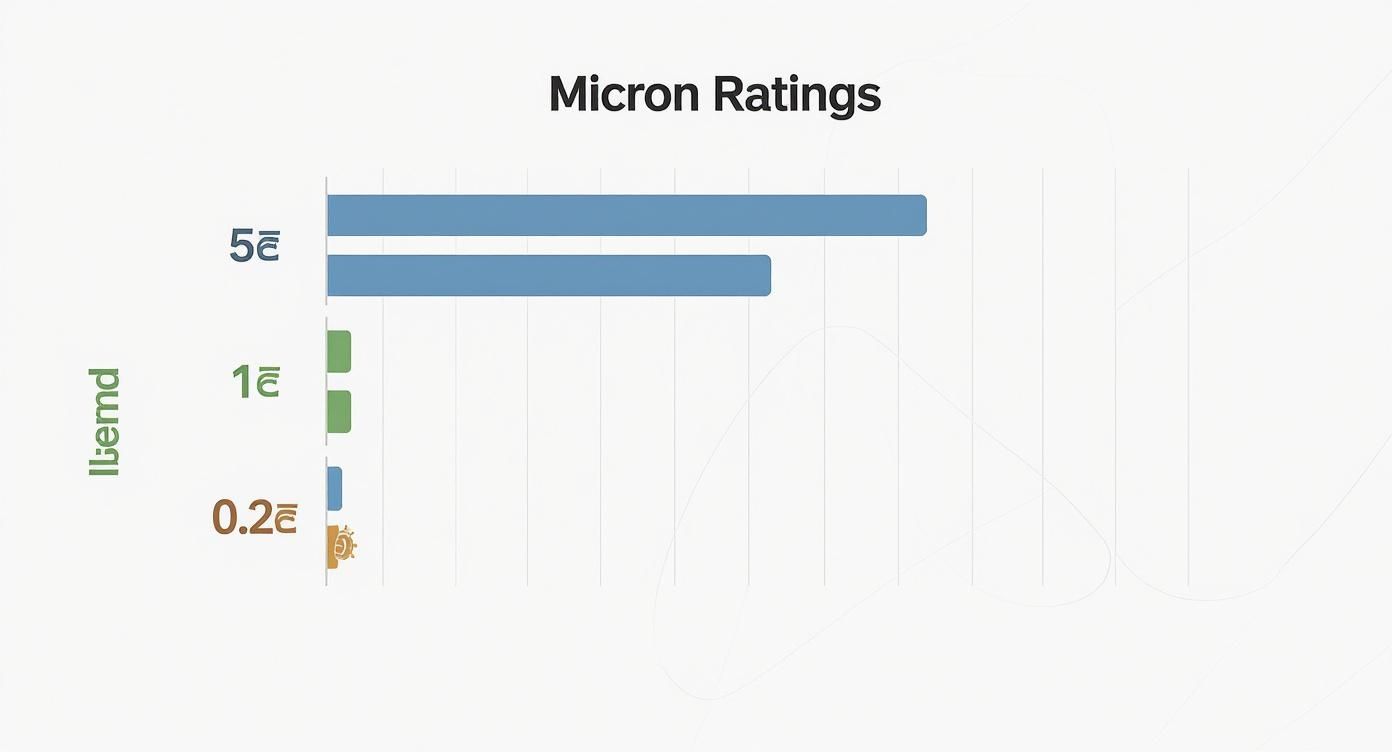
Below is a printable table to match exact water issues with the ideal filter rating.
Micron Rating Quick Guide
| Micron Rating | Primary Use | Example Contaminants |
|---|---|---|
| 5 µ | Sediment Pre-Filter | Sand, silt, rust |
| 1 µ | Fine Particle & Taste Filter | Chlorine, cysts |
| 0.2 µ | Microbial Barrier | Bacteria, protozoa |
Keep this chart on your fridge, in the garage or saved on your phone.
How To Match Filter To Your Issue
- Pinpoint your water concern: grit, taste or microbes.
- Find the corresponding micron rating in the table above.
- Select a cartridge with that rating and verify the media type.
- Install and test flow before daily use.
Store a digital copy on your phone for quick field checks—and share it with neighbors for safer community water.
Benefits Of Using Micron Filtration Chart
A micron filtration chart turns guesswork into confidence. By lining up pore sizes with specific contaminants, you pick sediment, carbon, membrane or ceramic media precisely. No more over-spending or under-filtering—just crystal-clear results.
Slip a printable PDF in your maintenance binder for on-site checks. Or load the interactive chart on your phone to sort by media and contaminant. Seeing everything side by side cuts decision time by up to 50%.
- Simplified Decisions: match pore size to contaminant
- Faster Filter Swaps: shop by test results
- Consistent Maintenance: built-in printable checklists
- Balanced Flow Control: avoid clogged filters or low pressure
Each chart entry links to deep-dives on sediment, carbon block, membrane/RO and ceramic filters. Jump straight to what you need—no manual spelunking required.
Visualizing Pore Sizes And Contaminants
Grouping ratings—5 µm for grit, 1 µm for fine particles, 0.2 µm for bacteria—gives you an instant snapshot. Color codes and clear icons turn technical specs into intuitive visuals.
Tables comparing flow rate vs. removal efficiency make tradeoffs crystal clear. Homeowners report cutting decision time in half with side-by-side charts rather than specs.
A concise chart brings transparency to every filter choice, ensuring you get exactly the protection you need.
Keep your chart next to the water test kit. When turbidity spikes or pressure dips, you’ll know exactly which rating to grab.
The global micron filters market hit roughly USD 1.2 billion in 2024 and may swell to USD 2.4 billion by 2033—an 8.5% CAGR from 2026 to 2033 Learn more about micron filters market growth.
Streamlining Filter Maintenance
Stash the chart in your filter housing to remove all guesswork at swap time. Follow these steps for perfect cartridge changes:
- Log initial flow rate and install date
- Compare test results to chart recommendations
- Pick a cartridge with the exact micron rating
- Replace, log the new date and record flow
Real-world examples:
- Well water packed with sand? Use a 5–20 µm pre-filter.
- City water smelling like pool chlorine? A 1 µm carbon block is your friend.
Mini-table of formats:
| Format | Use Case | Key Advantage |
|---|---|---|
| Printable PDF | Binder storage | Always available |
| Interactive Web | Field use | Dynamic sorting |
| Mobile App | Quick lookup | Offline access |
Keep both digital and printed charts within arm’s reach—especially when water issues strike.
Comparing Filter Media Types
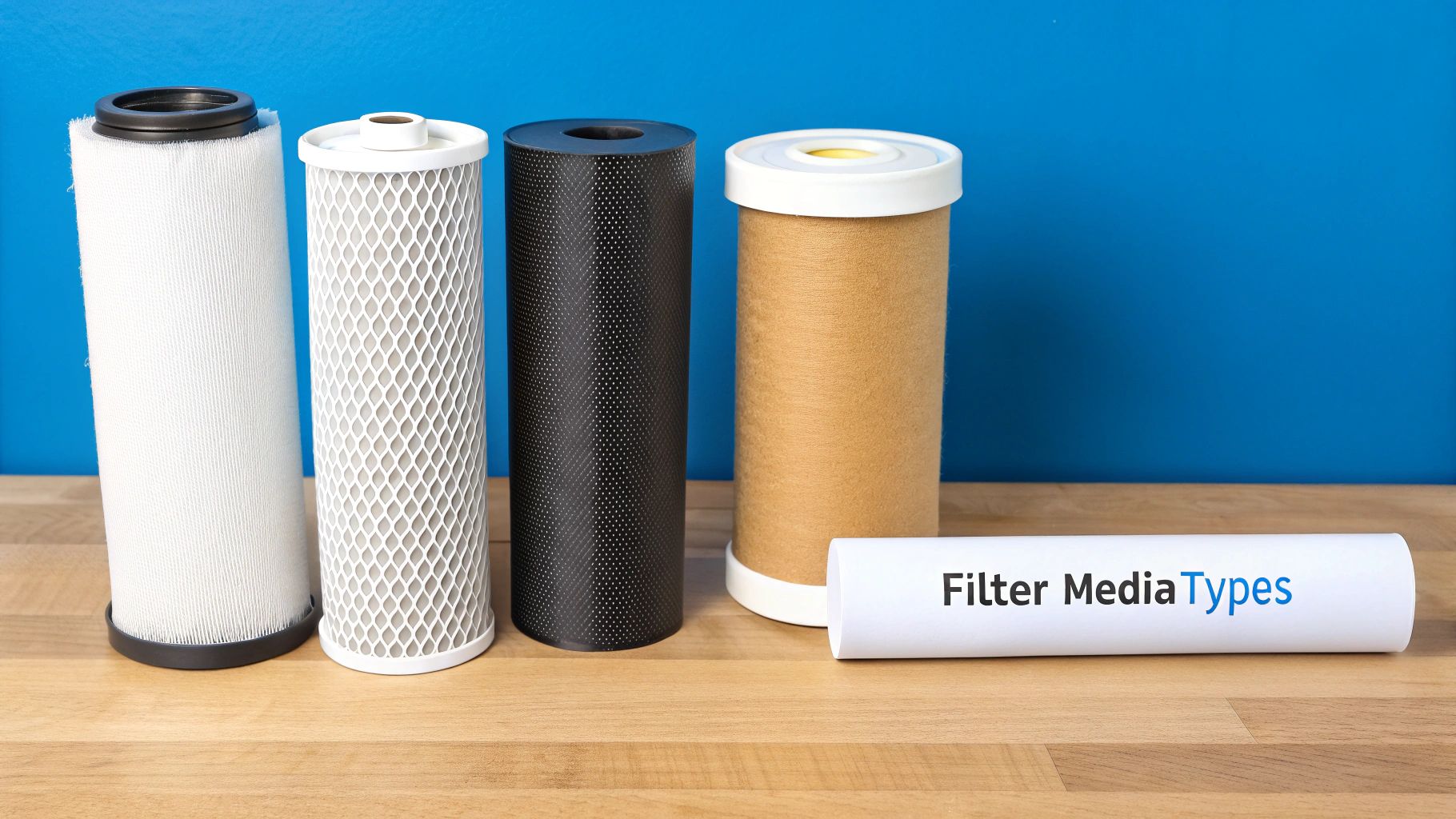
Pick the right media by matching pores to particles. Below we line up sediment cartridges, carbon blocks, RO/UF membranes and ceramic filters on our micron filtration chart.
Sediment Cartridges Overview
Sediment filters (5–20 µm) capture big chunks—sand, silt and rust flakes—protecting finer media downstream.
- Pore Size Range: 5–20 µm
- Key Targets: sand, silt, rust
- Use Case: pre-filtration on well pump systems
Activated Carbon Blocks Details
Carbon blocks (0.5–5 µm) adsorb chlorine, chloramine and organics for better taste and odor.
- Pore Size Range: 0.5–5 µm
- Key Targets: chlorine, VOCs, TTHMs
- Use Case: municipal water treatment, fridge filters
For more on targeted media, check the best HVAC filters for allergies.
Membranes And Ceramic Filters
Membranes (RO/UF) range from 0.0001–0.01 µm, stripping heavy metals and dissolved solids. Ceramic filters (0.2–1 µm) remove bacteria and cysts, and are easy to clean for repeated use.
| Media Type | Pore Size Range | Targets | Application |
|---|---|---|---|
| Sediment | 5–20 µm | Sand, silt, rust | Well water pre-filter |
| Carbon Block | 0.5–5 µm | Chlorine, VOCs | City water taste & odor |
| Reverse Osmosis | 0.0001–0.01 µm | Heavy metals, TDS | Under-sink drinking water |
| Ceramic | 0.2–1 µm | Bacteria, protozoa | Faucet-mounted or countertop |
Composite cartridges stack stages—for example, 20 µm sediment → 5 µm carbon → 1 µm ceramic—to tackle grit, chemicals and microbes in one go.
A smart media pairing delivers high removal rates without killing your flow.
How Micron Ratings Work
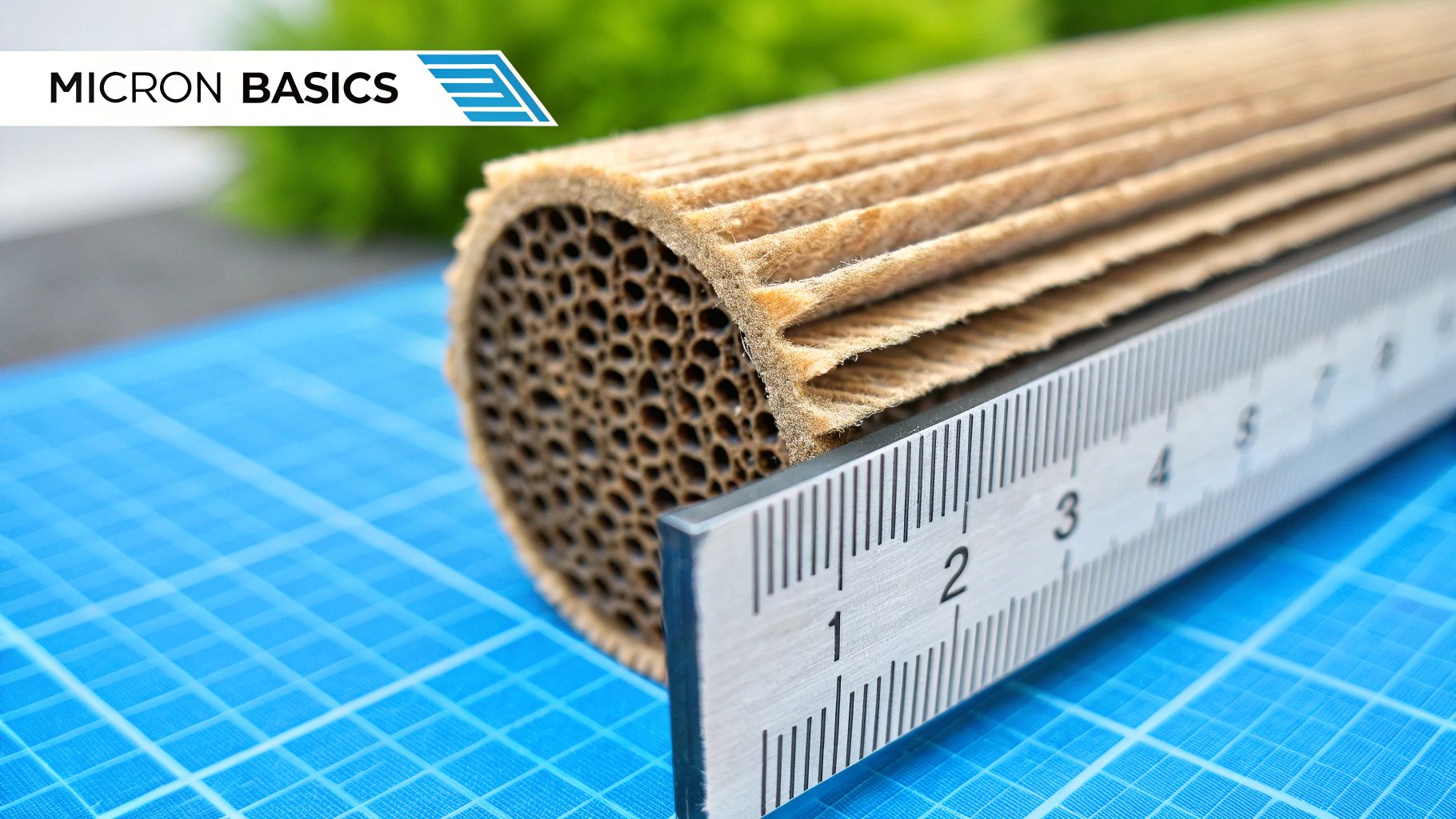
A micron (µm) is one-millionth of a meter—your guide to what particles a filter traps. Manufacturers use ASTM or ISO tests to assign nominal and absolute ratings, but those labels deserve context.
- ASTM F2389: Absolute retention at 99.9% for stated sizes
- ISO 9001: Nominal retention around 85% of particles
- Operating flow and pressure can shift a filter’s effective pore size
Understanding Nominal And Absolute Ratings
| Rating Type | Retention Percent | Best For |
|---|---|---|
| Nominal | ~85% | Sediment pre-filtration |
| Absolute | ~99.9% | Microbes & heavy metals |
Nominal filters aren’t bad—they’re great for general debris. Absolute filters guarantee near-total removal, perfect for drinking water safety.
Interpreting Data Sheets And Performance
Look for flow (gpm/lpm) and pressure (psi/bar) alongside micron specs. These numbers let you compare lab results to real-world performance.
- High pressure can compress pores—boosting retention but slowing flow
- Low pressure may let fine particles sneak through
A lower micron value isn’t always superior if your flow becomes a trickle.
Check test fluid (water, beads, oil) because results vary by medium. Then match data sheets with our sediment, carbon, membrane and ceramic guides.
Avoiding Common Misconceptions
Ultra-fine ratings clog in heavy sediment, upping replacement costs. Always pair specs with onsite pressure and flow checks.
- Look for the NSF mark for verified materials
- Choose filters tested under ANSI standards for extra peace of mind
Run your tap at 60 psi, record the result, and overlay it on your printable micron filtration chart.
Tradeoffs Of Filter Media
Balancing removal efficiency, flow rate and maintenance is easier with a micron filtration chart. Tighter pores trap more particles but can slow water and clog sooner.
Global macrofiltration may hit USD 8.3 billion in 2024 Straits Research.
- Sediment Filters (5–20 µm): low pressure drop, frequent cleaning in turbid water
- Carbon Blocks (0.5–5 µm): great for taste, medium flow reduction under load
- Membranes (RO/UF) (0.0001–0.2 µm): ultra-pure water, high pressure needs
Comparing Flow And Longevity
| Media Type | Pore Range | Longevity | Clog Potential |
|---|---|---|---|
| Sediment | 5–20 µm | 3–6 months | Low |
| Carbon Block | 0.5–5 µm | 6–12 months | Medium |
| Membrane | 0.0001–0.2 µm | 1–3 years | High |
Finer micron ratings often double replacement frequency in sandy water.
Case Study Examples
- Well water with sand: 20 µm pre-filter swaps monthly in muddy seasons.
- City water chlorine: 1 µm carbon block for crisp taste; add a booster pump for steady flow.
- Mixed contaminants: stack 10 µm sediment, 5 µm carbon, 0.2 µm membrane for balanced removal.
Maintenance Considerations
Fine pores demand extra care:
- Watch pressure differential to catch clogs early
- Log replacement dates and water test results
- Flush new cartridges 5 minutes before use to clear fines
Prioritizing Safety And Throughput
For microbial removal, go absolute-rated at 0.2 µm or tighter. Protect fine media with a nominal sediment pre-filter, then add a UV stage for extra disinfection.
Cross References For Deep Dive
- How Micron Ratings Work – Nominal vs. absolute definitions and test protocols
- Comparing Filter Media Types – Pore ranges and real use cases
- How To Choose Replacement Cartridges – Dimensions, connections, compatibility
With the micron filtration chart, you’ll fine-tune your home system for safety, flow and peace of mind.
How To Choose Replacement Cartridges
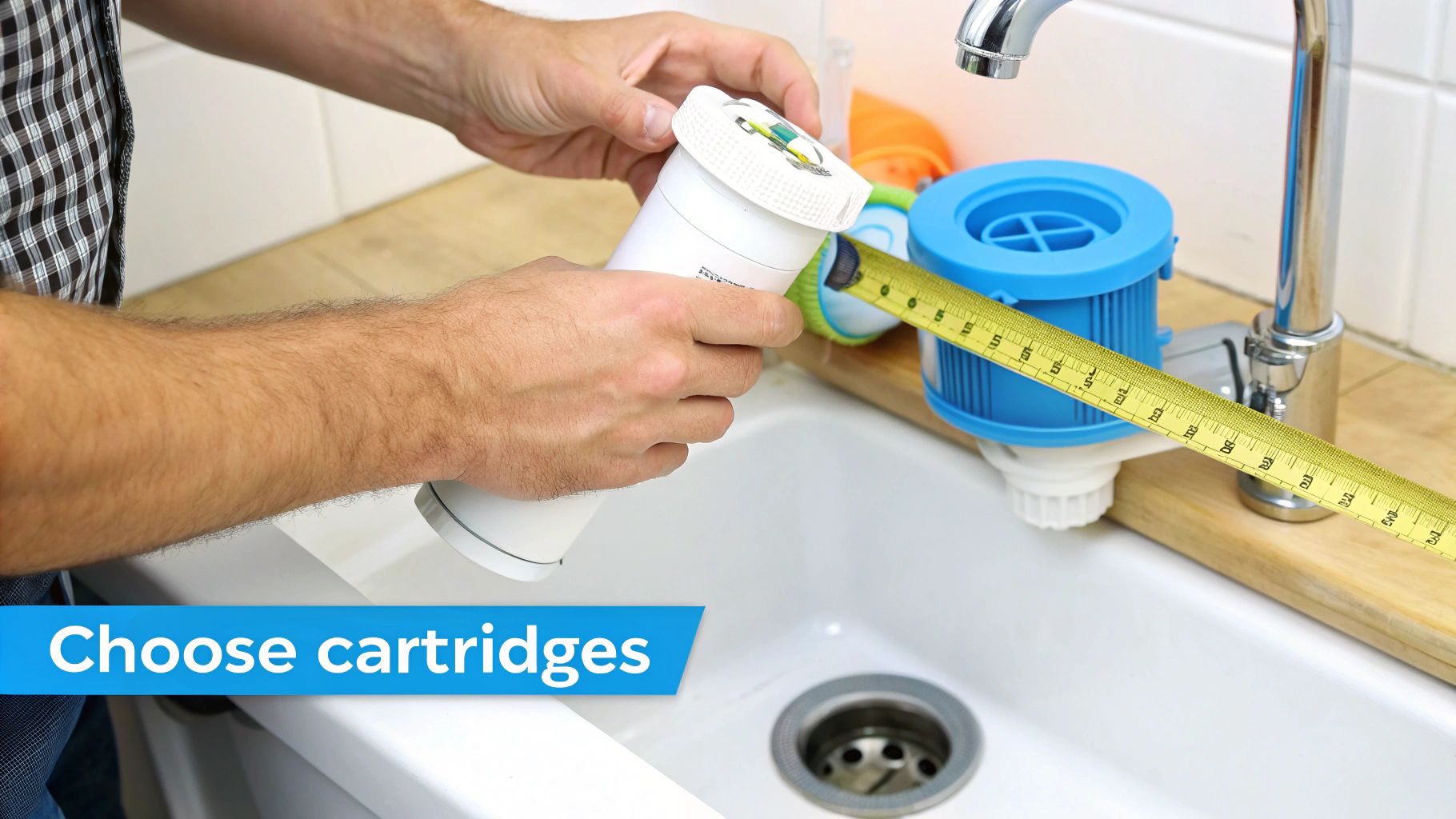
Zero in on your water woes—cloudy tap, metallic tang, or residual chlorine? Match the symptom to your micron filtration chart to land the ideal cartridge.
Matching Micron Ratings To Issues
- Sand & Silt: 5–20 µm Pre-Filter
- Rust & Large Particles: 5 µm Sediment Filter
- Chlorine Taste & VOCs: 1 µm Carbon Block
- Heavy Metals & Fine Particulates: 0.5–1 µm Membrane
- Bacteria & Protozoa: 0.2 µm Microbial Barrier
See the full specs at filter pack details.
Measuring And Checking Fit
- Remove old filter; measure its length and diameter
- Note inlet/outlet thread or quick-connect style
- Confirm system flow rate (gpm) to prevent bottlenecks
Bulk bundles and subscriptions often save up to 20% per cartridge.
Regular pressure and flow checks prevent nasty surprises.
Watch for end-of-life signs:
- Pressure drop over 15 psi
- Noticeable slow-down
- Return of bad odor or discoloration
Example Scenarios And Tips
- Hard Water Scale
- Pair a 1 µm carbon block with a 0.5 µm membrane for minerals and taste.
- Urban Chlorine
- A 1 µm granular activated carbon block removes VOCs.
- Turbid Well Water
- Stage a 20 µm pre-filter before a 5 µm sediment filter.
Log each swap date and flow rate in a binder or spreadsheet for pattern spotting. For more maintenance how-tos, explore our advice section.
Bulk Buying And Subscriptions
- Compare cartridge costs across pack sizes
- Sign up for subscriptions to lock in deliveries
- Store unopened filters in a cool, dry spot (shelf life 12–24 months)
These best practices keep your system running and never leave you high and dry.
Micron Filtration Chart FAQ
Micron ratings might look like alphabet soup, but they’re straightforward. Nominal means about 85% capture; absolute means 99.9% or more—essential for microbes and metals.
How To Read The Chart
- Identify sediment, chemical or microbial issue
- Match micron size in the chart
- Cross-reference media types for multi-concerns
- Weigh flow vs. removal efficiency in tradeoff tables
See Quick Guide for an overview and Combining Filter Media Types for example setups to avoid under- or over-filtering.
When To Use Multi-Stage Setups
Multi-stage tackles mixed problems:
- 5–20 µm pre-filter for sediment
- 1 µm (or finer) stage for taste, chemicals, microbes
This extends cartridge life and boosts efficiency—check Tradeoffs Of Filter Media for real-life case studies.
Why Flow Drops After A Cartridge Change
New cartridges clamp down until rinsed. Run water for 5–10 minutes, then test again. Persistently low flow? Check for:
- Housing-cartridge mismatch
- High pressure differential
Refer to How Micron Ratings Work for pressure guidelines.
Troubleshooting Low Flow
- Verify housing threads and cartridge dimensions
- Measure inlet pressure against specs
- Flush new cartridges fully before testing
Record date, model and flow in your filter binder. Patterns emerge, and you stay ahead of issues.
Ready to dial in your home water treatment? For side-by-side comparisons and pro tips, visit Water Filter Advisor.