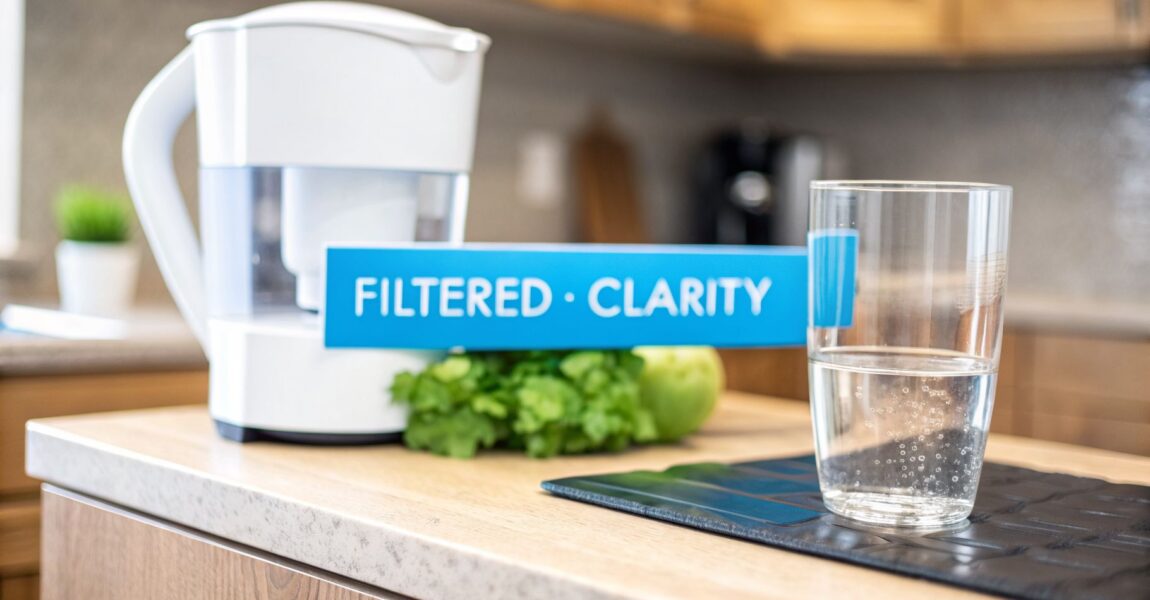
What Do Brita Filters Actually Remove from Your Tap Water?
Ever stared at your Brita pitcher and wondered what magical wizardry is happening inside that little white cartridge? You pour in regular old tap water, and out comes something that tastes crisp, clean, and way more refreshing.
So, what does a Brita filter actually pull out of your water?
The short answer is that it's a master at removing the stuff that makes your water taste and smell funky, especially chlorine. It also takes a bite out of some common heavy metals like mercury, copper, and zinc.
But the full story depends entirely on which filter you use. The trusty blue Standard filters and the more powerful white Elite models are worlds apart in what they can tackle.
Your Quick Guide to What Brita Filters Actually Remove

Think of your Brita pitcher as the first line of defense for better-tasting water. Its primary mission isn't to create sterile, ultrapure water, but to make the H2O from your tap significantly more enjoyable to drink.
The biggest and most noticeable win for any Brita is its smackdown on chlorine. This chemical is a necessary evil used to disinfect municipal water supplies across the country, but nobody enjoys the swimming-pool aroma it leaves behind.
Standard Brita filters are champs at this, reducing chlorine taste and odor by 92% to 95%. The result? Water that instantly tastes cleaner and crisper. You can dive deeper into independent test results to see just how effective they are.
A Tale of Two Filters: Standard vs. Elite
It’s absolutely crucial to know that not all Brita filters are created equal. The specific contaminants a filter can tackle comes down to the model you buy. Brita has two main types for its pitchers and dispensers:
- Standard Filters (Blue): These are the classic, budget-friendly cartridges. Their main gig is banishing chlorine taste and odor, but they also snag some mercury, copper, and cadmium on the side.
- Elite Filters (White): Formerly known as Longlast+, these are a serious upgrade. They do everything the Standard filter does but are also certified to reduce lead, asbestos, and certain industrial troublemakers like benzene.
To make it easier, here's a quick side-by-side look.
Brita Filter Contaminant Reduction at a Glance (Standard vs. Elite Models)
| Contaminant | Standard Filter (Blue) | Elite/Longlast+ Filter (White) |
|---|---|---|
| Chlorine (taste & odor) | ✅ | ✅ |
| Mercury | ✅ | ✅ |
| Copper | ✅ | ✅ |
| Cadmium | ✅ | ✅ |
| Lead | ❌ | ✅ |
| Asbestos | ❌ | ✅ |
| Benzene | ❌ | ✅ |
As you can see, the choice makes a huge difference.
The key takeaway is simple: your filter's performance is directly tied to the model you purchase. If you have specific health concerns, like lead from older plumbing, you absolutely need the Elite filter for any meaningful reduction.
At the end of the day, a Brita is a simple, accessible way to get better-tasting water right from your fridge. By understanding what it can—and can't—do, you can make a much smarter choice for your home.
How Brita Filters Work Their Magic
Ever poured water into your Brita and wondered what’s really going on inside that little cartridge? It’s not just a simple strainer. Think of it as a tiny, two-stage water treatment plant, designed to make your tap water taste and smell a whole lot better.
The secret sauce is a clever team-up between two materials: activated carbon and ion-exchange resin.
Imagine the activated carbon as a massive, porous sponge made from superheated coconut shells. Heating them creates a huge surface area filled with microscopic nooks and crannies. This isn't the same as barbecue charcoal; its job is to act like a magnet for certain contaminants.
As water trickles through, the carbon grabs onto molecules through a process called adsorption. It’s like molecular flypaper. Instead of soaking up chemicals, it traps them on its surface, snagging things like chlorine, mercury, and other organic compounds that give tap water that off-taste.
Meet the Dynamic Duo in Your Filter
While the carbon is busy making your water more pleasant, the ion-exchange resin is tackling a different problem.
- Activated Carbon: This is the workhorse for taste and smell. Its main job is to trap the chlorine that cities add to disinfect the water supply. This is the #1 reason filtered water tastes so much cleaner. It also grabs other junk like mercury and some industrial pollutants.
- Ion-Exchange Resin: These are tiny, bead-like spheres that are basically expert traders. They are designed to hunt down heavy metal ions. As water flows past, the resin beads snatch harmful ions like copper, cadmium, and zinc, releasing harmless sodium or potassium ions in their place.
It’s a molecular swap meet, plain and simple. The filter trades out bad-tasting and potentially harmful metals for neutral particles, leaving you with cleaner, better-tasting water. This is a big deal if your home has older copper plumbing.
A Powerful Combination for Better Water
This one-two punch is what makes a Brita filter so effective at what it’s designed to do. First, the carbon zaps the most obvious offender—that chlorine taste and odor. Right behind it, the resin beads reduce the concentration of specific heavy metals.
The system is designed to work quickly and efficiently, cleaning the water right as you fill the pitcher. It’s a simple but powerful process that explains why that first sip of filtered water is so much fresher than what comes straight from the tap. Every drop passes through this clever purification process before it ever hits your glass.
What Brita Filters Are Certified to Remove
Company claims are one thing, but if you want to know what a filter really removes, you need to look at the official certifications. Think of them as a report card from a trusted, independent source—proof that a product actually does what it says it will.
Brita’s biggest claim to fame has always been its performance against chlorine. That "swimming pool" taste in tap water is the number one reason people buy a filter pitcher. On this front, Brita filters do an exceptional job, which is why the water tastes so much fresher.
But what about the more serious stuff you can't see or taste? That's where the story gets more complicated, and the specific filter you choose suddenly matters a whole lot more.

Cracking the Code on NSF/ANSI Certifications
The gold standard in water filter testing comes from two organizations: the NSF (National Sanitation Foundation) and ANSI (American National Standards Institute). Seeing their seal on a filter means it has been put through the wringer in independent lab tests to meet strict public health standards.
You'll typically see two key certifications on Brita products, and they mean very different things:
- NSF/ANSI 42: This one is all about aesthetics—taste, smell, and appearance. It certifies that a filter is good at reducing things that aren't necessarily a health risk but are just unpleasant, like chlorine.
- NSF/ANSI 53: This is the big one for health effects. It's a much tougher certification to earn and confirms a filter can reduce specific health-related contaminants like heavy metals (lead, mercury) and certain industrial chemicals.
If you’re serious about a contaminant, this is the certification you need to look for.
Certified Heavy Metal Reduction
When it comes to heavy metals, not all Brita filters are created equal. This is a critical point, especially if you live in an older home with aging pipes.
Only specific Brita models are certified to reduce heavy metals like lead. The standard pitcher filters do not make this claim.
To get certified lead reduction of up to 99%, you absolutely have to use a Brita Elite (formerly called Longlast+) filter. These are the models certified under NSF/ANSI 53 for lead. According to Brita, these advanced filters also tackle mercury, asbestos, and other particulates like sediment and rust.
The Critical Takeaway: If lead is your concern, you must use a Brita Elite (or Longlast+) filter. The standard blue filters are not certified for lead reduction and won't give you the protection you're looking for.
For a deeper dive into what different Brita models handle, you can learn more about what Brita filters do and do not remove on callmother.com. This two-stage filtration process—using both activated carbon for taste and an ion-exchange resin for metals—is what makes the more advanced filters effective.
The Unfiltered Truth: What Brita Leaves Behind

While a Brita pitcher is great for improving the taste of your water, it’s crucial to know what it doesn't do. Relying on a standard filter for total purification can give you a false sense of security, as many of the most serious contaminants slip right through.
Think of it this way: the activated carbon in a Brita is like a net with big holes, perfect for catching bulky stuff like chlorine. But smaller, more stubborn contaminants simply sail on through. Understanding these limits is the key to making a truly informed choice for your family's health.
What Stays in Your Water After Filtering
Plenty of common and concerning substances are just too tough for a standard Brita filter to handle. It's important to have realistic expectations—"better-tasting" doesn't automatically mean "safer."
Here are the big categories of contaminants that Brita filters leave behind:
- Microscopic Organisms: This is a major one. Brita filters are not designed to remove bacteria, viruses, or cysts like Giardia and Cryptosporidium. They should only ever be used with water that's already been treated and is considered biologically safe to drink.
- Total Dissolved Solids (TDS): This broad category includes minerals and salts, such as fluoride, nitrates, and even arsenic. Removing these requires more advanced filtration, like a reverse osmosis system.
- Most Pharmaceuticals & Herbicides: While some of the newer, more advanced Brita filters are certified for a handful of pesticides, the vast majority of pharmaceuticals and chemicals from agricultural runoff will not be captured.
It's also worth understanding the distinction between drinking water and ultrapure water, which is stripped of everything and not intended for consumption.
The Challenge of "Forever Chemicals" (PFAS)
One of today's biggest water quality concerns is PFAS (per- and polyfluoroalkyl substances), better known as "forever chemicals." These man-made compounds don't break down easily and have been linked to serious health problems.
While Brita’s Elite filter is certified to reduce two common PFAS chemicals (PFOA and PFOS), its performance is extremely limited compared to other filtration methods. This is where you need to read the fine print.
A 2024 study painted a clear picture of this struggle. When tested on Canadian tap water containing 13-56 ng/L of PFAS, the Brita Elite filter only managed a 36% removal rate within the first 20 liters of use. Worse, that number plummeted to just 8% as the filter aged.
By comparison, a competitor like ZeroWater achieved 99% removal under the same conditions.
At the end of the day, a standard Brita filter is a taste-enhancement tool, not a full-blown purification system. If your local water report shows high levels of dissolved solids, microbes, or specific chemicals like PFAS, you'll need a more powerful solution to get your water truly clean.
Beyond the Pitcher: When to Upgrade Your Water Filtration
So, you’ve got a Brita pitcher. It’s a fantastic starting point, but if your water quality concerns run deeper than just chlorine taste, it’s probably time to look beyond the pitcher.
Brita does a solid job with the basics, but it was never designed to be a catch-all solution. For tougher contaminants like microbes, fluoride, or significant levels of PFAS, a simple pitcher filter just won't cut it. That's when you need to call in the heavy hitters of home water filtration.
Matching Your Needs with the Right System
This is where more advanced home water filtration systems really shine. We're not just talking about making tap water taste a bit better; we’re talking about true purification that targets specific, stubborn contaminants.
For anyone on a private well, the first step is always comprehensive well water testing. You can't fix a problem you don't know you have. Once you know exactly what’s in your water, you can choose a system designed to tackle it head-on.
The absolute best filtration system is the one that's built for your specific water issues. If you're after the purest water possible, a Reverse Osmosis (RO) system is the undisputed champion. It’s incredibly effective at removing things Brita can't touch, like fluoride, nitrates, arsenic, and a very high percentage of PFAS.
Maybe you just want dedicated clean water right at the kitchen sink. An under-sink filter is perfect for that. For a more complete solution, a whole-house system treats every drop of water coming into your home, protecting every faucet, shower, and appliance.
The goal is to move from a general solution to a targeted one. Once you identify what’s in your water, you can select the filtration technology certified to remove it effectively and give you total peace of mind.
To make things a little easier, here’s a quick guide to help you match common water worries with the right type of filter.
Choosing the Right Filter for Your Contaminant Concern
This table breaks down which technology is best suited for some of the most common contaminants that people want removed from their water.
| If You Want to Remove… | Best Filtration Technology | Example System Type |
|---|---|---|
| Fluoride, Nitrates, PFAS | Reverse Osmosis | Under-Sink RO Unit |
| Bacteria & Viruses | UV Purification or Ultrafiltration | Whole-House UV System |
| High Sediment or Iron | Sediment & Iron Filters | Whole-House System |
Knowing these options empowers you to choose a system that truly handles what a standard pitcher filter leaves behind. For more help deciding what’s right for your home, check out our expert filtration advice.
Your Top Brita Questions Answered
Let's clear up some of the most common questions people have about Brita filters. Knowing the answers helps you get the most out of your pitcher and make the right call for your home's water.
Can I Use a Brita Filter With Well Water?
This is a big one, and the answer is a hard no. Brita filters are only meant for municipally treated tap water that’s already been disinfected and deemed biologically safe to drink.
Well water is a completely different story. It can harbor bacteria, viruses, and other microscopic nasties that a simple carbon filter just can't touch. Using a Brita with well water is dangerous because it gives you a false sense of security. If you're on a well, you first need to get your water tested by a professional and then look into a proper purification system, like one with UV sterilization, to make it safe.
Do Brita Filters Remove Fluoride?
Nope, Brita filters do not remove fluoride. The materials inside a standard Brita filter—activated carbon and ion-exchange resin—simply can't grab onto dissolved minerals like fluoride. If fluoride reduction is your top priority, you'll need a different type of system altogether.
A reverse osmosis (RO) system is the go-to solution for fluoride. Most RO systems can remove over 90% of it, making them the most effective choice for home use.
How Can I Find Out What Is in My Water?
You can't fix what you don't know is broken. The only way to really understand your water quality is to get the data. You’ve got two solid options here:
- Check Your Local Water Report: Every year, your local water utility has to publish a water quality report, sometimes called a Consumer Confidence Report (CCR). It’s a great free resource that lists the contaminants they test for and their levels.
- Test It Yourself: For a more accurate picture of what's coming out of your specific tap—especially if you're worried about lead from older plumbing—you can use an at-home water test kit or send a sample to a state-certified lab.
At Water Filter Advisor, our goal is to help you find the perfect filtration solution for your home's unique needs. For in-depth reviews and expert buying guides, visit us at https://www.waterfilteradvisor.com.
