Filtered Water vs Reverse Osmosis: Which Is Right for Your Home?

So, you want better tap water. Welcome to the club! But when you start looking, you run into two heavy hitters: standard water filters and reverse osmosis systems. What's the real difference?

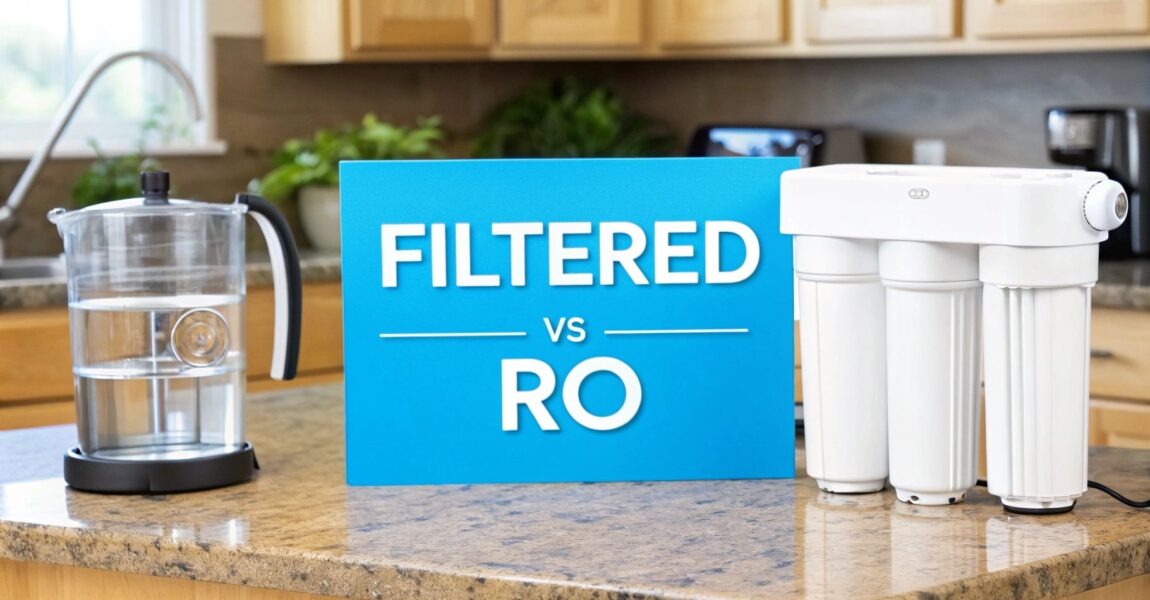
Let's cut to the chase. A standard filtered water system is like a bouncer at a club—it grabs the obvious troublemakers, like chlorine, making your water taste and smell way better. A reverse osmosis (RO) system is like a top-secret government lab—it purifies your water, zapping up to 99% of almost everything else, including salts, heavy metals, and fluoride.

The choice boils down to a simple question: are you looking for a simple taste upgrade, or do you want the absolute purest water you can get flowing from your tap?

Choosing Your Home Water System: A Quick Comparison

Diving into the world of home water filtration can feel like you’ve stumbled into a chemistry class you didn't sign up for. You'll hear technical terms like "activated carbon" and "semi-permeable membrane" tossed around, which can make a simple decision feel surprisingly complex.

But don't worry. Comparing filtered water to reverse osmosis is easier than it sounds. It all comes down to what's lurking in your water and what you personally want to kick to the curb.

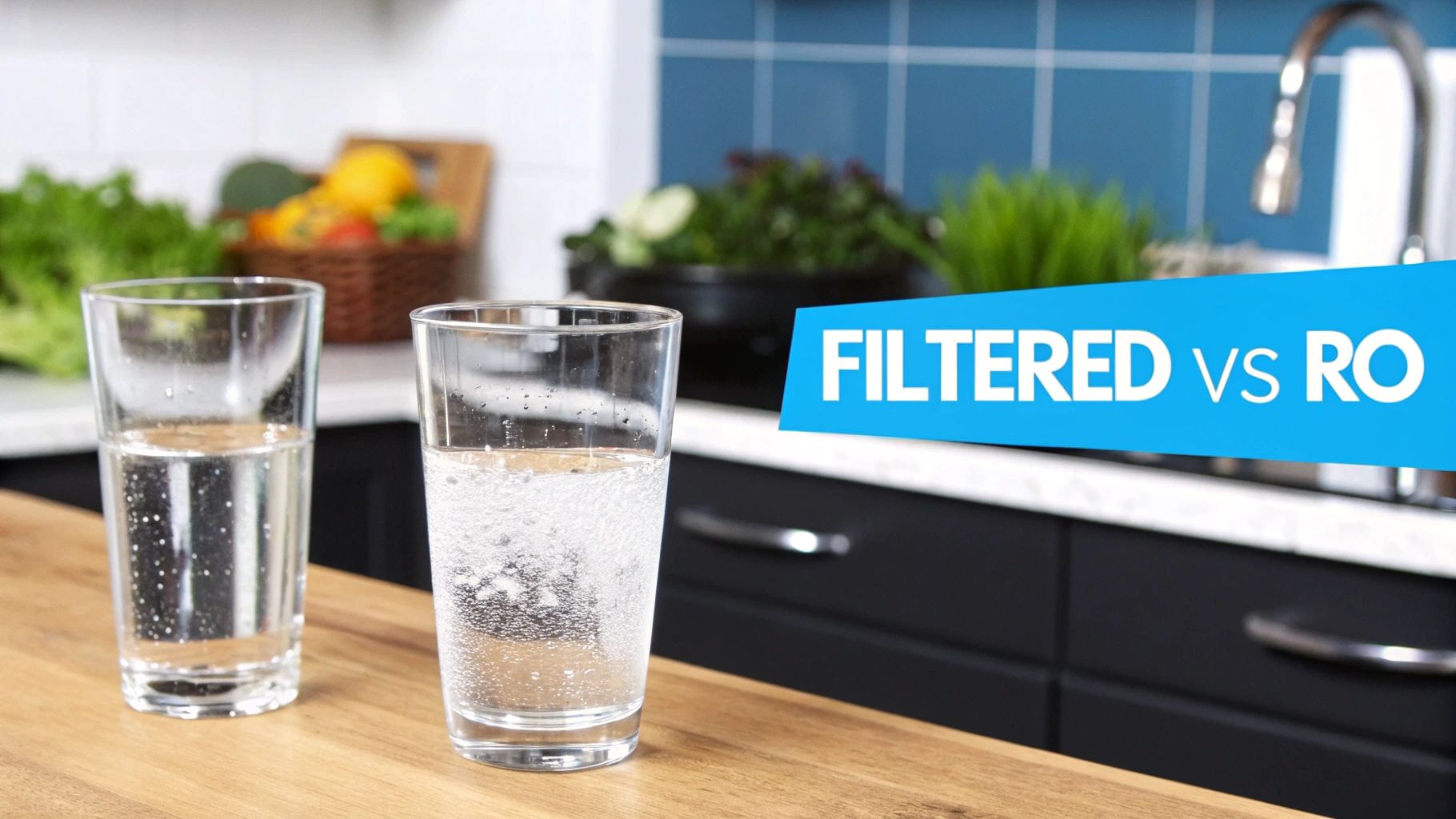
Two clear glasses of water on kitchen counter comparing filtered water versus reverse osmosis systems

Key Differences at a Glance

Think of standard filters—the kind you find in a simple pitcher, faucet attachment, or under-sink unit—as a basic gatekeeper. They do a fantastic job of grabbing the big stuff that ruins the taste and smell of your water, especially chlorine. They take your regular city tap water and make it genuinely pleasant to drink.

Reverse osmosis (RO) is a whole other beast. It's more like a high-security checkpoint for your water. By forcing water through an incredibly fine membrane, it strips out nearly everything that isn't pure H₂O. We're talking dissolved salts, fluoride, arsenic, lead, and a long list of other contaminants that simpler filters can't even see.

To make the right call, let's put them side-by-side. This table cuts through the noise and lays out the core differences.

Filtered Water vs Reverse Osmosis at a Glance

Feature Standard Water Filters Reverse Osmosis (RO) Systems
Primary Goal Improves taste, odor, and clarity by removing chlorine and sediment. Purifies water by removing a huge range of dissolved contaminants.
Technology Uses media like activated carbon or sediment screens to trap particles. Pushes water through a high-tech membrane to separate out impurities.
Contaminant Removal Great for chlorine, sediment, some VOCs, and larger particles. Removes up to 99% of TDS, including salts, fluoride, arsenic, and lead.
Mineral Impact Keeps healthy minerals like calcium and magnesium. Removes almost all minerals, both the good guys and the bad guys.
Installation Simple (pitchers, faucet mounts) to moderate (under-sink systems). More complex, usually needing a dedicated faucet and drain connection.

This gives you a solid starting point. For more in-depth comparisons and product suggestions, you can always check out more expert advice to zero in on the perfect fit. Now, let's dig deeper to help you match the right system to your home's unique needs.

Before we can really get into the reverse osmosis vs. filtered water debate, we need to be clear about what we mean by "filtered water." It's a broad term that covers a few popular technologies, each one a specific tool for a specific job. These methods don't technically purify water; they improve it by tackling problems like bad taste, weird smells, and cloudy appearance.

Think of standard filters as a bouncer at a club. They aren't there to check the ID of every single molecule, but they are great at stopping the most obvious troublemakers from getting past the rope. For most people on city water, this is often all you need to take your tap water from "meh" to "ahh."

The Workhorse: Activated Carbon Filters

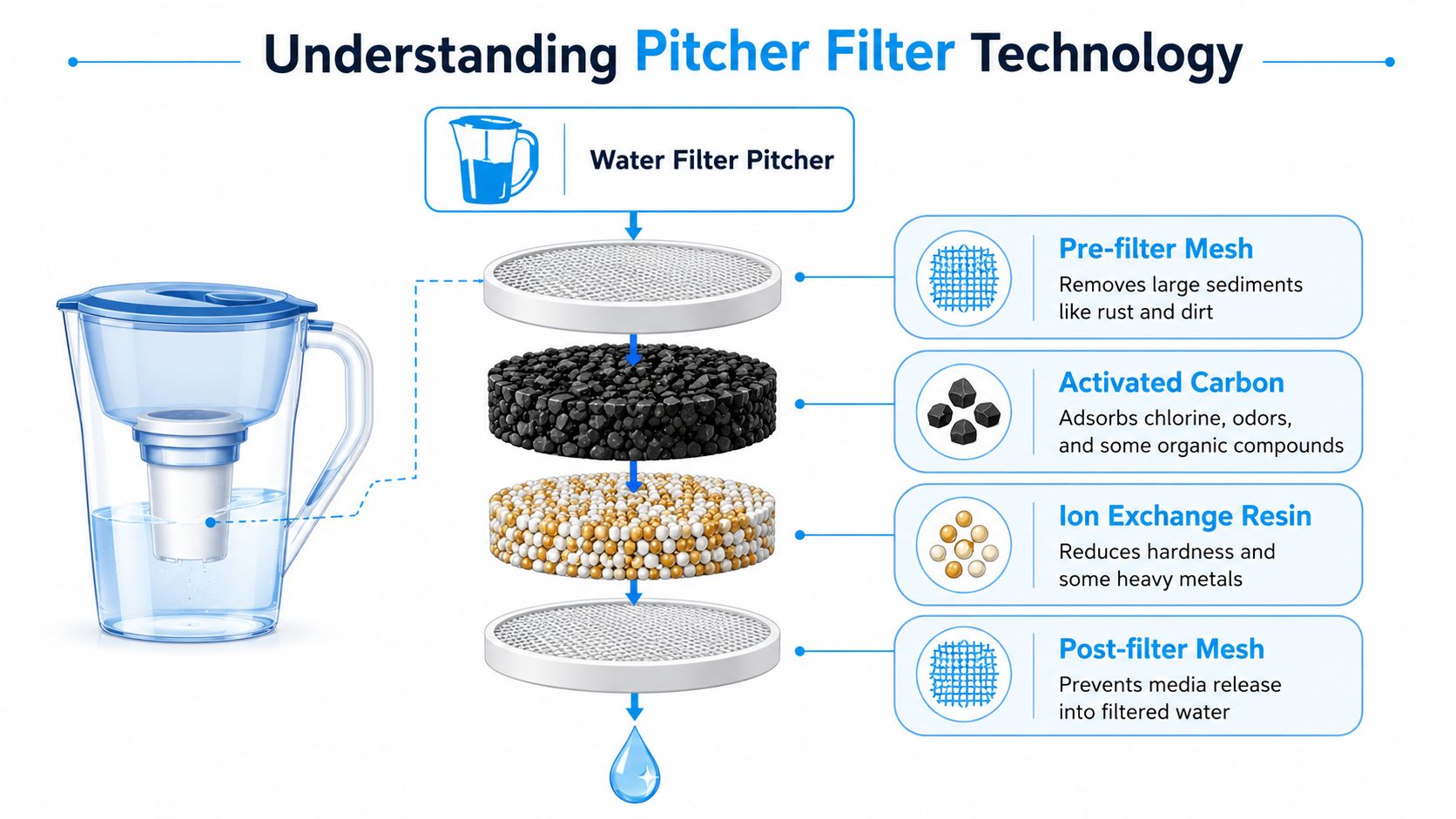
The most common player in the home filtration game is the activated carbon filter. This is the magic inside everything from your basic water pitcher and refrigerator filter to the more serious under-sink and whole-house systems. It's so popular because it’s incredibly good at one thing: adsorption.

An activated carbon filter is basically a super-sponge with a massive, porous surface area that acts like a magnet for certain contaminants. As water flows through, chemicals and impurities get trapped and stick to the surface. It’s especially good at nabbing chlorine—the chemical most cities use for disinfection and the main reason your tap water can taste and smell like a swimming pool.

By removing chlorine and some volatile organic compounds (VOCs), these filters make a huge difference in how your water tastes. If you want to get into the nitty-gritty, you can dig deeper into understanding water filtration and its impact on flavor. For many households, just getting rid of that chemical funk is the entire goal.

The Gatekeepers: Sediment Filters

Next up are sediment filters. These are the unsung heroes in many home water setups, especially for homes with older pipes or private well water. Their job is simple, physical screening—they’re basically a high-tech net designed to catch solid gunk.

Imagine pouring water through an extremely fine mesh. That’s what a sediment filter does, catching debris both big and small, like:

  • Rust flakes from old pipes
  • Sand and silt
  • Dirt and other bits of organic matter

These filters are absolutely essential for protecting the more delicate and expensive parts of a system that might come after them, like an RO membrane. They keep your water clear and prevent clogs, making sure everything runs smoothly.

The Specialist: UV Purifiers

While carbon and sediment filters deal with chemicals and grit, ultraviolet (UV) purifiers are built to fight an entirely different enemy: living microorganisms. A UV purifier isn't a "filter" in the traditional sense because it doesn't actually remove anything from the water. Instead, it blasts the water with powerful UV-C light.

This blast of UV light wrecks the DNA of bacteria, viruses, and nasty protozoa like Giardia and Cryptosporidium. It doesn't kill them, but it renders them sterile and harmless, neutralizing them without adding a single chemical to your water.

UV purification is a crucial defense for anyone on a private well, where microbial contamination is a real risk. It’s also used as a final safety step in many high-end systems to give you total peace of mind against invisible biological threats that other filters can't touch.

Each of these standard methods is great at its specific job, but they all leave smaller, dissolved contaminants behind. And that’s where the conversation really shifts over to reverse osmosis.

How Reverse Osmosis Delivers Ultimate Water Purity

When a standard filter just won't cut it, reverse osmosis (RO) steps into a league of its own. This isn't just about filtering water; it's a full-blown purification process designed to strip your tap water down to its purest form: H₂O. If you're looking for the absolute cleanest water possible for your home, this is the technology you need to know.

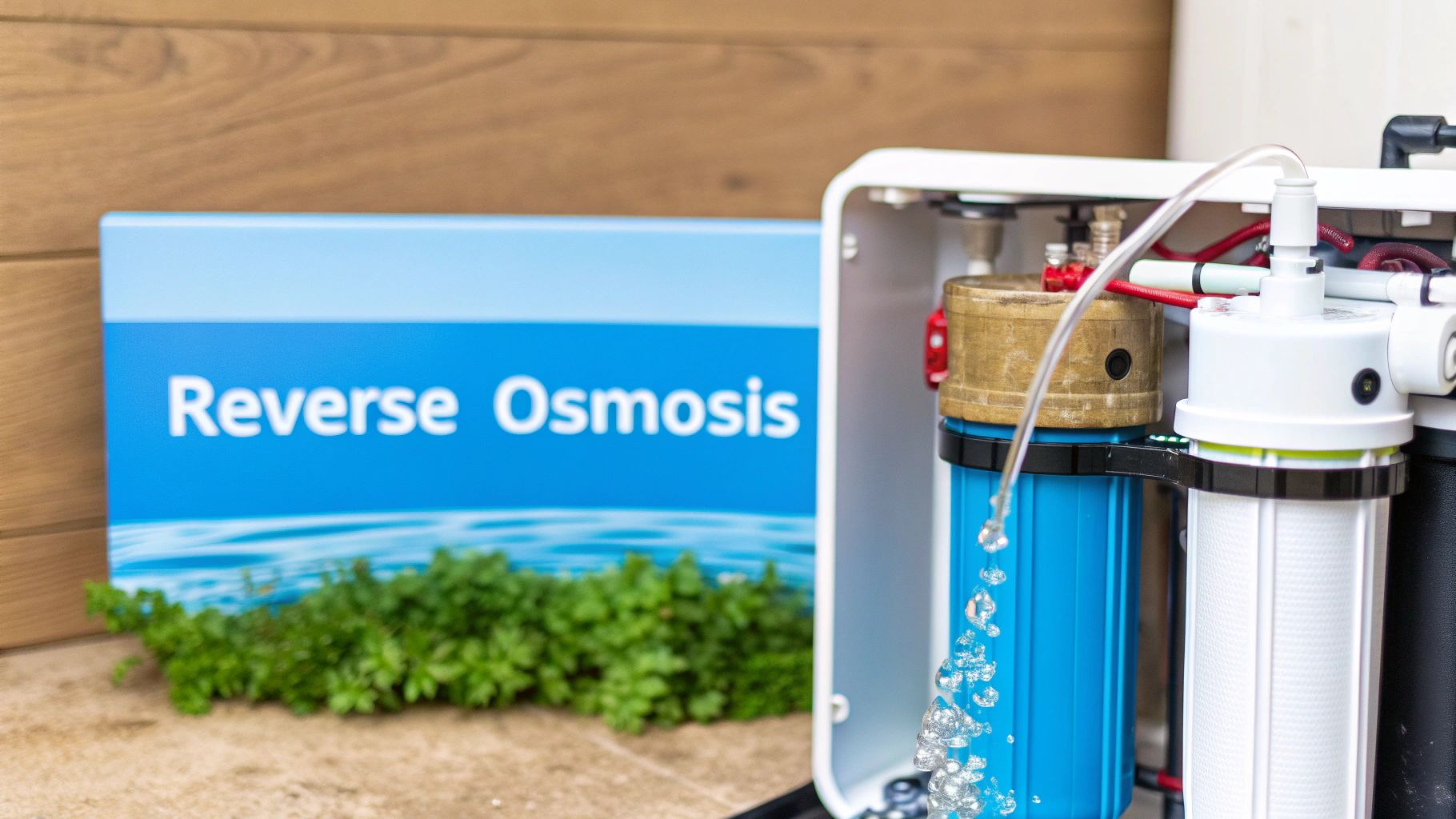
Reverse osmosis water filtration system with blue filter cartridges and brass fittings on countertop

The concept is surprisingly simple but incredibly powerful. An RO system uses your home's water pressure to push tap water through a special semi-permeable membrane. This membrane is the heart of the system, packed with microscopic pores around 0.0001 microns—so tiny that practically nothing but pure water molecules can squeeze through.

Everything else dissolved in the water—from salts and heavy metals to fluoride and nitrates—gets blocked and flushed down the drain. This core difference is what truly separates simple filtering from genuine purification when you compare filtered water vs reverse osmosis.

The Multi-Stage Purification Journey

A typical under-sink RO system isn't a one-trick pony. It’s a team of filters working in harmony, with each stage playing a crucial part in delivering that incredibly pure water.

  1. Sediment Pre-Filter: This is the bodyguard. It stops all the physical gunk like rust, sand, and dirt, protecting the more sensitive parts of the system from getting clogged or damaged.
  2. Carbon Pre-Filter: Before the main event, water flows through an activated carbon filter. Its job is to remove chlorine and other chemicals that could wreck the delicate RO membrane, helping it last longer and work better.
  3. The RO Membrane: This is where the magic happens. Water is forced through the membrane, which separates the pure water from a long list of dissolved contaminants.
  4. Storage Tank: Because the RO process is slow and steady, the purified water is stored in a small pressurized tank under your sink. This gives you a ready supply of clean water whenever you turn on the faucet.
  5. Post-Filter (Polishing Filter): Right before the water comes out of your special RO faucet, it usually gets one last pass through another carbon filter. This final "polish" removes any lingering tastes or smells picked up from the tank, ensuring your water is perfectly crisp and delicious.

This methodical, multi-stage process is exactly why RO is considered the gold standard for home water treatment. It’s not one filter doing all the work; it’s a coordinated system built for maximum purity.

You can't argue with the results. Reverse osmosis technology is a major player in the global water purification scene, holding about 36-39% of the market share. Its power to remove up to 99% of dissolved salts, heavy metals, and fluoride makes it an essential tool, especially where groundwater quality is a concern. You can find more details on the water filter market and current trends.

What Makes RO the Ultimate Choice for Purity

The number one reason people choose reverse osmosis is simple: it removes the nasty stuff that other filters can't even touch. An activated carbon filter is great for getting rid of chlorine, but it's completely helpless against dissolved inorganic compounds.

An RO system, on the other hand, is built to tackle a whole range of tough contaminants:

  • Heavy Metals: It dramatically reduces lead, arsenic, mercury, and chromium.
  • Dissolved Solids: It slashes the Total Dissolved Solids (TDS) count, which includes salts and other minerals.
  • Fluoride: This is one of the very few home-use methods that effectively removes fluoride.
  • Nitrates & Nitrites: A must-have for anyone on well water, especially near agricultural areas.

This level of performance gives you complete peace of mind. For families with specific health concerns, compromised immune systems, or anyone who just wants the purest water they can get, the power of RO is unmatched. It’s the final word when just improving your water isn’t enough and you’re aiming for true purification.

Contaminant Removal: A Detailed Performance Comparison

This is where the gloves come off and the real differences between standard filters and reverse osmosis (RO) shine. Choosing the right system for your home isn’t just about the technology—it's about matching that tech to the specific water problems you need to solve.

You can think of it this way: standard filters are great at making decent water even better, while reverse osmosis is designed to take questionable water and make it exceptionally pure. Let’s break down exactly what each method is built to handle and what it leaves behind.

Taste, Odor, and Chlorine: The Realm of Carbon Filters

For most homes on a municipal water supply, the biggest complaints are about taste and smell. The culprit is almost always chlorine, which is where filters using activated carbon are the undisputed champions. They are specialists at improving the "aesthetic" qualities of your water.

Activated carbon works like a sponge, using its huge internal surface area to adsorb chlorine and other volatile organic compounds (VOCs). When water flows through, these unwanted elements get trapped, leaving you with water that tastes crisp and clean, without that faint “swimming pool” aroma. Their job pretty much stops there, though; they aren't designed to touch dissolved solids, heavy metals, or salts.

If your main goal is simply to banish that chlorine taste and odor, an activated carbon filter is the most direct and budget-friendly solution. While RO also removes chlorine (usually in a pre-filter), its true purpose is to tackle a much wider range of contaminants.

Tackling Heavy Metals, Fluoride, and Nitrates

Here's where reverse osmosis systems pull away from the pack. Contaminants like lead from old pipes, naturally occurring arsenic, fluoride added by water districts, and nitrates from farm runoff are all dissolved in water. Standard carbon or sediment filters just can't physically grab them.

An RO system's semi-permeable membrane, with pores as tiny as 0.0001 microns, is specifically engineered to block these dissolved inorganic compounds. It forcefully separates pure water molecules from a long list of things you don't want to drink.

  • Lead & Arsenic: RO systems are proven to reduce these toxic heavy metals, often by over 95%.
  • Fluoride: It’s one of the only residential water treatment methods that can reliably remove fluoride.
  • Nitrates: For homes on well water near agricultural land, an RO system is a critical defense against nitrate contamination.

If your water test shows high levels of any of these, reverse osmosis isn't just a good idea—it's essential for your family's safety and peace of mind.

The Mineral Question: Beneficial vs. Unwanted Solids

A huge difference between filters and RO is how they treat minerals. Standard filters like carbon are selective; they take out the bad stuff but let beneficial minerals like calcium and magnesium pass right through. Many people prefer this for both taste and potential health benefits.

Reverse osmosis, however, is not selective at all. Its ultra-fine membrane strips out nearly all total dissolved solids (TDS). This includes harmful contaminants, but it also takes out those healthy minerals. The result is incredibly pure but "demineralized" water. While we don't rely on water for our primary mineral intake, some people find the taste a bit flat. To solve this, many modern RO systems now come with a remineralization post-filter that adds a balanced amount of healthy minerals back into the water right before it hits your glass.

Contaminant Removal Capabilities: Filter vs RO

To make this simple, the table below gives you a clear, at-a-glance breakdown of what each technology can and cannot do. Use it to quickly match your specific concerns with the right system.

Contaminant Activated Carbon Filter Sediment Filter UV Purifier Reverse Osmosis System
Chlorine Excellent Ineffective Ineffective Excellent (via pre-filter)
Sediment (Sand, Silt, Rust) Fair Excellent Ineffective Excellent (via pre-filter)
Lead & Heavy Metals Limited / Varies Ineffective Ineffective Excellent
Fluoride Ineffective Ineffective Ineffective Excellent
Nitrates & Sulfates Ineffective Ineffective Ineffective Excellent
Bacteria & Viruses Ineffective Ineffective Excellent Good (but UV is better)
Healthy Minerals Retains Retains Retains Removes

Ultimately, your decision comes down to your water quality. If you have generally safe city water and just want it to taste better, a standard filter is a perfect fit. But if you have specific worries about hard-to-remove contaminants or just want the highest level of purity possible, reverse osmosis is the undisputed champion.

The Real-World Breakdown: Cost, Upkeep, and Installation

Performance is one thing, but how a system fits into your budget and your life is what really matters. When we get down to the practical differences of filtered water vs reverse osmosis, the cost, maintenance, and installation are worlds apart.

The Financial Commitment

Let's talk money. These two approaches are on completely different financial planets.

Standard filters are your easy entry point. A basic water pitcher can be yours for $20-$40, and a more serious under-sink or faucet-mounted setup will run you $50 to $200. The ongoing costs are straightforward, too—you'll swap out filter cartridges every few months, which usually costs between $15 and $50 a pop.

Reverse osmosis systems are a bigger investment in your home's water quality. A solid under-sink RO unit starts around $200 and can easily top $500, especially with fancy features like a remineralization stage. The long-term costs are also more involved. You aren't just changing one filter; you're replacing multiple cartridges (sediment, carbon, etc.) every year and the main RO membrane every two to four years.

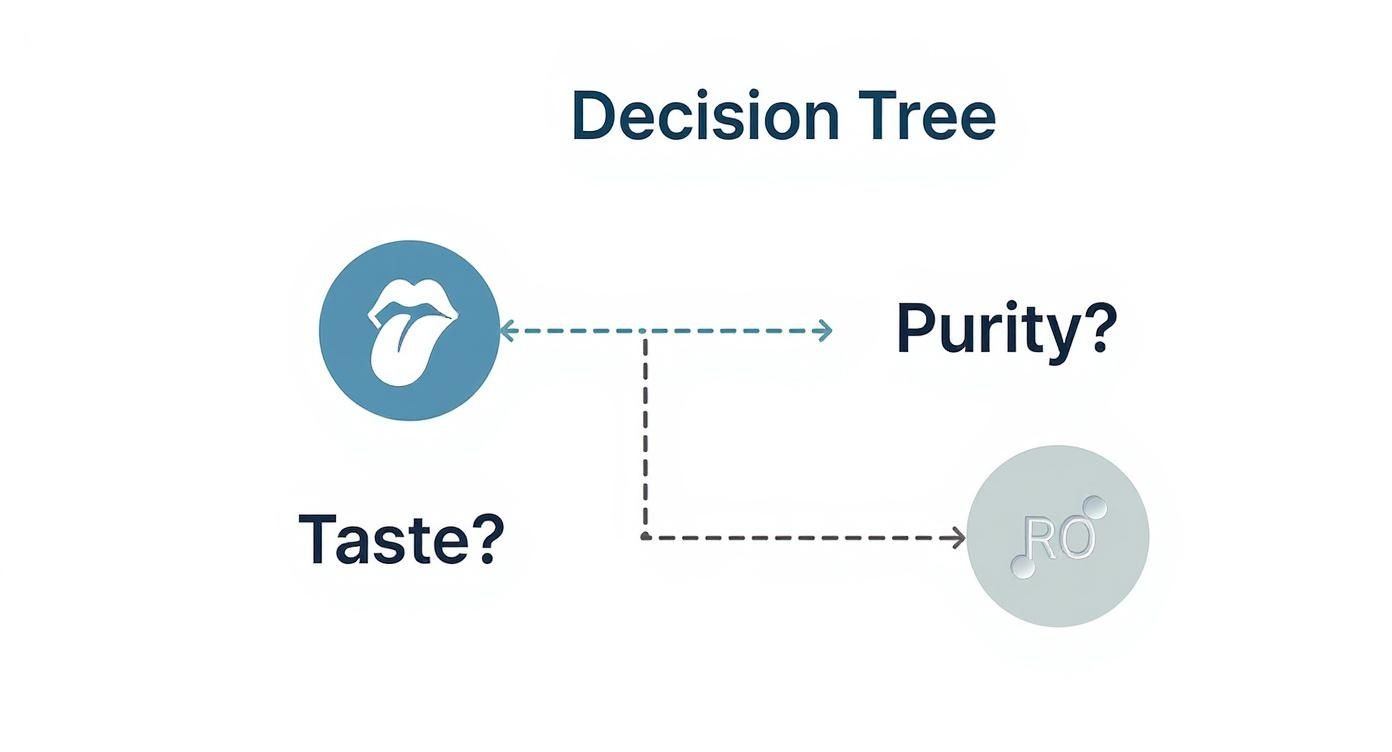
This decision tree cuts through the noise by boiling it down to what you care about most: better taste or ultimate purity.

Decision tree diagram comparing filtered water and reverse osmosis by taste and purity factors

As you can see, if you're just looking to improve taste and odor, a standard filter is your best bet. If you're after the highest level of purification possible, the path leads straight to reverse osmosis.

Installation: A Weekend Project or a Call to a Pro?

This is another area where the two systems couldn't be more different.

Most standard water filters are designed with the DIYer in mind. A pitcher filter obviously needs no installation, and you can usually twist a faucet filter on in minutes without any tools. Even most under-sink carbon filters are manageable for anyone comfortable with basic home repairs.

Installing a reverse osmosis system is a real project. It involves:

  • Drilling a new hole in your countertop or sink for its dedicated faucet.
  • Tapping into your sink's drainpipe to get rid of the wastewater.
  • Juggling multiple water line connections for all the different parts—pre-filters, the membrane, the storage tank, and the faucet.

While many kits are marketed for DIY, one wrong move can lead to a leaky disaster under your sink. That's why a lot of homeowners just hire a plumber, which can add another $150-$300 to the initial cost.

Let's Talk About RO Water Waste

One of the biggest concerns people have with reverse osmosis is the wastewater. It’s a valid point. To flush away all those contaminants it removes, the system has to send a certain amount of water down the drain. This is a key difference from standard filters, which produce zero wastewater.

The efficiency of an RO system is all about its pure-water-to-wastewater ratio. Older systems were infamous water hogs, sometimes wasting three gallons (or more!) for every single gallon of pure water they produced. Thankfully, modern technology has come a long way.

Today’s systems are much smarter. While you might still see ratios from 1:1 to 3:1 (waste to pure), the best modern RO units have dramatically improved, with some models achieving nearly 80% water recovery rates. In fact, the US EPA calculates that if everyone switched to WaterSense-labeled RO systems, we could save over 3.1 billion gallons of water across the country every year. You can learn more about how newer systems have tackled this issue over at hawaiiancoolwater.com. This progress makes choosing an RO system a much more eco-friendly decision than it used to be.

Matching a Water System to Your Household Needs

The choice between a standard water filter and a reverse osmosis system gets a lot easier once you stop focusing on technical specs and start thinking about your actual situation at home. What's the real goal here? Are you just trying to make your morning coffee taste better, or are you worried about specific health risks hiding in your water supply?

Let's walk through a few common household scenarios to figure out which system is the right fit for you.

Three miniature house models beside blue sign reading match your needs for property selection

Different Households Different Solutions

Scenario 1: The City Dweller Seeking Better Taste

You live in an apartment or a fairly new house with a reliable municipal water supply. Your main gripe is that chlorine smell and taste that makes tap water just a little bit… off. You’re not really concerned about heavy metals or anything serious—you just want crisp, clean-tasting water on demand.

  • Ideal Solution: A simple activated carbon filter. This could be anything from a pitcher in the fridge to a filter you screw onto your faucet or install under the sink. They're affordable, easy to manage, and fantastic at knocking out that chlorine taste for much better-tasting water.

Scenario 2: The Suburban Family with Older Plumbing

Your family lives in a home built before the 1980s, and you have a nagging worry about lead potentially leaching from old pipes or solder joints. The city’s water report looks okay, but you're not so sure about the plumbing that leads directly to your kitchen tap.

  • Ideal Solution: A reverse osmosis system. When it comes to dissolved heavy metals like lead, this is hands-down the most reliable option for a home. While some high-end carbon filters are certified to reduce lead, an RO system offers the highest level of protection and peace of mind for your family.

Think of it as a matter of risk management. If you just want better taste, a standard filter is perfectly fine. But for tough-to-remove contaminants like lead or fluoride, reverse osmosis is the undisputed winner for maximum safety.

Scenario 3: The Rural Homeowner on Well Water

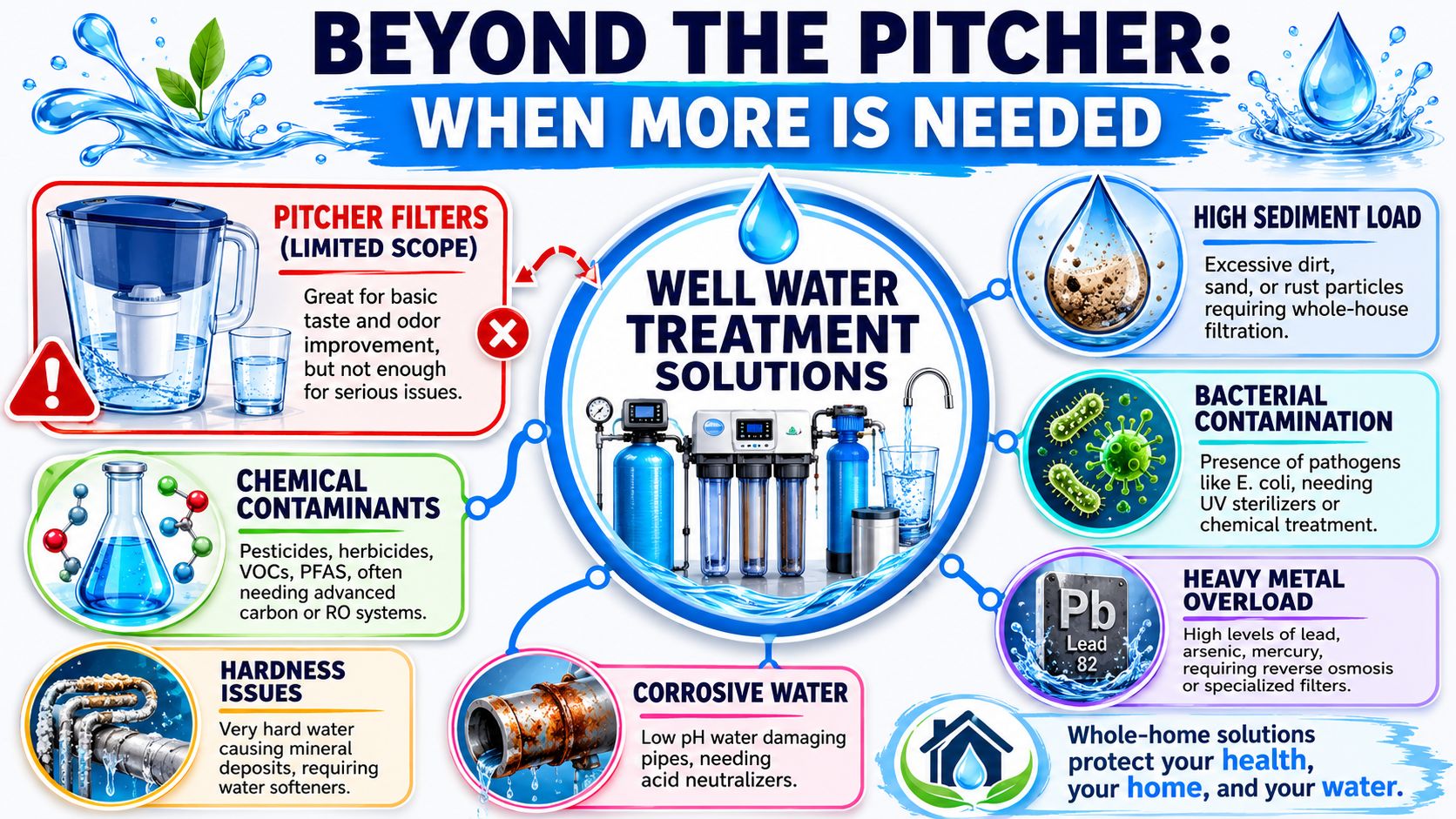
You're on a private well, which means you're the captain of your own water quality ship. Your list of potential concerns is long, from sediment and rust to invisible threats like nitrates from agricultural runoff or even bacteria and viruses.

  • Ideal Solution: A multi-stage approach is non-negotiable here. A powerful setup would start with a sediment pre-filter to catch the big stuff, followed by a reverse osmosis system to tackle dissolved contaminants like nitrates, and then a UV purifier as the final line of defense against microorganisms. This combination gives you a robust shield against the unknowns of well water.

Scenario 4: The Health-Conscious Individual Seeking Purity

You want your water to be as pure as humanly possible. We're talking free from fluoride, trace pharmaceuticals, microplastics, and all the other emerging contaminants you hear about. Your goal is simple: total control over what's in your glass, leaving nothing but pure H₂O.

  • Ideal Solution: A high-efficiency reverse osmosis system, probably one that includes a remineralization stage. RO is unmatched in its power to strip out the widest range of dissolved solids. Adding a remineralization filter puts beneficial minerals like calcium and magnesium back into the water, which improves the taste and balances the pH for perfectly optimized drinking water.

As you plan out your installation, especially for a more involved RO system, it's smart to think about the long term. Looking into innovations like smart plumbing systems with leak-detecting pipes can make a real difference in your installation and future maintenance plans. Once you diagnose what your home truly needs, you can pick a system with confidence, knowing it will deliver exactly what you're looking for.

Common Questions About Home Water Filtration

Deciding between a standard filter and a reverse osmosis system can feel a bit overwhelming. Let's tackle some of the most common questions head-on to help you get the clarity you need.

Does Reverse Osmosis Remove Healthy Minerals From Water?

Yes, it does. The RO process is so fine that it strips out nearly all dissolved solids, including good-for-you minerals like calcium and magnesium.

But here's the thing: we get the vast majority of our minerals from food, not water. If you're still concerned or just prefer the taste of mineral water, many modern RO systems have an add-on remineralization filter that puts a healthy dose of minerals back in before the water ever hits your glass.

Can I Install a Reverse Osmosis System Myself?

Absolutely. Most under-sink RO systems are designed for the handy homeowner. If you're okay with basic plumbing tasks—like hooking up a few water lines and drilling a small hole in your countertop for the new faucet—you can probably get it done in an afternoon.

If that sounds like a recipe for a weekend headache, just call a plumber. It's a quick job for a pro and gives you peace of mind that it's done right and won't spring a leak.

The most crucial part of the filtered water vs reverse osmosis decision is knowing what you're trying to remove. Without that information, you're just guessing.

How Do I Know What Contaminants Are in My Water?

The only way to know for sure is to test it.

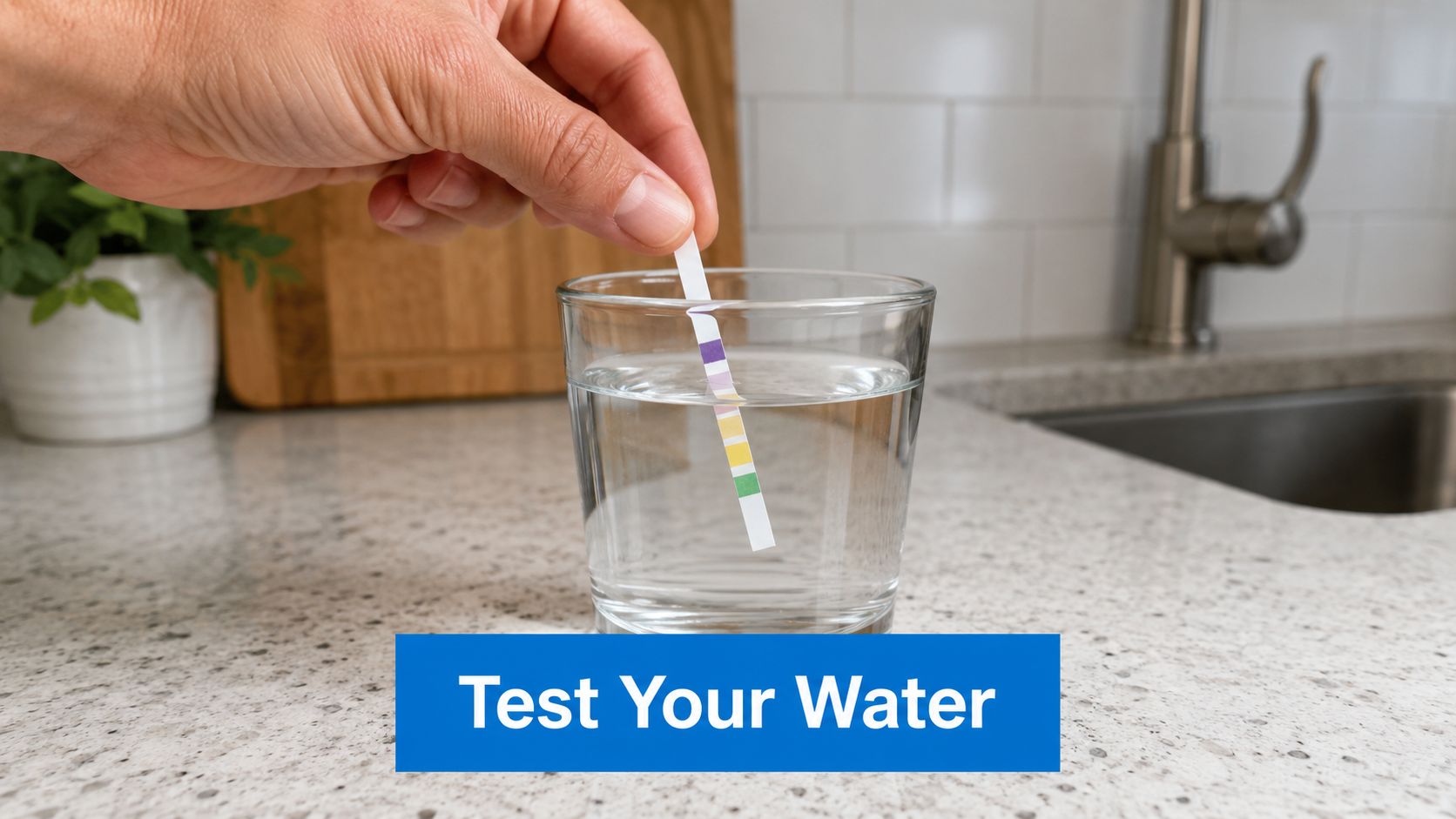
A good first step is to check the free consumer confidence report (CCR) from your local water utility. It gives you a baseline of what they've found. For a more precise look at what's coming out of your faucet—and this is a must if you have a private well—you can buy a home water test kit or send a sample to a state-certified lab for a full-blown analysis.


At Water Filter Advisor, our goal is to give you the clear, unbiased information you need to choose the best water filtration system for your family's health and peace of mind. Explore our in-depth guides and reviews at https://www.waterfilteradvisor.com.

Choosing the Right Types of Home Water Filters for Your Home

That glass of water from your tap looks pristine, but it’s been on a long, wild journey to get to your kitchen. Along the way, it can pick up some invisible hitchhikers. Most types of home water filters are designed to be the final, bouncer-at-the-door, grabbing these unwanted passengers—everything from the chlorine that makes your water smell like a public pool to microscopic party-crashers you’d never even see.

Figuring out what might be in your water is the first step to picking the perfect filtration sidekick for your home.

What's Really Lurking in Your Tap Water?

Think of your water supply like a cross-country road trip. It starts its journey at a treatment plant where it gets a basic cleaning, but it still has miles of pipes to navigate before it reaches your faucet. Some of these pipes might be older than your favorite classic rock band. It’s during this trip that all sorts of substances can hop aboard.

The point isn't to scare you into drinking nothing but sparkling water, but to arm you with knowledge. Once you understand the usual suspects, you'll see why a good home water filter is like a VIP checkpoint, making sure the water your family drinks is as clean and refreshing as it looks.

Common Contaminants on the Water Highway

Your tap water is more than just H₂O; it’s a cocktail of minerals, disinfectants, and sometimes, things you’d rather not be sipping. Here are some of the usual suspects that home water filters are built to tackle:

  • Chlorine: This is the chemical bodyguard most cities use to kill bacteria in the water supply. It does a fantastic job, but it can leave behind a chemical taste and smell that’s, well, pretty off-putting.
  • Lead and Heavy Metals: If you live in a home with vintage plumbing, there's a chance that lead from old pipes and solder could be leaching into your water. Other metals like mercury can also sneak into the water supply from industrial or environmental sources.
  • Microplastics: This is a newer, and frankly, weirder concern. These tiny bits of plastic are popping up in tap water worldwide, coming from larger plastic items breaking down over time. Scientists are still studying the long-term health effects.

This infographic breaks down these common contaminants, showing where they come from and just how common they are.

As you can see, contaminants can be anything from the byproducts of disinfection to pollutants from our environment, and they can enter the water at any point along its journey.

The Growing Demand for Cleaner Water

It’s not just about what you drink, either. The quality of your tap water can have a real impact on your appliances. For example, learning how tap water quality affects dishwasher performance can save you a lot of headaches from hard water spots and chalky buildup. This kind of awareness is a big reason why more people are looking into home filtration.

As people learn more about what's in their water, the demand for good filtration systems is skyrocketing. It’s all part of a bigger shift toward being more proactive about health and wellness at home.

The global market for home water filters is projected to hit about $28 billion by 2033, all because people want to live healthier lives. It really shows that for many families, a water filter isn’t a luxury anymore—it’s a non-negotiable part of a healthy household.

A Quick Guide to Filtration Technologies

Stepping into the world of home water filters can feel a bit like trying to read a menu in a foreign language. With so many terms and technologies floating around, it's easy to get lost. Before we dive into specific models, let’s get to know the core technologies that do all the heavy lifting.

Think of it like this: each filtration method is a specialist with a unique skill set. Most systems you'll find for your home use one of three main technologies: Activated Carbon, Reverse Osmosis (RO), or Ultraviolet (UV) Purification.

The Big Three of Water Filtration

Let's break down what each of these powerhouses does.

Activated carbon is the crowd-pleaser, great for improving the general taste and smell of your water by grabbing things like chlorine. Reverse osmosis is the perfectionist, using a super-fine membrane to strip out an incredible range of dissolved solids and contaminants. And UV purifiers? They're the silent bodyguards, using light to neutralize nasty microorganisms without adding a single chemical to your water.

You wouldn't use a spatula to hammer a nail, right? The same logic applies here. You've got to match the right filtration tool to the specific problem lurking in your water.

If your city water just has a funky chlorine taste, a simple carbon filter will probably do the trick. But if you're on well water and worried about bacteria, a UV system is a non-negotiable part of the setup. It's all about diagnosing the problem first.

Home Water Filter Technology at a Glance

To give you a clearer picture, let's put these technologies side-by-side. The table below is a great cheat sheet to quickly see what each filter type is designed to do, what it removes, and what kind of budget you'll need.

Filter Type Primary Function Removes Best For Average Cost
Activated Carbon Adsorption (traps contaminants) Chlorine, pesticides, bad taste & odor Improving taste and smell of city water $ (Low)
Reverse Osmosis Pushes water through a fine membrane Heavy metals, fluoride, salts, bacteria Maximum purity and removing a wide range of contaminants $$$ (High)
UV Purifier Neutralizes microorganisms with light Bacteria, viruses, protozoa Disinfecting well water or microbiologically unsafe water $$ (Medium)

Use this as your starting point. Seeing it all laid out like this really helps narrow down which filtration path makes the most sense for your home and your water.

Activated Carbon Filters: The Everyday Contaminant Magnet

If there's an MVP in the world of home water filtration, it’s the activated carbon filter. This is the technology you'll find in almost everything, from the simple pitcher in your fridge to more advanced under-sink systems.

Why is it so common? Because it nails one job perfectly: making your tap water taste and smell a whole lot better.

Think of activated carbon as a microscopic sponge with an enormous appetite. Thanks to millions of tiny pores, a single gram of the stuff can have more surface area than a football field. These pores act like magnets for certain contaminants as water flows past.

This isn't your typical filter that just strains out particles. The process is called adsorption, which means contaminants literally stick to the carbon's surface like static cling. It’s fantastic at grabbing onto things like chlorine, pesticides, herbicides, and other volatile organic compounds (VOCs) that give water that funky chemical flavor.

Two Forms: Granular vs. Block

When you start shopping, you’ll see activated carbon filters in two main styles. Knowing the difference will help you pick the right one for your setup.

  1. Granular Activated Carbon (GAC): This is just what it sounds like—loose granules of carbon packed into a cartridge. They're great at knocking down chlorine and improving taste, which is why they're the go-to for water pitchers and refrigerator filters where a fast flow rate matters.

  2. Carbon Block: These filters are made from finely powdered carbon that's been compressed into a solid block. This dense structure forces water through a much more winding path, giving it more contact time with the carbon. Because of this, carbon block filters are usually more powerful and can snag a wider range of contaminants, sometimes even heavy metals like lead. They also act as a physical barrier, filtering out sediment down to a certain micron level.

The real job of an activated carbon filter is to make your water more enjoyable to drink. It tackles the sensory stuff—the bad tastes and weird smells—that make so many people reach for bottled water instead of using the tap.

This makes it a perfect, wallet-friendly starting point for anyone on city water who just wants a simple upgrade.

The Strengths of Activated Carbon

For a huge number of households, an activated carbon filter is all they really need to completely transform their drinking water experience. The benefits are obvious right away.

  • Amazing Taste and Odor Removal: Nothing beats it for getting rid of that swimming-pool chlorine smell and taste, which is hands-down the most common complaint about tap water.
  • Super Affordable: Carbon filters are everywhere and are some of the most budget-friendly options you can buy.
  • Easy to Use: Whether it's a pitcher or a faucet attachment, these filters are almost always a breeze to install and replace.

Knowing Its Limits

It's just as important, though, to know what activated carbon can't do. It’s a specialist, not a cure-all. For a really good technical breakdown, check out this a comparison of carbon filters with other filtration types.

These filters will not remove:

  • Dissolved minerals (like the calcium and magnesium that cause hard water)
  • Fluoride
  • Nitrates
  • Bacteria or viruses

So, if your water worries go beyond just taste and smell—like if you're dealing with high levels of lead or potential microbial threats from a private well—you'll need to level up to a more advanced system. We'll get into those next.

Reverse Osmosis Systems for Maximum Purity

When just improving taste and smell isn't quite cutting it, you’ll eventually find your way to Reverse Osmosis (RO). If you're after the highest level of purification you can get in your home, this is the technology to look at. RO is the gold standard for stripping out the widest possible range of contaminants, leaving you with exceptionally pure water.

The secret sauce is the semipermeable membrane. Think of it like a microscopic nightclub bouncer with a very, very strict guest list. It lets the tiny, pure water molecules pass right through but turns nearly everything else away at the door—dissolved salts, heavy metals, fluoride, even bacteria.

This kind of performance puts RO systems in a class of their own, especially for anyone dealing with specific water quality issues that simpler filters just can't touch.

How the Multi-Stage Process Works

An RO system isn't just one filter; it's a whole team working in perfect harmony. It's a multi-stage process where each component preps the water for the next step, all leading up to that final, pure result.

  1. Sediment Pre-Filter: This is the first line of defense, catching all the big stuff like dirt, rust, sand, and silt. Its main job is to protect the more sensitive filters down the line from getting clogged up.
  2. Carbon Pre-Filter: Next up, the water hits an activated carbon filter. This stage is crucial for grabbing chlorine and other chemicals that could damage the delicate RO membrane.
  3. The RO Membrane: This is the heart of the whole operation. Your home's water pressure forces the water through this tightly wound membrane. Here, up to 99% of total dissolved solids (TDS) are separated out and flushed away.
  4. Carbon Post-Filter: As a final step, the now-purified water gets a "polishing" pass through one last carbon filter. This gets rid of any lingering tastes or odors the water might have picked up from its storage tank, making sure what comes out of your tap is crisp and clean.

The Unmatched Purity of RO Water

The biggest draw of a reverse osmosis system is its sheer filtration power. It's one of the few technologies that can remove an incredibly long list of contaminants you really don't want in your glass.

  • Heavy Metals: It's incredibly effective at reducing lead, arsenic, mercury, and chromium.
  • Dissolved Solids: Say goodbye to salts, nitrates, and fluoride.
  • Microorganisms: The membrane's pores are so fine that they block bacteria and viruses.

The real power of an RO system is the peace of mind it gives you. If your water report shows contaminants that have you worried, no other system offers this level of thorough removal.

Its effectiveness is a big reason why RO technology dominates the market. In 2021, the global home water filtration market was valued at $10.85 billion, and RO-based filters made up over 38% of global revenue. That tells you just how many homeowners trust RO for ultimate purity. You can dive deeper into the market trends over at Grand View Research.

The Trade-Offs to Consider

While RO systems deliver amazing results, they aren't perfect. It's important to understand the trade-offs before deciding if it's the right fit for your home.

The most common criticism is water waste. To separate the pure water, the system has to flush the contaminants away with what's called "brine" or wastewater. Older models were notorious for this, wasting several gallons for every one gallon of clean water they produced. Thankfully, modern systems have gotten much more efficient.

Another thing to know is that the RO membrane is so good that it also removes beneficial minerals like calcium and magnesium. While we get most of these minerals from food, some people find demineralized water tastes a bit "flat." To fix this, many RO systems now come with an optional remineralization stage that adds a healthy balance of minerals back into the water right before it hits your glass.

Finally, these systems are more complex than your average pitcher filter and require more maintenance. You'll need to swap out the pre- and post-filters every 6-12 months and the RO membrane itself every 2-5 years.

UV Purifiers: A Guardian Against Germs

So we've covered how activated carbon gets rid of nasty tastes and how reverse osmosis tackles dissolved solids. But what about the invisible threats? Microscopic bugs like bacteria, viruses, and cysts can easily slip through a standard filter. To deal with them, you need a different kind of guardian: an Ultraviolet (UV) purifier.

Unlike filters that physically trap contaminants, a UV system attacks on a microbiological level. It zaps the water with a powerful lamp that emits UV-C light, a very specific wavelength of ultraviolet light that’s absolutely lethal to microorganisms.

Think of it like giving germs a targeted, terminal sunburn. This intense UV-C radiation blasts through the cell walls of bacteria, viruses, and other pathogens, completely scrambling their DNA. They can't reproduce, they can't make you sick—they're effectively neutralized on the spot.

It's a Purifier, Not a Filter

This is a really important distinction. UV systems are purifiers, not filters. They don’t actually remove anything from the water—not sediment, not chlorine, not heavy metals. Their one and only job is to make your water microbiologically safe to drink.

Because a UV system only deals with living organisms, it’s almost always installed as the final piece of a larger filtration puzzle. The UV light needs a clear shot at the germs, and any murkiness or sediment in the water can create tiny shadows for them to hide in, making the system less effective.

That's why you'll almost always see a UV system installed after a sediment filter and often a carbon filter, too. Those pre-filters handle the dirty work of clearing out particles, giving the UV light an unobstructed path to zap every last potential threat.

Who Really Needs a UV Purifier?

So, do you need this level of protection? While it's great for peace of mind in any home, for some folks, it’s downright essential.

  • Homes with Well Water: Private wells aren't treated by a city, leaving them vulnerable to contamination from farm runoff or septic tanks. A UV purifier is your 24/7 defense against bacteria like E. coli and other viruses.
  • Areas with Boil Water Advisories: If your town is constantly issuing boil water notices, a UV system is a far more convenient and reliable way to ensure your tap water is always safe.
  • Immune-Compromised Individuals: For households with anyone who has a weakened immune system, a UV purifier adds a critical layer of protection against dangerous waterborne illnesses.

Benefits and Upkeep of UV Systems

The biggest win for UV is that it disinfects without chemicals. You get no chlorine taste and no weird disinfection byproducts. They’re also incredibly good at their job, wiping out 99.9% of harmful microorganisms when they're running properly.

Maintenance is simple but non-negotiable. That UV lamp has a limited lifespan, usually about a year of continuous operation. Even if the bulb still turns on after a year, its germ-killing power has faded significantly. To keep your water protected, you absolutely must replace the UV bulb annually.

Beyond the Sink: Whole House and Specialty Filters

Getting great-tasting water from your kitchen tap is one thing, but what about the water you shower in, wash your clothes with, and run through your expensive appliances? That’s where the conversation shifts to a much bigger-picture solution.

We're talking about point-of-entry (POE) systems, more commonly known as whole house filters.

Instead of treating water at a single faucet, these systems are installed right where the main water line enters your home. Think of it as a gatekeeper for your entire plumbing system. Every single drop that flows into your house—for the shower, the dishwasher, the washing machine—gets cleaned first.

This isn't just about better drinking water. It's about protecting your home's entire plumbing infrastructure from scale and corrosion, helping your appliances last longer, and getting softer skin and hair because you’re not showering in chlorinated water anymore.

First Line of Defense: Sediment Filters

Before you can even think about microscopic contaminants, you have to deal with the grit and grime you can actually see. This is where sediment filters come in. They are the unsung heroes of any serious water treatment setup.

They act like a bouncer at the door, catching all the obvious troublemakers:

  • Sand and silt
  • Rust flakes from aging city pipes
  • Dirt and other random gunk

By grabbing all this physical debris right away, a sediment filter keeps your more sophisticated (and more expensive) filters downstream from getting clogged up. They are an absolute must-have pre-filter that makes the rest of your system run better and last longer.

Solving Hard Water Woes: Water Softeners

If you're tired of seeing chalky white spots on your glassware and fighting a never-ending battle with soap scum, you have hard water. The solution isn't a typical filter, but a specialty system called a water softener.

A water softener is more of a water conditioner. It uses a process called ion exchange to literally swap out the "hard" minerals like calcium and magnesium for "soft" sodium ions. These hard minerals are the culprits behind all that nasty limescale buildup.

The result? Water that actually lathers up, is kinder to your appliances, and leaves your dishes sparkling clean. It’s a perfect example of a targeted system designed to solve one of the most common and annoying water problems out there.

The Ultimate Purity: Water Distillers

For those who want to get as close to pure H₂O as possible, water distillers are the gold standard. This method mimics nature’s own purification cycle: it boils water to create steam, leaving contaminants behind, and then condenses that pure steam back into clean liquid water.

Distillation is incredibly thorough, removing nearly everything—heavy metals, minerals, bacteria, and viruses. It’s a slower and more energy-intensive process, but the purity of the final product is unmatched.

It’s clear that people are thinking more seriously about their water quality. The residential water purifier market is expected to jump from $24.88 billion in 2025 to a whopping $76.61 billion by 2034. This boom is all about a growing awareness of what’s in our water and the desire for real solutions at home. You can dig deeper into these trends in the full report on residential water purifier market growth.

Answering Your Top Water Filter Questions

Alright, now that we’ve walked through everything from carbon filters to UV purifiers, you probably have a few practical questions bubbling up. Let's tackle those common "what about this?" and "how do I…?" thoughts to clear up any confusion and get you ready to choose the right system with total confidence.

How Do I Know Which Water Filter I Really Need?

Picking the right filter always starts with one thing: knowing what’s actually in your water. The best first step is to get your hands on your local water quality report, which your utility provider should offer for free. Think of it as a report card for your tap water—it tells you exactly what you’re dealing with.

If your biggest complaint is just a chlorine taste or that swimming pool smell, a simple activated carbon filter is a great, wallet-friendly fix. But if that report flags bigger issues like lead, fluoride, or a cocktail of other contaminants, then you need a heavy-hitter: a reverse osmosis system is going to give you the most complete purification.

And for anyone on private well water? A UV purifier isn't just a nice-to-have; it's a must. You'll almost always want to pair it with a sediment pre-filter to make sure it can do its job effectively against nasty bacteria and viruses.

How Often Should I Change My Water Filters?

There's no single, universal schedule for changing filters. It really boils down to the type of filter you have and how much water your family uses. Following the manufacturer's timeline is non-negotiable, because an old, gunked-up filter doesn't just stop working—it can turn into a breeding ground for bacteria.

As a rough guide, here’s what you can generally expect:

  • Pitcher Filters: These little guys usually need a swap every 2 months.
  • Faucet Filters: Plan on replacing these about every 3 months.
  • Under-Sink Carbon Filters: The larger cartridges give you more time, typically lasting 6 to 12 months.
  • RO Systems: The initial pre-filters need changing every 6-12 months, but the main RO membrane is the long-haul champ, lasting 2 to 5 years.

Remember, a filter's job is to trap contaminants. If you don't change it on time, you're essentially forcing your water through a collection of the very things you wanted to remove in the first place.

Will a Water Filter Remove Healthy Minerals?

That's a fantastic question, and the answer is: it depends entirely on the technology.

The most powerful systems, like reverse osmosis and distillation, are so thorough they strip out nearly everything—and that includes beneficial minerals like calcium and magnesium. Now, most of our minerals come from food, but some people simply prefer the taste of mineral water. If you want to dive deeper into this, you can find a ton of great resources offering in-depth water filter advice.

To get the best of both worlds, many modern RO systems now come with an optional remineralization stage. This cool feature adds those healthy minerals right back into the water after it’s been purified. On the flip side, filters like activated carbon, sediment, and UV are designed to leave all those good minerals completely alone.

Is Bottled Water a Better Option Than a Filter?

While it’s easy to grab a bottle of water on the go, it comes with some serious baggage. For starters, it’s way more expensive per gallon than filtered tap water, and it creates a mountain of plastic waste. Plus, studies have shown that some bottled water is just filtered municipal water anyway, and many popular brands have been found to contain microplastics.

Investing in one of the many types of home water filters gives you clean, great-tasting water on tap for a tiny fraction of the cost. It’s also a much more sustainable and environmentally friendly way to stay hydrated.


At Water Filter Advisor, our goal is to help you cut through the noise and find the perfect water solution for your home. Our detailed guides and honest reviews are here to give you the clarity you need for safer, better-tasting water. Explore all our resources today at https://www.waterfilteradvisor.com.

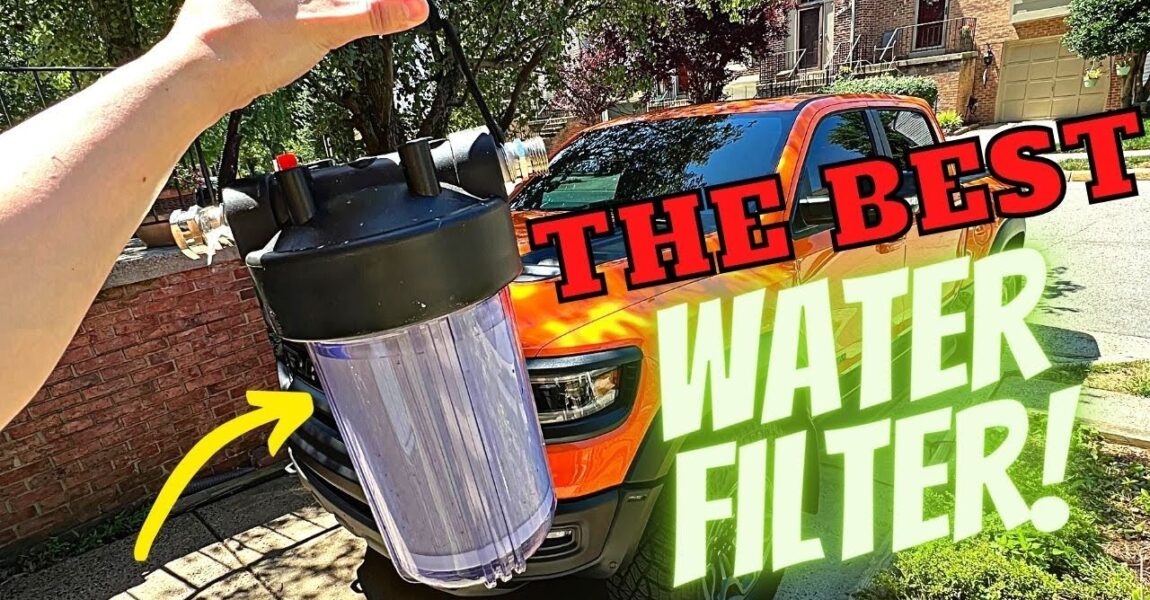
Best Water Filter For Washing Cars!

Best Water Filter For Washing Cars!


This in my opinion is the best water filter for washing your car if you live at a place where there is a lot of contaminates or harsh metals in your water. I recently moved and the water at my house is very harsh and awful for washing vehicles.

About this item
[CARBON FIBER CARTRIDGE] The upgraded cartridge can remove sediments, 99.5% of chlorine, 95.78% of chloroform, 99.5% of iron, 98.7% of manganese, 99.2% of lead, 98.8% of arsenic, odors, bad tastes and more
[THREE STAGE IN ONE] Integrates pleated polyester, carbon fiber and KDF55 in one 4.5×10 inch cartridge, while reducing the quantity of housing, the service life of each stage are 2.7 times more than the 2.5×10“ water filter with three housing
[ANTI-CLOGGING DESIGN] Pleated polyester design greatly increases the filter area to 1000 square inch, makes it 256 times more than small RV water filters, one cartridge can filter at least 18000 gallons of water without clogging
[FRESH WATER IN FULL FLOW] Benefit from NSF certified carbon fiber, you can hardly feel the drop in water pressure. Moreover, 0.1-6GPM outlet flow rate can be accepted, easily works perfect under most high water pressure
[18000 GALLONS CAPACITY] One replacement cartridge (ASIN:B094HXMLM5 ) have a 7 times of service life than ordinary small RV water filter, enjoy excellent performance and full water flow, will also reduce your spending by 60%

Kintim 3 Stage in 1 Water Filter:

Original Video Source

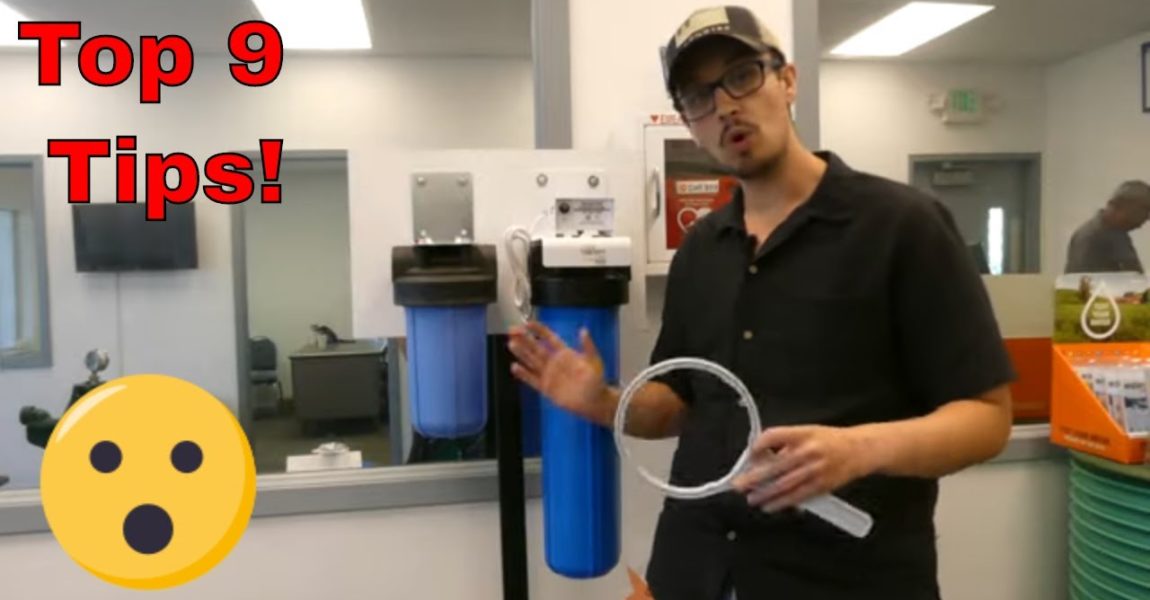
Top 9 Tips for Water Filter Owners

Top 9 Tips for Water Filter Owners


Strap in as we deliver the top nine need-to-know tips for your water filter system!

Buy water Filters:

Subscribe & “Ring the Bell”:

Have a question or need help selecting equipment?
Live chat with us on our website:
Call our experts: 855.329.4519
Email: Customer.Service@RCWorst.com
—————————————————————————————-
Our Social Media

Facebook:
Instagram:
Twitter:
LinkedIn:
—————————————————————————————-
We are a distributor of pumps, packaged pumping systems, on-site wastewater treatment equipment, on-site wastewater treatment systems, and custom electrical control panels for water and wastewater applications, water well supplies, drilling supplies, and water treatment equipment.

Original Video Source

5 Best Water Filter Pitcher | Best Water Filtration System for Home Use

5 Best Water Filter Pitcher | Best Water Filtration System for Home Use


The best water filter pitcher comes with an excellent water filtration system to filter your tap water and preserve it in the pitcher. The key features of the best water filter pitcher are their capacity and filtering performance. So, here’s our video discussing the 5 best water filter pitcher and best water filtration system for home use, that you should check out!

Best water filter pitcher list: (Affiliate Link)

0:00 – Introduction

00:43 – 5. LifeStraw Home Water Filter Pitcher
Link:

01:38 – 4. Epic Nano Water Filter Pitcher
Link:

02:37 – 3. ZeroWater zd-20RP-N Water Filter Pitcher
Link:

03:29 – 2. Aquagear Water Filter Pitcher
Link:

04:34 – 1. Brita UltraMax Water Filter Pitcher
Link:
———————————————————————————–
You may also like these videos –
** Water Filter Pitcher:
** Reverse Osmosis System: Reverse Osmosis System
———————————————————————————–
Intro, Outro & Animation Credit: (Boring Motion)
***Music Source: Youtube Audio Library
***Video Credit:
** LifeStraw:
** Epic Water Filters:
** ZeroWater:
** Aquagear Water Filters:
** Brita USA:
————————————————————————————
Business Email: mailkitchengadgetzone@gmail.com
————————————————————————————
Disclaimer:
***The following video abides by the YouTube Community Guideline. Footage used in this video is for educational purposes.
***The footage used in this video follows Fair Usage Policy “Under Section 107” of the “Copyright Act 1976”. If you have any copyright issues, please send us an email or let us know by commenting below.

#waterfilter #filterpitcher #waterpitcher

Original Video Source

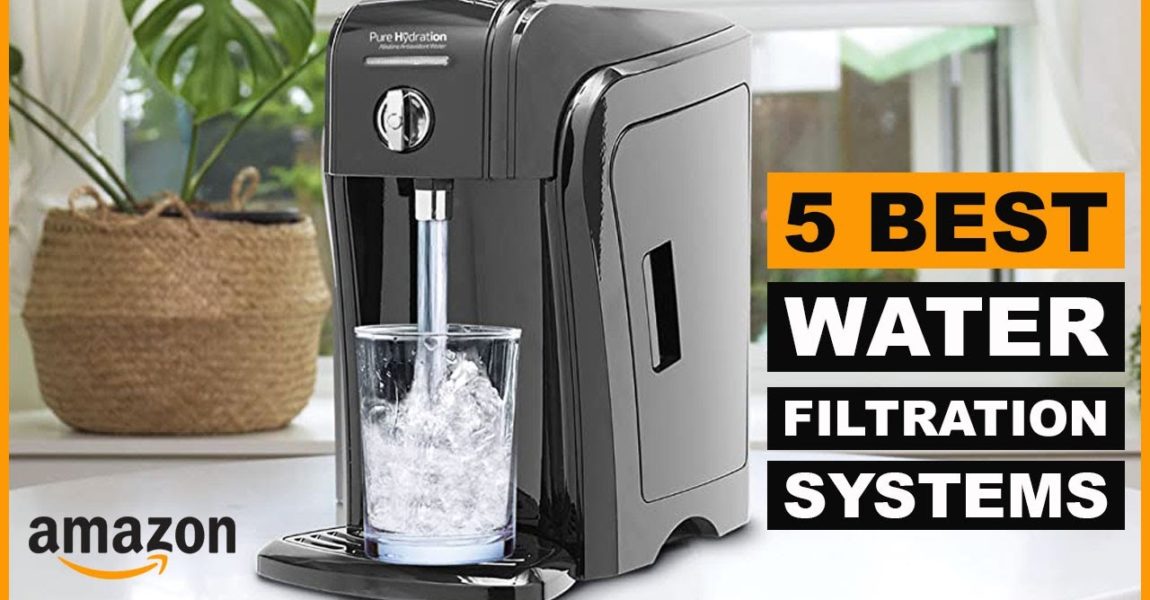
5 Best Water Filtration Systems 2022

5 Best Water Filtration Systems 2022


In this video, We listed Best Water Filtration Systems, You can check the price or purchase in the description below!

Best Water Filtration Systems

✅ Find Your Best Products:

✔ 5. Pure Hydration Alkaline Water Filtration:

✔ 4. Aqua Ionizer Deluxe 9.0 Aqua Water Filtration:

✔ 3. Waterdrop Reverse Osmosis Water Filtration:

✔ 2. Aquasure AS-PR75A Osmosis Water Filtration:

✔ 1. EcoPure ECOP30 Water Filtration:

✅ Be sure to leave a comment and to check out my channel! We have a lot more videos.

Business: howmuchbest@gmail.com

If you find any copyrighted material in this video, so you can email us to: howmuchbest@gmail.com, we’ll solve your copyrighted issue within 24 hours.
© All rights reserved by respective owners.

#BestWaterFiltrationSystems

Original Video Source

VOL - Advanced Water Filtration Technology

VOL – Advanced Water Filtration Technology


Why does VOL remove more impurities than ANY other water filter?

Electroadsorption enables the removal of a wide range of contaminants. It also means the water filter media can have larger pores, allowing much faster water flow.

VOL water filters remove:
Bacteria (e.g. E. coli)
Viruses
Sediment
Parasites including Giardia and Cryptosporidium
Chlorine
Lead
Trace Pharmaceuticals
Odour
Cysts
PCB’s (polychlorinated biphenyls)
BPA (Bisphenol A)
Rapid filtration speed
Long-lasting filter cartridges
VOC (Volatile Organic Compounds)

Visit volwater.com.au for more information

Original Video Source

Top 5: Best Water Filter Pitcher 2022

Top 5: Best Water Filter Pitcher 2022


Top 5: Best Water Filter Pitcher 2022

Hey guys, In this Water Filter Pitcher review video, we will show you 5 top rated Water Filter Pitcher to buy in 2022.

Subscribe Us:

➜Links to the Best Water Filter Pitcher we listed in this video:

►USA Links◄

➜1. ZeroWater ZD-018 Water Filter Pitcher –
➜2. Brita Standard Everyday Water Filter Pitcher –
➜3. Aquagear Water Filter Pitcher –
➜4. Amazon Basics 10-Cup Water Pitcher –
➜5. Waterdrop Chubby Water Filter Pitcher –

►Canada Links◄

➜1. ZeroWater ZD-018 Water Filter Pitcher –
➜2. Brita Standard Everyday Water Filter Pitcher –
➜3. Aquagear Water Filter Pitcher –
➜4. Amazon Basics 10-Cup Water Pitcher –
➜5. Waterdrop Chubby Water Filter Pitcher –

►UK Links◄

➜1. ZeroWater ZD-018 Water Filter Pitcher –
➜2. Brita Standard Everyday Water Filter Pitcher –
➜3. Aquagear Water Filter Pitcher –
➜4. Amazon Basics 10-Cup Water Pitcher –
➜5. Waterdrop Chubby Water Filter Pitcher –
—————

►Time Stamp◄
00:00 BEST WATER FILTER PITCHER REVIEW.
00:37 ZeroWater ZD-018 Water Filter Pitcher Review.
02:35 Brita Standard Everyday Water Filter Pitcher Review.
04:19 Aquagear Water Filter Pitcher Review.
06:05 Amazon Basics 10-Cup Water Pitcher Review.
07:37 Waterdrop Chubby Water Filter Pitcher Review.
—————

►Find Us on Social Media◄
Facebook-
Instagram-
Pinterest-
Website-
—————
▬ ABOUT THIS VIDEO ▬
Hello everyone, today’s video is on the BEST WATER FILTER PITCHER. Drinking water keeps you well hydrated for proper body functioning. But you want to ensure you’re drinking toxin-free water. The best water filter pitcher will remove all toxins from your drinking water, rendering it safe for consumption.

There are many filters available, but not all of them can filter out toxins effectively. But we’ve rounded up some water filters with incredible filtration efficiencies. More details are in the LINKS IN THE DESCRIPTION BELOW.

If you’re looking for other home appliances for convenience, check out our YouTube channel Consumer Sherpa for more uploads. So, here are the top five water filter pitchers:

ZEROWATER ZD-018 WATER FILTER PITCHER

This water filter pitcher boasts an impressive 5.4-LITER CAPACITY – that’s sufficient to hold 23 CUPS of clean water. The plastic material is high quality, meaning this pitcher will last for years. Also, this material is BPA-free for safe drinking water.

AQUAGEAR WATER FILTER PITCHER
This water filter pitcher leaves your drinking water tasting great and all-natural. And that’s because it removes toxins such as chlorine, mercury, lead, and VOCs from drinking water. Aquagear boasts that it will transform your taste buds once you have used it to remove toxins from drinking water.

WATERDROP CHUBBY WATER FILTER PITCHER
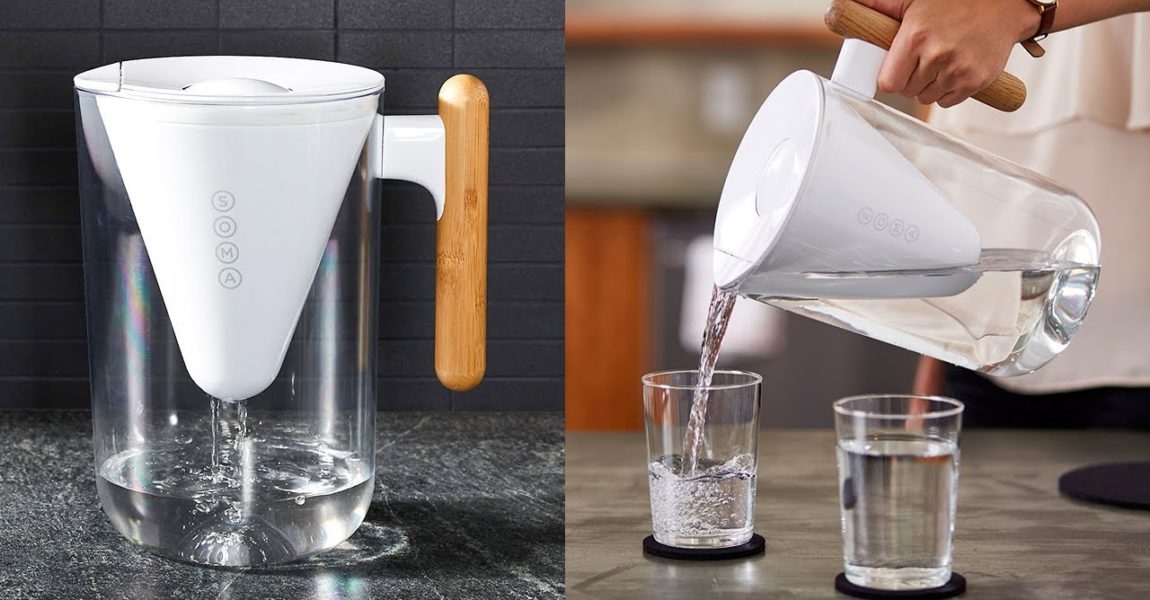
After unboxing this Waterdrop Chubby, it greets you with an impressive 10-cup capacity. Once you’ve filled it with filtered water, it reduces unnecessary trips to the kitchen faucet. The stylish wooden handle of the water pitcher is a great addition. Quite frankly, no other water pitcher has this look, making it unique.

The best water filter pitcher will benefit you in a lot more ways than you might imagine. Besides removing toxins from your drinking water, it will also save you from filling landfills with plastic bottles. Even more impressive is that they improve the taste of your tap water by removing chlorine and odor. As such, they are a worthy investment.
—————

►Video Credit◄
Storyblocks.com
►Graphics Elements Credit◄
www.freepik.com
www.flaticon.com
www.lottiefiles.com
www.canva.com
—————
► Copyright Disclaimer:
Portions of footage found in this channel are not original contents produced by Consumer Sherpa. Pieces of products’ stock footages were gathered from multiple sources, including manufacturers, fellow creators, and various other sources. If something belongs to you, and you want it to be excluded, please do not hesitate to contact consumersherpa[at]gmail.com

► Affiliate Disclaimer:
This channel is a participant in the Amazon Services LLC Associates Program, an affiliate advertising program designed to provide a means for us to earn fees by linking to Amazon[dot]com.

#Best_Water_Filter_Pitcher
#Best_Water_Filter_Pitcher_Review
#consumer_Sherpa

Original Video Source