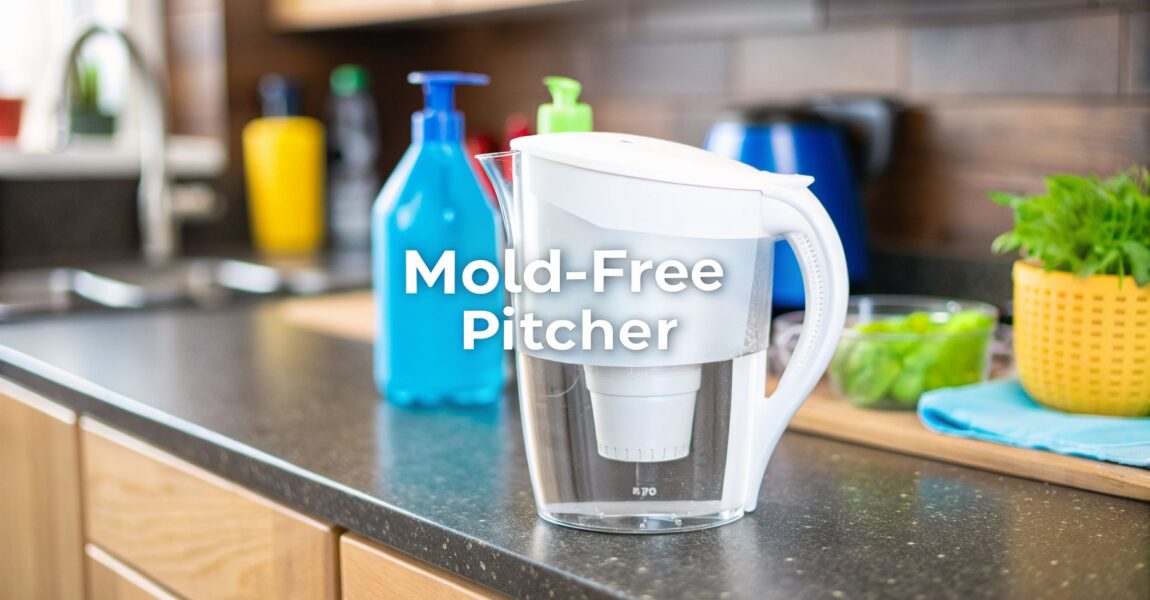
You reach for your water filter pitcher, anticipating a glass of pure, crisp water, only to be greeted by an unwelcome guest. Perhaps it’s a cluster of tiny black specks or a slick, pinkish film clinging to the inside wall. It's a jarring sight, but the truth is, mold can grow in your Brita pitcher. The very device you trust for water purification can, if neglected, become a habitat for unwanted microbes.
Why Your Water Filter Pitcher Can Grow Mold

It seems counterintuitive, right? A water filter… growing things? But from a microbe’s perspective, a pitcher is a luxury apartment with all utilities included. It offers the perfect trifecta for growth: constant moisture, a steady food supply, and a stable, sheltered environment. This is why discovering mold in a Brita pitcher is a surprisingly common home water filtration issue.
The primary ingredient is, of course, constant moisture. Let’s be honest—no one thoroughly dries their pitcher between every single refill. This means water is almost always present in the reservoir, in the hidden crevices of the lid, and around the filter housing. This perpetually damp setting is exactly what mold needs to get a foothold and thrive.
The Perfect Storm for Microbial Growth
So, where does the "food" come from? Your tap water. While your pitcher's filter is a champion at removing chlorine and certain heavy metals, it also acts as a net, trapping organic debris and particles. Over time, this captured organic matter accumulates within the filter and pitcher, essentially creating a free buffet for any airborne mold spores that happen to land inside.
Leaving your pitcher on the kitchen counter accelerates this process. The warmer, room-temperature air acts as an incubator, speeding up microbial growth. Storing it in the refrigerator helps, but it won't stop mold entirely if the other conditions—moisture and food—are present.
Think of your pitcher as a high-tech petri dish. The dark, damp interior, combined with a steady supply of trapped particles from your tap water, creates a perfect breeding ground. This isn't a reflection of your home's cleanliness; it's simply the science of how these home filtration systems operate.
The Usual Suspects in Your Pitcher
The gunk you're seeing might not be just one thing. Several common offenders love to set up shop inside a water filter. You're most likely dealing with one of these:
- Black Mold (Aspergillus niger): This often appears as small black specks. While not typically the highly toxic "black mold" from horror stories about water-damaged walls, you still don't want it anywhere near your drinking water.
- Pink Mold (Serratia marcescens): Surprise! This isn't mold at all, but an airborne bacterium that produces a distinctive pink or orange-colored slime. It adores damp surfaces, which is why you also see it on shower curtains and in toilet bowls.
- Green Mold (Cladosporium): Another frequent visitor to damp spots in a home, this mold can look fuzzy and green or even black.
Realizing your water filter is its own tiny ecosystem is the first step. The presence of mold in a Brita pitcher isn’t a sign of a faulty product; it’s a clear signal that your maintenance routine needs a tune-up to keep your home's water pure.
Understanding the Health Risks of a Moldy Water Pitcher
Discovering that fuzzy black or pink slime in the very device you rely on for clean water is more than just unpleasant—it can be a genuine health concern. It’s tempting to think a quick rinse will fix it, but let's dive into what’s really happening and why it matters for the water your family drinks.
When you spot mold in a Brita pitcher, you're looking at a living fungal colony. These colonies don't just sit there; they release microscopic spores into your water and even into the air every time you open the lid. For a healthy adult, accidentally drinking a glass might not cause immediate drama. But for others, the risk is much higher.
Who Is Most at Risk?
Not everyone reacts to mold in the same way. Certain people are far more sensitive, and what might be a non-issue for one person could be a serious trigger for another.
The most vulnerable groups include:
- Children and the elderly: Their immune systems are either still developing or aren't as robust as they once were, making them more susceptible to respiratory issues from mold.
- Anyone with asthma or allergies: Mold spores are a notorious environmental trigger. They can easily set off asthma attacks, coughing fits, wheezing, and other allergic reactions like itchy eyes and skin rashes.
- Those with weakened immune systems: For individuals with compromised immunity due to medical conditions or treatments, mold exposure can lead to more serious fungal infections.
It's not just the mold you can see. The hidden danger often lies in mycotoxins—toxic compounds produced by certain types of mold. These can linger in the water even after you've scrubbed the visible gunk away, which is why a simple rinse just doesn't cut it.
The symptoms from drinking contaminated water can be tricky to diagnose. You might blame a persistent cough, stuffy nose, or irritated throat on a common cold, never suspecting your water pitcher is the source of the problem.
Common Symptoms and Broader Effects
Drinking water from a moldy pitcher can sometimes lead to an upset stomach, while simply opening the lid and inhaling the spores can cause respiratory trouble. If you want to get a fuller picture of the risks, this article on the 10 Health Effects of Mold Exposure is a pretty comprehensive resource.
At the end of the day, your water filter is supposed to improve your water quality, not introduce new hazards. Recognizing the health risks is the first step. Now you can take the right action to get your pitcher truly clean and ensure every glass you pour is safe and pure.
How to Deep Clean and Sanitize Your Brita Pitcher
Finding mold in a Brita pitcher is a surprisingly common—and frankly, unappetizing—home filtration problem. But don't just toss the whole thing in the trash. As long as the plastic isn't cracked or permanently stained, a thorough deep clean will restore it to safe, working order.
Your first move is always the same: take the entire pitcher apart. This means separating the lid, the reservoir (the top part you pour water into), and the pitcher body. And most importantly, throw that old filter away. Never try to clean a filter. It's a dense, porous maze, and you'll never truly sanitize it.
Routine Cleaning with Soap and Water
For your regular weekly upkeep or if you just spot a hint of slickness, a good old-fashioned wash with soap and water is all you need. This is the simplest way to stop mold before it ever gets a chance to grow.
- Start by separating all the parts: the lid, reservoir, and the main pitcher.
- Get a good lather going with a mild dish soap and warm water and wash every component.
- This is where you need to be meticulous. Use a small bottle brush or even a dedicated toothbrush to scrub inside the spout, around the handle joints, and in all the little grooves. Mold loves to hide in those spots.
- Rinse every piece until it's squeaky clean. Any leftover soap residue can make your water taste off.
Now for the most critical part: let everything air dry completely. Don't use a dish towel. It will always leave a little bit of moisture behind in the corners and seams, which is exactly what mold needs to come roaring back. Place all the pieces upside down on a drying rack so air can circulate all around them.
Using White Vinegar for Natural Disinfection
If you’ve got some visible slime or a faint musty smell, it's time to bring in the vinegar. Plain old white vinegar works wonders as a natural disinfectant. Its acetic acid is great at killing mold and bacteria without resorting to harsh chemicals.
Mix up a solution of one part white vinegar to two parts warm water. Take your disassembled pitcher parts and let them soak in this solution for about an hour. That gives the vinegar enough time to break down any gunk.
After the soak, grab your brush and scrub away any lingering residue. You'll probably find that the slime comes off much easier now. Give everything a final, thorough rinse with plain water to get rid of the vinegar smell and, once again, let it air dry completely before putting it back together.
Vinegar is the perfect middle-ground cleaner. It's way more effective than soap for tackling early-stage mold, but it's not as intense as bleach. It's my go-to for a monthly sanitizing routine.
The risk here is real. Mold spores in the water you're supposed to be filtering can get into your system and cause problems, as this diagram shows.

When mold is in your pitcher, you're either drinking the spores directly or inhaling them every time you open the lid. For anyone with allergies or a sensitive immune system, that's a recipe for trouble.
To help you decide which method is right for your situation, I've put together a quick comparison of the three main cleaning options.
Brita Pitcher Cleaning Methods Compared
| Method | Best For | Effectiveness | Safety Notes |
|---|---|---|---|
| Dish Soap & Water | Weekly routine cleaning and preventing buildup. | Good for surface grime and light oils. Not effective for killing existing mold. | Very safe. Just be sure to rinse all the soap off thoroughly. |
| White Vinegar Solution | Monthly sanitizing or tackling light slime and musty odors. | Great for killing early-stage mold and bacteria naturally. | Safe, but requires a thorough rinse to remove the odor. |
| Diluted Bleach Solution | Serious mold outbreaks (visible black or green spots). | The most powerful option for completely killing stubborn mold and sanitizing. | Use one teaspoon of unscented bleach per gallon of water. Work in a ventilated area and rinse meticulously. |
Each of these methods has its place. You wouldn't use bleach every week, but soap and water alone won't cut it when you have a real mold problem.
Tackling Stubborn Mold with a Bleach Solution
Alright, if you're looking at a serious colony of black or green mold, it's time to bring out the big guns. A properly diluted bleach solution is the only way to be 100% sure you've killed everything. It sounds intense, but it's perfectly safe when you do it right.
- Get the mix right: This is key. Add just one teaspoon of unscented household bleach to a full gallon of cool water. More is not better here.
- Give it a quick soak: Let the pitcher, lid, and reservoir sit in the bleach solution for about 5-10 minutes. Don't go longer, as bleach can be hard on plastic over time.
- Scrub and rinse, then rinse again: After the soak, scrub any remaining spots. Then, rinse every part under running water until you can't smell even a hint of bleach.
- Air dry, of course: Just like with the other methods, let every single piece air dry completely before you even think about reassembling it.
This bleach method is only for a serious mold in a Brita pitcher situation, not your everyday cleaning. And please, make sure you're in a room with good airflow when you're handling bleach. Follow these steps, and you can confidently bring your pitcher back from the brink and enjoy clean, safe water again.
When You Absolutely Must Replace Your Brita Filter
So you've found mold in your Brita pitcher. The first question that probably pops into your head is, "Can I just clean the filter and save a few bucks?" It's a fair question. After all, if the pitcher itself is salvageable, why toss a filter that might still have some life in it?
Here’s the short and non-negotiable answer: no. Trying to salvage a mold-contaminated filter is a bad idea, and it’s critical to understand why from a water filtration perspective.
Your Brita filter isn't a simple screen. It’s a tightly packed cartridge of activated carbon and ion-exchange resin. This material is incredibly porous by design, creating a massive internal surface area to trap things like chlorine, copper, and other impurities. Think of it as a super-dense sponge filled with millions of microscopic pockets.
When mold spores find their way in, they don’t just hang out on the surface. They get lodged deep inside that complex structure. You could soak it in vinegar, bleach, or anything else you can think of, but you'll never reach every single spore hidden within. Attempting to "clean" it is a losing battle that only risks damaging the filter media and leaving a hidden mold colony ready to bloom again.
The Dangers Hiding Inside the Filter
It gets worse. It’s not just mold you have to worry about. An overused or contaminated filter doesn't just stop filtering effectively—it can become a breeding ground for bacteria. All the organic gunk it pulls out of your tap water becomes a perfect food source for microbes, creating an environment where they can multiply like crazy.
Don't just take my word for it. Research has shown how quickly a filter can turn against you. One study on home water filters found that in an astonishing 70.6% of household filters, the bacterial counts in the filtered water were significantly higher than in the original tap water.
Tests confirmed that bacteria levels in filtered water could shoot past tap water levels in as little as one week. You can see the full findings yourself in the 1996 study on bacterial growth in water filters.
The most important rule of home water filtration is this: The filter is a disposable component. Once it’s been exposed to a mold colony, its integrity is gone. It can no longer be trusted to purify your water.
The Only Safe Choice
So, what’s the right move? The moment you spot mold in your Brita, that filter has to go in the trash. No exceptions. It's the only way to be 100% sure you’ve removed the source of the problem and aren't just pouring your "clean" water through a hidden mold farm.
It breaks down like this:
- The pitcher and reservoir are non-porous plastic. They can be thoroughly cleaned and sanitized.
- The filter is a porous, absorbent sponge. It’s designed to trap and hold onto things—and that unfortunately includes mold.
Go ahead and give your pitcher a deep clean. Scrub it, soak it, and dry it completely. But finish the job by popping in a brand-new, fresh filter. It's a small price to pay for total peace of mind and the guarantee that your home's water is truly clean.
A Simple Guide to Preventing Mold Growth

While a deep clean can definitely rescue a moldy pitcher, the best strategy is always prevention. It's far less work to stop mold from starting than it is to battle an established colony.
The whole game is to deny mold the damp, stagnant environment it needs to survive. A few small, consistent habits will disrupt the conditions that lead to finding mold in a Brita pitcher, keeping your water fresh and your pitcher clean.
Your Prevention Routine
Think of your water pitcher like any other kitchen appliance—it needs regular cleaning. A quick weekly wash is absolutely essential for keeping things fresh.
- Wash It Weekly: At least once a week, take your pitcher apart. Wash the lid, reservoir, and pitcher body with warm, soapy water. This simple scrub gets rid of the invisible organic film that mold uses as food.
- Sanitize It Monthly: Once a month, take it a step further. Soak the components for about an hour in a solution of one part white vinegar to two parts water. This will kill off any unseen microbes that might be starting to grow.
One of the most common mistakes I see is not drying the pitcher properly. Never, ever reassemble a damp pitcher. After washing, lay all the parts upside down on a drying rack and let them air dry completely. A towel can just push moisture and lint into corners where mold loves to hide.
Smart Habits to Keep Mold Away
Beyond a cleaning schedule, how you use your pitcher day-to-day makes a massive difference. These small adjustments are your best defense against microbial growth in your home filtration system.
The biggest mistake is "topping off" the reservoir. When you just add new water to old water that’s been sitting out, you’re creating the perfect stagnant breeding ground for bacteria. Get in the habit of emptying any leftover water before you refill.
Your refrigerator is your best friend in the fight against pitcher mold. Mold and bacteria thrive in warmth. Storing your Brita in the cold drastically slows down their growth, keeping your water fresher for longer.
Another key habit is changing the filter on schedule. A standard Brita filter is designed for about 40 gallons or two months of use. Pushing it past its prime means it's not filtering effectively, and all the gunk it has trapped becomes a food source for any mold spores in the water.
Your Weekly and Monthly Brita Maintenance Checklist
To make it even easier, here's a simple checklist. Following this will help you stay on top of maintenance and keep your pitcher mold-free.
| Frequency | Task | Pro Tip |
|---|---|---|
| Weekly | Disassemble and wash all parts with soap and warm water. | Pay extra attention to the spout and the area where the lid sits. |
| Weekly | Allow all parts to air dry completely before reassembly. | Place components upside down on a drying rack for the best airflow. |
| Monthly | Sanitize the pitcher, reservoir, and lid in a vinegar-water solution. | A 1-hour soak is plenty to neutralize lurking microbes. |
| Every 2 Months | Replace the filter (or as directed by the manufacturer). | Set a recurring calendar reminder on your phone so you don't forget. |
| Daily | Empty leftover water before refilling the reservoir. | Never "top off" old water. Always start fresh. |
| Daily | Store the pitcher in the refrigerator. | Cold temperatures are your strongest ally against mold and bacteria. |
Turning these simple actions into habits is the real secret. This focus on a clean, dry environment isn’t just for your pitcher, either. For a deeper dive into home-wide strategies, this guide on Understanding Mold Prevention provides excellent insights.
And for more practical advice on all your home water systems, be sure to explore our advice library.
https://www.waterfilteradvisor.com/advice/
Common Questions About Brita Pitcher Mold
We get a lot of questions about dealing with mold in a Brita pitcher. Here are answers to some of the most frequent concerns people have about their home water filtration.
Are the Black Specks Always Mold?
Finding small black specks in your pitcher is a common issue, but it's rarely mold. Most often, these specks are activated carbon dust that has escaped from the filter cartridge. This is harmless and usually happens with a new filter that wasn't rinsed thoroughly before use.
You can typically tell the difference by appearance. Carbon dust will look like very fine, hard particles, almost like coffee grounds. Mold, however, tends to be softer, sometimes fuzzy, and may appear in clumps or as part of a slimy film. A musty odor is another key sign of mold. If your filter is several months old, the likelihood of it being mold increases.
Can I Just Wipe Away Visible Mold?
If you see mold, wiping it away is not enough. This is a common mistake. The visible spot you can clean off is just the surface growth. Microscopic mold spores and roots have almost certainly spread across the plastic surfaces and, more importantly, contaminated the filter media itself.
Wiping away a spot of mold is like cutting the top off a weed. You haven't removed the root, and the problem will return. It also fails to address the contamination you can't see.
When mold is present, a full deep cleaning of the pitcher is necessary. The current filter must be discarded and replaced.
Is Cold Water Better Than Room Temperature Water?
Yes, without question. Two of the best habits for mold prevention are filling your pitcher with cold tap water and always storing it in the refrigerator. Mold and bacteria grow best in warm, still water. Keeping the water cold significantly inhibits their growth.
A pitcher left on a counter at 70°F (21°C) provides an ideal environment for microbes. In contrast, a refrigerator at 37°F (3°C) creates a hostile environment for mold, keeping your water fresher and your pitcher cleaner. This one change makes a significant impact.
For expert guidance on all your home water filtration needs, from choosing the right system to keeping it running perfectly, trust Water Filter Advisor. Explore our in-depth reviews and practical guides at https://www.waterfilteradvisor.com to ensure every drop your family drinks is clean and safe.
- March 9, 2026
- 0
- Uncategorized
