Hydrogen Sulfide Water Test Guide
You turn on the tap before work and the kitchen fills with a rotten-egg smell. The water looks clear, so you wonder whether the odor is harmless, a plumbing problem, or evidence that your whole-house filter has stopped working. That uncertainty is exactly why a hydrogen sulfide water test matters. Filtration works best when the diagnosis reflects the water entering your home, not a sample that lost its dissolved gas on the way to a laboratory.
Hydrogen sulfide is unusually frustrating for homeowners because it can disappear before anyone measures it. A reliable test therefore has two jobs: identify whether sulfide or sulfur-producing bacteria are involved, and provide enough trustworthy information to choose carbon, oxidation, or chemical treatment without overspending.
Why Your Nose Is the Ultimate Early Warning System
The first clue usually arrives at the worst possible moment. You lift a glass, start the shower, or run the washing machine, and the familiar rotten-egg or swampy odor appears. Dismissing that smell as subjective is a mistake. For hydrogen sulfide, your nose can detect a problem at concentrations far below the point where water begins damaging plumbing.
The World Health Organization's hydrogen sulfide background document estimates taste and odor thresholds in water at about 0.05 to 0.1 mg/L. Canada has set an aesthetic objective of ≤0.05 mg/L, or ≤50 µg/L, for sulfide as H₂S. Those are sensory and aesthetic benchmarks, not a claim that every odor event creates the same health risk.
Read the pattern before buying a filter
The location and timing of the smell provide useful diagnostic information:
- Cold and hot water both smell: Suspect the well or incoming supply first. A whole-house treatment review makes more sense than replacing a water-heater part alone.
- Only hot water smells: The water heater may be creating or intensifying the odor. The anode rod and heater environment deserve inspection before you install equipment at the main line.
- The odor comes and goes: Sampling becomes more important because a quiet interval can produce a negative result even when the system has a genuine sulfur problem.
- The smell appears after filtration: Check media condition, backwashing, oxidizer settings, and flow before assuming the source water has changed.
Hydrogen sulfide can occur naturally in groundwater, and sulfur-reducing bacteria can produce it in a well or plumbing environment. In a home filtration system, that distinction affects the solution. A carbon tank may help with a light odor, while a well with recurring sulfide may need oxidation and properly managed media.
Practical rule: Treat the smell as a reason to investigate, not as a precise concentration reading.
Testing connects the household complaint to a treatment decision. It also protects you from choosing a filter based on a delayed sample that no longer represents the water at the tap.
Choosing the Right Testing Method for Your Home
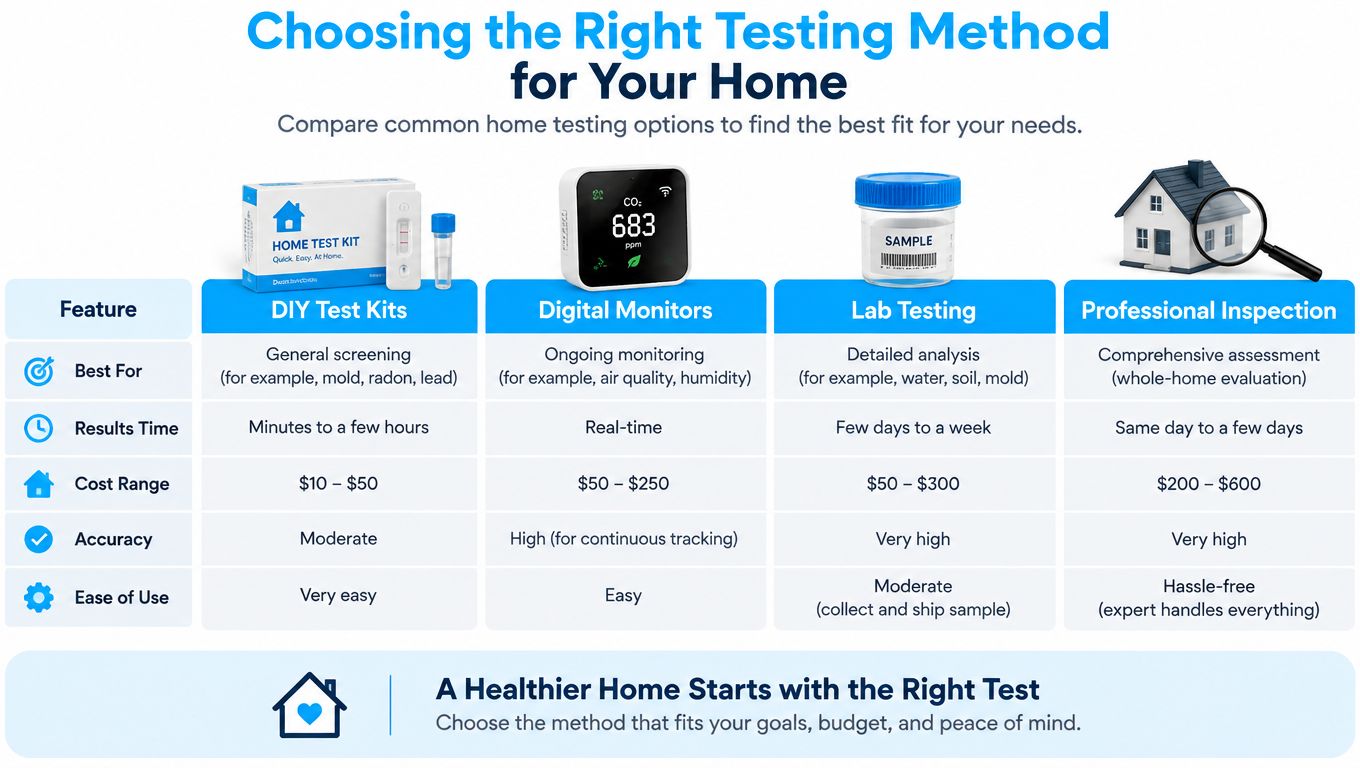
Start with the simplest observation, then increase the precision only as the decision requires. A sensory check can confirm that the problem is real, but it can't tell you whether a filter is being challenged by a trace nuisance or a concentration that threatens plumbing.
Compare the three practical options
Sensory check: Run cold water from a representative tap and note whether the odor is immediate, delayed, constant, or absent. Repeat with hot water. This costs nothing and helps separate a well-water problem from a water-heater problem, but it doesn't quantify hydrogen sulfide.
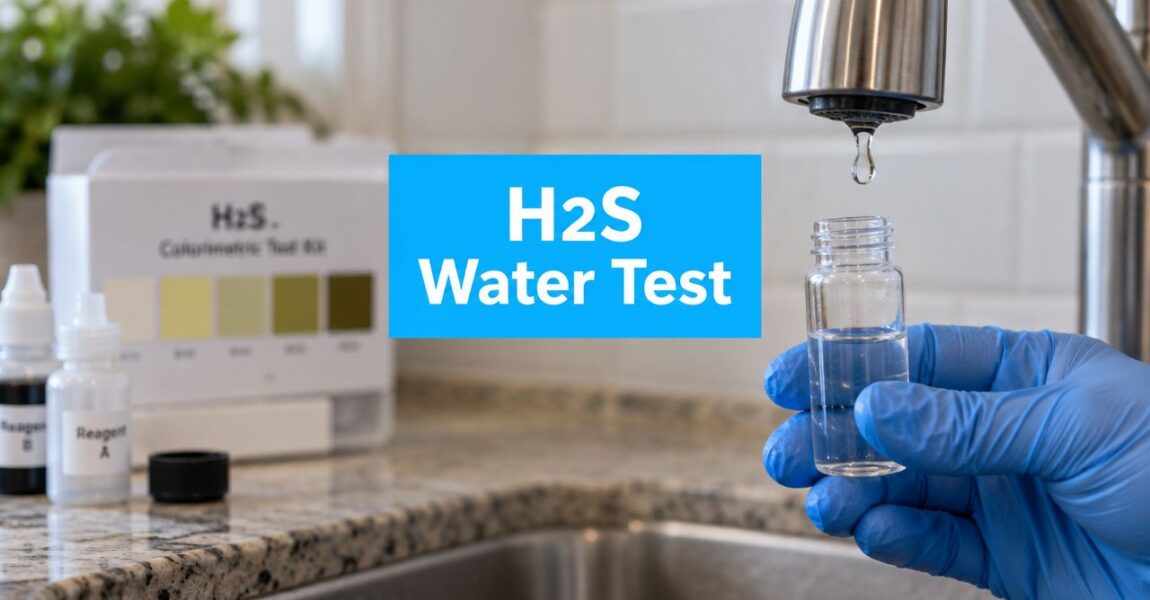
Colorimetric field kit: A reagent kit or suitable strip gives a faster screening result at the point of collection. Follow the kit's timing exactly, use fresh water, and compare the color under consistent lighting. Field testing is especially useful for volatile sulfide because the result is produced before the gas has time to escape.
Certified laboratory analysis: Use a laboratory that supplies the correct sulfide bottle, preservative, and handling instructions. A professional result is valuable when you're sizing a whole-house system, investigating a failed treatment train, or dealing with a result that conflicts with the odor.
Preserve the sample before it changes
Collecting hydrogen sulfide water isn't like filling a bottle for a standard hardness test. Use a gentle flow, keep the container close to the outlet, and don't splash, shake, or pour the sample between containers. Aeration and agitation encourage the dissolved gas to leave the water.
A practical certified-laboratory workflow for dissolved sulfide sampling calls for avoiding aeration and agitation, preserving the sample within 15 minutes, and using field flocculation rather than filtration for dissolved sulfide. The purpose is preservation, not tidiness. Standard filtration can remove or alter what the method needs to measure.
If the kit calls for field stabilization, do it immediately at the tap. If it doesn't provide a preservation method, use it as a screening tool and don't treat a negative result as proof that the odor source has vanished.
Test the water that the filter actually receives
For a private well, collect at the well or at the closest suitable cold-water outlet before treatment. For a home with a whole-house system, compare raw and treated water when possible. Test hot water separately if the odor is limited to showers and sinks.
A useful diagnostic panel should also consider iron, manganese, pH, and hardness, because those conditions influence filter selection and media performance. The hydrogen sulfide result alone rarely tells you how the complete filtration system should be configured.
Understanding Concentration Thresholds and Risks
A number only becomes useful when you connect it to what happens at the faucet, inside the heater, and along the plumbing. Connecticut public health guidance gives homeowners a practical scale: hydrogen sulfide can be detected by many people at about 0.5 mg/L, water below 1 mg/L may smell musty or swampy, and 1 to 2 mg/L typically creates a rotten-egg odor and can become corrosive to household plumbing. See the Connecticut guidance on hydrogen sulfide and sulfate in private well water for that interpretation.
| Concentration (mg/L) | Sensory Impact | Household Risk Level |
|---|---|---|
| Below 0.5 | May be faint, musty, or swampy, depending on the water and the person detecting it | Primarily an odor and taste nuisance, but still worth confirming if persistent |
| 0.5 to below 1 | Most people may notice the odor, with a stronger nuisance effect | Treatment assessment is sensible, especially for whole-house use |
| 1 to 2 | Typically a clear rotten-egg smell | Can become corrosive to household plumbing and demands a treatment review |
The table isn't a substitute for a complete water analysis. Hydrogen sulfide can interact with the plumbing environment, and the same measured concentration may feel different in cold water, heated water, or water that has already been aerated.
Separate comfort problems from plumbing problems
At a low level, the main complaint is often taste, odor, laundry quality, and shower comfort. That doesn't make the issue imaginary. A home filtration system should eliminate the nuisance at the point where people use the water, rather than merely making the raw-water report look better.
Higher readings deserve more attention because the water can become corrosive to household plumbing. Copper, brass, fixtures, water heaters, and other metal components may suffer when sulfur water remains untreated. The correct response isn't to panic over a trace reading, nor to ignore an aggressive odor. It's to preserve a representative sample and match the treatment to the measured conditions.
For filtration decisions, ask three questions: Is the result from raw or treated water? Was the sample stabilized correctly? Does the odor appear in cold water, hot water, or both? Without those answers, a concentration number can lead you toward the wrong system.
Troubleshooting False Negatives and Sampling Errors
A clean laboratory report doesn't always mean clean, odorless water. Hydrogen sulfide is a dissolved gas, and it can escape quickly once water is exposed to air. A plain bottle filled at home, left in a warm room, and sent through ordinary shipping may contain far less sulfide by the time the laboratory opens it.
Why the bottle can lie
The University of Georgia extension guidance on hydrogen sulfide testing explains why laboratory confirmation can be difficult without immediate stabilization and why on-site kits are often preferred for initial screening. A negative result from an unpreserved sample therefore doesn't automatically overrule a strong, repeatable odor at the tap.
Common sampling failures include:
- Pouring the sample: A waterfall into the bottle strips dissolved gas from the water.
- Leaving headspace: Extra air gives the gas somewhere to go before analysis.
- Waiting to preserve: Delayed stabilization changes the sample before the lab receives it.
- Using the wrong bottle: Sulfide testing may require a special container and preservative.
- Testing after treatment only: A working filter can hide the raw-water load, while a bypassed or exhausted filter can create a different picture.
Some laboratory procedures require refrigerated delivery within 48 hours, along with special bottles and preservatives, according to the sampling guidance in the University of Georgia hydrogen sulfide and sulfate publication. Follow the receiving laboratory's instructions rather than improvising with a generic mail-in kit.
Check the water heater before treating the well
If only hot water smells, don't assume the well is the culprit. A water heater can create a sulfur odor through conditions around its anode rod, even when cold water is acceptable. Compare cold and hot samples at the same time, and have the heater inspected before committing to a whole-house sulfur filter.
A sulfur-producing bacterial issue can also make odor intermittent. The WHO publication describing the H₂S test as a microbiological screening method explains that the method can detect bacteria associated with fecal contamination that reduce sulfur to sulfide gas. A blackened reaction after incubation in the dark can indicate a positive result, but it isn't a substitute for the broader testing needed to assess drinking-water quality.
If the report says “not detected” and the tap still smells, investigate sample preservation and the water heater before replacing the entire filtration system.
Matching Your Test Results to the Right Filtration Fix
Testing should answer a practical question: what treatment can remove the odor at the flow rates your home demands? A point-of-use filter may improve one drinking-water tap, but it won't protect showers, laundry, fixtures, or the water heater from sulfur-laden water entering the house.
Match treatment to the source and load
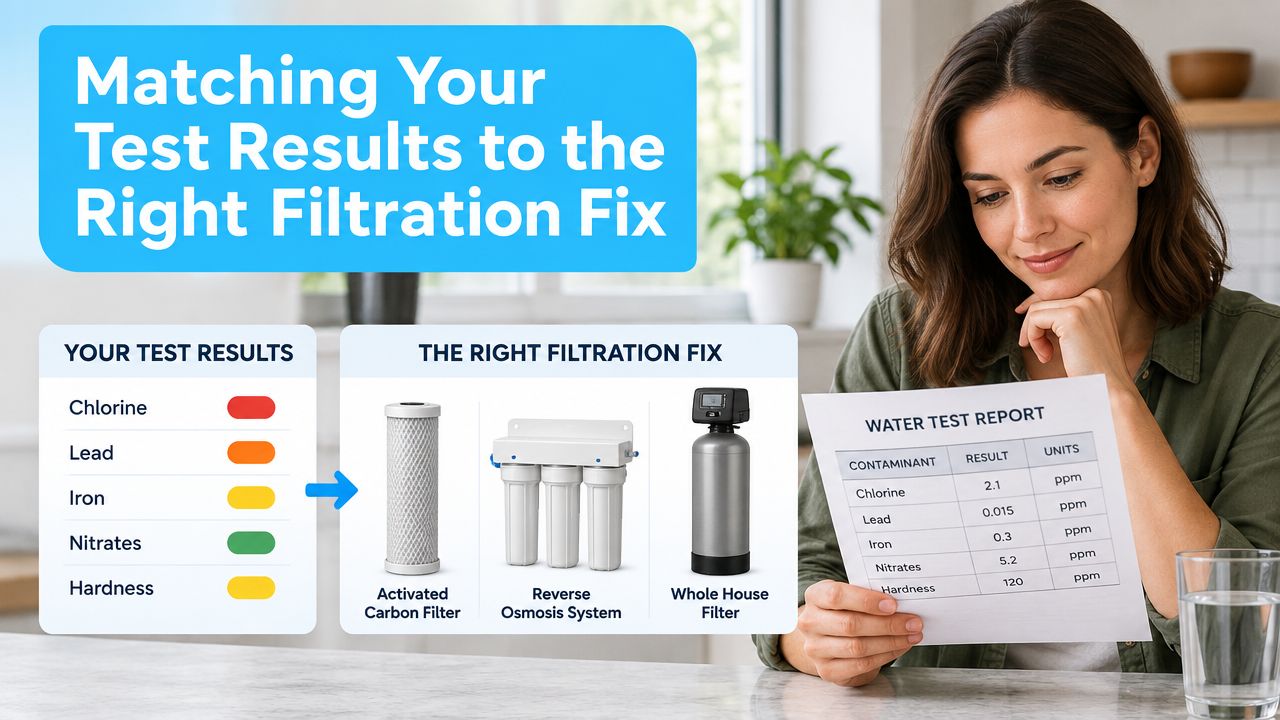
For light odor, catalytic carbon can be useful when the incoming sulfur load is modest and the rest of the water chemistry is compatible. Carbon needs correct sizing and replacement or regeneration planning. It can become a poor choice when the media exhausts quickly or when iron, manganese, sediment, or biological fouling places extra demand on the tank.
For a private well with recurring moderate odor, an automated air-injection oxidation system is often a more practical whole-house approach. The system introduces air, allows oxidation to occur, and sends the water through media that captures the resulting contaminants. It needs appropriate contact time, flow capacity, backwashing, and a pre-filter when sediment is present.
For severe or persistent sulfur conditions, a chemical feed pump paired with an oxidation medium such as manganese greensand may be considered. That arrangement adds chemical handling, pump calibration, and media maintenance, but it can provide more control when simpler carbon or air-based equipment can't keep up.
Avoid the common sizing traps
Use raw-water results: Size from the water entering the house, not only from a treated tap. Include peak flow, pressure, household occupancy, and the well's recovery behavior.
Protect the media: Sediment pre-filtration can keep oxidizing media from loading prematurely. Iron and manganese may require a treatment train rather than a sulfur-only cartridge.
Treat the whole house when the source is the whole house: Reverse osmosis is rarely the first answer for a volatile gas problem. It serves a drinking-water point, while sulfur odor often affects every fixture.
Confirm the chemistry: pH and hardness influence oxidation and media behavior. A filtration dealer should review the complete report before recommending a tank size or chemical program.
Laboratory operators and technical facilities face their own water-quality demands, so readers comparing treatment principles beyond a residence may find this overview of water purification for labs useful for understanding why application-specific water treatment matters.
Water Filter Advisor provides consumer guidance for comparing whole-house, under-sink, faucet, shower, refrigerator, and portable filtration options, including source-water testing for sulfur problems. Use that type of independent comparison to understand equipment categories, then verify the final design against your preserved test results and actual plumbing flow.
Establishing a Long-Term Testing and Maintenance Routine
Sulfur water can change, and filtration media doesn't remain new. Build a small routine around observation, testing, and service instead of waiting for the shower to announce a failure.
Keep the routine simple
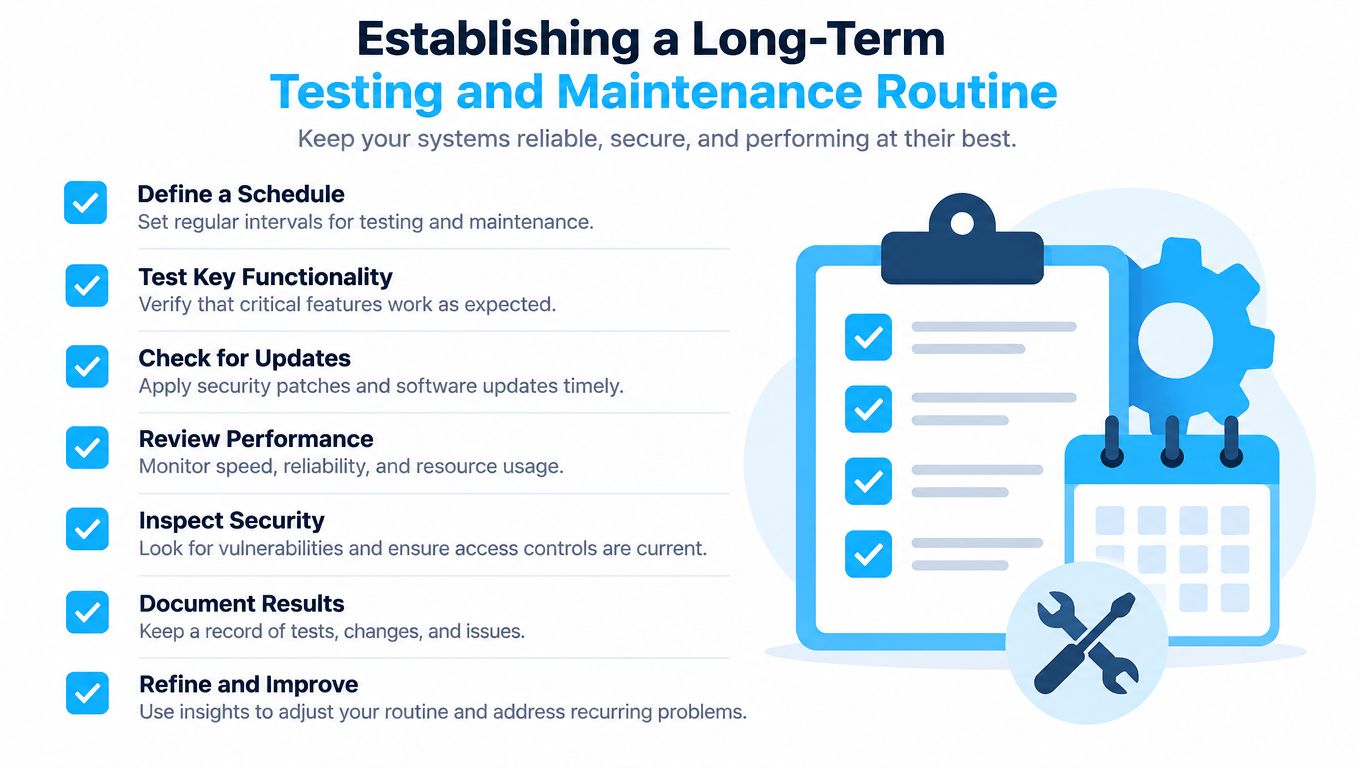
- Check monthly: Smell cold and hot water separately, and note any change in odor, color, pressure, or staining.
- Record service: Write down backwash settings, media replacement, oxidizer pump adjustments, and chemical refills.
- Retest after a change: Test again after well work, plumbing changes, a new water heater, treatment bypass, or a sudden odor breakthrough.
- Inspect pretreatment: Clean or replace sediment protection before it restricts flow or overloads sulfur media.
- Review the manual: Air-injection units need correct backwashing, while chemical-feed systems need reliable pump operation and solution management.
The Water Filter Advisor advice library can help you organize filter replacement and maintenance questions. If the problem points to a heater, supply line, or broader plumbing fault, a qualified second-generation plumbing company can assess the plumbing side alongside your water-treatment provider.
A strong hydrogen sulfide water test is only useful if the sample survives collection. Preserve promptly, keep raw and treated results separate, and treat an odor breakthrough as a signal to inspect both the filtration equipment and the source water.
Water Filter Advisor helps homeowners compare filtration systems, testing approaches, replacement media, and maintenance requirements for sulfur odors and related water-quality problems. Review the practical guides at Water Filter Advisor, then use your preserved test results to choose a whole-house or point-of-use solution that fits your water chemistry and household flow.
