Your Ultimate Guide on How to Reduce Water Hardness at Home

Ever notice those stubborn white spots on your glassware or feel like your “clean” laundry is still stiff and scratchy? You’re not just imagining it—you're dealing with hard water. The fix is a magical thing called water filtration, designed to remove or neutralize the high levels of dissolved minerals—mostly calcium and magnesium—that are wreaking havoc in your home. Think of learning how to reduce water hardness not just as a chore, but as a superhero move to save your plumbing and appliances from a slow, crusty demise.

Why Hard Water Is Waging a Secret War on Your Home

A bathroom sink faucet shows visible mineral deposits, highlighting hard water damage.

If you've ever felt a chalky film on your hands after washing them or wondered why your shampoo just won't lather up, you've met hard water. It's what happens when water travels through rock and soil, picking up mineral hitchhikers along the way. While it's perfectly safe to drink, those minerals can create a surprising amount of chaos around the house.

And this isn't some rare occurrence. According to the U.S. Geological Survey, a staggering 85% of households in the United States have hard water. In big chunks of the country, like the Midwest and Southwest, hardness levels often top 120 mg/L of calcium carbonate—that's well above the 60 mg/L threshold considered even moderately hard.

The Visible Signs Of A Hidden Problem

The most common signs of hard water are the daily cosmetic annoyances. You’ve probably seen them:

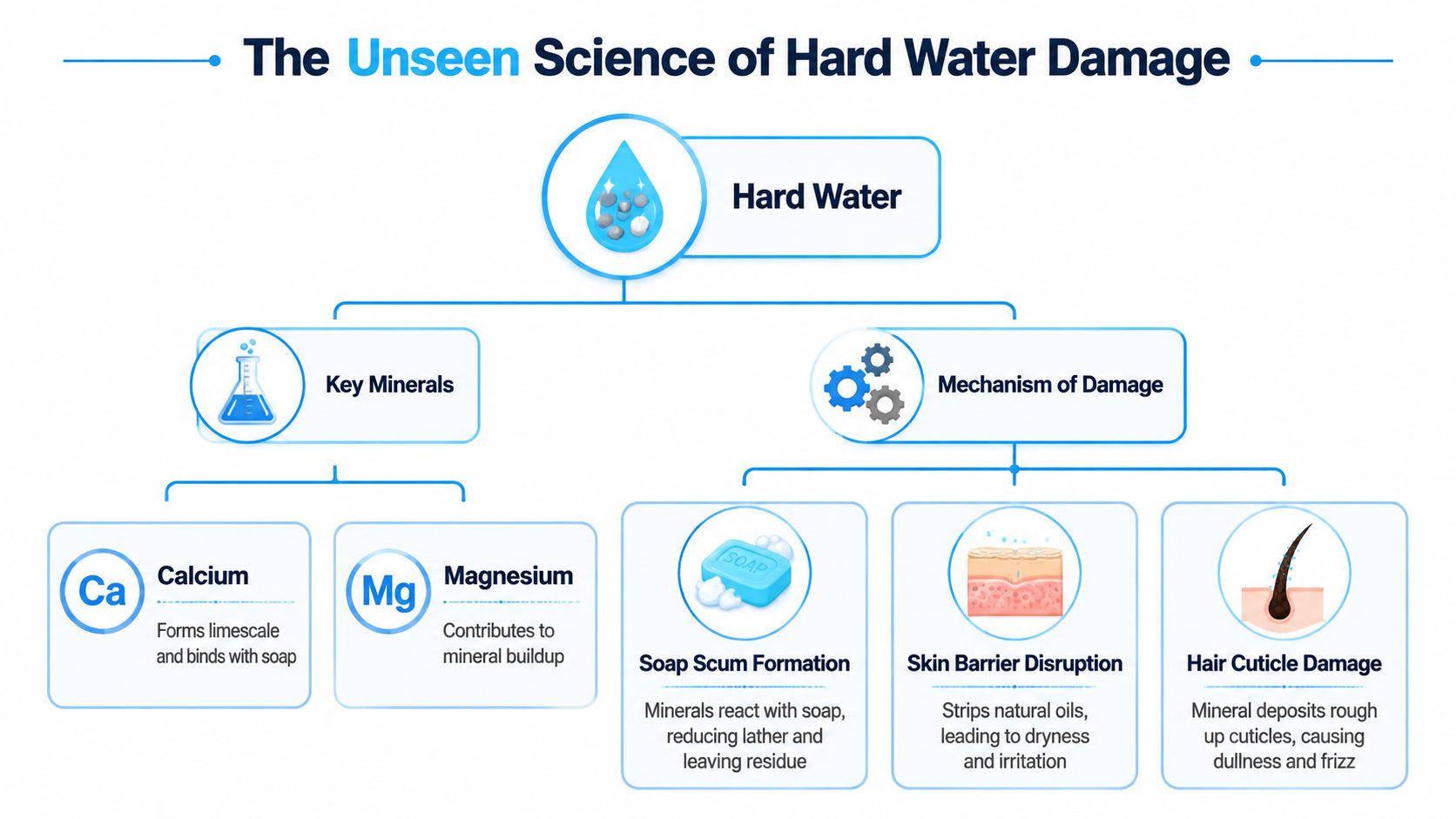
  • Soap Scum: Minerals in the water react with soap to create that gross, sticky film that coats your shower doors, tiles, and tubs.
  • Spotted Dishes: That cloudy haze on your glasses and silverware right out of the dishwasher? That’s mineral residue left behind when the water evaporates.
  • Dull, Stiff Fabrics: Those minerals get tangled up in the fibers of your clothes, making them feel rough and causing colors to fade way too quickly.

But these everyday headaches are just the tip of the iceberg. The real damage is happening where you can't even see it.

The real villain here is limescale—a hard, chalky deposit of calcium carbonate. This stuff builds up inside your pipes, fixtures, and appliances, slowly choking off water flow and tanking their efficiency.

To put it simply, what you see on your faucet is also happening inside your home's vital systems. This table breaks down the daily struggles of hard water versus the perks of switching to soft water.

Hard Water Problems vs Soft Water Benefits

Area of Impact Problem with Hard Water Benefit of Soft Water
Plumbing & Pipes Limescale buildup clogs pipes, reducing water flow. Pipes remain clear, maintaining strong water pressure.
Appliances Reduced efficiency and shorter lifespan for water heaters, dishwashers. Appliances run efficiently and last longer.
Kitchenware Cloudy film and spots on glasses and dishes. Sparkling, spot-free dishes and glassware.
Laundry Stiff, scratchy fabrics and faded colors. Softer, brighter clothes that feel and look newer.
Bathroom Surfaces Stubborn soap scum on showers, sinks, and tubs. Easier cleaning with little to no soap scum buildup.
Skin & Hair Dry, itchy skin and dull, brittle hair. Softer skin and smoother, more manageable hair.

As you can see, the benefits go far beyond just looks.

Long-Term Damage And Hidden Costs

Over time, that mineral buildup turns into a real financial drain. Limescale acts like an insulator, forcing your water heater to work much harder and burn more energy just to heat the same amount of water. This drives up your utility bills and can even shorten the appliance's lifespan, pushing you toward a costly replacement sooner than you’d expect.

And it doesn't stop there. Your coffee maker, dishwasher, and washing machine are all on the chopping block. The tiny valves and pipes inside these machines can get clogged, leading to breakdowns and expensive service calls. Another major headache from all this buildup is a drop in water flow, which often leads to frustrating issues like having no water pressure in your house.

Tackling this problem head-on is a wise investment in your home. By learning how to reduce water hardness, you aren't just making your daily life a little easier—you're protecting your most valuable assets from silent, creeping damage.

How to Accurately Test Your Water Hardness

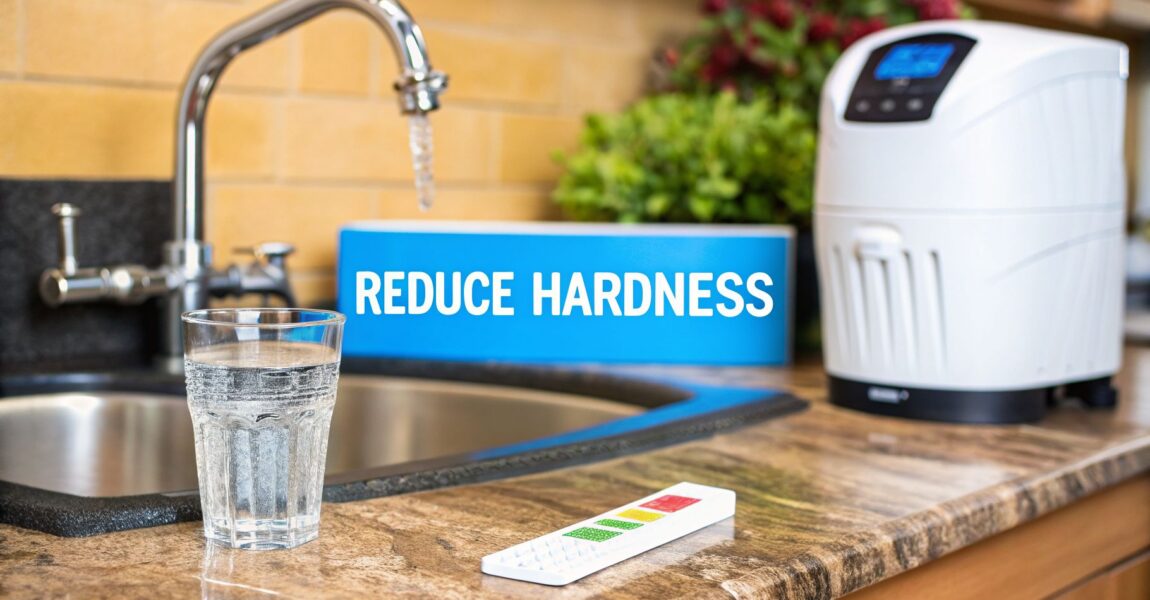
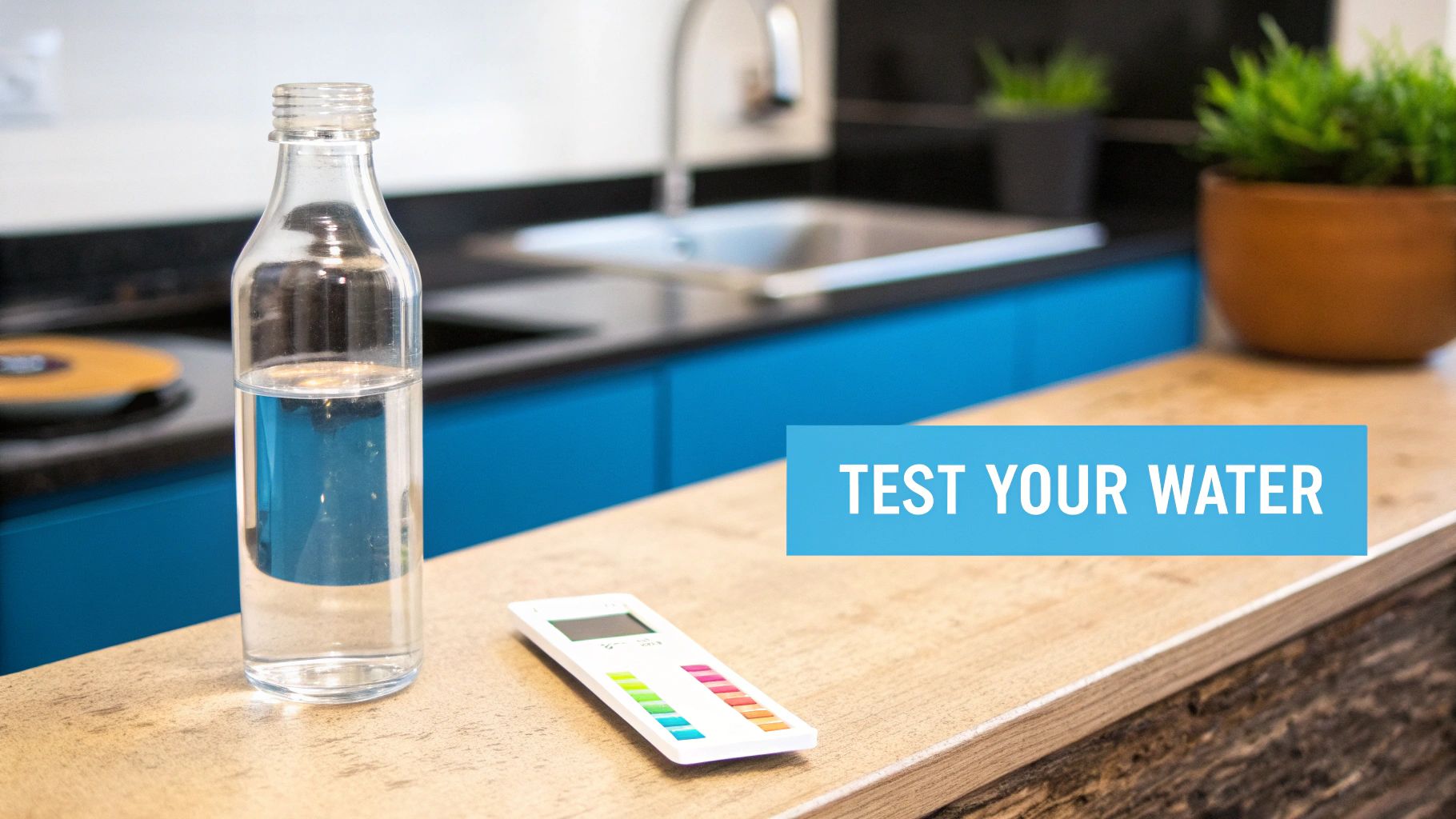
A hand uses a test strip in a glass of water to check quality on a countertop, 'TEST YOUR WATER' banner.

Before you declare war on hard water, you’ve got to know exactly what you’re up against. Think of it like a doctor needing a diagnosis before prescribing a treatment. If you just guess, you might end up spending a ton of money on a system you don't really need or, even worse, buying one that barely makes a dent in the problem.

The good news is that figuring out your water's mineral content is pretty straightforward. You don’t need a fancy chemistry degree to get a solid baseline. There are a few different ways to go about it, from a quick kitchen experiment to a super-precise professional analysis.

The Quick and Simple Soap Test

Let's start with the easiest method of all: the DIY soap test. This is a fantastic first step that gives you a rough idea of your water’s situation in just a few minutes, using stuff you already have lying around.

All you need is a clean, clear bottle with a lid that seals tight (a regular water bottle works great) and some basic liquid soap. Make sure to use a pure soap, not a detergent that has added softeners or perfumes.

  1. Fill the bottle about a third of the way with regular tap water.
  2. Add just a few drops of the liquid soap, screw the cap on, and give it a really good shake for about 15 seconds.
  3. Now, take a look. If your water is soft, you'll see a healthy layer of suds, and the water underneath should be nice and clear.
  4. If you’ve got hard water, you'll find it’s a real struggle to get a good lather. Instead of fluffy bubbles, you’ll likely see a cloudy, milky solution with a scummy film floating on top.

While this test won't give you an exact number, it’s a great initial indicator. If you're seeing almost no suds and a lot of that soap scum, you know you’re dealing with a pretty significant hardness issue.

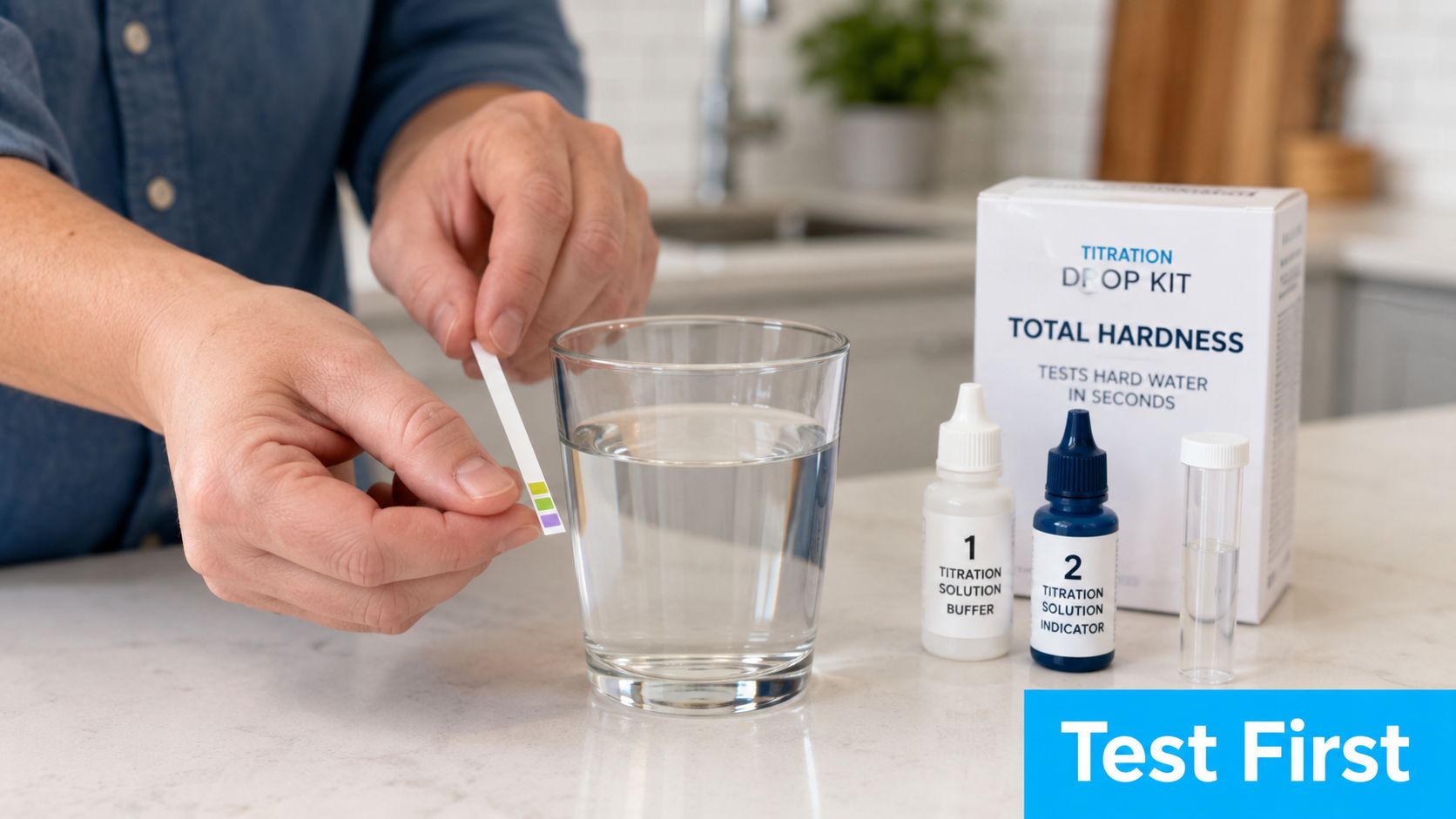
Using Water Hardness Test Strips

For a more precise, number-based reading, water hardness test strips are your best bet. They’re cheap, easy to find online or at any home improvement store, and incredibly simple to use. These kits give you a quantitative result, which is what you really need to choose the right size and type of water filter.

Using them is a breeze. You just dip a strip into a glass of your tap water for a couple of seconds, pull it out, and wait for the color to develop. After about a minute, you compare the color on the strip to the chart that came with the kit.

The chart will give you a reading in either parts per million (PPM) or grains per gallon (GPG). Just so you know, one GPG is the same as 17.1 PPM of dissolved minerals.

What does GPG mean for you? Here’s a quick breakdown of the water hardness scale:

  • Soft: 0–3.5 GPG
  • Moderately Hard: 3.5–7 GPG
  • Hard: 7–10.5 GPG
  • Very Hard: Over 10.5 GPG

Knowing your exact GPG number is a game-changer. A house with 10 GPG is going to need a much more powerful filtration system than a home with just 4 GPG. This little piece of data helps you avoid overspending and makes sure the system you buy can actually handle the job.

When Professional Lab Testing Is Necessary

For most homeowners who get their water from a city or municipal supply, those simple test strips are more than enough. However, if your water comes from a private well, or if you have a nagging suspicion that there are other contaminants besides just minerals, professional lab testing is the most reliable way to go.

Well water isn't regulated by the EPA, so its quality can be all over the map. A professional test can nail down the exact hardness level and also screen for things like iron, manganese, sulfur, bacteria, and other nasty stuff that might require a more specialized, multi-stage filtration system.

To get a lab test done, you can start by contacting your local health department for recommendations or find a state-certified lab online. They’ll send you a collection kit with simple instructions. It’s the most accurate assessment you can get and gives you the complete picture to make the smartest long-term investment for your home.

Short-Term Fixes for Hard Water Headaches

Jumping straight to a whole-house water filter isn't always in the cards. Maybe you're renting, you're on a tight budget, or you just want to dip your toe in the water—pun intended—before committing to a big installation. The good news? You don't have to put up with the daily grind of hard water while you weigh your options.

There are some really effective, non-permanent ways to get immediate relief from the most annoying hard water problems. These quick fixes target specific issues, from scratchy towels to irritated skin, giving you a way to manage the problem without tearing into your plumbing.

Get Your Laundry Bright and Soft Again

Hard water and your washing machine are not friends. The calcium and magnesium in the water latch onto your detergent, making it way less effective. Instead of cleaning, a chunk of that soap turns into a nasty curd that sticks to your clothes, leaving them stiff, dingy, and dull.

You can fight back. The easiest weapon in your arsenal is a chelating agent, which you might know as a water conditioner. Products like Calgon or even good old-fashioned borax are fantastic for this. They work by grabbing onto those pesky mineral ions and neutralizing them, freeing up your detergent to do its job.

Just add a conditioner to each load, and you’ll see a real difference. Your whites will look brighter, colors won't fade as fast, and your towels will finally lose that crunchy, board-like feeling. It’s a simple, cheap trick for anyone trying to figure out how to soften water just for their laundry.

Give Your Skin and Hair a Break from the Buildup

The daily battle with hard water gets personal in the shower. Those same minerals that leave spots on your glasses also leave a film on your skin and hair. This residue can clog pores, cause breakouts and dryness, and leave your hair feeling brittle, limp, and impossible to style.

A showerhead filter is a brilliant point-of-use solution here. These little devices just screw on between the shower arm and your showerhead—most don't even need tools to install. Inside, they use filtration media like KDF (Kinetic Degradation Fluxion) or activated carbon to specifically target the minerals and chlorine coming through your pipes.

You'll feel the difference almost right away. Your skin will probably feel less tight and itchy post-shower, and your hair will feel softer and look shinier because it's finally getting a clean rinse without a coating of mineral gunk.

Fight Back Against That Crusty Limescale

Those ugly white deposits crusted around your faucets and all over your shower doors are the most obvious calling card of hard water. This stuff, called limescale, is basically rock and regular cleaners just can't cut it.

To get immediate results, you need something acidic to dissolve the mineral buildup. You've got a couple of options:

  • Vinegar Solution: A simple 50/50 mix of white vinegar and water is a powerhouse, non-toxic limescale buster. For really stubborn spots, soak a rag in the solution and wrap it around the fixture for an hour before you start scrubbing.
  • Commercial Descalers: Products made specifically to tackle calcium, lime, and rust are incredibly effective. They use stronger acids to break down those mineral deposits in a hurry.

Making these little changes can help you keep the most visible signs of hard water in check. While these temporary fixes don't solve the problem at its source, they offer targeted relief and make everyday life a lot more comfortable.

Choosing the Right Permanent Water Filtration System

If you're sick of scrubbing soap scum and dealing with scratchy towels, it's time to look past the quick fixes. A permanent, whole-house system is the only way to stop hard water problems at the source, protecting your pipes, appliances, and sanity. This is where the real game-changers come in.

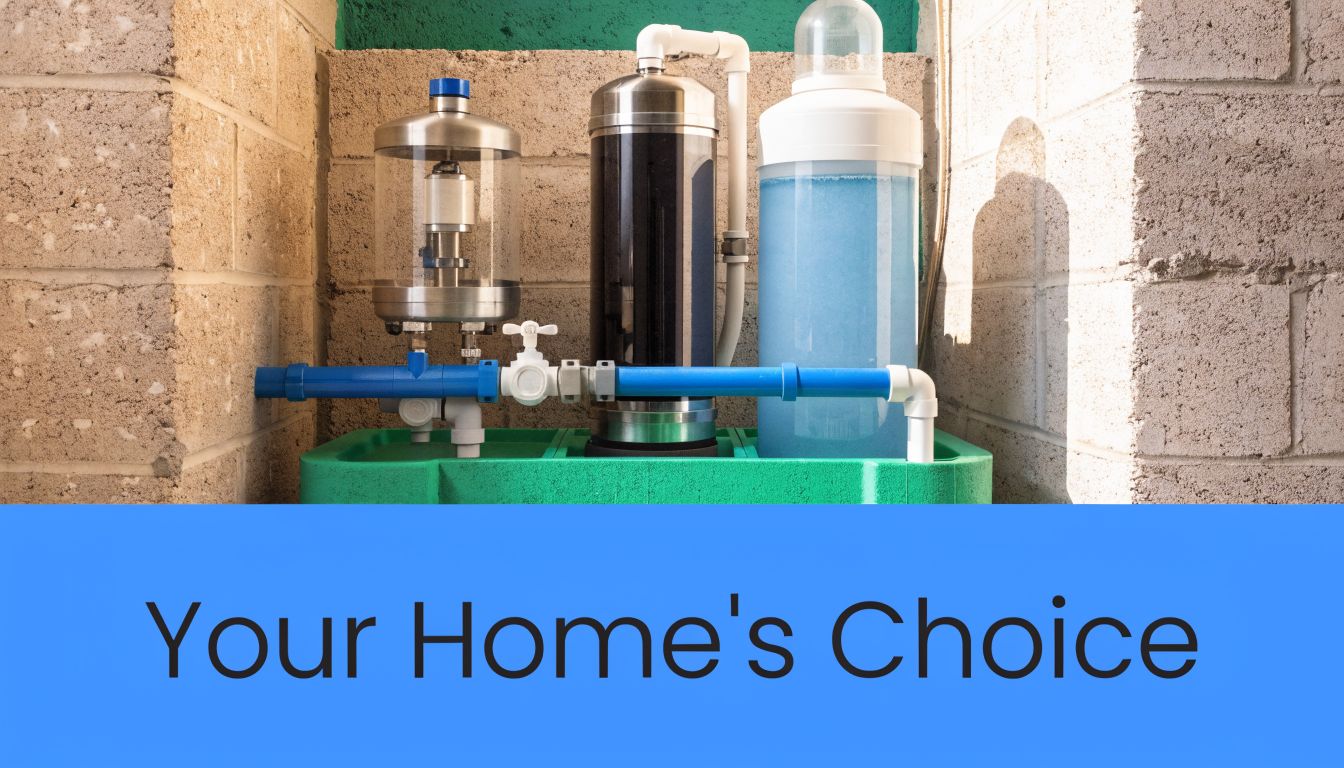
Picking the right technology can feel like a chore, with a dozen different systems all claiming to be the best. Let's walk through the most common and effective options out there. We’ll cover true water softeners that rip minerals out of your water and conditioners that just stop them from making a mess, so you can figure out what truly fits your home and your budget.

The Gold Standard: Ion-Exchange Water Softeners

When most people think of solving hard water, they’re picturing an ion-exchange water softener. This is the classic, time-tested method for actually getting rid of hardness minerals for good. It physically strips the calcium and magnesium from your water, giving you genuinely soft water at every single tap.

These systems work on a pretty clever principle. Your water gets routed into a large tank filled with thousands of tiny resin beads that are coated in sodium (or potassium) ions. As hard water washes over these beads, they act like tiny magnets, grabbing the "hard" minerals and releasing the "soft" sodium ions into the water instead.

This process is incredibly effective. Water softeners can slash water hardness by 95-99%, which is why they’re still the most powerful solution you can buy. This is a huge deal for the millions of households plagued by limescale buildup that wrecks plumbing and appliances.

Of course, those resin beads eventually fill up with all the minerals they’ve collected. That's when the system "regenerates" by automatically flushing itself with a saltwater (brine) solution from a second tank. This bath washes all the gunk off the beads, sends it down the drain, and recharges them with a fresh coat of sodium ions.

Sodium vs. Potassium Systems

You have a choice of what to fill that brine tank with.

  • Sodium Chloride: This is just plain old salt. It's the most common, cheapest, and easiest-to-find option. It’s highly effective and keeps the system humming along without a fuss.
  • Potassium Chloride: If you're on a strict low-sodium diet or just prefer not to add any sodium to your water, potassium chloride is a solid alternative. It works the exact same way but uses potassium instead. Just know that it’s a bit pricier and sometimes harder to track down.

The Low-Maintenance Alternative: Salt-Free Water Conditioners

Maybe you love the idea of preventing scale but hate the thought of lugging 40-pound bags of salt into your basement. If so, a salt-free water conditioner might be exactly what you need. But let's be crystal clear: these systems don't soften the water—they condition it.

What's the difference? They don't remove the calcium and magnesium. Instead, they use a process called Template Assisted Crystallization (TAC). As water flows through the TAC media, the hard minerals are changed into microscopic crystals that can’t stick to surfaces.

These tiny, harmless crystals just flow right through your plumbing without ever building up as limescale on your pipes, faucets, or water heater. You still get the health benefits of drinking mineral-rich water, but you get the massive perk of scale prevention.

Key Takeaway: A salt-free conditioner is a scale-prevention tool, not a water softener. You won't get that slick, "slippery" feeling of truly soft water or see a dramatic change in soap lather. What you will get is protection for your home's plumbing and appliances from destructive limescale.

Reverse Osmosis for Pure Drinking Water

A whole-house system takes care of your showers and laundry, but what about the water you actually drink? A Reverse Osmosis (RO) system is what’s known as a point-of-use filter, usually installed right under the kitchen sink, and it delivers some of the purest water you can get.

RO systems work by forcing water through a special membrane that’s so fine it removes up to 99% of pretty much everything—hardness minerals, chlorine, lead, fluoride, you name it. It's the same technology used to make most bottled water.

A lot of homeowners go for the one-two punch: a whole-house softener to protect the entire home, paired with an under-sink RO system for pristine, amazing-tasting water for drinking and cooking. You can explore our guides for more in-depth advice on building the perfect setup.

This chart can help you quickly find a temporary fix for whatever hard water headache you're dealing with right now.

Flowchart illustrating temporary hard water fixes for laundry, shower, and various surfaces.

As you can see, whether it's your laundry, shower, or kitchen sink, there's always a targeted fix you can use while you figure out a permanent plan.

A Word on Magnetic Descalers

You've probably seen ads for magnetic or electronic "descalers" online. These are little gadgets that you just clip onto your main water line. They claim to use a magnetic field to change the structure of the hardness minerals so they can't form scale.

It sounds fantastic—no salt, no filters, no maintenance. The problem? The science backing these things up is thin, and their performance is highly debated in the industry. Unlike ion-exchange softeners or TAC conditioners, there are no real standards or certifications to prove they actually work. For results you can count on, you’re much better off sticking with proven technology. Even for small appliances, targeted solutions are key, which is why it's worth learning about specific water filters for preventing limescale where it matters most.

Understanding System Installation, Maintenance, and Costs

Picking out a water filtration system is a huge first step, but the journey doesn't end with the price tag. The real commitment comes with installation, ongoing maintenance, and what I call the "total cost of ownership"—what you'll actually spend over the system's entire life.

Figuring this out upfront means no nasty surprises down the road. Let’s walk through what you can realistically expect after you've made your choice, from getting it set up to keeping it running like a champ.

Getting Your System Installed

Once you have your new water softener or conditioner, you've got two roads to take: roll up your sleeves and DIY, or call in a professional plumber. Your decision really boils down to how comfortable you are with basic plumbing and the complexity of the unit you bought.

A DIY install can definitely save you a few hundred bucks if you're handy. Most systems come with pretty good instructions, and the job typically looks something like this:

  • Shut off the main water supply to your house. (Don't forget this part!)
  • Cut into the main water line right where it comes into your home.
  • Plumb the system's inlet and outlet ports into that line.
  • Connect a drain line for the regeneration cycle (this is for traditional softeners).
  • Plug it in and program the control head.

If the thought of cutting pipes gives you a headache, hiring a pro is the stress-free route. A licensed plumber will make sure everything is installed correctly and up to code, which is great for peace of mind. You won't have to worry about leaks or performance problems.

Expect professional installation to run anywhere from $300 to $800, depending on how tricky your plumbing setup is and local labor rates.

The Long-Term Maintenance Checklist

Keeping your system in peak condition is pretty straightforward, but it does need some regular love. The to-do list changes based on what kind of system you have. For a traditional ion-exchange water softener, you'll be the most hands-on.

You’ll want to check the salt level in the brine tank about once a month and top it off as needed. A good rule of thumb is to keep the tank at least one-third full of salt pellets. For a typical family, this usually means adding a 40-pound bag of salt every couple of months.

Beyond just adding salt, it's a smart move to clean out the brine tank once a year. Over time, junk from the salt can create a "salt bridge" or a layer of sludge at the bottom, which can clog things up and stop the system from regenerating properly.

The resin bed—the real heart of the softener—is incredibly tough and can last 15 to 20 years with good care. If you have a lot of iron or chlorine in your water, though, using a special resin cleaner once a year will help it last even longer and work more efficiently.

Salt-free conditioners, on the other hand, are the champs of low maintenance. No salt, no electricity, no drain line. The internal media is built to last for years—often 6 to 10 years—before you even have to think about replacing it.

Calculating the Total Cost of Ownership

To really make a smart decision, you need to look at the whole financial picture. The sticker price is just the starting line. The total cost of ownership includes the unit itself, installation, and all the ongoing expenses.

A quality water softener can cost anywhere from $800 to over $2,500 for the unit alone. Factor in professional installation, and your upfront investment might be closer to $1,200 to $3,300. From there, your main ongoing cost is salt, which will likely run you $100 to $200 per year.

While that might sound like a lot, the payoff is huge. A 2023 study found that a whole-house water softener can cut your soap and detergent use by up to 50%, saving the average family $150 a year. Even better, it can extend the lifespan of appliances like water heaters by 30%, saving you from a premature replacement that could cost over $1,000. If you want to dive deeper into how water quality affects homes, you can explore the full findings on water stress.

Salt-free conditioners have a similar upfront cost but have almost zero ongoing expenses, saving you cash on salt and water. Reverse osmosis systems have their own costs, mainly filter replacements, which can range from $50 to $150 per year. By weighing these lifetime costs, you can pick a system that gives you great water without breaking the bank.

Your Hard Water Questions Answered

Deciding on a water treatment system is a big move, and it's totally normal to have some questions floating around before you commit. Once you start digging into how to fix hard water, you run into all sorts of myths and common worries. Let's tackle them head-on so you can feel good about your decision.

Will My Water Taste Salty?

This is the first thing everyone asks, and I get it. The good news? No, it won't. A properly working water softener uses salt, but only to clean itself. That salty brine solution gets flushed right down the drain during the regeneration cycle—it never makes it to your tap.

A tiny bit of sodium does get swapped for the hard minerals, but we're talking a minuscule amount. To put it in perspective, an 8-ounce glass of softened water has less sodium than a single slice of white bread. Honestly, most people can't taste the difference at all.

Is Softened Water Safe to Drink?

You bet. For the overwhelming majority of people, softened water is perfectly fine for drinking, cooking, and everything else. The only exception might be for someone on a very strict, doctor-ordered, low-sodium diet.

If that's a concern for you, or if you just want the purest water possible, the gold-standard setup is a whole-house softener paired with a reverse osmosis (RO) system under the kitchen sink. The softener protects your pipes and appliances from scale, and the RO filter takes care of the drinking water, removing the trace sodium and just about everything else.

Here's a simple way to think about it: The whole-house softener is for your house. The reverse osmosis system is for your body.

How Do I Pick the Right Size System?

Sizing a softener has nothing to do with your home's square footage. It’s all about two things: how much water you use and how hard that water is. A system that's too small will run itself ragged trying to keep up, regenerating constantly and burning out way too soon. Go too big, and you've just spent more money upfront than you needed to.

To nail the right size, you just need two key numbers:

  • Daily Water Use: A good rule of thumb is 75 gallons per person, per day. So, a family of four will use roughly 300 gallons daily.
  • Water Hardness in Grains Per Gallon (GPG): You'll get this number from your water test kit or a lab report.

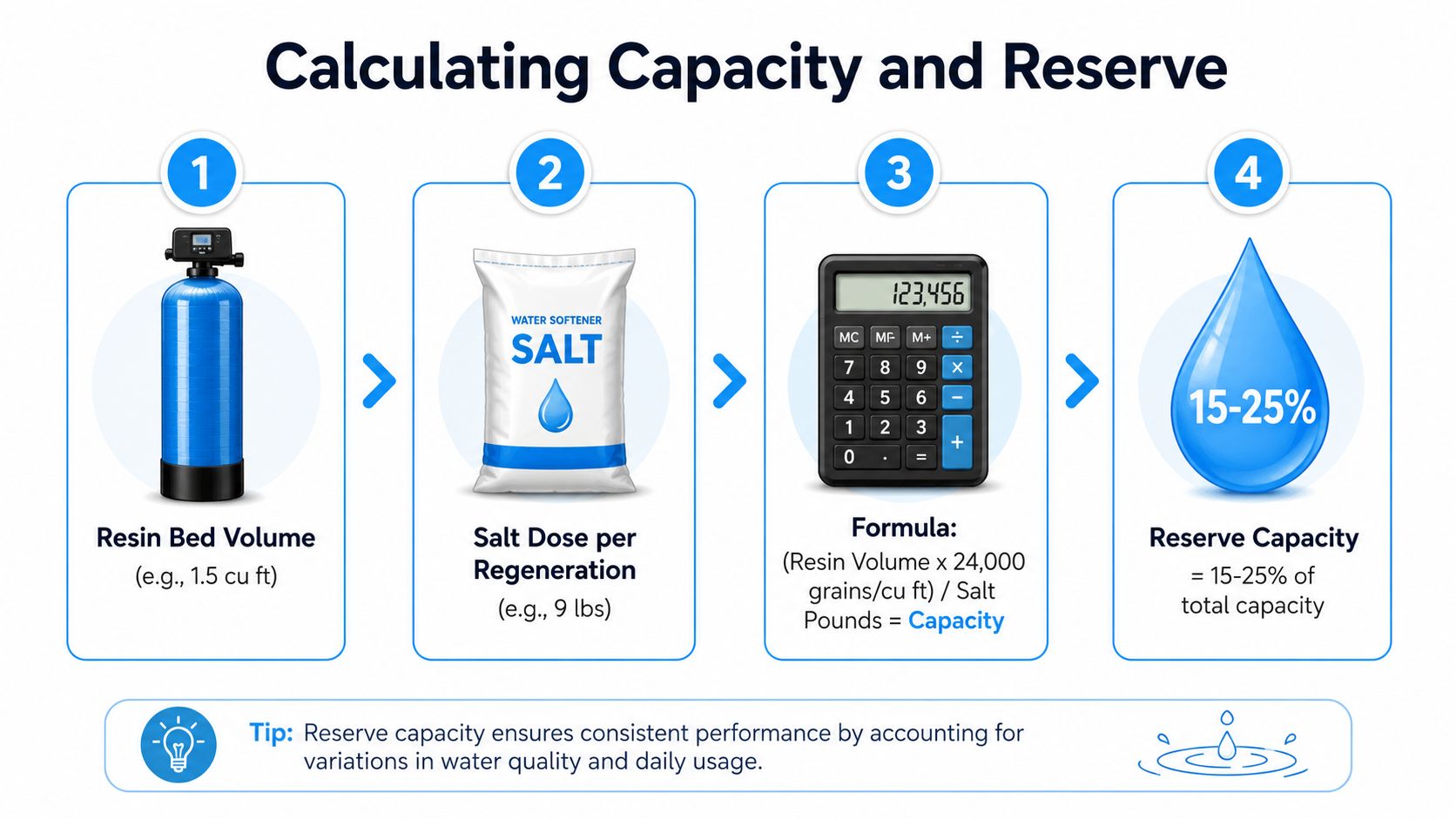
Now for the simple math: multiply those two numbers together. For that family of four with water that’s 10 GPG, you'd get 3,000 (300 gallons x 10 GPG). This means you need a system that can remove at least 3,000 grains of hardness each day. Softeners are rated by their total grain capacity (like 32,000-grain or 48,000-grain), which tells you how much hardness they can pull out before they need to regenerate.

Can I Use Softened Water on My Plants and Garden?

This is one area where you need to be a little strategic. Most houseplants and garden veggies aren't big fans of sodium. Over time, watering with softened water can cause salt to build up in the soil, which can stunt their growth or even kill them.

Thankfully, the fix is incredibly simple. When a softener is installed, the plumber should always set it up to bypass the outdoor hose bibs. Most systems also come with a built-in bypass valve. This gives you the best of both worlds: soft water inside for your showers and appliances, and the untreated hard water your garden needs—which still has the calcium and magnesium that plants actually like.


At Water Filter Advisor, our goal is to cut through the confusion and give you clear, practical information to find the right water solution for your home. From our in-depth guides to unbiased reviews, we’re here to help you get safer, better-tasting water. Explore all of our resources today at https://www.waterfilteradvisor.com.

How to Banish Hard Water for Good: Your Guide to Removing Calcium

If you’re waging a never-ending war against crusty white buildup on your faucets and fixtures, you've met the villain of this story: calcium. The two most powerful heroes in the fight against hard water are a whole-house water softener or a targeted reverse osmosis (RO) system. Think of them as the ultimate tag team for stopping that chalky limescale from ever showing up to the party.

Your Quick Guide to Solving Hard Water Nightmares

Let's be real—if your shower doors look permanently cloudy and your soap stubbornly refuses to lather, you’ve got hard water. The culprit is an excess of dissolved calcium, and it’s more than just an eyesore. Over time, that scaly buildup is like cholesterol for your home's arteries, choking the life out of your appliances and clogging your pipes.

It's a frustrating, soap-scum-covered problem, but you don't have to live with it. I've seen countless homeowners reclaim their homes from the clutches of calcium by choosing the right filtration strategy. And it almost always boils down to one of two battle plans.

Choosing Your Filtration Strategy

The first, and most comprehensive, fix is a whole-house water softener. This bad boy gets installed right where your main water line enters your house, treating every single drop you use. It works through a clever bit of chemistry called ion exchange, where it essentially tricks the "hard" calcium and magnesium ions into swapping places with "soft" sodium ions. This protects your entire plumbing infrastructure—from the water heater you never see to the coffee maker you use every morning.

Now, if your main headache is the funky taste of your tap water or the film on your cooked veggies, a point-of-use system like reverse osmosis is a fantastic option. These are typically installed right under the kitchen sink. An RO system is the overachiever of water filters, pushing water through a special membrane that strips out a ridiculously high percentage of contaminants—calcium included. For more in-depth info, you can find tons of professional advice on water filtration to help you weigh your options.

The decision often comes down to this: Are you looking to protect your entire home's plumbing and appliances, or do you crave ultra-pure water at a specific tap for drinking and cooking?

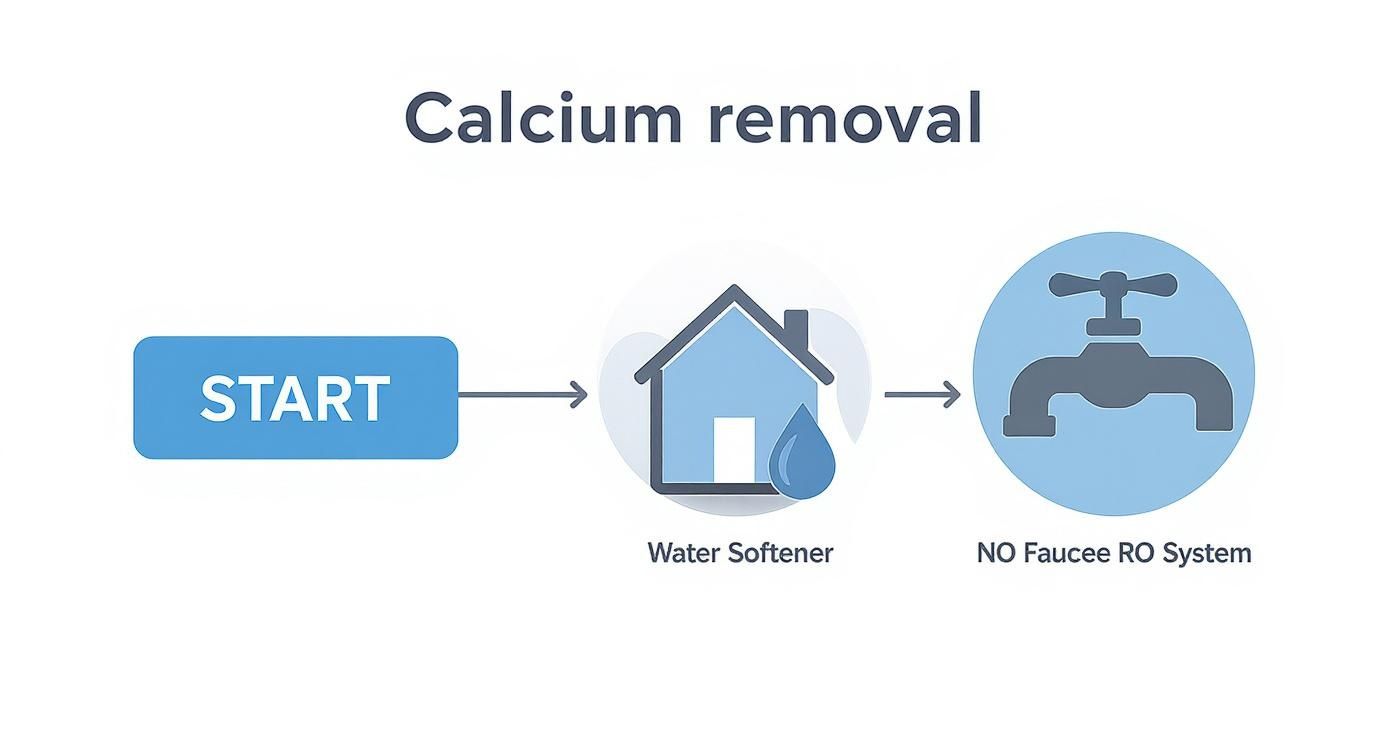
This simple decision tree can help you visualize which path is right for your home.

A flowchart showing the process of calcium removal from water, involving a water softener.

As you can see, the scope of your problem—whether it’s a house-wide menace or a kitchen-specific annoyance—points you directly to the most logical solution. While these systems prevent future issues, if you're already dealing with existing spots on your glass surfaces, a good guide on how to get hard water spots off windows can help you clean up the existing mess.

Comparing Calcium Removal Methods at a Glance

To make things even clearer, I put together a quick table comparing the top methods for kicking calcium to the curb. It breaks down what each is best for, the typical cost you can expect, and the main benefit you'll get.

Method Best For Typical Cost Range Primary Benefit
Water Softener Whole-house protection for all pipes and appliances $800 – $3,000+ Prevents limescale buildup everywhere in the home
Reverse Osmosis Purifying drinking and cooking water at a single tap $250 – $900 Removes up to 99% of all dissolved solids for pure taste

This table gives you a solid starting point. Think about your budget and your biggest hard water frustration, and the right choice should become pretty clear.

Pinpointing Your Home's Hard Water Severity

Before you can declare war on hard water, you need to know the strength of your enemy. Guessing at your water’s hardness is like trying to bake a cake without a recipe—you might end up with something edible, but it’s definitely not going to be perfect. Nailing down the specifics is the essential first step to choosing the right filtration system for your home.

The good news? You don't need a Ph.D. in chemistry to figure this out. A simple at-home test can give you a pretty good idea of what's going on with your water, confirming your suspicions before you commit to a solution.

A water bottle and a testing strip on a kitchen counter with a 'Test Your Water' banner.

The Simple Soap Suds Test

Think of this as your five-minute hard water detective work. It's not perfectly scientific, but it’s a surprisingly good indicator that can tell you if you're on the right track.

Here's how to do it:

  1. Grab a clean, clear water bottle with a cap that seals tightly.
  2. Fill it about one-third of the way with your cold tap water.
  3. Add 10 drops of a pure liquid soap, like a basic Castile soap. Don't use detergents; many are designed to create suds even in the hardest water.
  4. Shake it like you mean it for about 15 seconds.

Now, observe the results. If the bottle is brimming with fluffy, rich suds and the water underneath is clear, congratulations—you likely have soft water. But if you’re looking at a sad, scummy film with just a few pathetic bubbles and cloudy water, you've got hard water. The soap has reacted with the calcium to create gross soap scum instead of a luxurious lather.

Getting a Precise Reading with Test Kits

The soap test tells you there's a problem, but it doesn't tell you the scale of it. To properly size a water softener or select the right filter, you need an actual number. That’s where water hardness test kits come in—they’re cheap, easy to find, and even simpler to use.

Most kits come with test strips that you just dip into a sample of your tap water. After a moment, the strip changes color. You then match that color to a chart to get a specific measurement of your water's hardness.

Pro Tip: For the most accurate reading, test cold water straight from a faucet that has no existing filtration. Your outdoor spigot or a utility sink is perfect. This gives you a true baseline of the water coming into your house before it's been treated in any way.

Understanding the Numbers: GPG vs PPM

Your test kit will show results in one of two units: grains per gallon (GPG) or parts per million (PPM). Don't let the terms intimidate you; they're just different ways of measuring the exact same thing.

  • Parts Per Million (PPM): This is the same as milligrams per liter (mg/L). It simply tells you how many milligrams of calcium carbonate are present in one liter of water.
  • Grains Per Gallon (GPG): This is the industry standard for water softeners in the U.S. For context, one GPG is equal to 17.1 PPM.

If your kit only shows a PPM reading, just divide that number by 17.1 to get your GPG. That GPG number is the golden ticket you'll need when you start shopping for a water softener.

The U.S. Geological Survey uses these numbers to classify water hardness, giving us a clear set of benchmarks.

Water Hardness Level Grains Per Gallon (GPG) Parts Per Million (PPM)
Soft 0 – 3.5 0 – 60
Moderately Hard 3.5 – 7.0 61 – 120
Hard 7.0 – 10.5 121 – 180
Very Hard Over 10.5 Over 180

Once you have your GPG, you’ve got the most critical piece of the puzzle. Generally, if your water tests at 7 GPG or higher, investing in a system to remove calcium is going to make a noticeable, life-improving difference in your home.

Whole-House Water Softeners: The Ultimate Calcium Defense

If you're sick of fighting a losing battle against hard water in every single room, it's time to stop playing defense and bring in the heavy artillery. For a truly comprehensive, set-it-and-forget-it solution, nothing beats a whole-house water softener. This is the undisputed champion of hard water treatment, installed right where your main water line enters your home to shield every pipe, faucet, and appliance from the tyranny of scale buildup.

Think of it as a bouncer for your entire plumbing system. Its one job is to catch the troublemakers—calcium and magnesium ions—and swap them out for something far more civilized before they can cause any problems. This process is called ion exchange, and it's the gold standard for a reason.

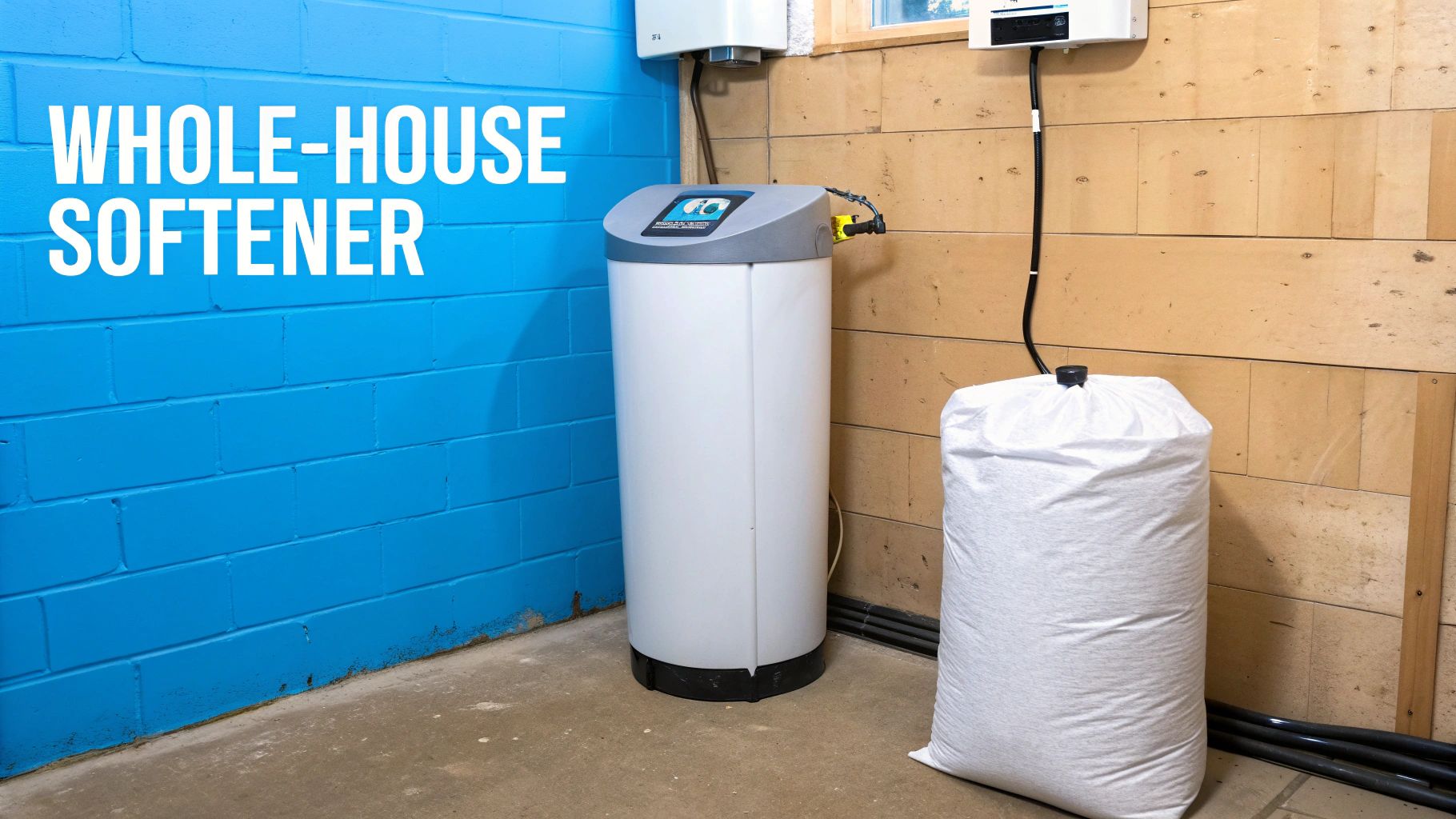
A water softener and salt bag in a basement with blue concrete block walls and wood paneling.

So, How Does This Ion Exchange Magic Work?

Inside every salt-based water softener is a tank packed with thousands of tiny resin beads. These beads come pre-loaded with harmless sodium ions. As your hard water flows through this tank, the calcium and magnesium ions—which carry a stronger positive charge—are magnetically drawn to the resin beads.

They literally kick the sodium ions off the beads and take their place. The newly "softened" water, now carrying the sodium ions, flows right on into your house. It’s a simple, elegant trade that happens millions of times as water passes through the system.

This process continues until the resin beads are completely saturated with calcium and magnesium, with no more sodium left to trade. At that point, the softener kicks into a self-cleaning mode called regeneration.

The Regeneration Cycle: What to Expect

Regeneration is just the softener’s way of hitting the reset button. The system automatically flushes the resin tank with a brine solution—a mix of salt and water from a separate tank. This concentrated saltwater bath washes away all the captured calcium and magnesium, sending them harmlessly down the drain.

This process recharges the beads with a fresh supply of sodium ions, getting them ready to soften more water. It’s usually programmed to happen in the middle of the night, based on your water hardness and how much water your family uses.

Your only job? Keep the brine tank topped up with water softener salt. Depending on your system and water quality, you might only need to add a new bag of salt every month or two. It’s a tiny bit of maintenance for total home protection.

Sizing Your System for Peak Performance

Picking the right size softener is absolutely critical. If it’s too small, it will constantly be regenerating, wasting salt and water. If it's too big, you’ve overspent, and it can lead to other issues.

Sizing boils down to two key numbers:

  • Your Water Hardness: Measured in grains per gallon (GPG), which you found with your water test.
  • Your Daily Water Usage: A solid estimate is 75 gallons per person, per day. A family of four would use about 300 gallons daily.

To figure out your daily softening needs, just multiply those two numbers.

Here’s a quick example:
Let's say a family of four has water with 15 GPG of hardness.
4 people x 75 gallons/person = 300 gallons per day
300 gallons x 15 GPG = 4,500 grains of hardness to remove daily.

This number tells you how much work the softener has to do each day. Softeners are rated by their grain capacity (e.g., 32,000-grain), which is how many grains they can remove before needing to regenerate. A perfectly sized system should only need to regenerate about once a week.

Investing in a whole-house system is a big move, but it provides a definitive answer to the hard water problem. For those wanting to dig deeper, exploring guides on the best whole house water filtration system for your home can provide even more context. A properly chosen softener will protect your home, save you money on appliance repairs, and improve your daily life—from softer skin to cleaner, brighter clothes.

Targeted Purity with Point-of-Use Filtration

What if your biggest headache isn't protecting your entire plumbing system, but just getting a great-tasting, clean glass of water from the kitchen sink? Maybe you're renting and can't install a big whole-house system, or perhaps you just don't see the point in treating the water you use to flush toilets.

This is exactly where point-of-use (POU) filtration shines.

Instead of a broad, house-wide approach, POU systems are like sharpshooters. They focus on a single faucet—usually in the kitchen—to give you exceptionally pure water right where you need it for drinking and cooking. When the goal is specifically how to remove calcium from water you're going to consume, the hands-down winner is a reverse osmosis system.

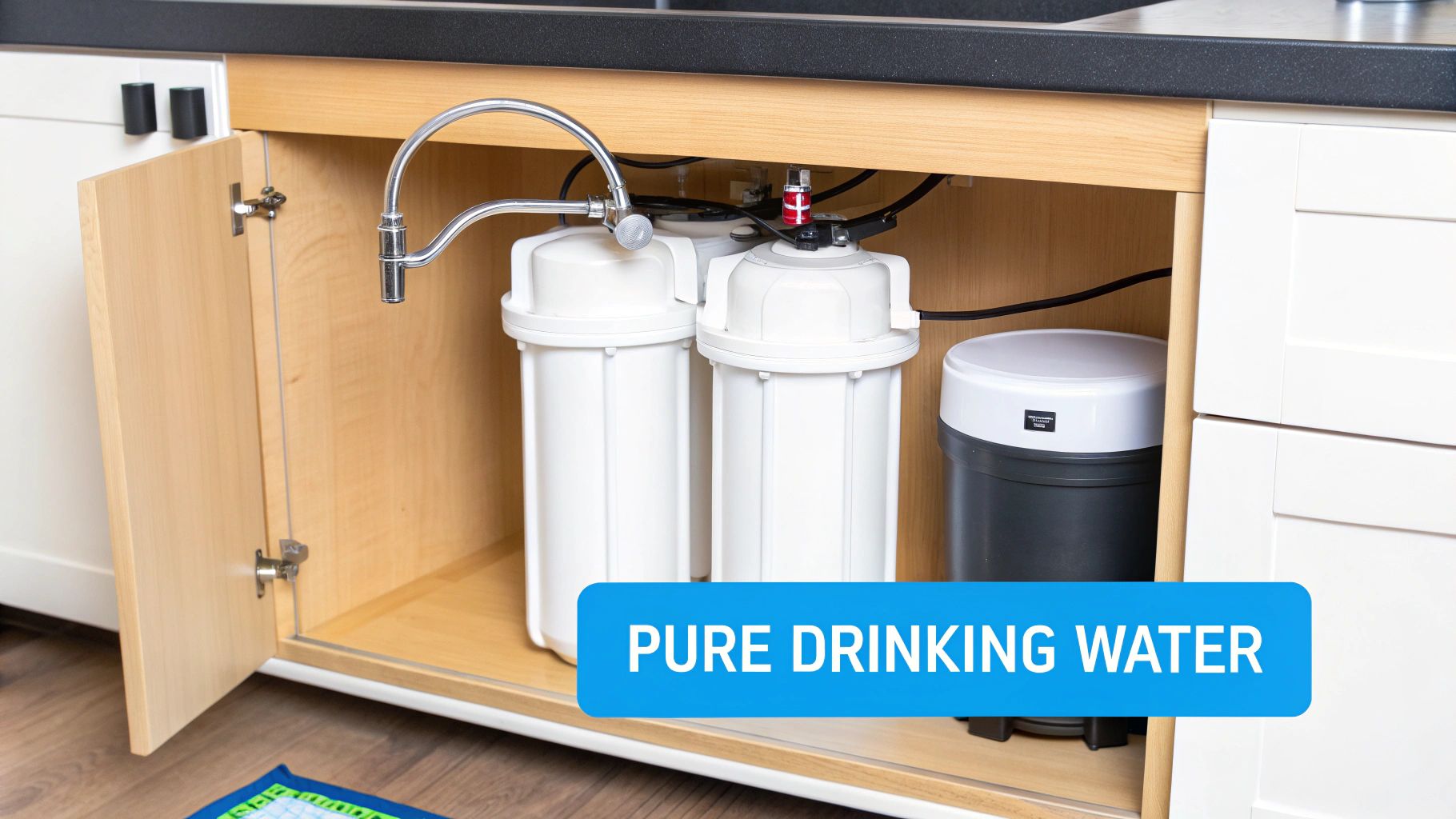
An under-sink water filtration system provides pure drinking water from a chrome faucet in a kitchen cabinet.

Reverse Osmosis: The Under-Sink Powerhouse

A reverse osmosis (RO) system is a multi-stage workhorse that typically lives in the cabinet right under your kitchen sink. This isn't your average pitcher filter; it's in a whole different league.

The magic happens at its semi-permeable membrane. Think of it as a microscopic bouncer at an exclusive club—the pores are so tiny that only water molecules are on the VIP list.

When your tap water is pushed against this membrane, the water molecules squeeze through to the clean side. Everything else—calcium, magnesium, lead, chlorine, and a whole host of other dissolved solids—gets rejected and washed down the drain. The result is stunningly pure water, with up to 99% of all contaminants stripped away.

Reverse osmosis doesn't just soften water; it purifies it. A water softener simply swaps calcium ions for sodium ions. An RO system physically removes the calcium completely, along with nearly everything else.

This makes RO the perfect fix if your goal is bigger than just fighting limescale. You get water that's not only free from hardness minerals but also tastes incredibly crisp and clean because all the other gunk affecting flavor and odor is gone, too.

How an RO System Works Under Your Sink

It helps to know what's going on inside the unit to appreciate its power. A typical under-sink RO system follows a few key steps:

  • Pre-Filters: Before the water even gets near the main membrane, it flows through sediment and carbon pre-filters. These are the bodyguards, catching big stuff like rust, dirt, and chlorine, which protects the delicate RO membrane from getting clogged or damaged.
  • The RO Membrane: This is where the real heavy lifting happens. Water pressure forces H₂O molecules through the membrane, leaving the calcium ions and other impurities behind to be flushed away.
  • Storage Tank: The RO process is slow and steady, so the purified water collects in a small pressurized tank. This gives you a ready supply of clean water the moment you open the tap.
  • Post-Filter: As a final touch, water from the tank passes through one last carbon filter on its way to your glass. This "polishing" filter removes any potential lingering tastes or odors from the tank.

All of this is hooked up to a sleek, dedicated faucet right on your sink. It’s the perfect setup for filling a water bottle, making coffee, or cooking pasta with water you know is as clean as it gets.

What About Water Distillers?

Another POU method that gets rid of calcium is distillation. A water distiller works by boiling water into steam, which leaves all the minerals and contaminants behind. The steam is then cooled and condensed back into pure liquid water.

Distillation is incredibly effective—it produces some of the purest water you can get. For day-to-day use in a home, though, distillers have some real-world drawbacks compared to RO systems.

Feature Reverse Osmosis (RO) Water Distiller
Speed Instant access from a tap Slow; takes hours to make a gallon
Convenience On-demand water Batch process; you have to fill it
Energy Use Uses water pressure Needs electricity to boil water
Installation Under-sink plumbing Sits on your countertop

While distillation is a great technology, its slow, batch-by-batch process just isn't practical for a busy kitchen that needs clean water now. For most homeowners who want to remove calcium for drinking and cooking, the on-demand convenience of a quality RO system makes it the obvious choice.

Getting It Installed and Keeping It Running

Choosing your water filtration system is the first big win, but the job isn't done yet. Proper installation and a little bit of upkeep are what will give you years of hassle-free, calcium-free water. It's like buying a fantastic new car; you still have to change the oil to keep it running smoothly.

This is your game plan for getting everything set up correctly and keeping it in top shape, whether you're a weekend DIY warrior or you'd rather hand the job to a pro. A little effort now saves you from major headaches down the road.

Setting Up Your Water Softener

A whole-house water softener is a serious piece of equipment, and its installation is more involved than, say, a new toaster. It needs to be plumbed directly into your main water line, usually between your water meter and your water heater. This is key because it ensures every drop of water entering your home gets treated.

If you've got solid plumbing skills, you can definitely tackle this yourself. But if you're even a little hesitant, call a plumber. A pro can get it done in a few hours, guaranteeing no leaks and a perfect setup from the start.

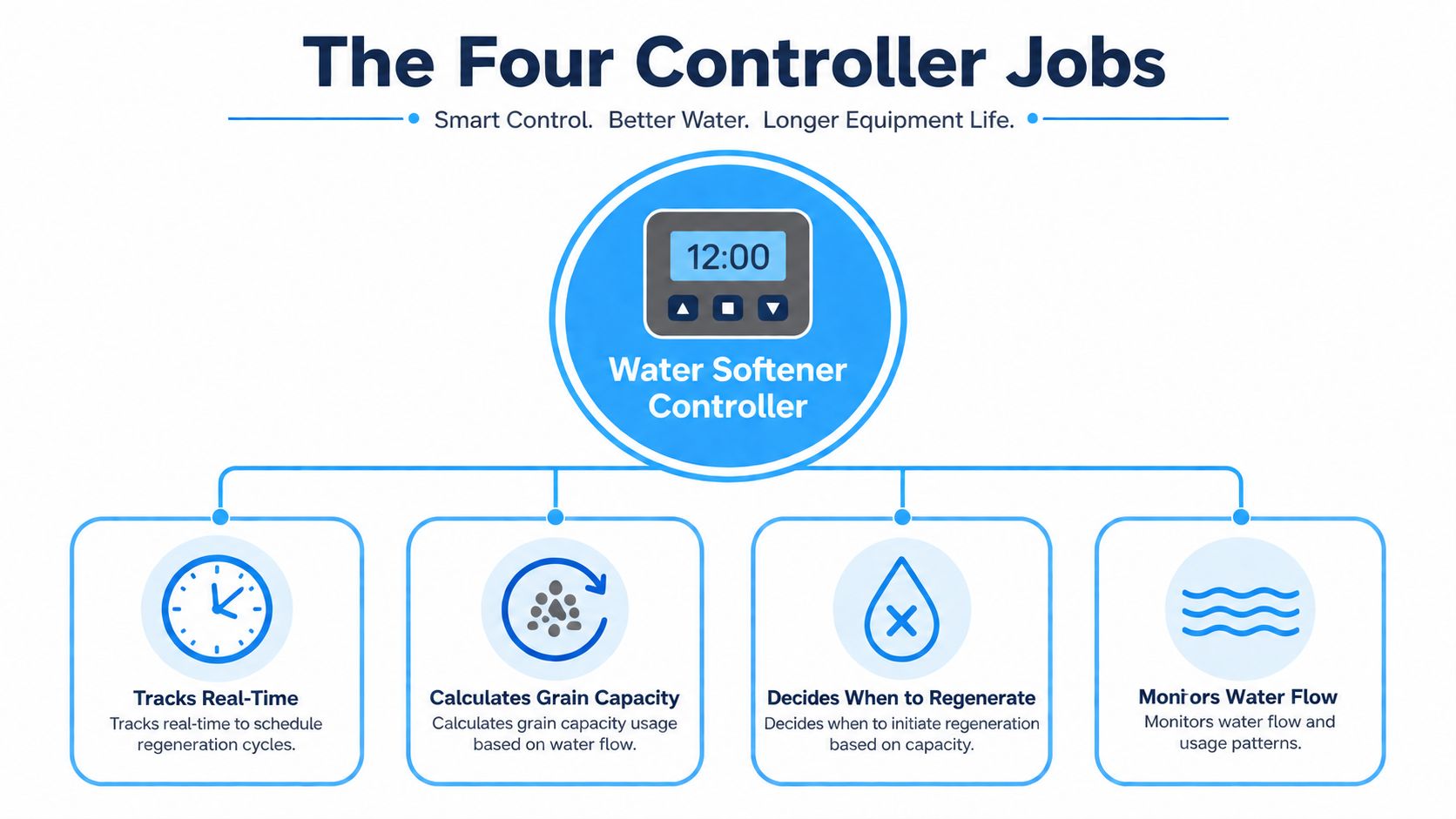
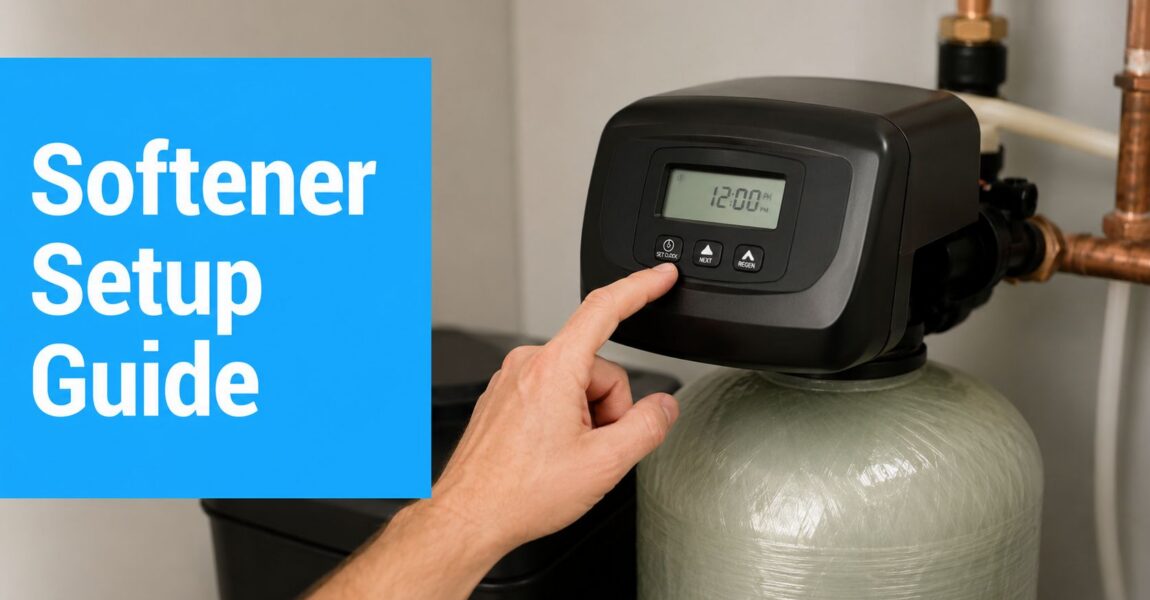
Once it's in, your most important job is to program the regeneration schedule. This is the automatic cleaning cycle where the system flushes out the collected minerals and recharges itself. Most modern softeners have a simple digital interface where you'll enter two numbers:

  • Your Water Hardness (GPG): That number you got from your water test.
  • The Number of People in Your Home: This helps the system estimate your daily water use.

With that info, the softener figures out the best time to regenerate—usually in the dead of night. Nailing this setting is critical for efficiency. It keeps the system from wasting salt and water by regenerating too often, or worse, not regenerating enough and letting hard water sneak through.

The Simple Routine of Softener Upkeep

After that initial setup, you’ll be pleasantly surprised by how low-maintenance a water softener is. Your main responsibility is just keeping the brine tank topped up with the right kind of salt.

  • Check Salt Levels: Once a month, just pop the lid and take a peek. As a rule of thumb, you always want the salt level to be higher than the water level.
  • Watch for "Salt Bridges": Every now and then, a hard crust can form over the top of the salt pile. This "bridge" stops the salt from dissolving into the water below. If the salt level hasn't budged in a while, give the side of the tank a gentle whack or use a broom handle to break up the crust.

And that’s about it. A well-maintained softener can easily last 15 years or more, quietly protecting your pipes and appliances from the shadows.

Pro Tip: Check your softener’s manual for its preferred salt type. Some newer high-efficiency models work best with purer salt pellets, while others are perfectly happy with the less expensive salt crystals.

Installing and Maintaining an RO System

Putting in an under-sink reverse osmosis (RO) system is a much more common DIY project. The kits usually come with everything you need and clear instructions. You’ll be tapping into your cold water line, drilling a small hole in your countertop for the dedicated RO faucet, and connecting the various filter housings and the storage tank.

The most important part of owning an RO system is sticking to the filter replacement schedule. An RO system is only as good as its filters, and if they get clogged, performance will plummet.

Filter Type Typical Replacement Schedule What It Does
Sediment Pre-Filter Every 6-12 months Catches the big stuff like rust, sand, and dirt.
Carbon Pre-Filter Every 6-12 months Removes chlorine, which can destroy the RO membrane.
RO Membrane Every 2-4 years This is the heart of the system; it removes the calcium.
Carbon Post-Filter Every 12 months Gives the water a final "polish" for a clean taste.

Put these dates on your calendar or set a reminder on your phone. Swapping filters on time is the number one thing you can do to ensure your RO system keeps delivering pure, great-tasting water. If you notice the water pressure from your RO faucet starting to drop, that's a classic sign a filter change is overdue.

Got Questions About Getting Rid of Calcium? We've Got Answers.

Even after doing your research, a few questions can still bubble up. That’s completely normal. When you’re dealing with something as vital as your home’s water, you want to be 100% sure you're making the right call. Let's tackle some of the most common things homeowners ask when they're figuring out how to remove calcium from their water.

Getting straight answers now means you won't have any surprises later. You can move forward feeling confident you’ve picked the best solution for your house and family.

Will a Water Softener Make My Water Taste Salty?

This is probably the number one concern we hear, but the short answer is no. The ion-exchange process adds a very small amount of sodium, not table salt (sodium chloride). The amount is directly tied to your water's hardness—the harder the water, the more sodium is needed to soften it.

Honestly, for most people, the amount of sodium is less than what’s in a single slice of white bread. The vast majority of people never even notice a change in taste.

Worried because you're on a strict low-sodium diet? You've got options. You can use potassium chloride pellets instead of sodium chloride. Another popular route is to pair your softener with an under-sink reverse osmosis system for drinking and cooking water, which will remove that added sodium anyway.

Can I Just Use a Standard Water Filter Pitcher to Remove Calcium?

It’s a great question, but unfortunately, those popular fridge pitchers are the wrong tool for this job. They typically use activated carbon filters, which are fantastic for making water taste and smell better by removing things like chlorine.

But they do absolutely nothing to remove dissolved hard minerals like calcium and magnesium. To really get rid of the minerals causing that crusty limescale, you need a system specifically designed for it, like an ion-exchange water softener or a reverse osmosis filter.

Is It Bad for Me to Drink Hard Water with Calcium in It?

Health-wise, drinking hard water is perfectly safe. In fact, your body needs essential minerals like calcium and magnesium to function properly. The whole reason for removing calcium from water has nothing to do with health—it's all about protecting your home and making your life easier.

The real problems caused by hard water are mechanical and cosmetic:

  • Limescale buildup that ruins appliances and clogs up your pipes.
  • Annoying spots and a filmy residue on your dishes, shower doors, and faucets.
  • Dry, itchy skin and hair that feels dull and brittle because of soap scum.

At the end of the day, people install these systems to stop expensive damage to their homes and to make daily tasks like cleaning and showering a whole lot more enjoyable.


Figuring out the world of water filtration can seem like a lot, but Water Filter Advisor is here to keep it simple. We create clear, research-backed guides to help you land on the perfect solution for your home's unique water needs. Check out our in-depth reviews and expert advice at https://www.waterfilteradvisor.com to get safer, better-tasting water today.

Water Filtration System 

Water Filtration System 


Water Filtration System this video is about what happened to my house’s water filtration and what the worker did to fix our problem.The problem was us having chemicals in our water such as Bromine and chlorine and having hard water watch full video to see what the worker did to get us healthy clean water. I’m so happy that we can have fresh clean water for ourselves our health and our
pets health.It’s just as simple as calling a company to see if you have clean safe drinking water then go from there.
00:00-Intro
0:24-Fullvideo
19:00-Outro
My Name Is Gina Young and Cooking is a True Passion Of mines and i want to share my Gift that God has Given me with the world I love to do cooking tutorials how to cook Gina Young Style
So If you want to learn How to cook this is the channel you want to watch or if you just love a good recipe i have over 1,400 cooking videos on this channel and counting i upload new content daily.
Feel free to Check out my playlist you will find just about any recipe you’re looking for.
until the next video God Bless You All Goodnight. In The Kitchen With Gina Young Gina Young Recipes How To Cook Gina Young Cooking Channel Best Cooking Channel On Youtube For Beginners Water Filtration System Water Filtration. Good water

#WaterFiltrationSystem 
#WaterFilter
Water
#WaterSoftener
#WholeHouseWaterFilterReplacement
#WaterFiltrationSyste m
#waterPurification
#CleanWater
#waterfilters
#WaterFilterInstallation
#InTheKitchenWithGinaYoung
#HowToCook
#HowTo
#BestCookingChannelOnYoutubeForBeginners
#GinaYoungCookingShow
#GinaYoungCookingChannel
#GinaYoungRecipes

Original Video Source

PUR Water Filter Pitcher - Ultimate 7-Cup Water Pitcher (PPT700W)

PUR Water Filter Pitcher – Ultimate 7-Cup Water Pitcher (PPT700W)


Water should be PUR.

We have been developing innovative and affordable technologies for superior water filtration for over 30 years.

PUR Faucet Filtration Systems are certified to remove 99% of Lead.
Lead can enter your water through the pipelines and plumbing going into your home. Exposure to Lead can cause delays in mental or physical development in children as well as kidney problems and high blood pressure in adults.

Quality Water Treatment has been delivering best-in-class water treatment solutions and customer service to people and businesses across North America since 1990. We at Quality Water Treatment can help you choose the best water for you. We have a variety of Quality Water Systems and products to choose from. You may also use our FREE water softener calculator.

To learn more about water treatment, visit

Disclaimer: This presentation is for educational purposes only. Opinions or points of view expressed in this presentation represent the view of the presenter at the time of recording and do not necessarily represent the official position or policies of Quality Water Treatment, Inc.
Any prices, costs, data, or product information is deemed reliable at the time of recording but subject to change without notice.

#PUR #PURWaterFilter #PURPitchers #PURFilters #PURDispensers #QualityWater #WaterFilter #watersofteners #watersoftening #softener #hardwater #watersoftenersystems #softeners #homeimprovement #watersoftenersforsale #softening #watersoftenerwork #uswatersystems #purification #bestwatersoftenerreview #watersoftenerinstallation #WaterIonizerForSale #QualityWaterTreatment

Original Video Source

WATER EXPO INDIA 2022!WATERPURIFIER EXPO PUNE !RO BUISSNES EXBHITION ! WASTEWATER FILTRATION!ROSPARE

WATER EXPO INDIA 2022!WATERPURIFIER EXPO PUNE !RO BUISSNES EXBHITION ! WASTEWATER FILTRATION!ROSPARE


WATER EXPO INDIA 2022!WATERPURIFIER EXPO PUNE !RO BUISSNES EXBHITION ! WASTEWATER FILTRATION!ROSPARE

—————– VIDEO DISCCRIPTION ———–
Hi friends in this video we are going to Talk about water purifier expo explain review.
in this video we are going to talk about best water purifier in India best water purifier in 2022 RO water purifier related all explanation combo water purifier information water purifier #expo reviews and use explanation.

Doston aaj ke is video ke madhyam se main aapko water purifier Expo water expo India 2022 k bare men pura review Karke batane wala hun. WatePurifier exhibition main कौन-कौन si companiyan aaye hain aur unke domestic aur industrial all product spare part aur unki taknik new technology ke bare mein ham janenge. Agar aap technology ke andar interest rakhte hain ya koi bhi naya business start karna chahte hain to yah video aapke liye bahut hi interesting aur informative hone wali Hai. Doston agar yah video aapko pasand aati hai to like share jarur Karen taki iska fayda bahut sare logo ko hojaye.
________________________________________

🙋दोस्तों आपके मन में कुछ भी विडियो रिलेटेड क्यूरी हो तो मुझे कमेंट करें अगर वीडियो पसंद आए तो सब्सक्राइब लाइक और अपने दोस्तों के साथ शेयर जरूर करें 🙏
_________________________________________
Mr . JAHANGIR PATHAN

Video Contact Details: 9518985225

Email: jahangirpathan56@gmail.com

My Facebook Page :👇
My Website 👉
My Aap link 👉

Channel Link 📢

—————– OUR CERTIFIED LINK —————

AC COOLER
👉

Water Purifier
👉

Best deal offer buy now

anti theft lock :👉

Fire Alarm Safety 786Rs
👉

Boya Mice
Camera
top mobile
top Gadagets
Top Blutooth
_______________ MY PLAY LIST —————————————-

BRAND SATHI Recent Uploades Video

MOBILE & SMART GADETS unboxing reviwe

WATER PURIFIER SYSTEM spare parts Expo vlogs

Online earning affiliate offline..

—————— COVER THIS TOPIC VIDEO ——-
best water purifier kaun sa hai.
sabse sasta ro filter kaun sa hai.
sabse sasta best water purifier.
Water Exbhition me konsi company ayi.
best water purifier
waterpurifier installation
water purifier for home
water purifier project
water purifier 2022
rouv water purifier
water purifier machine
water purifier
best water purifier in India
kent Water Purifier
aqua water purifier
aquaguard water purifier
RO water purifier system
brand sathi waterfilter
offer
@tech #technology technews
सबसे शुद्ध पानी!BESTWATER PURIFIER2022🇮🇳#WATERPURIFIER #Filter BuyingGuide ROटेक्नोलॉज? #KENTRO
WATER EXPO INDIA 2022!#waterpurifier #expo pune!#ro #BusinessExbhition!WASTE-WATER FILTER PLANT STP

————————— EXTRA TAG ——————-
Rro waterpurifier #waterfilter #purifier #BrandSathi #Reviwemazha

@technichal gurgji @Manoj Dey
@TarkinTech @Techy @Gizmogayan
@Techniacl Yogi @technology #Filter #BRANDSATHI

Original Video Source

How to Replace a Water Softener | Whole House Water Filter Installation

How to Replace a Water Softener | Whole House Water Filter Installation


My water softener has been giving me problems lately, so I decided it was finally time to replace the softener, but I won’t be installing another one….I will be replacing the water softener with a whole-home water filter system

DIY Projects:

D100 Videos:

Charger Videos:

VW Beetle Videos:

Fitness Videos:

You can always find me here:
Webpage:
Facebook:
Instagram: @Moonbuilt
Twitter: @BuiltMoon

Tools Used For This Build:
APEC 3-Stage Filter System Amazon
Copper Tube Cutter Amazon
Sharkbite Disconnect Clips Amazon
Sharkbite Disconnect Tool Amazon
Sharkbite Deburring/Depth Gauge Amazon

What I Use To Film:
Canon EOS M50:
DJI Osmo Action:
Zhiyun Smooth 4 Gimbal:
Rode VideoMic Me-L:
Rode VideoMicro:
Rode Wireless Go Wireless Lavalier:
Vijim LED Video Light:
Thronmax MDrill Zero Microphone:
AmazonBasics 60-Inch Lightweight Tripod with Bag:
Vastar Smartphone Mount:

eBay –
Amazon –
Automotive Parts at Jegs –
Custom T-shirt Designs at Printful –

Disclaimer: Some of these links are affiliate links where I’ll earn a small commission if you make a purchase at no additional cost to you. This helps support the channel and allows us to continue to make videos like this. Thank you for the support! All opinions are my own and presented without editorial input from outside sources.

Disclaimer:
Due to factors beyond the control of MoonBuilt Garage and WJM Industries LLC, we cannot guarantee against improper use or unauthorized modifications of this information. MoonBuilt Garage and WJM Industries LLC assume no liability for property damage or injury incurred as a result of any of the information contained in this video. Use this information at your own risk. MoonBuilt Garage and WJM Industries LLC recommend safe practices when working on vehicles and or with tools seen or implied in this video. Due to factors beyond the control of MoonBuilt Garage and WJM Industries LLC, no information contained in this video shall create any expressed or implied warranty or guarantee of any particular result. Any injury, damage, or loss that may result from improper use of these tools, equipment, or from the information contained in this video is the sole responsibility of the user and not MoonBuilt Garage or WJM Industries LLC.

Produced and owned by WJM Industries LLC

#MoonBuiltGarage #DIY #howto #woodworking #storage #storageideas #storagesolutions #woodflag #americanflag #rusticflag #woodshop #garageshop #shopideas #workshop #tools #maker #woodworkingtools #tooltip #woodworkingprojects #garagelife #garagefun #garagenight #builder #homerepair #homeimprovement #homerepairdiy #homeimprovementdiy

Original Video Source

Crystal Quest Water Filtration Systems

Crystal Quest Water Filtration Systems


Crystal Quest is a manufacturer of water and air filtration products. We ship our products worldwide and serve Residential, Commercial, and Industrial markets.

Crystal Quest has been in the water filtration business for over 30 years. Throughout this time we have learned what matters most to our customers. We offer a wide range of products to be sure that we can accommodate nearly any specific water problem or preference and take pride in our customer service and support. We want to help people and families pick the perfect water filter system and oftentimes will assess water reports specific to their location in order to achieve this.

Quality Water Treatment has been delivering best-in-class water treatment solutions and customer service to people and businesses across North America since 1990. We at Quality Water Treatment can help you choose the best water for you. We have a variety of Quality Water Systems and products to choose from. You may also use our FREE water softener calculator.

To learn more about water treatment, visit

#CrystalQuest #CrystalQuestFilter #CrystalQuestWaterFilter #watersoftener #watersofteners #watersoftening #softener #hardwater #watersoftenersystems #softeners #homeimprovement #watersoftenersforsale #softening #watersoftenerwork #uswatersystems #purification #bestwatersoftenerreview #watersoftenerinstallation #CrystalQuestForSale #QualityWaterTreatment

Original Video Source

Worlds SMALLEST Whole House Water Filtration System

Worlds SMALLEST Whole House Water Filtration System


Hey Tuber Turds! Today’s Video is about the Worlds Best Whole House Water Filtration System! The PROSELECT Descaling System and the PROSELECT Under Counter Faucet Filter! You can find these at Ferguson.com! I hope y’all Enjoy! 🙂

► Thanks to Ferguson for Sponsoring This Video! —

► Click Here To Subscribe —

► My Free Mini – Course to Help You Begin Your Plumbing Career —

► Become a Member TODAY —

► Follow me on Tik Tok! —

► Check Out My Merch! — teespring.com/stores/tuberturds​

► Join My Subreddit! —

► My Networking Secrets That Grew My Plumbing Business FAST —

► My Recommended Plumbing Study Guide —

► Find Your Local Union —

Thanks for watching! I’m Roger Wakefield, LEED AP, The Expert Plumber and welcome to my channel. On this channel I teach homeowners how to save money on their plumbing by doing DIY plumbing projects. I also teach plumbers and plumbing company owners how to be the best plumbers in their area and run successful plumbing businesses. My goal is teach you everything you need to know about plumbing.

► Check Out Our Social Media:
Website —
Blog —
YouTube —
Facebook —
LinkedIn —
Twitter —
Instagram —
Tik Tok —

► Gear We Use:
Coolest Clock Ever –
Main camera –
Lens for main and Second cameras –
Second camera –
My microphone –
XLR Interface –
Wireless Lav Mic –
Tripod to hold our camera –
Our studio lights –

*NOTE: This description contains affiliate links that allow you to find the items mentioned in this video and support the channel at NO COST TO YOU. While this channel may earn minimal sums when the viewer uses the links, the viewer is in NO WAY obligated to use these links. Thank you for your support!

Original Video Source

What’s the BEST KEPT SECRET in WATER FILTRATION?

What’s the BEST KEPT SECRET in WATER FILTRATION?


Wondering what’s HUM Water Filtration and why it’s important to your family? There are all kinds of brands of water filters and products but how is HUM different from the rest?
When you’re investing in water treatment for your family there are so many products and brands out there, where do you start? Who do you believe? How can you be sure you get what you need? Surely there must be a short cut to get to what you need! There is and it’s the HUM Water Filtration Brand of products.
Think of HUM Water Filtration like the story of Goldilocks and the three bears. HUM Water Filtration products offer that “just right” mix of great quality, ease of installation & use, product support and service. Make no mistake about it, these are definitely not the most expensive water filtration products, they offer no bells, no whistles just great performance day after day, year after year. HUM water filtration products will give your family the biggest and best “bang for the buck”.
HUM water filtration is our own private label brand. Although we’ve access to over 20,000 water filtration products there are only a select group that are good enough to be chosen by me, Gary the Water Guy to join our HUM water filtration brand because these products give great performance, last a long time and are available at a very reasonable cost to purchase and operate.
Whenever our customers identify the need for water filtration, we look for the best solution and product to fill that need. Because we’ve had a retail water filtration store since 2003 we’re in consumers’ homes every day testing water, installing and servicing their water filtration needs so we soon know what works and what doesn’t, which brands provide the quality products and customer support our customers love and which ones don’t. We vet our suppliers and personally test all HUM water filtration products, installing them in our homes and monitoring their performance daily. The manufacturer must have a proven track record of not only building a high performance product but also providing amazing after sales support and service. HUM water filtration products are easy to install & service, in most cases use widely available non proprietary consumables and when possible, are Made in North America. We offer YouTube videos that support HUM water filtration products explaining how they work, how to install and service.
We do offer other high end and perceived higher quality water filtration brands that come with a high price tag, but are not good enough to become HUM water filtration products because often they are difficult to use, extremely expensive to purchase & operate. We find those flashy “bells and whistles” that come with the premium brands always break down first, often rendering the system useless. And the cheap stuff, well some families look for the lowest price point but then find those products are very difficult to use, often break down and after a year or two those proprietary replacement filters or UV lamps are nowhere to be found.
HUM water filtration products are “just right” and are what I’ve installed in my home for my family. We offer a 100% money back guarantee if you’re not satisfied with your investment in HUM water filtration products for your family.

20

Click here for your next video on HUM water filtration products and I’ll see you there!

Any questions or comments about this video or water softeners in general? Please enter them below, I read them all and would love to answer yours.
LOVE GARY THE WATER GUY AND WANT TO LEARN MORE ABOUT WATER FILTRATION FOR YOUR FAMILY? HERE ARE SOME NEXT STEPS!
SUBSCRIBE

2) LET’S CONNECT!

3) CONTACT!
info@WaterEstore.com or info@WaterStoreMidland.com

4) SHOP!
Midland
Canada
USA

Please share this video
Please comment or ask questions below.
#garythewaterguy#waterfiltration#uvdisinfection#humwaterfiltration

Original Video Source