Home Sulfur Water Treatment Guide

You turn on the faucet for a glass of water, lean in, and get hit with that rotten egg smell again. Then you notice it in the shower. Then in the dishwasher. At that point, most homeowners stop asking whether the smell is real and start asking how expensive this is going to get.

The good news is that sulfur water treatment is usually very fixable when you diagnose it in the right order. The bad news is that a lot of people buy the wrong filter first. They throw carbon at a bacterial problem, shock chlorinate a heater issue, or install an oxidation filter without checking whether the water chemistry will let it work well.

A sulfur problem feels mysterious because the smell can come from different places. The source water. The well. The plumbing. The water heater. Sometimes more than one at once. Once you sort out where the odor starts and how strong it is, the treatment path gets much simpler.

That Rotten Egg Smell Ends Today

You fill a pot at the kitchen sink and catch that sulfur smell right away. An hour later, the shower is worse. By evening, you are wondering whether you need a filter, a plumber, or a whole new well setup.

Start with the right question. Where is the odor showing up, and under what conditions?

Rotten egg odor usually points to hydrogen sulfide or a related sulfur issue, but the smell alone does not tell you which fix will work. One house needs a water heater service call. Another needs oxidation and filtration at the entry point. A third has a one-faucet problem that has nothing to do with the well itself.

Practical rule: Don’t choose equipment based on smell alone. Two homes with the same rotten egg odor can need completely different fixes.

I’ve seen homeowners replace fixtures, change cartridges, and blame the municipal supply when the actual problem was in the well system. I’ve also seen the reverse. A family assumes the well is contaminated, but the odor only shows up on the hot side, with the heater causing most of it.

The right sulfur water treatment doesn’t start with shopping. It starts with separating symptoms from causes, then matching the fix to the source, concentration, and budget.

That decision process is what keeps costs under control. If the smell is only in hot water, the least expensive answer may be at the heater. If it shows up in both hot and cold water at every tap, treatment usually needs to happen earlier in the plumbing line. If the odor is light and occasional, a simpler approach may hold up well. If it is strong, constant, and paired with staining or corrosion, the treatment plan usually needs more than a basic filter.

Sulfur problems are usually fixable. The key is choosing in the right order so you do not spend whole-house money on a local problem, or patch a whole-house issue with the wrong small fix.

Diagnosing the Source of the Sulfur Odor

A sulfur smell at the kitchen sink in the morning can point to one problem. The same smell only in the shower on the hot side points to a different one. That is why the first step is always location, not equipment.
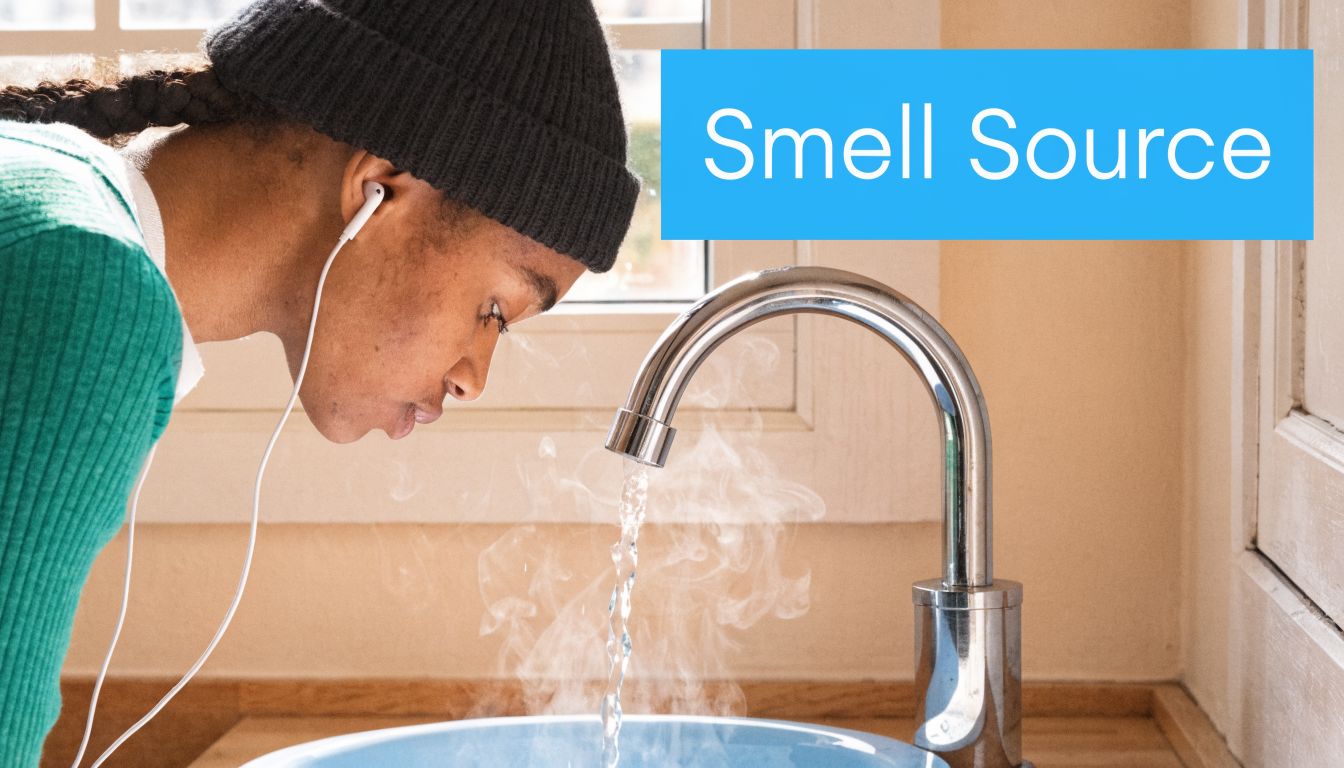
A person leans toward a steaming bathroom sink faucet to smell the hot water flowing out.

Start with hot water versus cold water

Run a simple check at two or three fixtures. Test cold water first, then hot. If the odor shows up only in hot water, the water heater moves to the top of the list. I see this often with older heaters, inactive heaters, or tanks with conditions that let odor problems build inside the unit.

If the odor is present in both hot and cold water, look upstream. On a well, that usually means the source water, pressure tank, or plumbing before the heater. If the smell is strongest after water sits for hours and improves after a minute or two, stagnant plumbing or bacterial growth inside parts of the system may be contributing.

Use this quick home checklist

  • Hot water only: Start with the water heater. This is usually the lowest-cost place to investigate.
  • Hot and cold at every tap: Suspect incoming water or the well system.
  • Only one faucet: Check that fixture, its drain, and nearby plumbing before blaming the whole house.
  • Hot water much worse than cold: The heater may be making a mild sulfur issue smell much stronger.
  • Odor comes and goes: Seasonal well changes, plumbing stagnation, or intermittent bacterial activity are common causes.

This distinction is simple but important. A sulfur odor can be a nuisance at low levels and can also contribute to corrosion and unpleasant-tasting water over time. As noted earlier, the smell problem is not always just a smell problem.

Well water and city water don't behave the same way

For private well owners, sulfur odor often starts in the groundwater or somewhere in the well system itself. Sulfur bacteria can also be part of the picture, especially if the smell is persistent or returns quickly after shock treatment.

For municipal water users, a true source-water sulfur issue is less common. In city homes, I would first check the water heater, dead-end plumbing, infrequently used fixtures, and any point-of-use filters that have been left in service too long.

A good diagnosis follows a simple flow. First ask where the smell appears. Then ask whether it is hot only, cold only, or both. Then ask whether it affects one fixture or the whole house. That sequence narrows the repair fast and keeps you from buying a whole-house system for a problem sitting inside one appliance.

If the smell is only in hot water, don’t buy a whole-house filter first. Confirm the heater is not the real culprit.

If you want a grounded overview of sampling and interpretation before you test, these practical water quality insights are worth reading.

How to Accurately Test Your Water for Sulfur

Once you know where the odor appears, stop guessing and test the water. Smell tells you there’s a problem. It doesn’t tell you the concentration, whether iron is tagging along, or whether the treatment system you’re considering is oversized, undersized, or just wrong.
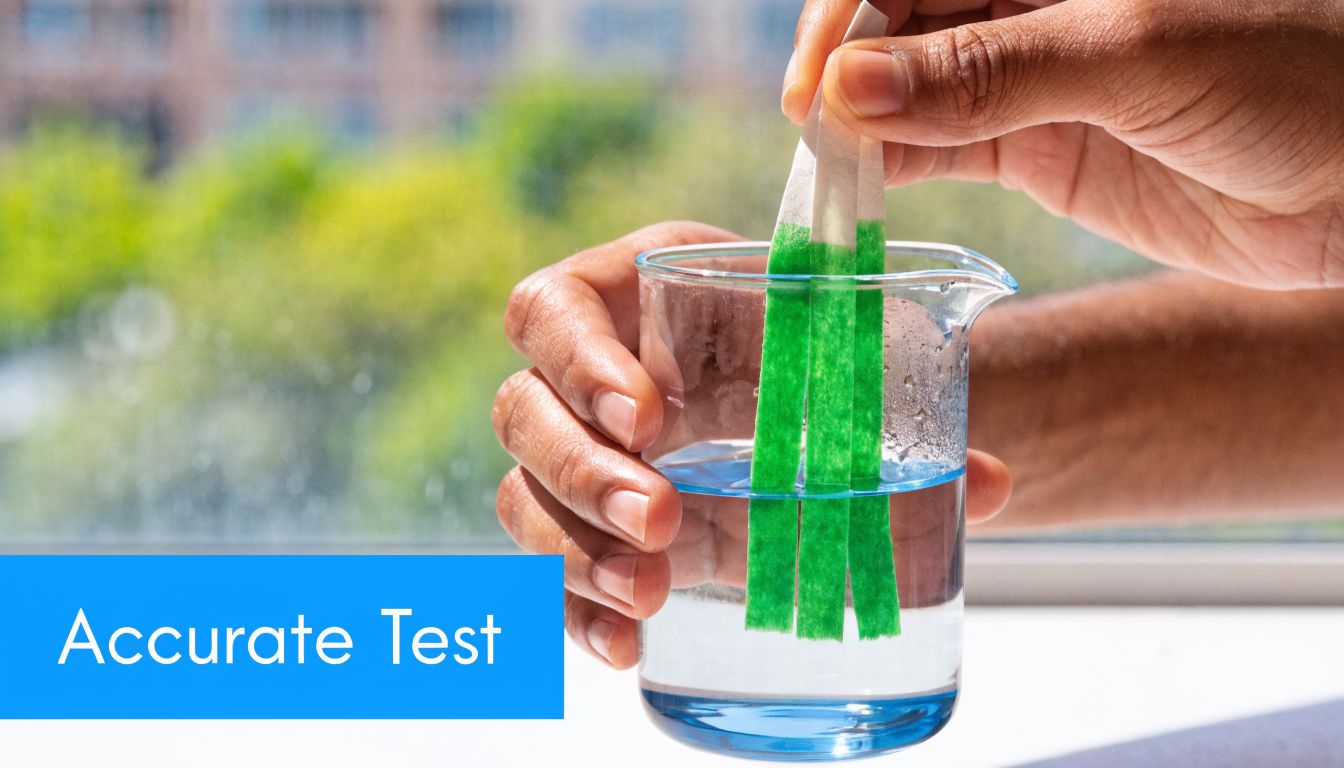
A close-up of a person's hands holding green testing strips inside a glass beaker filled with water.

Start with screening, then confirm with a lab

A simple home strip or kit can help you confirm that the odor isn’t your imagination and can point you toward a sulfur issue. That’s useful as a first pass, especially if you’re deciding whether to call a lab.

For system selection, though, a certified water test is the smarter move. Hydrogen sulfide is volatile, so sample handling matters. If the sample isn’t collected properly, the gas can escape and the result won’t reflect what’s reaching your fixtures.

If you want a grounded overview of sampling and interpretation, these practical water quality insights are worth reading before you order a test kit or schedule lab work.

What to ask for in your test

You don’t need to become a chemist. You just need a usable water profile.

Ask the lab or water professional about:

  • Hydrogen sulfide level: This is the key number for treatment matching.
  • Iron and manganese: These often change which media or oxidation approach makes sense.
  • pH and alkalinity: These affect oxidation performance and filter reliability.
  • Bacterial indicators: Helpful when odor patterns suggest biological activity.
  • Raw water sample location: Test before existing treatment equipment if possible.

A good video can make the process less intimidating before you collect samples:

Read the result like a buyer, not a scientist

What matters most is whether your result lands in a low, moderate, or high treatment range. That’s what drives equipment choice.

A low reading may allow a simpler odor-polishing setup. A moderate reading usually points toward oxidation or air-injection style treatment. Higher levels often need stronger pretreatment, longer contact time, or chemical injection before filtration.

Bring your test sheet to any installer conversation. If they recommend equipment without looking at the raw numbers, slow the process down.

The right sulfur water treatment starts with a real number attached to the smell.

A Clear Path to Choosing Your Treatment

Most sulfur filter decisions get messy because homeowners compare products before they compare conditions. That flips the process upside down. You want to pick a treatment category first, then narrow to models.
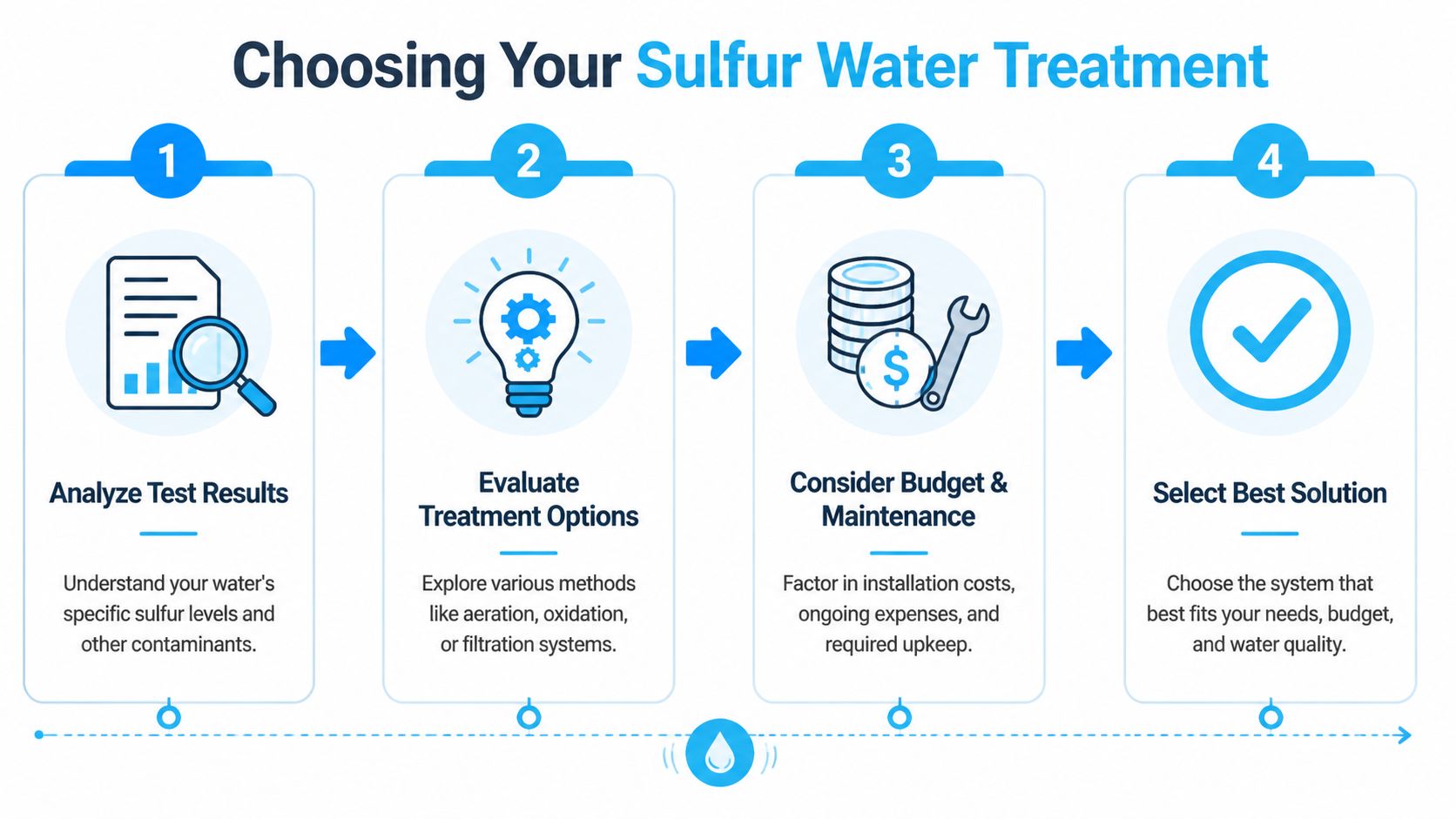
A four-step infographic illustrating the process of selecting a sulfur water treatment system for your home.

Follow the decision flow

Use this practical flow instead of shopping by brand name.

  1. Check where the odor starts
    If it’s hot-water-only, investigate the heater first. If it’s in hot and cold, treat the incoming water.

  2. Match the treatment to the hydrogen sulfide range
    Low levels can sometimes be handled with simpler filtration. Moderate levels often respond well to aeration or oxidizing media. Higher levels usually need a stronger oxidation approach with contact time and follow-up filtration.

  3. Look for iron and manganese before finalizing the system
    A sulfur-only filter can struggle if the water also carries metals. In practice, combination problems often call for combination treatment.

  4. Decide how much maintenance you’ll really do
    Some systems are clean and simple. Others work well but need regular chemical handling, backwashing, or media attention.

Budget and upkeep matter as much as performance

A system can be technically correct and still be a bad fit for the household. If you don’t want to refill tanks, handle regenerants, or monitor settings, don’t choose a method that depends on owner discipline.

That’s why it helps to compare broader residential water filter options before locking into one sulfur-specific setup. You’re not just solving odor. You’re choosing how your home will live with the solution.

For deeper homeowner-focused guidance on evaluating fit, maintenance, and filtration categories, the advice library at Water Filter Advisor is a useful place to continue the comparison process.

A fast way to narrow the field

  • Mild sulfur odor, no major side issues: Start by evaluating catalytic carbon.
  • Moderate sulfur with possible iron or manganese: Look closely at air injection and oxidizing filters.
  • Higher sulfur levels or recurring bacterial problems: Consider chemical injection with filtration.
  • You want stronger oxidation without chlorine residuals: Ozone can be attractive, but it’s more complex.
  • You hate maintenance: Avoid systems that only work well when the owner keeps up with frequent chemical steps.

A good choice feels boring after installation. The odor stops, the water runs normally, and you’re not thinking about the filter every week.

Comparing Top Sulfur Treatment Methods

There isn’t one best sulfur water treatment method. There’s a best fit for your water, your plumbing, and your tolerance for maintenance. Here’s how the main options stack up in real homes.

Aeration systems

Aeration or AIO systems introduce air so hydrogen sulfide can oxidize and then be filtered out. For many households, this is one of the cleanest long-term approaches because it avoids continuous chemical feed.

The catch is that oxidation systems need the water chemistry to cooperate. For many aeration and oxidation-based sulfur filters to work efficiently, minimum influent alkalinity of 100 ppm is required, and performance suffers if alkalinity is too low, according to the Culligan High Efficiency Sulfur-Cleer owner’s guide.

Aeration works best when the sulfur load is within the equipment’s comfort zone and the rest of the water profile supports oxidation.

Catalytic carbon filters

Catalytic carbon is often the first thing people hear about because it’s familiar and easy to understand. It can be a solid choice for lighter odor issues, especially as a polishing stage after oxidation.

On its own, though, it’s easy to overestimate. Carbon doesn’t magically solve every sulfur problem. If the odor is strong, the load fluctuates, or bacteria are involved, carbon alone may become a short-lived fix instead of a durable one.

Manganese greensand filters

Manganese greensand has been around for a long time because it works well in the right conditions. It can handle sulfur along with iron and manganese, which makes it useful when the water has more than one issue.

The trade-off is maintenance. Greensand systems usually need regeneration, and that means paying attention to chemicals, settings, and schedule.

Greensand is often a strong performer for mixed contaminant water, but it’s not a “set it and forget it” choice.

Chemical injection systems

Chemical injection uses an oxidant, commonly chlorine, ahead of filtration. This approach is effective for tougher sulfur situations and can also help when bacterial activity is part of the problem.

It’s not the most hands-off option. You’ll need solution refills, contact time, and post-filtration to clean up taste or residual effects. But when sulfur levels are beyond what simpler media can comfortably handle, chemical injection often makes the system more dependable.

Ozone treatment

Ozone is powerful and appealing because it oxidizes aggressively and doesn’t leave the same kind of chemical residual homeowners worry about with chlorine. It can work very well.

It also brings more complexity. Ozone systems are more equipment-heavy, more sensitive to design quality, and usually a better match for homeowners who are comfortable with a more advanced setup or are working with a seasoned installer.

Quick comparison table

Method Effective H2S Range (ppm) Initial Cost Maintenance Needs Best For
Aeration system Moderate range Moderate Backwashing and periodic checks Homeowners who want chemical-free oxidation
Catalytic carbon Low range Lower Media replacement Mild sulfur odor, especially as a polishing stage
Manganese greensand Up to 6 ppm in common residential use Moderate Regeneration and chemical handling Sulfur with iron or manganese
Chemical injection Above 6 ppm and tougher cases Moderate to higher Refill solution, monitor feed, post-filtration Strong sulfur odor and recurring source issues
Ozone Moderate to high range Higher More technical service and monitoring Homes needing strong oxidation without standard chlorine feed

What tends to work and what tends to disappoint

Works well: matching the technology to the actual sulfur level and the presence of metals.

Disappoints: buying the cheapest odor filter without testing, or installing a system that looks good on paper but doesn’t match the home’s flow rate or maintenance habits.

The best sulfur water treatment method is the one that keeps working after the first month, not the one with the flashiest product page.

Installation Costs and Long-Term Maintenance

A sulfur system earns its keep over years, not on installation day. The price on the estimate matters, but the better question is what it will cost to run, service, and keep working when life gets busy.
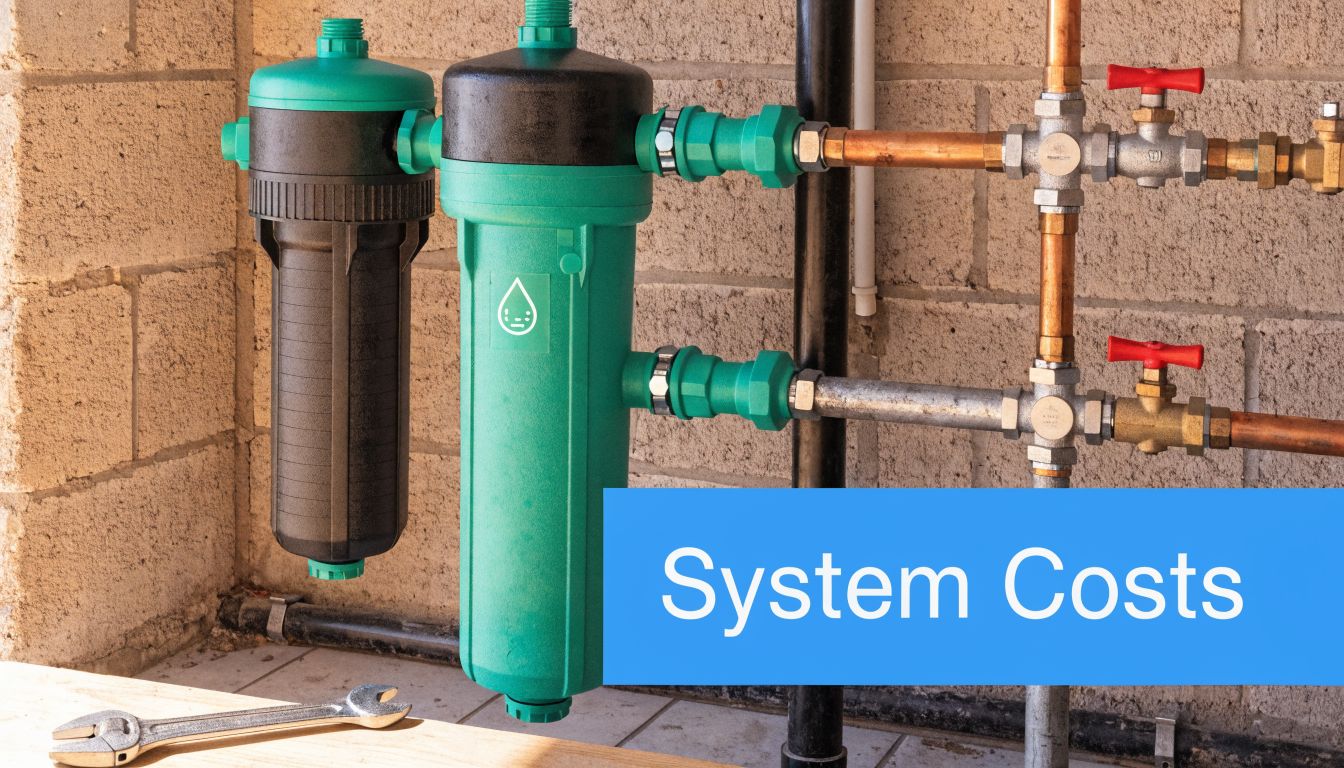
A professional water filtration system installed on a brick wall with tools nearby for maintenance.

Think beyond the day it goes on the wall

Two systems can solve the same odor and feel very different to own. One may need little more than periodic media changes. Another may ask you to refill solution tanks, clean an injector, check a feed pump, and stay on top of settings. Neither is automatically wrong. The right choice depends on your water, your budget, and how much upkeep you will realistically do.

That ownership side gets missed all the time.

For example, oxidizing filters that use manganese greensand often bring ongoing chemical costs that buyers do not factor in up front. Potassium permanganate regeneration can add $50 to $200 annually in chemical expense, according to Penn State Extension guidance on hydrogen sulfide odor in wells.

DIY versus professional installation

DIY installation can work if the job is simple and the water test is clear. A single-tank backwashing filter in an accessible basement is one thing. A setup with chemical injection, a retention tank, drain routing, and multiple treatment stages is another.

Professional installation usually pays for itself when the system depends on correct contact time, feed rate, backwash flow, or control settings. I have seen good equipment underperform because the injector fouled early, the drain line was undersized, or the backwash schedule never got dialed in for the household's actual use. The equipment was fine. The setup was not.

Key maintenance questions to ask before buying

Ask these before you sign off on a system:

  • What will I refill, replace, or clean each year? Media, chemicals, injector parts, test kits, and prefilters all count.
  • How often does it need attention? Monthly checks feel very different from annual service.
  • What happens if service gets delayed? Some systems lose performance gradually. Others let odor break through fast.
  • Can I tell when it is falling behind? Clear indicators and simple testing are easier to live with than guessing.
  • Who will service it if I do not want to? Some local dealers support what they install well. Some do not.

Those answers should steer the purchase as much as sulfur level and equipment type.

Where homeowners get caught off guard

The most common problem is a mismatch between the system and the owner's habits. A chlorine injection system, for example, can be very effective on stubborn sulfur problems, especially when the water also needs disinfection or has recurring odor swings. But if the solution tank runs dry, the feed pump is ignored, or the post-filter is left past its service life, the smell comes back and confidence in the whole setup drops fast.

The cheapest sulfur water treatment is often the one you’ll maintain properly for years.

Low-involvement households usually do better with simpler equipment, even if the installed price is higher. Households willing to check tanks, refill supplies, and schedule service can justify more aggressive treatment. Use that as part of the decision flow. Match the sulfur source and concentration first, then choose the system your budget and maintenance tolerance can support.

Enjoying Your Clean Odor-Free Water

Once the diagnosis is right and the system fits the water, sulfur problems usually stop feeling dramatic. The kitchen stops smelling. Showers feel normal again. You stop apologizing for the tap water when someone visits.

That’s the ultimate payoff of good sulfur water treatment. Not just cleaner-smelling water, but confidence that the fix matches the problem instead of masking it for a few weeks.

The best results usually come from a simple discipline. Confirm the source. Test the water. Match the treatment to the concentration and the chemistry. Choose a system you’ll maintain. Homeowners who follow that sequence waste less money and get to a dependable solution faster.

There’s also a promising future angle worth watching. An emerging treatment trend uses sulfur-oxidizing bacteria to convert hydrogen sulfide into sulfate without chemicals, a direction described in this overview of the sulfur cycle in wastewater systems. For residential wells, it’s more of a future-facing option than a mainstream one right now, but it shows where low-chemical sulfur treatment may head next.

For today, the smartest move is still the practical one. Solve the odor you have, with equipment designed for the water that’s entering your home.


If you’re comparing systems, testing options, or replacement media, Water Filter Advisor is a solid next stop for homeowner-focused guidance on choosing and maintaining the right filtration setup without overspending.
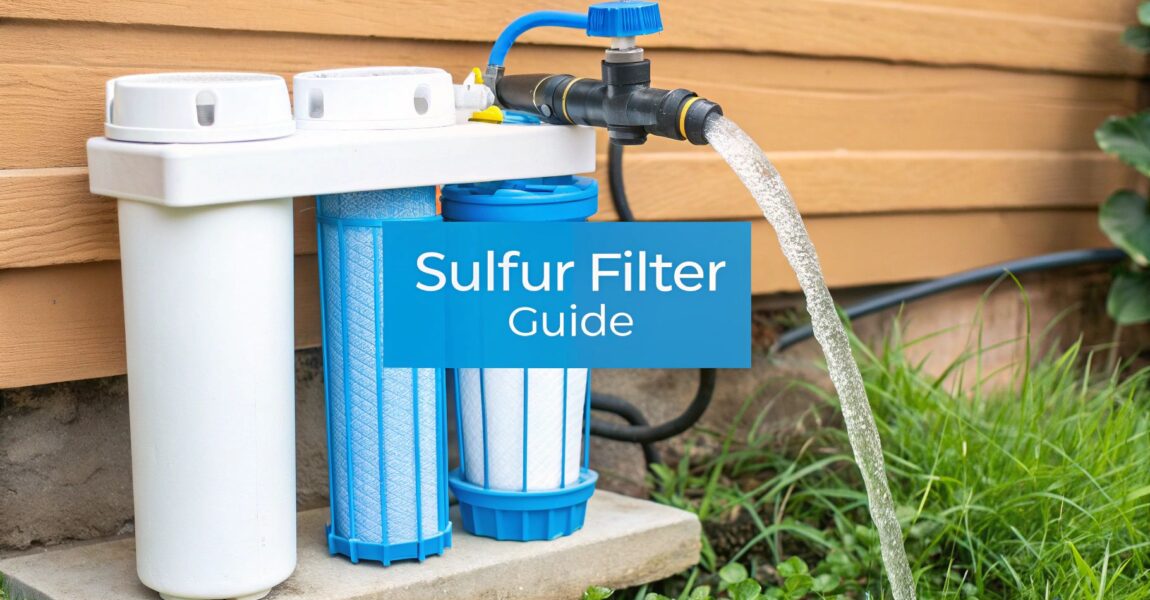
Your Complete Guide to a Well Water Sulfur Filter

If you’ve ever turned on your faucet and been greeted by that infamous “rotten egg” smell, you know the feeling. That unmistakable odor is the calling card of sulfur in your well water, and a well water sulfur filter is your ticket to getting rid of it for good.

Finally Banish That Rotten Egg Smell From Your Well Water

It’s a problem that plagues millions of homeowners with private wells. You go for a glass of water, hop in the shower, or start a load of laundry, and that foul smell just ruins the experience. The culprit is hydrogen sulfide gas, a naturally occurring compound that can make your otherwise pristine water completely unappealing.

But here’s the fantastic news: you don’t have to live with it.

This guide is your battle plan. We'll walk you through everything you need to know to tackle the problem head-on, from identifying the source of the stench to picking the perfect well water sulfur filter that will have your family enjoying clean, fresh-smelling water from every tap.

This mission is about more than just getting rid of a bad smell. Sulfur doesn't just stink—it can tarnish your silverware, leave unsightly stains on your clothes and fixtures, and even corrode your plumbing over time. Investing in the right filter is an investment in your home and your peace of mind.

To give you a clear path forward, we've put together a quick guide summarizing the common symptoms and the best filtration solutions we'll be diving into.

Quick Guide to Solving Sulfur Water Problems

Symptom You're Experiencing The Likely Cause in Your Well The Best Filtration Solution
A "rotten egg" smell from both hot and cold water taps. Hydrogen Sulfide Gas (H₂S) dissolved in the water supply. An Air Injection Oxidizing (AIO) or Chemical Injection system.
The smell is only noticeable from the hot water faucet. Sulfur-reducing bacteria reacting with your water heater's anode rod. Replacing the anode rod or a simple shock chlorination.
Black or gray stains on laundry, silverware, and plumbing. Hydrogen sulfide gas or high levels of sulfates. An AIO system or Catalytic Carbon Filter.
Water has a bitter taste but little to no odor. High concentration of dissolved sulfates. A Reverse Osmosis system (for drinking water) is most effective.

This table is just the starting point. In the rest of this guide, we'll break down each of these issues and solutions in detail so you can find the perfect fix for your home.

What You Will Learn in This Guide

Here’s a quick look at what we’ll cover to get you from smelly water to pure refreshment:

  • Finding the Source: We'll dig into the science behind that rotten egg smell, showing you how to tell the difference between hydrogen sulfide gas and pesky sulfur bacteria.
  • Testing Your Water: Learn how to do a few simple tests at home and know when it’s time to send a sample to a lab for a detailed analysis of what’s really lurking in your water.
  • Comparing Filter Types: We'll give you the real-world pros and cons of the top treatment options, like air injection, chemical injection, and catalytic carbon filters.
  • Sizing and Installation: Get practical advice on choosing the right size system for your family’s needs, plus tips for a smooth installation and easy maintenance down the road.

Our goal is simple: to arm you with the knowledge to choose a filter that wipes out your sulfur problem for good. By the time you're done here, you'll be ready to transform your problem water into something you and your family can finally enjoy. Let's get started.

So, Why Does Your Well Water Smell Like Sulfur?

To get rid of that rotten egg smell once and for all, you have to understand its origin story. Picture the aquifer that supplies your well—it’s not just a big underground pool of water. It's a whole ecosystem down there, full of rocks, soil, minerals, and all sorts of microscopic life.

When the conditions are just right (or, for our noses, just wrong), this hidden world starts pumping out sulfur compounds that eventually find their way into your faucets. It's a completely natural process, but the result is anything but pleasant.

The Two Main Culprits Behind the Sulfur Smell

The problem isn't sulfur itself, but what happens to it underground. Two things are typically responsible for creating the hydrogen sulfide gas that stinks up your well water.

  1. Sulfur-Reducing Bacteria (SRBs): These are naturally occurring little critters that thrive in places with very little oxygen, like deep wells and even your home's plumbing. Think of them as tiny factories that don't need oxygen to live. Instead, they "breathe" sulfates (a form of sulfur) and exhale hydrogen sulfide gas as waste. This is, by far, the most common reason for that powerful smell.

  2. Chemical Reactions with Sulfates: Sometimes, the issue isn't biological at all. If your water has a lot of dissolved sulfates, they can react with other things—most notably, the anode rod inside your hot water heater. This reaction spits out hydrogen sulfide gas, which is why some folks only notice the smell (or a much stronger version of it) when they turn on the hot tap.

It’s no surprise that people are paying more attention to what's in their water. The global water filter market has exploded as homeowners demand effective solutions. Installing a well water sulfur filter is a huge part of this trend, as families take control of contaminants like hydrogen sulfide.

Hydrogen Sulfide vs. Sulfates: What's the Difference?

You’ll hear these terms thrown around, and it's super important to know what's what because each one needs a different fix. Getting this right is the first step in picking a well water sulfur filter that actually works.

  • Hydrogen Sulfide Gas (H₂S): This is the main offender—the gas that gives you that distinct rotten egg smell. It's dissolved in the water, and our noses are incredibly sensitive to it. You can often smell it at concentrations as low as 0.5 parts per million (ppm).
  • Sulfates (SO₄): These are minerals containing sulfur that are dissolved in your water. At normal levels, you'd never know they were there; they're odorless and tasteless. But if the concentration gets high (over 250 ppm), they can make the water taste bitter and even have a laxative effect.
  • Elemental Sulfur (S): This is just solid sulfur. If you have a filter system that oxidizes hydrogen sulfide, you might start seeing tiny yellow or black specks in your water. That's a good thing! It means the gas has been turned into a solid particle that your filter can now trap.

Here's the bottom line: Hydrogen sulfide is the gas you smell. Sulfates are the minerals that bacteria munch on (or that make your water taste bad). Elemental sulfur is the solid particle that a filter can physically grab. Each one tells you something different about what's going on with your water.

Knowing which one you're dealing with isn't just a science lesson—it's the key to solving your problem for good. If you've got sulfur-reducing bacteria, just filtering out the gas won't stop them from growing in your pipes. If you have high sulfates but no smell, a standard sulfur filter isn't the right tool for the job. This basic knowledge ensures you put your money into a solution that hits the problem at its source, bringing fresh, clean-smelling water back into your home.

How to Properly Test Your Water for Sulfur

Before you even think about buying a well water sulfur filter, you’ve got to play detective. Figuring out exactly where that smell is coming from is the single most important step, and honestly, it can save you from spending a lot of money on a system you don't even need.

The good news is, you can start this investigation right at your kitchen sink. Your best tool is the one you were born with: your nose. The simple "smell test" reveals a ton. First, run the cold water for a minute, fill a glass, and then step away from the sink to give it a sniff. Now, do the exact same thing with the hot water. This little test is your first huge clue.

Is It Your Well or Just Your Water Heater?

The results from your sniff test will point you down one of two very different paths. Getting this right is critical, because one solution is a whole-house filter, and the other is a cheap and easy plumbing fix.

  • Smell from Both Hot and Cold Water: If both taps are putting out that rotten egg smell, the problem is in your well water itself. This means you’re looking at a whole-house treatment system to get rid of it for good.

  • Smell Only from Hot Water: If the stink is only coming from the hot side, the culprit is almost certainly your water heater. Inside the tank, a little part called a magnesium anode rod is reacting with sulfates in the water and creating hydrogen sulfide gas. A simple swap to an aluminum or zinc-aluminum rod usually solves the problem completely.

When You Need a Professional Lab Test

While the smell test is a fantastic starting point, it doesn't give you the whole story. For that, you absolutely need a professional water analysis. If the smell is coming from both hot and cold water, a lab test is your next move—it gives you the hard data needed to choose and size the right well water sulfur filter.

Think of it like getting a real diagnosis before you pick up a prescription. A lab test won't just tell you if sulfur is there, it'll tell you exactly how much is there. It measures hydrogen sulfide in parts per million (ppm), which is the key number you need.

Knowing the precise concentration of hydrogen sulfide and other contaminants is non-negotiable. A filter designed for 2 ppm of sulfur will be completely overwhelmed if your water actually has 8 ppm, wasting your money and leaving you right back where you started.

When you send a sample off to a state-certified lab, don't just ask for a sulfur test. You need the full picture of your water's chemistry to understand what might interfere with a filter's performance.

Make sure the lab test includes:

  1. Hydrogen Sulfide (H₂S): This confirms the concentration of the gas causing the odor.
  2. Iron and Manganese: These common minerals can clog up filter media and often need to be treated first.
  3. pH Level: The acidity of your water can make or break how well certain oxidation filters work.
  4. Total Dissolved Solids (TDS): High levels could point to other issues you’ll want to address.

Once that report is in your hands, you can confidently match your water's unique profile to a filtration system that is guaranteed to work. That's how you ensure every drop from your tap is finally fresh, clean, and odor-free.

Comparing The Best Sulfur Filter Technologies

Alright, you've figured out what's causing that rotten egg smell. Now comes the fun part: picking the right tool to get rid of it for good. Choosing the best well water sulfur filter isn't about finding a one-size-fits-all solution. It’s about understanding how different technologies work and matching the right one to what your water test told you.

Let's walk through the three heavy hitters in the world of sulfur filtration. Think of it like a mechanic's toolbox—you wouldn't use a wrench to hammer a nail, and the same logic applies here. Each system has its own strengths, weaknesses, and a specific job it's perfect for.

Air Injection Oxidation (AIO): The Chemical-Free Powerhouse

Air Injection Oxidation, or AIO for short, is hands-down one of the most popular and effective ways to tackle sulfur. The idea behind it is brilliant because it's so simple—it basically "rusts" the sulfur right out of your water.

Picture the hydrogen sulfide in your well as invisible gas dissolved in the water. An AIO system works by drawing in a bubble of air (oxygen) and mixing it with the water inside a large tank. This process, called oxidation, instantly forces the smelly gas to turn into solid sulfur particles. They can't stay dissolved anymore. Once they're solid, the filter media inside the tank easily traps them.

Every few days, the system cleans itself out with a powerful backwash cycle, flushing all those trapped sulfur particles down the drain. It's a set-it-and-forget-it kind of deal.

Why People Love AIO Systems

  • Completely Chemical-Free: This is the number one reason homeowners choose AIO. You never have to buy, store, or mess with chemicals like chlorine.
  • Low Maintenance: Once it's up and running, an AIO system pretty much takes care of itself. The automatic backwash means you don't have to do much.
  • Takes Care of Iron and Manganese, Too: These systems are fantastic multi-taskers. The same oxidation process that knocks out sulfur also removes iron and manganese, two minerals that often show up with sulfur in well water.

The Downsides to AIO

  • Higher Upfront Cost: AIO systems usually have a bigger price tag at the start compared to other options.
  • Needs Good Water Pressure: That backwash cycle is crucial, and it requires a decent flow rate from your well pump to work effectively. If you have a low-yield well, you might need a booster pump.

Chemical Injection Systems: The Targeted Disinfectant

A chemical injection system is like calling in a SWAT team for your water supply. This setup uses a small pump to inject a very precise dose of a sanitizing chemical—usually chlorine—directly into your water line.

The chlorine goes to work immediately, oxidizing the hydrogen sulfide to eliminate the smell. But it does more than that; it also kills any sulfur-reducing bacteria that might be causing the problem in the first place. The water then flows into a holding tank to give the chlorine time to work before passing through a carbon filter. This last step gets rid of any leftover chlorine taste and smell, so all you're left with is clean, fresh water.

Key Insight: Chemical injection is often the go-to solution for really high levels of hydrogen sulfide (think above 10 ppm) or when you also need to kill bacteria like coliform or E. coli.

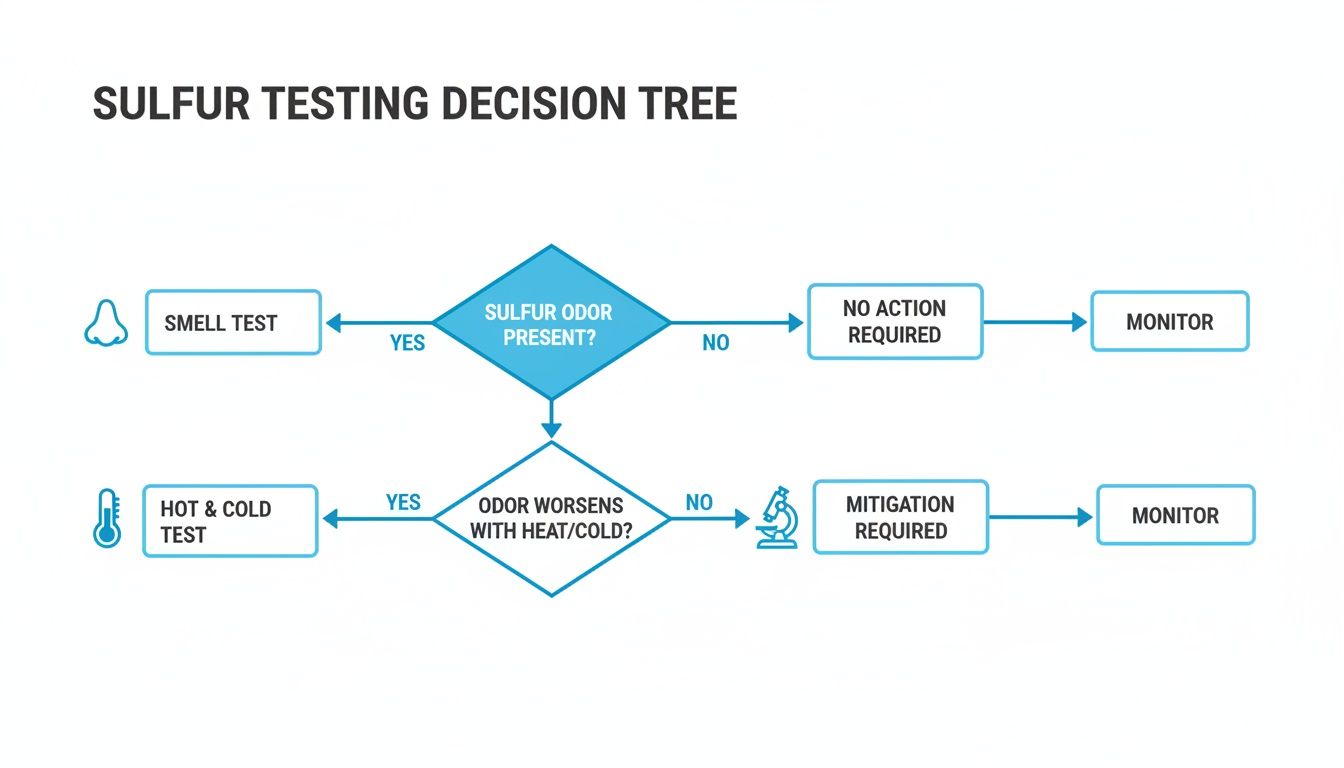
To get a better handle on your situation, this simple chart can help you start the diagnostic process.

Decision tree flowchart outlining sulfur testing procedures and actions based on odor presence and temperature effects.

As you can see, just checking if the smell is in your hot and cold water can point you in the right direction—is it just the water heater, or is it a bigger problem coming straight from the well?

Catalytic Carbon Filters: The Specialized Sponge

Catalytic carbon filters offer a simpler, more passive way to deal with sulfur. Don't think of this as a regular charcoal filter; it's more like a specialized sponge with a reactive surface. While standard activated carbon is good for taste and odor, catalytic carbon has been specially treated to kickstart the oxidation of hydrogen sulfide gas.

As water passes through the tank, the catalytic carbon media encourages the sulfur gas to convert into solid particles, which then get trapped in the filter bed. Just like AIO systems, these filters need to backwash on a regular schedule to clean themselves out and keep the media working effectively.

Pros and Cons of Catalytic Carbon

  • Pro: Lower Cost & Simpler: These systems are generally cheaper and take up less space than AIO or chemical injection rigs.
  • Pro: No Chemicals Needed: Like AIO, it's a completely chemical-free process, which is a huge plus for many folks.
  • Con: Limited Horsepower: Catalytic carbon works best for low to moderate levels of sulfur, typically under 6 ppm. It just can't keep up with higher concentrations.
  • Con: Shorter Media Lifespan: The carbon media will eventually wear out and need to be replaced, usually every 3 to 5 years, depending on your water quality and how much you use.

To make the choice a bit easier, here’s a side-by-side look at how these technologies stack up.

Sulfur Filtration Technology Comparison

This table breaks down the key differences between the most common sulfur filters, helping you see at a glance which one might be the right fit for your well.

Filtration Method How It Works Best For (Sulfur Level) Pros Cons
Air Injection Oxidation (AIO) Injects air to oxidize sulfur gas into solid particles, which are then filtered out. Moderate to High (2-15 ppm) Chemical-free, low maintenance, also removes iron and manganese. Higher initial cost, requires strong well pump flow rate.
Chemical Injection Injects a chemical (like chlorine) to oxidize sulfur and kill bacteria. A second filter removes the chemical taste. Very High (10+ ppm) & Bacteria Extremely effective, disinfects water, handles the toughest cases. Requires chemical refills, higher maintenance, more complex setup.
Catalytic Carbon Uses a special carbon media with a reactive surface to convert sulfur gas to solid particles for filtration. Low to Moderate (Under 6 ppm) Lower cost, simple design, no chemicals needed. Less effective on high sulfur levels, media needs periodic replacement.

Ultimately, the best well water sulfur filter for you comes down to what's in your water. An AIO system is a powerful, chemical-free workhorse for most homes. Chemical injection is the heavy-duty solution when you need serious disinfecting power. And for smaller sulfur issues, a catalytic carbon filter can be a simple and affordable fix.

Choosing and Sizing Your Sulfur Filter System

You've done the water tests and figured out which type of filter technology is the right match. Now comes the critical part: picking the actual unit. Choosing the perfect well water sulfur filter goes beyond just the technology—it’s about getting the size and specs just right for your home.

Think of it this way: an undersized system will lead to frustrating drops in water pressure every time you try to multitask. An oversized one? That's just a waste of money. Getting the size right means your filter will work efficiently without making your daily routine a headache.

It’s like a highway. A two-lane road can’t handle rush-hour traffic without a major slowdown. In the same way, your filter has to be big enough to handle your household's peak water demand without choking.

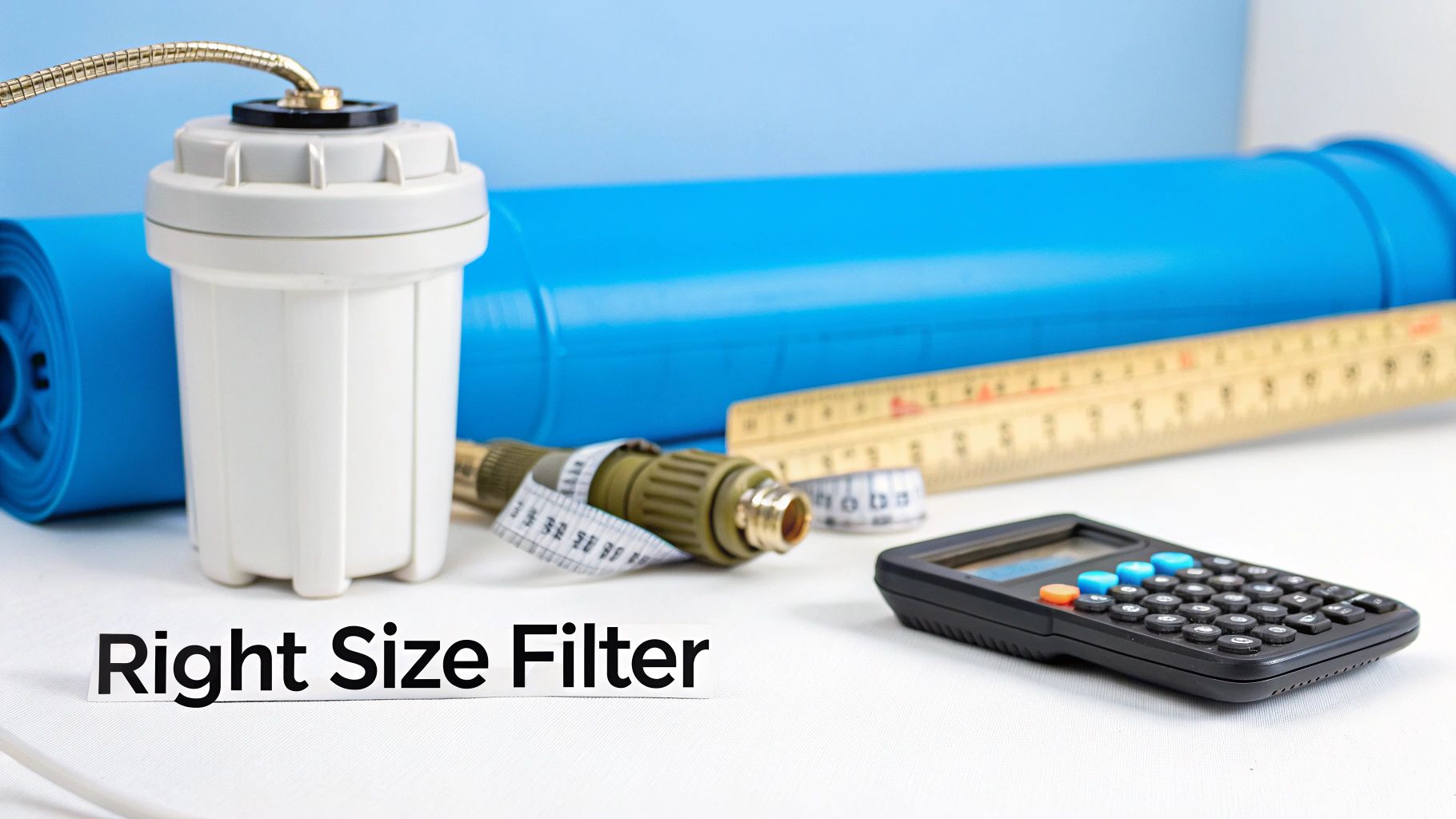
A white water filter, measuring tape, ruler, and calculator are on a white surface with a blue pipe, indicating filter sizing.

Calculating Your Household's Flow Rate

The single most important factor for sizing your filter is its flow rate, which we measure in gallons per minute (GPM). This number tells you the maximum amount of water your home might pull from the well at any given moment. If your filter's GPM is too low, turning on the dishwasher while someone is in the shower could turn that shower into a sad little trickle.

You don't need to be a plumber to get a good estimate. Just follow these simple steps:

  1. Count Your Fixtures: Make a quick list of everything that uses water in your house—sinks, showers, toilets, the washing machine, dishwasher, etc.
  2. Estimate Demand: Each fixture has a typical flow rate. For example, a standard showerhead uses about 2.5 GPM, a kitchen faucet is around 1.5 GPM, and a washing machine needs about 2.0 GPM.
  3. Find Your Peak: Now, think about your busiest morning. Add up the GPM for all the fixtures you might realistically have running at the same time.

Let's say a family of four might have a shower (2.5 GPM), the dishwasher (1.5 GPM), and a toilet flush (1.6 GPM) all happening at once. That adds up to a peak demand of 5.6 GPM. To be safe, you'd want a system rated for at least 10-12 GPM to comfortably handle that load and then some, completely avoiding any pressure loss.

A correctly sized well water sulfur filter should match or slightly exceed your home’s peak flow rate. This guarantees strong, consistent water pressure even when multiple taps are open.

Why Third-Party Certifications Matter

As you start comparing different filter models, you’ll see labels like NSF/ANSI thrown around. These aren't just marketing fluff—they are your guarantee that a filter actually does what the box says it does. These independent organizations put filtration systems through tough tests to make sure they meet public health standards.

Here are the key certifications to look for:

  • NSF/ANSI 42: This certifies that a filter can reduce "aesthetic" issues like chlorine, which affects taste and odor. While it isn't specifically for sulfur, it's a great baseline for overall performance.
  • NSF/ANSI 53: This is a much stricter, health-focused standard. It verifies a filter can remove specific health-related contaminants like lead, cysts, and certain chemicals.
  • WQA Gold Seal: The Water Quality Association (WQA) also offers a certification confirming a system is durable, safe, and performs as advertised.

Seeing these seals means the filter has been put through its paces by an unbiased third party. This demand for proven, effective solutions is a big deal. The market for home water purifiers, including the well water sulfur filter, is booming, driven by homeowners who want reliable, tested technology. You can learn more about the expanding market for home water purifiers and see just how common this is becoming.

Installation and Long-Term Maintenance Tips

A high-quality well water sulfur filter is a fantastic investment, but its real value comes down to a solid installation and a little bit of regular upkeep. Getting these two things right is the key to enjoying fresh, odor-free water for years to come—and avoiding those surprise repair bills nobody likes.

The first big question is always: DIY or hire a pro? Many of the newer systems are definitely designed with the handy homeowner in mind. They often come with simple push-to-connect fittings and clear instructions. If you know your way around basic plumbing and don't mind cutting into your main water line, you can absolutely save a few hundred bucks by installing it yourself.

But let's be realistic. If you're looking at a more complex chemical injection setup, or if the thought of cutting pipes makes you break out in a cold sweat, calling a professional is the way to go. A good plumber will make sure everything is installed to code, integrated perfectly with your existing plumbing, and dialed in for peak performance right from the start.

Creating a Simple Maintenance Schedule

Once your filter is installed and humming along, a simple maintenance routine becomes your best friend. Honestly, neglecting it is like never changing the oil in your car—sooner or later, things are going to grind to a halt. The good news is that keeping a sulfur filter in top shape is surprisingly easy.

Here are the key things to keep an eye on:

  • Check Salt or Solution Levels (if applicable): If you have a system that uses a brine tank or chemical feed, just peek at the levels once a month. Top it off when it gets low.
  • Verify Backwash Cycles: Make sure the automatic backwash or regeneration cycle is actually running when it's supposed to. A typical AIO system, for instance, might backwash every 3-4 days.
  • Inspect for Leaks: Once a month, just do a quick walk-around and eyeball the fittings and connections. Catching a tiny drip early can save you a massive headache later.

A proactive maintenance schedule is the difference between a system that lasts 5 years and one that lasts 15 years. Just a few minutes of attention each month protects your investment and guarantees your water stays clean.

Know When to Service Your Filter Media

The heart of your well water sulfur filter is the media—that's the stuff inside the tank doing all the heavy lifting. Over time, this media can get gunked up or just plain wear out. For a catalytic carbon filter, you're probably looking at replacing the media every 3 to 5 years. For AIO systems, the media usually lasts a lot longer, sometimes 8 to 10 years or even more.

The market for these solutions is growing, reflecting major advancements in filter media and smart systems that make maintenance easier. This growth offers homeowners better access to effective solutions and professional services.

Understanding long-term upkeep is crucial for all home water systems. For instance, knowing the ins and outs of a sump pump replacement guide can offer some great parallels on making important maintenance decisions for other critical equipment in your home. And for more great filtration advice, feel free to check out our other tips and guides.

A Few Final Questions on Sulfur Filters

Even after you've done all the digging, a couple of practical questions usually pop up right before you pull the trigger on a well water sulfur filter. We've been there. So, let's clear up the most common ones to make sure you're heading in the right direction.

Think of this as your last gut check. It’s here to help you dodge some common pitfalls and make certain the system you pick is the right one to fix your water issues for good.

Will a Water Softener Get Rid of the Sulfur Smell?

In almost all cases, no. A water softener has one main job: to remove hardness minerals like calcium and magnesium that create scale and soap scum. It simply isn't built to grab the dissolved hydrogen sulfide gas that causes that nasty rotten egg smell.

Sure, a softener might accidentally catch a tiny bit of other stuff, but it's not going to make a dent in a real sulfur problem. For that, you absolutely need a dedicated well water sulfur filter, like an Air Injection Oxidation (AIO) unit or a catalytic carbon system.

It's a classic mistake to think one piece of equipment can do it all. Softeners are for hardness, sulfur filters are for the smell. Using the right tool for the job is the only way to get the clean water you're after.

What's a Whole House Sulfur Filter Going to Cost Me?

The price tag on a whole house sulfur filter can swing quite a bit, mostly depending on the technology inside and how much water it can handle. Knowing the ballpark figures helps you set a realistic budget.

  • Catalytic Carbon Filters: These are usually your most wallet-friendly choice, running somewhere between $500 and $900. They're a solid pick for lower levels of sulfur.
  • Air Injection Oxidation (AIO) Systems: These are the more powerful, chemical-free workhorses. Expect to see prices in the $1,000 to $2,500 range.
  • Chemical Injection Systems: Upfront, these cost about the same as AIO systems, but you'll have ongoing costs for chemicals like chlorine.

Don't forget to account for professional installation. That can add another $300 to $800 to the final bill, depending on who you hire and the complexity of the job.

Why Does Only My Hot Water Smell Like Sulfur?

This one stumps a lot of people. If that rotten egg odor is only coming from your hot water taps, the problem isn't your well water. The real culprit is almost always the anode rod inside your hot water heater.

Most water heaters come with a magnesium anode rod to keep the tank from rusting out. The trouble is, this rod can have a chemical reaction with sulfates that are naturally in your water, which creates hydrogen sulfide gas as a byproduct. The fix is usually cheap and easy: have a plumber swap out that magnesium rod for an aluminum or zinc-aluminum one. If both your hot and cold water smell bad, then you know a whole-house filter is what you need.


Here at Water Filter Advisor, our mission is to give you clear, no-nonsense advice to help you get safer, better-tasting water for your home. Check out our in-depth guides and reviews to find the perfect filtration setup for your family at https://www.waterfilteradvisor.com.