TDS Value of RO Water: What Homeowners Need to Know
Have you ever checked the TDS value of RO water, seen a very low number, and assumed it must be healthier, safer, and better tasting? That assumption is understandable, but it misses an important distinction. TDS can help you judge how effectively an RO system is reducing dissolved material, yet the lowest possible reading isn't automatically the right target for everyday drinking water.
For a homeowner, the useful question isn't, “How close is my water to zero?” It's whether the system is performing consistently, whether the water tastes pleasant, and whether the final mineral balance suits your household. Reverse osmosis can remove dissolved salts and minerals extremely well, but a thoughtfully maintained system may include remineralization rather than treating zero TDS as the finish line.
Understanding TDS and How Reverse Osmosis Changes It
What does a TDS reading tell you? Total dissolved solids, or TDS, is an estimate of the dissolved material in water, reported in parts per million, or ppm. That material can include minerals and salts such as calcium, magnesium, sodium, chloride, and sulfate. Unlike visible sediment, these substances are dissolved, so a clear glass of water can still contain a substantial TDS level.
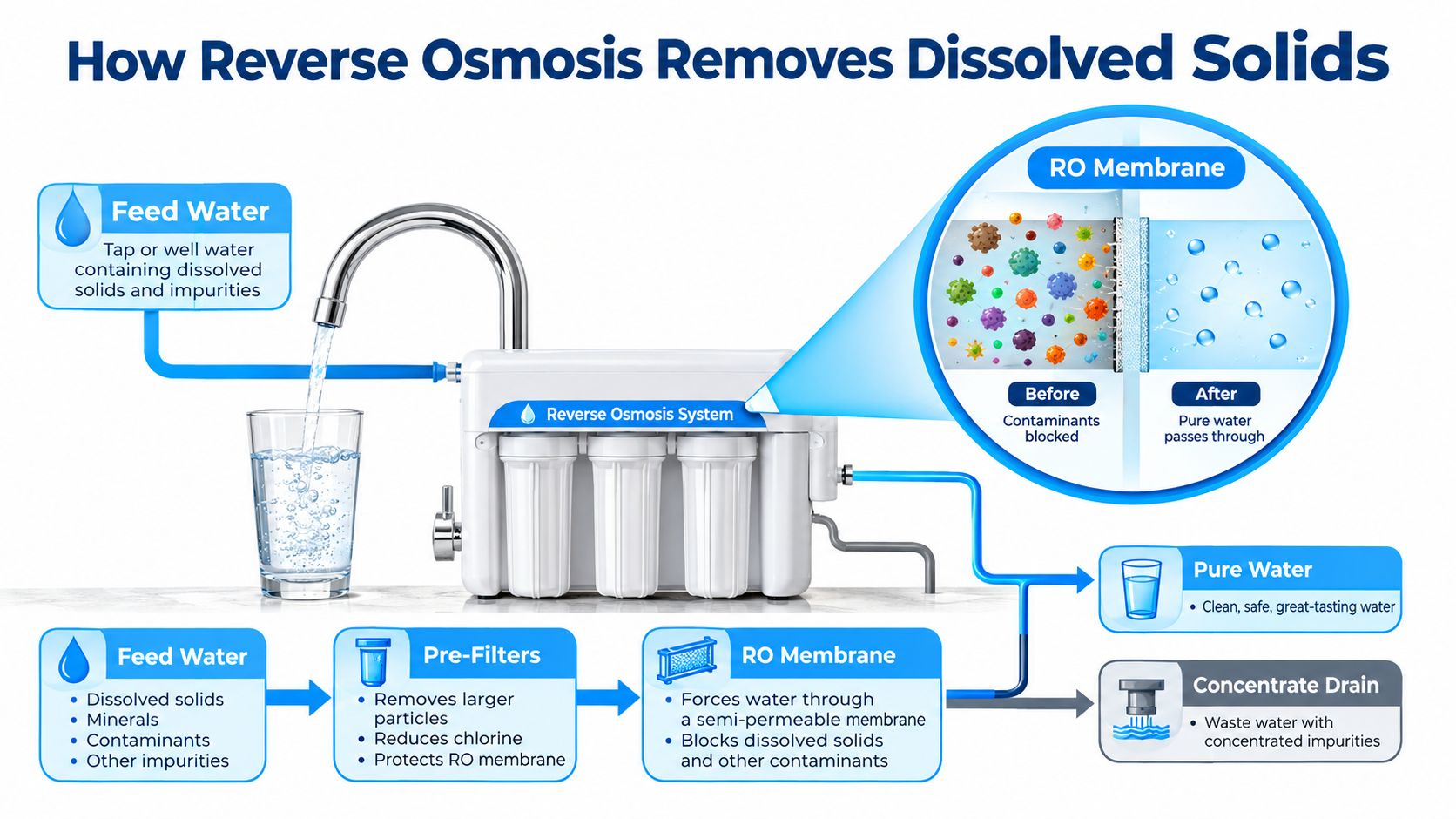
A useful mental model is a microscopic sieve. An RO membrane has extremely fine passages. Water is pushed through the membrane under pressure, while many dissolved solids remain on the feed-water side and leave through the concentrate, or drain, line. Pre-filters protect the membrane by reducing sediment, chlorine, and other material that could interfere with its operation.
What raises TDS in household water
Tap-water TDS can come from the natural geology around a well, municipal treatment chemicals, minerals picked up in pipes, or salts and other dissolved compounds already present in the source water. A higher number tells you that more dissolved material is present, but it doesn't identify which substances are there.
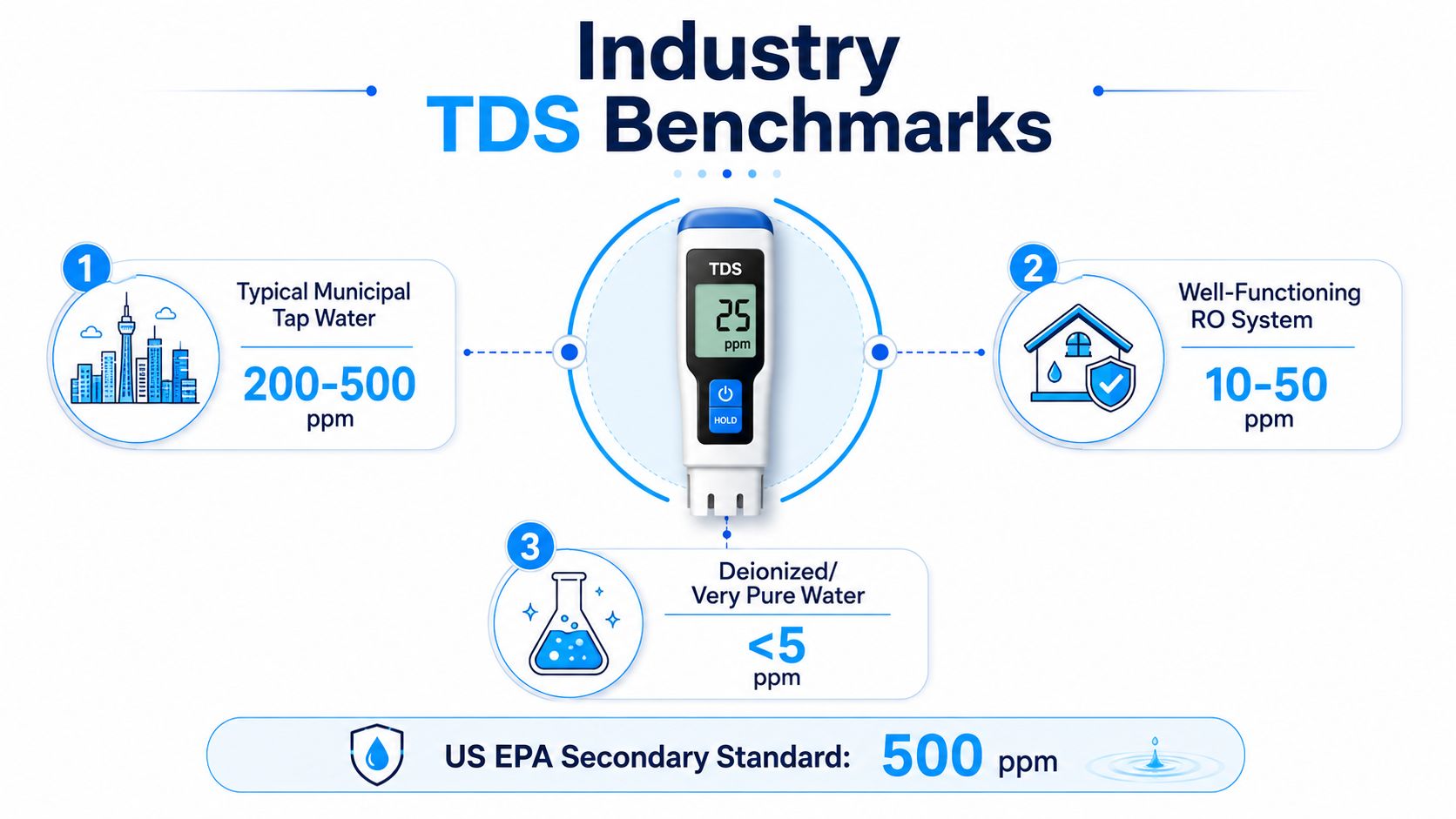
That limitation matters. The U.S. Environmental Protection Agency's drinking-water regulations list 500 mg/L TDS as a secondary drinking-water standard, mainly connected with taste, odor, and scaling rather than a health-based limit. WHO also states that there is no health-based guideline value for TDS in drinking water, so a TDS meter shouldn't replace contaminant-specific testing.
Practical rule: Use TDS to monitor RO performance, not as a complete safety certificate.
Reverse osmosis is valuable because it lowers a broad group of dissolved substances in one process. It doesn't remove every possible water-quality concern by definition, and a TDS meter can't detect every contaminant. For a plain-language comparison of RO with other household filtration approaches, the Covenant Aire Solutions water guide provides useful context.
Typical TDS Ranges After Reverse Osmosis Filtration
A healthy RO system doesn't produce one universal TDS value. The result depends on the feed-water TDS, membrane condition, pressure, temperature, system design, and whether another treatment stage follows the membrane.
The U.S. FDA's reverse osmosis guidance gives a useful benchmark. When feed water contains 300 ppm TDS, product water may be about 15 to 30 ppm, representing roughly 95% or 90% rejection, respectively, as described in the FDA reverse osmosis guidance. The key idea is the relationship between the incoming and outgoing readings, not a promise that every household faucet will show the same result.
Read the number in context
Independent RO guidance commonly describes home membrane rejection around 95% to 99%, and explains the calculation as:
Rejection (%) = [1 − (Permeate TDS ÷ Feed TDS)] × 100
The formula and rejection-rate context are available from Crystal Quest's RO rejection guidance. For example, if feed water measures 300 ppm and the RO sample measures 30 ppm, the calculation indicates 90% rejection. That doesn't mean 30 ppm is a universal pass or fail reading. It means the membrane has removed nine-tenths of the measured TDS under those conditions.
NSF/ANSI 58 and EPA WaterSense use a test challenge of about 750 ± 40 mg/L TDS and require at least 75% reduction under the applicable test conditions. The EPA WaterSense supporting statement explains that this corresponds to permeate at roughly 190 mg/L TDS or lower during testing.
Some systems use deionization or multiple RO modules in series. The FDA guidance notes that such designs can produce water below 0.1 ppm TDS, while it cites a USP limit of 10 ppm total solids for water for injection. Those are specialized purity references, not normal targets for an under-sink drinking-water system.
A low reading can confirm strong dissolved-solids reduction. It can't tell you whether the water tastes good or whether a specific contaminant is absent.
How to Measure TDS Accurately at Home
A TDS meter is simple to use, but inconsistent sampling can make a good system look unreliable. Test the feed water and the treated water under comparable conditions, then track the results instead of reacting to one isolated reading.
A repeatable testing method
-
Test cold feed water first. Fill a clean glass from the cold tap before the RO system. Don't sample from a warm line or a faucet that has been sitting unused if you're trying to establish a normal baseline.
-
Run the RO faucet briefly. Let the RO faucet run before collecting the sample. The first water may have been held in the faucet, tubing, or storage tank, so a flowing sample gives a more useful picture of current production.
-
Use a clean container. Soap residue, dust, or leftover water can affect the reading. Rinse the glass with the same water you're testing, then collect a fresh sample.
-
Check the meter. Follow the manufacturer's calibration instructions and keep the probe clean. If the meter supports temperature compensation, use it consistently, because water temperature can influence electrical readings.
-
Measure at the RO faucet. Testing directly at the dedicated faucet is usually more informative than testing water from a pitcher that has been mixed, stored, or exposed to another cartridge.
-
Repeat the test. Take another reading under the same conditions. A stable trend is more useful than a single surprising result.
Tank water can tell a different story
A storage-tank sample may differ from water produced directly by the membrane because the tank holds treated water between uses. Test both locations only if you have a reason to compare them, and write down where each sample came from. Don't compare a first-draw tank sample with freshly flushed feed water and treat the difference as a membrane failure.
A general TDS meter is enough for routine monitoring. If you want to investigate several aspects of household water quality rather than TDS alone, a multi-function water test kit can help you organize broader checks. Remember that a TDS meter measures an aggregate indicator, not a list of individual contaminants.
Why Lower TDS Doesn't Always Mean Better Water
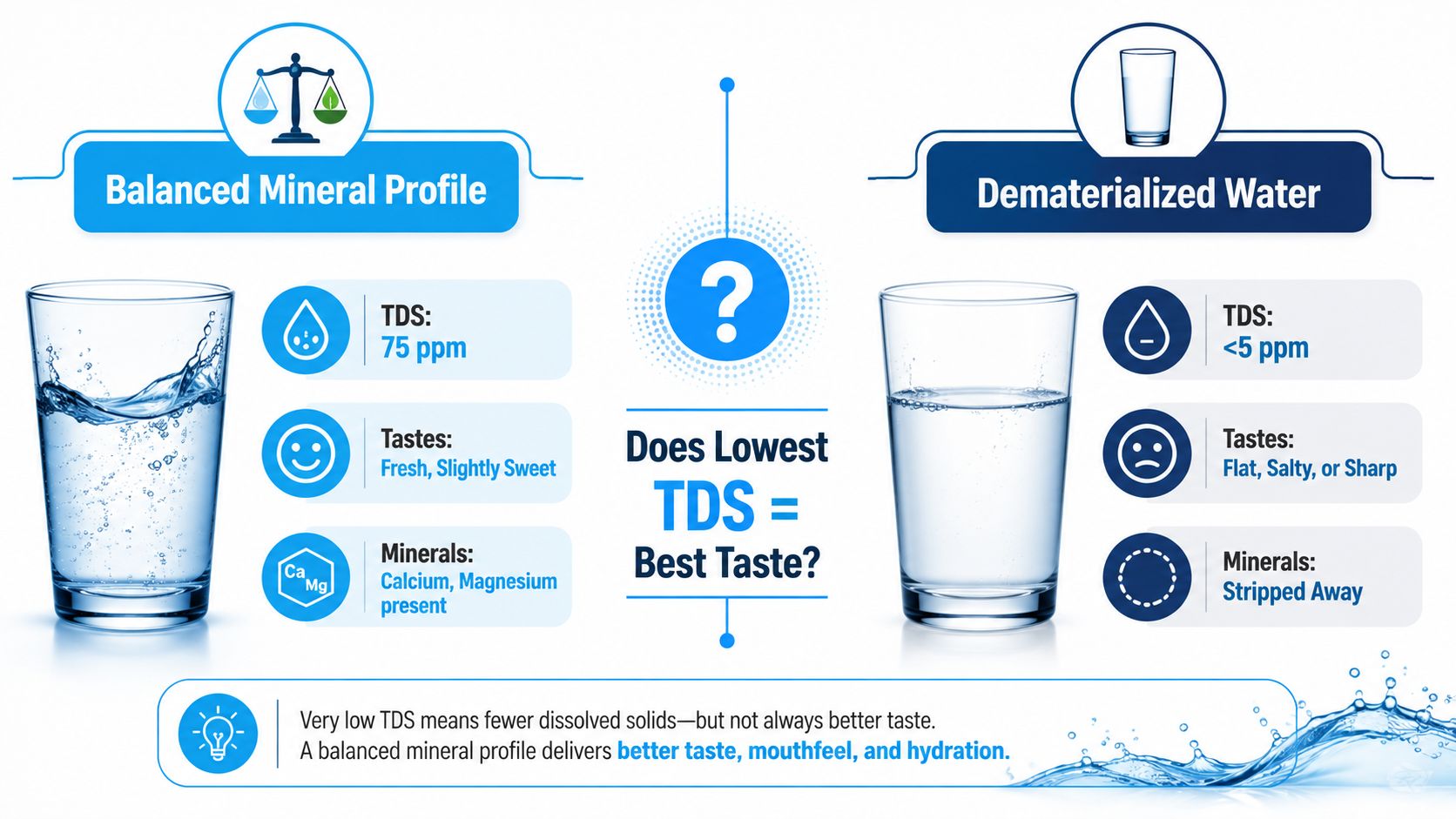
The phrase “pure water” often leads homeowners toward the lowest possible TDS value. For drinking water, taste complicates that goal. Water without much mineral content can seem flat, bitter, dry, or sharp, especially when someone is accustomed to the flavor of mineral-containing tap water.
WHO guidance says water below 600 mg/L TDS is generally palatable, while water becomes increasingly unpalatable above about 1000 mg/L. Research summarized in the WHO document found that water around 190 to 350 mg/L received the freshest taste ratings, while removing minerals below that range shifted perceptions toward bitter, dry, and rough sensations. The WHO drinking-water guidance supports the broader point that palatability isn't improved indefinitely by removing more minerals.
Why remineralization exists
An RO membrane can leave water with very little dissolved mineral content. A remineralization cartridge adds selected minerals back into the treated water, often with the aim of improving flavor and mouthfeel. The resulting TDS may rise, but that increase can represent a deliberate finishing step rather than declining membrane performance.
That doesn't mean every household should chase a particular mineral number. Feed-water chemistry, personal taste, existing plumbing, and the cartridge design all matter. The more sensible target is water that has been adequately treated and is pleasant enough that people want to drink it regularly.
Zero TDS is a purity result, not a taste award.
A TDS reading also can't establish whether water is healthy by itself. EPA classifies TDS as a secondary standard, and WHO provides no health-based TDS guideline value. If you're investigating a health concern, use laboratory or certified tests designed for the contaminant in question.
For homeowners sorting through broader indoor water-quality concerns while planning filtration work, help from AMPM Restoration Services can provide separate context about testing accuracy. That topic isn't a substitute for water analysis, but it reinforces a useful habit, match the test to the question.
Troubleshooting High or Unexpected TDS Readings
A higher-than-expected reading doesn't automatically mean the membrane has failed. First, confirm the measurement. Then compare feed and product water taken with the same technique, because a stagnant first draw, an unclean probe, or an uncalibrated meter can create a misleading result.
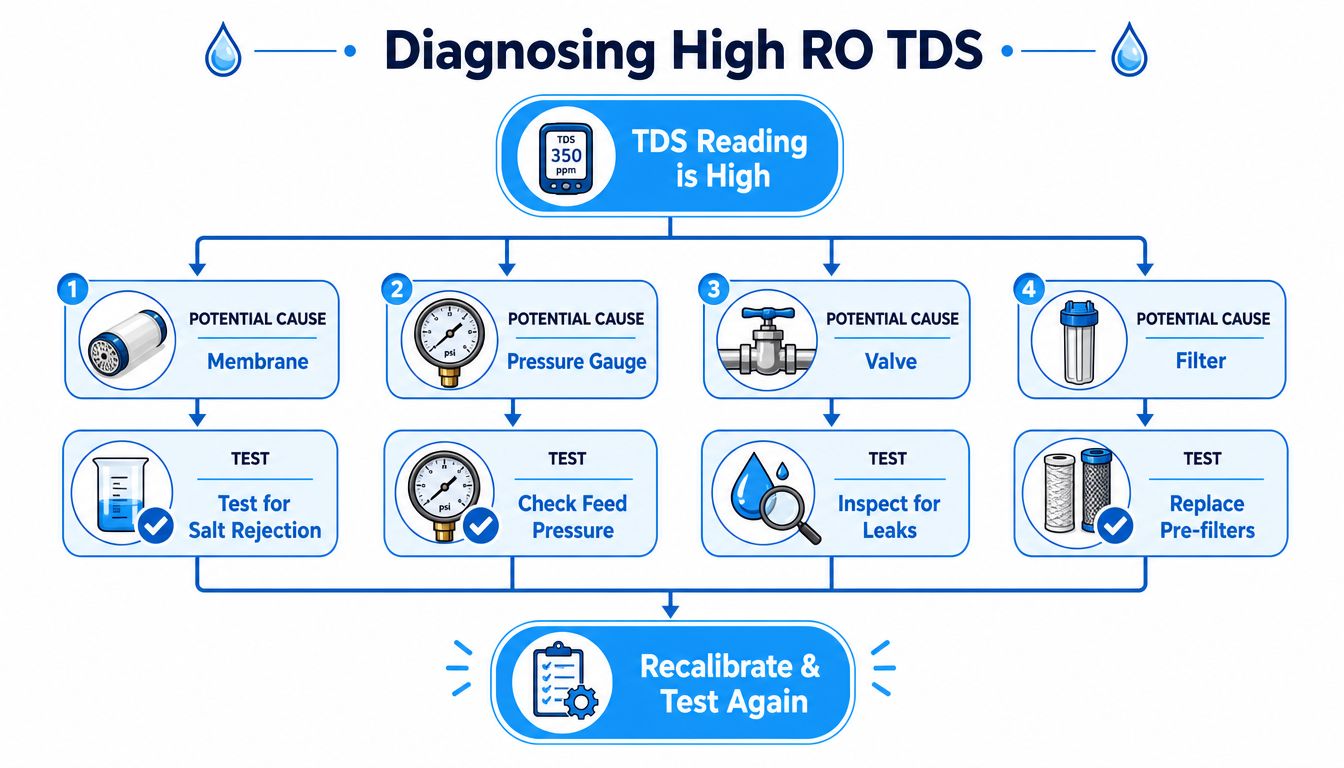
Follow the water path
Start with the simplest checks and move toward the membrane.
-
Confirm the sample: Flush the RO faucet, clean the meter, and repeat the reading. Compare the rejection calculation rather than judging the RO number alone.
-
Inspect the membrane: A membrane that isn't seated correctly can allow untreated water to bypass the intended separation stage. Check the installation direction and seating if the system is new or has recently been serviced.
-
Check feed pressure: RO membranes need adequate pressure to perform properly. Low pressure can reduce production and dissolved-solids rejection, so inspect the household supply and any pressure gauge or booster equipment.
-
Examine pre-filters: Sediment and carbon pre-filters protect the membrane. If they become clogged, restricted flow can reduce the pressure reaching the membrane. Replace them according to the manufacturer's instructions or when their condition indicates they're exhausted.
-
Look for valve problems: A leaking check valve or malfunctioning shutoff component can allow treated and untreated water to mix or keep the system from operating normally. Inspect connections and valves for backflow or leakage.
-
Consider the storage tank: A damaged or waterlogged tank can change flow behavior and affect the sample you receive at the faucet. Separate a tank problem from a membrane problem by testing freshly produced water when possible.
When the number deserves attention
A slightly different reading can reflect changing feed water or sampling conditions. A steady rise over repeated, comparable tests is more meaningful and may point to membrane wear, pressure loss, fouling, or a component problem.
The EPA reverse osmosis performance materials and NSF/ANSI 58 benchmark are useful for understanding standardized performance, but household conditions won't duplicate a laboratory challenge exactly. If repeated tests show declining rejection, inspect the system methodically before replacing parts at random.
Building a Sustainable RO Maintenance and Testing Routine
A reliable RO routine has three parts: consistent testing, timely filter care, and a written record. Test feed and RO water under similar conditions, especially after changing a filter, servicing the membrane, or noticing a taste or flow change. The right frequency depends on your household usage and source-water conditions, so use the manufacturer's maintenance schedule as the starting point rather than relying on a universal calendar.
Keep a small log beside the system. Record the date, feed TDS, RO TDS, sample location, whether the faucet was flushed, and any maintenance performed. A trend can reveal a gradual decline that a single test would hide.
Build maintenance around symptoms and system design
Pre-filters deserve attention because they shield the membrane from sediment and chlorine. The membrane is the central rejection stage, while the post-filter affects the final taste. Replace each component according to its rated service life, water conditions, and measured performance, not just because a low TDS number makes you anxious.
Seasonal changes can also alter feed-water characteristics, particularly for households using wells or supplies that experience changing mineral conditions. If your readings move, retest carefully before concluding that the RO unit is failing.
For additional guidance on testing, replacement planning, and choosing filtration equipment, consult Water Filter Advisor's water filtration advice. A practical routine should protect the membrane, verify performance, and leave room for taste preferences such as remineralization.
The most useful takeaway is simple: judge the TDS value of RO water against feed water, system design, taste, and trend. Don't treat zero as a household trophy. A maintained system that reduces dissolved solids effectively and produces water your family enjoys is a more sensible goal.
Water Filter Advisor offers practical guidance for choosing, testing, and maintaining home filtration systems, including help with RO TDS checks and replacement decisions. Visit Water Filter Advisor to compare filtration options and build a maintenance routine based on your household's water-quality goals.
