
How Do I Dechlorinate Water for Better-Tasting Results
Ever notice that faint swimming pool smell coming from your tap? That’s not your imagination. It’s chlorine, a heavy-duty disinfectant used in municipal water systems to kill off nasty bacteria on its way to your home. While it's a hero for public health, its job is pretty much done by the time it reaches your faucet. From that point on, it’s just an uninvited guest that can mess with everything from the taste of your morning coffee to the health of your houseplants.
Ready to give chlorine the boot? Let's dive into how water filtration can give you purer, better-tasting water right from the tap.
Why Chlorine in Your Tap Water Is a Buzzkill
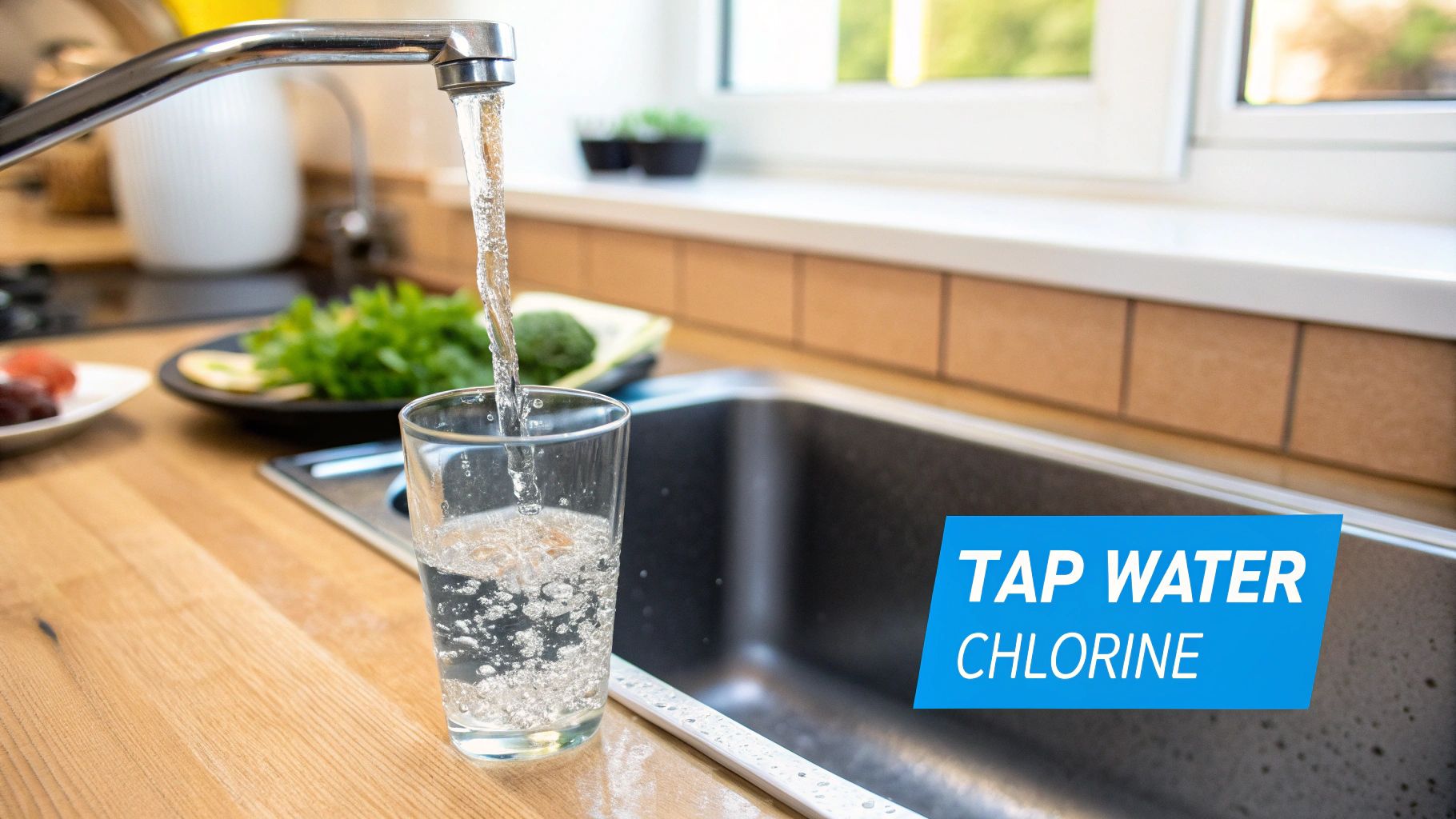
Chlorine is great at its day job—keeping our water safe. But having it in your home’s water brings along a few unwanted side effects. The most obvious is the impact on taste and smell. That distinct chemical note can turn a perfectly brewed cup of tea into a disappointment or make a simple glass of water taste… well, like a trip to the local pool.
Beyond your taste buds, chlorine can have real, tangible effects on your daily life. Many people find it dries out their skin and hair, leaving them feeling brittle and irritated after a shower. If you've ever wondered why your salon-fresh hair color fades so fast, the chlorine in your shower water is a prime suspect.
The Chlorine vs. Chloramine Showdown
Just to keep things interesting, many water treatment plants now use chloramine instead of chlorine. It’s a more stable compound made by mixing chlorine with ammonia. While that stability helps it disinfect water more effectively over long pipe runs, it also makes it a whole lot tougher to get rid of.
Here’s the breakdown you need to know:
- Chlorine is a bit of a drama queen. It’s volatile and will naturally gas off and evaporate if you just let the water sit out.
- Chloramine, on the other hand, is the stubborn, clingy type. It will not evaporate and needs specific filtration methods to be removed.
Figuring out which one your local utility uses is the first big step. You can usually find this info tucked away in your city’s annual water quality report.
Impact on Your Home and Hobbies
The need to ditch these chemicals goes way beyond just your drinking glass. That chlorinated water can wreak havoc on other parts of your life, too.
For anyone keeping fish, chlorine is public enemy number one. It can damage fish gills and wipe out the beneficial bacteria that keep a tank ecosystem healthy. Even home bakers aren't safe—chlorinated water can kill the delicate yeast in a sourdough starter, resulting in a sad, flat loaf.
This growing awareness has kicked off a huge demand for better water filtration. In fact, the global market for dechlorination is projected to jump from USD 1.5 billion in 2025 to a whopping USD 2.5 billion by 2035. You can dig into these market trends over at Future Market Insights. This surge shows just how many homeowners are looking for purer water for every part of their lives.
Simple DIY Methods for Dechlorinating Water
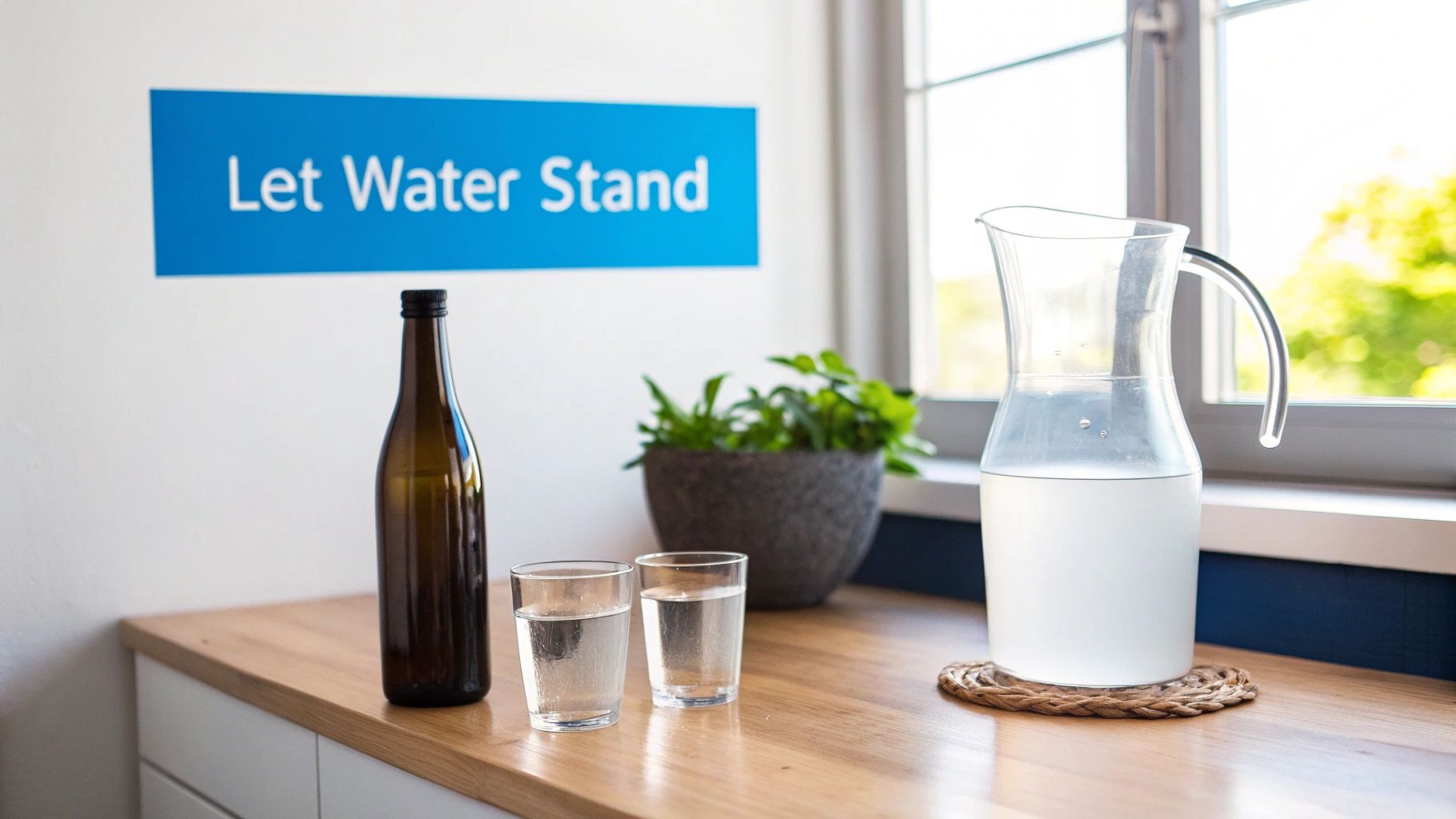
If you're wondering "how do i dechlorinate water" but aren't ready to invest in a filtration system just yet, you're in luck. Some of the oldest methods are still effective for small jobs, like watering your plants or topping off a fishbowl.
These techniques really just come down to basic chemistry and a bit of patience. While they're not a whole-home solution, they're a good place to start.
Letting Water Stand and Off-Gas
The easiest trick in the book is aeration, which is just a fancy term for letting your water sit out. Chlorine is a volatile chemical, meaning it naturally wants to evaporate from water and escape into the air. You just have to give it time to do its thing.
For instance, filling a wide-mouthed pitcher and leaving it on the counter overnight will often do the trick. A larger surface area gives the chlorine more room to make a run for it. This process usually takes about 24 to 48 hours to get most of the chlorine out.
But there’s one huge catch to this simple method.
This only works if your tap water is treated with free chlorine. If your local water utility uses chloramine—that more stable blend of chlorine and ammonia—letting it stand will do absolutely nothing. Chloramine is designed to stick around and won’t just evaporate on its own.
This is exactly why you need to know what’s in your water before you start. Check your local water utility's annual report for that info. For a deeper dive into figuring out your water quality, you can find more water filter advice to help you test your supply.
Using Boiling to Accelerate Removal
Need chlorine-free water in a hurry? Boiling is your next best bet. It’s a more active approach that uses heat to force those unwanted chemicals out of the water.
- For Chlorine Removal: A solid rolling boil for just 5-10 minutes is enough to drive off nearly all the free chlorine.
- For Chloramine Removal: Chloramine is tougher. You’ll need to keep a vigorous, rolling boil going for at least 20-30 minutes.
While boiling is effective, it has drawbacks. The big one is energy cost—boiling gallons of water isn't practical for daily drinking. It also concentrates any other contaminants, like heavy metals, that might be left behind. While these methods work in a pinch, they highlight the convenience and effectiveness of modern water filtration systems.
Using Chemical Neutralizers Like Vitamin C
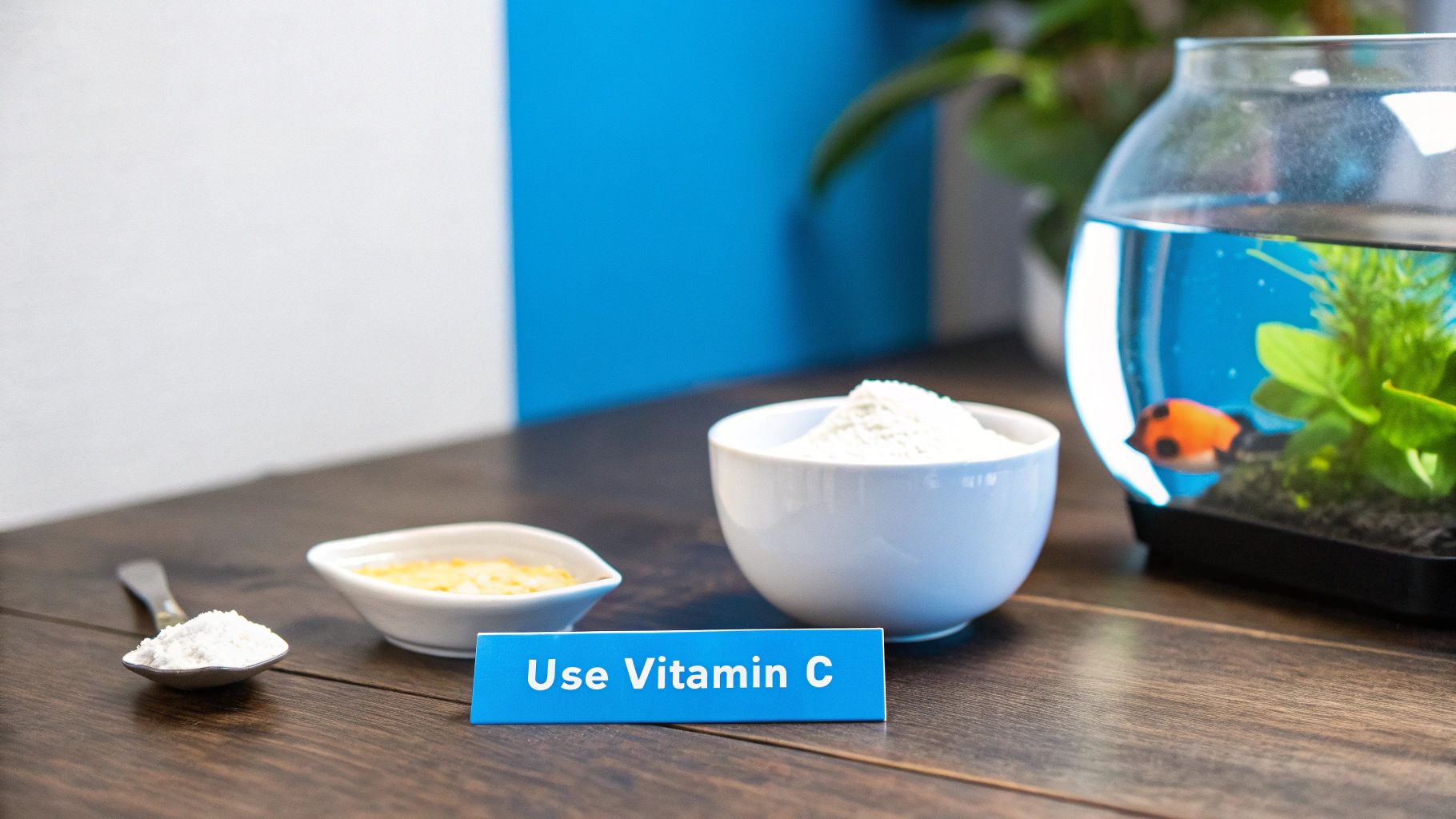
Let's be real, waiting 24 hours for water to dechlorinate on its own isn't always practical. When you need safe, chlorine-free water right now, chemical neutralizers can get the job done instantly.
I know the word "chemical" can sound a bit scary, but the most common option is probably sitting in your medicine cabinet right now: Vitamin C.
How Vitamin C Works Its Magic
Yep, good old ascorbic acid is a superstar when it comes to neutralizing both chlorine and its more stubborn cousin, chloramine. When you add a bit of Vitamin C powder to your water, it kicks off a super-fast reaction that turns chlorine and chloramine into harmless chloride. It's incredibly effective, and the best part is that it's totally safe.
Just be sure you're using pure ascorbic acid powder. Skip the flavored chewable tablets, as they're loaded with sugars and other stuff you don't want in your water.
The amount you need is surprisingly tiny. As a rule of thumb, about one teaspoon of ascorbic acid powder (around 4,000 milligrams) will treat a whopping 100 gallons of water. For something smaller, a tiny pinch is literally all it takes.
This makes it a great solution for specific tasks, but if you're looking for a hassle-free, automated solution for all the water in your home, a dedicated filtration system is the way to go.
Understanding Other Chemical Options
While Vitamin C is a fantastic option, you've probably seen another neutralizer on the shelves: sodium thiosulfate. This is the workhorse ingredient in most commercial water conditioners and has been trusted for decades. It's cheap and effective, but it's a chemical compound you wouldn't want to add to your drinking water.
For most people looking to improve the water in their homes, relying on manual additions isn't ideal. This is where modern water filtration technology truly shines, offering a permanent and effortless solution.
If you're tired of waiting for water to sit out or fiddling with chemical drops, it's time to look at the easiest, most reliable method out there: activated carbon filters. This isn't some niche trick; it's the gold standard in water filtration, and for good reason. It’s hands-down the most effective way to get clean, chlorine-free water throughout your home.
So, how does this magic work? It all comes down to a process called adsorption.
Picture each tiny granule of activated carbon as a super-porous sponge with an incredible amount of surface area. As water passes through, all the nasty stuff—chlorine, chloramine, and other chemicals that make your water taste and smell funky—gets stuck to the surface. What comes out the other side is just clean, crisp water.
What Makes Activated Carbon So Effective?
We're not talking about the charcoal briquettes for your grill. Activated carbon is specially treated with oxygen, which creates millions of microscopic pores between the carbon atoms. This gives it a ridiculously large surface area—a single gram can have more surface area than a football field!
This huge network of nooks and crannies acts like a powerful magnet for chlorine molecules. It’s fantastic at grabbing not just the easy-to-remove free chlorine, but also the more stubborn chloramine that methods like letting water stand can't touch. That makes it a complete filtration solution for pretty much any city water you'll encounter.
Finding the Right Carbon Filter for Your Home
Activated carbon filters come in all shapes and sizes, so you can definitely find one that fits your needs and budget, whether you're in a tiny apartment or a big family house.
Here are the most common types you’ll run into:
- Pitcher Filters: The simplest starting point. They're perfect for renters or anyone who just wants better-tasting water for drinking. They're cheap to buy but require frequent cartridge changes.
- Faucet-Mounted Filters: A small upgrade from a pitcher, these attach right to your kitchen faucet for filtered water on demand. They're convenient, but the filters are small and the flow rate can be slow.
- Under-Sink Systems: Installed out of sight under your sink, these give you a dedicated faucet for top-notch filtered water. The filters last much longer, making them a really solid choice.
- Whole-House Systems: This is the ultimate "set it and forget it" option. A large carbon filter is installed where your main water line enters your home, meaning every single drop of water is dechlorinated—for drinking, showering, laundry, you name it.
Getting chlorine out of water is a massive global industry. Driven by tight water quality regulations, the market for dechlorination is expected to jump from USD 1.6 billion in 2023 to USD 2.4 billion by 2030. You can dig into the data behind these trends over at Lucintel, which really shows how critical this filtration technology has become for homes and industries alike.
A Quick Look at the Costs and Upkeep
Your decision will probably come down to balancing upfront cost against long-term convenience. A water pitcher might only set you back $30, but the cost of replacement filters adds up.
On the other hand, a whole-house system is a bigger investment at first. But since its high-capacity filters can go for years before needing a swap, it often ends up being the more economical choice for homeowners who want pristine, chlorine-free water from every tap in the house.
Comparing Dechlorination Methods at a Glance
With so many options, it can be tough to decide which route to take. This table breaks down the most common methods to help you figure out what makes the most sense for your home.
| Method | Effective On Chlorine? | Effective On Chloramine? | Best For | Cost & Effort |
|---|---|---|---|---|
| Aeration/Standing | Yes | No | Small batches of water for plants, fish, or brewing. | Free, but takes 24-48 hours and is slow. |
| Boiling | Yes | No | Small, quick batches when you need chlorine-free water fast. | Low cost (just energy), but labor-intensive. |
| Activated Carbon | Yes | Yes | Drinking water, whole-house filtration, and aquariums. | Moderate to high initial cost, but low long-term effort. |
| Vitamin C | Yes | Yes | Instantly treating water for aquariums, gardening, or baths. | Very low cost, requires precise measuring. |
| Sodium Thiosulfate | Yes | Yes | Large volumes of water, like ponds and large aquariums. | Very low cost, but can affect pH and requires careful handling. |
Ultimately, there's a dechlorination method for every situation and budget. But for a truly hands-off, effective solution for your home, investing in a quality water filtration system is the clear winner for convenience, safety, and taste.
Choosing the Right Water Filtration System
Trying to pick the right water filter can feel overwhelming, but it doesn't have to be. The secret is to stop thinking about the hardware and start thinking about your actual needs. Once you dial in on your lifestyle and what you’re trying to solve, the right choice becomes much clearer.
What's your main goal? If you're renting and just want drinking water that doesn't taste like it came from a swimming pool, your needs are very different from a homeowner who's fed up with dry skin after every shower. Each problem has its own perfect filtration solution.
Point-of-Use vs. Point-of-Entry Systems
Your first big decision is where you want to treat your water. Do you need better water at one specific spot, or does your whole house need an upgrade? This choice splits the world of filters into two main camps.
-
Point-of-Use (POU) Filters: These guys treat water right where you’re about to use it. We’re talking about faucet-mounted filters, under-sink units, showerhead filters, and those classic water filter pitchers. They are fantastic for tackling a specific issue, like the taste of your drinking water, without a huge investment.
-
Point-of-Entry (POE) Systems: You’ll often hear these called whole-house systems. They’re installed right where the main water line comes into your home, filtering every single drop of water—from the shower to the washing machine. This is the go-to approach for widespread problems like chlorine-induced skin irritation or protecting your home’s plumbing.
This handy flowchart can help you visualize the best path forward, from identifying your main issue to landing on the right type of filter for your home.
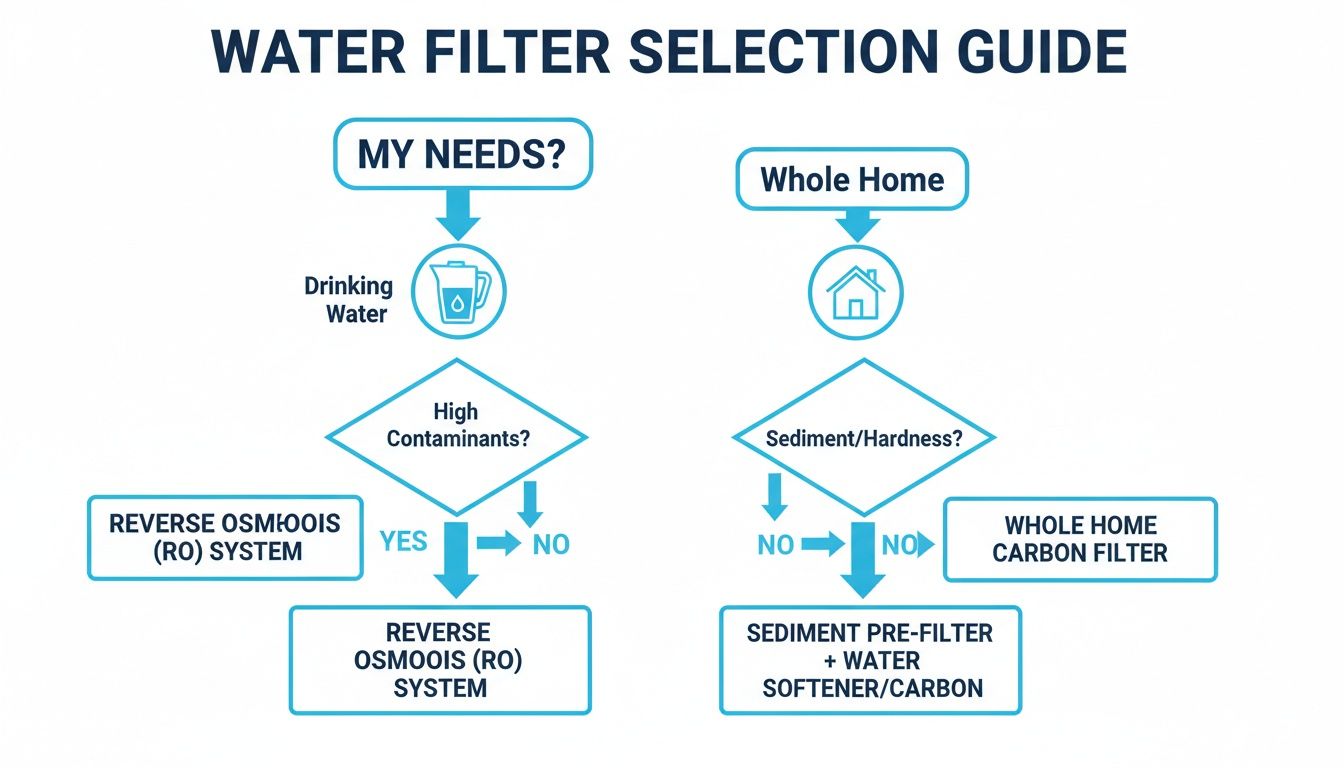
As you can see, once you decide between spot-treating your drinking water or giving your entire home an overhaul, you can start drilling down into the specific filtration technology—like activated carbon or reverse osmosis—that will get the job done.
Matching a Filter to Your Life
Let’s get practical. If you’re a renter, a faucet filter or a high-quality pitcher gives you an instant and major upgrade to your drinking water with zero permanent changes.
On the other hand, if you own your home and have noticed your colorful clothes are fading way too fast, chlorine is almost certainly the culprit. In that scenario, a whole-house carbon filter is a smart investment. It protects your laundry, your skin, and your appliances all in one go. For a comprehensive treatment system, you might look into professional-grade solutions like the Brita Purity C Quell St C300 Water Filter.
Your choice ultimately boils down to three things: the problem you're solving, your budget, and how much installation and maintenance you're willing to handle. A POU filter is a low-cost, low-commitment starting point, while a POE system is the complete, long-term solution.
The demand for better water is growing fast. The market for dechlorination chemicals was valued at USD 1.37 billion in 2024 and is expected to jump to USD 2.54 billion by 2035, thanks to people like you wanting cleaner water at home. As regulations get stricter, you can bet the technology behind home filtration will only get better.
Look, you're going to have questions when you start digging into water filtration. It’s totally normal. Let's walk through some of the most common things people ask so you can choose your filter with confidence.
How Do I Know if My Water Has Chlorine or Chloramine?
The easiest way? Check your local water utility’s annual quality report. They're required to publish this, and you can usually find it on their website. It’ll tell you exactly what disinfectants they use.
If you want to test it yourself, grab some water test strips that measure both "free chlorine" and "total chlorine."
- If the numbers for both are pretty much the same, you've got chlorine.
- If your "total chlorine" reading is higher than your "free chlorine," that means you have chloramine.
This is a super important distinction. Simple methods, like letting water sit out, work great for chlorine but do absolutely nothing for chloramine, which requires a robust carbon filter.
Will a Standard Water Filter Pitcher Remove Chlorine?
Yes, for the most part. Almost all standard pitcher filters use activated carbon as their main filtering tool. This stuff is fantastic at adsorbing chlorine, which is why water from a pitcher filter almost always tastes and smells better right away.
But here's the catch: they aren't always great at removing chloramine. If your water report confirmed you have chloramine, you need to find a pitcher filter that is specifically certified for chloramine reduction. For anyone serious about making incredible coffee, the quality of your water is a game-changer; this guide to brewing exceptional coffee at home dives deeper into why the right water makes all the difference.
Pro Tip: Don't forget to change your filter cartridge on schedule! An old, clogged-up filter is useless for removing chlorine and can actually turn into a little hotspot for bacteria.
Is Using Vitamin C to Dechlorinate Drinking Water Safe?
Absolutely. Using pure ascorbic acid (that's just Vitamin C) is a perfectly safe and incredibly fast method for neutralizing both chlorine and chloramine. It works on contact, and you won’t taste or smell a thing.
A tiny pinch of the powder is all you need—it's powerful enough to treat several gallons of water. Just be sure you're buying 100% pure Vitamin C powder. While it's a great trick for specific tasks, for everyday drinking water, a reliable filter is a much more convenient and consistent solution.
Here at Water Filter Advisor, our mission is to give you the clear, straightforward knowledge you need to make smart choices about your water. Whether you need a simple pitcher or a full whole-house system, our expert reviews and guides are here to help. See what we have to offer at https://www.waterfilteradvisor.com.
