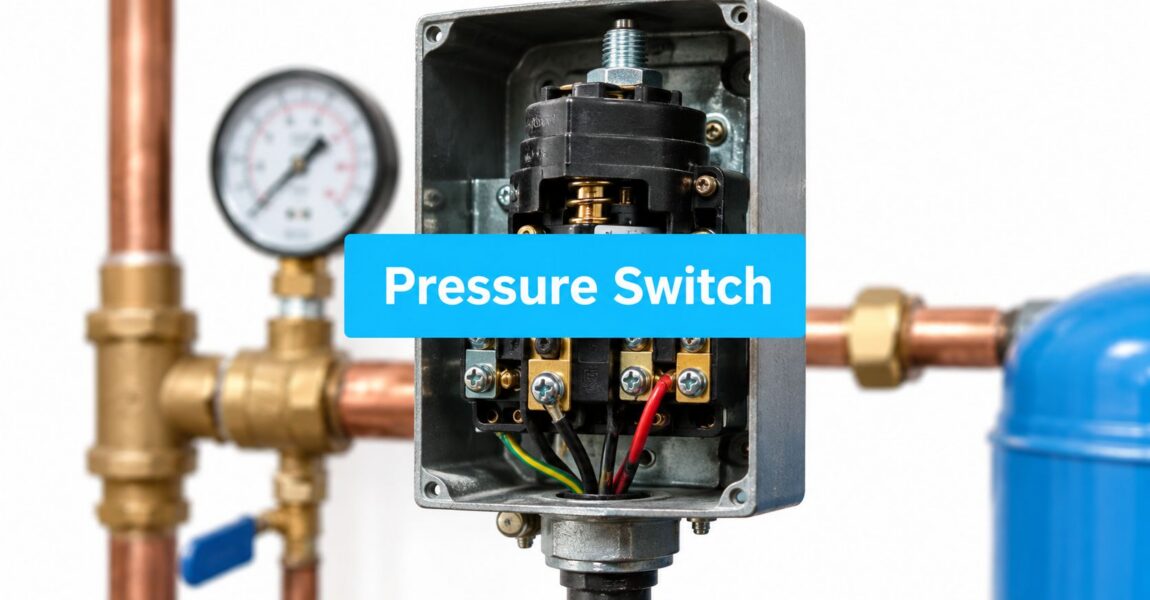
Pressure Switch Troubleshooting for Home Well Systems

Someone opens the shower while the dishwasher is running, the water pressure drops to a trickle, and the well pump starts again less than a minute later. Then the pump keeps running longer than expected, or refuses to shut off at all. That scene often sends homeowners straight to the pressure switch, but the switch may only be reporting a problem elsewhere in the well and filtration system.

Pressure switch troubleshooting works best as a process of elimination. A clogged sediment filter, incorrect pressure-tank air charge, restricted strainer, leaking check valve, weak well recovery, or loose wire can all create symptoms that look like a failed switch. The safest approach is to measure what the system is doing before adjusting or replacing anything.

Why Your Well Pump Is Acting Up

A pressure switch is the control that starts the pump at the lower setpoint and stops it at the higher setpoint. In a common residential setup, those points might be 30/50 psi, while another familiar arrangement is 40/60 psi. Cut-in starts the pump, and cut-out stops it, but the switch depends on the rest of the system to reach those pressures reliably. InspectAPedia's well-pump pressure-switch guidance explains these setpoints and the relationship between switch pressure and tank setup.

Consider a home with a whole-house sediment filter. If the cartridge loads with iron, sand, or other well-water debris, the pump may build pressure at the tank while the fixtures receive weak flow. The homeowner sees low pressure and blames the switch, even though the restriction is downstream. A clogged filter or strainer can also make the pump run longer because the system struggles to satisfy demand.

Match the complaint to the likely fault

  • Rapid cycling: A waterlogged pressure tank, a differential set too narrow, a sticking contact, or a faulty check valve can make the pump start and stop repeatedly.
  • Weak pressure at the tap: Check a loaded filter cartridge, restricted inlet, failing tank bladder, poor well recovery, or a switch that has drifted out of adjustment.
  • No water: The cause may be a tripped breaker, open circuit, loose wire, failed switch diaphragm, pump fault, or an empty well.
  • Pump won't shut off: First ask whether the pump can build enough pressure to reach cut-out. A leak, clogged pipe, failing pump, or incorrect setting may be responsible rather than the switch. This pump troubleshooting guide makes that distinction explicit.

Practical rule: The switch is often the messenger, not the culprit. Test the tank, filtration path, wiring, and actual pressure before buying a replacement.

The low-cost checks come first. Look at the filter, inspect visible wiring, confirm the gauge moves, and record when the symptom appears. If pressure falls only when several fixtures run, the system may have a flow restriction or limited well recovery. If the pump cycles with almost no water use, the tank, check valve, or switch differential deserves closer attention.

Safety Gear and Tools You Need First

Pressure switches sit near electrical terminals, pump controls, and pressurized plumbing. Prepare the work area before removing a cover or disconnecting a wire. Wear safety glasses, insulated gloves, and non-conductive footwear, and use a flashlight if the tank and switch are in a dark crawlspace or utility corner.

The first essential instrument is a multimeter set to continuity or resistance. It tells you whether the switch contacts are open or closed when the system is de-energized. The second is an accurate pressure gauge. A gauge rated from 0 to 100 psi or 0 to 200 psi can be fitted to a hose bib or drain port to show what the tank and switch are seeing.

Build the test kit

  • Multimeter: Use the ohms or continuity function for contact checks. A meter reading is more useful than guessing from a relay click.
  • Pressure gauge: Choose a gauge that covers the switch range and connect it where it can read system pressure.
  • Adjustable wrench: Useful for gauge adapters, tank-valve access, and plumbing fittings.
  • Correct screwdriver: Match the switch-terminal screws rather than forcing an ill-fitting driver.
  • Notepad: Record the pressure at pump start and stop, along with unusual sounds or fluctuations.
  • Manual or wiring diagram: Keep the switch model information nearby so the nameplate rating and terminal arrangement are clear.
  • Flashlight and non-contact tester: Use the tester to confirm the circuit is de-energized, but don't treat it as a substitute for proper electrical verification.

Turn off the breaker before removing the pressure-switch cover. Confirm the power is off with an appropriate tester, then verify the wiring condition before touching terminals. If you need to disconnect plumbing or remove the switch, bleed pressure from the tank and system first. This pressure-switch safety guidance emphasizes de-energizing equipment and using direct measurements instead of trial and error.

Don't bypass the switch to make the pump run. That removes a control designed to protect the pump and plumbing. Having the meter, gauge, tools, and paperwork ready keeps the diagnostic session orderly instead of turning into a series of guesses.

Reading the Symptoms Your Switch Is Giving You

Before testing, listen to the pump and watch the pressure gauge. A short click followed by an immediate restart tells you something different from a steady pump that never reaches shutoff. The timing, sound, and gauge movement give the electrical test a useful context.

Four patterns deserve attention

Rapid cycling means the pump turns on and off within a short interval. A tank that has lost its air charge is a leading suspect, but a narrow differential, restricted filter, stuck check valve, or sticking switch contact can produce a similar pattern. The gauge should show whether pressure is moving between the intended cut-in and cut-out points or merely oscillating around one setting.

Constant running means the pump doesn't reach cut-out. Check whether the gauge climbs at all, then inspect for a major leak, clogged piping, a failing pump, low well recovery, or a setting the pump can't satisfy. A switch with welded contacts is possible, but replacing it before proving that the pump can build pressure wastes time.

No pump activity with an open faucet points toward a tripped breaker, open circuit, loose wire, failed contact mechanism, or pressure-sensing diaphragm that isn't responding. The gauge may remain below cut-in while the pump stays silent. Don't open the switch until power is isolated.

Weak or inconsistent pressure often begins in the water path rather than the control. A loaded sediment filter, blocked inlet, damaged tank bladder, or filter housing restriction can reduce flow even when the switch starts and stops correctly. Compare pressure at the tank-side gauge with pressure at a fixture if possible.

A homeowner may see a 30/50 psi or 40/60 psi arrangement, but the nameplate is the authority for that particular switch. The well-pump FAQ from InspectAPedia describes the meaning of cut-in and cut-out and gives 30/50 as a common residential example. Record the actual values rather than assuming the label tells the whole story.

Write down when the symptom began, whether a filter was recently changed, whether plumbing work occurred, and whether the pump behavior changes during heavy household use. That history often separates a filtration restriction from an electrical fault before the cover ever comes off.

Step-by-Step Diagnostic Walkthrough

Start with the circuit dead. Turn off the breaker, confirm the switch and pump wiring are de-energized, and don't rely only on a silent pump. Remove or isolate the switch wires only after power has been verified off, keeping track of their original terminals.
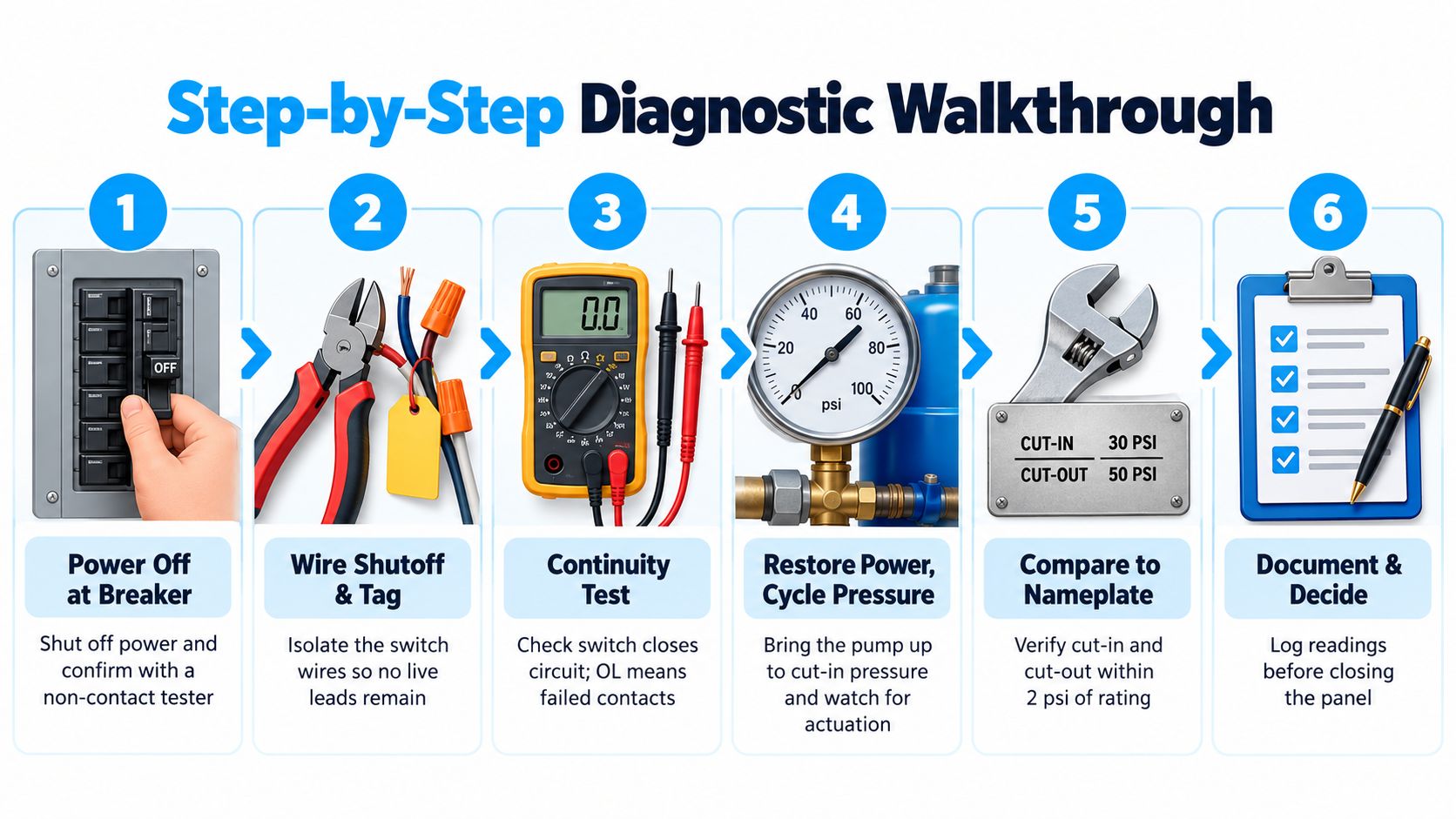
A six-step infographic illustrating the diagnostic procedure for troubleshooting a water pump pressure switch system.

Begin with continuity

Set the multimeter to ohms or continuity and place the probes across the switch contacts. At the switch's normal state, the meter should show the corresponding open or closed condition. The useful test is whether the contacts change state at the proper pressure, not whether the switch merely clicks when touched.

If the contacts remain closed when pressure should have reached cut-out, or remain open when pressure falls to cut-in, the switch may have a failed diaphragm, contaminated mechanism, or damaged contacts. However, a continuity failure with no pressure applied doesn't prove the switch is the only fault. The pressure port, tank, and wiring still need inspection.

For homeowners who want broader maintenance context around household mechanical systems, this guide to solving HVAC problems at home is useful because it reinforces the same test-first habit, isolate the system, observe the symptom, and avoid replacing parts blindly.

Verify the live pressure cycle

Reconnect the wiring, restore power, and attach the pressure gauge to a suitable drain port or hose bib. Open a faucet and let the system draw down. Watch the gauge as the pump starts, then close the faucet and observe the rise toward cut-out.

Compare both readings with the switch nameplate. A pump that starts near its marked cut-in but never reaches cut-out points away from a simple switch adjustment and toward pump capacity, leakage, restriction, or well recovery. A switch that changes state at inconsistent readings deserves further inspection rather than repeated adjustment.

Short-cycling becomes easier to diagnose when the gauge shows the actual differential. A narrow operating differential, waterlogged tank, or filter restriction can cause frequent starts. Chattering near cut-in can result from loose terminals, contamination, vibration, or unstable pressure. Check the 1/4-inch sensing port or nipple for blockage, because a restricted port can prevent the diaphragm from seeing the true system pressure.

Record several complete pressure sweeps. The switch should transition consistently at its specified cut-in and cut-out. If readings drift from cycle to cycle, suspect contamination, diaphragm fatigue, or contact wear before changing a spring setting.

Decoding Short-Cycling and Chattering

Short-cycling and chattering sound similar from the utility room, but the gauge and meter separate them. Short-cycling is a complete pump start and stop that repeats too quickly. Chattering is a rapid flutter of the contacts near a pressure threshold, often accompanied by a buzzing or clicking sound.

A waterlogged pressure tank is a common short-cycle cause because the tank no longer provides the intended cushion between pump starts. A clogged filter or stuck foot valve can also make pressure respond poorly to demand. If the switch differential is too narrow, the pump may reach cut-out almost immediately and restart as pressure falls.

Chattering points more directly toward the switch circuit or unstable pressure. Loose or corroded terminal screws, pitted contacts, moisture, contamination, vibration, and electromagnetic interference can all disturb the contact transition. The multimeter should show a clean change of state, while the gauge should move steadily rather than hover around cut-in.

Symptom-to-Cause Quick Reference

Symptom Likely Cause First Check
Pump starts and stops repeatedly Waterlogged tank, narrow differential, restriction, or check-valve problem Observe the gauge through a full cycle and inspect tank setup
Contacts buzz or flutter Loose terminals, pitted contacts, contamination, or vibration Isolate power, inspect terminals, and test continuity
Pressure falls quickly after shutoff Leaking check valve, plumbing leak, or filter-side restriction Close fixtures and watch whether pressure holds
Pump runs without reaching cut-out Pump weakness, clogged piping, leak, low recovery, or incorrect setting Confirm the gauge rises and inspect the filtration path
Pressure is low only at fixtures Loaded cartridge, clogged strainer, or restrictive filter housing Compare tank-side and fixture-side pressure

The measurement decides the next move. If the pressure cycle is correct but the contacts chatter, the switch mechanism or wiring becomes more likely. If the contacts operate cleanly while the system cycles rapidly, investigate the tank, filter, valve, and demand profile instead of condemning the switch.

Adjust, Replace, or Call a Pro

Adjustment is reasonable only when the measurements show a basically healthy system. If the switch actuates within 2 psi of its nameplate rating, and the tank pre-charge is correctly set 2 psi below cut-in, a drifted spring or differential setting may be the only issue. This pressure-tank troubleshooting guide describes the procedure of turning off power, draining the tank, measuring the air charge, and using the 2-psi relationship.

Don't turn adjustment nuts while guessing. Changing one setting can alter the operating range, pump cycling, and filtration performance. Record the original position and pressure readings, make only a controlled change, and retest the complete cycle.

Use the readings to choose

Adjust when the contacts transition consistently, the pump reaches the intended cut-out, and the discrepancy is limited to a setting or tank pre-charge issue. A tank that has lost air should be checked with power off and the tank drained, not while the system is pressurized.

Replace when continuity fails to change at the rated pressure, the diaphragm is visibly bulging or weeping, or the contacts are black, badly pitted, or burned. The Well Guide's pressure-switch troubleshooting advice connects visibly damaged contacts with unreliable pump starting. A standard mechanical switch older than 10 to 12 years is also a sensible replacement candidate when it has become unreliable, although the actual condition and exact model still matter.

Call a licensed well technician if the pump draws unusually high current, the pressure tank shows signs of bladder failure, wiring is damaged, or you're uncomfortable around 240-volt equipment. Local permit requirements may also make professional replacement necessary. A service call costs more than a switch, but a miswired control, dry-running pump, or unsafe pressure setting can cost far more than the part.
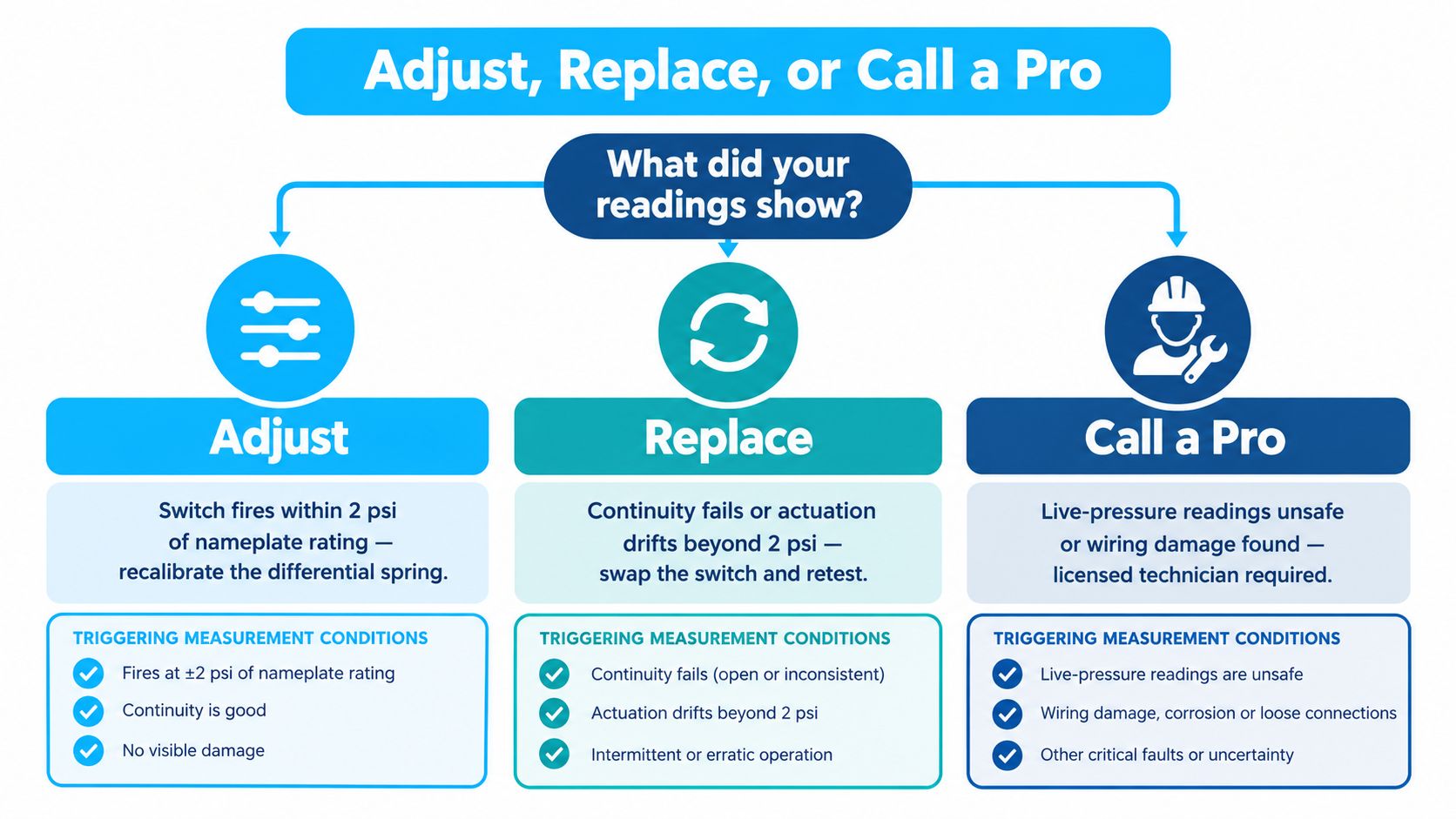
A flowchart guide explaining when to adjust, replace, or call a professional for pressure switch troubleshooting procedures.

Keep the system on a maintenance rhythm

Preventive checks catch many failures before the shower goes cold. Guidance for pressure-switch systems recommends monthly leak checks, quarterly terminal and mounting checks, annual calibration verification, and replacement intervals of 5 to 7 years for standard mechanical switches and 10 to 15 years for standard electronic switches. CFM Distributors' service guidance provides those intervals and emphasizes drift, corrosion, loose wiring, diaphragm wear, and setpoint changes.

For a filtration-focused home, include the filter housing in that routine. Look for a loaded cartridge, pressure loss across the filter, leaks around the sump, and a bypass valve that isn't fully open. Water Filter Advisor also provides water pressure and filtration advice that can help homeowners compare pressure readings with filter maintenance decisions.

Pressure switch troubleshooting ends well when the data points to a specific cause. Check the tank air charge, clean or replace a restricted filter, inspect wiring and sensing ports, and replace the switch only when testing shows the switch has failed.


Water Filter Advisor helps homeowners compare whole-house and under-sink filtration options, understand replacement cartridges and filtration media, and connect water-quality concerns with practical maintenance. Visit Water Filter Advisor to review filtration guidance before a clogged cartridge turns into another pressure problem.
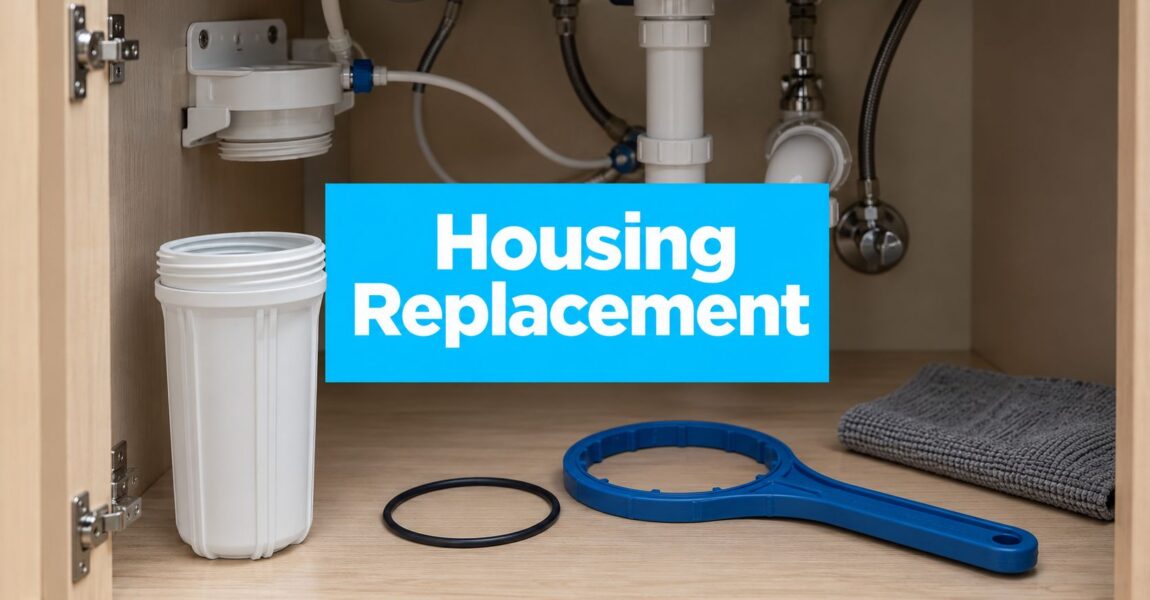
Water Filter Housing Replacement: A Complete Guide

You usually notice the problem at the worst moment. Maybe the floor under the sink is damp, the sump looks cloudy, or a housing that's worked fine for years suddenly starts weeping after a cartridge change. That's the moment you realize the housing itself isn't immortal, and swapping the cartridge alone won't fix a body that's cracked, warped, or cross-threaded.

A lot of homeowners treat filter maintenance like it's just a routine cartridge swap, then get surprised when the bowl sticks, the O-ring won't seal, or the plastic shows age around the threads. A water filter housing replacement is different from a normal filter change because you're dealing with the pressure vessel, not just the media inside it. The right replacement is less about force and more about alignment, clean sealing surfaces, and knowing when the housing has reached the end of its usable life.

Why Your Water Filter Housing Needs Attention

The warning signs usually start small. A hairline crack near the neck, a drip that only appears after the system repressurizes, or a bowl that feels gritty as you unscrew it all point to a housing that deserves attention. The DIY filter housing replacement conversation matters because the housing is a wear part too, even if the cartridge gets all the attention.

The housing takes the pressure, gets opened and closed over and over, and lives with whatever torque people use during routine cartridge changes. That is where a lot of leaks begin. Over-tightening rarely fixes a sealing problem, and it often makes one worse by distorting the O-ring, stressing the threads, or making the next service call harder than it should be.

The housing wears differently from the cartridge

The cartridge does the filtering, but the housing carries the load. It holds pressure, gets handled every time the cartridge is changed, and relies on clean threads and sound sealing surfaces to keep working as it should. Market reporting from Global Growth Insights shows this is a steady replacement category, not a one-time purchase, because housings and the parts around them are expected to be serviced over time.

That matches what shows up in real homes. A cartridge may be due on schedule, but the housing itself is what gets inspected at every change, and that is when cloudy plastic, thread wear, stress marks, and seal damage finally become obvious. I have seen homeowners keep using a housing long after the cartridge schedule made sense, then run straight into a leak because the body was no longer dependable.

Practical rule: if the housing shows damage, stop treating it like a disposable filter part. Treat it like a pressure component with a finite service life.

The mistake is assuming tighter always means better. In practice, a housing usually seals because the O-ring sits cleanly, the bowl threads engage properly, and the cap and sump line up without strain. Once those surfaces start to degrade, no extra muscle at the wrench will make up for it, and forcing the fit usually creates the next problem.

If you want a straight walkthrough from someone who has done this repeatedly in real homes, the most useful reference is DIY filter housing replacement. It is useful because it treats housing service as its own job, separate from swapping the cartridge.

Understanding Your Water Filter Housing

A water filter housing is not the filtering medium. It's the pressure vessel that holds a replaceable cartridge or filter bag while water passes through it under controlled pressure (Basidewt). That distinction matters because replacement decisions should be based on the body, threads, and sealing surfaces, not just on the cartridge schedule. A housing can be reused for a long time, but only until the body, threads, or sealing surfaces are no longer dependable.

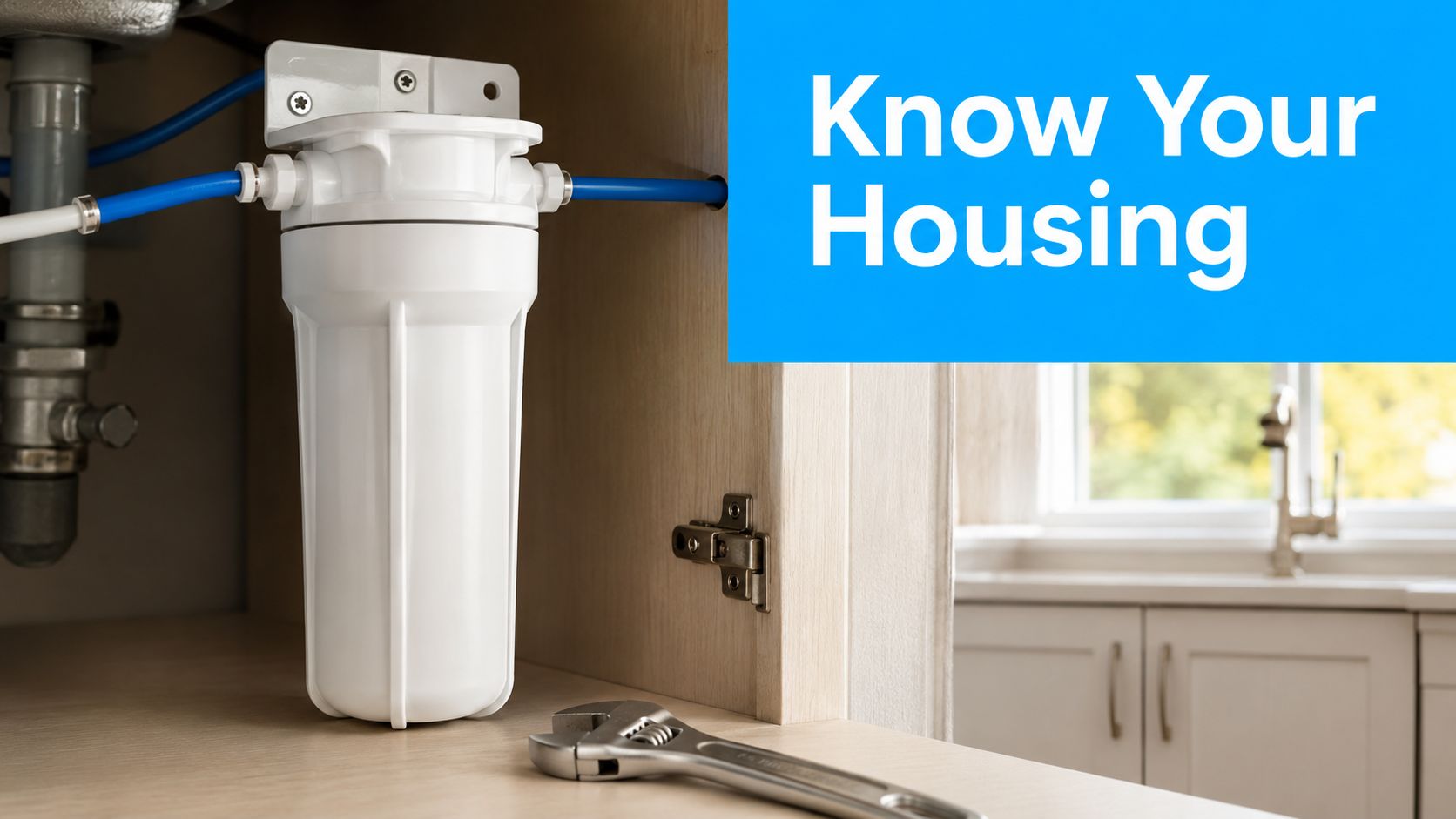
A white water filter housing installed under a kitchen cabinet with an adjustable wrench lying nearby.

Common housing types and where they show up

Under-sink housings are usually compact and built for point-of-use filtration. Whole-house housings are larger, because they handle the water entering the home, and they're the ones most homeowners wrestle with when a leak shows up at the main line. Refrigerator filtration uses a different style of enclosure entirely, and the replacement parts aren't interchangeable with the big canisters used for plumbing mains.

Housing Type Common Use Typical Size Material
Under-sink housing Drinking and cooking water Compact, cartridge-sized Plastic
Whole-house housing Main entry filtration Larger canister style Plastic or metal
Refrigerator housing Appliance filtration Small integrated unit Plastic

Compatibility is where a lot of DIY jobs go sideways. You need the right housing body, the right cartridge format, and the right sealing geometry. If the new part doesn't match the old system's size and connection style, you can force it together and still end up with a leak, which is exactly the kind of repair that turns into a second repair.

The practical way to think about it is simple. The cartridge must fit the housing, the housing must fit the plumbing, and the sealing surfaces must line up cleanly. If any of those three don't match, don't improvise.

What to inspect before buying a replacement

Look at the neck, the threads, the sump, and the O-ring groove. If any of those areas are damaged, stained beyond cleaning, or visibly distorted, replacement becomes a safer choice than another round of tightening and hoping. The housing is reusable only while its pressure-bearing structure and sealing points are still sound.

Essential Tools and Parts for Housing Replacement

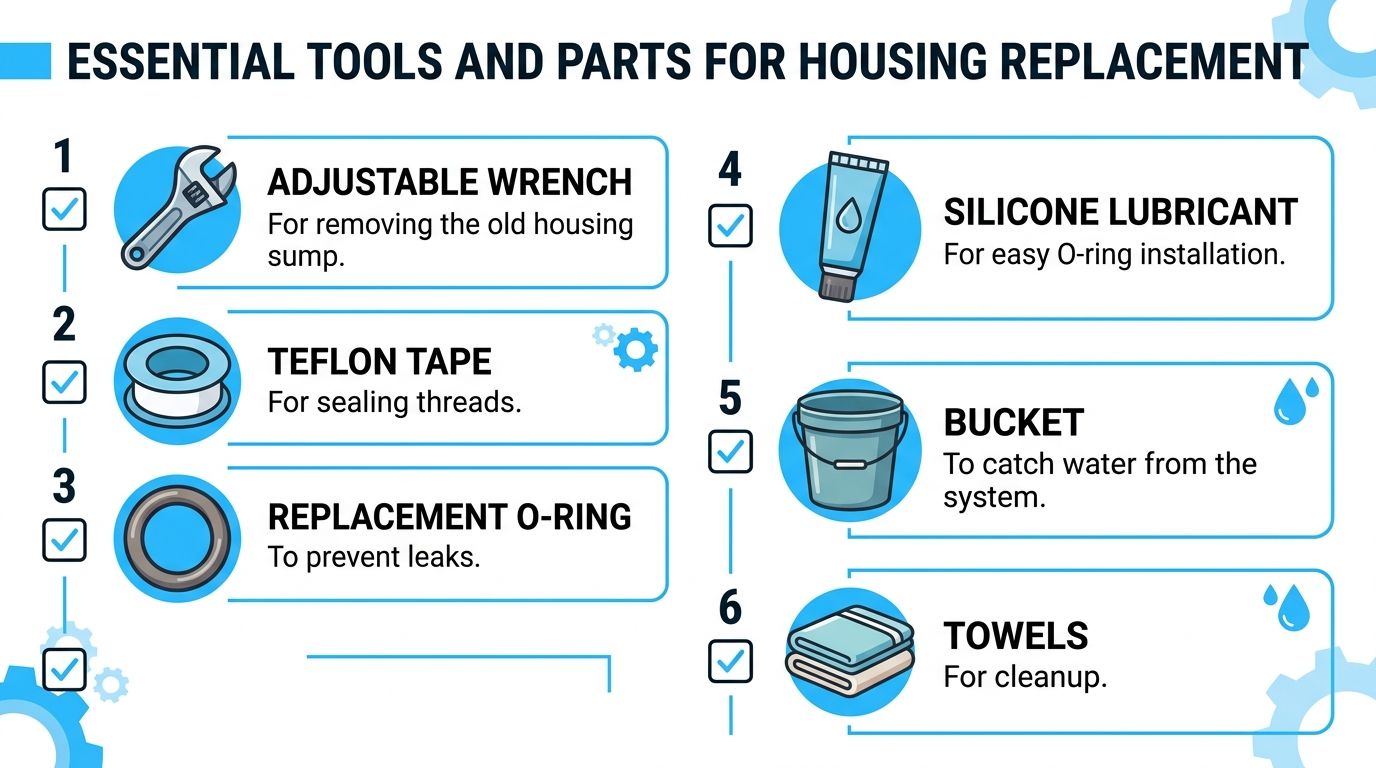
A clean replacement starts before you shut off the water. If you're missing the housing wrench, the new O-ring, or the silicone grease, you'll end up with wet hands, a half-open system, and a mess that takes longer to clean than the actual install. A good prep pile saves more time than any amount of muscle.

A helpful infographic listing the essential tools and parts needed for replacing a water filter housing.

What belongs on the bench

Start with the obvious items. You need an adjustable wrench or the correct housing wrench, a replacement O-ring, silicone lubricant, a bucket, and towels. Teflon tape can help on threaded connections where the manufacturer allows it, but it doesn't fix a damaged seal or a bad fit. If the housing is tucked into a tight cabinet, a shop vacuum is handy for cleanup, especially when the sump dumps unexpectedly.

A lot of homeowners also underestimate how much easier the job gets when the replacement housing is already unpacked and checked against the old one. Match the size, the port style, and the cartridge format before you drain anything. The wrong part in the right box still leaves you standing there with the water off.

The best replacement parts are the ones that fit cleanly the first time. If you need to persuade them, something's off.

That's where a good resource can help you compare options without guesswork. Water Filter Advisor has practical maintenance guidance at https://www.waterfilteradvisor.com/advice/, which is useful if you're sorting out replacement timing or trying to understand what kind of housing you have.

Parts that matter more than people think

The O-ring is small, but it does a lot of work. If it's flattened, nicked, left dry, or seated crooked, the housing can leak even when everything else looks perfect. Silicone grease gives the ring a better chance of seating evenly, and a clean groove matters more than people expect because debris left behind can mimic a bad part.

The replacement housing itself should be treated as the main purchase, not an accessory. If the old body is cracked, the bowl is cloudy from age, or the threads have been stressed by past overtightening, no amount of fresh tape will make it trustworthy again.

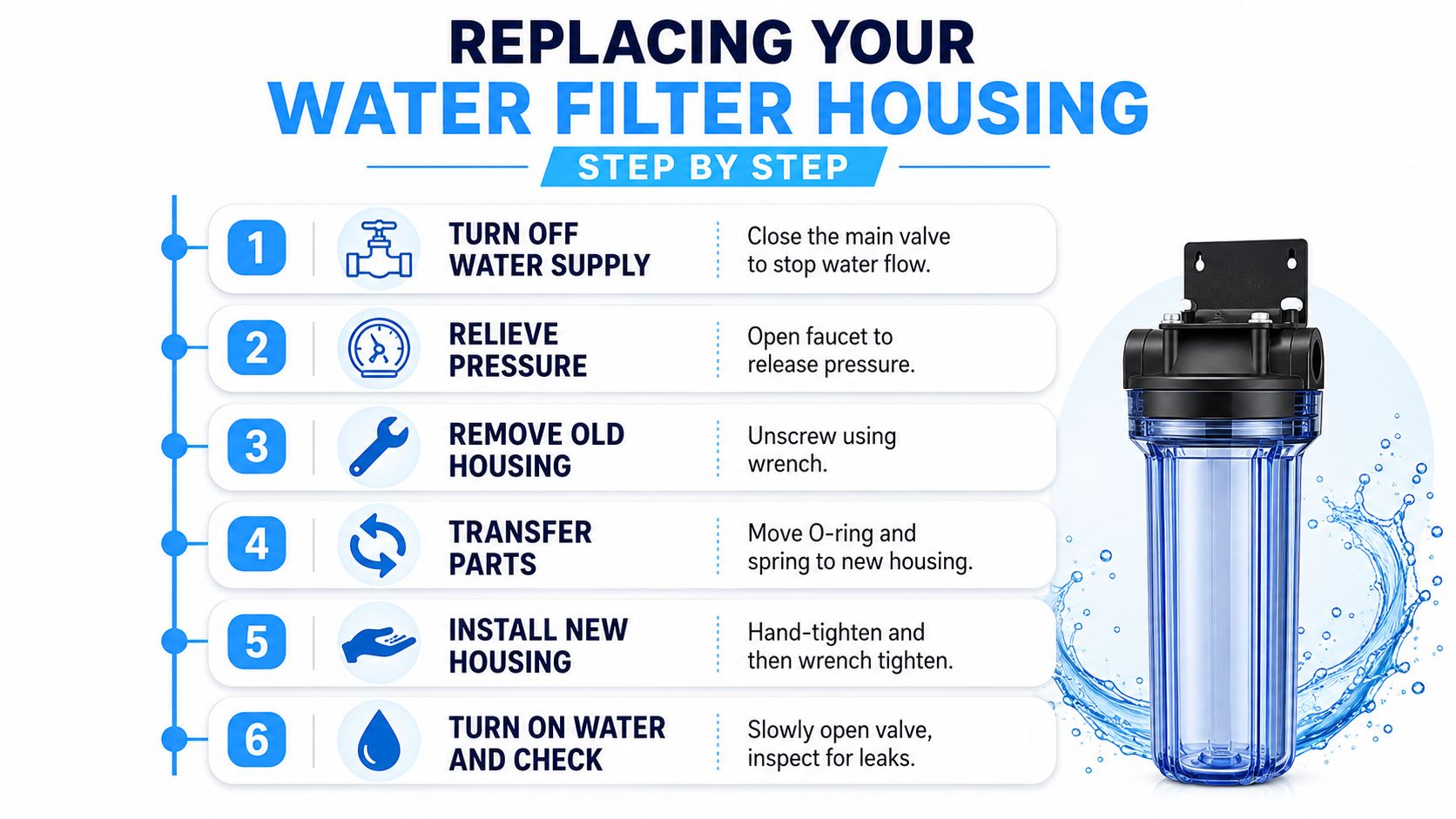
Replacing Your Water Filter Housing Step by Step

A housing swap goes better when you treat it like a pressure job, because the housing itself wears out over time even if the cartridge still looks fine. A tired body, warped threads, or a stressed seal surface can leak on a fresh cartridge, so the replacement has to start with the unit, not just the filter inside it.

A step-by-step instructional infographic showing how to replace a home water filter housing unit efficiently.

Start by killing pressure, not just flow

Shut off the feed first, then open the nearest faucet to bleed off pressure before you touch the bowl. That order matters because trapped pressure is what turns a normal removal into a spray problem. Hand-tight assembly is the goal here, and the common leak mistake is overtightening, which can stress-crack the neck or distort the seal instead of fixing it.

Once the bowl is off, remove the cartridge and inspect the old parts before they go in the trash. Check the O-ring groove for grit, scale, or an old ring left behind. I've seen a stray O-ring fool people into blaming the new housing when the actual problem was the leftover seal sitting in the groove.

Rule of thumb: if the threads only close properly when you force them, stop. Hand-starting the thread is part of the repair.

Clean, inspect, and seat the new parts correctly

A practical cleanup pass means rinsing the housing, then scrubbing the cap and bowl with 1 gallon of warm water plus 1 tablespoon of household bleach (Home Depot instruction sheet). The point is not cosmetic. It clears film, grit, and residue that can keep the new seal from sitting flat and can make a good housing look faulty.

The O-ring should get a light coat of clean silicone grease and sit evenly in its groove. A dry, twisted, or cocked ring will not usually settle into place once pressure comes back. That is why the seat has to be right before the bowl goes on. Line up the cartridge squarely, thread the bowl on by hand first, and only give it the small wrench turn the manufacturer allows.

Flush before you trust it

Bring the water back on slowly, leave a faucet open to purge air, and flush the system before putting it back into service. One instruction sheet calls for a 5-minute flush, a 1-hour wait, then another 5-minute flush (Home Depot instruction sheet). That gives the housing time to settle, clears loose fines, and helps prevent the first batch of water from carrying taste or cloudiness.

Check for leaks while the system is under pressure and the area is still open. A small drip at this stage is usually a simple fix. Leaving it alone only turns a minor seal issue into water damage later.

Troubleshooting Common Housing Replacement Problems

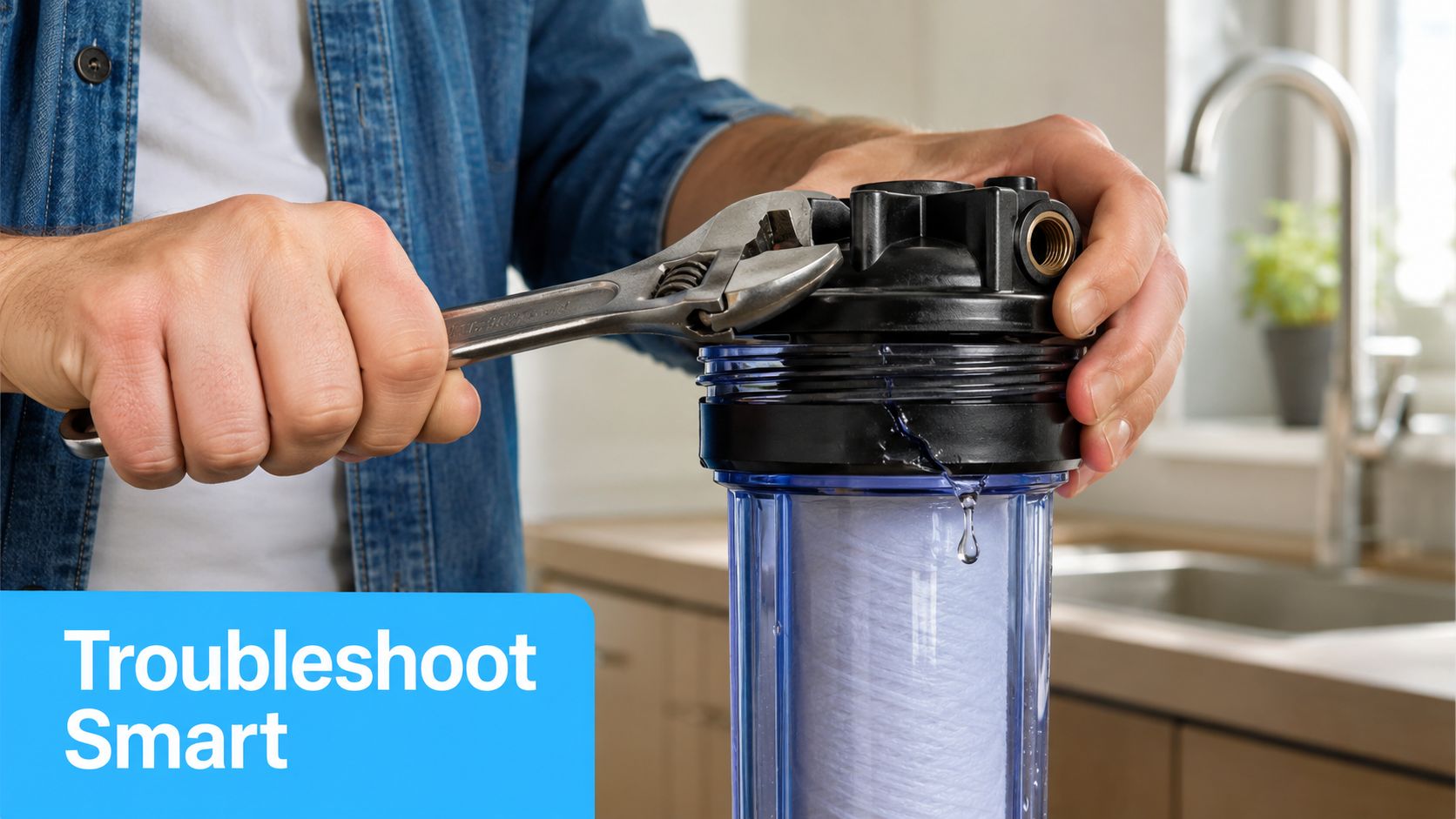
A housing swap usually goes sideways for the same few reasons. The bowl is stuck because pressure was never fully bled off, a leak shows up because the O-ring groove still has grit, or the threads feel off because the part was started crooked and then forced. Those are the failure points, and they show up in ordinary homes all the time.

A person using an adjustable wrench to repair a cracked plastic water filter housing assembly.

Why housings get stuck or leak after replacement

The fastest fix is to find the source before you touch anything, then fully relieve pressure before loosening the bowl, as outlined in the Basidewt troubleshooting guide. That sounds basic until you run into a housing that will not budge. If pressure is still trapped, the bowl can feel welded in place, and forcing it only makes the next repair messier.

Leaks after reassembly usually come from one of four places. The O-ring is worn, the groove still has debris, the threads were tightened too hard, or the replacement housing does not match the original shape closely enough. The torque myth causes a lot of these calls. More force does not improve the seal. Several installation guides warn that overtightening can distort the seal and damage the threads instead of fixing the leak (Basidewt troubleshooting guide).

Practical rule: if you have already tightened it by hand and it still leaks, clean and reseat before you tighten again.

What to do when the fix doesn't hold

If the bowl still drips after reseating the O-ring, take it apart again and look for a trapped old ring, a nick in the groove, or a thread that has already been stressed. Do not keep adding tape and hoping for the best. Tape has its place on the right connection, but it will not save a housing with a damaged sealing surface.

If the housing body is cracked or the neck shows stress whitening, stop chasing the seal. That part has moved past normal service. A lot of repeat leaks are the system telling you the body is done, not the cartridge. Housing plastic degrades with age, heat, and repeated tightening, so replacing the cartridge alone will not fix a shell that has already worn out.

For whole-house setups or awkward plumbing, the trade-off is the same as if you decide to replace your AC system. Some jobs are routine maintenance, and some are better handled by a tech once the access is poor or the system is already showing wider wear.

Knowing When to Call a Professional

A confident DIYer can replace a lot of housings without help. The line gets crossed when the plumbing layout is awkward, the leak source stays unclear, or the system is big enough that a mistake means real water damage instead of a damp towel. When the housing is part of a complicated whole-house setup, the cost of a bad guess can outrun the savings from doing it yourself.

If you're comparing the job to another major home system, the logic is similar to replace your AC system. Some tasks are basic maintenance, and some are better handled by a tech when the equipment is old, hard to access, or already showing signs of broader failure.

Persistent leaks are the biggest clue. If you've cleaned the groove, reseated the O-ring, checked the threads, and the leak keeps coming back, something deeper is wrong. At that point, a plumber can check the plumbing connection, the housing alignment, and whether the system needs a different part instead of another round of tightening.

Final Tips for Successful Housing Replacement

The winning formula is boring, and that's a good thing. Shut off pressure, clean the sealing surfaces, seat the O-ring properly, hand-start the threads, and only use the smallest final wrench turn the manufacturer allows. That sequence prevents most of the problems people blame on “bad parts.”

Treat the housing as a service item with its own life cycle. During every cartridge change, inspect the body, threads, and O-ring groove for cloudy plastic, cracks, or distortion. Because cartridge replacement happens on a recurring schedule, the housing gets a built-in inspection window every time, and that's the moment to catch failure before it turns into water on the floor.

A few habits make the whole system easier to live with. Mark installation dates on the housing, keep a spare O-ring on hand, and store the wrench where you can find it. After a swap, follow the flush routine and don't rush to declare victory before the system has run under real pressure.

The broader point is simple. A housing isn't just a shell around the cartridge, it's a pressure part that ages, loosens, and eventually deserves replacement on its own merits. If you want a practical reference for maintenance habits and filter care, the advice hub at Water Filter Advisor is a useful place to keep on hand for future system checks.


If you want more hands-on help with choosing a housing, spotting seal failures, or figuring out whether a swap is worth doing yourself, visit Water Filter Advisor. It's built for homeowners who want clear maintenance guidance without the jargon, and it pairs well with a real-world water filter housing replacement job.

How to Replace a Water Softener | Whole House Water Filter Installation

How to Replace a Water Softener | Whole House Water Filter Installation


My water softener has been giving me problems lately, so I decided it was finally time to replace the softener, but I won’t be installing another one….I will be replacing the water softener with a whole-home water filter system

DIY Projects:

D100 Videos:

Charger Videos:

VW Beetle Videos:

Fitness Videos:

You can always find me here:
Webpage:
Facebook:
Instagram: @Moonbuilt
Twitter: @BuiltMoon

Tools Used For This Build:
APEC 3-Stage Filter System Amazon
Copper Tube Cutter Amazon
Sharkbite Disconnect Clips Amazon
Sharkbite Disconnect Tool Amazon
Sharkbite Deburring/Depth Gauge Amazon

What I Use To Film:
Canon EOS M50:
DJI Osmo Action:
Zhiyun Smooth 4 Gimbal:
Rode VideoMic Me-L:
Rode VideoMicro:
Rode Wireless Go Wireless Lavalier:
Vijim LED Video Light:
Thronmax MDrill Zero Microphone:
AmazonBasics 60-Inch Lightweight Tripod with Bag:
Vastar Smartphone Mount:

eBay –
Amazon –
Automotive Parts at Jegs –
Custom T-shirt Designs at Printful –

Disclaimer: Some of these links are affiliate links where I’ll earn a small commission if you make a purchase at no additional cost to you. This helps support the channel and allows us to continue to make videos like this. Thank you for the support! All opinions are my own and presented without editorial input from outside sources.

Disclaimer:
Due to factors beyond the control of MoonBuilt Garage and WJM Industries LLC, we cannot guarantee against improper use or unauthorized modifications of this information. MoonBuilt Garage and WJM Industries LLC assume no liability for property damage or injury incurred as a result of any of the information contained in this video. Use this information at your own risk. MoonBuilt Garage and WJM Industries LLC recommend safe practices when working on vehicles and or with tools seen or implied in this video. Due to factors beyond the control of MoonBuilt Garage and WJM Industries LLC, no information contained in this video shall create any expressed or implied warranty or guarantee of any particular result. Any injury, damage, or loss that may result from improper use of these tools, equipment, or from the information contained in this video is the sole responsibility of the user and not MoonBuilt Garage or WJM Industries LLC.

Produced and owned by WJM Industries LLC

#MoonBuiltGarage #DIY #howto #woodworking #storage #storageideas #storagesolutions #woodflag #americanflag #rusticflag #woodshop #garageshop #shopideas #workshop #tools #maker #woodworkingtools #tooltip #woodworkingprojects #garagelife #garagefun #garagenight #builder #homerepair #homeimprovement #homerepairdiy #homeimprovementdiy

Original Video Source