Removing Bleach Smell from Water That Actually Works
You pour a glass first thing in the morning, lift it toward your face, and get that sharp, swimming-pool, almost-bleach hit before you even take a sip. One might assume something got into the water. In homes I've looked at over the years, the more common answer is simpler. The smell is usually part of the water treatment itself.
That matters because removing bleach smell from tap water is rarely a cleaning problem. It's a chlorine chemistry problem, and the fix depends on whether you're dealing with free chlorine, chloramine, or a plumbing setup that makes the odor seem stronger than it is. If you treat it like a mystery stain, you'll waste money on the wrong filter, the wrong cartridge, or a trick that only masks the smell for a few hours.
Why Your Tap Water Smells Like Bleach
You turn on the kitchen tap first thing in the morning, fill a glass, and catch that sharp pool-like smell before the water even reaches your mouth. I see the same pattern in homes with city water all the time, especially after the water has been sitting in the pipes for a few hours.
In most homes, that bleach smell comes from disinfectant left in the water to keep it safe in the distribution system. Annoying, yes. Automatically dangerous, no.
What matters here is the source of the odor, because each source points to a different fix. Water that smells strongest at one faucet calls for a different response than water that smells the same at every tap in the house.
Why the smell seems stronger at certain times
First-draw water often smells harsher because it has been sitting in your home's plumbing, picking up warmth and airflow conditions that make the odor easier to notice. The same thing can happen after nearby main work, hydrant flushing, or a temporary treatment adjustment by the utility.
Fixtures can exaggerate it too. A dirty aerator, mineral buildup on a faucet screen, or an older branch line can make the smell seem concentrated right at the sink, even when the rest of the house is less noticeable.
That is why bleach odor is usually a filtration and plumbing diagnosis problem, not a surface-cleaning problem. If the smell is in the water stream, wiping down the sink or replacing a pitcher lid will not solve much.
Practical rule: If the odor is strongest in the first few seconds, treat it as a water delivery clue first.
When it is mostly an odor issue, and when to look deeper
People can notice chlorine-like odor well before a utility would consider the water out of spec. Strong smell alone does not tell you whether you need a simple flush, a point-of-use carbon filter, a catalytic carbon system for chloramine, or a plumbing repair.
A few patterns help narrow it down fast:
- Only hot water smells: check the water heater before buying a drinking water filter.
- Only one faucet smells: inspect that aerator, faucet body, and branch line.
- Every tap smells all day: look at incoming water conditions or whole-house treatment.
- Smell shows up with discoloration, sediment, or a utility alert: call the water provider before treating it as a basic taste-and-odor issue.
The goal is to match the odor source to the right fix. That saves money, avoids the wrong cartridge, and usually gets rid of the smell faster.
What Causes That Bleach Odor in Home Water
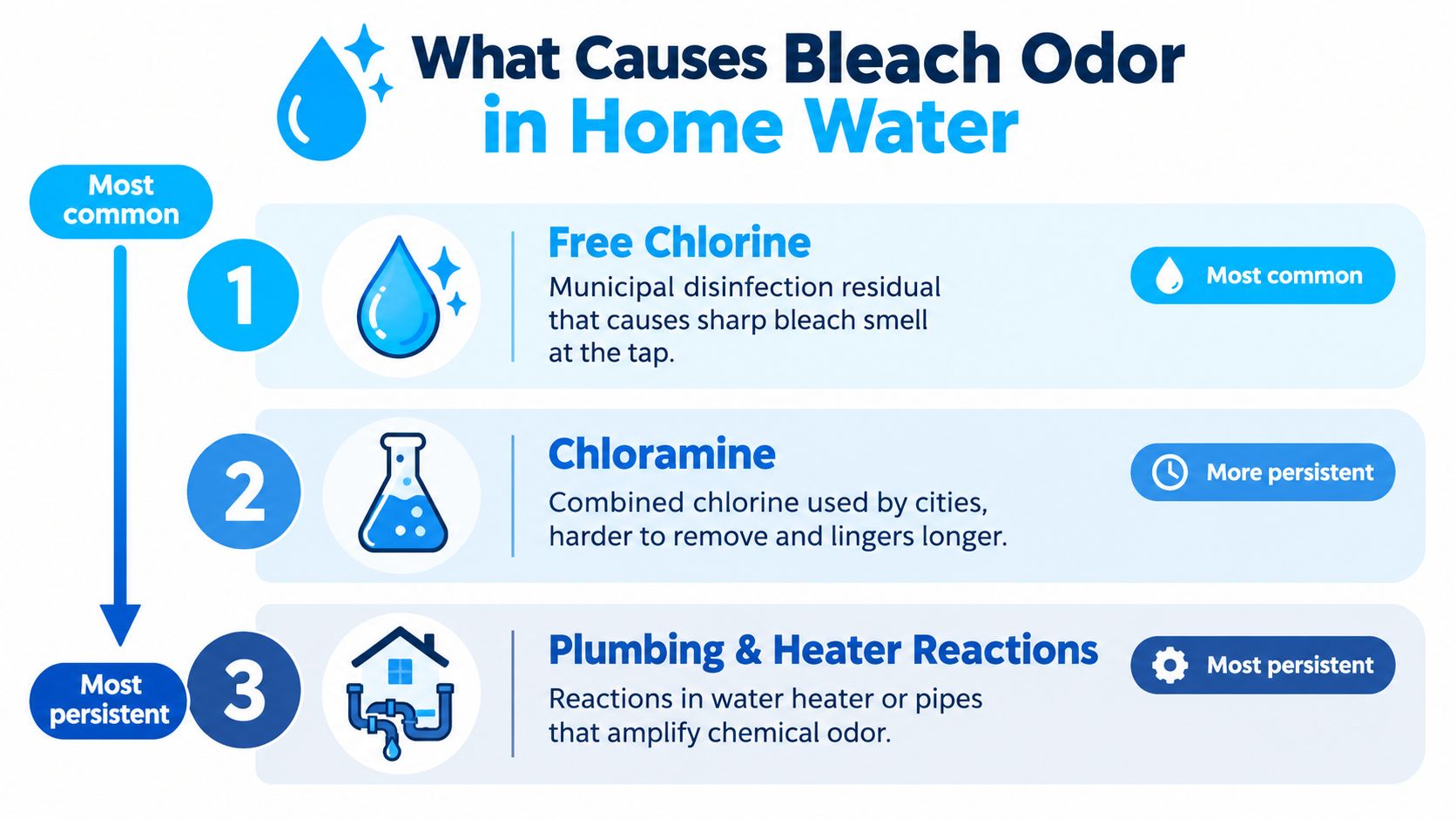
A bleach smell at the tap usually starts with chlorine chemistry, then gets shaped by what happens in your plumbing. That distinction matters because the fix for free chlorine is often simple, while chloramine usually takes a different filter media and more contact time.
Free chlorine is the most common cause
In many homes, the smell comes from free chlorine residual left in the water after municipal disinfection. People describe it as a bleach odor because the smell is familiar, but what they are noticing is usually chlorine in the water, not cleaning product contamination.
That smell can seem stronger than the actual concentration suggests. As noted earlier, chlorine is detectable by smell at very low levels, long before it reaches the kind of airborne level people associate with irritation. In practice, that is why a glass of water can smell sharp even when the utility is still delivering compliant disinfected water.
Chloramine lasts longer and is harder to remove
Some utilities use chloramine instead of free chlorine because it stays in the distribution system longer. From a filtration standpoint, that persistence is the whole story. It tends to be more stubborn at the tap.
I've seen homeowners waste money here by buying a standard carbon pitcher for a chloramine problem, then assuming all filtration is ineffective. Free chlorine often comes out readily with ordinary activated carbon. Chloramine usually needs catalytic carbon or more contact time, and chloramine reduction is treated separately from basic chlorine reduction under NSF/ANSI 42 in this guide to NSF water filter certifications. If a filter only claims chlorine taste and odor reduction, that does not automatically mean it will handle chloramine well.
Later in the section, it's helpful to hear a quick visual explanation:
Plumbing and water heaters can make the odor seem worse
The incoming disinfectant is only part of the picture. House plumbing can intensify the smell, especially after water sits in a branch line, passes through a water heater, or hits a faucet aerator with buildup on it. That is why two houses on the same street can get the same utility water but have very different odor complaints.
Water treatment has used chlorine for a long time because the public health trade-off is favorable. One early milestone came in 1897, when bleach solution was used to disinfect a water main in Maidstone, Kent, after a typhoid outbreak, as described in the NCBI history of water chlorination. The modern version of that same trade-off is simple. Utilities need a disinfectant residual that survives the trip to your house. Homeowners want that protection without the smell.
The useful question is not “how do I clean away the bleach smell?” It is “which chlorine source am I dealing with, and which filtration method is built to remove it?”
How to Find the Source Before You Filter
A bleach smell at the sink does not automatically mean you need a better drinking water filter. It often means you need to identify where chlorine is showing up, where it is concentrating, or where your plumbing is making it more noticeable. That distinction saves money.
I've seen three expensive mistakes over and over. People buy an under-sink unit when the odor only shows up in hot water. They install a whole-house system when one dirty faucet aerator is the culprit. Or they replace filters that were never designed for chloramine in the first place.
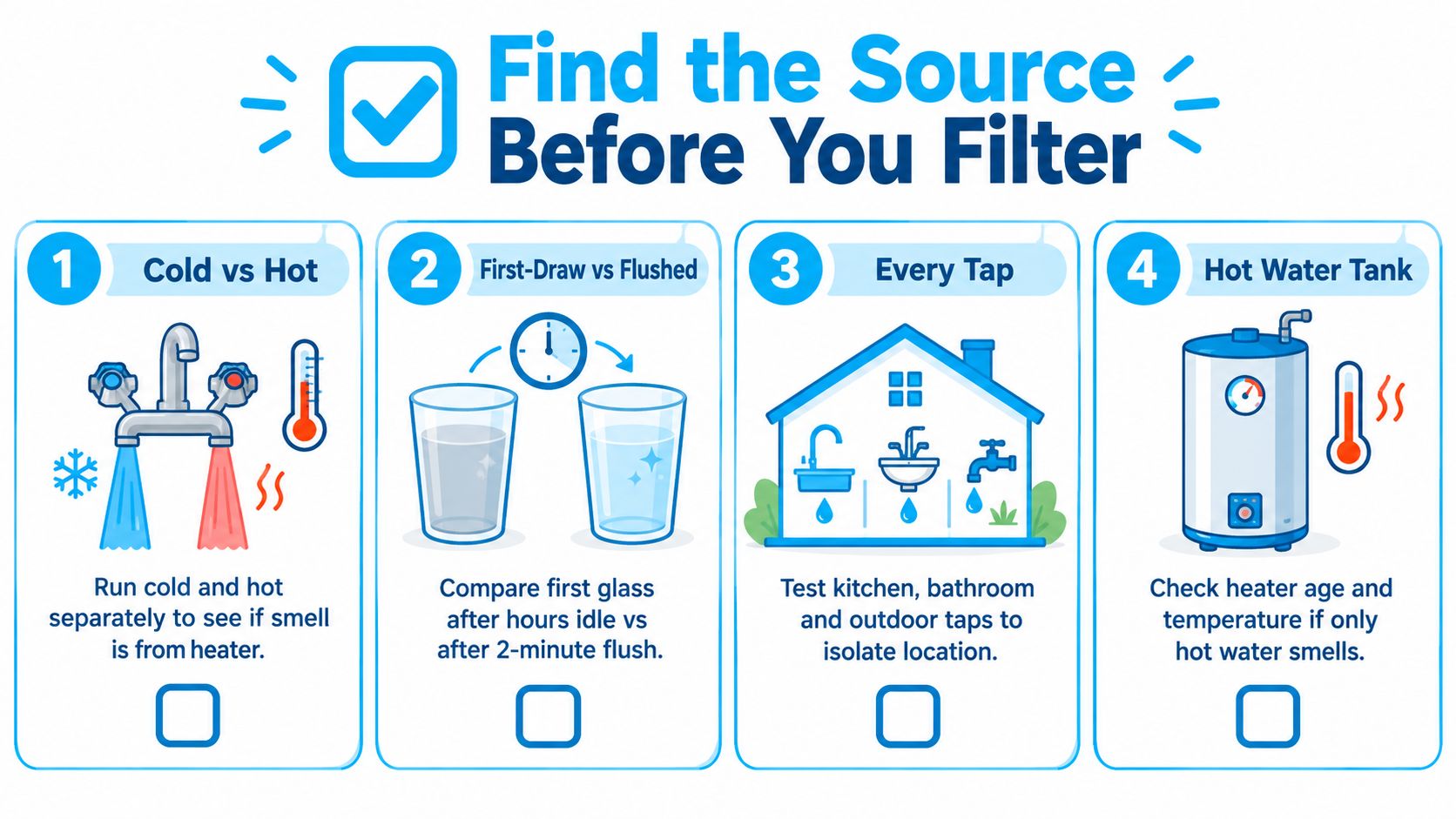
Run these checks in order
Start with plain cold water in clean glasses. Avoid ice, soap residue, or a recently washed cup, because all three can throw off a smell test.
Cold versus hot
Fill one glass from the cold side and one from the hot side. Smell them right away. If the odor is much stronger in hot water, check the water heater, not the filter under the kitchen sink.First draw versus flushed
Fill one glass as soon as you turn on the cold tap. Then run the cold water briefly and fill a second glass. If the second sample smells better, the issue is partly water sitting in the pipes, not just the incoming supply.One faucet versus every faucet
Compare the kitchen sink, a bathroom faucet, and an outdoor spigot if you have one. One bad tap usually points to a local plumbing or fixture problem. The same smell everywhere points to disinfectant in the incoming water or a whole-house treatment issue.Morning pattern versus all-day pattern
Pay attention to timing. A strong odor after the water sits overnight often points to household plumbing conditions. A smell that stays consistent all day usually points upstream, or to filter media that is spent and no longer removing chlorine effectively.
Confirm the pattern before you buy equipment
A simple chlorine test strip helps separate chlorine residual from a vague odor complaint. It is not lab testing, but it is useful for deciding whether you are dealing with disinfectant in the water or chasing the wrong problem entirely.
Utility information helps too. Check your annual water quality report or call and ask a direct question: do you disinfect with free chlorine or chloramine? That answer matters because the right fix changes. Standard activated carbon usually handles chlorine well. Chloramine often needs more contact time, catalytic carbon, or a filter that specifically claims chloramine reduction.
Here's the decision tree I use in real homes:
- The smell drops after flushing. Start with simple use changes or point-of-use treatment.
- The smell is present at every cold tap. Look at a whole-house carbon system or a properly certified drinking water filter, depending on whether the problem affects only taste and odor or also showers and laundry.
- The smell is mostly in hot water. Inspect the heater, anode rod, and hot-side plumbing before you spend money on filtration.
- The smell remains after installing a filter. Check whether the cartridge is exhausted, whether the system is certified for chlorine but not chloramine, or whether the smell is coming from plumbing reactions rather than the utility water itself.
If you can pinpoint where the bleach smell starts, you can match the chlorine problem to the right filtration fix instead of buying hardware that never had a fair shot at solving it.
Simple Ways to Remove Bleach Smell Without a Filter
You fill a glass from the kitchen tap, take one sip, and get that pool-water note in the back of your throat. If you need a same-day fix, a few no-filter methods can help, but they only work well when the smell is coming from free chlorine. They are much less useful for chloramine, and none of them replace proper treatment if the odor shows up every day.
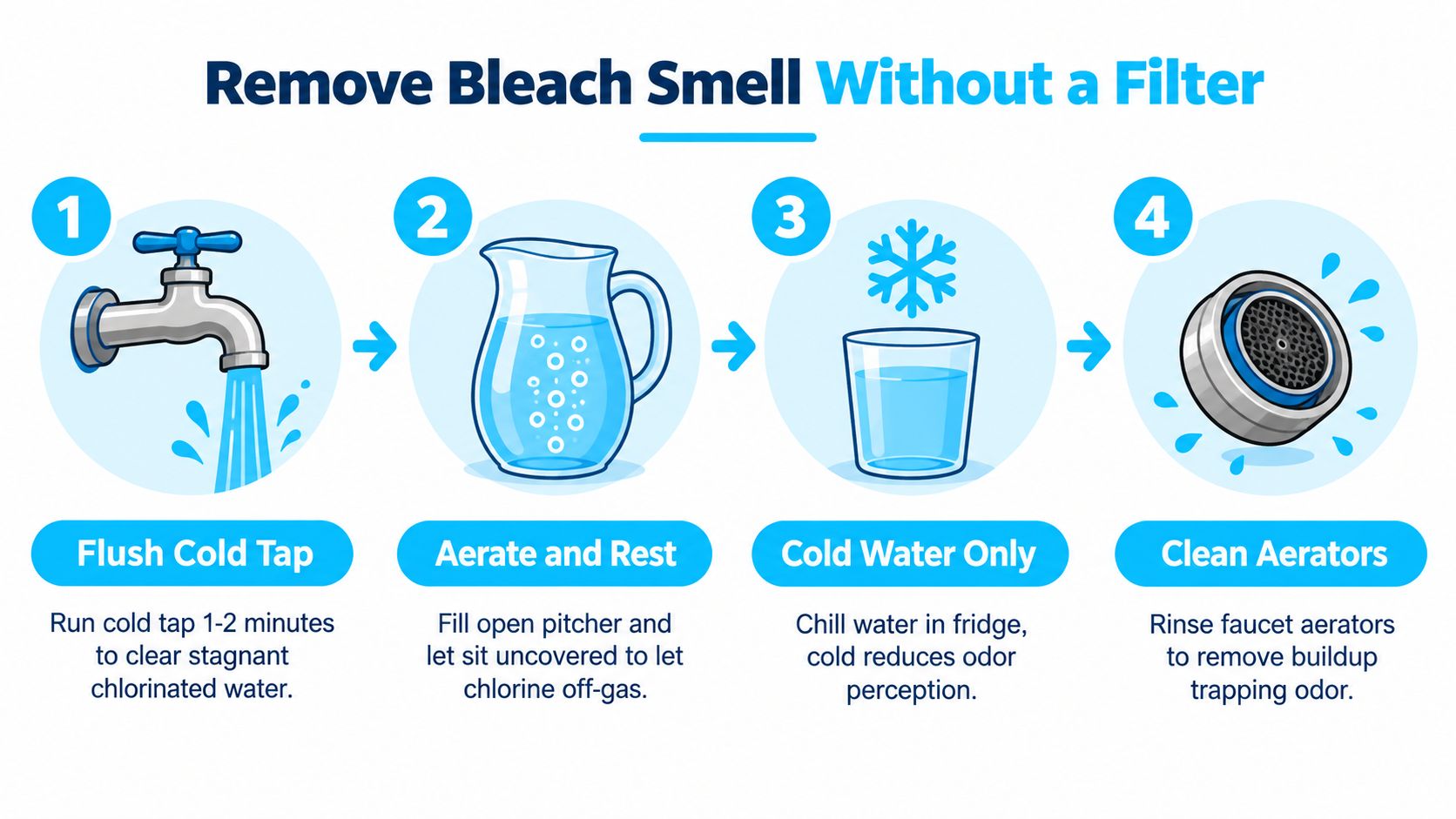
The quick fixes that actually help
Start with the simplest option first. Pour a glass, smell it, then let the cold tap run briefly and try again. If the odor eases up, stagnant water in the plumbing was part of the problem, and flushing before drinking or cooking may be enough for now.
For drinking water, an open pitcher in the fridge still works better than many people expect. Free chlorine can dissipate when water sits exposed to air, and the EPA notes that chlorine taste may be reduced by storing water in an uncovered pitcher in the refrigerator overnight in the EPA home treatment FAQ.
Boiling is stronger, but less convenient. It can drive off chlorine faster than simple resting, which makes it useful for soup, pasta, tea, or baby formula water when the smell is hard to ignore. I rarely suggest boiling as a long-term habit because it takes time, heats up the kitchen, and only treats a small batch at once.
Vitamin C is the fast chemical option. It neutralizes chlorine directly, so it can knock down the bleach smell almost immediately. That can be handy for a pitcher of drinking water, but it is still a workaround, not a house-wide answer.
What each method is actually doing
These approaches are solving a chlorine chemistry problem in small batches.
- Flushing replaces water that has been sitting in household pipes.
- Resting water uncovered gives free chlorine time to dissipate.
- Boiling speeds that process up.
- Vitamin C neutralizes chlorine instead of waiting for it to fade.
The trade-off is simple. They help most with free chlorine and much less with chloramine. If your utility uses chloramine, you can spend a lot of time resting and boiling water for modest improvement.
What wastes money or solves the wrong problem
A few common fixes sound reasonable but do very little for bleach odor:
- Sediment filters catch grit and rust, not chlorine residual.
- Uncertified carbon products may help, or may barely touch the smell. If the package does not state what it reduces, assume very little.
- Lemon slices, closed containers, or chilling alone can make water seem nicer to drink, but they do not reliably remove the disinfectant causing the odor.
That distinction matters. If the smell source is chlorine in the water, covering it up is different from removing it.
One safety warning people skip
Bleach smell around sinks and pitchers can overlap with cleaning residue, especially in kitchens and laundry areas. Independent cleaning guidance warns not to mix vinegar with bleach residue because it can release harmful chlorine gas, and recommends rinsing and ventilation first in this bleach odor safety article.
For drinking water, stay with flushing, open-air resting, boiling, or the right filtration. If those quick fixes barely change the smell, the next step is choosing treatment that matches the disinfectant your water supplier is using.
Choosing the Right Water Filtration for Lasting Odor Removal
Once the smell becomes routine, temporary fixes get old fast. At that point, you want filtration that matches the way you use water in the house.
Start with the certification, not the brand story
For household chlorine taste and odor complaints, NSF/ANSI 42 is the benchmark to look for. It covers aesthetic chlorine reduction, including taste and odor claims, rather than health-hazard contaminants, as outlined in this overview of NSF/ANSI Standard 42.
If you're buying for free chlorine, NSF/ANSI 42 is the first box to check. If you suspect chloramine, read deeper into the media type and test claims. Standard carbon may not be enough.
Nebraska Extension also notes that activated carbon is a core home treatment method for chlorine-related taste and odor issues and may also reduce chloramines and some disinfection byproducts, but it is not effective for metals, nitrate, microbial contaminants, or other inorganic contaminants in its home water treatment guidance. That's a useful reminder to keep the problem narrow. Don't buy chlorine treatment expecting it to solve every water issue in the house.
Matching Filtration Type to Bleach Odor Needs
| Filter Format | Best For | Chlorine vs Chloramine Handling | Certification to Look For |
|---|---|---|---|
| Pitcher filter | Renters, light kitchen use, occasional odor | Good fit for free chlorine if carbon is certified. Limited for stubborn chloramine unless specifically designed for it | NSF/ANSI 42 |
| Faucet-mounted filter | Easy install at one sink | Usually suitable for chlorine. Check media and flow limits before expecting chloramine control | NSF/ANSI 42 |
| Under-sink carbon system | Daily drinking and cooking water | Better contact time than many faucet units. Can be configured for chloramine with the right carbon media | NSF/ANSI 42, plus chloramine-specific claim if needed |
| Whole-house carbon system | Odor at every tap, showers, laundry, general household comfort | Strong option for chlorine across the home. For chloramine, look for catalytic carbon and proper sizing | NSF/ANSI 42 and clear chloramine performance language |
What works in the field
For free chlorine, certified activated carbon is the standard move. Consumer guidance commonly describes chlorine reduction in the 95 to 99% range for activated-carbon treatment, but that depends on media type, contact time, and replacing cartridges before they're spent, according to this guide on carbon treatment for chlorine taste and odor.
That last part matters more than most buyers realize. When carbon is undersized or exhausted, the smell comes back even though water still flows normally.
Field note: If a carbon filter “used to work fine” and the bleach smell suddenly returns, the cartridge is often the first suspect, not the city water.
If you're comparing formats, Water Filter Advisor's filtration guides are one practical place to sort pitcher, faucet, under-sink, and whole-house options by use case and maintenance requirements.
Keep Your Water Fresh and Know When to Get Help
The easiest way to keep bleach odor from coming back is boring, but it works. Flush taps after the house has been sitting empty, chill drinking water if you store it, and replace carbon cartridges on schedule instead of waiting for the smell to remind you.
Whole-house carbon systems need the same discipline. Media eventually runs out of useful capacity, and point-of-use cartridges don't last forever just because water still passes through them. If you have chloramine service, stay alert to media compatibility when you replace anything.
A few signals mean it's time to stop tweaking and start asking questions:
- Persistent odor after certified carbon treatment
- Discoloration or unusual changes in taste
- Only hot water smells after other taps are fine
- Utility notices about flushing, maintenance, or treatment changes
If the odor issue extends beyond drinking water and into damp building materials, fabrics, or rooms after a water event, a broader odor-remediation resource like Eagle Restoration Marion County can help you think through non-plumbing odor sources separately from tap-water treatment. That distinction matters because room odor and water odor often get lumped together when they shouldn't.
For home water, the right sequence is simple. Identify the source, match the filter to the disinfectant, and maintain the media before performance drops.
Water Filter Advisor helps households compare real filtration options for chlorine, chloramine, and other common water problems without guessing from packaging claims. If you're dealing with removing bleach smell and want help choosing between a pitcher, faucet unit, under-sink setup, or whole-house carbon system, visit Water Filter Advisor.
