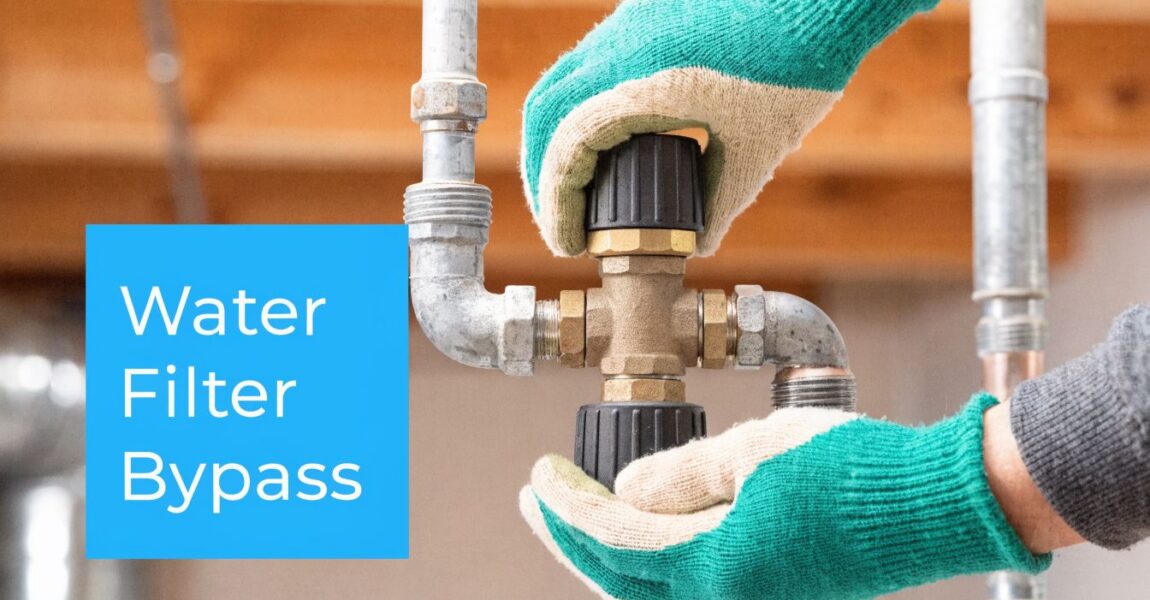
Bypass Water Filter: A Complete How-To & When-To Guide

You know the moment. The filter light starts blinking, water pressure seems a little off, and you remember that changing the cartridge means shutting water off, opening a housing that never comes loose gracefully, and dealing with the splash that somehow always lands in the wrong place.

That’s where the bypass water filter setup earns its keep.

A bypass isn’t glamorous. It doesn’t improve taste by itself, and it doesn’t remove contaminants. But it does something every homeowner appreciates. It keeps water moving through the house while you service the system, isolate a problem, or protect a filter from a job that doesn’t need treatment. Used properly, it’s one of the smartest parts of a home filtration layout. Used casually, especially on refrigerator and point-of-use systems, it can undo the very protection you paid for.

The key is understanding the trade-off. A bypass is a tool, not a free pass. In some situations it saves wear, time, and hassle. In others, it puts untreated water right back into your drinking glass.

Your Filter's Secret Weapon The Bypass Valve

Most homeowners think about the cartridge, the media, or the big blue housing on the wall. The bypass valve gets ignored until the day it saves the job.

A bypass valve is a way to reroute water around the filter for a short period. It functions as a road detour around a construction zone. Water still reaches the house, but it skips the treatment equipment while you change a cartridge, inspect a leak, or troubleshoot low flow.

Why it matters in a real home

On a whole-house setup, that detour can be the difference between a clean maintenance job and a miserable one. If your system has no bypass, a basic cartridge change can mean shutting off the house, draining lines, opening the housing, and hoping nobody flushes a toilet halfway through. With a bypass, you isolate the filter and keep the rest of the plumbing usable.

That’s why plumbers like to see one built in from day one. It’s not an accessory. It’s part of a serviceable system.

Practical rule: If a filter can’t be isolated cleanly, maintenance gets delayed. Delayed maintenance turns a good filter into a bad one.

What a bypass does and what it does not do

A bypass valve does two jobs well:

  • Keeps water available: You can still wash hands, flush toilets, or run a faucet while the filter is out of service.
  • Protects the filter during service: You don’t force water through an open or partially disassembled housing.

What it does not do is provide treatment. Once water is on bypass, the filtration step is out of the loop. That’s fine when you’re changing a sediment cartridge in the basement. It’s a different story when the water you’re bypassing was supposed to improve taste, reduce odor, or address drinking water concerns at the kitchen tap.

That difference matters more than most DIY guides admit.

When to Use the Bypass and When to Think Twice

You notice the filter needs service on a Saturday morning. The house still needs water, the kids still need showers, and the temptation is to flip the bypass and leave it there until later. That is exactly where good maintenance can turn into a water quality problem.

A bypass is safest as a short-term tool with a specific purpose and a clear end point. The right use depends on what the filter was installed to do in the first place. Skipping a whole-house sediment stage for an hour is one decision. Skipping a drinking water filter for a week is a different one.

A person looking thoughtful while considering the settings of a bypass water filter valve system.

Good reasons to use a bypass

For a whole-house system, bypass mode is often part of normal service. It keeps water available while you change a cartridge, clean a housing, replace an O-ring, or confirm whether a clogged filter is causing pressure loss. On jobs like these, the bypass saves time and keeps the plumbing usable.

There are also cases where sending every gallon through a filter is hard to justify. Lawn watering, driveway washdown, and other heavy utility use can burn through cartridge life quickly, especially on sediment or carbon stages that were installed to improve indoor water use, not outdoor hose work.

Short-term matters here.

If the filter protects appliances from grit, stains, or scale-related debris, leaving it bypassed longer than necessary means the rest of the house starts seeing untreated water again.

Situations that deserve caution

The bigger risk shows up at fixtures where people drink the water. Under-sink systems and refrigerator filters are easy to dismiss because water still comes out of the faucet or dispenser. Flow is not treatment.

That trade-off gets ignored in a lot of DIY advice. If the filter was installed to reduce chlorine taste, odor, lead concerns, or hard-to-pronounce contaminants such as PFAS, bypassing it puts those concerns back at the tap immediately. The U.S. Geological Survey reported widespread PFAS detection in U.S. tap water, which is exactly why bypass decisions deserve more care than they usually get.

A bypass does not fail slowly. It removes the filtration step all at once.

Whole-house versus drinking water bypass

These choices are not equal, and I tell homeowners to judge them by exposure, not convenience.

System type Bypass usually makes sense when Main trade-off
Whole-house sediment or prefilter Filter changes, service work, troubleshooting, heavy non-potable utility use Dirt, sediment, or other untreated water can reach fixtures and appliances during the bypass period
Under-sink drinking water filter Brief cartridge replacement or filter-head service Drinking and cooking water quality drops right away
Refrigerator filter Diagnosing flow issues or keeping the ice maker running until the correct filter arrives Water and ice still dispense, but the filter media is no longer reducing taste, odor, and contaminant load

That last row causes the most confusion. Homeowners see normal flow and assume the system is “basically working.” It is not. It is only passing water.

The refrigerator filter trap

Official bypass plugs and bypass cartridges have a real use. They help confirm whether a blocked filter is causing low flow, and they can keep a refrigerator running while you wait for the right replacement. I use them for diagnosis, not as a long-term fix.

The trade-off is simple. You get water delivery back, but you give up the treatment the refrigerator filter was there to provide. In practical terms, that often means the chlorine taste returns first. If the filter was part of your plan for reducing lead or PFAS exposure at the dispenser, bypassing it undercuts that plan completely.

For homeowners weighing pressure loss, cartridge cost, and contaminant concerns, practical home water treatment guidance helps sort out whether bypassing is the right short-term move or a sign the system needs a different fix.

A simple way to decide

Use the bypass for maintenance, diagnosis, or limited utility use where untreated water is an acceptable short-term compromise.

Reconsider bypassing any filter that serves drinking water. If that filter was installed for taste, odor, lead, chlorine, or PFAS concerns, bypass should last hours or days, not become the new normal.

Installing a Whole-House Water Filter Bypass

A whole-house bypass solves a very practical problem. You need to change a cartridge, service a leaking housing, or diagnose a pressure issue, and the house still needs water. Done right, the bypass lets you keep showers, toilets, and laundry running while the filter is offline. Done poorly, it becomes the weak point in the system.

That trade-off matters more than many DIY guides admit. A bypass on a whole-house sediment or carbon filter is often reasonable for short maintenance windows. A bypass on a system installed to reduce a known contaminant problem changes the risk immediately. If your filter is part of your plan for PFAS, chlorine byproducts, or other source-water concerns, the bypass should be treated like a temporary service position, not normal operation.

The standard layout is a three-valve bypass. One valve sits on the inlet side, one on the outlet side, and one bridges the two through a short bypass loop.

In service mode, water goes through the filter. In bypass mode, you close the inlet and outlet valves to isolate the housing and open the center valve so water travels around it.
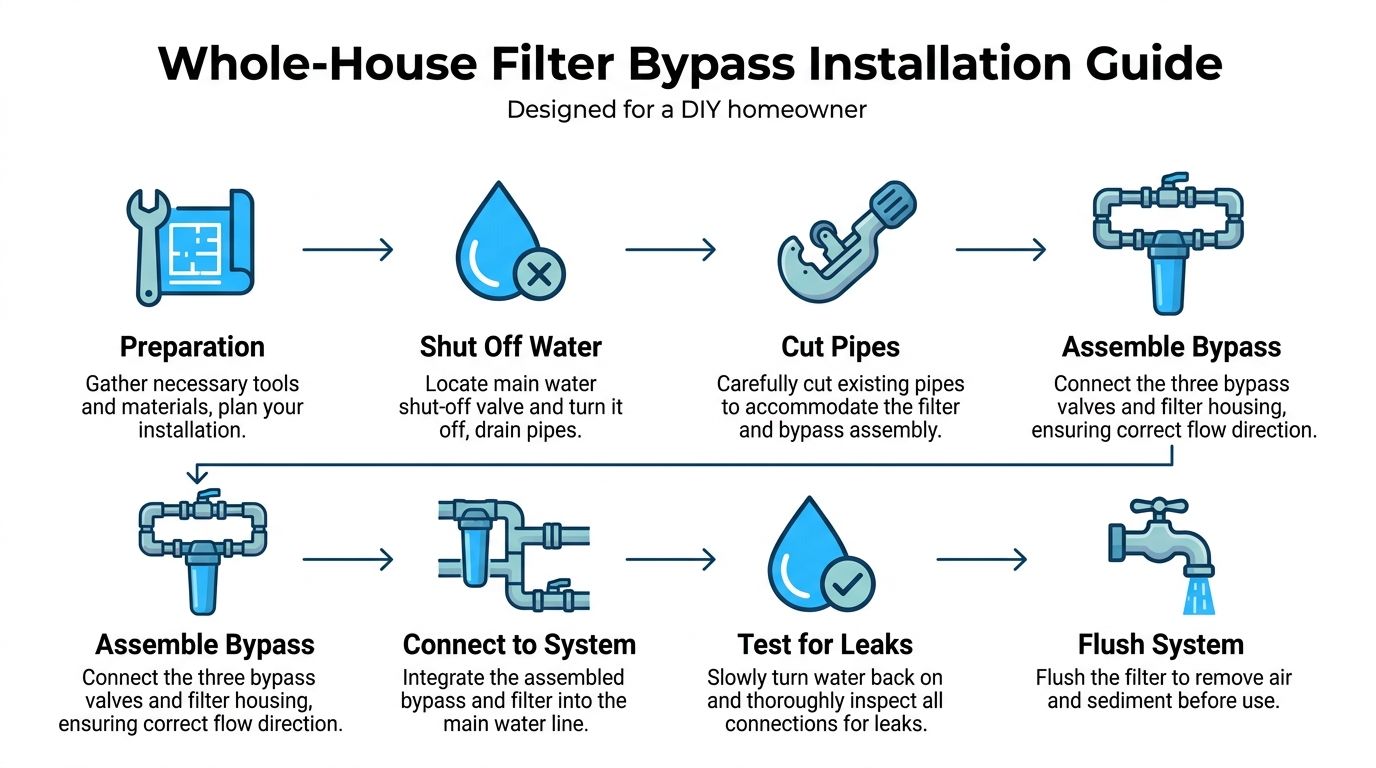
A step-by-step infographic showing how to install a whole-house water filter bypass system for DIYers.

Tools and materials to gather first

Set everything out before you cut into the main line. For most installations, that includes:

  • Ball valves: Full-port valves matched to your pipe size
  • Pipe and fittings: Tees, elbows, unions, nipples, and the short section that forms the bypass loop
  • Thread seal materials: PTFE tape or an approved thread sealant for threaded joints
  • Cutting tools: A copper cutter, PEX cutter, or the correct tool for your plumbing material
  • Wrenches: Two adjustable wrenches or two pipe wrenches so you can hold back while tightening
  • Mounting hardware: A bracket and screws if the housing or manifold needs wall support
  • Bucket and towels: Always needed, even on clean installs

Heat needs extra care around plastic housings, valve parts, and nearby trim pieces. Midmark's installation document for bypass-equipped water treatment assemblies shows support hardware, union use, and orientation requirements, and it reinforces a rule every plumber learns fast: keep open flame work away from plastic components whenever possible, especially once the assembly is mocked into place (Midmark installation document).

Plan the layout before you cut

A clean layout is easier to maintain and less likely to leak later.

Leave enough space below the housing to drop the sump and remove the cartridge without fighting the floor or wall. Give yourself hand room around each valve handle. Dry-fit the tees, valves, and housing before making the first cut.

I see the same mistake over and over. The piping is technically correct, but the sump cannot be unscrewed without hitting the wall, or the bypass handle ends up tucked behind the housing where no one can reach it.

Basic valve positions

Before you install anything, know the finished valve positions:

Mode Inlet valve Outlet valve Bypass valve
Service Open Open Closed
Bypass Closed Closed Open

Label the valves after installation. A tag or marker saves confusion when somebody else has to shut it down during a leak or filter change.

Here’s a visual walkthrough that pairs well with the written steps below.

Step 1 shut off water and drain the line

Shut off the main supply. Open a downstream faucet to relieve pressure and drain the section you plan to cut.

Put towels down early if the filter is near finished walls, flooring, or electrical equipment. Water always finds the one spot you did not protect.

Step 2 mark the filter and bypass footprint

Hold the housing and bypass loop in position and mark your cut points. Confirm spacing for the housing ports, both tees, the center valve, and future service access.

Too tight, and the housing becomes miserable to maintain. Too spread out, and the pipe puts extra strain on the head and fittings.

Step 3 cut the pipe cleanly

Cut the main line with the right tool for the material and keep the cuts square.

Deburr as needed. Sharp edges can damage seals and cause push-fit connections to seat badly.

Step 4 pre-assemble the bypass loop

Build as much of the assembly as you can on a bench or floor. Usually that means the two tees, the short bypass section, and the center valve.

Then confirm the housing orientation and branch connections with a dry fit. This allows you to catch backward heads, awkward handle positions, and missing clearance before the system is glued, pressed, or threaded together.

Step 5 support the assembly

Mount the bracket firmly if your system uses one. Use unions where they make future service easier, especially on common residential sizes.

This step gets skipped in a lot of homeowner installs. The pipe ends up carrying the housing weight, the housing shifts every time someone changes the cartridge, and the threaded ports start weeping months later.

Step 6 check flow direction before final assembly

Some housings, valve bodies, and control components are directional. Follow the flow arrow on every part that has one.

This matters on simple filter heads and it matters even more on systems with accessories such as shutoff components or specialty controls. If the body is installed backward, you can get poor flow, bad sealing, or service problems that look like a defective filter.

Step 7 connect the assembly to the plumbing

Install the filter and bypass into the main line. On threaded joints, use two wrenches so you do not twist the housing head or rack the existing plumbing.

Use thread sealant only where the fitting type calls for it. Compression, push-fit, solvent-weld, PEX crimp, and threaded joints each have their own rules. Mixing methods out of convenience is how small leaks turn into callbacks.

Step 8 install the cartridge and check seals

Insert the cartridge, seat the O-ring correctly, and tighten the housing the way the manufacturer specifies. Clean the O-ring groove first and inspect the seal for nicks, flattening, or grit.

A dirty or pinched O-ring often gets blamed on the bypass because the leak shows up after the installation. The actual problem is usually at the sump.

Step 9 pressurize slowly and test for leaks

Bring the water back on slowly. With the bypass valve closed and the inlet and outlet valves in service position, crack the main supply just enough to fill the housing without a hard rush.

Check every joint, union, valve, and housing connection. A dry paper towel is better than your eyes for finding a small seep.

Step 10 flush the filter before normal use

Flush the cartridge according to the filter manufacturer's instructions. That clears trapped air, fines, and installation debris.

A little sputtering at first is normal while the air purges. Steady flow is the goal.

Common mistakes that create callbacks

These are the problems I run into most often:

  • Valve handles blocked by the layout: The bypass works on paper but cannot be operated easily.
  • No support under the housing: The assembly moves during cartridge changes and stresses the ports.
  • Not enough sump clearance: The filter cannot be opened without removing other plumbing.
  • Torch work too close to plastic parts: Housings, valve seats, and trim get damaged by heat.
  • No unions where service requires them: Future repairs become harder than they need to be.
  • Bypass left open by accident: Untreated water feeds the entire house and the filter appears to be "working" because flow is normal.

That last mistake deserves attention. On a whole-house sediment filter, the main consequence may be dirt getting through fixtures and appliances. On a whole-house carbon or specialty treatment system, bypassing can re-expose the home to the very contaminants the system was installed to reduce. If the household chose treatment because of taste alone, that is one problem. If the choice was driven by PFAS concerns or another drinking-water issue, bypass is a short-term maintenance position and should be treated that way.

A good bypass installation feels simple in use. The valves are easy to reach, the housing comes apart without a fight, and the system returns to service without leaks or guesswork.

Bypassing Under-Sink and Refrigerator Filters

You pull the refrigerator filter because flow has slowed to a trickle, snap in a bypass plug, and the water comes back strong. That feels like a fix. In practice, it only proves the filter was restricting flow. It also means the water is now passing through with little or no treatment.

That distinction gets missed all the time. With whole-house systems, a bypass usually sends water around the equipment through separate piping. Under-sink units and refrigerators often do it inside the filter head or by replacing the cartridge with a pass-through part. The hardware is simpler. The drinking-water trade-off is easier to overlook.
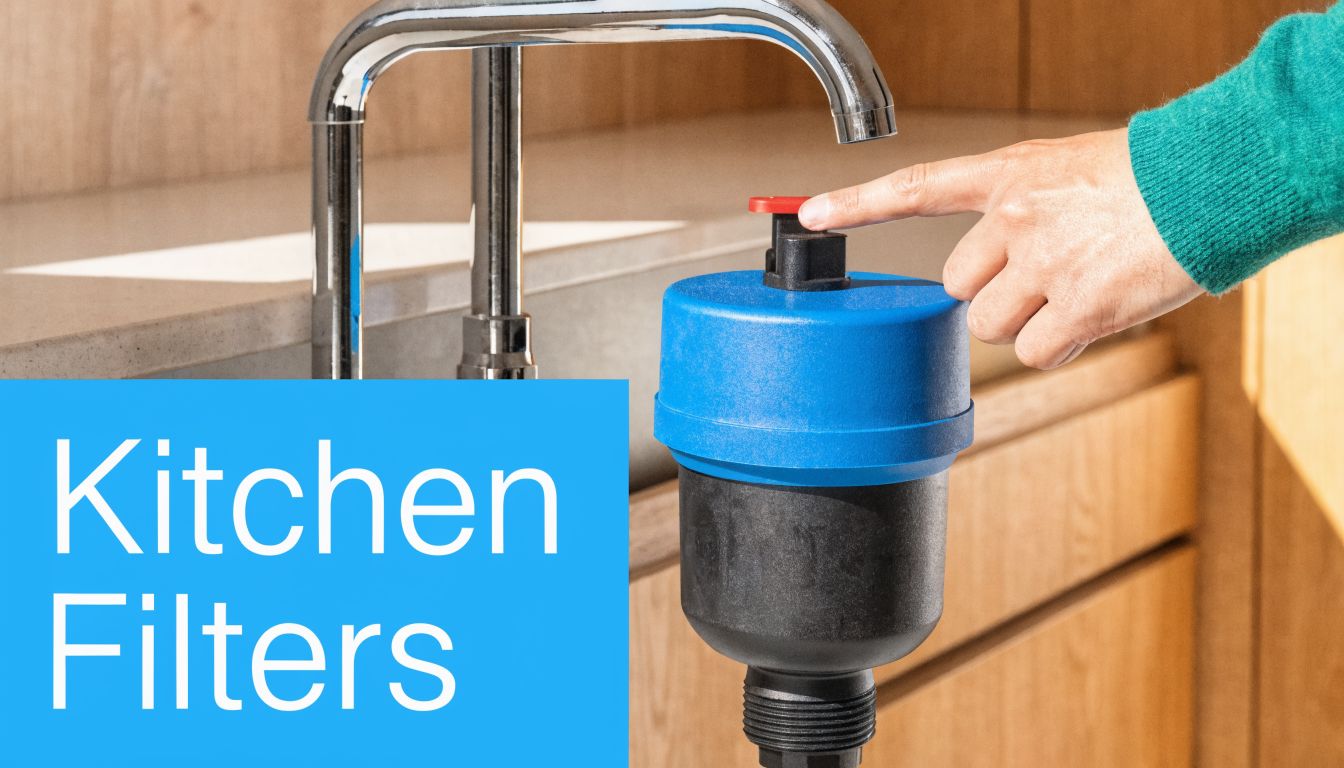
A person uses their finger to push the red button on a blue and black water filter.

Under-sink systems usually use a built-in bypass

Most under-sink filter heads are built for quick service. A lever, push button, or auto-shutoff in the head lets you remove the cartridge without shutting down the entire home. On a good design, cartridge changes are clean and fast.

Use the feature the way the manufacturer intended:

  1. Shut off the feed if your model requires it.
  2. Open the faucet to relieve pressure.
  3. Engage the release or service position.
  4. Remove the old cartridge.
  5. Seat the new cartridge fully.
  6. Return the head to filter mode and flush the faucet.

Correct seating matters more than many homeowners expect. If the cartridge is cocked, half-locked, or forced past a keyway, you can get leaks, poor flow, or a partial internal bypass that lets untreated water slip past the media.

Refrigerator filters use plugs or bypass cartridges

Refrigerators handle bypass differently. Many models need a bypass plug or bypass cartridge installed when the filter is removed. Without that insert, the dispenser or ice maker may slow down, stop, or behave erratically because the filter head is designed to stay mechanically engaged.

Manufacturers sell those parts for troubleshooting and short-term use. GE and other major brands provide model-specific bypass inserts that keep water moving through the refrigerator while the filter housing remains properly actuated. That proves a useful point for diagnosis. If flow improves the moment the bypass goes in, the old filter was clogged, installed incorrectly, or failing internally.

What it does not prove is that the water is still being treated.

Side-by-side trade-offs

Feature Under-sink bypass Refrigerator bypass plug
How it works Built into filter head or manifold Replaces the cartridge with a pass-through part
Main use Quick cartridge changes or service Troubleshooting or temporary operation
Best use case Brief maintenance window Waiting for the right replacement filter
Main downside Easy to forget system isn’t filtering if left in bypass Water flows, but treatment for taste and chemicals is lost

What works and what doesn’t

These bypass options are useful during maintenance, diagnosis, or a short wait for the correct replacement filter. I use them for exactly that.

Problems start when a temporary bypass becomes normal operation. A refrigerator bypass plug is not a filter. An under-sink head left in service position is not filtering either. If the original cartridge was there for chlorine taste, odor, lead reduction, or PFAS reduction, bypassing can put those contaminants back into the drinking water stream at whatever level the incoming supply contains.

PFAS is the part many DIY guides skip. If a household installed an under-sink filter because they were trying to reduce long-lasting contaminants, bypassing that unit takes them back to untreated source water. The same logic applies to refrigerators. Many fridge filters are mainly used for taste and odor improvement, but some households rely on them as a last point-of-use barrier for chemicals they do not want in drinking water or ice.

You can often taste the difference fast. More chlorine bite. More pool smell. Sometimes no obvious taste change at all, which is why bypass can be misleading. A lot of contaminants do not announce themselves in the glass.

Treat under-sink and refrigerator bypasses as service tools, not operating modes. That keeps the convenience without forgetting the reason the filter was installed in the first place.

Smart Alternatives to a Standard Bypass

Not every home starts with a neat three-valve bypass. Older installs often have a filter housing plumbed straight into the main line with no isolation at all. That’s when homeowners start looking for workarounds.

Some of those workarounds are solid. Some create more pressure loss and more service headaches than the original problem.

Two practical retrofit options

The first option is an isolation-style retrofit. Instead of a full classic bypass from the start, you add shutoff valves on either side of the filter and build a controlled path around it. This can be a good fix when access is tight or when you want to improve serviceability without rebuilding the whole area.

The second option is a temporary jumper for maintenance. In some situations, especially on PEX systems, a plumber can isolate the filter, disconnect a section, and create a short temporary pass-through using compatible tubing and fittings while the filter assembly is repaired or replaced. That’s a practical service method, not something to leave in place forever.

Flow loss matters more than people expect

A bypass layout can solve one problem and create another if the components are undersized or poorly chosen. Homeowners who install a DIY 3-way ball valve bypass using 3/4-inch NPT fittings need to be aware that it can reduce water flow by 15% to 20%, while factory bypasses designed for the application may preserve up to 95% of the original flow rate, according to this discussion of whole-house bypass trade-offs.

That’s the kind of issue people feel in the shower or when two bathrooms run at once. The system still “works,” but the house feels starved.

Which alternative fits which situation

  • Use a temporary maintenance jumper when the goal is to keep water on during a short repair.
  • Use isolation valves when you want easier service access but don’t need a full redesign.
  • Use a factory-made bypass assembly when preserving flow and compatibility matters more than shaving initial cost.

A bypass that kills pressure isn’t a clever hack. It’s just a different problem.

What about smart bypass valves

Some newer systems use app-controlled or automated bypass functions, especially on equipment that backwashes or cycles through service modes. Those can be useful in complex setups, but for most homes, simplicity still wins. A clearly labeled manual bypass with quality valves is easier to understand and easier to repair.

The smartest alternative is usually the one the next homeowner, the next plumber, or the next family member can operate without guessing.

Troubleshooting Common Bypass Problems

Bypass problems usually announce themselves in plain ways. A drip. A stuck handle. A sudden pressure drop. The trick is separating a valve problem from a filter problem, because they can look similar from across the basement.

A close-up view of a person's hands repairing or adjusting a bypass water filter valve system.

Quick diagnosis table

Symptom Likely cause What to do
Slow drip at valve handle Packing nut or internal seal issue Gently tighten the packing nut if the valve design allows. If it still drips, replace seals or the valve.
Valve won’t turn Mineral buildup, age, or lack of use Don’t force it. Shut down the line and service or replace the valve.
Pressure is low after returning to service Filter is clogged, valve not fully open, or housing issue Confirm valve positions first, then inspect the cartridge and housing seal.
Water still seems untreated Filter bypassing internally or poor seal at the housing Inspect the cartridge seating and O-ring before blaming the valve.

The problem may be the filter seal

One of the most overlooked causes of poor performance is leakage around the filter rather than through it. Research on filter bypass flow shows that even a 1 mm gap can allow about 1% to 2% of flow to bypass the media, and bypass can rise to nearly 40% with larger gaps or as a filter gets clogged, according to this California Energy Commission research document.

That matters because the symptoms mimic a faulty bypass valve. Water quality drops. Pressure acts strangely. The homeowner assumes the valve is partly open, yet the underlying problem is a bad seal, warped frame, or misseated cartridge.

Simple checks before you call for service

  • Verify handle positions: A half-turned valve can create confusing flow behavior.
  • Inspect the housing O-ring: Clean it and make sure it sits flat.
  • Look for frame or cartridge damage: A bent cartridge or worn seat can let water sneak around the media.
  • Cycle the bypass slowly: Sometimes a valve that sat untouched for years needs careful movement to reseat fully.

Don’t diagnose from the handle alone. The bypass path might be closed while the filter is still leaking around its own seal.

If you see cracked housings, heavily corroded valves, or fittings that move when touched, stop there and bring in a plumber. Water under pressure punishes wishful thinking.

Frequently Asked Questions About Water Filter Bypasses

Will installing a bypass void my filter warranty

It can, depending on the equipment and the parts used. Manufacturer-approved bypass components are always the safer route when warranty protection matters. On refrigerators especially, an official bypass cartridge is very different from a homemade workaround. If you’re unsure, check the filter or appliance documentation before modifying anything.

Is it okay to leave a bypass water filter on all the time

Usually, no. A bypass is meant for service, troubleshooting, or another short-term reason. If you leave the system in bypass, you’ve removed the treatment stage from the water path. On a whole-house system that may mean taste, odor, or sediment issues returning. On a drinking-water system, it means the water at the faucet or dispenser is no longer being treated as intended.

How do I keep bypass valves from seizing up

Operate them occasionally and do it gently. A valve that never moves is the one most likely to freeze in place when you need it. Turn the handles through their positions during routine maintenance, then return them to normal service mode. If a valve feels rough or gritty, don’t muscle it harder. That’s when stems snap and leaks begin.

How do I know whether low pressure is from the bypass or the filter

Start with the simple checks. Confirm the valve positions, then compare flow in service mode versus bypass mode if your system allows it. If pressure improves when bypassed, the cartridge may be loaded or the housing may have a sealing problem. If pressure stays poor either way, the restriction may be elsewhere in the plumbing.

When should I call a professional

Call for help if the bypass leaks at the body, not just the handle, if the housing threads are damaged, if the valve won’t move without force, or if you’re dealing with a complicated setup that includes directional parts or electrical controls. It’s also worth calling a pro if you’re not fully certain which water lines feed drinking fixtures versus utility lines. That’s where bypass mistakes become household water-quality mistakes.


If you’re sorting out a bypass water filter decision and want clearer guidance on replacement filters, whole-house setups, under-sink systems, and what helps with chlorine, lead, iron, or odor, Water Filter Advisor is a strong next stop. It’s built for homeowners who want practical, research-driven help choosing and maintaining the right filtration system without getting lost in marketing claims.

What Is a Sediment Filter and How Does It Work?

Ever wonder what’s actually in your water? A sediment filter acts as a physical gatekeeper, stopping party crashers like sand, silt, rust, and other debris from getting into your home's water. You can think of it as the bouncer for your water supply, catching all the big, visible gunk before it has a chance to cause any real trouble. It’s the crucial first piece of the puzzle in most home water filtration setups.

Your Home's First Line of Defense Against Gunk

An outdoor water filter system, labeled 'FIRST LINE FILTER', attached to a house's beige siding.

If your home water system was a football team, the sediment filter would be the hard-working defensive lineman. Its job isn't flashy, but it's absolutely essential. Before your water ever gets to the more specialized filters—like carbon blocks that tackle chlorine taste or reverse osmosis systems that purify down to the molecule—it has to get past this checkpoint first.

This pre-filtration step is a must-have for protecting your entire plumbing ecosystem. Without it, those larger particles would quickly clog up and ruin the more sensitive and expensive filters down the line. That means your other filters would wear out fast, and your appliances could take a beating from all that grit and grime.

The Guardian Role of a Sediment Filter

A sediment filter works just like a screen door or a kitchen colander. It physically stops any particles that are too big to squeeze through its pores. The main job here is to get rid of suspended solids—all that gritty, insoluble stuff you might see floating in a glass of tap water.

This simple mechanical process does a few key things for your home:

  • Protects Your Plumbing and Appliances: It stops sand and rust from building up inside your pipes, water heater, dishwasher, and washing machine, helping them last longer and avoid costly repairs.
  • Improves Water Clarity: It grabs the tiny specks that can make your water look cloudy or "dirty," giving you crystal-clear water for drinking, cooking, and bathing.
  • Enhances Other Filters' Performance: By doing the heavy lifting upfront, it frees up your carbon and other specialty filters to do what they do best, like removing chemicals and making your water taste great.

You don't have to just take our word for it—the market shows how important this first stage of filtration is. The global sediment filter market is on track to become a $15.8 billion industry by 2025. This growth is mostly driven by homeowners who want to protect their appliances and enjoy better water quality. You can discover more insights about these market trends on datainsightsmarket.com.

What a Sediment Filter Does and Doesn't Remove

It's crucial to know what a sediment filter is designed to do—and what it's not. It has one job, and it does it very well: capturing physical particles. It's not built to handle invisible chemical or biological contaminants.

Here’s a simple breakdown to help you see the difference.

What It Removes (Physical Particles) What It Does NOT Remove (Dissolved Contaminants)
Sand, dirt, and grit from wells or aging city pipes Chlorine and chloramine (chemicals used for disinfection)
Silt and clay that cause cloudy water (turbidity) Lead, mercury, and other heavy metals
Rust flakes from corroded plumbing Bacteria, viruses, and other microorganisms
Small organic matter like tiny plant debris or insect fragments Pesticides, herbicides, and Volatile Organic Compounds (VOCs)
Scale particles that break off from pipes and water heaters Dissolved minerals that cause water hardness (calcium and magnesium)

Think of the sediment filter as the bouncer that keeps the obvious troublemakers out of the club, letting your other filtration systems focus on the more specialized work of purifying your water.

How a Sediment Filter Actually Works

Two different industrial filters, a beige pleated one and a white pleated one, side by side.

It seems almost magical how a sediment filter can catch so much sand, rust, and silt without completely blocking your water flow. But it's not magic—it’s just smart engineering. The whole process boils down to two simple approaches: filtering like a sieve or filtering like a sponge.

Getting a handle on these two methods will show you exactly how your filter is keeping your water clean and help you choose the right one for your home.

The Sieve Method: Surface Filtration

First up is surface filtration. This is your classic sieve. Think of a pleated sediment filter, with its large, folded surface area. It works just like a screen door.

When water flows through, any particles bigger than the filter's tiny pores get stuck on the outside. The water passes right through, but the sand, dirt, and rust can't. It’s a simple, effective way to grab larger sediment without causing a big drop in water pressure right away.

One of the best things about this "sieve" design is that a lot of pleated filters are reusable. Since all the junk is just sitting on the surface, you can often just take the filter out, spray it clean with a hose, let it dry, and pop it back in. This makes them a great choice if you have a lot of visible sediment and want to keep your water flowing strong.

The Sponge Method: Depth Filtration

The other approach is depth filtration. This method is less like a screen and much more like a sponge. Instead of one flat surface, these filters use a thick web of fibers, like you'd find in a spun polypropylene or string-wound cartridge.

Picture water pushing its way through a dense, fibrous mat. There's no single barrier. Instead, particles get tangled up and trapped throughout the entire thickness of the filter. The bigger chunks get caught near the outside, while finer particles get lodged deeper inside.

This layered trapping is what makes depth filters so good at capturing a whole range of particle sizes. They create a 3D maze that sediment gets lost in.

The trade-off? Once this "sponge" is full, it's full for good. You can't clean it; you just have to replace it. You'll know it's time when you notice your water pressure starting to drop. That's your sign that the filter has done its job and is clogged with all the gunk it has successfully removed from your water.

At the end of the day, both the sieve and the sponge have the same mission: to physically block particles from getting into your home's water. The only difference is how they catch the debris, which in turn affects your water pressure and whether you can clean the filter or need to toss it.

Understanding Micron Ratings to Choose the Right Filter

Choosing the right sediment filter can feel a bit like cracking a secret code. The single most important clue you need to look at is the micron rating. This number tells you exactly how fine a particle the filter is designed to catch.

So, what’s a micron? It’s incredibly small—one-millionth of a meter.

To give you some real-world perspective, a single strand of human hair is about 70 microns thick. The smallest thing you can see with your naked eye is around 40 microns. Anything smaller than that is totally invisible unless you’ve got a microscope. Nailing down this scale is the key to matching a filter to your specific water problems.

What the Numbers Really Mean

Micron ratings on sediment filters aren't just arbitrary numbers; they translate directly to how that filter will perform in your home. A larger number means larger pores in the filter material, which lets more through. A smaller number means a much tighter filter that’s built to capture finer, almost invisible particles.

Here’s a quick guide to what these common micron ratings will actually pull out of your water:

  • 100 Microns: This is a coarse filter, like a bouncer for big rocks. It’s your first line of defense, designed to catch large, visible gunk like sand, grit, and scale flaking off old pipes. It's a great starting point, especially if you're on well water.
  • 25-30 Microns: Taking it a step finer, these filters are excellent for trapping smaller bits of sand, silt, and rust that a 100-micron screen might miss. This is a very common rating for pleated, reusable filters.
  • 5 Microns: This is the go-to standard for solid, all-around sediment filtration for both city and well water. A 5-micron filter will remove most of the sediment you can see, including fine silt and clay, leaving you with noticeably clearer water. It's often the minimum rating you'll want to protect more sensitive equipment down the line.
  • 1 Micron: Now we're talking about a fine filter that captures microscopic particles. It will remove nearly all suspended solids that cause cloudy water, including very fine silt and even some larger cysts (like Giardia).

Choosing the right micron rating is all about efficiency. You don't want to use a 1-micron filter to catch large grains of sand that a 50-micron filter could handle with ease. The finer filter will just clog up way too fast and crush your water pressure.

Nominal vs. Absolute Ratings

As you compare filters, you’ll bump into two terms that sound alike but have very different meanings: nominal and absolute. Getting this right is critical to making sure you're actually buying the level of protection you think you are.

A nominal 5-micron filter, for example, is rated to remove most particles that are 5 microns or larger. It might be designed to capture around 85% of particles at that size, meaning some 5-micron particles (and even a few slightly larger ones) might still slip through. Think of it as "mostly" getting the job done.

Absolute-rated filters offer a much higher level of certainty. An absolute 5-micron filter is guaranteed to remove at least 99.9% of all particles that are 5 microns or larger. No guesswork, no exceptions.

If you’re just trying to keep sand out of your sprinkler system, a nominal filter will do the job just fine. But if you're trying to protect a sensitive and expensive reverse osmosis system, an absolute-rated filter provides the guaranteed protection you need. This kind of pre-filtration isn't just a "nice-to-have." Unfiltered sediment can slash the life of an RO membrane from 3-5 years down to just 6-12 months. For the 15 million U.S. homes on private wells, a 5-10 micron sediment filter is often essential for making water safe and pleasant.

Once you understand micron ratings and the difference between nominal and absolute, you can cut through the technical jargon and make a smart choice. You're no longer just buying a filter; you're picking the exact level of protection your home's water system needs to run its best.

Comparing the Most Common Types of Sediment Filters

Alright, now that you’ve got a handle on how these filters work and what those micron numbers actually mean, let’s meet the main players. Walking into the world of sediment filters can feel a bit like wandering down the tool aisle—there are a bunch of different models, and each one is designed for a specific job.

They’re all built with different materials and designs, making them better suited for certain types of water, budgets, and how much maintenance you’re willing to do.

We’ll break down the four most common types you’re going to run into: Spun Polypropylene, String-Wound, Pleated, and Spin-Down filters. Knowing their strengths and weaknesses is the key to picking a filter that doesn't just work, but works perfectly for your home.

Spun Polypropylene (Melt-Blown) Filters

Think of a spun polypropylene filter as the trusty, all-purpose disposable option. These are made by melting and blowing polypropylene fibers into a dense, multi-layered cylinder. This creates a depth filter—that "sponge" we talked about earlier—which traps particles all the way through its core.

The outer layers are a bit looser to catch the big stuff, while the inner layers are packed tight to grab the finer silt. This gradient design is great because it can hold a lot of gunk before it finally clogs up.

  • Best For: General-purpose use with city water or well water that has pretty consistent, fine sediment. They’re a fantastic, low-cost first line of defense for protecting other systems like a carbon filter or water softener.
  • Pros: Super affordable, great at catching a wide range of particle sizes, and you can find them just about anywhere.
  • Cons: They are single-use only. Once they’re full, you have to toss them and put in a new one, which means ongoing costs and more waste.

String-Wound Filters

String-wound filters are the rugged, old-school workhorses of the sediment world. They’re made by winding a cord—usually polypropylene or cotton—very tightly around a central core. The crisscrossing pattern creates a tough depth filter that’s exceptionally good at trapping all sorts of sediment sizes.

Their durable build makes them a go-to for more challenging water, especially from wells that can kick up a random mix of sand, silt, and rust. They also tend to handle higher temperatures better than some of their counterparts.

We often recommend string-wound filters for well owners because they offer a fantastic balance of high filtration capacity and pure structural integrity. They're built to handle the tough, unpredictable stuff that wells can dish out.

To give you a sense of scale for what these filters are up against, this chart shows just how tiny these particles are.

Conceptual flow diagram illustrating micron ratings and comparing the sizes of hair, silt, and bacteria.

As you can see, a filter rated to stop silt is capturing particles that are many, many times smaller than a single human hair. It really shows the precision involved in getting your water clean.

Pleated Filters

Pleated filters work more like a "sieve," using a large, folded sheet of material to catch particles on its surface. The accordion-like folds give them way more surface area than a standard filter of the same size. This design lets water flow through with less resistance, which means you get better flow rates and less of a drop in water pressure.

The biggest perk for most homeowners? They’re often reusable. Since all the sediment is just sitting on the outside surface, you can usually take the cartridge out, give it a good spray with a hose, and pop it right back in.

  • Best For: Homes where keeping strong water pressure is a big deal. They’re also perfect if your water has larger, more uniform sediment, since you can clean and reuse them several times.
  • Pros: High flow rates, low impact on water pressure, and being reusable makes them cheaper in the long run.
  • Cons: They cost more upfront than spun or string-wound types. They can also clog up faster if your water has a lot of fine, slimy gunk.

Spin-Down (Self-Cleaning) Filters

Spin-down filters are really in a class of their own. They use centrifugal force to create a vortex inside the filter housing, which slings the heavier sediment to the outside wall where it collects at the bottom. The cleaner water in the middle then passes through a screen (usually stainless steel) for a final polish.

The "set it and forget it" appeal comes from their super easy cleaning. You don’t have to shut off the water or take anything apart. You just open a little valve at the bottom, and the collected sediment flushes right out. This makes them a lifesaver for homes with very heavy sediment, like those on well water.

Choosing the right filter isn't just about convenience; it's a major public health decision. Sediment filters directly tackle turbidity, a risk factor the WHO has identified in the water supplies of 1.8 billion people. By capturing 98-99.9% of these particles, they help prevent health issues that can arise from cloudy, contaminated water. You can read more on the global importance of filtration at gminsights.com.

To make it even easier to decide, we’ve put together a quick comparison table breaking down the most common options for homeowners.

Sediment Filter Comparison for Homeowners

Filter Type How It Works Best For Pros Cons
Spun Polypropylene Depth filter; traps particles throughout its multi-layered core. General city or well water with fine sediment. Very affordable, widely available, good all-around performance. Single-use only; creates ongoing replacement costs and waste.
String-Wound Depth filter; a wound cord creates a durable structure to trap varied sediment sizes. Challenging well water with mixed sediment (sand, silt, rust). Very durable, handles high flow and temperature well. Can be less precise with micron ratings than spun filters.
Pleated Surface filter; large, folded surface area catches particles on the outside. Homes needing high flow rates and minimal pressure drop. Reusable (can be cleaned), excellent flow, lower long-term cost. Higher initial price, can clog with very fine or slimy sediment.
Spin-Down Centrifugal force spins out heavy debris before water passes through a screen. Water with very heavy, large sediment (like sand from a well). Self-cleaning (just flush the valve), minimal maintenance. Highest upfront cost, mainly for larger particles.

Ultimately, the best filter is the one that matches your water source and your lifestyle. Whether it's a cheap and easy disposable filter or a reusable, heavy-duty model, there’s a solution that will keep your water clear and your pipes protected.

Key Signs Your Sediment Filter Needs Replacing

Your sediment filter is a quiet workhorse, but it's not a "set-it-and-forget-it" part of your home. Just like the oil filter in your car, it eventually gets clogged with all the gunk it’s pulling from your water. Letting it go for too long can cause more headaches than the sediment you were trying to fix in the first place.

Manufacturers usually suggest swapping the filter out every 3 to 6 months, but that's just a starting point. The real factor is your water quality. If you're on a private well, for instance, sediment levels can swing wildly with the seasons. Luckily, your home gives you some pretty clear signals when it's time for a change.

The Slowdown: A Noticeable Drop in Water Pressure

This is the big one. It's the most common and annoying sign that your filter has clocked out. If your morning shower suddenly feels like a weak drizzle or it takes ages to fill a pot at the sink, a clogged filter is almost always the culprit.

Think of it this way: a new filter is like a freshly paved, wide-open highway for your water. As it traps sand, dirt, and rust, it’s like closing down lanes one by one. Eventually, you've got a full-blown traffic jam, and only a trickle of water can squeeze through. That's what causes that frustrating pressure drop you feel all over the house.

A clogged sediment filter literally chokes off your home’s water supply. This isn't just an inconvenience; it’s a direct sign the filter is so packed with debris that it has become the main bottleneck in your plumbing.

The Return of Cloudy or Gritty Water

Remember why you got the filter in the first place? To get rid of that nasty, cloudy water. If you start seeing little floaties in your glass again or find a film of silt at the bottom of your toilet bowl, your filter has probably thrown in the towel.

Once a filter cartridge is completely saturated with sediment, a couple of things can happen, and neither is good:

  • Bypass: The water pressure gets high enough to force a path around the filter media. Untreated water then flows right past it and into your pipes.
  • Unloading: A sudden surge in pressure can actually tear the filter or dislodge a concentrated burst of trapped gunk back into your water system.

This completely defeats the purpose of having a filter. You'll end up with clogged faucet aerators and gummed-up showerheads, which are just another chore to clean.

A Change in Taste or Odor

A standard sediment filter isn't built to remove chemicals like chlorine. Its job is to trap physical particles, including fine organic matter like dirt and silt.

When all that organic stuff gets trapped and sits in a wet, clogged filter, it can start to decay. This can breed a musty, earthy, or even swampy taste and smell in your water. If your water starts tasting "off" and you've ruled out other issues, your dirty filter is the likely source. It’s become a breeding ground for the very junk it was meant to remove.

A Homeowner's Guide to Filter Installation and Maintenance

A person's hands are replacing a sediment water filter under a kitchen counter using a wrench.

Knowing how to install or change your own sediment filter can save you both time and a service call fee. Whether you're a seasoned DIYer or just want to know what the plumber is doing, it's a simple skill that puts you in control of your home’s water quality.

Most often, you'll find a sediment filter set up as a whole-house system at the point of entry—that's right where the main water line comes into your house. This is a great setup because it protects every single tap, shower, and appliance from grit and other gunk. Swapping out the cartridge in these systems is a quick job you can easily master.

How to Replace a Sediment Filter Cartridge

When your filter is spent, it’s time for a change-out. This is the most basic part of keeping your system running right. The exact steps might change a little depending on the brand, but the process is pretty much the same across the board.

Here's how to get your water flowing clean again.

  1. Turn Off the Water: Find the main shut-off valve for your water line and crank it closed. This stops water from flowing into the system while you're working.

  2. Relieve the Pressure: This is a crucial step! Look for a red pressure-relief button on top of the filter housing. Push it down and hold it until you don't hear any more hissing. Releasing this trapped pressure makes the housing way easier to unscrew.

  3. Unscrew the Housing: Grab the filter wrench that came with your system and use it to get the housing (the big canister part) loose. After a good turn, you should be able to unscrew it the rest of the way by hand. Keep a bucket handy to catch the water that will spill out.

  4. Swap the Filters: Pull out the old, dirty filter and toss it. It's a good idea to give the inside of the housing a quick rinse to get rid of any sediment that's settled at the bottom.

  5. Inspect and Lube the O-Ring: At the top of the housing threads, you'll see a black rubber O-ring. This is what creates the seal. Check it for cracks or damage. A light coat of food-grade silicone grease will help it seal perfectly and make it easier to open next time.

  6. Install the New Filter: Pop the new filter cartridge into the housing. Make sure it sits straight and is centered on the post at the bottom.

  7. Tighten and Check for Leaks: Screw the housing back on by hand until it's snug. Then, give it one last quarter-turn with the wrench—be careful not to overtighten! Slowly turn your water back on. Press the relief button one more time to let any trapped air escape. Now, just watch for any drips around the seal to make sure it's tight.

Pro Tip: Keep a spare O-ring on hand. They’re cheap and can be a real lifesaver if the old one gets stretched or nicked during a filter change, saving you from a surprise leak.

This simple job is the key to keeping your filter system working perfectly. Following these steps will ensure your sediment filter provides clean, clear water for your whole house.

Frequently Asked Questions About Sediment Filters

Even after you’ve got the basics down, a few questions always seem to pop up. Sediment filtration sounds simple enough, but the practical side of things is what really matters for your home. Here are the straight answers to the questions we get asked all the time.

Will a Sediment Filter Alone Make My Water Safe to Drink?

No, and this is the most important thing to get straight. A sediment filter is a mechanical filter. All it does is grab physical junk like dirt, sand, and rust. Think of it like a bouncer at a club who only stops the people who look like they're going to cause a scene.

What it doesn't do is remove dissolved chemicals like chlorine or lead. It also can't touch microorganisms like bacteria or viruses. To get truly safe, drinkable (potable) water, your sediment filter needs to be the first step in a multi-stage system. That means pairing it with something like an activated carbon filter and a UV purifier or a reverse osmosis system.

Do I Really Need a Sediment Filter with City Water?

In most cases, yes, you absolutely do. It's a huge myth that city water arrives at your faucet perfectly clean. Sure, it gets treated at a municipal plant, but then it has to travel through miles of old underground pipes to get to you.

On that journey, it’s all too easy for the water to pick up rust from old iron pipes, sediment from a water main break, or all sorts of other debris.

Think of a sediment filter as an inexpensive insurance policy. It protects your pricey appliances—dishwashers, washing machines, and water heaters—from getting wrecked by that hidden grit. That little filter can save you a ton of money on repairs down the road.

What Happens if I Forget to Change My Sediment Filter?

Letting a clogged filter sit in the housing is a bad idea. Forgetting about it can lead to two big problems, and you might end up with water that's even worse than having no filter at all.

First, you'll notice a serious drop in water pressure all over the house. Your shower will feel weak and faucets will trickle. That’s because the filter is so jammed with gunk that water can barely squeeze through.

Second, a filter can get so overloaded that it might tear or "unload" all that trapped sediment back into your pipes in one big burst. This sends a concentrated shot of filth into your faucet aerators and showerheads, clogging them up. Keeping up with filter changes is a key part of any good home maintenance plan. If you want to stay on top of everything, an ultimate annual home maintenance checklist can be a lifesaver.

Can a Sediment Filter Fix Bad-Tasting or Smelly Water?

It really depends on what’s causing the issue. If your water has an earthy or musty taste from actual dirt or silt particles, then yes, a sediment filter will probably help a lot by removing the physical source of the taste.

However, it won't do a thing for chemical tastes or odors. It has zero effect on:

  • The taste of chlorine that’s so common in city water.
  • A "rotten egg" smell from hydrogen sulfide gas, often found in well water.
  • A metallic taste caused by dissolved iron or other minerals.

To tackle those problems, you’ll need an activated carbon filter. It’s designed specifically to adsorb those taste and odor compounds, which is why carbon filters are almost always placed right after the sediment filter in a complete system.


At Water Filter Advisor, our goal is to empower you with the knowledge to make confident decisions about your home's water quality. From choosing the right micron rating to understanding maintenance, we're here to provide clear, research-driven guidance. Explore our in-depth guides and reviews to find the perfect filtration solution for your family at https://www.waterfilteradvisor.com.

Water Filtration System 

Water Filtration System 


Water Filtration System this video is about what happened to my house’s water filtration and what the worker did to fix our problem.The problem was us having chemicals in our water such as Bromine and chlorine and having hard water watch full video to see what the worker did to get us healthy clean water. I’m so happy that we can have fresh clean water for ourselves our health and our
pets health.It’s just as simple as calling a company to see if you have clean safe drinking water then go from there.
00:00-Intro
0:24-Fullvideo
19:00-Outro
My Name Is Gina Young and Cooking is a True Passion Of mines and i want to share my Gift that God has Given me with the world I love to do cooking tutorials how to cook Gina Young Style
So If you want to learn How to cook this is the channel you want to watch or if you just love a good recipe i have over 1,400 cooking videos on this channel and counting i upload new content daily.
Feel free to Check out my playlist you will find just about any recipe you’re looking for.
until the next video God Bless You All Goodnight. In The Kitchen With Gina Young Gina Young Recipes How To Cook Gina Young Cooking Channel Best Cooking Channel On Youtube For Beginners Water Filtration System Water Filtration. Good water

#WaterFiltrationSystem 
#WaterFilter
Water
#WaterSoftener
#WholeHouseWaterFilterReplacement
#WaterFiltrationSyste m
#waterPurification
#CleanWater
#waterfilters
#WaterFilterInstallation
#InTheKitchenWithGinaYoung
#HowToCook
#HowTo
#BestCookingChannelOnYoutubeForBeginners
#GinaYoungCookingShow
#GinaYoungCookingChannel
#GinaYoungRecipes

Original Video Source

Top 5 Best Reverse Osmosis Systems of 2023 | Best Water Filtration System For Home And Office

Top 5 Best Reverse Osmosis Systems of 2023 | Best Water Filtration System For Home And Office


Are you looking for the best reverse osmosis systems in 2023?

—————–►Updated Price Links◄—————

00:00 – Introduction
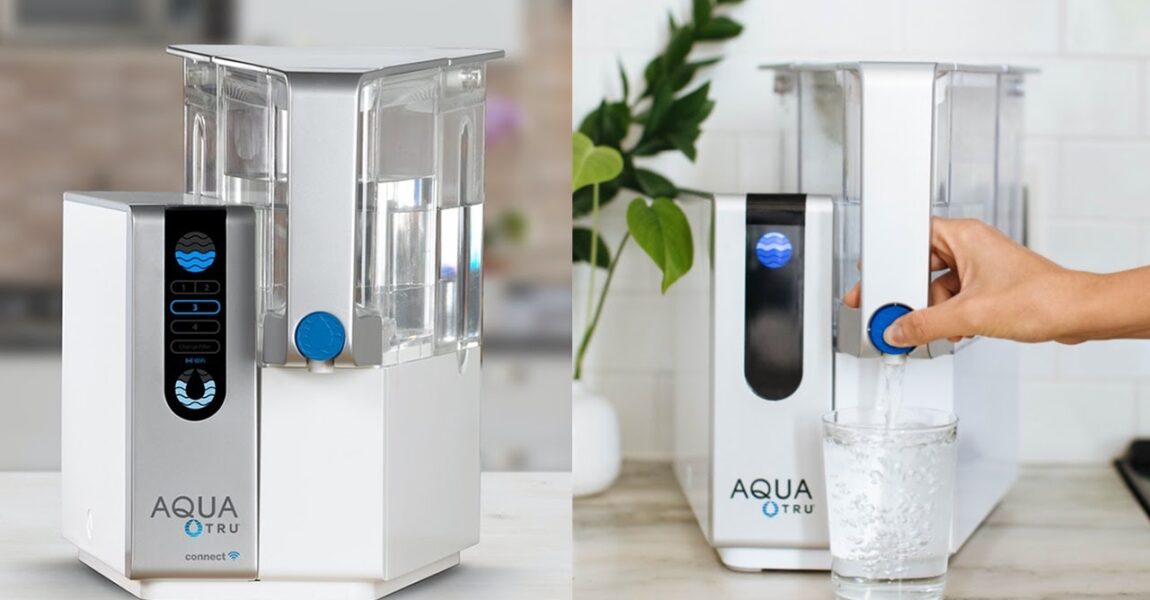
0:47 – 5. AquaTru Water Purification System ➼

1:30 – 4. iSpring RCC7AK ➼

2:19 – 3. Express Water RO5DX ➼

3:07 – 2. APEC Water Systems ROES-PH75 ➼

3:49 – 1. Waterdrop G3 Reverse Osmosis ➼

💥 Best Selling Reverse Osmosis Systems ➼

—————— Checking out more videos ———-

✦ Top 5 Best Under Sink Water Filter ➼
✦ Top 5 Best Water Filter Pitcher ➼
✦ Top 5 Best Water Distiller ➼
✦ Top 5 Best Soda Maker ➼

————————————————————————

➥Disclaimer:
Some of the footages used in this video is not original content produced by “Pro Selection”. Portions of stock footage of products were gathered from multiple sources. please do not hesitate to contact us.

➥ Copyright Issue: –
If you find any of your copyrighted material in this video,
please leave us a message, so we can resolve the issue.

Connect With Us ▼

─────── ❏ Business Inquiries ❏ ─────────
📧For business inquiries : contactproselection@gmail.com

➥ AMAZON AFFILIATE DISCLOSURE: Pro Selection is a participant in the Amazon Services LLC Associates Program, an affiliate advertising program designed to provide a means for sites to earn advertising fees by advertising and linking to Amazon.com.

****
Music Credit :
Track: Cadmium – Change Your Mind [NCS Release]
Music provided by NoCopyrightSounds.
Watch:
Free Download / Stream:

Related Searches: Best Reverse Osmosis Systems,best reverse osmosis system 2023,best reverse osmosis system reviews,best reverse osmosis systems,best reverse osmosis system 2022,best reverse osmosis system,best budget reverse osmosis system,best countertop reverse osmosis,best countertop reverse osmosis system,best home reverse osmosis system,best home water filtration system,best reverse osmosis,best reverse osmosis water filtration system,best ro system,best tankless reverse osmosis,best tankless reverse osmosis system,best tankless ro system

#BestReverseOsmosisSystems
#BestReverseOsmosisSystem
#ReverseOsmosisSystemReviews
#ReverseOsmosisSystem
#ReverseOsmosis

—————- LEAVE US A COMMENT —————

➤ Don’t forget to:

★ Subscribe
★ Like
★ Comment
★ Share with your friends

© All rights reserved by respective owners.

Original Video Source

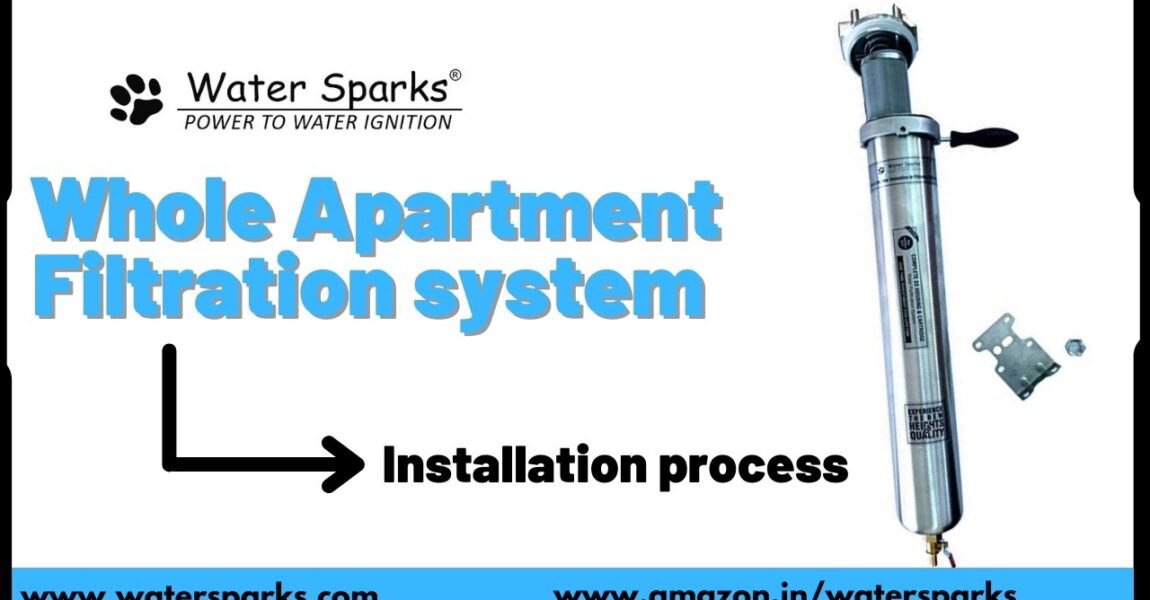
Whole Apartment Water Filtration system - Water Sparks #wholehousewaterfilter

Whole Apartment Water Filtration system – Water Sparks #wholehousewaterfilter


#wholeapartmentfiltrationsystem #wholeapartmentfilter #wholehousefilter #wholehousewaterfilter
#waterfilter
Product details:- Water Sparks Whole House/ Apartment Filtration System in Complete Stainless Steel 304 grade reduces hair fall, protects the skin, removes bad odor, and gives you clean, healthy water. Removes dissolved iron particles in water up to 50%. Removes Suspended impurities in water up to 40 microns. The filter mesh is made of special SUS316L stainless steel, which is easy to clean and durable and lasts for a very long period, and does not require change at all, unlike traditional cartridge filters.

Please visit our amazon store to see all product including Whole apartment water filtration system:-

We are an RO water treatment plant company based in Chennai. We are one of the leading manufacturers and suppliers of RO water treatment plants in Chennai, Iron removal plants, industrial RO water treatments which are fabricated using high-quality material. Water Sparks includes a fervent team of Engineers, Technicians who are trained in their individual fields to supply Superior Quality products & unmatched client Service.

Our official websites:

Contact or Whatsapp me: 9884366644

Original Video Source

How to make effective DIY Water filter? Free drinking water for the family

How to make effective DIY Water filter? Free drinking water for the family


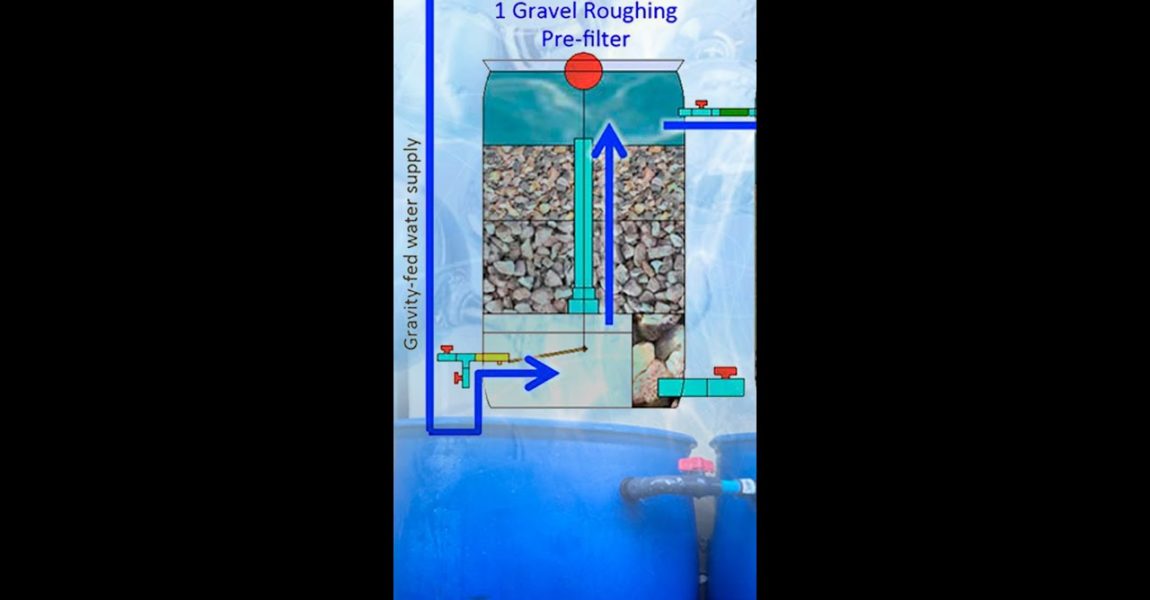
Today I’ll share with you one of our lessons on how to make a slow sand biochar filter that treats 300 litres of pond or rain water per day. Can I make swamp water drinkable? How do I purify water? How do I make dirty water clean? How do I make water drinkable? Water filter for drinking. Water filter with charcoal. How to make water filter for home?

Join our telegram channel. 😊
★ TELEGRAM // t.me/bio_veda

Check out our online courses:
★ WATER COURSE // www.bioveda.co/water
★ DOME HOME COURSE // www.bioveda.co/domehome
★ ECO HOME FOR COLD CLIMATE // www.bioveda.co/wautillarium

water filter, DIY water filter, how to make a water filter, how to purify water, how to purify water with sand, how to purify water with charcoal, how to make clean water, clean water, purified water, purify water with charcoal, how to make drinking water, how to filter water for drinking, homemade water filter, how to filter water, water filter DIY, water filtration system, water purifier, water filter system for home, how to make water filter, filter water, filtering water, how to clean water, natural water filter,water purification

Original Video Source

Indigenous Water Filtration System (Megha-LAMP)

Indigenous Water Filtration System (Megha-LAMP)


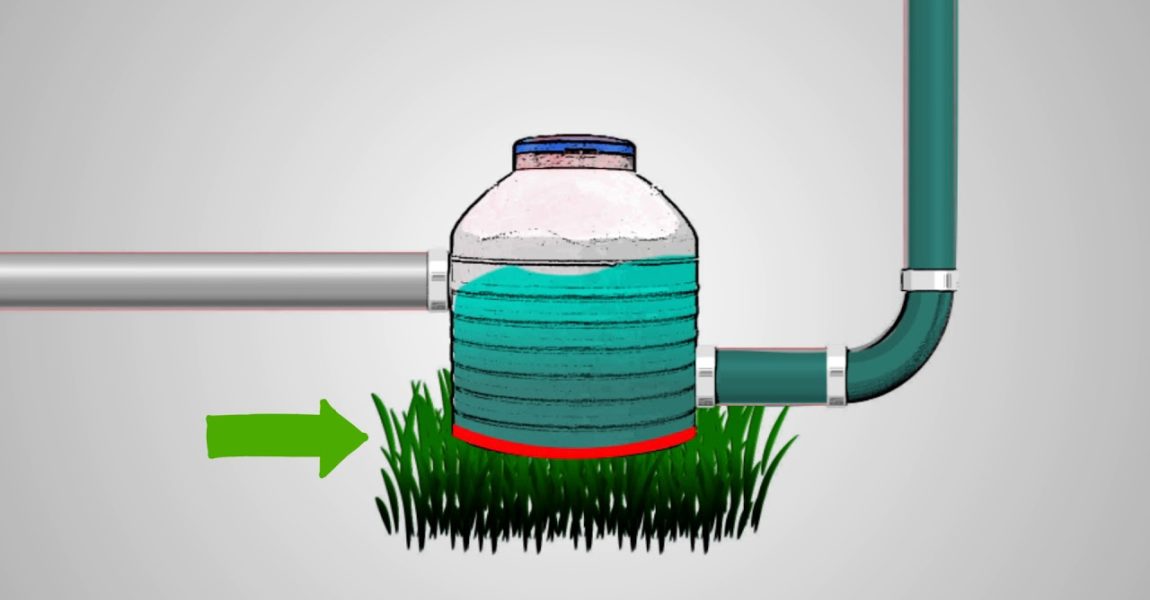
To overcome scarcity of clean water, Bah Rapthap Ryntong from Pormawlai Village in West Khasi Hills, Meghalaya had deviced his own water filtration System using simple tools that are easily available to him. While the filtered water is not potable, it is clean enough for non-consumption domestic use.
This activity is part of the larger sustainable water use practices and Integrated Natural Resource Management activities of the village, which is being done under the IFAD supported Megha-LAMP project implemented by MBDA.

Original Video Source

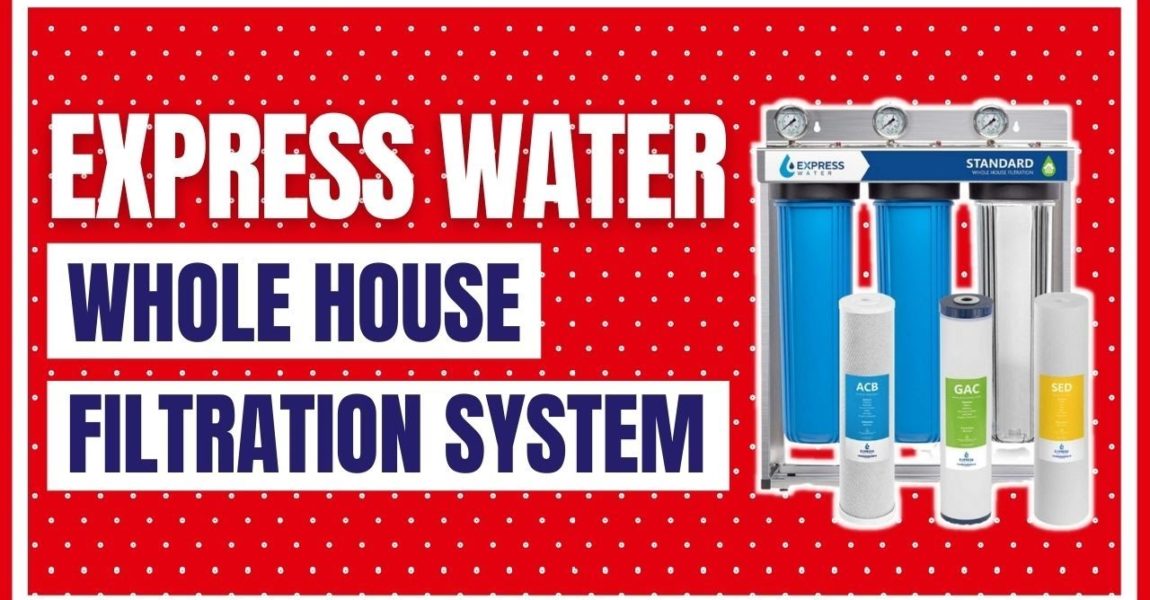
Express Water Whole House Water Filter – 3 Stage Home Water Filtration System

Express Water Whole House Water Filter – 3 Stage Home Water Filtration System


Express Water Whole House Water Filter – 3 Stage Home Water Filtration System
CHECK OUT ON AMAZON ►
Check Amazon’s latest price (These things might go on Sale) ►

No more worrying about your home’s water with our three-stage whole-house filter. You can get clear, clean drinking water from any faucet with no reduction in water pressure thanks to specifically built high flow filtration. Our simple “point of entry” filtration system delivers large amounts of filtered water to the entire house at once, with no waste water or chemicals added. At the same time, you may shower without harsh chlorine, preserve your equipment from filth, corrosion, and chemical pollutants, and cook with wonderful tasting clean water. Make your home a clean water residence now by choosing the full home filtration system!

What makes this product a smarter choice?

Number 1: Whole House Water Filter: With Express Water’s 3 Stage Water Filtration System, you can remove dangerous pollutants from your whole home’s water. Typical Water Filter: Drink the cleanest water on the planet, thanks to your home water filter, which removes over 52 pollutants from your water, including chlorine, rust, and other contaminants.

Number 2: Express Water’s water filtration systems come with 1 inch standard connectors and are ready to use. Water Filter Cartridges are Simple to Replace: To keep your system up and running, all Express Water whole house water filter replacement cartridges are intended to be quick and easy to change.

Number 3: Long-lasting Whole-House Water Filtration System: Express Water Whole-House Water Filtration Systems are built with stainless-steel frames that stand upright for long-term durability and quality.

Number 4: On-Demand Support: Experts are available to answer any queries you may have regarding your new home water filter. Assurance of Quality: All Express Water Whole Home Water Systems come with a one-year guarantee.

Please be advised that this whole house system is placed at the main water supply line to treat all incoming water in your home or business. This system will NOT decrease Total Dissolved Solids, unlike reverse osmosis systems (TDS). We propose our Express Water Reverse Osmosis systems if you’re looking for a filter that minimises TDS.

plus a whole lot more…

Searches related to Express Water Whole House Water Filter – 3 Stage Home Water Filtration System

Express Water Whole House Water Filter 3 Stage Home Water Filtration System
Express Water Whole House Water Filter
Express Water Whole House Water Filter Review
3 Stage Home Water Filtration System
Express Home Water Filtration System
Express Water Water Filtration System
Express Water Water Filtration System Review
Water Filtration System
ExpressWater Filtration System

Share this video:

★ Check out today’s BEST deals on Amazon ► ★

Disclaimer: This video and description contain affiliate links, which means that if you click on one of the product links, I’ll receive a small commission without any extra cost to you. This help supports the channel and allows us to continue to make videos like this. Thank you for your support!

Original Video Source

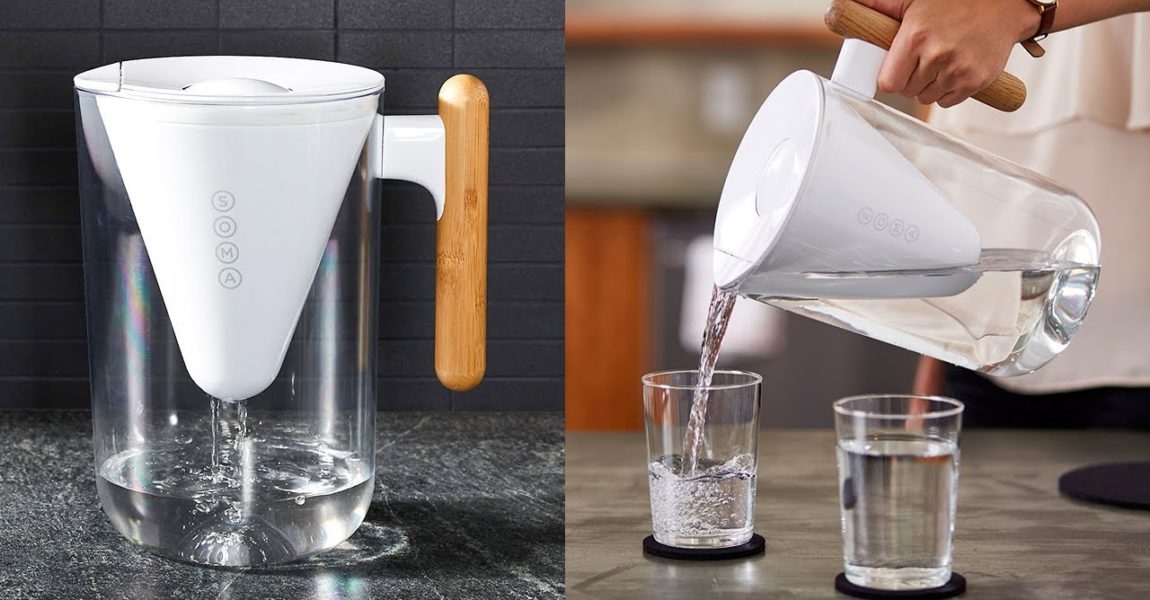
5 Best Water Filter Pitcher | Best Water Filtration System for Home Use

5 Best Water Filter Pitcher | Best Water Filtration System for Home Use


The best water filter pitcher comes with an excellent water filtration system to filter your tap water and preserve it in the pitcher. The key features of the best water filter pitcher are their capacity and filtering performance. So, here’s our video discussing the 5 best water filter pitcher and best water filtration system for home use, that you should check out!

Best water filter pitcher list: (Affiliate Link)

0:00 – Introduction

00:43 – 5. LifeStraw Home Water Filter Pitcher
Link:

01:38 – 4. Epic Nano Water Filter Pitcher
Link:

02:37 – 3. ZeroWater zd-20RP-N Water Filter Pitcher
Link:

03:29 – 2. Aquagear Water Filter Pitcher
Link:

04:34 – 1. Brita UltraMax Water Filter Pitcher
Link:
———————————————————————————–
You may also like these videos –
** Water Filter Pitcher:
** Reverse Osmosis System: Reverse Osmosis System
———————————————————————————–
Intro, Outro & Animation Credit: (Boring Motion)
***Music Source: Youtube Audio Library
***Video Credit:
** LifeStraw:
** Epic Water Filters:
** ZeroWater:
** Aquagear Water Filters:
** Brita USA:
————————————————————————————
Business Email: mailkitchengadgetzone@gmail.com
————————————————————————————
Disclaimer:
***The following video abides by the YouTube Community Guideline. Footage used in this video is for educational purposes.
***The footage used in this video follows Fair Usage Policy “Under Section 107” of the “Copyright Act 1976”. If you have any copyright issues, please send us an email or let us know by commenting below.

#waterfilter #filterpitcher #waterpitcher

Original Video Source