Removing Sulfur From Well Water: Your Guide to Ditching That Rotten Egg Smell
Ah, the rotten egg smell. It’s the unmistakable, nose-wrinkling sign that your well water has a sulfur problem. But here's the good news: removing sulfur from well water is a totally winnable battle with the right filtration game plan. The culprit is almost always hydrogen sulfide gas, and it doesn't just stink—it can wage a corrosive war on your plumbing and fixtures over time. Figuring out where this smelly villain is hiding is the first and most important step to kicking it out for good.
Why Your Well Water Smells Like a Science Experiment Gone Wrong
If you've ever turned on a faucet only to be blasted by that nasty rotten egg odor, you’ve just been formally introduced to hydrogen sulfide (H₂S). It's the number one reason homeowners start a frantic Google search for home water filtration systems. So, where does this stuff come from? Is your well sitting on a portal to another dimension? Not quite. The problem can be geological or biological, and sometimes it's hiding right inside your own house.
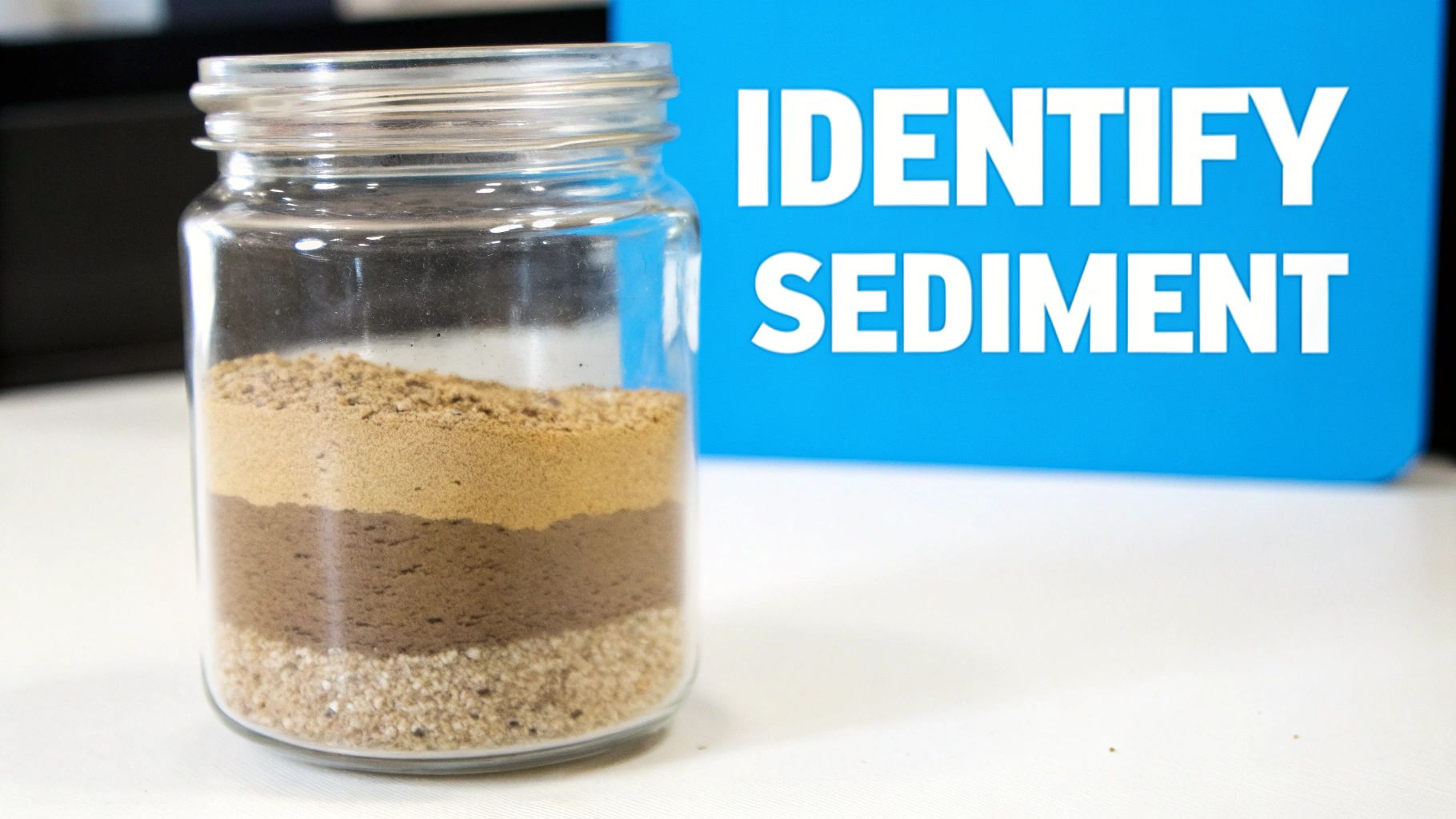
Most often, sulfur in well water is just nature doing its thing. Sulfates are naturally found in rocks and soil. As groundwater journeys through these mineral deposits, it dissolves them and brings them straight into your well. The hydrogen sulfide gas that produces the smell is incredibly potent—your nose can detect it at concentrations as low as 1 ppm (part per million). Even tiny amounts make water corrosive enough to tarnish your copper pipes and silverware. You can dig deeper into sulfur's effects by checking out the EPA's supply chain profile.
The Two Main Suspects in the Sulfur Caper
Nailing down the exact cause is the key to choosing the right weapon for the fight. In my experience, it almost always comes down to one of two things.
- Geological Presence: For many folks, sulfates and hydrogen sulfide are just part of the local geology. If you live in an area rich with shale, sandstone, or gypsum, your water is basically picking up these sulfur compounds on its way to your well. It’s not a flaw; it’s just a feature of the neighborhood.
- Bacterial Shenanigans: This one is a real party crasher. Certain types of bacteria, called sulfur-reducing bacteria, absolutely love low-oxygen hangouts like wells, plumbing lines, and especially hot water heaters. They throw a feast on the naturally occurring sulfates in your water and, as a thank you, produce stinky hydrogen sulfide gas as a byproduct.
While these bacteria aren't harmful to drink, they are the tiny factories turning your water into a foul-smelling brew.
Key Takeaway: That rotten egg smell is more than just an annoyance. It's a clear signal of hydrogen sulfide, a gas that can lead to serious corrosion in your pipes and fixtures, causing expensive damage if you ignore it.
Plot Twist: Your Water Heater Might Be the Real Problem
Before you start pricing out a filtration system that could rival a small car in cost, do a little detective work. Is the smell only coming from the hot water taps? If so, the villain is almost certainly your water heater.
Most water heaters have a component inside called a magnesium anode rod. Its noble job is to sacrifice itself to prevent the steel tank from rusting out. The catch? This rod can have a chemical reaction with sulfates in the water, creating a non-stop supply of hydrogen sulfide gas. The warm, oxygen-starved tank is the perfect five-star resort for this reaction.
If this sounds like your situation, you might be in luck. Often, simply swapping that magnesium rod for an aluminum one can stop the reaction in its tracks and solve the smell completely, no expensive filter needed.
Pinpointing Your Sulfur Problem Like a Pro
Before you spend a single dime on a home water filtration system to get rid of sulfur, you’ve got to play detective. The whole point is to figure out exactly what kind of sulfur issue you have and where it's coming from. Getting this wrong is like buying shoes without knowing your size—it’s just a recipe for an expensive and frustrating fix that doesn't work.
The first, and by far the easiest, diagnostic you can run is the hot versus cold water showdown. This simple little experiment can literally save you hundreds, if not thousands, of dollars. Just run a cold water tap for a few minutes and give it a good sniff. Then, do the same thing with a hot water tap.
Does that rotten egg funk only show up with the hot water? If so, you can breathe a huge sigh of relief. The problem is almost certainly your water heater, not your well. Like we mentioned earlier, the magnesium anode rod inside the tank is probably reacting with naturally occurring sulfates, which creates hydrogen sulfide gas. The fix might be as simple as swapping it out for an aluminum or powered anode rod.
When Your Nose Isn't Enough: Calling in the Experts
If both your hot and cold water carry that distinct sulfur perfume, the issue is deeper in your plumbing or the well itself. This is your cue to move past the sniff test and get some hard data. While you can find DIY water testing kits at the hardware store, for a sulfur problem, a professional lab analysis is a much smarter investment.
Why go pro? A lab report gives you precise, actionable numbers that a home kit just can't match. It’s the difference between guessing and knowing.
You wouldn’t accept a medical diagnosis without bloodwork, so don’t choose a water treatment system without a proper water analysis. The details in that report are the blueprint for your solution.
A comprehensive lab test provides the critical information needed to pick the right home filtration system. It takes the conversation from "my water stinks" to "I have 5 ppm of hydrogen sulfide and a pH of 6.8." See the difference?
Decoding Your Water Test Report: A Cheat Sheet
When you get that professional water analysis back, it might look a little intimidating with all its numbers and chemical names. Don't sweat it. You only need to zero in on a few key metrics to really understand your sulfur problem and find the right way to get it out of your well water.
Here’s what to look for and what it means for your home:
- Hydrogen Sulfide (H₂S) Concentration: This is the big one, measured in parts per million (ppm). This number is the single most important factor in deciding which type of home water filtration system you need. A level below 2 ppm might be handled by a simple carbon filter, but if you're seeing numbers above 6-7 ppm, you’ll need a more heavy-duty solution like chemical injection.
- Iron and Manganese Levels: These minerals are sulfur's partners in crime. They often show up together and can sabotage certain sulfur removal methods. High iron, for example, can completely foul up carbon filters and some oxidation media, which means you’ll need a system designed to handle both.
- pH Level: This tells you how acidic or alkaline your water is. Your water's pH can dramatically affect how well certain treatments work. Chlorination, for instance, is far more effective at a lower pH, while some other systems work best in a neutral to alkaline environment.
- Presence of Bacteria: The test should also check for sulfur-reducing or iron-related bacteria. If these nasty bugs are the root cause, you need a system that also disinfects the water—like a chlorine injection system or an ozonator—not just one that filters it.
Armed with this data, you can have a real, informed conversation with a water treatment specialist or confidently compare systems yourself. You’ll know exactly what you’re up against, ensuring the home filtration solution you pick is perfectly matched to your well’s unique water chemistry.
Matching the Right Filtration Fix to Your Sulfur Issue
Alright, you've got your water test results. Now for the fun part: playing matchmaker between the problem and the solution. When it comes to getting sulfur out of well water, there's no magic bullet. The right home water filtration fix is always dictated by the data you're holding in your hand.
Think of it like this: you wouldn't take a painkiller for a broken arm. You need the correct treatment for your specific ailment, and just guessing is a surefire way to waste money on something that won't work.
The whole game is about matching the filtration technology to the concentration of hydrogen sulfide (H₂S) in your water. A system that’s perfect for a faint whiff of sulfur will get completely steamrolled by a heavy-duty problem. On the flip side, installing an industrial-strength system for a minor odor is just burning cash. Let's walk through the options so you can pick a system that’s got the muscle you need without the hefty price tag.
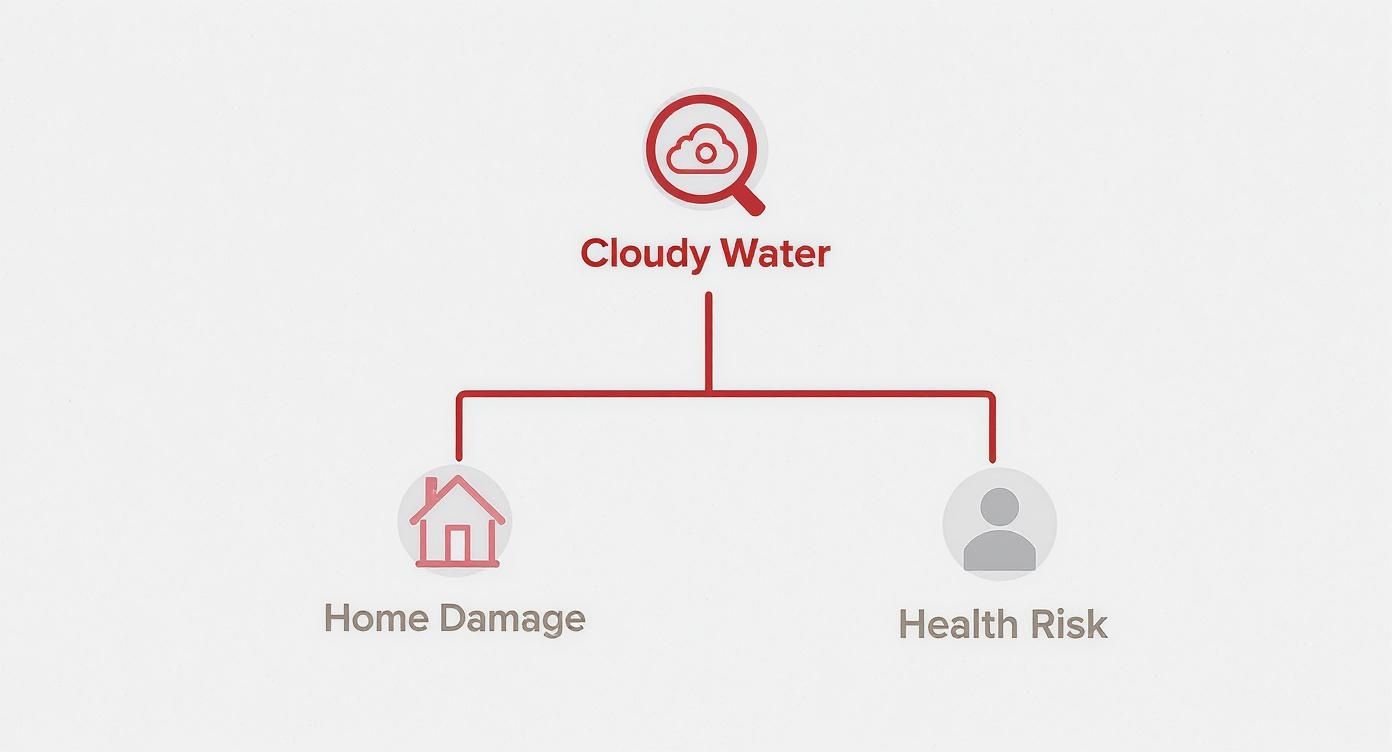
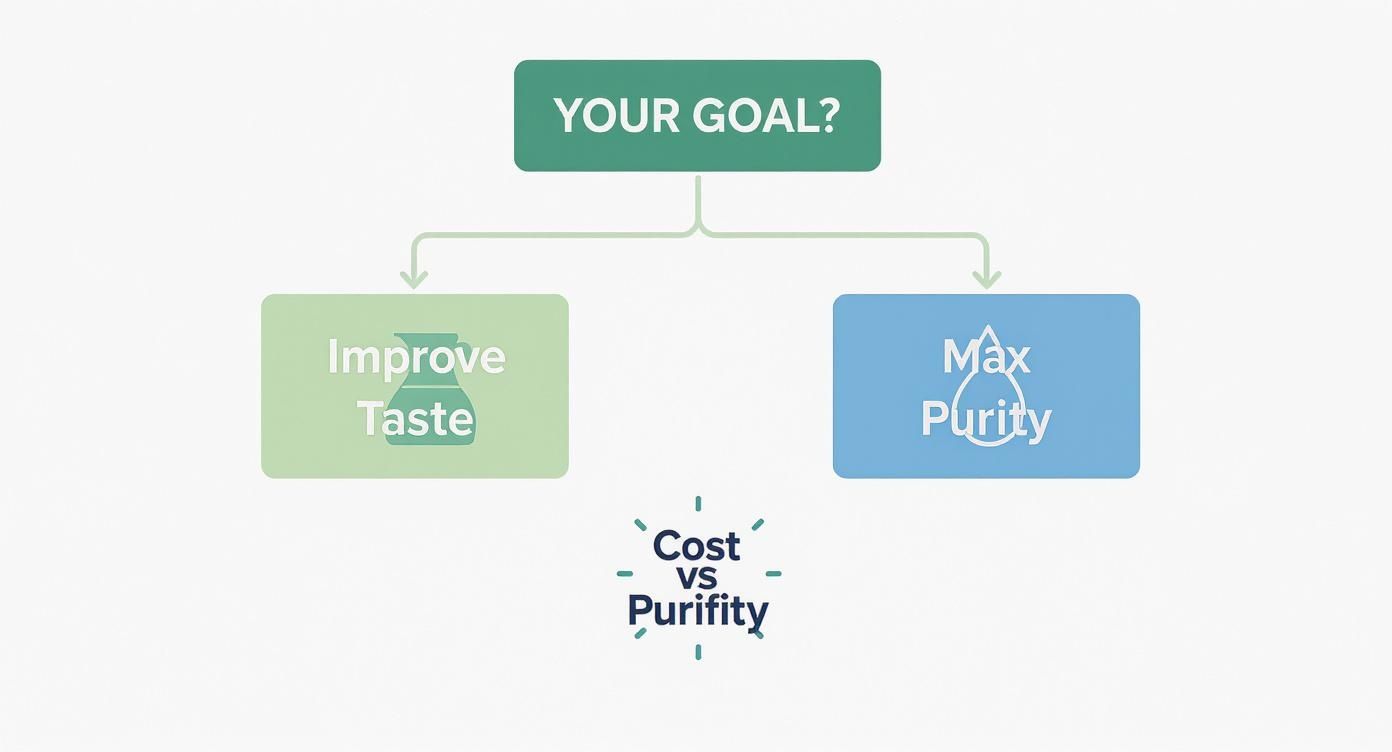
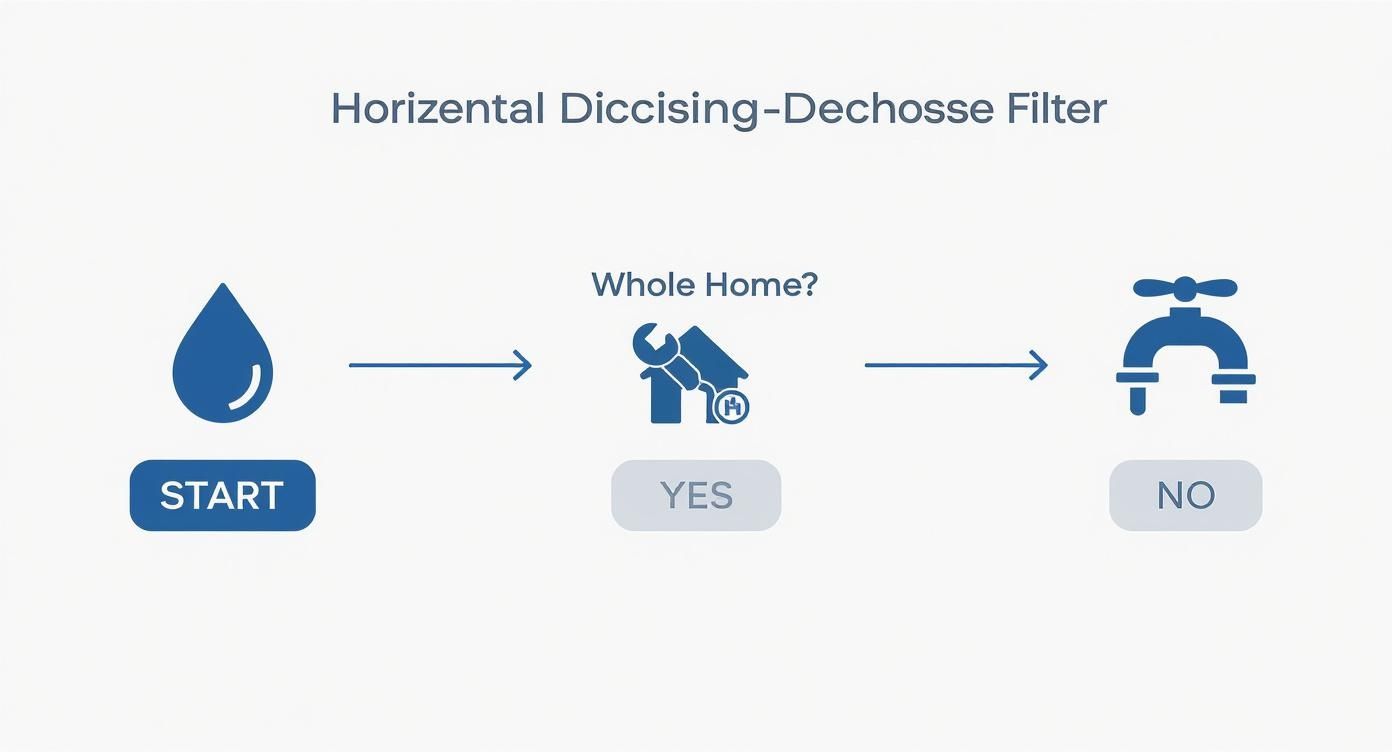
First, this quick decision tree can help you figure out if the problem is just your water heater or if you're dealing with a whole-house issue.
As you can see, the first diagnostic step is critical. If that rotten egg smell only shows up when you run the hot water, the problem is almost certainly your water heater. If it's in both hot and cold, you're looking at a whole-house water filtration system.
Solutions for Low Sulfur Levels (Up to 2 ppm)
If your test came back showing hydrogen sulfide levels below 2 parts per million (ppm), you're in luck. This is more of a nuisance level that can usually be handled with simpler, more affordable gear. These home filtration methods are fantastic for getting rid of that annoying background smell without a huge investment.
A go-to solution in this range is a good old activated carbon filter. These work through adsorption—the carbon media essentially acts like a sponge, grabbing the hydrogen sulfide gas and yanking the odor out of your water. They're pretty easy to install and maintain, usually just needing a cartridge change every few months.
One thing to keep in mind, though: if you also have a lot of iron in your water (a common partner-in-crime with sulfur), it can exhaust the carbon filter much faster. They work best when the water is otherwise relatively clean.
Tackling Moderate Sulfur Levels (2 to 6 ppm)
Once your H₂S concentration starts creeping into that 2 to 6 ppm range, a simple carbon filter isn't going to have enough firepower. At this point, you need a more powerful system that actively removes the sulfur instead of just trapping it. This is where oxidation filters really start to shine.
These home water filtration systems, which you'll often see called air injection or iron filters, work by pulling an oxidizer (usually just plain air) into the water. This process instantly changes the dissolved hydrogen sulfide gas into tiny solid particles of sulfur. From there, these particles get trapped in a bed of special filter media.
Some of the most popular media types include:
- Manganese Greensand: This is a classic, tried-and-true media coated with manganese dioxide. It does a great job but needs to be regenerated every so often with potassium permanganate, a strong purple oxidant that you need to handle carefully.
- Katalox Light or Filox: These are more modern, high-performance media. They can handle higher flow rates and knock out sulfur, iron, and manganese all at once, often without needing any chemical regenerants.
These systems are super effective and pretty self-sufficient. They automatically backwash every few days, flushing all the trapped sulfur particles down the drain to clean themselves out.
Heavy-Duty Systems for High Sulfur Levels (Above 6 ppm)
If your test results are showing H₂S levels above 6 or 7 ppm, you've officially entered heavy-duty territory. At this concentration, even a good oxidation filter can get overwhelmed. You need a more aggressive approach to guarantee that fresh, odor-free water you're after. The undisputed champion here is a chemical injection system.
This setup uses a small feed pump to inject a very precise amount of an oxidizing agent right into your water line. The two most common choices for homes are chlorine and hydrogen peroxide.
The word "chemical" can sound a little scary, I get it. But when these systems are sized and maintained correctly, they are an incredibly safe, reliable, and powerful way to completely wipe out even the most severe sulfur problems.
The injected chemical oxidizes the H₂S, and a large carbon filter downstream removes the resulting particles. Chlorine is a fantastic option because it also kills any sulfur-reducing bacteria that might be causing the problem to begin with. Hydrogen peroxide is a strong, clean alternative that breaks down into just oxygen and water, so it leaves no residue behind.
While your main concern is the well water, sometimes other stubborn smells can hang around the house. If that's the case, you might look into comprehensive odor removal services to make sure your whole home feels fresh.
Comparing Your Home Water Filtration Options
To help you see how these solutions stack up, I've put together a quick comparison table. Choosing the right system means balancing the upfront cost with long-term maintenance and overall effectiveness. Each one has its own strengths and weaknesses.
Sulfur Treatment Options by Concentration Level
| Treatment Method | Best For (H₂S Level) | Pros | Cons |
|---|---|---|---|
| Activated Carbon Filter | Low (0-2 ppm) | Inexpensive, easy to install, improves taste | Short filter life with iron, doesn't kill bacteria |
| Oxidation Filter | Moderate (2-6 ppm) | Chemical-free, low maintenance, very effective | Higher initial cost, requires backwashing |
| Chemical Injection | High (6+ ppm) | Kills bacteria, handles very high H₂S levels | Requires ongoing chemical purchase, more complex |
At the end of the day, picking the right equipment for removing sulfur from well water is a decision driven by data, not guesswork. Your water test results are your roadmap, and understanding these home water filtration options gives you the tools to follow it. By matching the technology to your specific sulfur level, you'll land on a solution that gets rid of that rotten egg smell for good—without breaking the bank.
How to Choose and Size Your Home Water Filtration System
https://www.youtube.com/embed/ak5o479A–o
You’ve done the hard part—you’ve tested your water and you know which filtration technology you need. Now, it's time to match that technology to the right system for your home. This is where the rubber meets the road, and getting it right is the difference between fresh, clean water and dealing with a system that just can't keep up.
This is about more than just picking a brand. You need to make sure the system can handle your family's water demand without dropping the ball. Trust me, sizing a system incorrectly leads to nothing but headaches: weak water pressure, that rotten egg smell creeping back in, and a much shorter lifespan for your equipment.
Calculating Your Home's Peak Flow Rate
The very first number you need to nail down is your home's peak flow rate, measured in gallons per minute (GPM). This is a snapshot of the maximum amount of water your household might use at any given moment. A system that can’t meet this demand will leave you with a dribble in the shower the second someone flushes a toilet or starts the dishwasher.
Here’s a simple way to get a solid GPM estimate using a fixture count:
- Standard Faucets (Kitchen, Bath): 1.5 GPM each
- Showerheads: 2.5 GPM each
- Dishwasher: 2 GPM
- Washing Machine: 2.5 GPM
Just add up the GPM for all the fixtures you could see running at the same time. For a typical family of four, that might be a shower (2.5 GPM), the dishwasher (2 GPM), and a kitchen sink (1.5 GPM). That adds up to a peak demand of 6 GPM. Your new home filtration system must have a service flow rate that meets or, even better, exceeds this number.
Considering Other Water Quality Issues
Here's something I've seen trip up countless homeowners: sulfur rarely shows up to the party alone. Other common well water issues like iron, manganese, and hardness can absolutely wreck the performance of your sulfur removal system if you ignore them.
For example, high iron levels will quickly foul up the media in an oxidation filter or clog an activated carbon filter solid, making it totally useless against sulfur. Hard water is just as bad, creating a rock-like scale buildup inside your system that chokes its efficiency and can lead to expensive mechanical failures.
Pro Tip: Always look for a system designed to handle the full picture of your water quality. It’s almost always more effective and cheaper in the long run to install a single system that treats both iron and sulfur, rather than trying to bolt on a second unit later.
Understanding Key System Specifications
When you start comparing models, that technical spec sheet is your best friend. Don't let your eyes glaze over—the details on that page tell you everything you need to know about the system's real-world performance and long-term costs.
Pay close attention to these critical specs:
- Backwash Rate and Frequency: This tells you how much water the system uses to clean itself and how often it needs to do it. An efficient backwash cycle is absolutely crucial for keeping the filter media healthy and effective.
- Media Lifespan: How long will the filter media last before you have to shell out for a replacement? A system with media that lasts 5-10 years offers far better long-term value than one that needs new media every year or two.
- Warranty Details: A strong warranty is a good sign that the manufacturer stands behind their product. Look for comprehensive coverage on the tank, the control valve, and the electronics.
If you want to dig deeper into choosing a system, our guide on general water filtration advice is a great place to broaden your knowledge.
The good news is that modern systems are incredibly effective. Most quality units on the market today boast over 90% removal efficiency for sulfur. These advancements in sulfur removal technology have been a game-changer for well water treatment. By carefully sizing your system and paying attention to these key specs, you can make a smart investment that delivers fresh, odor-free water for years to come.
Installation and Long-Term Maintenance Insights
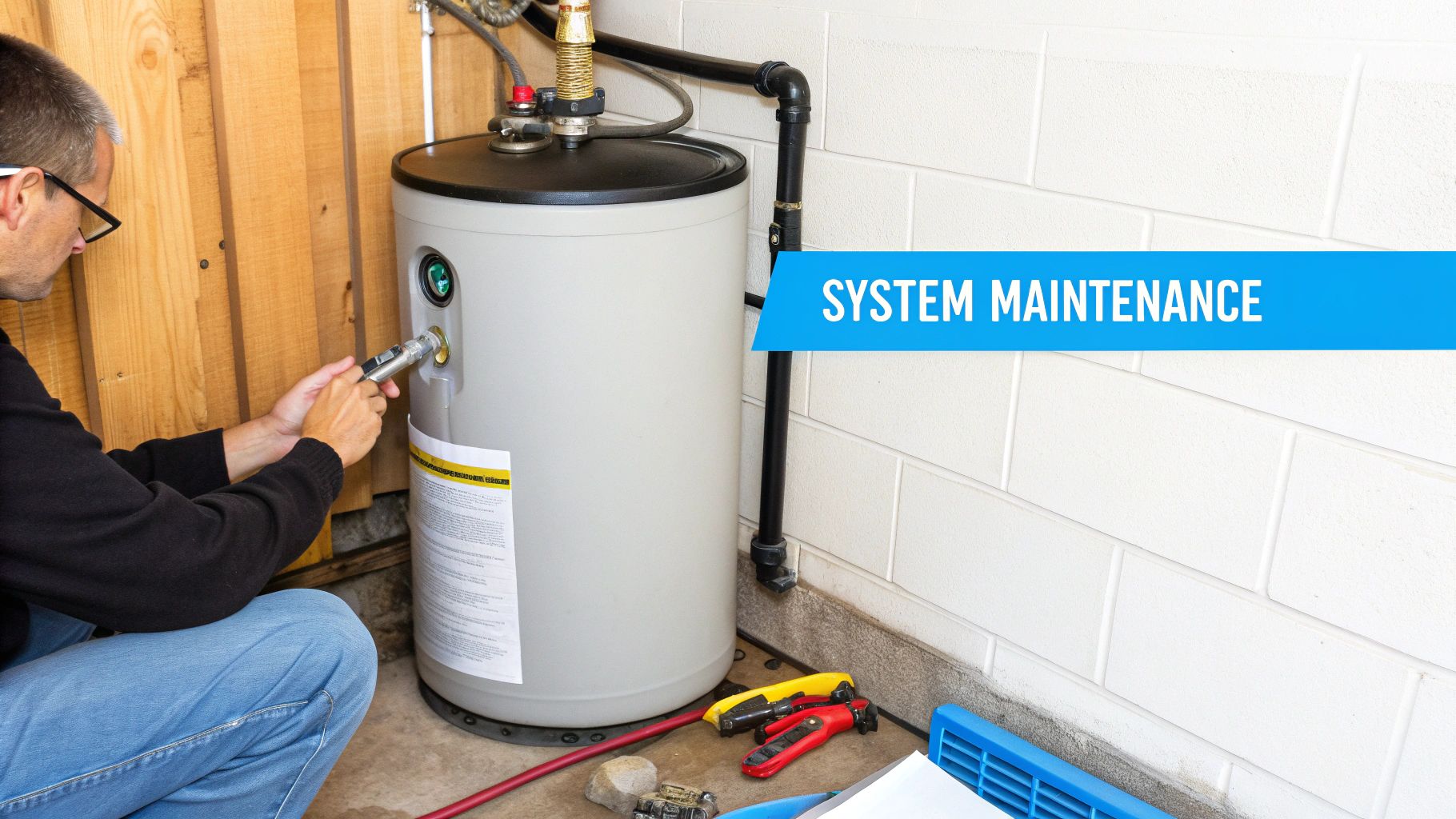
Alright, so you've picked out your new home water filtration system. It's a beast of a tool in the fight for fresh, odor-free water, but let’s be clear: it's not a "set it and forget it" appliance. The real difference between a quick fix and a lasting solution comes down to proper installation and consistent maintenance. Nail these two things, and you’ll get every penny's worth out of your investment for years to come.
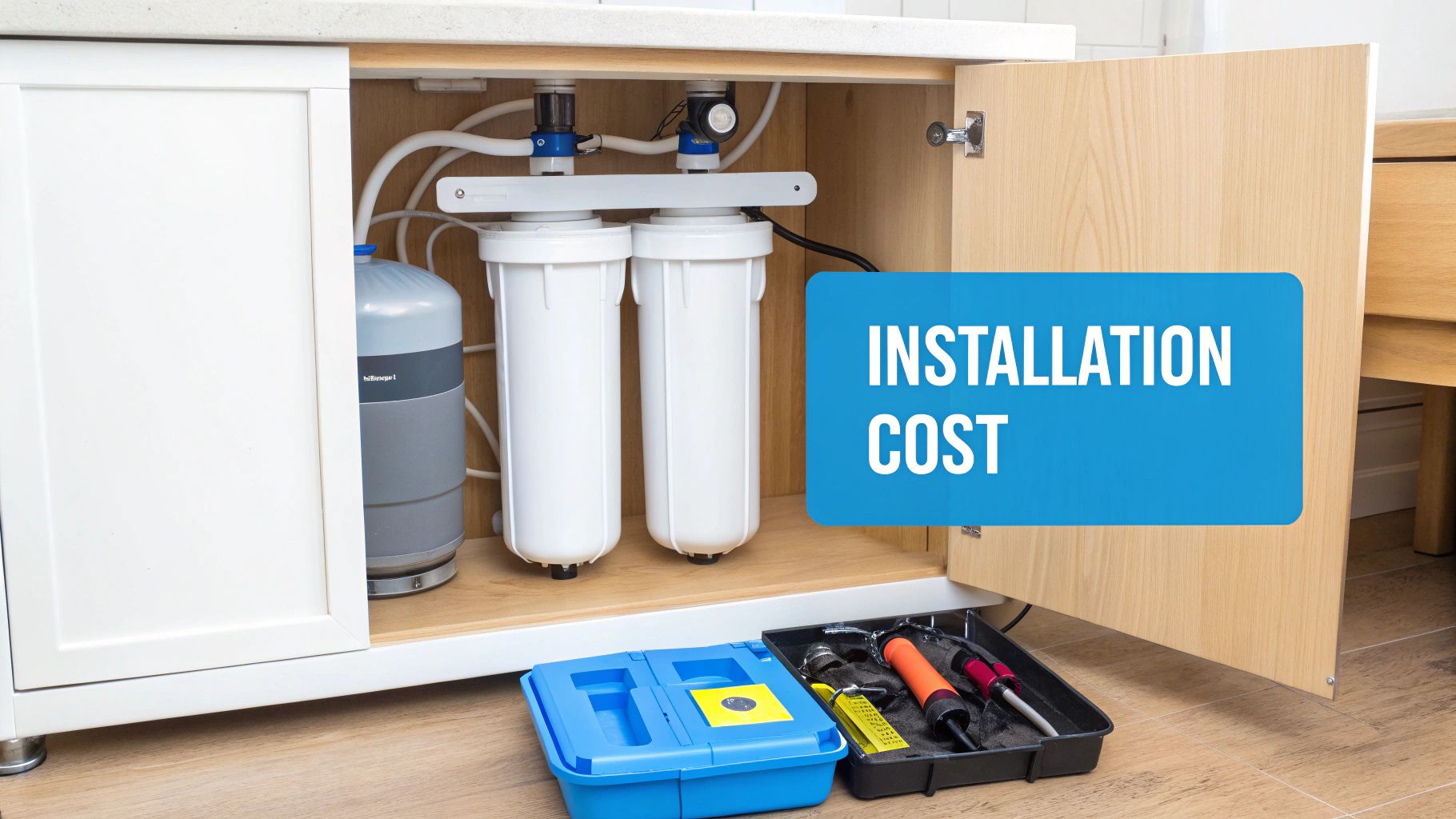
Whether you're a seasoned DIYer ready to get your hands dirty or you're calling in a pro, a solid setup starts with a little planning. Think about where this thing is going to live. Ideally, you want to install it after your pressure tank but before your water heater. This protects both appliances from whatever you're filtering out. It also needs a nearby power source for the control valve and, critically, a drain for its backwashing cycles.
Make sure the spot you pick is level and won't freeze in the winter. Just as important, leave yourself enough elbow room to get around it for future service. It might be tempting to shove it into a tight corner to save space, but you’ll be kicking yourself the first time you need to check a fitting or swap out the media.
Your Essential Maintenance Checklist
Once your system is humming along, a simple, consistent maintenance routine is your best friend. This is what keeps that rotten egg smell from making a comeback. We're not talking about spending every weekend tinkering with your plumbing—just a few scheduled checks to stop big problems before they start.
For most systems, it boils down to a handful of key tasks. Think of it as a quick health checkup for your water.
- For Chemical Injection Systems (Chlorine/Peroxide): You’re the supply manager here. At least once a month, pop the lid on your chemical solution tank and top it off. While you're there, give the injection pump and tubing a quick once-over for any clogs or leaks.
- For Oxidation Filters (Air Injection, Greensand): These are pretty self-sufficient, but the media inside won't last forever. Check the manufacturer's guidelines and mark your calendar. You'll likely need to replace the media every 5-10 years.
- For All Systems: Every few months, just do a quick visual inspection of all the fittings and connections. A tiny drip might not seem like a big deal, but it can waste a surprising amount of water and signal a bigger problem.
Maintenance Mindset: Treat your filtration system like any other major appliance in your home—your furnace, your A/C, your water heater. A little proactive care goes a long way in ensuring it lasts and does its job, protecting both your investment and your water quality.
Spotting Trouble Before It Starts
Even with perfect maintenance, things can still go sideways. The trick is to know the early warning signs so you can jump on a problem before it turns into a costly repair or, worse, a full-blown return of the sulfur stench.
Start by listening. Pay attention to the sounds your system makes. Is the backwash cycle suddenly running way longer than it used to? Do you hear the well pump kicking on and off more often? These little changes are often the first clues that something’s not quite right.
Another huge red flag is a gradual drop in your home's water pressure. This almost always points to a clog somewhere in the system, either from sediment building up or the filter media getting fouled. If you notice the flow from your faucets getting weaker, it’s time to investigate the filtration unit. Catching these things early is the key to keeping your system for removing sulfur from well water running like a top.
Common Questions About Sulfur in Well Water
Once you've zeroed in on the right system for removing sulfur from well water, you might still have a few questions rattling around. It's totally normal. Sorting out those last few details can feel a bit overwhelming, but getting solid answers is key to feeling confident about your new home filtration setup.
Let's dive into the most common questions we hear from homeowners who are just about to cross the finish line on their water treatment project. We'll cover everything from the role of your water softener to what you should expect the moment your new system fires up.
Will a Standard Water Softener Remove the Rotten Egg Smell
This is probably the number one question we get, and the short answer is almost always no. A standard water softener is a specialist; its whole job is to pull out hardness minerals like calcium and magnesium using a process called ion exchange. It's built to stop scale, not fight odors.
Sure, some softeners might seem to knock back very low levels of hydrogen sulfide, but they simply aren't designed for it. Worse, high concentrations of sulfur can actually foul the softener's resin bed over time, making it less effective and shortening its life. To really solve the problem, you need a dedicated piece of equipment like an oxidation filter or a chemical injection system.
Think of it this way: you wouldn't use a hammer to turn a screw. A water softener is the wrong tool for the sulfur job. Relying on it is an ineffective and potentially costly mistake.
Is It Safe to Drink Water That Smells Like Sulfur
For the most part, the hydrogen sulfide gas that causes that rotten egg smell is more of a nuisance than a direct health threat at the levels you'd typically find in a home well. The US Environmental Protection Agency (EPA) actually classifies it as a secondary contaminant, which means it mainly impacts things you can taste and smell.
But, and this is a big but, that smell is a major red flag. Its presence can signal that conditions in your well are perfect for certain types of bacteria to thrive. Plus, high levels of sulfates—a different, related form of sulfur—can have a laxative effect, which is a real concern for infants or even visitors not used to the water. The only way to know for sure what's going on is to get your water professionally tested. While you're at it, you might have other frequently asked plumbing questions about your home's water system in general.
How Long Does It Take for a New Filtration System to Work
You should notice a huge difference almost immediately after your new sulfur filter is installed and flushed out. As soon as the system runs its first cycle, that treated, odor-free water will start making its way into your pipes.
That said, it takes a little time to completely push out all the old, smelly water that's already in your plumbing—especially inside your hot water tank. Give it a few hours, or maybe even a full day, for the rotten egg smell to vanish completely. If the odor is still hanging around after 24 hours, it’s a good time to double-check the system's settings or give your installer a call to see what's up.
At Water Filter Advisor, we provide the practical guidance and research-driven reviews you need to make confident decisions about your home's water quality. Find the perfect solution for your needs at https://www.waterfilteradvisor.com.